Most startups today live in the cloud. Your code sits on GitHub. Your models run on remote servers. Your team works from kitchens, cafes, and coworking spaces all over the world. That setup feels fast and modern. It also puts your most valuable secrets at risk in ways many founders do not see coming.
Trade secrets are not old or boring. They are often the core of what makes your startup special. The problem is that trade secrets only work if you protect them every single day. Once they leak, they are gone for good. No reset button. No second chance.
Why Trade Secrets Matter More Than Ever for Cloud-First Startups
Trade secrets used to live in locked rooms, on private servers, and inside a small office where everyone knew each other. That world is gone. Today, startups are born in the cloud.
Code is shared instantly. Documents move across tools without friction. Teams grow fast and spread out even faster. In this new setup, trade secrets are both more powerful and more fragile than ever before.
This section explains why trade secrets are now a core business asset for cloud-first startups, not a legal afterthought.
It also shows how founders can treat them as something living and active, not a dusty policy document no one reads.
Trade Secrets Are Often the First Real IP You Have
Most early-stage startups do not start with patents. They start with ideas, workflows, code logic, data methods, and internal know-how. All of that is a trade secret, even if you never call it that.
This matters because trade secrets do not require approval. You do not file anything to create them. The moment your team builds something valuable that is not public, it can qualify.
That means you already have trade secrets, whether you planned for them or not.
The mistake many founders make is assuming trade secrets are weak or informal. In reality, they are often the strongest protection you have in the early days. They move as fast as your product.
They cover things patents cannot. They also cost nothing to create. The only real cost is the discipline to protect them.
Founders who understand this early make better decisions about access, sharing, and growth. Founders who ignore it usually learn the hard way after something leaks.
If you are unsure how trade secrets fit into a broader IP plan, this is where modern tools plus real attorney guidance matter.
You can see how PowerPatent helps founders think clearly about this at https://powerpatent.com/how-it-works.
Cloud Speed Turns Small Leaks Into Big Problems
Cloud tools are built for speed. Files sync instantly. Access is easy to grant and easy to forget about. A single click can expose months of work.
In a cloud-first startup, leaks rarely look dramatic. There is no break-in. No hacking scene.
Instead, someone leaves the company and still has access. A contractor copies a repo to work offline. A shared folder gets linked to the wrong email.
Each event feels small. The damage is not.
Trade secrets depend on secrecy. Once information spreads beyond reasonable control, courts stop treating it as a secret.
That means your rights disappear not because someone stole your idea, but because you failed to protect it well enough.
This is why cloud-first startups need to think differently. Protection is not about fear. It is about design. Your systems should assume change, turnover, and mistakes, and still keep your core knowledge safe.
Investors Quietly Care About Trade Secrets
Many founders believe investors only care about patents. That is not true. What investors really care about is defensibility.
When a company is built on software, data, or process advantages, trade secrets are often the backbone of that defensibility. Investors look for signs that the company understands what is sensitive and treats it that way.
They notice when access is sloppy. They notice when everyone has admin rights. They notice when there is no clear story about what makes the company hard to copy.
You do not need a long policy manual to impress investors. You need clarity. You need to show that you know what your secrets are and that you act like they matter.

This is one reason founders who use structured IP tools early tend to raise with more confidence. They are not scrambling to explain later. They already know what they have protected and how.
Trade Secrets and Patents Are Not Opposites
A common myth is that you must choose between trade secrets and patents. In reality, strong companies use both.
Trade secrets protect how things work behind the scenes. Patents protect what you are willing to show publicly in exchange for exclusive rights. In cloud startups, this balance is critical.
Some parts of your system should never be public. Some parts benefit from being locked down by patents. Knowing the difference is a strategy decision, not a legal one.
The danger comes when founders delay thinking about this until it is too late. Once something is public, it cannot be a trade secret. Once you disclose too much, you lose options.
This is where early guidance matters. Not from a slow, traditional firm, but from tools designed for fast-moving teams.
PowerPatent exists to help founders make these calls at the right time, not after damage is done. You can explore that approach at https://powerpatent.com/how-it-works.
Remote Work Raises the Bar for Secrecy
Remote work is not going away. That means trade secret protection has to work across time zones, devices, and environments you do not control.
Founders often focus on trust. Trust is important, but trust alone is not protection. Real protection comes from structure.
Structure means knowing which parts of your product are sensitive. It means limiting access by role, not by convenience. It means thinking ahead about what happens when someone leaves or changes roles.
The good news is that strong structure actually makes teams faster. When people know where to work and what not to copy, confusion drops.
When access is clean, onboarding is smoother. Protection and speed are not enemies. They are partners.
The Cost of Getting It Wrong Is Permanent
Unlike patents, trade secrets cannot be repaired once lost. If your secret becomes public, it is gone forever.
This is why trade secrets demand attention early. Waiting until scale is too late. Waiting until a dispute arises is far too late.
The most effective founders treat trade secrets like product features. They are designed, tested, and improved over time. They evolve as the company evolves.
If this sounds heavy, it should not. With the right tools and guidance, protecting trade secrets becomes part of how you build, not something that slows you down.

Modern IP platforms like PowerPatent are built for this exact reality. They help founders move fast while staying protected, without drowning in paperwork or legal talk.
If you want to see how that works in practice, visit https://powerpatent.com/how-it-works.
How SaaS Tools Quietly Put Your Secrets at Risk
SaaS tools are the backbone of modern startups. They help teams move fast, stay aligned, and ship more with fewer people. The same tools also create invisible paths for trade secrets to slip away.
Most founders do not see this risk because nothing feels broken. Everything works exactly as designed.
This section explains how everyday SaaS usage slowly weakens trade secret protection, often without anyone noticing.
More importantly, it shows how founders can regain control without turning their company into a locked-down fortress.
Convenience Is the Real Threat
SaaS products are built to remove friction. That is their job. One-click sharing, auto-sync, smart suggestions, and seamless integrations all feel helpful.
From a trade secret view, they also remove natural barriers that once protected sensitive information.
When files move freely across tools, it becomes hard to track where critical knowledge lives.
A document starts in one place, gets copied into another, referenced in a third, and exported into a fourth. At each step, the circle of access widens.
The risk is not bad intent. It is drift. Over time, more people can see more than they need. Trade secrets slowly become common knowledge inside the company. Once that happens, legal protection weakens.
Founders who care about defensibility need to design against convenience creep. That does not mean banning tools. It means being intentional about how they are used.
Shared Workspaces Blur Ownership
Many SaaS platforms rely on shared spaces. Shared drives, shared boards, shared notes, shared repos. Sharing feels collaborative, but it also blurs lines around ownership and responsibility.
When everyone can see everything, no one feels accountable for protecting specific information. Sensitive logic sits next to casual notes. Core system designs sit next to planning docs.
Over time, people stop distinguishing between what is critical and what is not.
Courts look at this behavior closely. If a company treats its secrets like general knowledge, it becomes harder to argue they were truly secret.
A simple shift in mindset helps. Founders should think in terms of zones. Some zones are open and flexible. Others are tight and controlled. The goal is not secrecy everywhere. The goal is secrecy where it actually matters.
Integrations Multiply Exposure
SaaS tools love integrations. Each connection promises efficiency. Each connection also becomes another place your data can travel.
When a tool connects to another tool, information often flows automatically. That flow is rarely audited after setup. Months later, no one remembers exactly what data is moving or who can see it.
This is dangerous for trade secrets. Sensitive data can end up cached, logged, or stored in places you never intended. If access controls differ across tools, protection breaks at the weakest link.
Smart founders treat integrations like hiring decisions. They ask what data is shared, why it is shared, and what happens if that access should end. If the answer is unclear, that integration deserves a second look.
Access Rights Rarely Shrink on Their Own
One of the quietest risks in SaaS environments is stale access. People join teams, change roles, and leave. Their access often stays the same.
Someone who needed deep access during a sprint may not need it months later. A contractor who finished work may still have credentials. An early hire may retain broad rights long after the company has grown.
From a trade secret standpoint, this is a slow leak. Even if nothing bad happens, the company can no longer claim tight control.
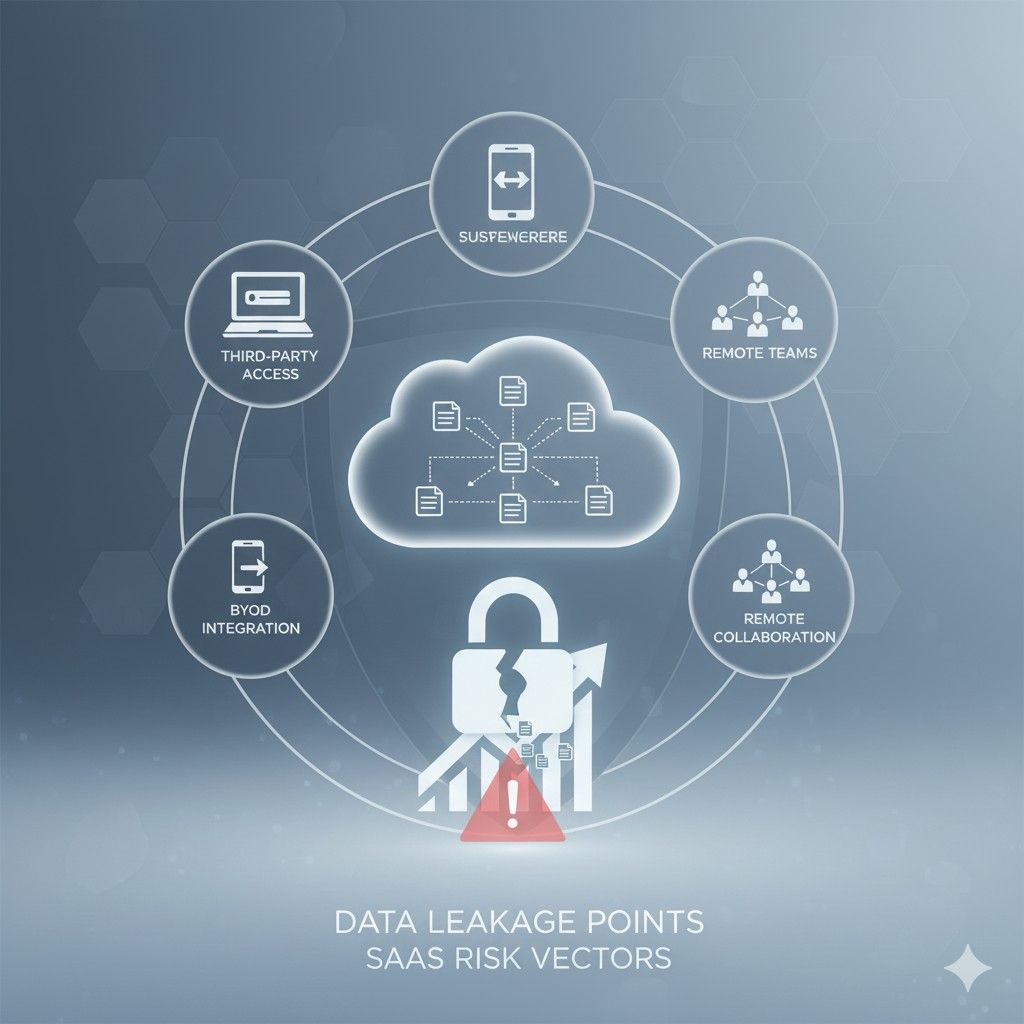
Founders who take this seriously build access review into normal operations. Not as a one-time cleanup, but as a habit.
This does not require heavy process. It requires ownership. Someone must be responsible for asking, on a regular basis, who still needs what.
Version History Is Not Neutral
Many SaaS tools keep detailed histories. Edits, comments, deleted files, past versions. This feels safe because nothing is lost. It also means sensitive information can linger long after you think it is gone.
A design you decided not to pursue may still exist in a version history. A secret approach you replaced may still be recoverable. If access expands later, that old knowledge can resurface.
Trade secrets are judged based on reasonable efforts to protect them. Leaving sensitive details buried but accessible can work against you.
Founders should understand how their tools handle history and retention. In some cases, pruning is necessary. In others, separating sensitive work into controlled environments is the better move.
SaaS Vendors Are Not Your Legal Shield
A common assumption is that reputable SaaS vendors will handle security and compliance. While they protect infrastructure, they do not protect your trade secrets for you.
Most SaaS terms place responsibility on the customer to manage access and usage. If a secret leaks due to poor internal controls, the vendor is rarely at fault.
This means trade secret protection is an internal discipline, not something you outsource. Tools support your strategy. They do not replace it.
Founders who understand this build systems that assume tools are neutral. The protection comes from how you configure and use them.
Why This Matters Before You Scale
Early-stage companies often delay these conversations. They plan to clean things up later. The problem is that habits harden quickly.
Once a culture of open access sets in, reversing it feels painful. People resist changes that feel like loss. What could have been simple early becomes disruptive later.
Addressing SaaS risk early is not about control. It is about clarity. When people know what matters most, they act accordingly.

This is also where thoughtful IP planning connects directly to daily operations. Tools like PowerPatent help founders identify what truly needs protection and align that with how teams work.
It keeps IP strategy grounded in reality, not theory. You can see how that works at https://powerpatent.com/how-it-works.
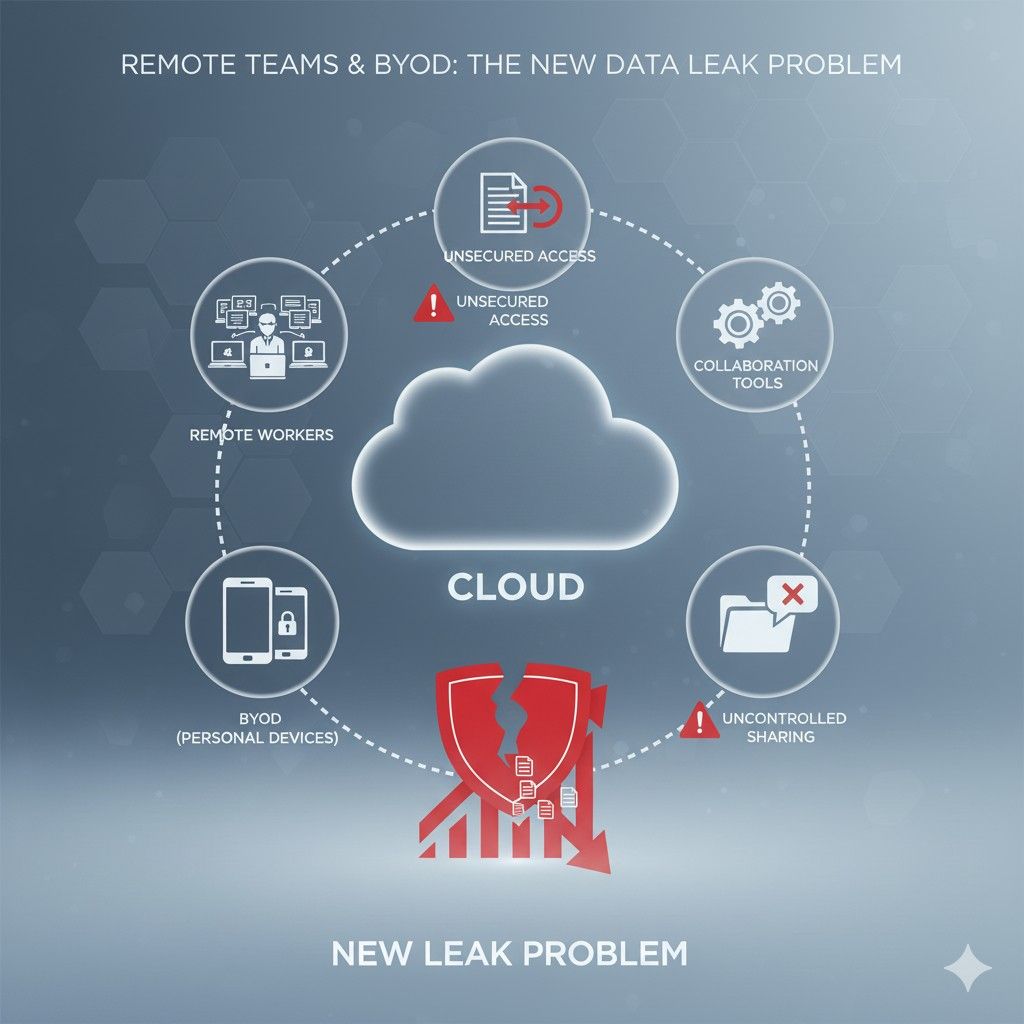
Remote Teams, Personal Devices, and the New Leak Problem
Remote work changed how companies operate. BYOD made it even more flexible. Together, they created a work environment where trade secrets travel far beyond company walls.
This shift did not break protection overnight. It slowly reshaped it. Many founders are still adjusting without realizing how much the ground moved under them.
This section looks at how remote teams and personal devices create new kinds of risk, why old assumptions no longer work, and how founders can respond in ways that support trust while still protecting what matters most.
Work No Longer Lives in One Place
In the past, work happened in the office. Devices stayed on desks. Networks were shared. That physical setup created natural limits. Today, work follows the person.
Code is written at home. Docs are edited on trains. Calls happen in cafes. Each location adds exposure.
Each network adds uncertainty. Each moment outside controlled environments increases the chance that sensitive information is seen, copied, or stored where it should not be.
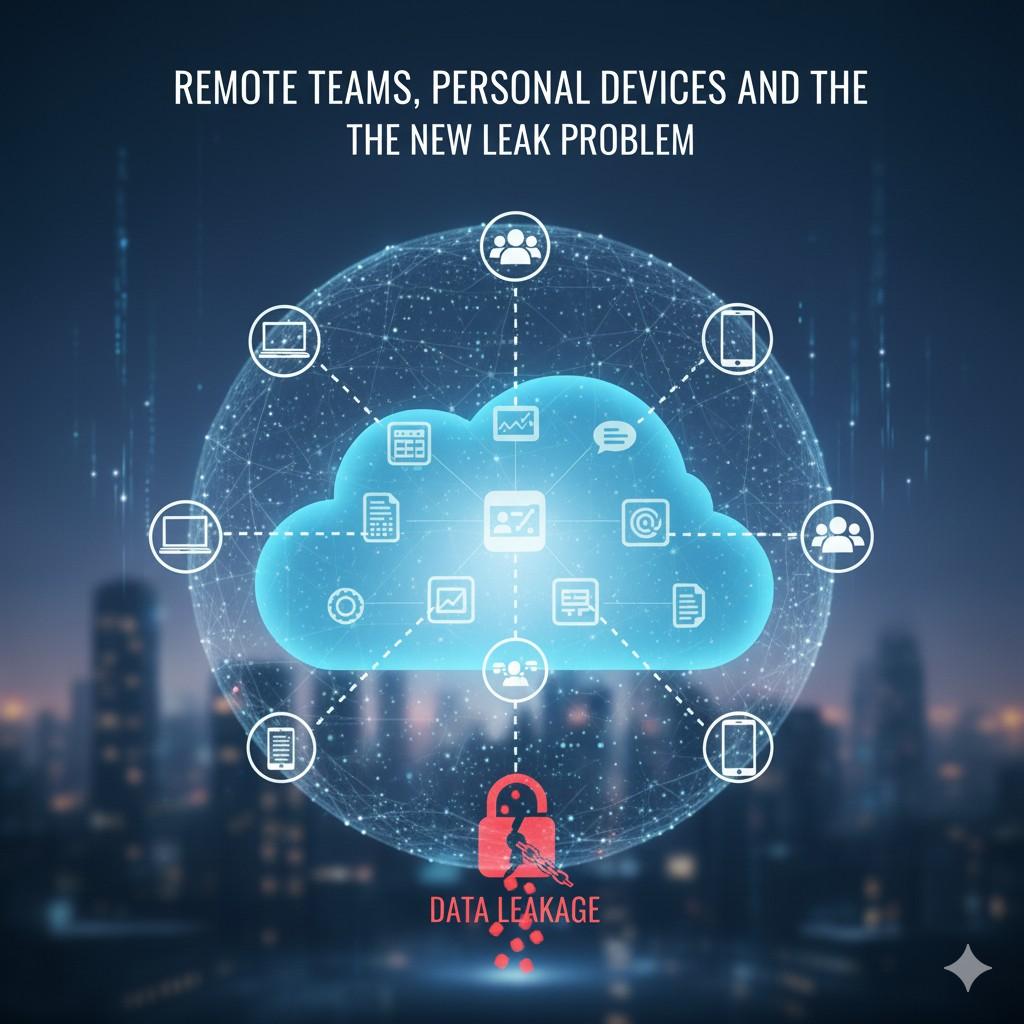
This does not mean remote work is unsafe. It means trade secret protection can no longer rely on location. It must rely on design.
Founders who accept this reality early stop chasing control and start building resilience.
Personal Devices Blur the Line Between Work and Life
BYOD feels practical. It saves money. It keeps teams happy. It also blurs ownership.
On a personal laptop, work files sit next to personal files. Backups may sync automatically. Screens may be shared with family. Old devices may be resold without proper cleanup.
None of this is malicious. It is human behavior. Trade secrets do not survive well in spaces designed for convenience and comfort.
Courts look closely at whether a company took reasonable steps to protect its secrets. Allowing sensitive material to live unmanaged on personal devices can weaken that argument.
The solution is not banning BYOD. It is defining boundaries. Founders who are clear about what should never live locally and what tools must be used for sensitive work protect themselves without alienating their teams.
Remote Hiring Expands the Trust Surface
Remote work allows startups to hire globally. This is a massive advantage. It also expands the trust surface dramatically.
When team members sit in different legal systems, enforcement becomes harder. When contractors are spread across regions, expectations differ. What feels obvious in one context may not be obvious in another.
Trade secrets rely on shared understanding as much as legal rules. If people do not clearly know what is sensitive, they will not treat it carefully.
Founders who succeed with remote teams over-communicate importance, not rules. They explain why certain information matters. They connect protection to company survival, not legal threats.
This approach builds alignment. Alignment is far stronger than fear.
Offboarding Is Where Most Leaks Happen
Hiring gets attention. Onboarding gets care. Offboarding is often rushed.
Someone leaves. Access is removed slowly. Files remain synced. Copies remain on devices. A clean break rarely happens.
From a trade secret view, this is the most dangerous moment. Intentions can change. Memory lingers. Access mistakes matter.
Smart founders treat offboarding as a core protection step, not an HR task. They plan it in advance. They know which systems matter most. They make sure knowledge transfer happens before access is gone.

This is not about suspicion. It is about closure. Clean endings protect both sides.
Culture Sets the Ceiling for Protection
Policies do not protect trade secrets. Culture does.
If people treat sensitive work casually, no tool will fix that. If leaders share secrets freely, others will follow. If speed is rewarded without care, protection erodes.
Culture is shaped by what founders model. When founders speak openly about what matters, teams listen. When founders respect boundaries, teams adopt them.
This is why trade secret protection starts at the top. It is not a legal task. It is a leadership one.
Founders who align culture with protection find that fewer rules are needed. People do the right thing because they understand the stakes.
Documentation Can Help or Hurt
Remote teams rely heavily on documentation. That is a strength. It is also a risk.
Documenting everything without thinking about sensitivity can turn secrets into manuals. Over-documenting critical logic makes it easier for knowledge to travel.
This does not mean hiding knowledge. It means being intentional about depth and placement.
Some things should be documented at a high level. Some details should live in controlled spaces. Some knowledge should be shared verbally within trusted circles.
Founders who think about documentation as a design choice, not a habit, protect their edge without slowing learning.
Why Remote Reality Demands Early IP Strategy
Remote work is not temporary. BYOD is not going away. Waiting to address trade secret protection until later assumes a future that will never come.
Early-stage startups have the advantage of flexibility. Habits are not fixed. Systems are still forming. Culture is still malleable.
This is the moment when IP strategy can shape daily work instead of reacting to it. Tools like PowerPatent help founders identify what needs protection and build around that from day one.
Not with heavy rules, but with clarity and intention. You can see how that approach works at https://powerpatent.com/how-it-works.
Remote teams can be incredibly secure when designed well. They can also leak value quietly when left unchecked. The difference is not technology. It is attention.
How Smart Founders Actually Protect Trade Secrets Without Slowing Down
Protecting trade secrets often sounds like adding friction. More rules. More approvals. More delays.
In reality, the opposite is true when it is done well. Smart founders design protection so it fades into the background and supports speed instead of fighting it.
This section focuses on how real startups build trade secret protection into daily work without creating drag. The key theme is intent. When protection is intentional, it feels natural. When it is reactive, it feels heavy.
Protection Starts With Knowing What Truly Matters
Not everything in your company needs the same level of protection. Treating all information as equally sensitive creates noise. Noise leads to shortcuts. Shortcuts lead to leaks.
The fastest teams are clear on what really matters. They know which parts of their product create leverage and which parts are replaceable. That clarity guides behavior without constant reminders.
Founders should spend time identifying the small set of things that would seriously hurt the business if exposed. This is not a legal exercise. It is a strategy one.
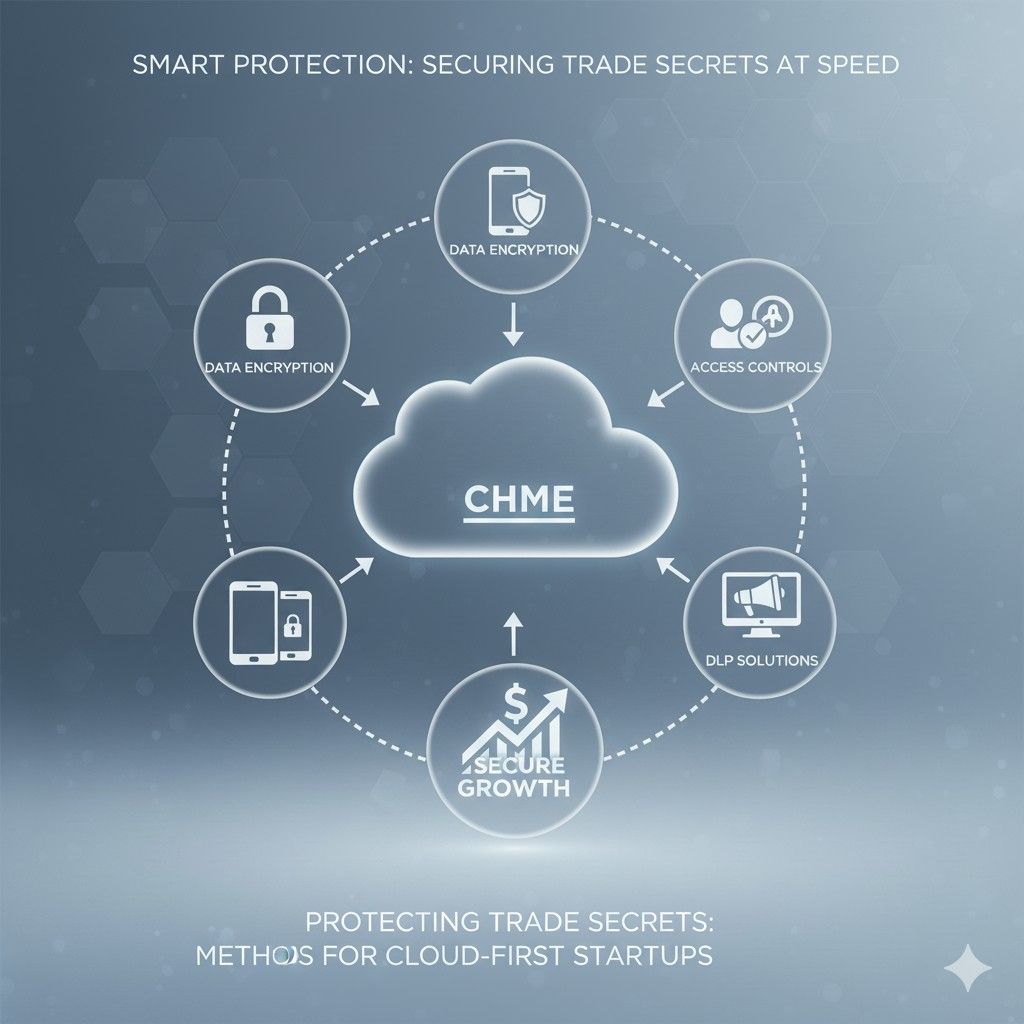
Once those areas are clear, protection becomes focused instead of overwhelming.
This is also where many founders benefit from outside structure. Platforms like PowerPatent help turn this thinking into a clear IP map that teams can actually use.
You can explore how that works at https://powerpatent.com/how-it-works.
Design Access Around Roles, Not People
One common mistake is giving access based on trust or seniority. Trust matters, but access should follow function.
When access is tied to roles, changes become easier. When someone shifts roles, access shifts with them. When someone leaves, their role disappears and access goes with it.
This approach reduces emotional friction. Removing access does not feel personal. It feels procedural.
Founders who adopt this early find that security conversations become calmer. Teams understand that access is about work needs, not judgment.
Make the Right Path the Easy Path
People take shortcuts when the right path is hard. If secure workflows are slow or confusing, teams will work around them.
Smart protection removes temptation. Sensitive work should live in tools that are easy to use and clearly marked. Sharing should be simple but intentional. Saving copies should feel unnecessary.
This is less about rules and more about product thinking. Founders who apply the same care to internal systems as they do to customer-facing features see better outcomes.
When protection is built into flow, compliance happens naturally.
Use Boundaries Instead of Warnings
Warning-heavy environments create fatigue. Pop-ups, disclaimers, and long policies get ignored.
Boundaries work better. Clear separation between sensitive and general spaces reduces mistakes without constant reminders.
For example, having a dedicated environment for core logic creates a natural pause before sharing. People think before crossing boundaries.

This approach respects intelligence. It trusts teams to act wisely when context is clear.
Teach the Why Before the How
Rules without reasons do not last. Especially in fast-moving teams.
Founders who explain why trade secrets matter create buy-in. When people understand that protection supports growth, funding, and survival, they act differently.
This does not require long training sessions. Short conversations at the right moments work better. Explaining why access is limited during onboarding. Explaining why offboarding matters when someone leaves.
When protection is framed as part of building something meaningful, teams support it.
Plan for Change, Not Perfection
Perfect control is impossible. People make mistakes. Tools change. Teams grow.
Smart founders plan for change. They assume turnover. They assume role shifts. They assume growth.
This mindset leads to systems that recover quickly. Access reviews become routine. Knowledge is compartmentalized. Sensitive decisions are revisited as the company evolves.
Trade secret protection becomes adaptive instead of brittle.
Legal Support Should Feel Like a Safety Net
Many founders avoid legal thinking because it feels slow and intimidating. That avoidance creates risk.
The best legal support does not slow teams down. It gives confidence. It acts as a safety net that lets founders move faster because they know the ground is solid.
Modern IP tools exist to bridge this gap. PowerPatent combines software with real attorney oversight so founders can make smart calls without stopping momentum.
It turns protection into an advantage instead of a burden. You can see how this works at https://powerpatent.com/how-it-works.
Speed and Protection Can Grow Together
The idea that protection slows growth is outdated. In cloud-first, remote companies, protection enables scale.
When systems are clear, onboarding is faster. When access is clean, collaboration is smoother. When IP strategy is aligned early, fundraising conversations are easier.
Smart founders do not choose between speed and safety. They design for both.
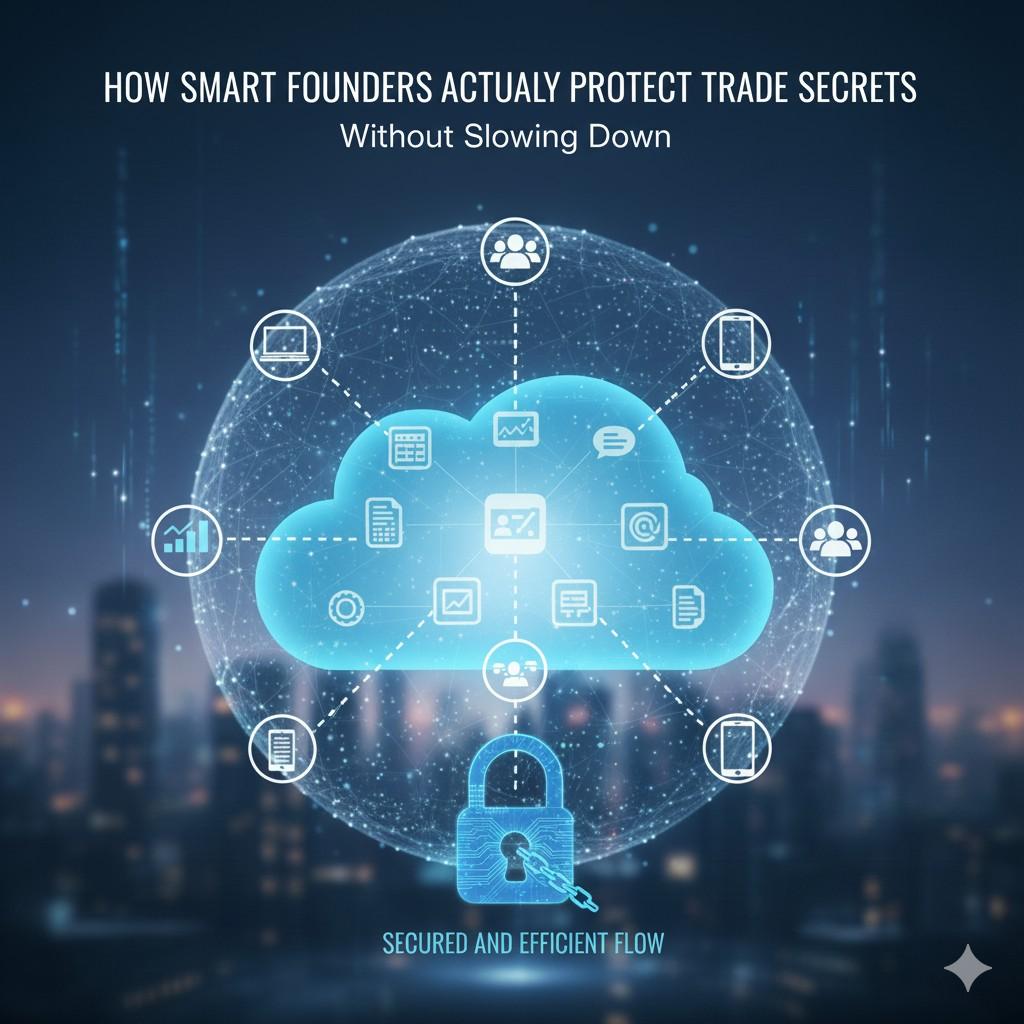
Trade secrets are not about hiding. They are about focus. Protecting what matters most lets everything else move freely.
Wrapping It Up
Trade secrets in modern startups are not locked away in safes or hidden behind legal walls. They live inside tools, habits, conversations, and decisions made every day. In cloud-first companies with remote teams and personal devices, protection is no longer about control. It is about clarity.
The biggest shift founders need to make is mental. Trade secrets are not something you deal with later. They are not something only lawyers care about. They are part of how you build, hire, share, and scale. When you treat them that way, protection stops feeling heavy and starts feeling natural.
Leave a Reply