
If you build products that use standard tech, you already live in a world of rules. You may not like them. You may not think about them every day. But they are there, and they can hurt you if you ignore them. This article is about one thing only: how simple, steady record-keeping can protect your company if you use Standard Essential Patents, also called SEPs. No theory. No filler. Just what actually keeps you safe when questions come later.
Why SEP Compliance Is Really About Proof, Not Paperwork
SEP compliance sounds like forms, filings, and legal noise. That is how it is often sold. But in real life, compliance has very little to do with documents for the sake of documents. It is about proof.
Proof that you acted fairly. Proof that you knew what you were doing. Proof that you did not ignore your duties or take shortcuts.
When disputes happen around SEPs, the side that wins is usually the side that can show a clear story backed by records. Not the side with the thickest binder.
Not the side that hired the loudest lawyers. The side that can prove what happened, step by step, without gaps.
This section breaks down why proof matters more than paperwork, and how you can build that proof quietly while you build your product.
Proof Is What Shows Good Faith
Every SEP issue comes back to one idea: good faith. Did you try to understand the standard? Did you act reasonably? Did you respond when issues came up?
These questions are not answered by what you say later. They are answered by what you can show.
Good faith is proven through timing. When did you look at the standard? When did you map it to your product?
When did you discuss licensing internally? When did you reply to a notice? If these moments are written down close to when they happened, they carry weight.

If they are recreated months or years later, they look weak. Courts and licensors know the difference. Investors do too.
The goal is not to look perfect. The goal is to look honest, aware, and responsible. Proof gives you that.
Paperwork Without Context Is Useless
Many teams save files but never explain them. They keep emails, but no one knows why they mattered. They store drafts, but not the thinking behind them. This kind of paperwork does not help when pressure comes.
What matters is context. Why a decision was made. What tradeoffs were discussed. What assumptions were true at the time. A short note that explains this can be more valuable than a hundred pages of raw data.
When you create records, always think about the future reader. That reader may be a lawyer, an investor, or a judge. They were not in the room. Your job is to make the moment clear to them.
The Real Audience for Your Records Is the Future
Most founders think records are for today. They are not. They are for a version of your company that is bigger, more visible, and under more scrutiny.
That future company may have new leaders. New counsel. New owners. Your records help them understand what was done before they arrived. Without that clarity, they assume risk. And assumed risk is expensive.
When records are clear, future teams can move fast. They do not freeze. They do not overpay. They do not panic. That speed has real value.
SEP Compliance Is a Timeline, Not a Snapshot
One of the biggest mistakes companies make is treating compliance as a single event. A review. A response. A deal. SEP compliance is a timeline. It unfolds over years.
Your records should show movement. They should show that you revisited assumptions as your product changed. That you updated views as standards evolved. That you reacted when facts changed.
This ongoing trail shows seriousness. It shows that compliance was part of how you operated, not something you rushed when trouble appeared.
What Proof Looks Like in Practice
Proof is often small. A dated note after a standards meeting. A short internal summary after a design choice. A saved email that shows a question was raised and discussed.
These moments do not take long to capture. But together, they form a narrative that is very hard to attack. They show that decisions were not random or careless.
The key is consistency. A little proof, created often, beats a lot of proof created late.
Why Memory Is Not a Defense
Human memory fades. People leave. Stories change. When SEP issues come up, relying on memory is a losing move.
Written records lock facts in time. They protect you from honest mistakes and from unfair claims. They also protect your team from being put in uncomfortable positions where they are asked to recall details they no longer trust.
Memory creates risk. Records reduce it.
How Early Proof Lowers Licensing Pressure
Licensing talks are negotiations. Leverage matters. When you can show that you understood the standard early, evaluated it seriously, and tracked your use carefully, the tone changes.
You are no longer seen as someone who ignored obligations. You are seen as someone who engaged thoughtfully. That can lower rates, shorten talks, and avoid threats.
This is not theory. It happens because proof shifts power.
Proof Is Cheaper Than Cleanup
Fixing missing records later is painful. It takes time. It costs money. And it often fails. Creating proof early is quiet and cheap.
A few minutes after key decisions. A habit of writing things down while they are fresh. A simple system everyone uses. This is far less costly than scrambling later under pressure.
Compliance Proof Protects More Than Legal Risk
Strong records do not only help with SEP issues. They help with due diligence. They help with audits. They help with acquisitions. They show maturity.
They tell outsiders that your company is well run. That matters more than most founders expect.
How PowerPatent Fits Into This
This is where structure matters. PowerPatent is built to help teams capture proof as they build. Not after. Our tools help turn technical work into clear records, reviewed by real attorneys, without slowing you down.

If you want to build proof while you build products, and avoid painful cleanup later, you can see how PowerPatent works here: https://powerpatent.com/how-it-works
The Silent Risk of “We’ll Figure It Out Later” Record-Keeping
Many companies do not choose bad compliance habits on purpose. They drift into them. The team is small. The product is moving fast. Everyone agrees they will clean things up later. That later rarely comes at the right time.
This section is about the hidden cost of delay. Not obvious fines or public fights, but the quiet loss of control that happens when records are missing, scattered, or created too late to matter.
Delay Feels Harmless Until It Is Not
Putting off record-keeping feels safe because nothing bad happens right away. There is no warning light. No email. No deadline. That silence is misleading.
SEP issues do not announce themselves early. They surface when your product gains traction. When revenue grows. When your name shows up on someone’s radar. By then, the past matters a lot.
If the past is fuzzy, you pay for it in stress, time, and money.
Growth Makes Old Gaps Dangerous
Early on, gaps in records feel small. Later, they grow teeth. As your product evolves, it becomes harder to explain how and when standards were used.
Small changes pile up. Engineers move on. Design choices blur together. Without records, you cannot separate what was true then from what is true now.
This makes every question harder to answer and every answer easier to challenge.
The Myth of the Future Cleanup Sprint
Many founders believe they can do a cleanup sprint if needed. They think they can sit down for a week, reconstruct decisions, and be fine.
That almost never works. Reconstruction relies on memory and guesswork. It creates records that all look the same date. It lacks the natural trail that real compliance proof needs.
Cleanup looks like damage control, because that is what it is.
Late Records Invite Doubt
Records created after a problem appears are viewed with suspicion. Even if they are honest, they look reactive. They raise questions about why they did not exist earlier.
This doubt weakens your position. It forces you to explain not just your actions, but your process. That double burden is hard to overcome.
Internal Confusion Becomes External Risk
When records are missing, teams disagree about what happened. One person remembers it one way. Another remembers it differently. There is no anchor.
That confusion leaks outside. It shows up in emails. In meetings. In filings. Inconsistency is a red flag. It suggests lack of control.
Clear records keep everyone aligned, even years later.
“We’re Too Small” Is a Costly Assumption
Small companies often assume they are invisible. That assumption expires faster than expected.
Standards are everywhere. If you ship a product that touches them, you are part of the ecosystem. Size does not change that. Visibility comes sooner than most expect.
Waiting to act until you feel big enough is waiting too long.
Investors Notice What Is Missing
During diligence, missing records slow deals. They trigger follow-up questions. They lead to discounts or conditions.
Investors do not expect perfection. They expect awareness. They want to see that risks were seen and managed, not ignored.
Record gaps suggest blind spots. Blind spots scare capital.
Engineers Should Not Carry This Alone
When record-keeping is delayed, pressure falls on engineers later. They are asked to remember why choices were made long ago. That is unfair and risky.

Good systems protect your team. They free engineers to build, not defend old decisions under stress.
Time Pressure Changes Behavior
When SEP issues arise, time compresses. Deadlines appear. Emotions rise. Decisions get rushed.
If records already exist, you respond calmly. If they do not, you scramble. Scrambling leads to mistakes.
Calm comes from preparation.
How Small Habits Prevent Big Problems
The fix is not heavy process. It is small habits done early. Writing things down while they are fresh. Saving context with decisions. Keeping a simple, shared place for records.
These habits take minutes. Their payoff can last years.
Building the Muscle Before You Need It
Record-keeping is a muscle. If you only use it under stress, it performs poorly. If you use it lightly and often, it becomes natural.
Teams that build this muscle early barely notice the effort. Teams that wait feel every step.
How PowerPatent Helps You Avoid Delay
PowerPatent is designed to remove the excuse to wait. Our platform helps capture what matters as it happens, tied directly to your tech, with attorney oversight that keeps things clean.
You do not need a future sprint if you build proof along the way. If you want to see how this works in practice, you can explore it here: https://powerpatent.com/how-it-works
How Simple Records Can Cut Licensing Pain Before It Starts
Licensing pain does not begin with a demand letter. It begins much earlier, in quiet moments when no one is watching. It begins when a company chooses not to write something down because it feels unnecessary at the time.
By the time licensing talks start, the pain is already baked in.
This section explains how simple records, created without drama or heavy process, can change the entire shape of future licensing conversations. Not by being clever, but by being clear.
Licensing Is About Leverage, Not Just Law
Most founders think licensing outcomes are driven by legal rules alone. That is not how it works in real life. Licensing is a negotiation. And negotiation is about leverage.
Leverage comes from clarity. If you can clearly show what you use, when you used it, and how you thought about it, you control the pace of the conversation. If you cannot, the other side sets the tone.
Simple records are leverage because they reduce uncertainty. Uncertainty always hurts the party who cannot explain themselves.
When You Control the Story, You Control the Pressure
In SEP discussions, someone will tell a story about your product. Either you tell it first, or someone else does.
If you have clean records, your story is calm and boring. It shows deliberate choices. It shows boundaries. It shows awareness.
If you do not, the story fills with assumptions. Assumptions inflate risk. Inflated risk leads to higher demands.
Records keep the story grounded.
Early Clarity Prevents Broad Claims
One common licensing problem is scope creep. A licensor claims your product uses more of the standard than it actually does.
When your records clearly map features to standards, these claims lose force. You can respond with facts, not opinions. You narrow the conversation early.
Without records, you argue in general terms. General arguments rarely win.
Why Silence Is Often Misread as Avoidance
When companies lack records, their responses are slow. They ask for time. They need to investigate. They circle back.
From the outside, this looks like avoidance. Even if it is not. That perception hardens positions.
Simple records let you respond quickly and confidently. Speed signals seriousness. Seriousness lowers aggression.
Records Turn Emotional Talks Into Technical Ones
Licensing gets emotional when facts are unclear. Voices rise when people argue about what is true.
When records are solid, talks become technical. Technical talks are calmer. They focus on details, not blame.
This shift alone can save months of stress.
The Difference Between “We Think” and “We Know”
Language matters. “We think” invites challenge. “We know” ends debate.
Records allow you to say “we know” because you can point to dates, documents, and decisions. This changes how you are treated.
Confidence backed by proof is hard to push around.
Why Over-Explaining Is a Hidden Trap
When records are weak, companies tend to over-explain. They volunteer extra context. They speculate. They try to sound helpful.
This often backfires. Extra words create extra angles for attack.
Strong records let you say less. You answer only what is asked. You stay inside the lines.
Less talk. More control.
Clean Records Shorten Negotiations
Long negotiations cost money even when you win. They distract teams. They slow deals. They drain energy.
When records are clean, many questions are answered early. Issues resolve faster. Some never escalate.
Speed is a quiet but powerful win.
Simple Does Not Mean Shallow
Simple records are not shallow records. They are focused records.
A short note that explains why a feature was built a certain way can be more powerful than a long report that says little. Simplicity makes truth easier to see.
The goal is not volume. It is clarity.
How Records Signal Reasonableness
Licensors assess risk. They decide how hard to push based on who they are dealing with.
When your records show consistent, reasonable behavior over time, you are seen as a lower-risk counterparty. Lower risk invites compromise.
Aggression is often reserved for those who appear careless or dismissive.
Preventing Retroactive Rewrites of History
In tense talks, people sometimes try to rewrite history. They frame your past actions in the worst possible light.
Records freeze history. They prevent this drift. They anchor discussions to what actually happened, not what someone wishes had happened.
This protection is invaluable.
Records Protect You Even When You Are Wrong
No company is perfect. Sometimes you misjudge. Sometimes you miss something.
Records still help. They show that mistakes were honest, not reckless. They show effort.
This distinction matters a lot in outcomes.
Why Consistency Beats Brilliance
You do not need brilliant analysis to reduce licensing pain. You need consistent behavior.
Regular, simple records create a pattern. Patterns build trust. Trust reduces conflict.
This is boring work with powerful results.
Turning Records Into a Strategic Asset
When done right, records stop being defensive tools. They become strategic assets.
They help you decide when to push back and when to settle. They inform pricing. They guide product decisions.
They make your company smarter.
How PowerPatent Helps Reduce Licensing Pain Early
PowerPatent is built around this idea. Capture what matters early. Tie it to your actual tech. Keep it simple. Add attorney review so the records hold up when tested.
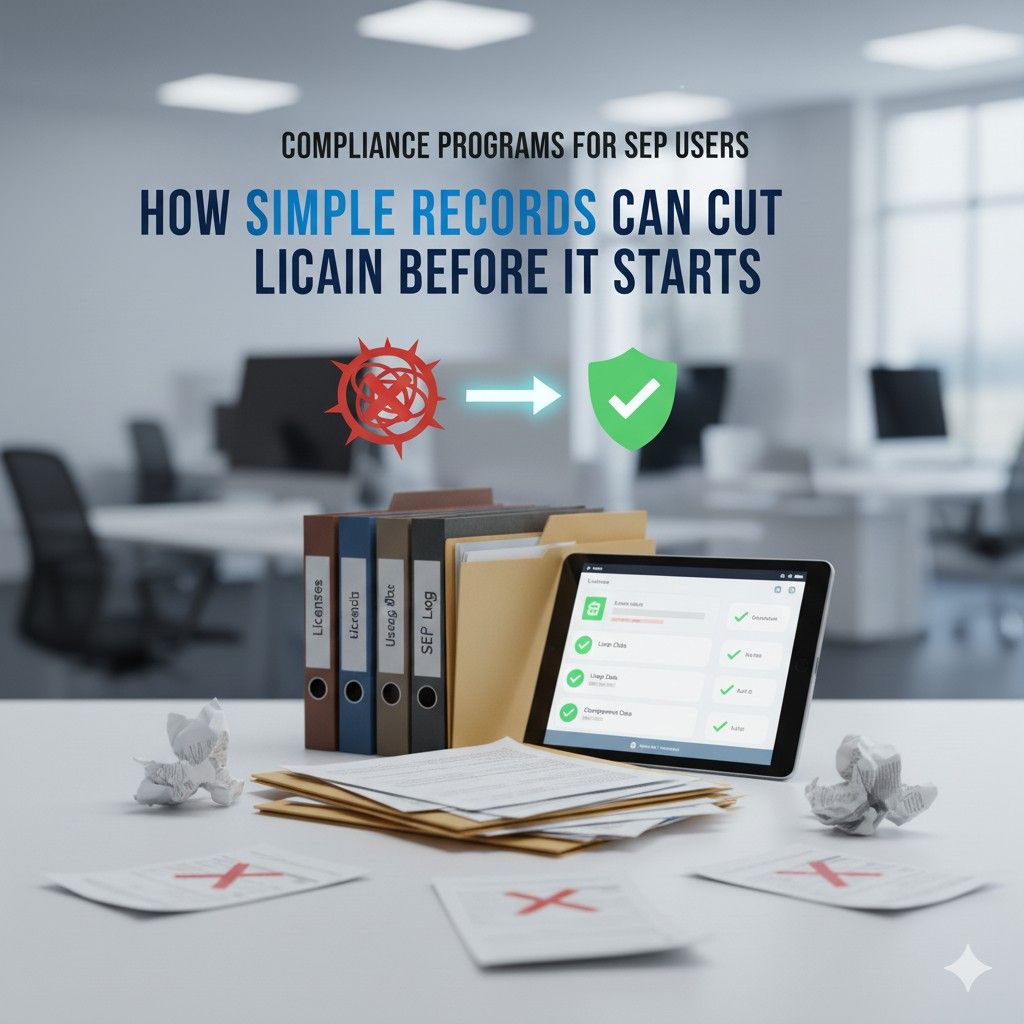
This approach turns record-keeping into leverage, not overhead. If you want to see how this works in real companies, you can explore it here: https://powerpatent.com/how-it-works
Wrapping It Up
By now, one thing should be clear. SEP compliance is not about fear. It is not about paperwork for its own sake. And it is not about slowing your company down. It is about staying in control when things get serious. Most SEP problems do not come from bad intent. They come from silence. From missing notes. From decisions that made sense at the time but were never captured. When pressure arrives, that silence becomes expensive. The companies that handle SEP issues well are not smarter or better funded. They are simply prepared. They can show what they did, when they did it, and why. That proof changes everything. Record-keeping is the quiet work that pays off loudly later. It protects your team. It strengthens your position. It shortens hard conversations. And it signals maturity to everyone who looks under the hood of your business.
Leave a Reply