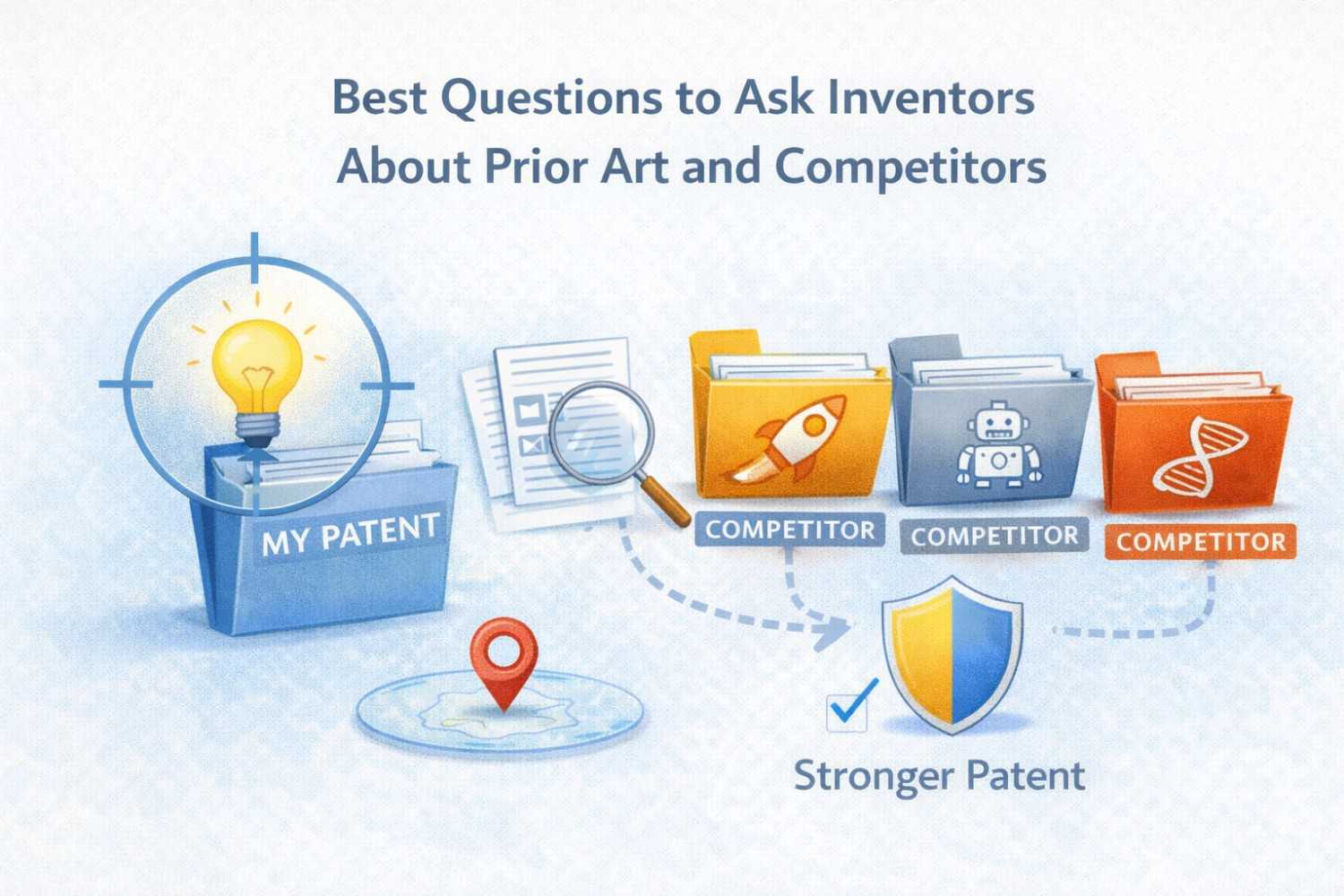
If you are building something new, you are not alone. Somewhere in the world, someone is working on something similar. That is not bad news. It is normal. The real risk is not competition. The real risk is not knowing what is already out there. If you want a strong patent that actually protects your work, you must ask the right questions about prior art and competitors before you file anything.
This guide will walk you through the best questions to ask inventors about prior art and competitors, so you can protect your idea the smart way and avoid painful mistakes later.
The Real Risk Is What You Don’t Know: Why Prior Art Can Make or Break Your Patent
Most founders think the biggest threat to their patent is a competitor copying them. That is not true.
The biggest threat is hidden information. It is the paper, the old patent, the research post, or the product from five years ago that looks close enough to block your claim.
If you do not find it early, it can destroy your patent later. Or worse, it can make your patent so weak that it gives you false confidence. This is why prior art is not just a legal issue.
It is a strategy issue. It decides how strong your protection will be, how much leverage you have with investors, and how hard it will be for others to work around you.
Let’s go deeper into what this really means for your business.
Prior Art Is Not the Enemy. It Is a Signal.
Most inventors react emotionally when they hear that something similar already exists. They feel disappointed. They assume their idea is no longer special.
That reaction is wrong.
Prior art is not proof that your idea is worthless. It is proof that the market cares. It shows that people have tried to solve this problem before. That is useful. It tells you where the line is drawn. Your job is to move that line.
When you ask inventors about prior art, you are not trying to disqualify their invention. You are trying to sharpen it. The goal is to understand what already exists so clearly that you can define exactly how your invention is different in a meaningful way.
This is where most patents fail. They describe a feature. They do not define a real technical difference. A strong patent makes it clear why the invention is not just another version of what came before.

If you want a defensible patent, you must treat prior art like a map. It shows you the boundaries. Once you see the boundaries, you can design your claims to sit in a strong position that others cannot easily attack.
If you want help doing this the right way, with smart software and real attorney oversight, you can see how PowerPatent works here: https://powerpatent.com/how-it-works
The Cost of Ignoring Prior Art
Many startups rush to file. They believe speed alone will protect them. Speed matters, but blind speed is dangerous.
If you file without understanding prior art, three bad things can happen.
First, your claims may be too broad. That sounds good at first. But broad claims that overlap with existing work will get rejected. You will spend time and money arguing.
Your launch gets delayed. Your focus shifts from building to fighting paperwork.
Second, your claims may be too narrow. This happens when founders are scared by prior art but do not fully understand it. They shrink their claims so much that competitors can easily design around them.
On paper, you have a patent. In reality, it does not stop anyone.
Third, you may build features that are already protected by someone else. That is a business risk. You could face legal pressure later. Investors may hesitate. Acquirers will ask hard questions.
The real cost is not the filing fee. The real cost is lost leverage.
Before you file anything, ask: what exact problem does this invention solve that others have not solved in the same way? If the answer is vague, you are not ready yet.
Asking the Right Questions Changes Everything
When working with inventors, the quality of the patent depends on the quality of the questions.
Instead of asking, “Has anyone done this before?” ask something deeper.
Ask, “What is the closest system you know that solves a similar problem?” This forces clarity.
Ask, “What does that system fail to do?” This reveals gaps.
Ask, “If you were forced to combine two existing solutions, would you still get your result?” This tests true novelty.
The goal is not to prove uniqueness. The goal is to isolate the real technical improvement.
A strong patent is built around a clear technical advantage. It is not built around a general idea.
At PowerPatent, we guide founders through this exact thinking process. Our software helps surface related patents and technical references, and real attorneys help interpret what they mean.

That combination helps you avoid filing weak claims and focus on what actually makes you different. You can explore the process here: https://powerpatent.com/how-it-works
Understanding the Difference Between Similar and the Same
Founders often say, “It looks similar, but ours is better.”
Better is not enough.
Patent law does not reward better. It rewards different in a specific way.
This is why your conversations about prior art must be precise. You must move from general comparisons to technical distinctions.
For example, if a prior system processes data, and yours also processes data, that is not enough. You need to define how the architecture differs. How the data flows.
How the model is trained. How the output is generated. What constraints are removed. What new capability is unlocked.
The difference must be concrete.
When reviewing prior art, ask the inventor to walk through both systems step by step. Map each step. Then identify where the path splits. That split is often the core of the patent.
If you cannot clearly explain the split in simple language, the patent will struggle.
How Prior Art Shapes Claim Strategy
Prior art does not just influence whether you can get a patent. It shapes how you draft it.
If the closest reference teaches A and B, and your invention adds C, your claims should focus on C in a way that makes it essential. If you ignore this and claim A and B broadly, you will hit a wall.
This is why prior art review should happen before claim drafting, not after. It is strategic positioning.
Think of it like building a house. Prior art defines where the solid ground is. You do not want to build on unstable soil.
A thoughtful prior art analysis lets you:
Refine your core technical contribution.
Align your claims with your real innovation.
Avoid unnecessary fights during examination.
Protect the parts that truly give you market power.

When done well, this work increases the speed of approval because your claims are built with awareness, not guesswork.
Turning Prior Art Into Competitive Insight
There is another hidden benefit here.
When you study prior art carefully, you are also studying your competitors.
Patents are public. They reveal what others are working on, how they think, and where they are investing.
This is free intelligence.
Instead of fearing it, use it.
If you see that a competitor has protected a certain architecture, you can design around it early. If you notice that most patents in your space focus on one approach, you can explore a different angle.
This reduces future legal friction and increases strategic freedom.
Ask yourself: are we building in a crowded zone, or are we carving out new territory?
The more you understand the existing landscape, the more intentional your roadmap becomes.
Why Founders Need Structure, Not Just Search Results
Some founders try to search patents on their own. That is a good start. But raw search results are not strategy.
The real value comes from interpretation.
You need to understand not just what was filed, but what was actually claimed. You need to see what was rejected. You need to know how examiners view certain combinations.
This is where having both smart tools and real patent attorneys matters.
PowerPatent combines software that surfaces relevant references with experienced attorneys who help you interpret them and adjust your claims accordingly. This hybrid approach helps you move fast without sacrificing quality.
It is not about filing more patents. It is about filing the right ones.
If you are serious about protecting what you are building, take a closer look at how we help founders do this efficiently and with confidence: https://powerpatent.com/how-it-works
Prior Art Awareness Builds Investor Confidence
Investors ask hard questions.
They want to know if your moat is real. They want to know if you can defend your space.
If you cannot explain how your invention differs from what already exists, that is a red flag.
But if you can clearly describe the closest prior art and explain, in simple terms, how your system improves on it in a specific technical way, that builds trust.
It shows that you understand your market deeply. It shows that your patent is not a random filing, but a strategic asset.
This is the difference between saying, “We have a patent pending,” and saying, “We have protected a specific technical breakthrough that competitors cannot easily copy.”

The second statement carries weight.
And it starts with asking the right questions about prior art.
The Questions Every Founder Must Ask Before Filing Anything
Filing a patent should never be your first move. It should be your informed move. The difference matters. A rushed filing often locks you into weak language, vague claims, and protection that does not match your real product.
A thoughtful filing, on the other hand, creates leverage. It gives you control. It makes your company harder to copy and easier to fund.
Before you file anything, you need to slow down just enough to ask the right questions.
Not surface questions. Not generic questions. The kind of questions that force clarity about what you are truly building and how it stands apart from what already exists.
This is where strong patents are born.
What Problem Are We Actually Solving?
Many founders describe their invention by talking about features. Features are not the core. The core is the problem.
If you cannot clearly describe the exact problem your system solves, you cannot define how it is different from prior art.
Ask yourself, what is broken in the current way of doing this? Where do existing systems fail? Where do they waste time, lose accuracy, create friction, or cost too much?
Force the answer to be specific.
If your answer sounds like marketing copy, it is not good enough. It should sound technical but simple. Clear enough that a smart engineer in another company could understand it.

When you anchor your patent around a clearly defined technical problem, everything else becomes easier. The claims become focused. The novelty becomes visible. The value becomes obvious.
If This Already Exists, How Is Ours Technically Different?
This is the question most founders avoid because it is uncomfortable.
You need to assume that something similar exists. Now ask, in what exact way is ours not the same?
Not better. Not faster. Not cleaner. Different.
Walk through the system step by step. Compare architecture. Compare data flow. Compare processing logic. Compare output generation.
If the difference is just a tuning parameter or a cosmetic change, that is not enough. If the difference changes how the system operates at a core level, that is interesting.
Push deeper. If you removed your key technical improvement, would the system still function in the same way? If yes, your improvement may not be central. If no, you may have found the heart of your patent.
This kind of thinking prevents weak filings. It forces you to isolate the real innovation.
At PowerPatent, we guide founders through this exact process so that the patent matches the real technical edge of the product. You can see how we do it here: https://powerpatent.com/how-it-works
What Would a Competitor Change to Avoid Our Patent?
This is one of the most powerful questions you can ask before filing.
Imagine your smartest competitor reads your future patent. They want to copy your success without infringing. What would they tweak?
Would they change the order of steps? Replace one module? Swap out a data source? Use a different training method?
If it is easy to design around your core idea, your claims need to be stronger.
This exercise forces you to think like an attacker. It shows you where your protection might have holes. It helps you draft claims that cover variations, not just one narrow implementation.
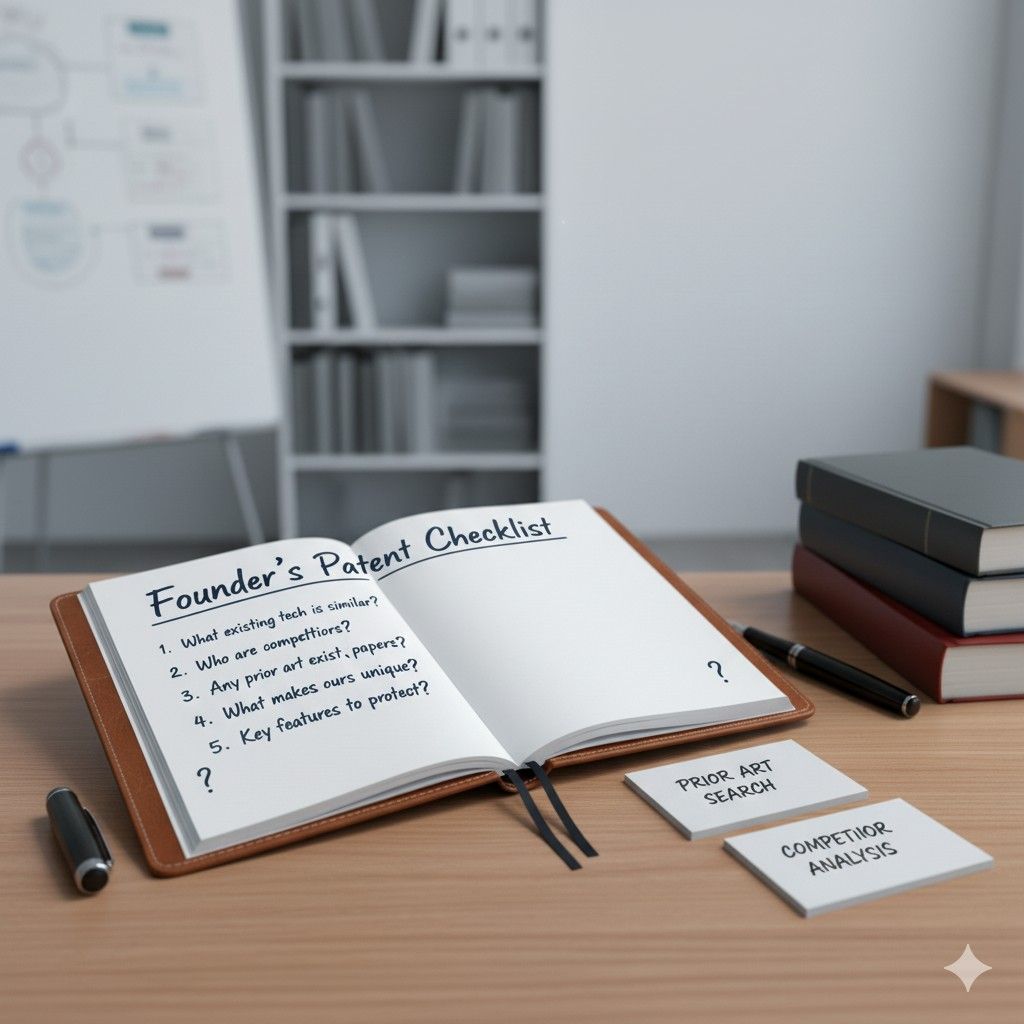
Strong patents anticipate workarounds.
When founders skip this thinking, they end up with patents that look impressive but fail under pressure.
Are We Protecting the Product or the Platform?
Sometimes what you are building today is just the first version of something much bigger.
If you file too narrowly around your current product, you may block yourself later. Your future features may fall outside your own patent coverage.
Before filing, ask yourself whether the invention is a single feature or part of a broader platform approach.
If your core insight can apply to multiple use cases, industries, or system types, your patent strategy should reflect that. The claims should be structured to protect the underlying method, not just one use case.
This requires careful framing. It requires thinking beyond the next release cycle.
That is why having real patent attorneys involved matters. Software alone cannot see your long-term roadmap.
At PowerPatent, we combine intelligent drafting tools with attorney oversight to make sure your protection scales with your vision. Learn more here: https://powerpatent.com/how-it-works
What Have We Publicly Disclosed Already?
Many founders forget this step.
Have you published a blog post explaining your system? Presented at a conference? Shared technical details in a whitepaper? Open-sourced part of the code?
Public disclosures can affect your patent rights, especially outside the United States.
Before filing, gather everything you have shared publicly. Review it carefully. Make sure your patent application fully captures and expands on what has been disclosed.
If you fail to include key details, you may lose the ability to claim them later.
This is not about fear. It is about awareness.

Your patent should be stronger than your public description. It should go deeper. It should reveal the technical logic in a way that supports strong claims.
What Evidence Do We Have That This Is New?
Do not rely on instinct. Do not rely on hope.
Search existing patents. Search research papers. Search product documentation. Look at GitHub repositories. Study competitor blogs.
When you find similar systems, do not panic. Study them.
Print them out. Highlight the steps. Compare them line by line with your system. Write down the differences in simple language.
This exercise builds conviction. If your differences are real and meaningful, you will see them clearly. If they are minor, you will know you need to refine your invention before filing.
Doing this work before drafting saves enormous time later.
It also leads to stronger discussions with your patent team because you are not guessing. You are operating from evidence.
Is This the Right Time to File?
Timing is strategy.
If your system is still changing weekly, filing too early may lock you into outdated language. If you wait too long and start disclosing widely, you may lose options.
The right time to file is when your core technical approach is stable enough to describe clearly, but early enough that competitors have not caught up.
Ask yourself whether the main architecture is settled. Ask whether your key technical insight is unlikely to change in the next few months.
If the answer is yes, it may be time.
With the right support, filing does not have to slow you down. At PowerPatent, our process is built for speed without sacrificing quality, so founders can keep building while securing protection. You can explore how it works here: https://powerpatent.com/how-it-works
If This Patent Is Granted, What Power Does It Give Us?
This final question brings everything together.
Imagine your patent is granted. What can you actually stop others from doing? What leverage does it give you in partnerships, fundraising, or acquisition talks?
If the answer is unclear, your strategy needs refinement.
A patent is not a trophy. It is a tool.
It should block competitors from copying your key advantage. It should make your technical approach expensive to replicate. It should strengthen your negotiation position.
When you ask these questions before filing, you shift from reactive protection to strategic protection.
You stop filing because you feel you should. You start filing because you know exactly what you are securing.
That shift is what separates startups with paper patents from startups with real defensible IP.

If you would like, I can continue with the next section and go even deeper into competitor analysis and how to turn that knowledge into stronger claims.
How to Spot Competitors Early and Turn That Knowledge Into a Stronger Patent
Most founders think they know who their competitors are.
They name two or three startups they see on social media. Maybe a large company in the space. Maybe a research lab.
That is surface-level awareness.
Real competitor insight goes deeper. It includes companies you have never heard of. It includes patent filings that have not turned into products yet. It includes teams quietly building in the same technical area but solving the problem in a slightly different way.
If you wait until launch day to discover them, you are late.
If you spot them early, you gain power.
The goal is not to obsess over competition. The goal is to use competitor knowledge to shape a patent that is harder to attack, harder to design around, and far more valuable.
Let’s break down how to do this in a practical way.
Competitors Are Not Just Companies With Similar Websites
When founders think about competitors, they often focus on product similarity.
That is only one layer.
Your real competitors are anyone solving the same core technical problem, even if the use case looks different on the surface.
For example, if you built a new way to compress model weights for faster inference, your competitor may not market to your same customer. But if they use a similar compression method, they matter to your patent strategy.
So the first shift is this: stop defining competitors by branding. Start defining them by technical overlap.
Ask yourself what technical space you are in. Is it distributed data processing? Edge AI optimization? Real-time fraud detection? Autonomous control systems?
Now look at who is filing patents and publishing research in that exact space.
Those are your real competitors.
When you identify them early, you can study how they claim their inventions. You can see what they focus on and what they ignore. That insight helps you carve out stronger ground.

At PowerPatent, our tools help surface not just obvious competitors but also hidden ones through patent data and technical mapping, all backed by real attorney guidance.
If you want to see how that works, you can explore it here: https://powerpatent.com/how-it-works
Patent Filings Reveal Future Competitors
Some of your biggest competitors may not have launched yet.
But they may already be filing.
Patent applications are often published before products hit the market. That means you can see where others are heading months or even years in advance.
This is free strategic intelligence.
Instead of just asking who sells something similar today, ask what has been filed recently in your technical area.
Look at new patent publications. Read their claims. Study their diagrams.
You may discover that a large company is investing heavily in a direction that overlaps with your roadmap. Or you may find that a startup is protecting an approach very close to yours.
This changes how you file.
If you see that others are claiming a certain architecture, you can focus your patent on a different structural advantage. If they emphasize one type of model training, you can highlight a different training pipeline or optimization method.
The goal is not to copy or react blindly. The goal is to position your invention where it stands out clearly.
This reduces the chance of rejection. It reduces the chance of conflict. And it increases the clarity of your technical contribution.
Read Claims, Not Just Abstracts
One common mistake founders make is reading only the summary of a competitor’s patent.
Abstracts are broad and often vague. They are written to sound impressive.
The real protection lives in the claims.
Claims define the legal boundary. They show what the company can actually enforce.
When you study competitor patents, go directly to the claims section. Read them slowly. Break them down into steps. Translate them into plain language.
Ask yourself what exact sequence of actions or system components they are protecting.
Then compare that to your own system.
Where do you overlap? Where do you diverge?
This is not busy work. This is strategic groundwork.
If you discover that a competitor has claimed a specific workflow, you can avoid building your patent around the same workflow. Instead, you can highlight the distinct path your system takes.
This makes your patent cleaner and more defensible.
At PowerPatent, we help founders interpret competitor claims in simple language so they understand what is actually covered and where there is room to innovate.
That mix of AI tools and real attorney insight gives clarity that most startups never get. Learn more here: https://powerpatent.com/how-it-works
Spotting Design Patterns Across Competitors
When you analyze several competitors, patterns emerge.
You may notice that most patents in your space rely on a central server architecture. Or they depend on labeled data. Or they assume a specific hardware constraint.
These patterns reveal assumptions.
Assumptions create opportunity.
If everyone in your field is solving the problem in one way, there may be space to protect a fundamentally different approach.
For example, if most systems rely on batch processing, can you protect a real-time streaming architecture? If others depend on supervised learning, can you claim a self-supervised method that changes the training flow?
The key is to look for repetition.
Repetition signals crowding.

Where the crowd gathers, claims get narrower and harder to defend. Where few have ventured, claims can be broader and stronger.
This is how competitor awareness directly shapes patent strength.
Turning Competitive Insight Into Broader Claims
Once you understand what competitors are doing, the next step is not to narrow your patent. It is to strengthen it.
If you see that others focus on a specific embodiment, think about whether your invention can be described at a more fundamental level.
Instead of claiming a narrow implementation detail, can you describe the core mechanism in a way that covers multiple implementations?
For example, instead of claiming a specific neural network structure, can you claim the method of transforming input data using a dynamic constraint model that applies regardless of the exact network type?
This requires careful drafting.
You must stay honest to what you actually invented. But within that truth, there is room to frame the invention at the right level of abstraction.
Too narrow and competitors slip around you.
Too broad and the examiner pushes back.
The sweet spot comes from understanding the landscape first.
This is why competitor analysis and claim drafting should not be separate steps. They should inform each other from day one.
Using Competitor Weaknesses to Strengthen Your Story
Competitor patents often expose their blind spots.
They may ignore performance trade-offs. They may not address scalability. They may rely on assumptions that break under certain conditions.
If your invention solves one of those weaknesses, that becomes powerful.
Not just for your patent, but for your business narrative.
When drafting your patent, clearly explain the technical limitation in existing approaches and how your system overcomes it.
Do not attack specific companies by name. Focus on technical gaps.
This does two things.
First, it strengthens your case during examination because you are clearly defining the problem and your solution.

Second, it creates a strong story for investors and partners. You are not just building something new. You are fixing something broken in current systems.
That is compelling.
Competitor Awareness Reduces Legal Surprises
No founder wants to receive a surprise legal letter.
Early competitor analysis reduces that risk.
If you understand what others have already protected, you can design your product in a way that avoids direct conflict.
This does not mean being fearful. It means being intentional.
Freedom to operate matters. So does strategic positioning.
When you combine competitor insight with thoughtful patent drafting, you create a stronger shield and a clearer path forward.
At PowerPatent, we help startups think about both protection and positioning from the start. Our platform is built to move fast while staying strategic, so you are not left guessing about what others have claimed.
If you are building something important, it is worth doing this right. You can see how we support founders here: https://powerpatent.com/how-it-works
The Real Advantage: Confidence
In the end, spotting competitors early is not about paranoia.
It is about confidence.
When you know who is in your space, what they have filed, and how your invention differs, you move differently.
You pitch with clarity.
You build with intention.
You file with precision.
You stop hoping your patent will hold up. You know why it should.

That confidence becomes part of your company’s foundation.
And it starts with asking better questions about prior art and competitors before you ever hit submit on a patent application.
Wrapping It Up
Most startups do not lose because they lacked talent. They lose because they moved fast without protecting what mattered. A patent is not paperwork. It is leverage. It is protection. It is a signal to the market that what you built is real and defensible. But that only happens when you ask the hard questions early.
Leave a Reply