
Every startup has two documents that decide its future, even if founders do not realize it at first. One is the cap table. The other is the ownership of the IP. Most teams obsess over the cap table. Who owns what. How much is vested. What happens if someone leaves. These are normal questions. They feel real because they tie directly to money. IP ownership often feels abstract. It lives in folders, repos, decks, and heads. It feels like something you can clean up later. That belief quietly kills deals, delays funding, and blows up exits.
When Work Starts Before Ownership Is Clear
This is where most IP problems begin. Not in bad intent, but in speed. A company starts moving before the paperwork does. Someone writes code over a weekend. A model gets trained before incorporation.
A deck turns into a product while equity is still a conversation. By the time the company feels real, the work is already done.
This section is about that early gap. The space between creation and ownership. It explains why this gap is dangerous, how it shows up later, and what smart teams do to close it without slowing down.
The First Line of Code Often Comes Too Early
Most startups do not begin with a signed agreement. They begin with curiosity and momentum. A founder opens a laptop and starts building. A friend helps shape an idea. A future co-founder adds logic or structure before roles are defined.
The problem is not that work starts early. The problem is that ownership does not start at the same time. In most places, the person who creates something owns it by default. That is true even if everyone “knows” it is for the company. Intent does not transfer ownership. Paper does.
If the first code, design, or system is created before the company exists or before assignment language is signed, that work lives outside the company. Later agreements do not always fix this cleanly. Especially if the person leaves, disagrees, or becomes unreachable.
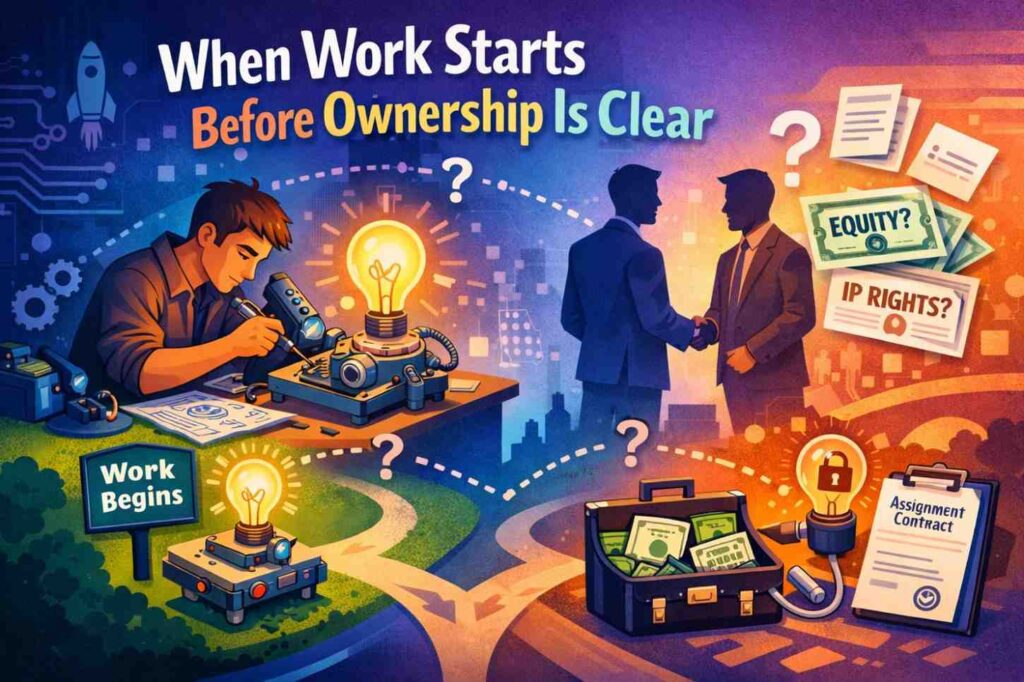
The most practical move is to treat ownership as something that must exist before creation, not after. Even a simple invention assignment signed early can save months of cleanup later.
Pre-Incorporation Work Is Still Real IP
Many founders assume that once the company is formed, all earlier work magically becomes company property. That is not how it works. Pre-incorporation IP is owned by the people who made it unless it is clearly assigned to the company after formation.
This shows up during diligence. An investor asks where the core technology came from. The answer is “before we incorporated.” The next question is whether that work was assigned to the company. Silence at that moment is expensive.
The fix is not complicated, but it must be deliberate. Founders should document what was created before incorporation and formally assign it to the company as soon as the entity exists. Waiting increases risk. Memory fades. People leave. Assumptions turn into disputes.
Teams that handle this early look clean and credible. Teams that ignore it look sloppy, even if the tech is strong.
Friends, Helpers, and Early Contributors Create Real Risk
Early-stage companies often rely on help. A friend reviews architecture. A former coworker writes a script. An advisor suggests an approach and refines it over a few calls. These contributions feel informal, but they can still create ownership claims.
If someone contributes original expression or problem-solving, they may be a creator. If they are a creator, they may be an inventor. If they are an inventor, they may own rights.
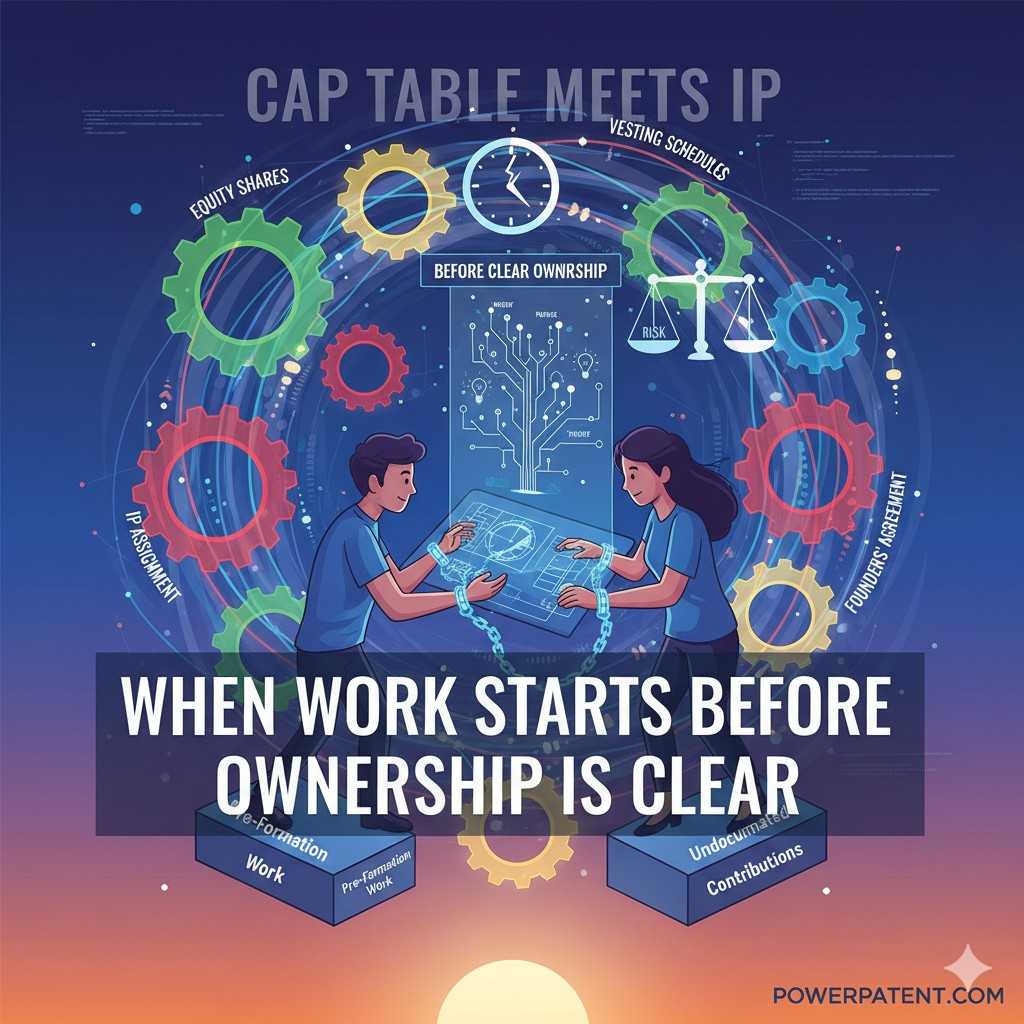
The danger is not that these people will come after you. The danger is that investors will notice they could. That possibility alone can delay or kill a deal.
The safest approach is to treat any meaningful contribution as something that requires a written assignment. This does not mean making things awkward. It means being clear. Clear ownership is a sign of a serious company, not an untrusting one.
Contractors Are Not Automatically Safe
Many founders believe that paying someone means the company owns the work. That belief is wrong more often than people think. In many cases, contractors own what they create unless the contract clearly assigns ownership to the company.
This becomes a major issue when contractors work on core systems. Code, models, hardware designs, and internal tools all count. If assignment language is missing or weak, the contractor may legally own part of your product.
Fixing this later can be painful. Contractors may ask for payment. They may refuse. They may be gone. Investors will notice.
The strategic move is to never let a contractor touch core IP without a signed agreement that clearly assigns all rights to the company. This should happen before work starts, not after delivery.
Vesting Does Not Equal Ownership Transfer
Equity vesting is often misunderstood. Vesting controls who keeps shares over time. It does not automatically transfer IP ownership. A founder can vest zero shares and still own the IP they created if it was never assigned.
This creates a dangerous mismatch. The cap table says one thing. The IP reality says another. When a founder leaves early, the company may lose both equity and technology.
The only way to align vesting with ownership is through proper assignment that exists from day one. Vesting should control equity incentives. Assignment should control IP ownership. They solve different problems.
Companies that mix these concepts often find out too late that they protected the wrong thing.
Timing Mistakes Compound Quietly
The most painful IP issues are not loud. They do not cause immediate failure. They sit quietly while the company grows. Then they surface during fundraising, acquisition talks, or patent filings.
At that point, fixing timing mistakes costs more. It takes longer. It may require special approvals or disclosures. In some cases, it cannot be fixed at all without weakening the company’s position.

The strategic advantage comes from treating timing as a core discipline. Ownership should be locked before creation. Assignments should be signed before access. Clean records should exist before questions are asked.
This mindset does not slow teams down. It removes future friction.
Patents Make Timing Errors Visible
Patents force clarity. They require named inventors. They require ownership chains. They surface gaps that internal teams may have ignored.
If an inventor was not properly assigned at the time of creation, that patent can become fragile. Fixing inventorship after the fact is possible, but it raises questions. Those questions show up in diligence.
This is why patent strategy cannot be separated from cap table and assignment timing. Filing strong patents requires knowing exactly who created what and who owns it.
PowerPatent helps teams align these pieces early. It connects real work to real ownership and makes sure patents reflect the company, not loose history. If you want to see how that alignment works without slowing your team down, you can explore it here: https://powerpatent.com/how-it-works.
The Founder’s Role Is to Close the Gap Early
Founders often delay ownership conversations because they want to move fast. The reality is that clarity makes speed sustainable. Clear ownership removes doubt. It builds trust with investors. It protects the company when people change.
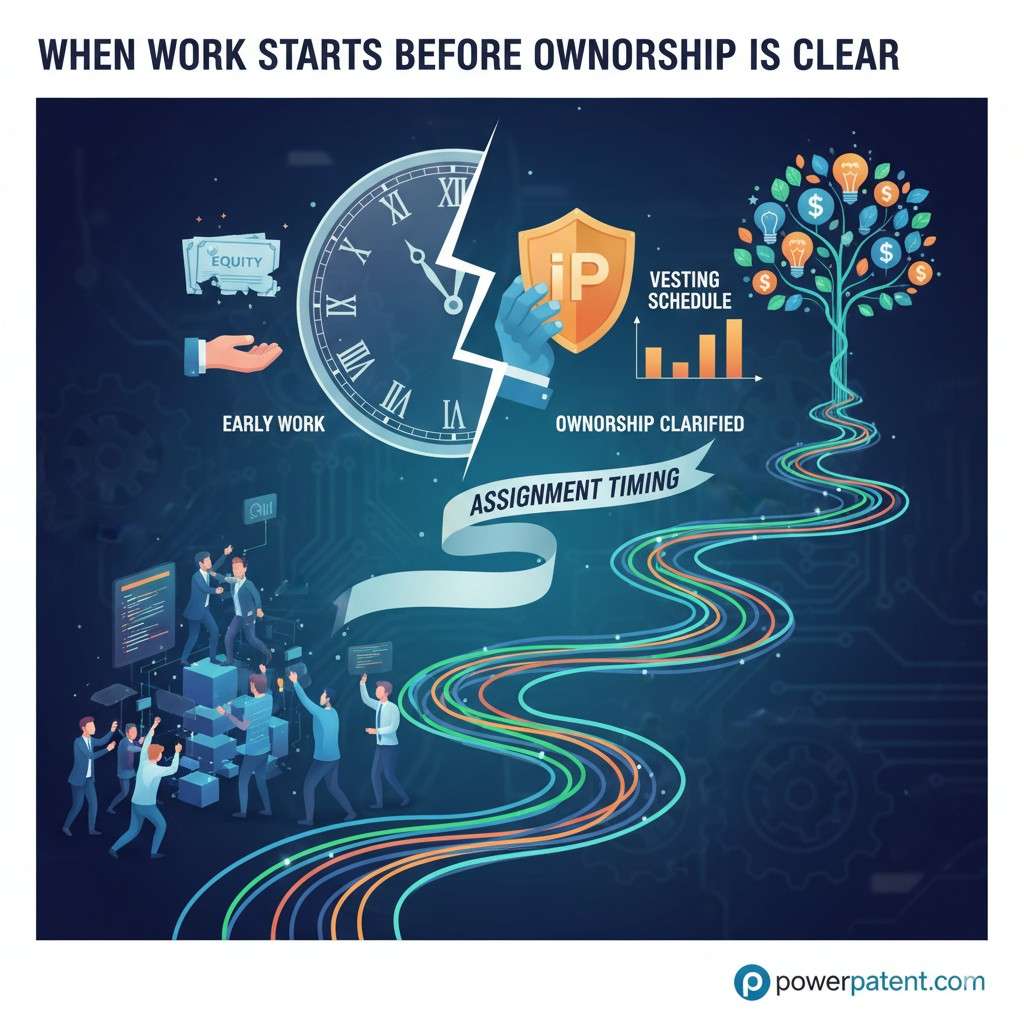
The most effective founders treat IP ownership like they treat their cap table. They review it. They update it. They make sure it reflects reality.
Vesting Schedules Do Not Protect IP by Themselves
Vesting feels like a safety net. Founders believe it protects the company if someone leaves early. Investors like seeing it.
Lawyers insist on it. But vesting only controls equity. It does not control ownership of ideas, code, models, designs, or inventions.
This section explains why vesting alone is not enough, how this misunderstanding causes real damage, and what companies must do to make sure equity rules and IP reality actually match.
Why Vesting Exists and What It Really Does
Vesting was designed to solve a human problem, not a technical one. It makes sure people earn their shares over time. It rewards commitment. It discourages early exits with full ownership.
What vesting does not do is reach backward into what someone created. It does not automatically move inventions into the company. It does not erase personal ownership of work done outside a proper assignment.
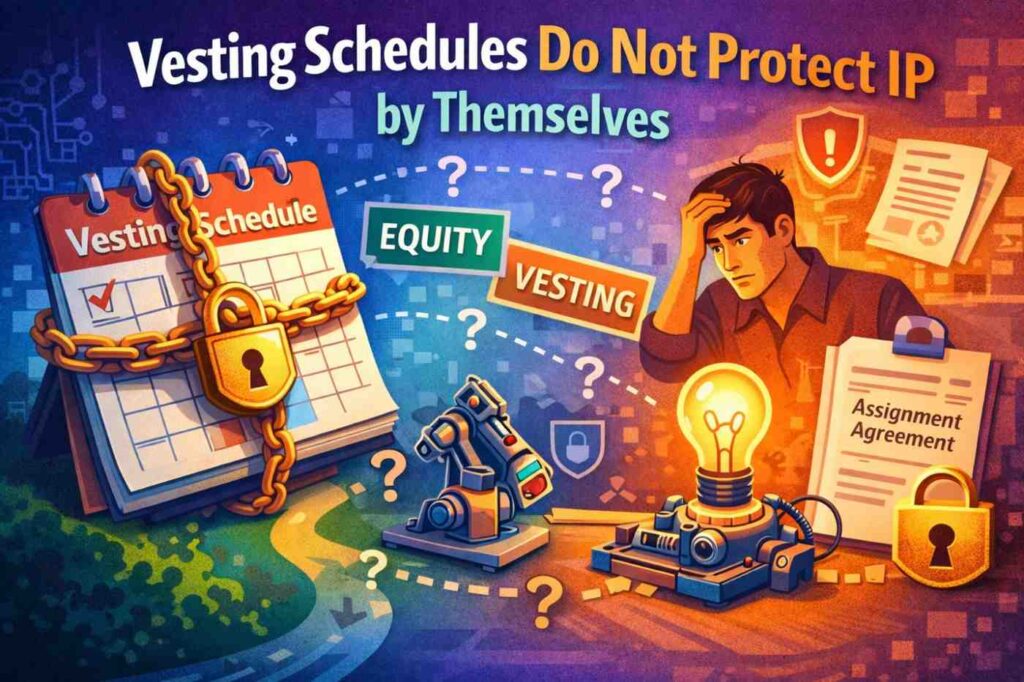
This gap matters because most of a startup’s value is not the shares. It is the technology behind them.
The Common Founder Assumption That Causes Trouble
Many founders assume that if a co-founder leaves unvested, the company is safe. They think the company “gets everything back.” In reality, the company only gets the shares back.
If the departing founder created key parts of the product and never assigned them properly, they may still own that IP. The company now has the equity but not full control of what it builds on.
This mismatch can quietly block growth. The company may not be able to license, sell, or patent its own work without risk.
How Early Departures Turn Into Long-Term Risk
When someone leaves early, emotions are high. Teams move on quickly. Rarely does anyone pause to review IP ownership line by line.
Years later, that early departure shows up in diligence. An investor asks whether all inventors assigned their rights. A patent examiner asks for confirmation. An acquirer’s lawyer flags a gap.

At that point, tracking down a former founder can be hard. They may be busy. They may want leverage. They may refuse to cooperate without compensation.
The cost of fixing this later is always higher than doing it right at the start.
Vesting and Assignment Must Start on the Same Day
The cleanest companies align timing perfectly. The same day equity vesting starts is the day IP assignment starts. There is no gap. There is no ambiguity.
This does not require heavy process. It requires discipline. Every founder, employee, and contractor signs an agreement that clearly assigns all relevant IP to the company from day one.
This way, vesting controls incentives, and assignment controls ownership. Each tool does its job. Neither is stretched beyond its purpose.
Why “We’ll Fix It Later” Rarely Works
Founders often plan to clean up IP once the company is bigger. That moment rarely comes. There is always another sprint, another hire, another deadline.
The longer you wait, the more work piles up. More contributors. More versions. More uncertainty about who created what and when.
Later fixes rely on memory and goodwill. Early fixes rely on clarity and routine. Smart teams choose the second option.
Employees Are Not Automatically Covered Either
Full-time employees feel safer than contractors, but the same rules apply. Without a clear invention assignment, an employee may still own what they create.
Many founders assume offer letters are enough. They are not, unless they include strong assignment language. Even then, timing matters. Work done before the agreement may sit outside the company.

This becomes especially risky when early employees help define core systems or architecture. Losing clarity there can weaken the company’s entire foundation.
Patents Expose Vesting Misunderstandings Fast
Patents require you to name inventors accurately. They do not care about vesting schedules. They care about who actually created the invention.
If an inventor left unvested but still owns the IP, that must be addressed. If it is not, the patent can be challenged or devalued.
This is why patent strategy forces honesty. It does not allow fuzzy thinking about ownership. It makes companies confront reality.
PowerPatent is built around this reality. It helps teams capture inventorship correctly and align it with company ownership early, before mistakes become expensive. You can see how that works here: https://powerpatent.com/how-it-works.
Investors Notice the Difference Immediately
Experienced investors can spot vesting-only protection fast. They ask simple questions. Who created the core tech? When did they assign it? Is there a clean chain of ownership?
Companies with clear answers move faster. Companies with vague answers slow the process. Some never recover momentum.
This is not about legal perfection. It is about trust. Clear ownership signals discipline and maturity.
Making Vesting and IP Work Together
The goal is not complexity. The goal is alignment. Equity tells the story of incentives. IP tells the story of ownership. Both must match the reality of who built what.
When these systems support each other, companies scale with confidence. When they drift apart, problems hide until the worst possible moment.

Vesting does not protect IP by itself. Assignment does. The strongest teams understand this early and act on it without hesitation.
Why Assignment Timing Decides Who Really Owns the Company
Ownership is not decided by intent. It is decided by timing.
Not who planned to assign IP, not who meant to clean it up later, but who actually signed and when. In fast-moving startups, this detail is easy to miss. It is also one of the most expensive mistakes a company can make.
This section explains why timing matters more than wording, how small delays change ownership outcomes, and how strong companies design assignment timing as part of how they build.
Ownership Is Set at the Moment of Creation
The law treats creation as the starting line. The moment an invention is made, ownership attaches to the creator. Everything that happens after that is a transfer, not an origin.
If assignment is signed after creation, it must clearly cover past work. Even then, it can raise questions. Was everything included? Was the inventor aware? Was the company already formed?
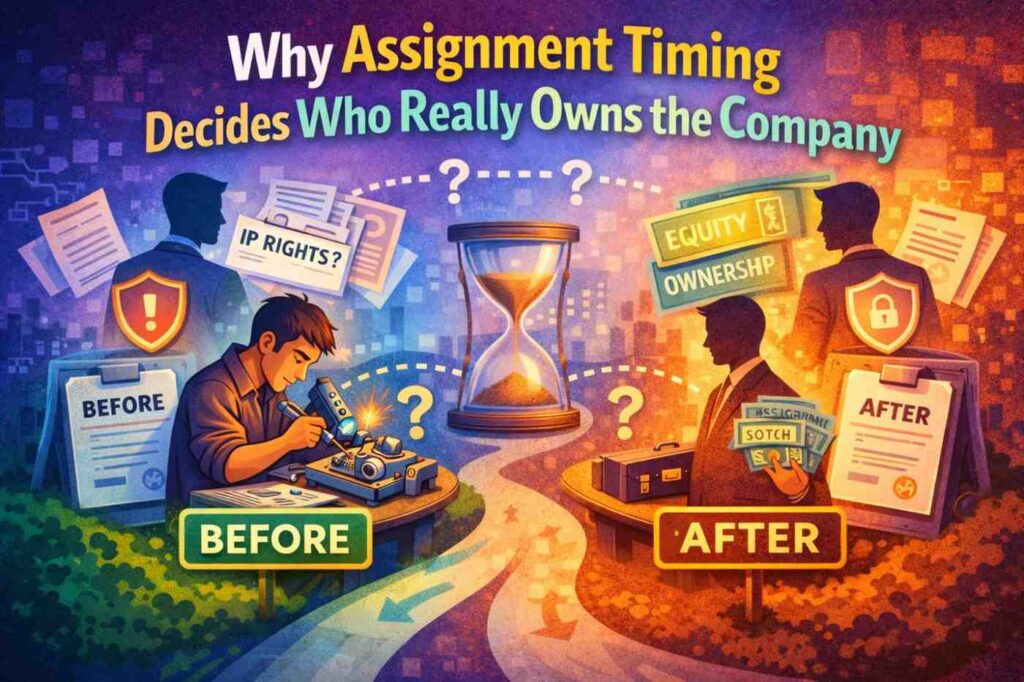
When assignment is signed before work begins, none of those questions exist. Ownership flows cleanly from the start.
Delayed Assignment Creates Hidden Personal IP
When someone starts working before signing an assignment, they are building personal IP, even if they never think of it that way. The company may use the work, depend on it, and build on it, but ownership remains personal until transferred.
This is how founders accidentally create companies that run on borrowed IP. Everyone assumes the company owns it, but legally it does not.
These gaps often stay invisible until an outside party looks closely. That is when assumptions break.
The “Catch-Up Assignment” Problem
Many teams rely on catch-up assignments. They realize something is missing and ask contributors to sign paperwork covering past work.
Sometimes this works. Sometimes it does not. Contributors may ask questions. They may want compensation. They may have leverage they did not have before.
Even when signed, catch-up assignments can be weaker. They may be challenged. They may require disclosures. They may complicate patent filings.
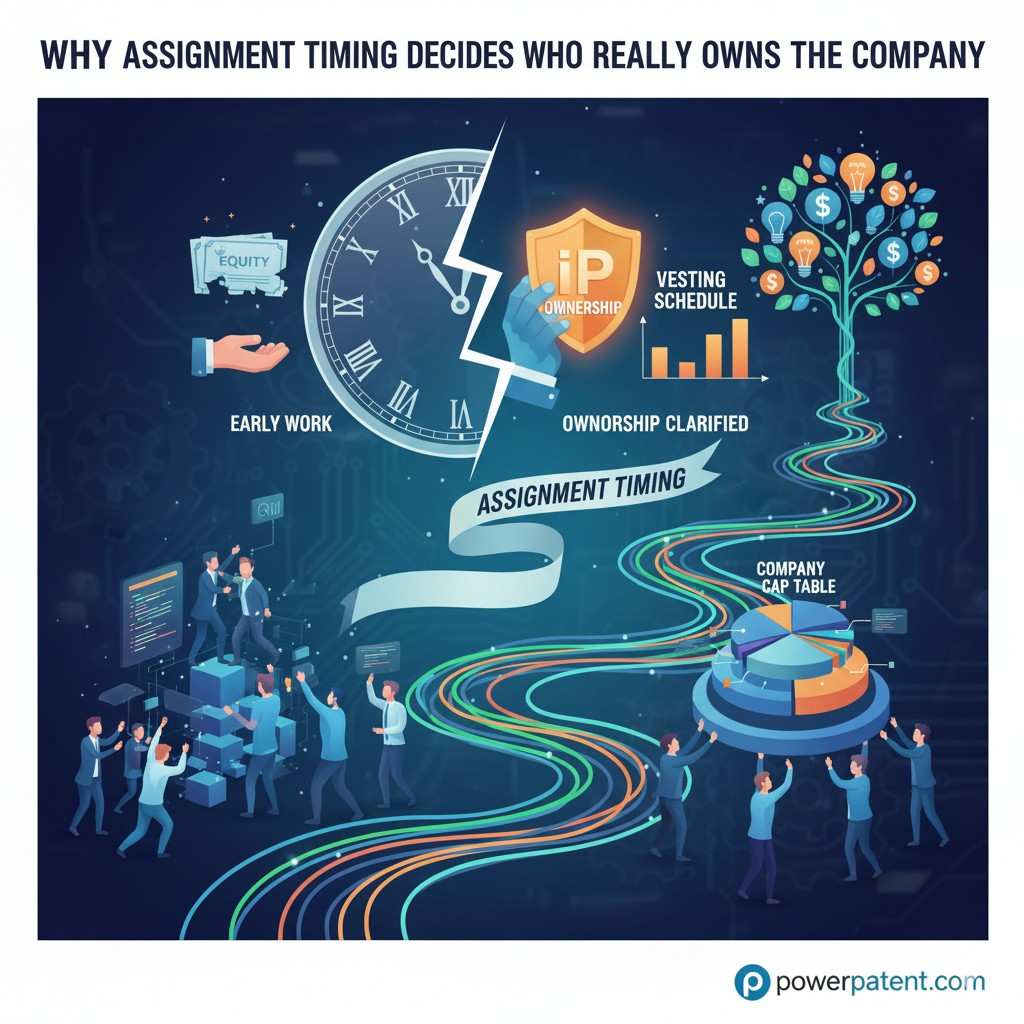
The cleaner path is to never rely on catch-up in the first place.
How Assignment Timing Affects Control, Not Just Ownership
Ownership determines control. If the company does not fully own its IP, it may not be able to license it, sell it, or enforce it without permission.
This becomes critical in acquisitions. Buyers want certainty. They do not want to negotiate with former contributors. They want a clean handoff.
If assignment timing was sloppy, control becomes shared or unclear. That uncertainty lowers value.
Founders Often Create Risk Before the First Hire
Many assignment problems start before the first employee joins. Founders brainstorm, prototype, test, and refine ideas long before documents are signed.
If founders do not assign their early work to the company at formation, the company starts life without owning its core invention.
Fixing this later is possible, but it introduces risk where none needed to exist.
Advisors and Mentors Can Also Affect Timing
Advisors often contribute early. They suggest features, refine approaches, and sometimes help solve hard problems.
If their contribution crosses into creation, timing matters. If assignment is never discussed, ownership can be unclear.
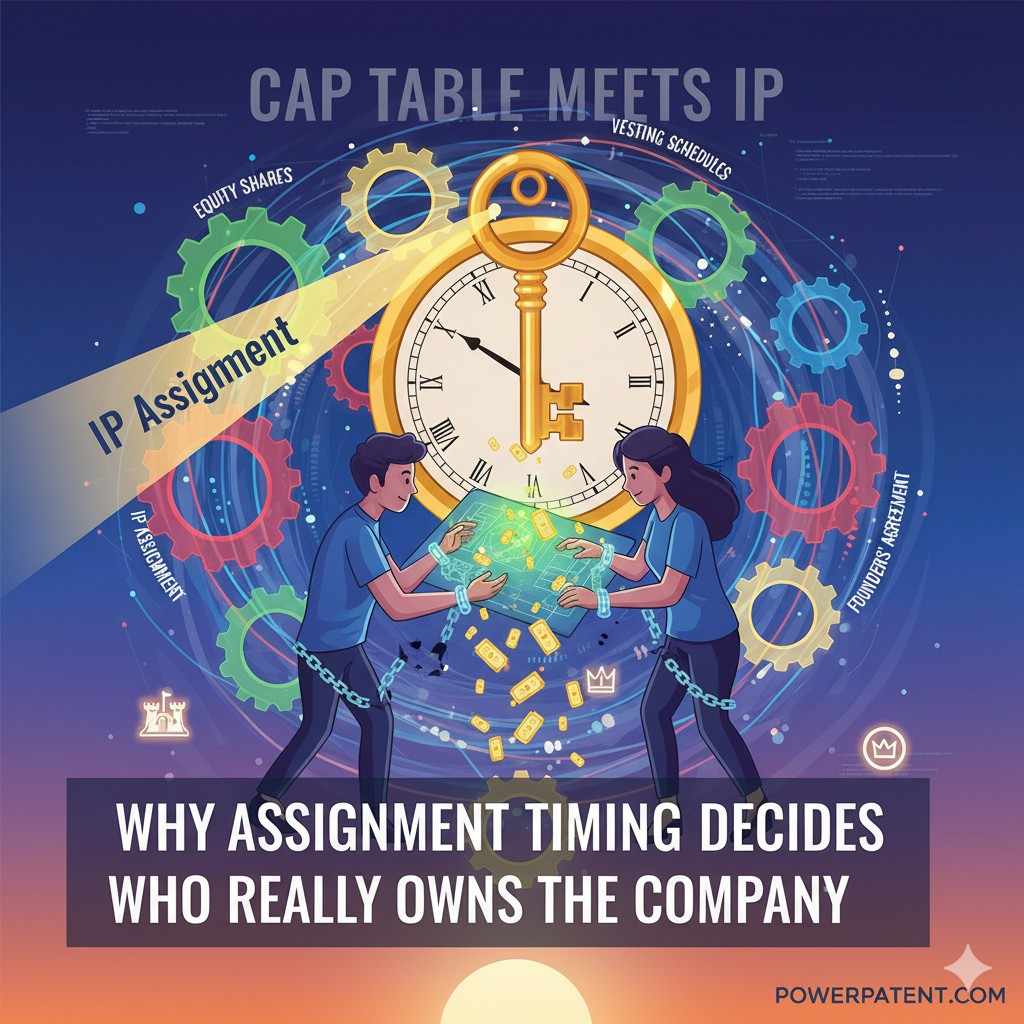
Clear boundaries and early paperwork protect both sides. Advisors want clarity too, even if they do not ask for it.
Patent Filings Freeze Timing in Place
Patent applications lock in dates. They capture who invented what and when. If assignment did not exist at the right time, that record reflects it.
Trying to adjust ownership after a patent is filed can be complicated. It may require additional filings. It may raise questions during review.
Strong teams align assignment timing before patent work begins. This keeps filings clean and defensible.
PowerPatent helps teams do this naturally. By connecting invention capture with ownership checks, it reduces timing risk without adding friction. You can see how that works here: https://powerpatent.com/how-it-works.
Speed Does Not Have to Mean Sloppiness
Many founders worry that early paperwork slows them down. In practice, it does the opposite. It removes future blockers.
Clear assignment timing means fewer questions later. Fewer delays. Fewer renegotiations.
It lets teams move fast with confidence, not hope.
The Company Is Defined by What It Owns
A company is not its pitch. It is not its logo. It is what it owns and controls.

Assignment timing decides that reality. Get it right early, and everything else becomes easier. Get it wrong, and success becomes harder than it needs to be.
Wrapping It Up
Every startup story is built on speed. Speed to market. Speed to learning. Speed to growth. But ownership does not reward speed without structure. It rewards clarity at the right moment. Cap tables tell one story. IP tells another. When those stories match, companies move forward with confidence. When they drift apart, problems wait quietly until the worst possible time. Fundraising. Patents. Acquisitions. That is when timing mistakes surface. The core lesson is simple. Equity is not ownership of ideas. Vesting is not protection of inventions. Intent is not assignment. Only clear, timely ownership transfers do the job.
Leave a Reply