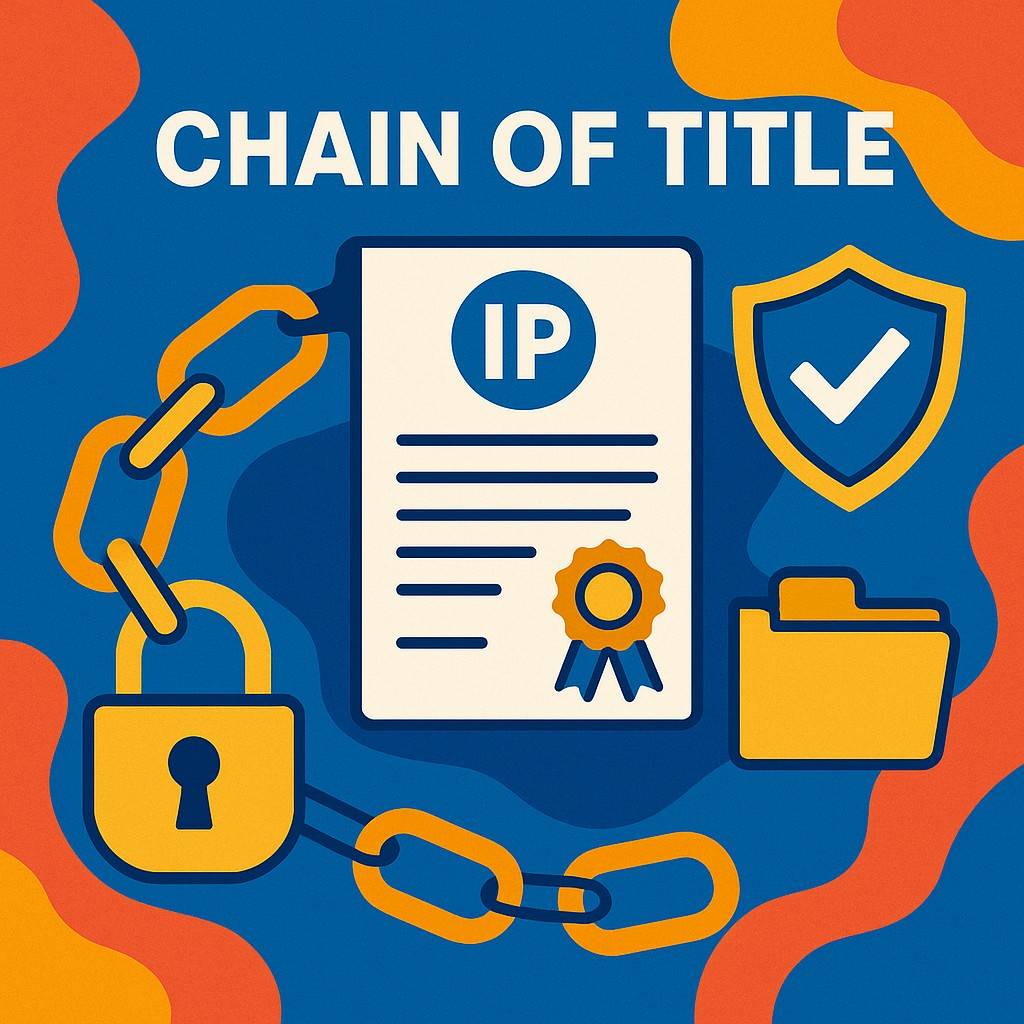
When you build something new, you want to know it’s yours. Not just in your heart, but on paper. That’s what chain of title is all about. It’s the clean trail that shows who truly owns the rights to an invention, a piece of code, a model, a design, or any other IP inside your startup. Without it, even the best idea can be blocked, challenged, or copied. With it, you get confidence, power, and real control over the thing you worked so hard to create.
Why Chain of Title Makes or Breaks Your Patent Rights
Before you can protect an invention, you have to show you actually own it. That simple truth sits at the center of every strong patent.
Chain of title is the record that proves your startup has full and rightful ownership of the invention you want to patent. When this record is clean, your patent has power.
When it’s not, even a brilliant idea becomes fragile. Many founders only discover this when an investor, partner, or potential buyer asks for proof and the trail is missing a link.
At that moment, the conversation shifts from excitement to doubt, and trust becomes much harder to rebuild.
How Clear Ownership Builds Real Strength
When your ownership trail is complete, everything else becomes easier.
Patent applications move faster because there is no back-and-forth about who holds the rights. Investors feel safe because they can see clear proof that your startup fully controls its core invention.
Even internal decisions become smoother because there is no fear that a former contractor or cofounder might surface with a claim.
A clean chain gives your team freedom to build, ship, and scale without worrying that someone else might have a say in the core mechanics of your technology.
Why Missing Links Slow Down the Entire Business
Any gap in chain of title becomes a point of friction. During diligence, it forces investors to pause. During acquisition talks, it becomes a red flag that lawyers latch onto.
Even during hiring, unclear ownership can make new technical employees nervous about joining. Everything slows down, and the story you tell about your startup loses its simplicity.
Instead of saying you built something new and fully own it, you end up explaining old paperwork or chasing past contributors for signatures. This creates delays that can cost real opportunities at critical moments.
How to Build Ownership Proof Into Your Workflow
The smartest startups treat chain of title as part of their daily rhythm rather than a chore they fix later.
Whenever code is written, models are trained, hardware is refined, or prototypes are built, someone signs an assignment. The trick is to make the process automatic so no one has to remember it.
You can train your team to capture ownership transfers the moment work is created, not weeks or months after. This habit removes risk before it grows and makes every invention easier to protect.
PowerPatent helps set this up in a clean, simple flow so you never scramble for paperwork again. You can see how that works here → https://powerpatent.com/how-it-works
Why Early Documentation Shields You From Future Conflict
Even in the most friendly team, things change. People leave. Roles shift. New partners join. Old contributors fade out of the picture.
When the ownership record is captured early, none of these changes can harm the strength of your patent rights.
You already have everything signed and stored. This gives you control regardless of team dynamics, because the legal rights stay with the company.
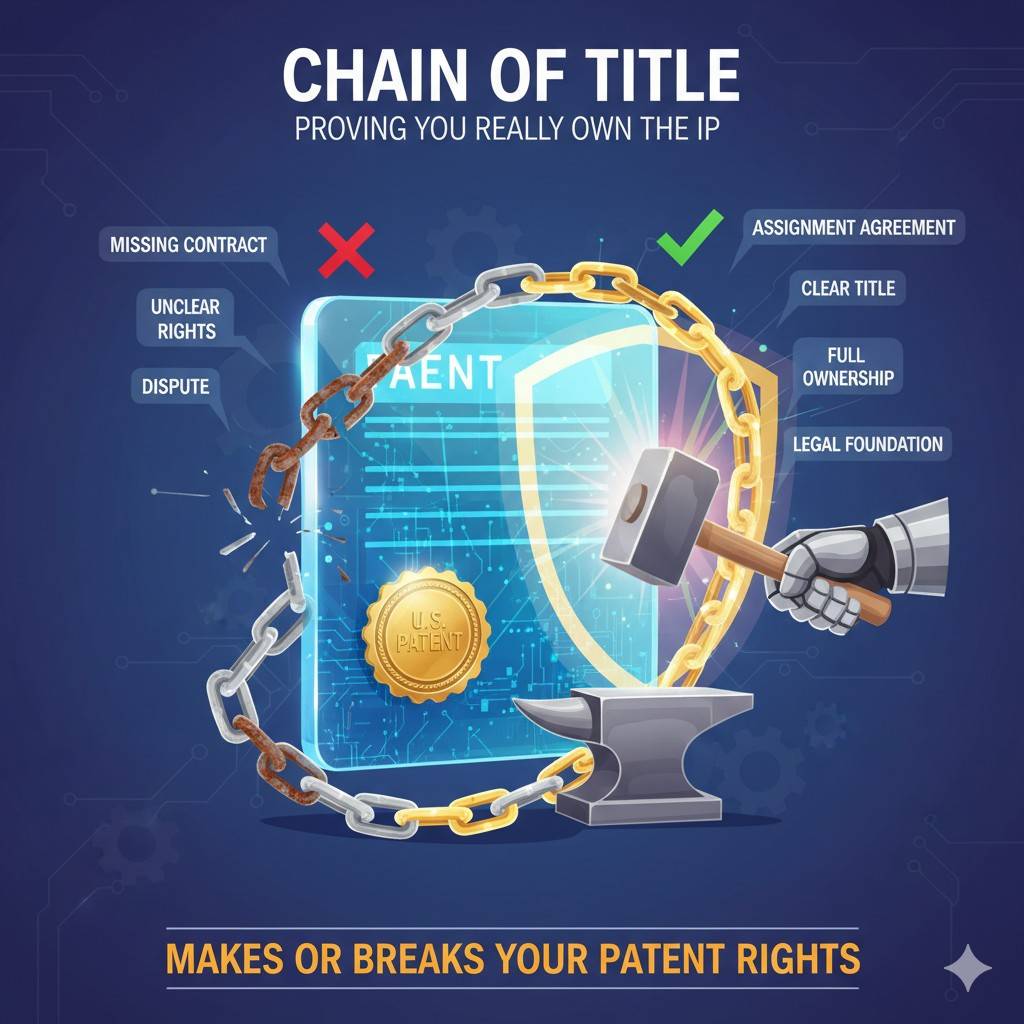
Later disputes become far less likely, and even if someone raises questions, the documentation speaks louder than any memory or assumption.
How Clean Chain of Title Makes Licensing and Partnerships Simple
Big companies do not move forward unless they see clean ownership. They want to know your startup controls everything they are about to rely on.
When you can show a clear chain of title on day one, you skip weeks of legal checks and jump straight into real partnership conversations.
This can win you faster deals and stronger terms because you remove uncertainty. Companies trust teams that keep their IP house in order.
When they can see that you document everything from the start, they assume your tech and your process are reliable too.
The Power of Showing Ownership Confidence
Founders who understand chain of title carry themselves differently. When someone asks, you don’t hesitate or say you’ll check. You simply explain that everything is already documented.
This confidence helps you lead better, pitch better, and negotiate better. It shows that you take your invention seriously and protect it like an asset.
When a founder speaks with that level of clarity, investors feel safer writing checks and teams feel safer building on top of the idea. Strong ownership doesn’t just protect you legally. It shapes how the world perceives your startup.
Making Ownership Proof a Simple Part of Your Patent Strategy
The smartest way to file a strong patent is to make ownership proof part of the process from the very start. Instead of treating it as something separate, you pull it directly into your patent workflow.
This ensures nothing slips through the cracks.
PowerPatent is designed for exactly this, because it blends software automation with real attorney oversight. You get a full picture of what you own, what you still need, and how each piece ties back to your patent filings.
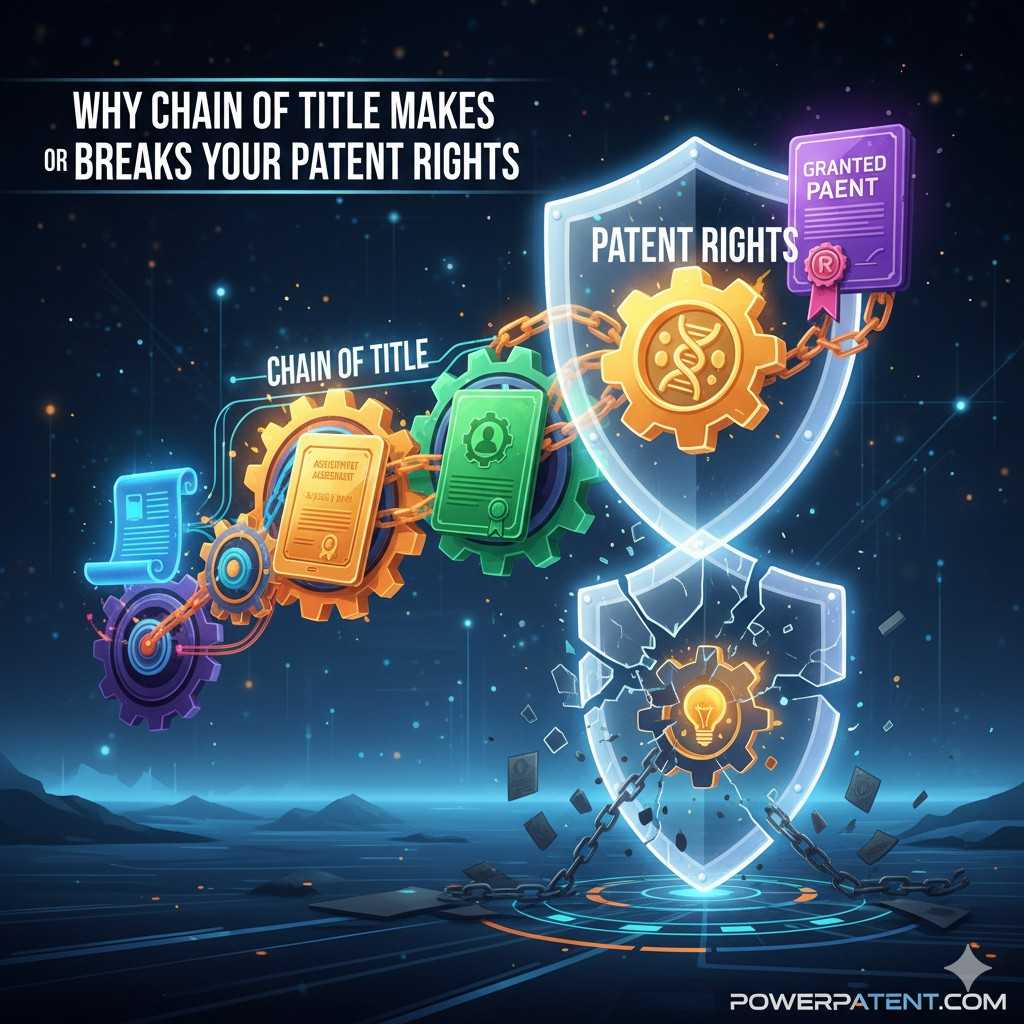
It’s simple, clear, and built for founders who want control without slowing down. See the full process here → https://powerpatent.com/how-it-works
How Ownership Gets Messy Inside a Startup (And How to Fix It Early)
Every startup begins with energy, ideas, and trust. Everyone is building fast, everyone is wearing ten hats, and no one is thinking about paperwork. That’s normal, but it’s also the exact moment when ownership problems quietly take root.
Chain of title rarely breaks because someone acted with bad intent. It breaks because the team was moving too fast to track who created what, who signed what, and who actually assigned their rights to the company.
Later, when the invention becomes valuable, those missing documents turn into real risk. This section helps you understand how those gaps happen and shows you how to fix them before they turn into roadblocks.
How Founders Accidentally Create Ownership Confusion
Most early-stage teams work in a shared cloud folder, a shared code repo, or a shared lab space. Everyone throws in ideas. Someone sketches architecture.
Someone writes a first version of the algorithm. Someone else tests a prototype on the weekend using personal equipment. Everyone believes everything belongs to the startup.
But ownership doesn’t work that way unless rights have been formally assigned.
Without an assignment, the person who created the work owns it, even if they were part of the team at the time.

This is the first major point where chain of title snaps, and it often goes unnoticed until due diligence or a patent filing forces a closer look.
How Contractors and Advisors Complicate the Picture
Startups love contractors because they move fast and avoid long-term costs. Designers, engineers, data scientists, and specialists all jump in for short sprints. But contractors do not automatically give the company ownership of what they create.
Their default rights belong to them, not you. If you don’t have a signed agreement that assigns all IP they create to your company, your chain of title becomes instantly unclear.
Advisors can cause similar problems, especially if they help develop patentable ideas during strategy sessions. The startup assumes ownership, but the law assumes otherwise unless everything is documented in clear, simple language.
Why Co-Inventors Create Legal Twists When Not Documented
When more than one person contributes to an invention, each person is a co-inventor. That means each person has rights that must be handled correctly. If even one co-inventor hasn’t assigned their rights to your company, the company does not fully own the invention.
That single missing assignment can disrupt the entire patent application. It can also allow a co-inventor to grant rights to someone else without your permission, which is a nightmare scenario for any startup.
The moment a patent claim includes multiple contributors, you need a clean record showing every co-inventor transferred their rights to the company.
How Fast Growth Creates Gaps No One Notices
As the team expands, new engineers enter the codebase. New designers refine the product. New researchers test new approaches. Every new contributor means potential new ownership rights.
If the startup does not have a simple onboarding flow that includes IP assignment, the gaps grow with every hire. Later, when the patent attorney asks who created a specific feature or piece of code, the answer becomes complicated.
No one remembers exactly who wrote which part six months ago. You’re left reconstructing history from old commits, emails, and memories, which is slow, stressful, and often incomplete.
Why Delayed Assignments Are Much Harder to Secure
The farther you get from the moment of creation, the more difficult assignments become. People leave. People move. People lose interest. Some forget what they contributed.
Others want compensation to sign. Others simply ignore communication. What could have been solved with a single onboarding signature becomes a long chase.
Investors hate seeing this because it shows the startup did not handle IP correctly at the time it mattered most.
Every delay increases the chance that someone refuses or asks for leverage, which becomes a real threat to the company’s ability to claim full ownership.
How Personal Devices and Side Projects Blur Ownership
Founders and engineers often build early prototypes on personal laptops or test ideas on their own time. This seems harmless, but it creates ownership ambiguity.
If someone writes early code before the company is formed or before they sign an agreement, that work belongs to the individual, not the company.
Small details like this cause big headaches later, especially when the patent examiner or investor wants to know exactly when and where the invention was created.
Without clear documentation, the startup ends up relying on memory, which is never strong enough to withstand a legal challenge.
How to Fix Ownership Issues Inside the Startup
You can bring clarity back into your company’s ownership picture by rebuilding the chain of title piece by piece.
Start by capturing assignment agreements for every founder, every early engineer, every contractor, and every advisor who touched the invention.
Make sure each person signs a present assignment of rights, which transfers ownership immediately instead of promising to do it later. This closes gaps that could otherwise create arguments.
Next, document the timeline of creation. Make sure you understand which version of the idea came from whom and when.

Map each piece to the person who built it so that your patent attorney can clearly show how the invention came together.
How to Build Ownership Clean-Up Into Your Patent Filing Strategy
A good patent filing process forces clarity. As you prepare your application, you naturally uncover contributors, early drafts, experiments, and code updates.
This is the perfect moment to fix missing links because you’re already reviewing how the invention evolved. Instead of treating this as a separate effort, fold assignment cleanup directly into the filing stage.
As you identify each contributor, confirm their IP assignment is on file. If not, secure it immediately.
When you do this early, you avoid the far worse scenario of discovering a missing link after the patent examiner starts asking questions.
Why Outside Counsel Alone Isn’t Enough
Traditional firms often assume your chain of title is clean unless told otherwise. They may not ask for all the details or push you to gather documents until late in the process.
This is why founders often discover ownership gaps right before filing or during office actions. It’s not because the invention is weak; it’s because basic paperwork was never captured.
You need a system that tracks ownership, surfaces gaps, and ties everything to the patent preparation process. That’s exactly what PowerPatent is built for.
The platform shows what you have, what you’re missing, and what needs to be signed before you file. You can see that workflow here → https://powerpatent.com/how-it-works
How PowerPatent Helps Prevent Ownership Drift
As your team grows, PowerPatent helps lock in every new contributor’s rights automatically. Instead of relying on memory or scattered emails, the software ensures assignments are collected at the right moment and stored in one clean record.
Real attorneys review the chain, flag risks, and guide you through fixing them. This mix of automation and human oversight keeps your chain of title strong even as your company moves fast.
When investors ask for proof, you simply show them a complete record instead of scrambling to reconstruct the past.
How a Clean Chain of Title Makes Your Startup More Valuable
Investors and acquirers buy clarity. They want to see that your company owns its breakthroughs fully and confidently. When your chain of title is clean, you remove uncertainty from the equation.
You show that your invention belongs to the company, cannot be challenged by past contributors, and can be protected through strong patents.
This increases your valuation, speeds up diligence, and puts you in a stronger negotiation position. Ownership is leverage. A clean chain gives you more of it.
Why Fixing Chain of Title Now Saves You Months Later
Every day you delay cleaning up IP assignments, the risk compounds. But the moment you fix it, the pressure lifts. Filing a patent becomes smoother. Talking to investors becomes easier.
Growing your team becomes safer. You eliminate problems before they show up instead of reacting to them under stress.

You move from guessing to knowing. And in the fast world of startups, that kind of certainty is worth a lot.
The Real Risks of a Broken Chain—and How to Protect Yourself
Every startup carries some level of risk, but nothing slows momentum faster than a question about who truly owns the invention at the heart of the business.
A broken chain of title might not look dangerous when the team is small and the product is young, but once the company grows, that broken link becomes a real threat.
It can block a patent, stop a deal, weaken an acquisition, or pull the company into a fight it never wanted.
This section explains how those risks appear, why they matter more than most founders expect, and how to protect yourself with simple habits that keep your ownership clear and defensible.
How a Single Missing Assignment Can Freeze Your Patent
When you file a patent, the examiner needs to see that your startup truly owns the invention. If one contributor never assigned their rights to the company, the examiner can question the entire filing.
The problem is not just a delay. It becomes a question of validity. Even if the invention is brilliant, the patent cannot move forward without clean ownership.
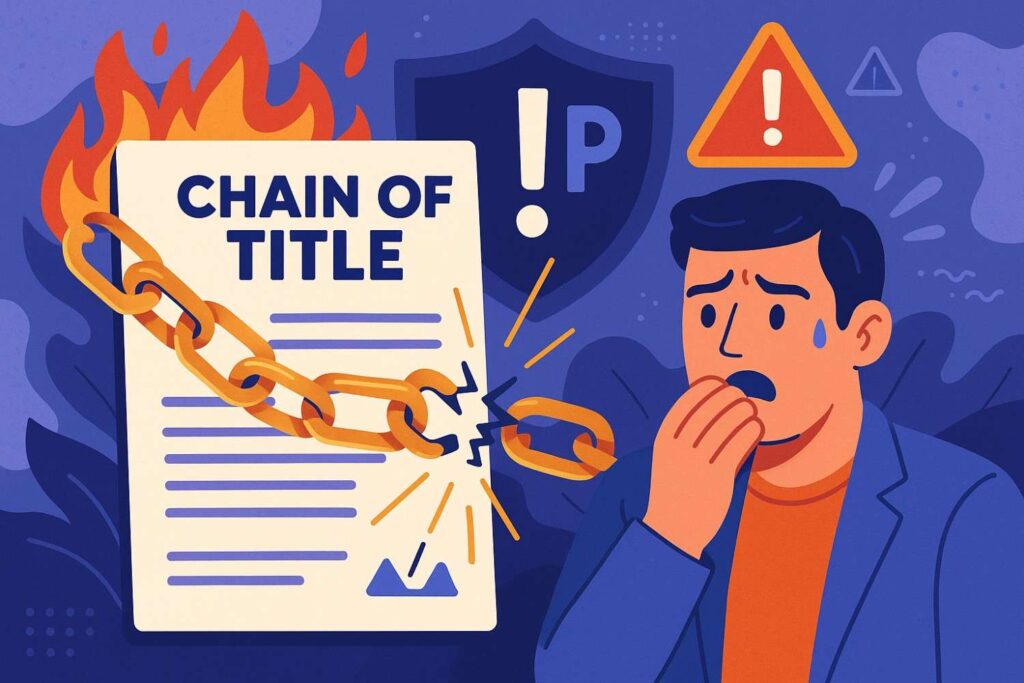
That one missing document turns into a legal puzzle that stalls your ability to protect your idea. Many founders discover this only after spending months preparing a filing. At that point, the scramble begins, and momentum slows dramatically.
Why Business Deals Stop the Moment Ownership Gets Unclear
Investors, partners, and potential buyers all rely on certainty. If they sense any weakness in your chain of title, they pull back immediately.
What could have been a fast conversation turns into a long review, and the tone shifts as soon as they realize the company may not fully control its core intellectual property.
No one wants to invest in a technology that can be challenged or claimed by someone outside the company. When buyers sense risk, they push for lower valuations or walk away entirely.
This is why clean ownership isn’t just a legal box to check. It’s a business advantage that protects your leverage in every major negotiation.
How Ownership Disputes Drain Time and Focus
Startups survive by moving quickly. When an ownership dispute surfaces, everything slows down.
Instead of building product and closing deals, founders end up sending emails, searching old files, calling former contributors, and trying to reconstruct events from years earlier.
The process can last weeks or months, and during that time the company loses focus. Competitors keep moving, customers keep shifting, and the team gets stuck in a loop of paperwork instead of progress.
Even if the dispute ends in your favor, the lost time is costly. A clean chain of title saves you from this entire detour by removing the dispute before it begins.
Why Investors Expect Ownership Confidence During Diligence
When investors review your company during diligence, they look for anything that could block growth.
A broken chain of title stands out immediately. It signals that the company did not protect its invention from the start, which makes investors wonder what else might be fragile or missing.
Once that doubt enters the room, it’s hard to remove. Investors want founders who understand the value of what they built and took the steps to secure it.
When you can show a complete record of assignments, signed at the right times, you give investors peace of mind. That peace converts into faster decisions, cleaner terms, and stronger trust.
How Competitors Exploit a Weak Chain of Title
If a competitor discovers your chain of title is unclear, they gain leverage. They might challenge your patent. They might argue that someone else still holds rights.
They might question your ownership in a way that slows your ability to enforce or license your IP.
Even if their challenge fails, they can use the uncertainty to delay your progress. Startups do not have time for defensive battles, especially when they could have been avoided with proper documentation.
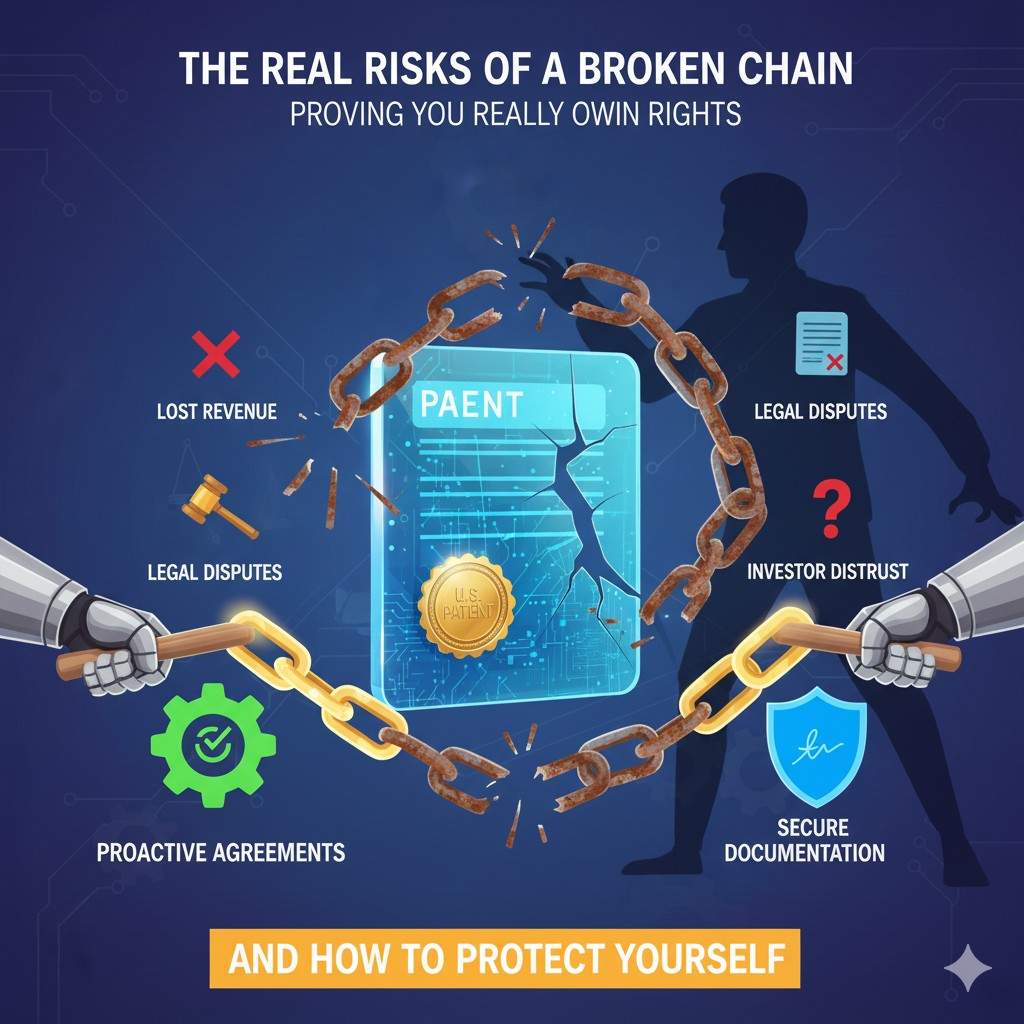
A strong chain of title makes your patents harder to attack and removes easy openings for anyone who wants to slow you down.
How Courts Treat Missing Ownership Proof
If a patent ever ends up in a legal dispute, the court looks at the chain of title with intense scrutiny. Every link must be documented, signed, and clear. If the court cannot verify that the company had full ownership at the time it filed the patent, the entire patent can be ruled invalid.
The court does not accept assumptions or memories. It only accepts paperwork. Many founders don’t realize that even a minor paperwork mistake made years earlier can undo the protection they thought they had.
This is why clean ownership records are not optional. They are part of the core foundation of any patent strategy.
How Poor Documentation Weakens Licensing Power
Licensing is one of the most powerful ways a tech startup generates revenue. But licensing only works when you can prove you own every piece of the invention you are offering.
If there is any doubt about ownership, potential licensees hesitate or ask for steep discounts. They might insist on additional protections that complicate the agreement.
Some walk away entirely because the risk outweighs the reward. A clean chain of title makes licensing simple.
You can show clear ownership, justify strong terms, and negotiate from a position of strength. That clarity turns your IP into a dependable asset rather than a question mark.
How Missing Links Jeopardize International Protection
When you file patents across borders, each country reviews ownership independently. A missing assignment in your home country becomes a global issue.
Once one patent office raises a question, others follow. You end up answering the same challenges multiple times in multiple jurisdictions, which multiplies the cost and slows down protection everywhere.
You lose the ability to move fast and secure your technology in key markets. With a clean chain of title, these international filings become much more efficient because every country can rely on the same clear ownership trail.
How Early Fixes Lower Long-Term Legal Costs
Many founders fear dealing with chain of title because they assume it’s expensive. The truth is the opposite. Fixing ownership early is cheap because everyone is still involved, reachable, and cooperative.
Fixing it later is far more expensive because it requires attorneys, reconstruction, negotiation, and sometimes compensation. The cost difference is dramatic.
Smart founders treat ownership cleanup as an investment rather than an expense. One hour of work now can prevent thousands of dollars of legal fees years from today.
How PowerPatent Helps You Close Ownership Gaps Before They Spread
PowerPatent is designed to catch broken links before they cause real damage.
The platform surfaces missing assignments automatically, flags contributors who have not transferred their rights, and organizes everything into a clear record your attorney can review.
Instead of juggling PDFs, emails, and old signatures, you get a single place where everything lives. The system shows what your chain of title looks like at any given moment.
When something is missing, you fix it with simple steps instead of long legal conversations. The blend of automation and attorney oversight keeps your ownership strong as your company grows. You can explore how this works here → https://powerpatent.com/how-it-works
How Clean Ownership Lets You Focus on Building Instead of Backtracking
When your chain of title is complete, you get to spend your energy where it matters: building product, closing deals, and growing your company.
You no longer worry about who owns what or whether someone from the past might raise a claim. You move forward with confidence instead of hesitation.
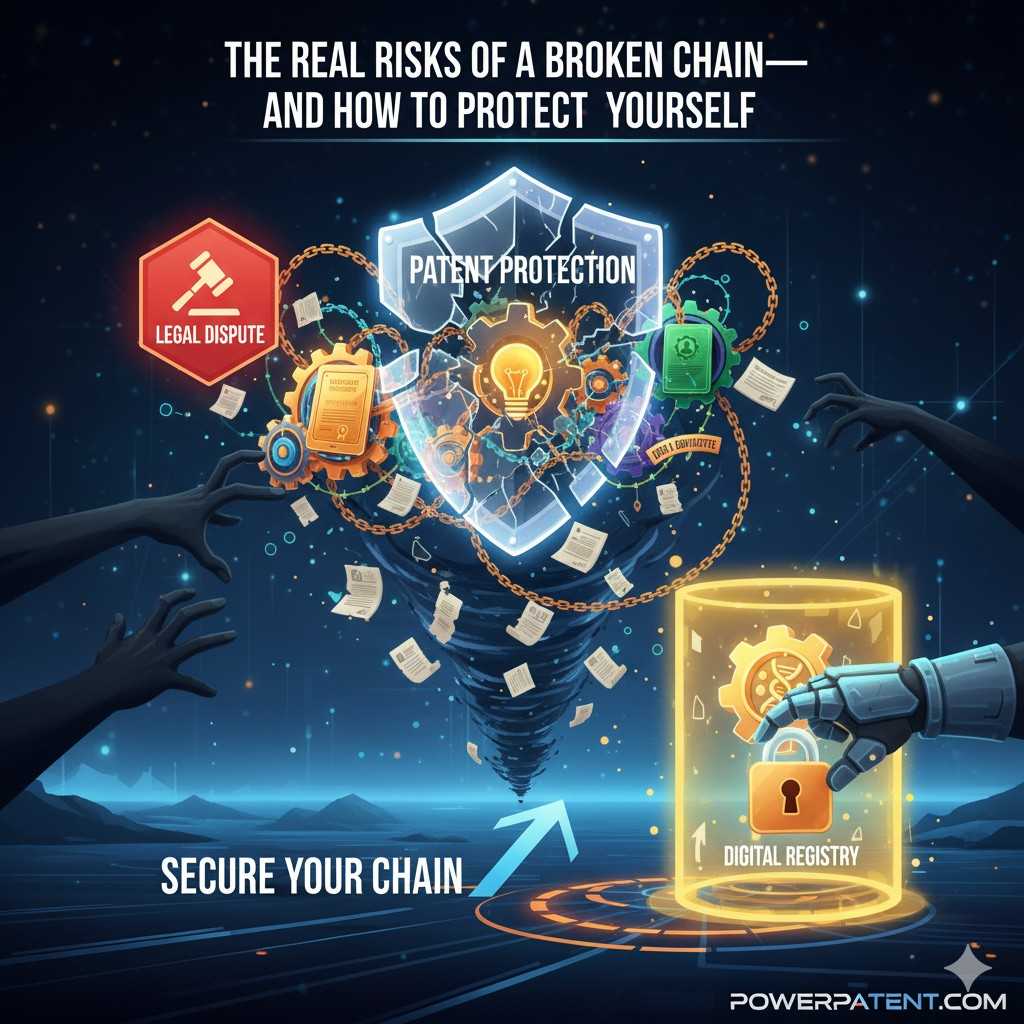
That clarity translates into faster cycles, more focused execution, and a smoother path to scale. Clean ownership is not just legal protection. It is freedom to build without distraction.
How PowerPatent Helps You Lock Down Clean, Strong Ownership From Day One
Before a startup can file a strong patent, pitch an investor with confidence, or enter a major partnership, it needs one simple thing in place: proof that it owns the invention.
This is where many founders struggle, not because they lack discipline but because traditional patent processes were never built for speed, clarity, or the way modern startups operate.
PowerPatent changes that by giving founders a simple, guided path that blends smart software with real attorney oversight.
This section explains how that mix helps you secure clean ownership from the very beginning and keep it clean as your team grows.
How PowerPatent Turns Ownership Into a Simple, Natural Step
Most founders avoid ownership paperwork because it feels tedious and disconnected from the actual work of building technology. PowerPatent fixes that by making assignments part of your normal workflow.
When you capture an invention, draft claims, upload code snippets, or describe new features, the system automatically checks whether every contributor has assigned their rights.
If anything is missing, you see it right away instead of discovering it months later. This shifts ownership from something you manage reactively to something that flows naturally as you invent and document new ideas.
How Real Attorneys Review the Chain and Flag Risks Early
No software can replace legal judgment, and that’s why PowerPatent pairs automation with real patent attorneys who examine your ownership trail.
They look at each contributor, each date, each document, and each piece of the invention to ensure every link is complete.
If something looks off, they raise the issue while you still have time to solve it. This type of early intervention is almost impossible to get with traditional firms because their process is built around long cycles.
PowerPatent’s hybrid approach gives you speed without sacrificing legal strength.
Why Centralized Documentation Beats Scattered Files Every Time
When founders try to manage chain of title through email threads, lost PDFs, personal computers, or random cloud folders, gaps are inevitable. Over time, no one remembers where the latest version of anything lives.
PowerPatent solves this by centralizing everything into one clean record. All assignments, all signatures, all dated contributions, all inventor notes, all technical uploads, and all communication with attorneys live in one place.
If an investor or partner ever wants proof, you can show them a complete record without scrambling.
This kind of organization is not just helpful. It signals maturity, discipline, and reliability at moments when those qualities matter most.
How PowerPatent Helps You Track Contributors Automatically
One of the hardest parts of maintaining a clean chain of title is simply knowing who contributed what.
Startups move fast, roles overlap, and people touch parts of the invention in ways that are easy to forget. PowerPatent tracks contributors by analyzing the information you upload.
If your technical description mentions work done by a contractor or early collaborator, the system surfaces that name for review.
You never have to worry about missing a contributor because the platform keeps watch for you. This protects you not only from legal challenges but also from unintentional oversights that can derail a patent later.
Why Automatic Assignment Collection Saves You Time and Stress
Instead of chasing signatures weeks or months after contributions were made, PowerPatent collects assignments at the right moment.
When you document new work or add a new contributor, the system prompts you to secure their assignment immediately.
You can send the document out with a single click, and contributors can sign digitally. The assignment flows straight into your record with the correct timestamp.
This eliminates the classic founder headache of trying to hunt down past contributors or track down someone who is no longer active on the team.
You capture everything while the moment is fresh and the people are still engaged.
How Early Ownership Clarity Makes Patent Drafting Faster
Patent drafting becomes smoother when ownership is already settled. Attorneys can focus on the technical details, the claims, and the novelty of the invention instead of trying to solve paperwork gaps.
With PowerPatent, attorneys enter the drafting phase with a complete chain of title already mapped out.
That speeds up the filing process, reduces back-and-forth questions, and prevents last-minute delays.
It also allows attorneys to build a stronger application because they have a clear picture of how the invention came together and who contributed to each part.
Clean ownership gives the legal team clarity, and clarity always leads to better outcomes.
Why Investors Trust Startups That Use PowerPatent
When investors evaluate a startup, they want to know the company is protecting its core invention the right way. They want to avoid surprises. They want to avoid disputes.
And they want to avoid any hint that someone else might claim rights to the technology.
When they see that a startup uses PowerPatent, they understand immediately that IP is being handled with discipline. They see standardized assignments, complete records, automated tracking, and attorney-reviewed documentation.
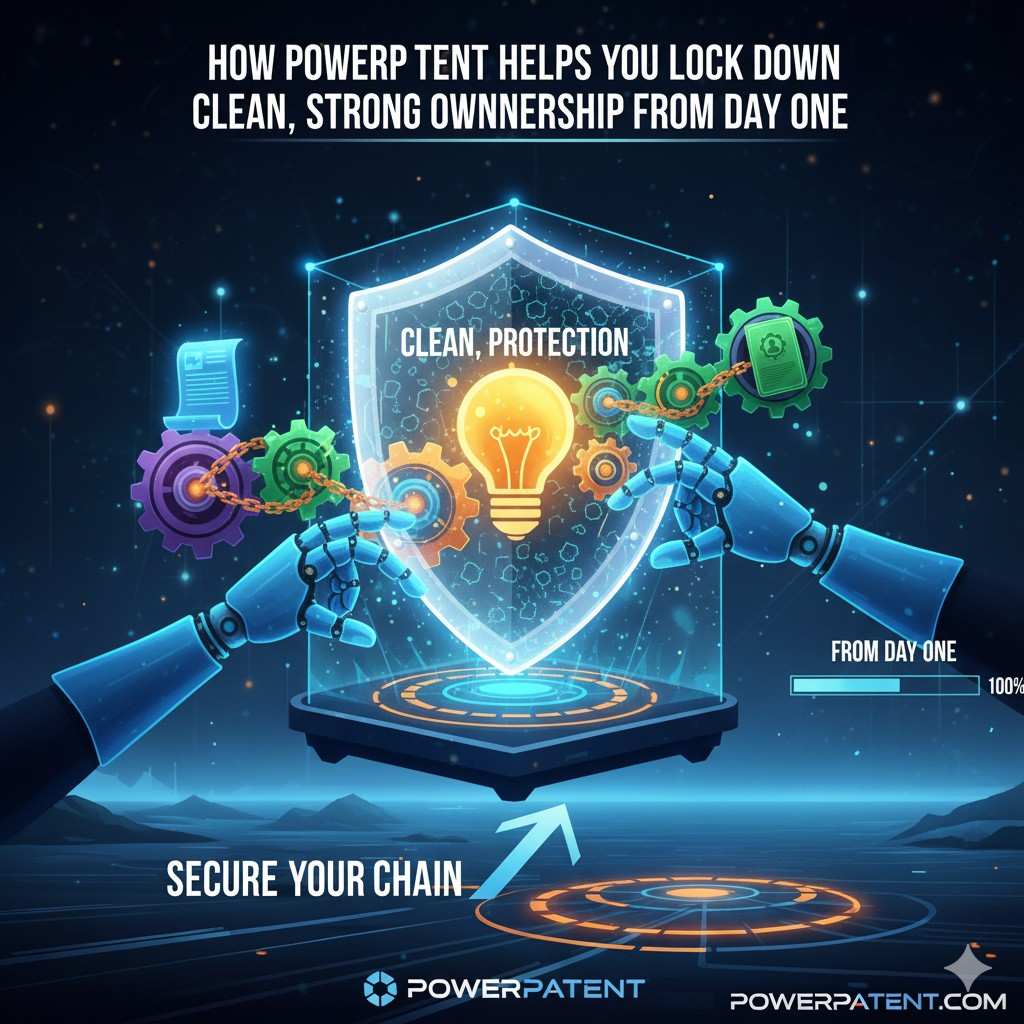
This makes investors more comfortable writing checks because it shows the founder takes ownership seriously. It also shortens diligence because everything they need is already organized.
How Clear Ownership Supercharges Acquisition Negotiations
Acquirers look deeper than investors. They want absolute certainty that no one outside the company can challenge the IP they’re buying. If they see missing assignments, they either slow the deal or reduce the offer.
But when they see a clean chain of title, they move faster and negotiate with more confidence.
PowerPatent gives you the ability to hand over a complete, neatly stored ownership record showing exactly how each rights transfer happened, who contributed what, and why the company has full control.
This level of clarity removes friction and can significantly improve the terms of an acquisition.
How PowerPatent Helps Founders Avoid Future Legal Fights
The best legal fight is the one that never starts. When your chain of title is airtight, disputes often die before they begin.
If someone claims they contributed to the invention, you can show exactly who contributed what and when. You can show their signed assignment.
You can show the invention timeline. You can show every step in a clean record. This shuts down disagreements quickly because everything is documented and timestamped.
PowerPatent’s approach reduces the emotional, financial, and operational cost of dealing with IP challenges. You protect your company not by reacting, but by preventing problems long before they appear.
How Ownership Confidence Helps You Lead With Clarity
When you know your chain of title is complete, you lead differently. You speak with more certainty during pitches.
You negotiate more assertively. You make decisions faster because you understand exactly what you own and where your legal footing stands.
Your team feels safer building on top of the core invention. Your partners trust your foundation. Your investors see stability instead of risk. Confidence becomes a real asset, not just a feeling.
PowerPatent’s system gives founders this confidence by removing guesswork and replacing it with clean, attorney-reviewed documentation.
How PowerPatent Removes the Fear of Making a Mistake
Most founders are not lawyers, and they shouldn’t have to be. But chain of title can make even experienced founders nervous because one small oversight can break a patent or disrupt a deal.
PowerPatent removes that fear by guiding you through each step.
The software tells you what documents you need. The attorneys confirm whether the chain is complete.
If anything is missing, the system highlights it clearly so you can fix it before it grows into a problem. You are no longer operating in the dark.
You get clarity, direction, and support at every stage. You can explore how the system works here → https://powerpatent.com/how-it-works
How Strong Ownership Sets Up Every Future Patent You File
One of the hidden benefits of using PowerPatent is that once you establish a clean chain of title, future filings become easier.
Each new invention builds on a foundation where contributors are already documented, assignments are already in place, and ownership habits are already part of the company culture. You don’t have to rebuild the system every time.
You simply maintain it. This makes your patent strategy more scalable, more predictable, and more aligned with the growth of your startup. Clean ownership becomes part of your operating system rather than a separate legal chore.
How PowerPatent Supports Fast-Moving Teams Without Slowing Them Down
Startups thrive on speed. But traditional legal processes slow teams down because they rely on manual steps, back-and-forth email, and delayed attorney reviews.
PowerPatent removes that friction. Its automated tools capture information instantly, its platform organizes documents in real time, and its attorneys review everything on a rolling basis.
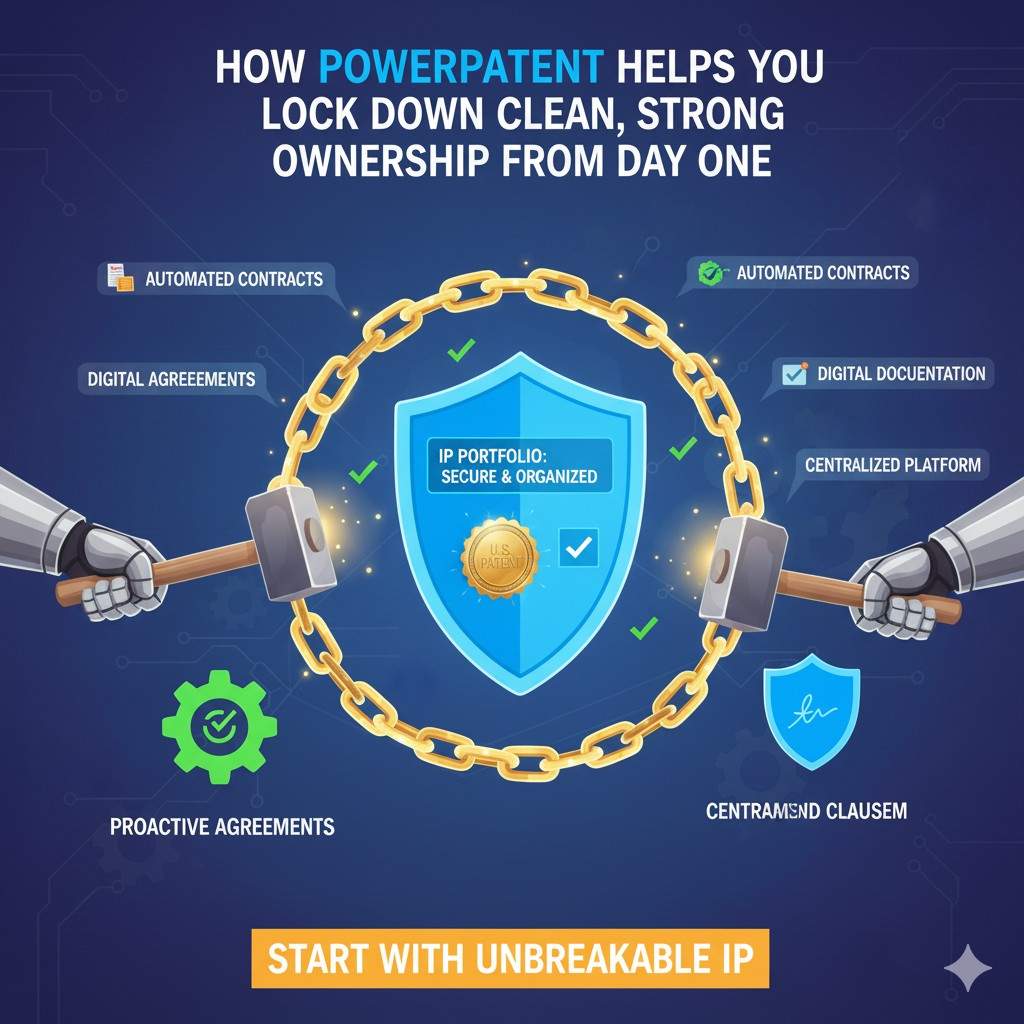
This means you can move quickly without leaving holes behind. You get the pace of a startup with the protection of a seasoned legal team, all without feeling weighed down by legal overhead.
Wrapping It Up
Every startup begins with an idea, but only the ones that protect what they create get to grow with confidence. Chain of title sits at the center of that protection. It is the quiet backbone of every strong patent, every clean investment, every safe partnership, and every high-value acquisition. When your ownership trail is complete, you move faster, negotiate better, and lead with certainty. When it’s broken, even small gaps turn into major risks that slow your momentum just when it matters most.
Leave a Reply