Most startups don’t lose their IP because someone steals it—they lose it because no one actually owns it. A founder thinks the code is automatically theirs, a contractor assumes they keep rights to whatever they touched, an employee signs an offer letter but never signs an IP assignment, and a co-founder walks away still holding rights to half the invention.
Why IP Assignments Matter More Than Most Founders Realize
Every startup begins with excitement, speed, and a rush to build something real. But while everyone is focused on the product, the deeper question of who actually owns the ideas, code, and breakthroughs gets ignored.
Most teams assume ownership is automatic, or that a promise, handshake, or email thread is enough. In reality, nothing is owned until it is assigned in writing.
This section explains why that simple truth becomes one of the biggest strategic risks for early-stage companies and how to avoid the hidden traps that quietly grow until they block fundraising, partnerships, patents, and even exits.
The silent IP drift that happens inside every early team
In the early days, people move fast and change roles without thinking about the paper trail behind their work. A founder hacks the first version of the product using old code from a previous project.
A contractor builds core features but works under a vague agreement that never mentions IP. A friend helps with the design because you offered them a small favor.
None of this feels dangerous because the team trusts each other and everyone is focused on getting something out the door.
But this is exactly when IP begins to drift away from the company, because ownership follows the creator unless a written assignment transfers it.
This drift is invisible until the moment someone asks for proof. Investors, partners, and acquirers expect clear ownership, and they expect it fast.
If your answers are slow, uncertain, or scattered across emails, they immediately see risk.
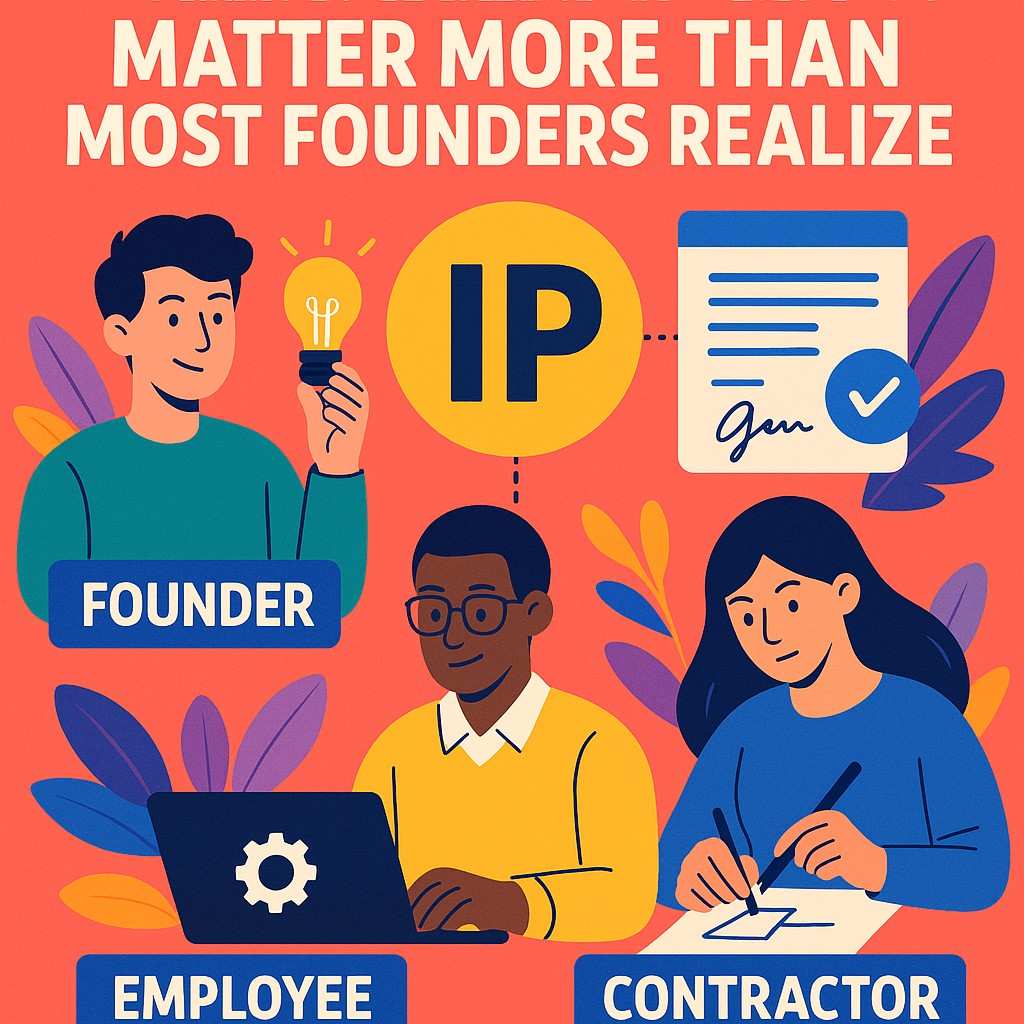
Fixing this later means tracking down people who have moved on, who no longer care, or who now want to negotiate. That situation creates real friction, and it can stop deals in their tracks. A simple assignment signed early would have prevented all of it.
Why ownership is the foundation of every patent, even before you file
When a company files a patent, the first thing the examiner checks is whether the applicant actually owns the invention. Many founders believe that if they invented it, they automatically own it.
But the law looks at who contributed to the inventive steps. If a contractor, advisor, or employee added technical input without an assignment, that person becomes a co-inventor, which also means they may be a co-owner.
Even a small contribution to a claim can create a major ownership problem.
If you file without fixing this, the patent can be challenged, blocked, or invalidated. Worse, a co-owner can license or use the invention without your permission, creating competitive risk you can’t control.
Getting clean assignments upfront protects the invention before it becomes valuable, and it gives you the freedom to file confidently without worrying about ownership being questioned later.
This is exactly why platforms like PowerPatent help founders lock down ownership early, so the patent pathway stays clear and smooth. If you want to see how this process works from idea to filing, you can explore it here → https://powerpatent.com/how-it-works.
How messy IP ownership slows down growth even when you think everything is fine
Growth creates pressure, and that pressure exposes every gap. When you hire your first engineer, raise your first round, or pitch to a big customer, IP suddenly becomes front-and-center. One missing assignment from a contractor can cause weeks of delay.
A co-founder who contributed early technical work but never signed paperwork becomes a negotiation point.
An advisor who casually gave input on an algorithm may now need to be tracked down. These situations break momentum at the exact moment when you need it most.
Founders who clean up early move faster later because they never have to stop and patch holes. They never scramble for signatures or dig through old messages.
Their documents are ready when an investor asks for them. Their patents can be filed without backtracking.

And their team understands from day one that ownership flows to the company, not the individual. This creates a culture where people know the rules, know the expectations, and build with clarity instead of confusion.
The emotional side of IP that no one talks about
People leave startups. Sometimes it’s friendly, sometimes it isn’t. When a relationship changes, the way people think about ownership changes too. Someone who once said they would sign anything may now want compensation.
Someone who casually helped build a feature may suddenly claim they deserve credit or control. These conflicts don’t always come from bad intentions. They come from unclear expectations.
When assignments are in place early, no one feels surprised or taken advantage of. Everyone understands their contribution is part of the company, not something they personally retain.
The agreement makes everything clean and calm because it sets expectations before emotions enter the picture. This is one of the simplest ways to protect relationships as your team grows and shifts over time.
Why clean IP assignments increase company valuation without changing the product
Investors don’t only fund technology. They fund ownership. Two startups can have identical products, but the one with clean IP paperwork is worth more because the risk is lower.
Clean ownership means freedom to build, freedom to expand, and freedom to sell. It tells investors they won’t face surprises. It tells acquirers the deal can close smoothly. It tells partners they can integrate with confidence.
This clarity also shows maturity. It tells the world that the founders understand how real companies operate, how value is created, and how risk is controlled.
You don’t need a huge legal budget to achieve this. You just need simple agreements signed early and stored where you can find them. That small investment in clarity gives you leverage for years.
The most actionable advice: make IP assignments a default, not an afterthought
The easiest way to avoid every ownership gap is to make assignments automatic. Every founder signs one. Every contractor signs one before starting work.
Every employee signs one with their offer letter. Every advisor who contributes technical input signs one before any brainstorming begins. When this becomes part of your culture, IP stays clean without effort.
You never chase signatures or worry about past work. You simply build and know that everything created stays with the company.
This is also where the right tools matter. A system that keeps your documents organized, tied to your patent filings, and verified by real attorneys gives founders confidence that nothing slips through the cracks.
PowerPatent does this by combining simple software workflows with attorney oversight, so founders have clarity without slowing down.
If you want to see how this works in practice, you can explore it here → https://powerpatent.com/how-it-works.
Founder IP: Cleaning Up the Earliest and Messiest Gaps
Every company begins with a spark, and that spark usually comes from the founders. The trouble is that those early days are usually the messiest from an IP standpoint.
People are building fast, pulling in pieces of old projects, borrowing from past jobs, mixing ideas from conversations, and writing code at a pace that leaves no time for paperwork.
This creates hidden ownership problems that almost always surface later. This section lays out how founders can clean up the earliest gaps now, even if the company is already moving fast, already has a product, or already brought in early collaborators.
Why founders need their own IP assignments even if they created everything
It surprises many first-time founders to hear that they also need formal IP assignments. Most assume that since they created the invention, the company automatically owns it.
But legally, the founder and the company are separate. The invention belongs to the founder until they assign it, even if they formed the company themselves.
Without a signed assignment, the company cannot clearly say it owns the core technology, and no investor or acquirer takes that risk.
Fixing this is simple. Every founder signs an assignment transferring all past and future IP that is tied to company work. It doesn’t need complex language. It just needs to exist.
Once it is signed, the company finally becomes the true owner of its foundation, and everything built on top of it becomes clean and safe.
How old projects and past jobs create invisible risks for founders
Many founders bring pieces of earlier work into their new company. It might be a small library of code from a side project, a prototype from grad school, or a model built at a previous job.
This feels harmless, and in the moment, it helps the team move faster. But this is where the biggest risks hide.
Anything built while employed by another company may already be owned by that employer. Anything created as part of a research program may belong to the university.
Anything built collaboratively could have co-owners. Even a small part of old code can cause massive complications if it wasn’t fully yours to bring in.
This doesn’t mean you can’t bring it. It just means you need clarity. You need to confirm what you truly own, what you need permission for, and what you may need to rewrite.
Many founders choose to rebuild small components from scratch rather than risk future ownership challenges. It takes less time than negotiating with a former employer or digging through old agreements, and it creates a cleaner, safer IP foundation.
Why early verbal agreements don’t hold up and how to fix them fast
Early founders move on trust. They talk through ideas over coffee, split tasks, and make promises without writing anything down. That sense of camaraderie is powerful, but the law doesn’t recognize verbal agreements when it comes to IP.
If two founders build something together before forming the company and never assign their rights, both continue to own it.
If a friend helped brainstorm a key algorithm and there’s no agreement, they may legally have contributed to an inventive idea.
The cleanest fix is retroactive assignments. These documents confirm that everything created before the company was formed now belongs to the company.
This approach works best when done early, while everyone is still aligned and before any tension or uncertainty appears. The longer founders wait, the harder it becomes to gather signatures.

Retroactive assignments are common, accepted, and often necessary. The sooner they’re done, the safer the entire business becomes.
When a co-founder leaves and still holds rights without knowing it
One of the most painful IP stories happens when a co-founder leaves. Many exits are friendly, but ownership does not disappear with goodwill.
If that founder wrote early code, designed early models, or created early inventions and never assigned them, the company does not fully own those assets.
The founder may not want rights, but since they still legally have them, they can unintentionally block patents, fundraising, or acquisition.
Fixing this requires a post-departure assignment. It should transfer all contributions made while they were part of the team. This is much easier when handled immediately at or before departure.
If years pass, the conversation becomes harder, and the former founder may request compensation.
The easiest way to avoid this scenario is to require assignments from every founder on day one. This keeps the company’s ownership intact even when people’s roles shift or someone steps away.
How to rebuild trust and clarity when the early days were messy
Many founders feel embarrassed when they realize they skipped early paperwork. It’s more common than people think. Almost every early team moves fast and handles IP later.
The key is to fix it before the company hits a major milestone. The longer it stays unaddressed, the harder it becomes to fix.
The best approach is transparency. Explain to your co-founders that the company needs clean ownership to raise money, file patents, and grow. Frame it as protecting value for everyone, not as a legal chore.
People respond well when they understand the purpose and see it as collective protection rather than control.
Founders often find that once the conversation starts, everyone is willing to sign. The friction only arises when people are left out, confused, or caught off guard. Clarity and openness make the process smooth.
Why early cleanup creates a lasting competitive advantage
A clean IP foundation does more than reduce risk. It strengthens the company’s ability to innovate. When founders know exactly what the company owns, they can build without hesitation.
They can file patents faster, move into new markets, negotiate deals, license technology, and defend their inventions with confidence.
A company with clear ownership has more freedom. It can sell. It can raise. It can partner.
It can expand. It can evolve without dragging unresolved issues behind it. In a world where startups compete not only on speed but on defensibility, clean founder IP becomes a real edge.

PowerPatent exists to help founders lock down ownership in a simple, fast, attorney-backed way, giving them a clean base for patents and long-term protection. You can see how this works here → https://powerpatent.com/how-it-works.
Employee and Contractor IP: Making Ownership Crystal Clear
When your team starts growing, your IP risk grows with it. Employees and contractors bring new skills, new ideas, and new output into your company, but they also bring new ownership complications if the paperwork is not handled cleanly and early.
Many founders assume the company automatically owns whatever an employee creates because they are on payroll, or that a contractor’s invoice implies ownership.
But those assumptions are wrong, and they lead to some of the most damaging gaps a startup can face. This section explains how to make IP ownership simple, clear, and fully in your control the moment someone begins work.
Why an offer letter is not the same as an IP assignment
Founders often believe that an offer letter covers everything. It does not. An offer letter explains compensation, title, and responsibilities. It does not transfer ownership of anything an employee creates.
Even if the company pays the employee, the law still treats the employee as the default owner of their creative output unless they sign a separate assignment agreement.
This means your engineers, designers, data scientists, and product builders may legally own the most important parts of your product if they never signed anything assigning those rights to the company.
That gap can block patents, freeze deals, and create massive uncertainty. The fix is simple: every employee signs an invention assignment agreement as part of their onboarding.
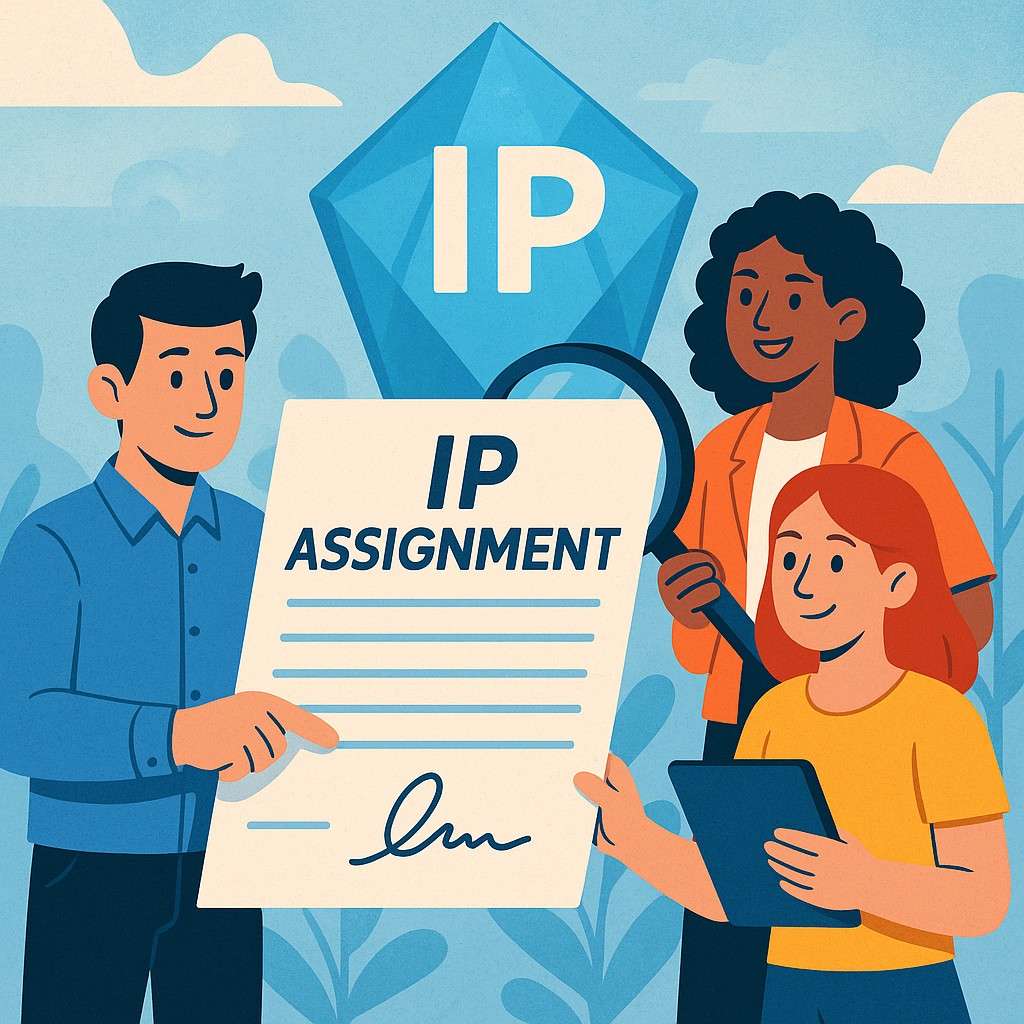
The moment they start work, everything they create for the company belongs to the company. It is the simplest way to avoid future conflict, confusion, or claims.
Why contractors create the biggest ownership risks in fast-moving startups
Contractors often build some of the earliest and most important parts of a startup product.
But unlike employees, contractors are not even assumed to be doing work for the company by default. The work they create belongs entirely to them unless they sign a formal assignment.
This becomes a problem when contractors write backend code, build machine learning models, or design your product’s interface. If they walk away without assigning their work, you don’t own the things you rely on every day.
Even worse, they can legally reuse or resell what they built for you. Many founders discover this only when they try to raise money or file a patent and suddenly realize they can’t prove ownership of their own product.
The most effective way to avoid this is to treat contractor IP assignments with the same seriousness as employee assignments. Contractors should sign an agreement before they begin any work.
This document should make it clear that everything they create for the company belongs to the company. The agreement does not need to be long or complicated. It just needs to exist before work starts.
When contractors work across multiple clients and reuse code
Some contractors move fast by reusing their own internal libraries or frameworks from project to project. This is normal in the contractor world, but it creates confusion for founders.
If a contractor brings in pre-existing code that they own, that is not automatically transferred to your company.
If that code becomes part of your product without clarity, ownership becomes muddy. This can block patent filings because your company cannot claim clear rights to the underlying components.
The cleanest solution is simple communication. Contractors should disclose any pre-existing materials they plan to use. The company should either approve it, reject it, or request an assignment or license.
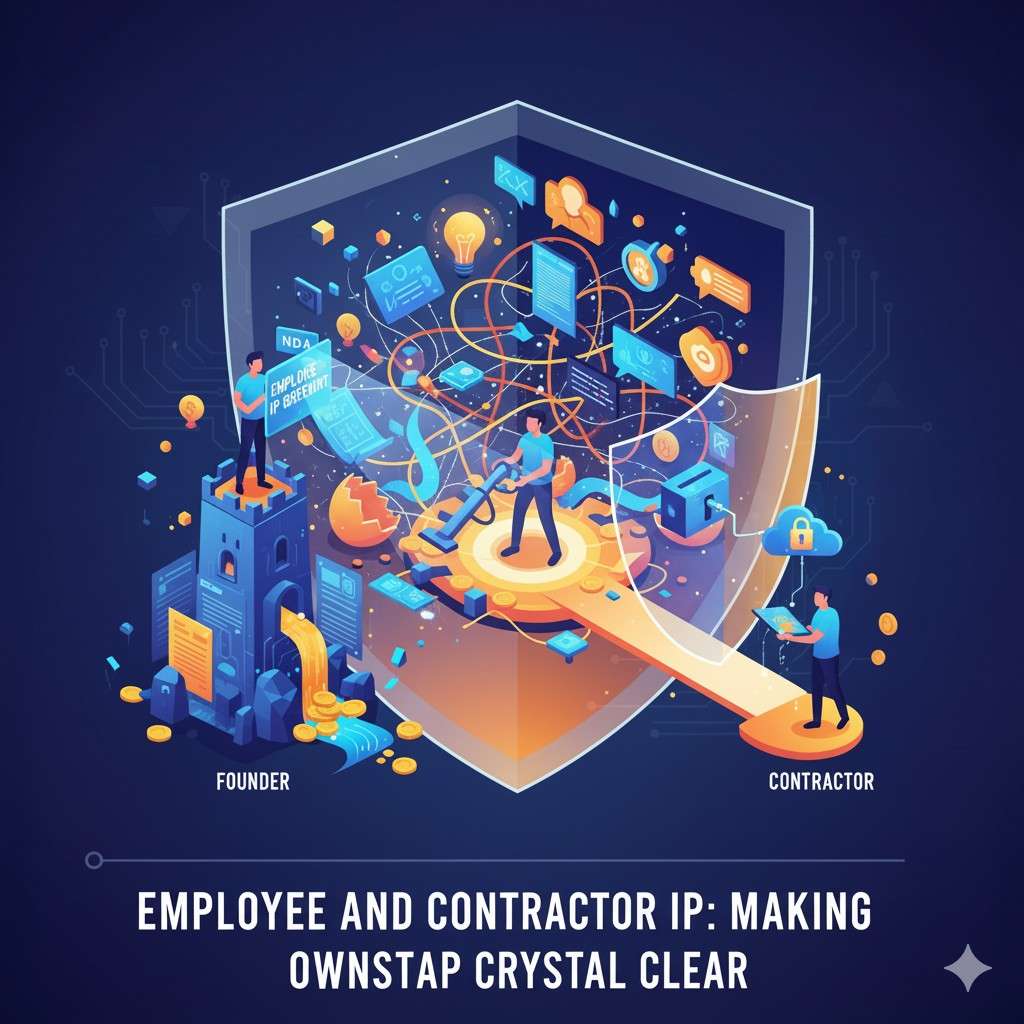
Some startups allow contractors to use their own libraries as long as those libraries are licensed to the company permanently. Others ask for a full assignment. What matters most is that the decision is made early, not discovered later.
How to clean up past employees or contractors who left without signing anything
Almost every startup has at least one person who contributed work early and left before paperwork was signed. Maybe they wrote part of the first prototype.
Maybe they designed the early interface. Maybe they helped build a critical algorithm. Even one missing signature can create a major ownership gap.
Cleaning this up requires tact. You reach out, explain why the company needs the assignment, and make it clear that this is not about control or compensation but about clarity and progress.
Most people are willing to sign when the purpose is explained clearly. If someone is unresponsive, you may need to show past agreements or emails that outline expectations.
If someone refuses, you may need to rewrite or replace the parts they contributed. While that sounds painful, in many cases it is faster than negotiating.
A strong preventive strategy is to store signed assignments in one place and verify them regularly. Many founders wait until fundraising to check their paperwork, only to discover missing documents.
A simple system for tracking agreements prevents this and gives the company confidence at every stage of growth.
Why clear IP ownership allows your team to build faster without fear
Your team works better when they know who owns what. Engineers feel protected when they know they won’t be accused of claiming rights to company work.
Contractors appreciate clarity because they want clean boundaries between their own libraries and the work they create for you. Designers and product builders work confidently when expectations are defined.
With clean assignments, no one wonders whether the company can use, modify, sell, or patent what they build. That certainty reduces friction and frees your team to focus fully on building.
This is especially important when your product moves quickly across new features, experiments, or prototypes. Clean ownership removes hesitation from the creative process because everyone knows they are building on a solid foundation.
Why this protects you during fundraising more than almost anything else
Investors care deeply about IP ownership because they care about risk. When a startup cannot prove it owns its technology, investors see a company that could collapse under legal pressure or fail to defend itself.
Missing assignments show up at the worst possible times, usually in due diligence. If a key engineer never signed anything, or a contractor built the core backend without an assignment, investors may walk away or demand the gaps be fixed before funding.
Startups that handle IP clearly stand out. They move through diligence faster. Their documents look mature and organized. Their technology is seen as defensible and fully controlled.
This increases valuation without changing a single line of code. Clean ownership becomes a business asset, not just a legal formality.
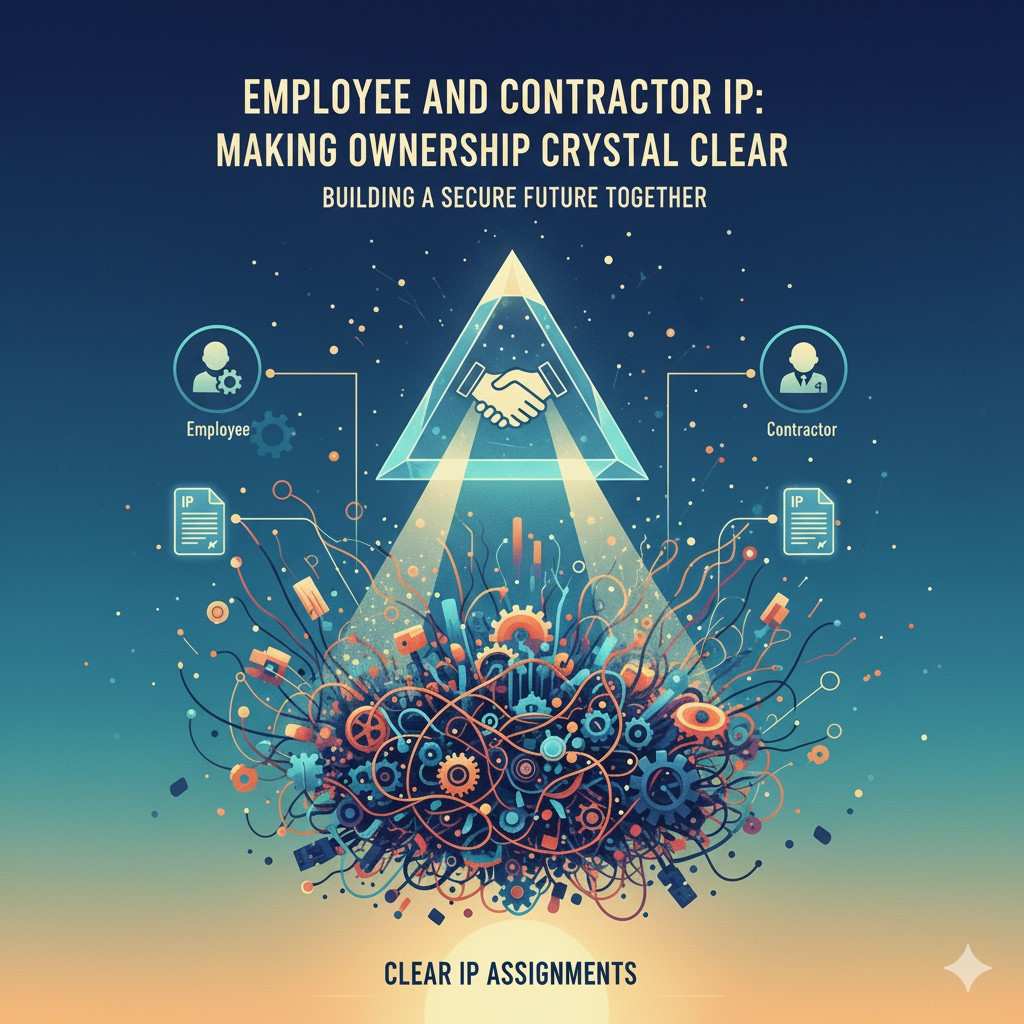
Platforms like PowerPatent help founders tie this clarity directly into their patent process.
When assignments are stored, tracked, and verified alongside your patent filings, you eliminate surprises. If you want to see how this works in practice, you can explore it here → https://powerpatent.com/how-it-works.
How to Keep Your IP Clean as You Scale (Without Slowing Down)
As your company grows from a few founders to a real team with employees, contractors, advisors, and partners, your IP footprint expands with every new idea, line of code, design file, and technical improvement.
Growth brings more innovation, but it also brings more places where ownership can slip.
What once felt manageable begins to feel scattered. People join quickly, roles shift, and projects move across teams. In this stage, clean ownership is not just about protection.
It is about keeping your company agile, fundable, and ready for every opportunity. This section explains how to keep your IP clean as you scale without slowing down the pace of building.
Why scaling teams need simple rules everyone can follow
When the company is small, you can personally check that every contract, offer letter, and assignment is handled correctly.
But once you start hiring fast, running multiple projects, or bringing in more contractors, you can no longer rely on memory or good intentions. You need simple, automatic rules that everyone understands.
The most effective companies make IP assignments part of their culture. Everyone knows that before any work begins, the paperwork must be signed. It is not optional.
It is the same as giving someone access to internal systems or adding them to payroll. When this becomes the norm, there are no awkward conversations, no confusion, and no surprises.
People expect it and accept it because it is part of how the company operates. This consistency keeps the company protected even as teams grow quickly and new contributors join week after week.
Why centralizing documents matters more than founders expect
One of the biggest risks during scaling is scattered documentation. Assignments and agreements live in email threads, Slack messages, old folders, someone’s desktop, and onboarding files that get lost as processes change.
When an investor or acquirer asks for proof of ownership, you need to pull everything together fast. If your documents are scattered, this becomes stressful, time-consuming, and sometimes impossible.
Centralizing documents in one secure, easy-to-access place solves this. Every assignment, every agreement, every contributor’s paperwork should live in a single system where you can find it instantly.
This creates a clean ownership trail that grows with the company instead of becoming tangled. It gives you confidence during due diligence and makes future patent filings smoother because you can prove ownership without digging.
Why IP workflows need to be automated as the team grows
Manual processes fall apart at scale. What works for five people does not work for fifty.
Founders cannot personally chase signatures, verify documents, or remember who has or has not signed agreements. Every missed step becomes a future headache.
Automation keeps the process clean without adding friction. You set up a workflow where every new employee or contractor receives an assignment automatically.
They sign before they receive access to internal tools or begin work. The signed document is stored instantly in the right place. You get notified only if something is missing.
This turns what used to be a complicated manual task into a smooth, predictable system that works in the background while you focus on building.
This is where tools like PowerPatent help founders bring order to the chaos. The platform organizes your IP documents alongside your patent work, ensuring that everything is consistent and attorney-reviewed before you file.
If you want to see how this works in a real workflow, you can explore it here → https://powerpatent.com/how-it-works.
How to handle rapid hiring without creating ownership gaps
Scaling teams hire fast, and sometimes desperate hiring needs push paperwork aside. People join under verbal agreements, HR is overwhelmed, or someone starts working before their contract is finalized.
Those moments create ownership gaps that may not surface until much later, often right before fundraising or patent filings.
A strong hiring process solves this. When assignments are integrated into onboarding, no one starts work until everything is signed and stored.
It becomes a predictable step that HR, founders, and hiring managers follow every time. Even when you need someone urgently, the process remains the same. This keeps the company safe while allowing speed.

Some companies also re-confirm assignments when roles change. For example, when a contractor becomes a full-time employee, they sign a new assignment tied to their employee role.
This ensures that each stage of their contribution is captured properly and avoids confusion about which work belongs to whom.
Why advisors and occasional contributors need assignments too
Many startups overlook advisors because they think advisory relationships are informal. But advisors often provide technical input, brainstorm solutions, suggest algorithms, or give direction that influences key inventions.
If that input contributes to a patentable idea, they may become a co-inventor. And without an assignment, they may become a co-owner.
Assigning advisor IP is simple. The agreement makes it clear that any ideas or contributions they make in connection with their advisory role belong to the company.
Most advisors expect this because it is standard practice. It protects both the company and the advisor by eliminating future misunderstandings about ownership.
This applies to occasional contributors as well. A designer friend who helps with a quick mockup. A researcher who gives feedback on your model. A developer who volunteers to fix a small bug.
If they create anything that becomes part of your product, the ownership must be assigned. If that feels uncomfortable, the company can pay a small amount for the work and sign an assignment. The important thing is clarity.
How clean IP boosts your ability to scale without hitting legal roadblocks
Once your company reaches real traction, you want to move fast. You want to launch features, form partnerships, enter new markets, and file patents for the technologies that set you apart. But if ownership is unclear, everything slows down.
You cannot file patents because you cannot prove inventorship. You cannot close deals because partners want clean IP. You cannot raise money because investors want certainty.
Clean IP becomes a competitive advantage. It gives you the freedom to make moves without hesitation. It prevents last-minute delays and embarrassing gaps revealed during diligence.
It shows your maturity and makes investors trust your leadership. When you scale with clean IP, your company grows with confidence instead of risk.
This clarity also allows your team to innovate boldly. They know that their work contributes to protected, company-owned inventions.
They can collaborate across teams without worrying about ownership boundaries. They can build without fear that someone else might claim rights later.
Why a strong IP foundation makes patents smoother, faster, and stronger
A clean IP system sets the stage for strong patents because every invention has a clear chain of ownership. When an inventor contributes, their assignment is already in place.
When the company files, the examiner sees a clean and consistent ownership trail. This reduces challenges, avoids disputes, and strengthens your position if anyone tries to copy your work.
PowerPatent is designed to help founders connect these pieces in one place: assignments, inventor records, and patent filings all tied together with attorney oversight.

This creates a smooth path from idea to protection, even as your company grows and your team becomes more complex. You can see how the process works here → https://powerpatent.com/how-it-works.
Wrapping It Up
Every startup begins with a burst of energy, a shared dream, and the belief that building fast is all that matters. But the companies that last are the ones that protect what they build. Clean IP ownership is not a legal chore. It is the foundation that keeps your ideas safe, your patents strong, your fundraising smooth, and your future acquisitions possible. When founders, employees, contractors, advisors, and occasional contributors all sign clear, simple assignments from day one, the company gains total control over its creations. This control becomes a real business asset because it removes uncertainty, eliminates future conflicts, and builds trust with every investor, partner, and customer that touches your product.
Leave a Reply