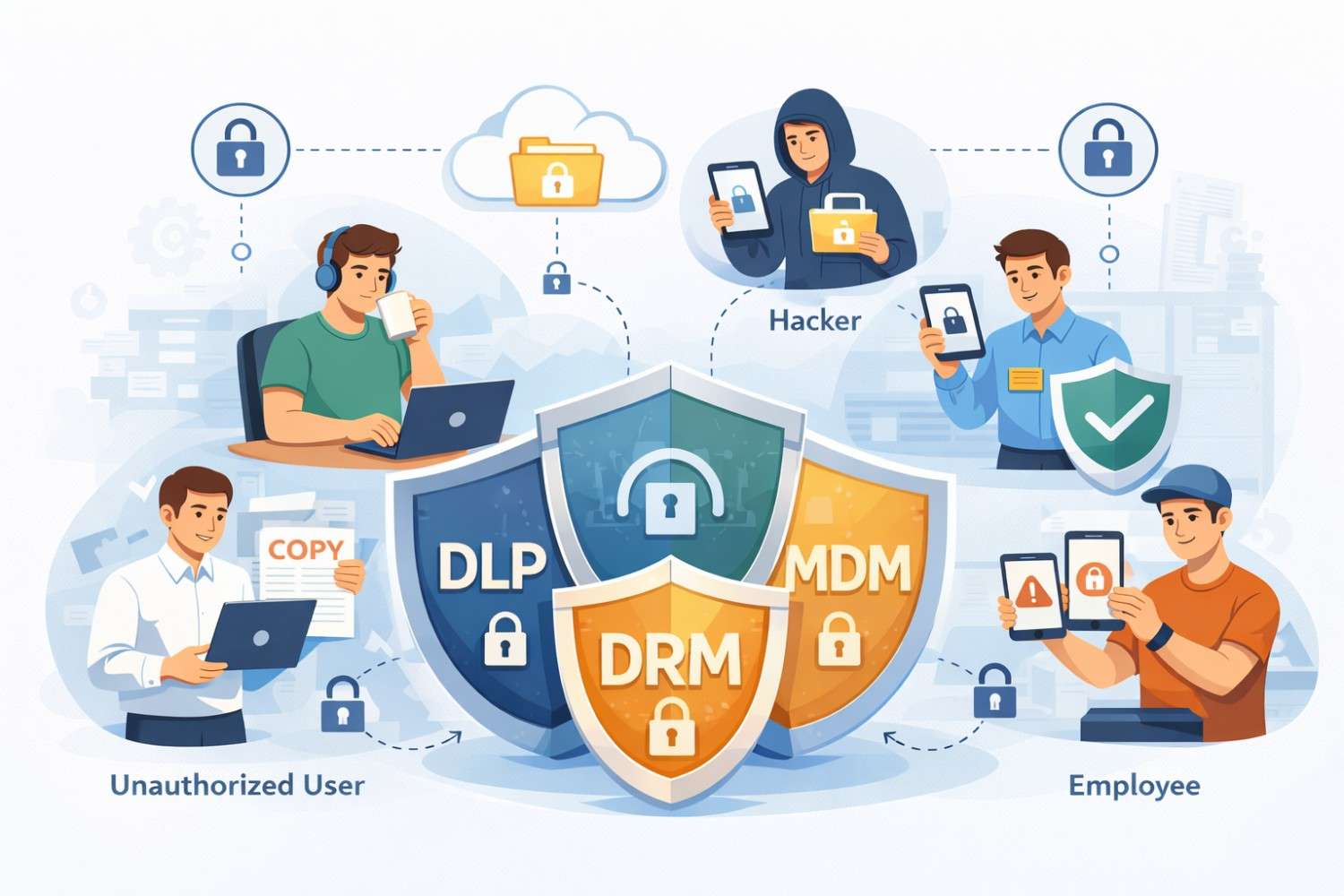
Most leaks do not come from hackers in hoodies. They come from normal people doing normal work. A file sent to the wrong email. A laptop left in a taxi. A shared link that never should have been shared. This is how valuable ideas escape. If you are building a tech company, your ideas are your company. Your code, models, designs, and data are the real product. Once they leak, you cannot pull them back. That damage is permanent. This article is about stopping leaks before they happen. Not after. Not during a lawsuit. Before the damage is done.
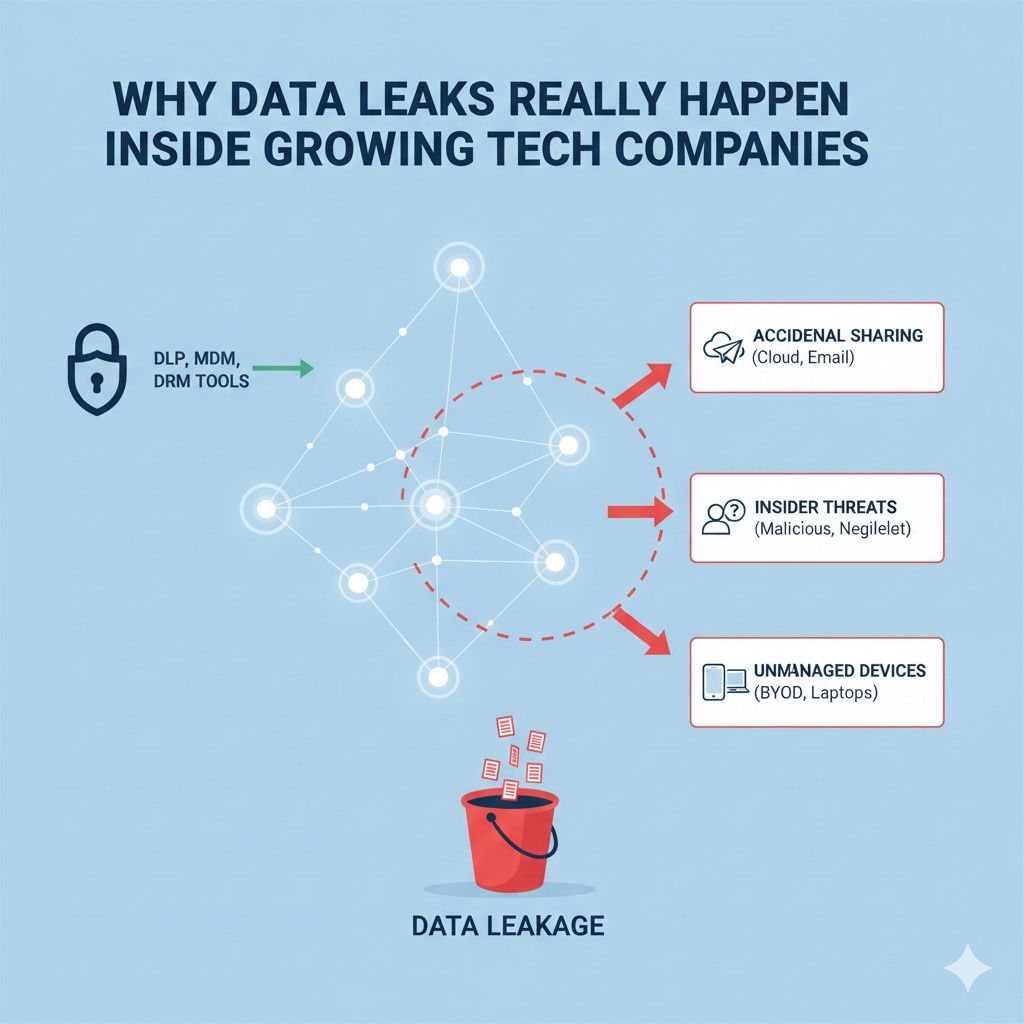
Why Data Leaks Really Happen Inside Growing Tech Companies
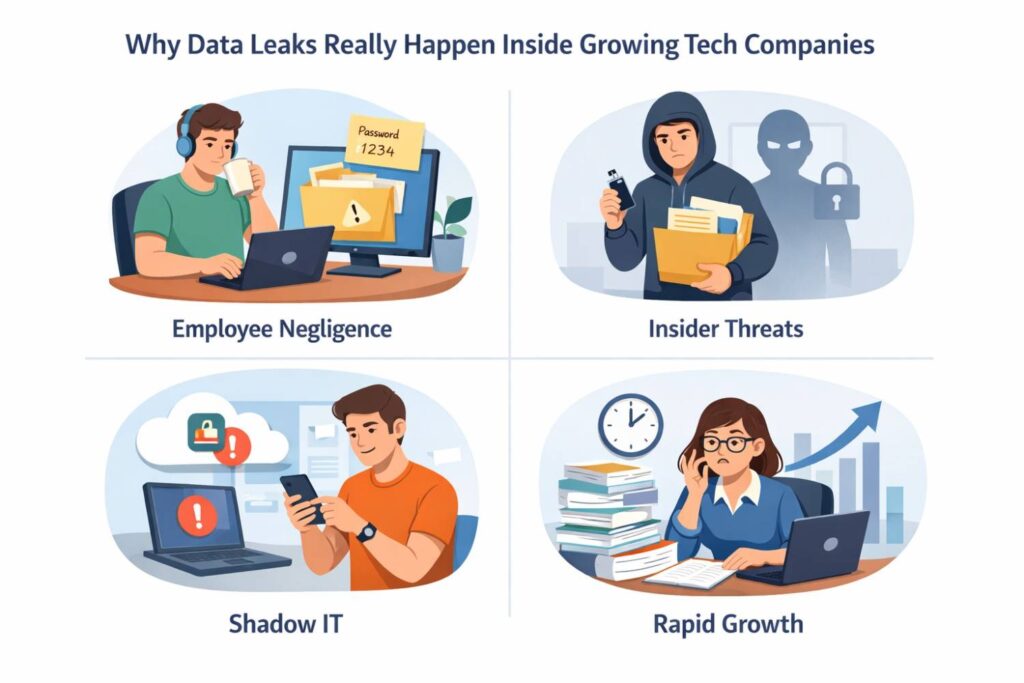
Data leaks inside fast-growing tech companies are rarely caused by bad people. They happen because speed wins over structure, trust replaces process, and tools lag behind growth.
Founders move fast for good reasons, but the same habits that help a company grow can quietly create holes where sensitive work slips out. Understanding the real causes is the first step to fixing them.
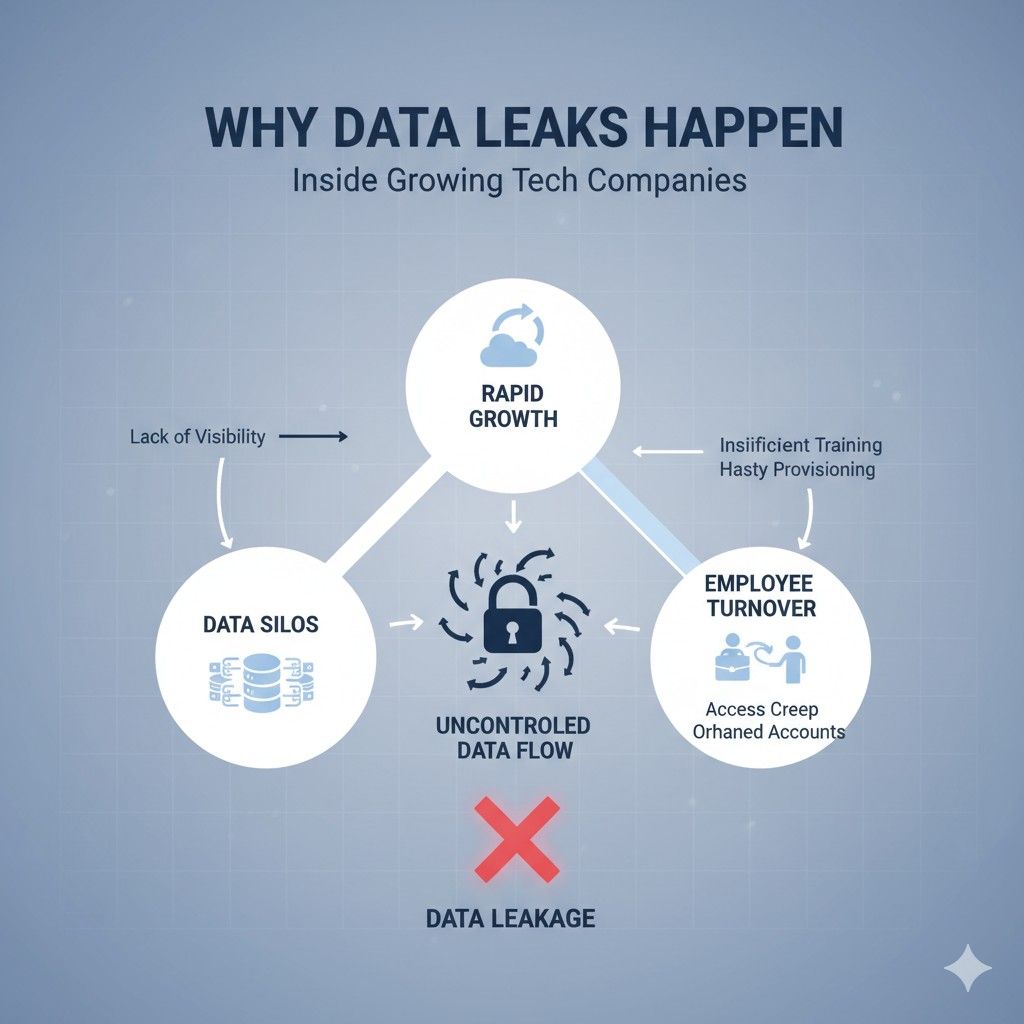
Growth Changes Behavior Before It Changes Systems
When a company is small, everyone knows everything. Files are shared openly, devices are personal, and access is broad. This works early on because trust is high and the team is tight.
As the company grows, this behavior stays the same, but the risk changes. New hires join every month. Contractors come and go. Partners need access for short periods of time.
Old permissions stay active because nobody wants to break anything. This is where leaks begin.
A smart move is to treat growth as a trigger, not a reward. Every new hire, every new tool, and every new client should force a quick review of who can see what.
This does not need to be heavy or slow. Even a short weekly check-in where someone asks “who has access that should not” can stop problems early.
Speed Pushes People to Take Shortcuts With Data
Engineers and product teams are trained to move fast. If a tool blocks progress, people find a way around it.
They email files to personal accounts. They upload code to random tools. They copy data to local machines so they can work offline.
None of this feels dangerous in the moment. It feels helpful. The risk shows up later, when that laptop is lost or that account is hacked.
The fix is not to slow people down. The fix is to make the safe path the easy path. If sharing data securely is harder than sharing it unsafely, leaks will happen.
Teams should invest time in setting up tools that work smoothly inside daily workflows. When protection feels invisible, adoption happens naturally.
Remote Work Turns Homes Into Data Centers
Remote work changed everything. Sensitive company data now lives on kitchen tables, coffee shop Wi-Fi, and personal phones. This is not a temporary shift. It is the new normal.
Many companies still act like work happens inside an office network. That assumption is outdated. Devices move across countries. Networks change every day. Family members share spaces with work machines.
A simple but powerful action is to treat every device as untrusted by default. That does not mean assuming bad intent. It means planning for loss, theft, or mistakes.
Encrypting devices, requiring login checks, and limiting what data can live locally reduces damage when something goes wrong.
Access Creep Happens Quietly Over Time
Access creep is one of the most common causes of internal leaks. Someone joins a project and gets access to files. Months later, the project ends, but the access stays. Over time, more people can see more data than they should.
This problem grows slowly and stays invisible until it causes harm. By then, it is hard to trace what happened.
A practical habit is to tie access to time, not trust. Temporary access should expire by default.
Long-term access should require renewal. This creates natural checkpoints where teams can clean things up without blame or drama.
Tools Are Added Faster Than Rules
Growing companies love tools. New chat apps, file sharing platforms, analytics dashboards, and cloud services appear every quarter. Each tool holds data. Each tool has its own rules.
The problem is not the tools. The problem is the lack of a clear owner. When nobody owns data rules, everyone assumes someone else is handling it.
Assigning clear responsibility matters. One person or small group should own data flow decisions.
They do not need to block progress. Their role is to understand where data lives and how it moves. This clarity alone prevents many leaks.
Trust Replaces Verification Too Early
Startups are built on trust. Founders trust early hires. Teams trust each other. This trust is healthy, but it should not replace verification as the company grows.
Leaks often come from honest mistakes, not bad intent. Verification protects good people from bad outcomes.
Adding light checks, like activity tracking on sensitive files or alerts when data moves outside approved systems, creates safety without creating fear. The goal is visibility, not control.
External Pressure Forces Risky Decisions
Deadlines, investors, and customers push teams to deliver fast. Under pressure, data protection feels like something that can wait. Files are shared quickly. Access is widened temporarily and never tightened again.
The reality is that pressure will always exist. The solution is to prepare before it hits. Setting default rules for data handling during calm periods helps teams make safer choices when things get intense.
Early Protection Saves Legal and Financial Pain Later
Many founders only think about leaks after something goes wrong. By then, the cost is high. Customer trust drops. Legal risk increases. Competitive advantage fades.
Preventing leaks early is far cheaper than fixing them later. It also makes future steps, like filing patents, stronger. When your ideas are controlled and documented, protecting them legally becomes easier.
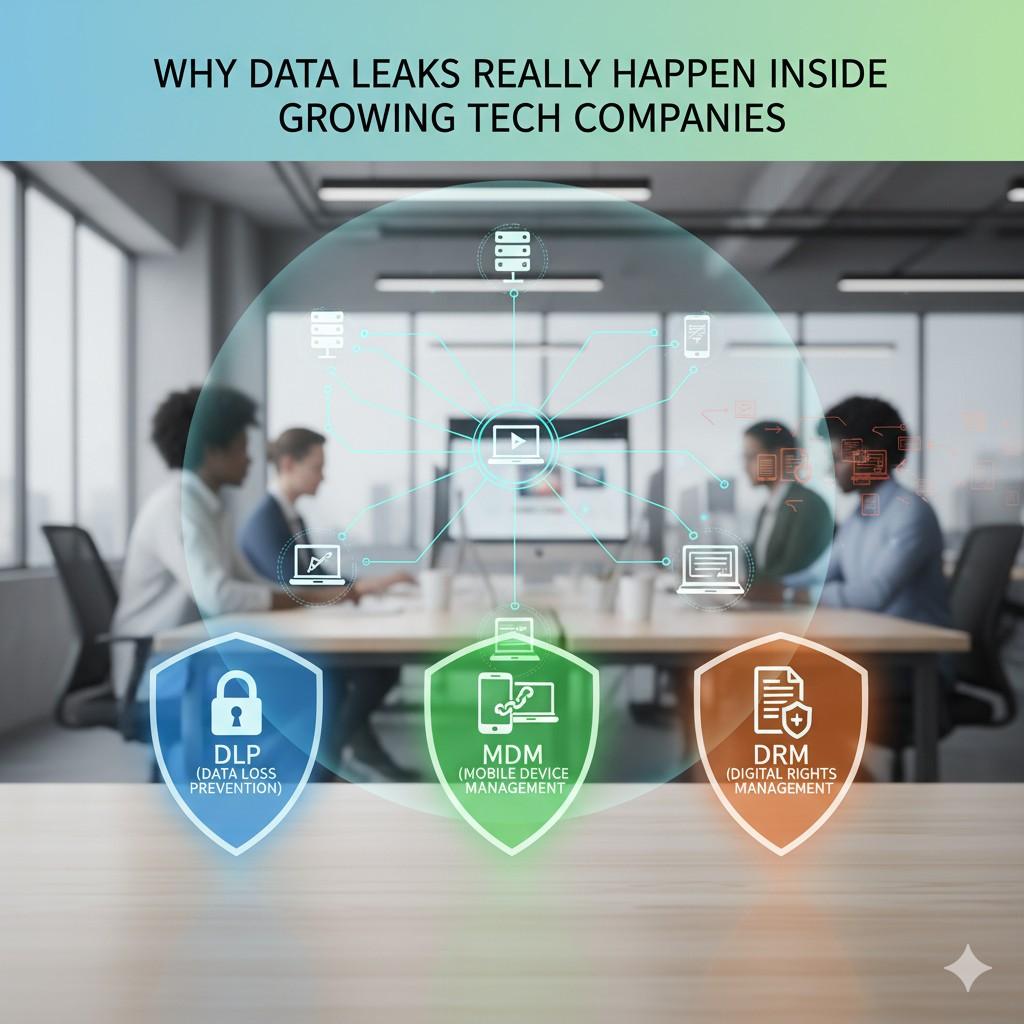
This is where tools and strategy meet. DLP, MDM, and DRM help control data today.
Patents lock in value for years. PowerPatent helps founders turn what they are building into strong protection without slowing momentum. You can see how the process works at https://powerpatent.com/how-it-works.
Data leaks are not a sign of failure. They are a sign of growth without guardrails. The good news is that guardrails can be added at any stage. The earlier you start, the less you have to fix later.
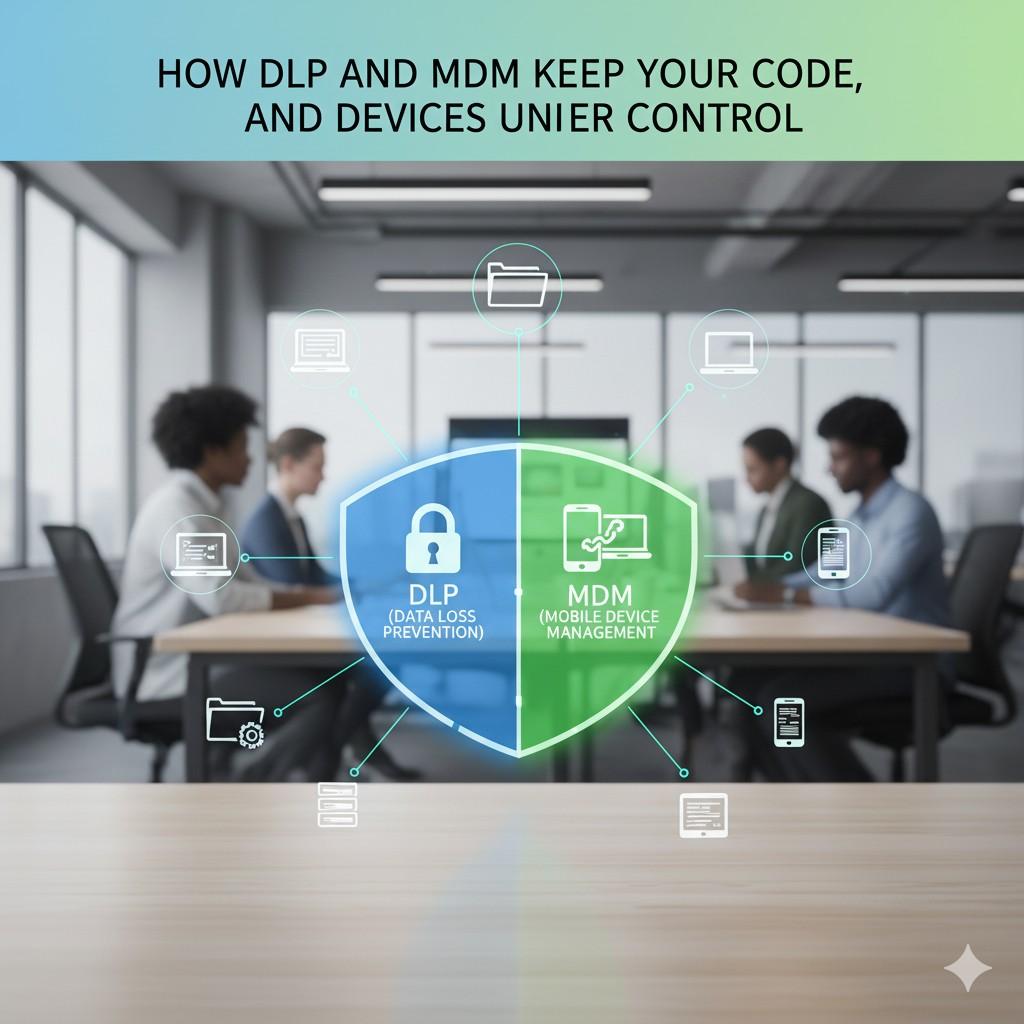
How DLP and MDM Keep Your Code, Files, and Devices Under Control
Most founders think data leaks are about files. In reality, leaks are about behavior and devices.
Files move because people move. Devices travel because work travels. DLP and MDM exist to bring calm and control to that movement without slowing the business down.
This section explains how these tools actually work in real companies, why they fail when used the wrong way, and how to apply them in a way that protects your work while keeping teams productive.
DLP Is About Watching Data, Not Policing People
Data Loss Prevention, or DLP, sounds scary to many teams. They imagine constant monitoring and blocked workflows. That fear usually comes from bad setups, not from the idea itself.
At its core, DLP simply watches how sensitive data moves. It notices when code, designs, or private documents leave approved paths. It can warn, slow, or stop that movement depending on the rules you set.
The most effective DLP systems are quiet. They do not shout or interrupt daily work.
They step in only when something truly risky happens, like source code being uploaded to a personal cloud account or customer data being emailed outside the company.
A strong strategy is to start DLP in observation mode. Let it watch without blocking anything.
Study the patterns it shows you. You will quickly see where risk actually lives, instead of guessing. Once you understand real behavior, you can add gentle controls that fix the biggest problems first.
DLP Works Best When It Protects the Most Valuable Things First
Not all data matters equally. Trying to protect everything at once usually leads to frustration and failure. Teams get blocked, exceptions pile up, and the tool gets turned off.
A smarter approach is to define what truly matters. For most tech companies, this includes source code, models, internal designs, customer data, and future plans.
These assets deserve extra care because losing them changes the future of the company.
Once you know what matters most, DLP rules become simple. Focus on where those assets can go and who can touch them. This clarity makes the system feel helpful instead of restrictive.
MDM Is the Missing Link Between People and Data
Mobile Device Management, or MDM, is often misunderstood as a tool for phones only. In reality, it is about every device that touches company data.
Laptops, tablets, and phones are now full workstations. They hold code, emails, credentials, and files. When one device is lost or compromised, the damage can spread fast.
MDM allows companies to set basic safety rules on devices without invading personal space. This includes things like requiring screen locks, encrypting storage, and separating work data from personal data.
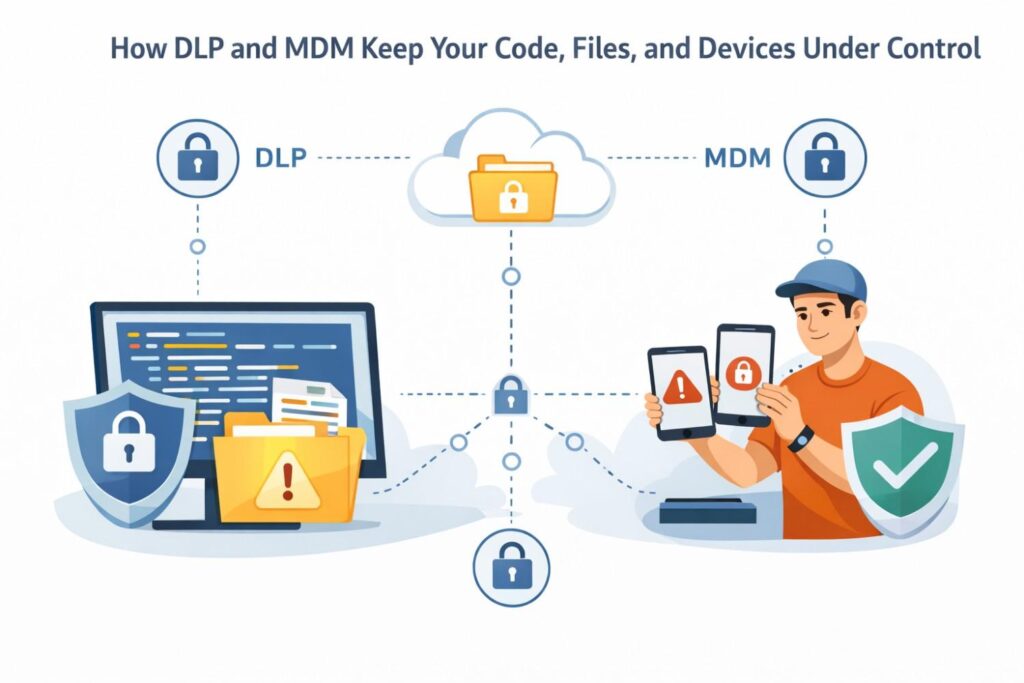
The goal is not control. The goal is resilience. When a device is lost, stolen, or compromised, MDM gives you options. You can lock access, wipe company data, or revoke credentials before real harm happens.
MDM Fails When It Ignores the Human Side
Many MDM rollouts fail because they are forced on teams without explanation. People fear losing privacy or control over their own devices.
Transparency changes everything. When teams understand that MDM protects their work and their company, adoption improves. Clear boundaries matter.
Employees should know exactly what the company can and cannot see.
One effective approach is to separate work profiles from personal profiles on devices. This makes it clear that only work data is managed. Trust grows when people feel respected.
Combining DLP and MDM Creates Real Coverage
DLP watches data. MDM watches devices. Alone, each tool helps. Together, they create a safety net.
For example, DLP might notice sensitive code being copied to a local machine. MDM ensures that machine is encrypted and protected. If the device later goes missing, the risk stays contained.
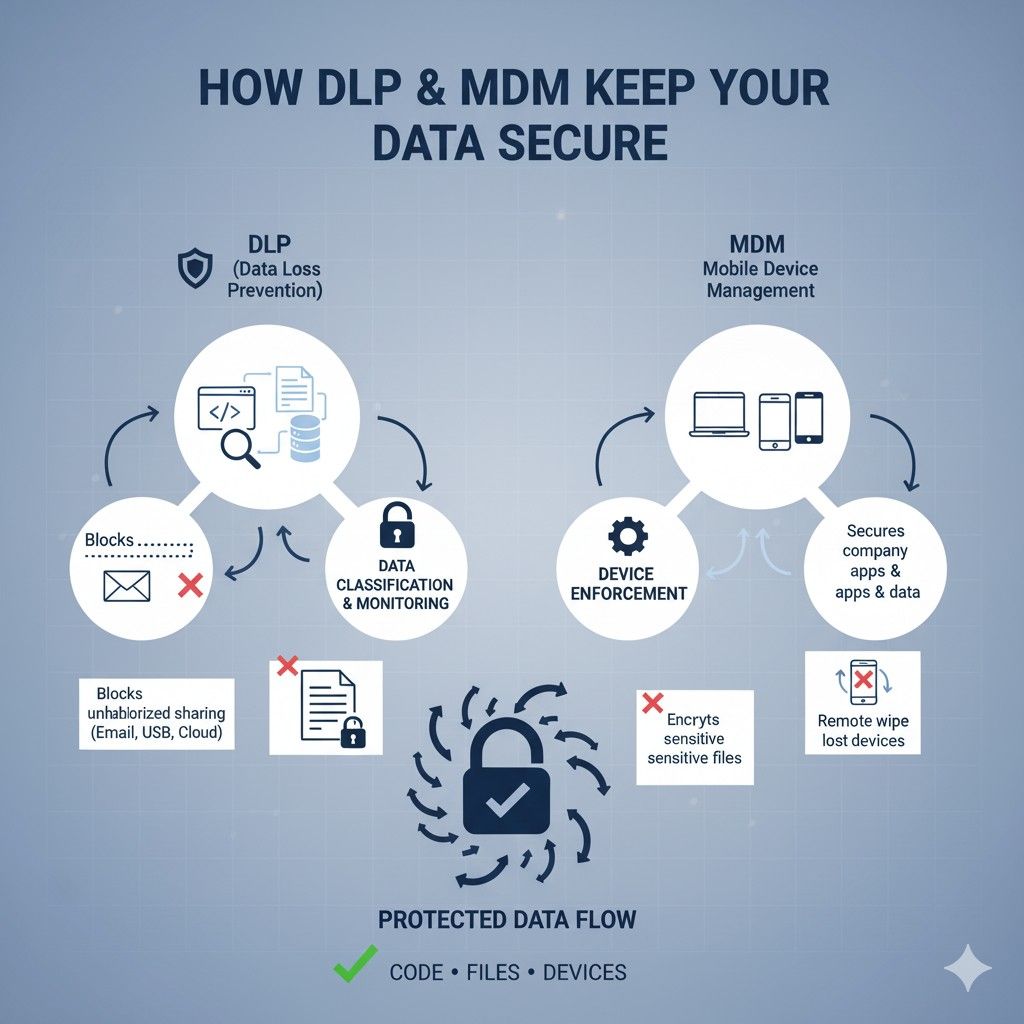
This combination is especially powerful for remote and hybrid teams. It allows freedom without chaos. People can work from anywhere, while the company keeps control over what matters.
Start With Defaults That Protect You Automatically
The best systems rely on defaults, not constant decisions. When protection depends on people remembering rules, mistakes happen.
Default encryption, default access limits, and default monitoring reduce risk without extra effort. Teams should not need to think about security every minute. The system should handle it quietly in the background.
This mindset also applies to new hires. Devices should be protected from day one. Access should be granted intentionally, not automatically.
DLP and MDM Support Stronger Long-Term Protection
Data control today makes legal protection tomorrow stronger. When your code and designs are well-managed, documenting invention history becomes easier.
You know who built what and when. This clarity matters when protecting ideas through patents.
PowerPatent is built for founders who want this kind of control without slowing down.
When your data is organized and protected, turning it into real patent protection becomes faster and cleaner. You can see how founders do this at https://powerpatent.com/how-it-works.
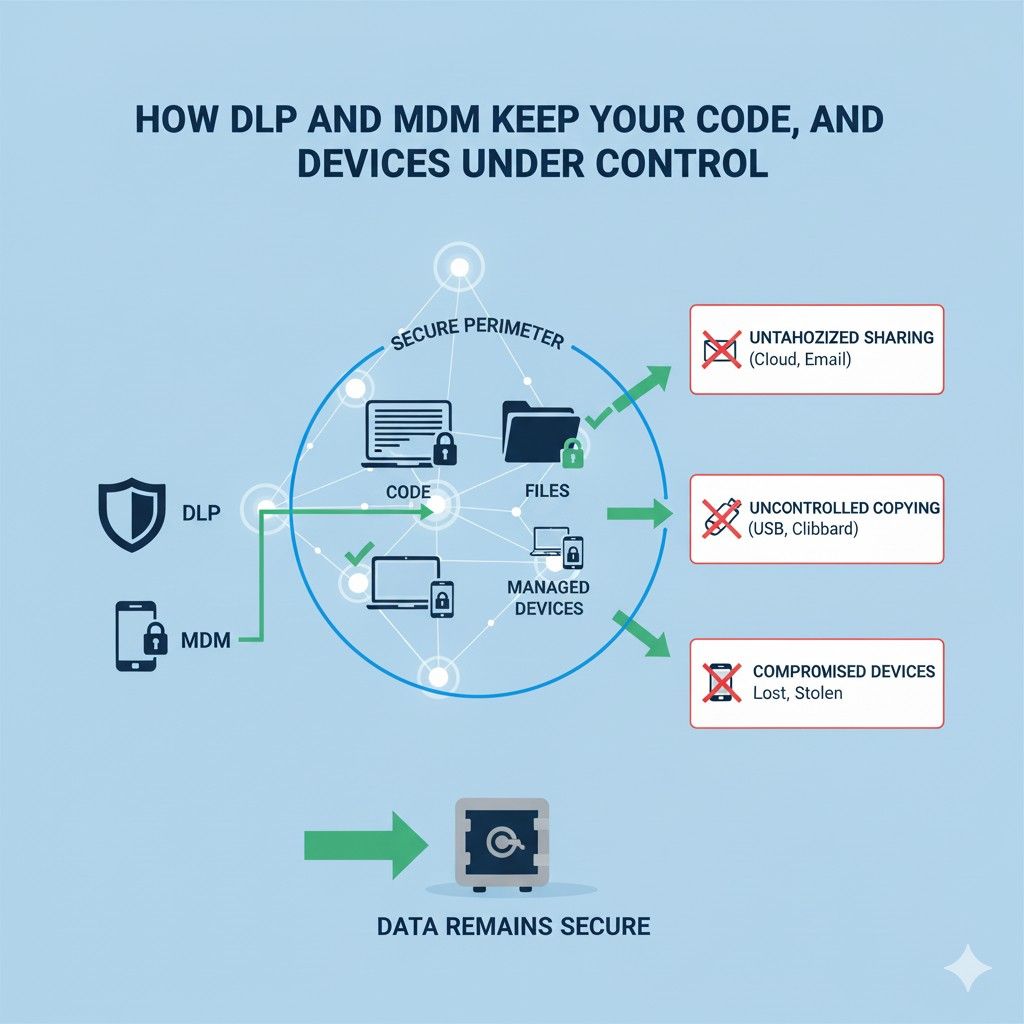
DLP and MDM are not about fear. They are about confidence. Confidence that your work is safe, your team can move fast, and your future is protected.
Why DRM Is the Last Line of Defense When Data Leaves Your System
DRM matters at the point where most companies mentally check out. Once a file is shared, many teams believe the risk is already accepted and irreversible.
That belief is dangerous. Data does not lose value when it moves. In many cases, it becomes more valuable because it is now exposed.
DRM exists to keep ownership, intent, and control attached to data long after it leaves your internal tools.
Shared Data Is Still Company Property
A common mistake inside growing tech companies is treating shared files as borrowed time. A document goes out, and everyone assumes it will naturally disappear when it is no longer needed. That rarely happens.
Files get downloaded. They get saved. They get copied into other systems. They follow people across roles, companies, and years. What felt temporary becomes permanent without anyone noticing.
DRM forces a different mindset. It treats shared data as still belonging to the company, regardless of where it lives.
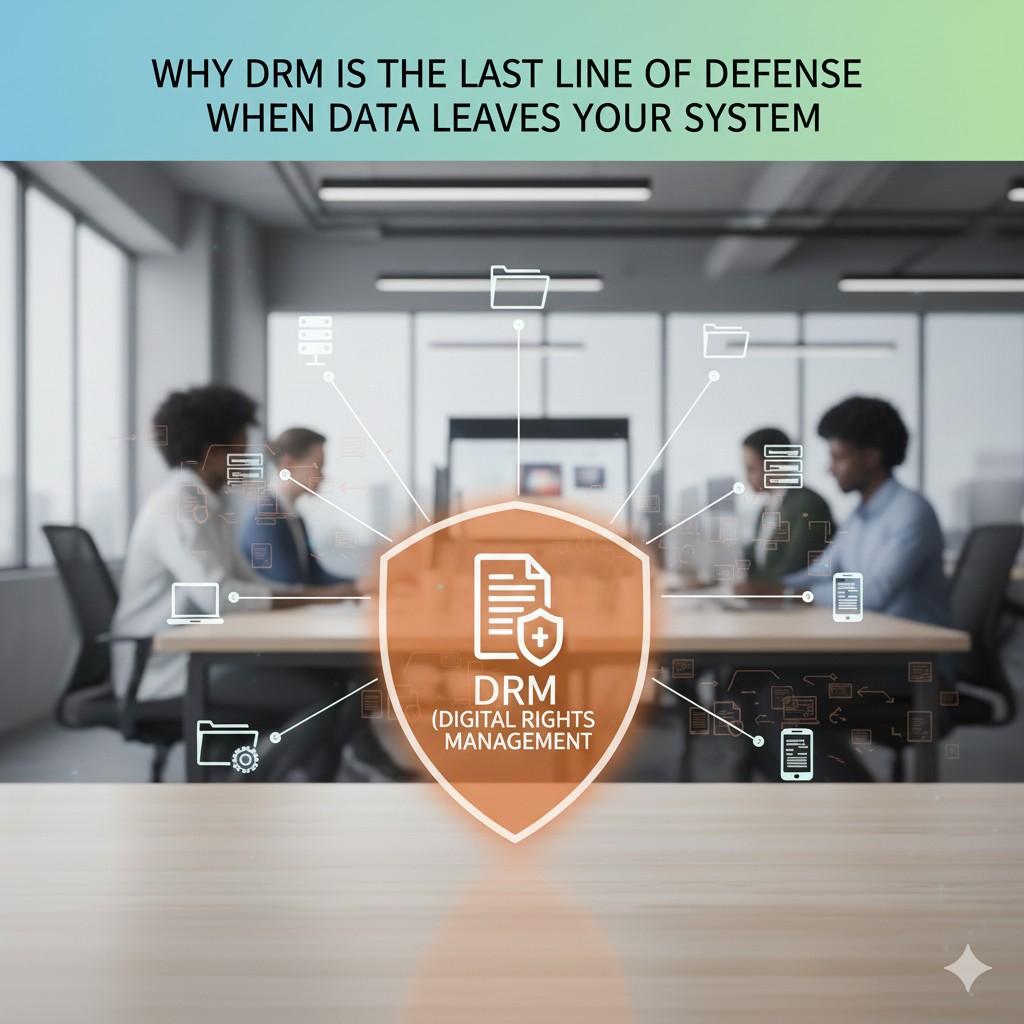
This subtle shift changes behavior. Sharing becomes intentional instead of automatic. Ownership stays clear even as collaboration increases.
The Illusion of Safety After Sending a File
Many teams feel a false sense of safety once a file reaches the right person. They assume good intent equals low risk. But risk is not about intent. It is about exposure.
People change roles. Devices get compromised. Accounts get reused. Cloud tools sync automatically. None of this requires bad behavior for a leak to happen.
DRM removes reliance on assumptions. It does not care why something happens. It simply limits what can happen. That objectivity is what makes it powerful.
DRM Protects Against Time, Not Just People
Time is one of the biggest threats to data security. As weeks turn into months, files outlive their original purpose. Nobody remembers who should still have access. Nobody feels responsible for cleanup.
DRM uses time as a control instead of a risk. Access can expire naturally. Permissions can degrade automatically. What once required manual follow-up becomes part of the system.
This is especially valuable in fast-moving companies where priorities change often. Data protection should adapt automatically as context changes.
The Quiet Risk of Familiar Relationships
The most damaging leaks often come from people who once had legitimate access. Former employees. Past contractors. Old partners.
These are not strangers. They are familiar faces with deep knowledge of how things work. When they leave, access often lingers quietly.
DRM addresses this without confrontation. Access ends when it is supposed to end. Files stop opening. Sharing stops working. There is no need for uncomfortable conversations or reactive cleanup.
DRM Reduces Dependency on Perfect Offboarding
Offboarding is one of the weakest points in many companies. It is rushed, emotional, and inconsistent. Checklists are missed. Access is forgotten.
DRM reduces the impact of imperfect offboarding. Even if someone keeps a file, it does not mean they can keep using it. Control does not rely on memory or process alone.
This safety net is critical for companies that scale quickly and do not yet have mature operations teams.
Protecting Data During High-Stakes Moments
Certain moments dramatically increase leak risk. Fundraising, acquisitions, launches, and crises all force teams to share more information with more people in less time.
In these moments, speed matters more than caution. Files are sent quickly to keep momentum. Decisions are made under pressure.
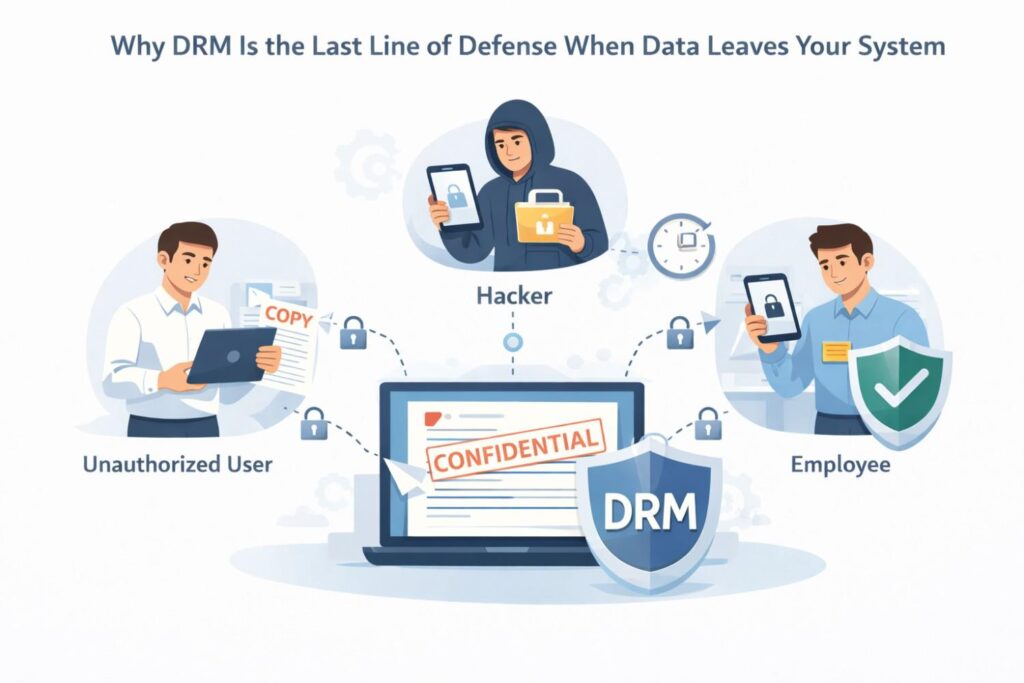
DRM is designed for these exact situations. It allows sharing without permanent exposure. Even rushed decisions remain reversible. That flexibility protects the company without slowing it down.
DRM Turns Fear Into Confidence
Without DRM, leaders often rely on fear to control data. Fear of leaks. Fear of mistakes. Fear of losing control.
Fear leads to hoarding. Hoarding slows collaboration. Slow collaboration slows growth.
DRM replaces fear with confidence. When leaders know they can control shared data after the fact, they are more comfortable enabling teams. This balance is what healthy growth looks like.
Visibility Changes How Teams Think About Sharing
When data sharing is invisible, people treat it casually. When sharing is visible, behavior improves naturally.
DRM provides clarity without noise. You can see who accessed what and when. You can understand how files move without digging through logs or guessing.
This visibility is not about blame. It is about awareness. Awareness leads to better decisions over time.
DRM Helps Preserve Intent as Teams Scale
As companies grow, context gets lost. People leave. New hires join. Files remain, but the reasons behind them fade.
DRM helps preserve intent. It captures why something was shared, under what conditions, and for how long. This context becomes part of company memory.
When questions arise later, answers exist. This reduces confusion, conflict, and risk.
Competitive Risk Is Often Invisible Until It Is Too Late
Many leaks never make the news. They quietly benefit competitors. A former contractor brings ideas to a new role. A partner uses shared knowledge to build something similar.
DRM cannot stop all competitive risk, but it can reduce the surface area. Limiting reuse, forwarding, and long-term access slows the spread of sensitive ideas.
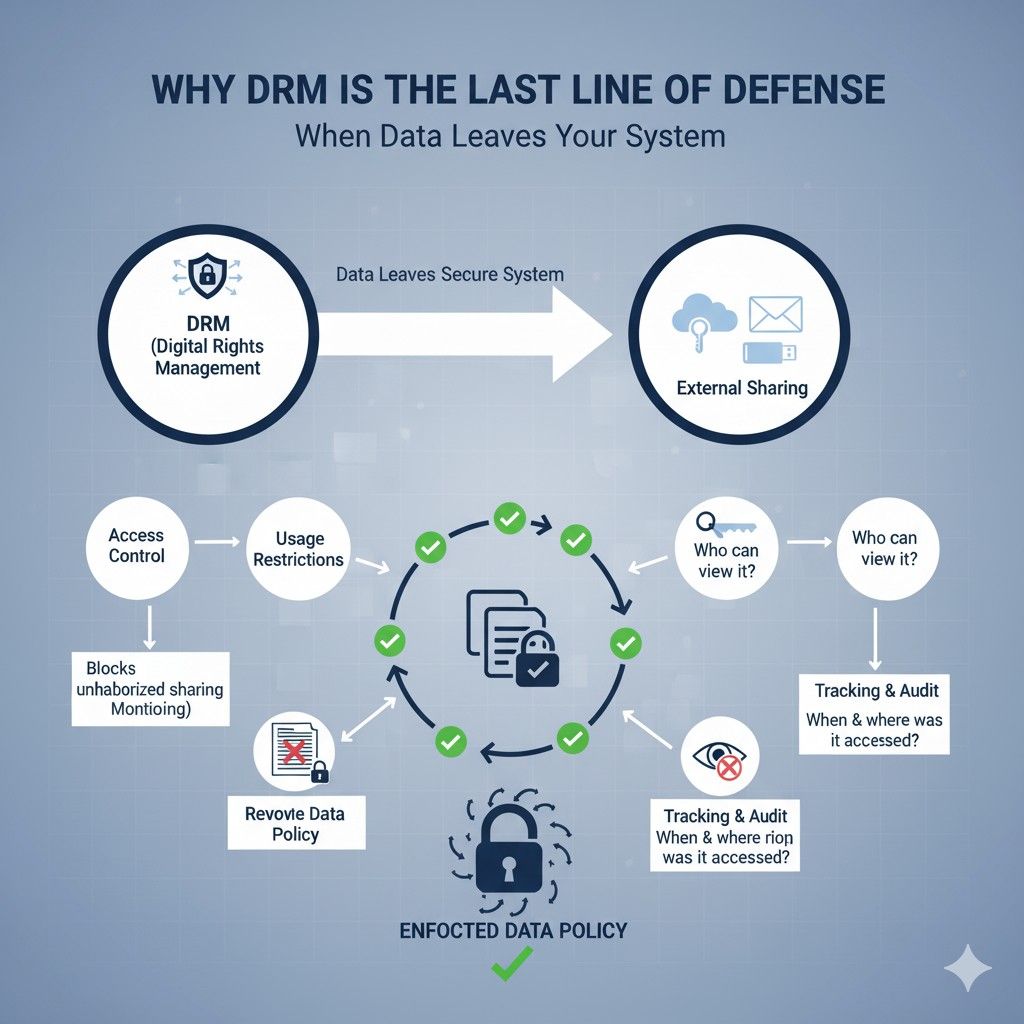
Even small delays can matter. Time protects advantage. Time creates space to build, file, and lead.
DRM Supports Cleaner Ownership Stories
Ownership disputes often come down to documentation and control. Who had access. When they had it. Under what terms.
DRM creates clean records. These records support contracts, agreements, and future legal protection. They make ownership easier to prove and harder to challenge.
This is especially important for deep tech companies where ideas evolve quickly and contributions overlap.
Operational Discipline Strengthens Legal Protection
Strong legal protection does not start with lawyers. It starts with discipline. How data is handled. How ideas are shared. How access is controlled.
DRM supports this discipline quietly. It creates habits without friction. It reinforces ownership without slowing work.
When the time comes to protect innovation formally, through patents or other means, this discipline pays off.
PowerPatent works best with founders who already respect their ideas enough to protect them early.
DRM keeps ideas contained. PowerPatent helps turn those ideas into defensible patents without disrupting momentum. You can see how that process works at https://powerpatent.com/how-it-works.
DRM Is Not About Locking Down Creativity
A common fear is that DRM will slow creativity. In practice, the opposite is true.
When teams feel safe, they share more openly. When leaders feel protected, they enable faster collaboration. Control creates freedom when applied correctly.
DRM is not about saying no. It is about saying yes safely.
The Real Role of DRM in a Growing Company
DRM is not the first tool companies think about. But it is often the one they wish they had implemented earlier.
It protects data when everything else has already happened. After files are shared. After people move on. After tools change.
That is why it is the last line of defense. And why it matters so much.
When combined with DLP and MDM, DRM completes a full protection loop. Data is watched before it moves, protected while it moves, and controlled after it leaves.
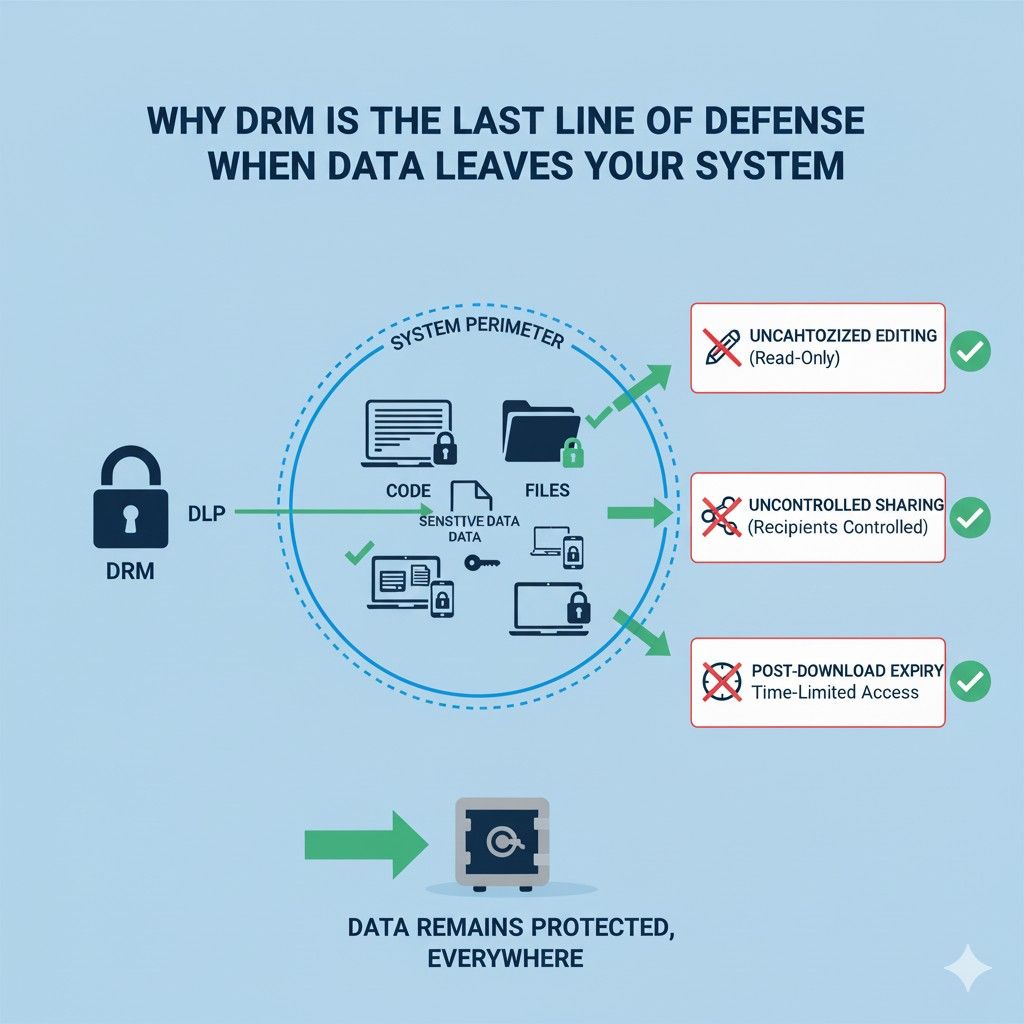
That is how modern companies stop leaks before they happen, without slowing down the people building the future.
Wrapping It Up
Most data leaks are not dramatic moments. They are quiet, boring, and invisible until the damage is done. A file shared too widely. A device that goes missing. Access that never gets turned off. None of these feel like big decisions at the time, but together they decide whether a company keeps control of what it builds.
DLP, MDM, and DRM are not three separate ideas. They are three parts of the same story. They protect data before it moves, while it moves, and after it leaves. When used together, they create a system that supports growth instead of fighting it.
Leave a Reply