
Every startup has something quiet and powerful behind the scenes. It might be a model, a process, a formula, or a clever way of doing things that no one else has figured out yet. This is the stuff that makes your company worth building. This is your trade secret. Most founders think trade secrets are protected by silence. They are not. Silence breaks the moment you hire, raise money, share a demo, or push code. What actually protects a trade secret is control. Who can see it. Who can touch it. Who can change it. And who leaves a trail when they do.
Why Access Control Is the Real Shield for Trade Secrets
Access control is not about fear. It is about clarity. When a company clearly controls who can see, use, and move its most sensitive work, it creates a quiet wall around its advantage.
This wall does not slow teams down. It keeps momentum clean and focused. Trade secrets survive not because people are careful, but because systems are designed to make care the default.
Many businesses assume contracts alone do the job. They do not. Contracts explain intent, but access control shows behavior. When something goes wrong, behavior is what matters.
Courts, investors, and buyers all look at how a company actually treated its secrets, not how it claimed it did. Access control is the proof.
Trade Secrets Live or Die in Daily Habits
Trade secrets are lost in small moments. A shared drive that keeps growing. A Slack channel that mixes core logic with casual talk. A demo link sent without limits.
None of these feel dangerous in the moment. Over time, they form a pattern that shows the company did not treat its secret as special.
Strong access control changes daily habits without making them heavy. When people must request access, they pause. When access expires, old doors close on their own.
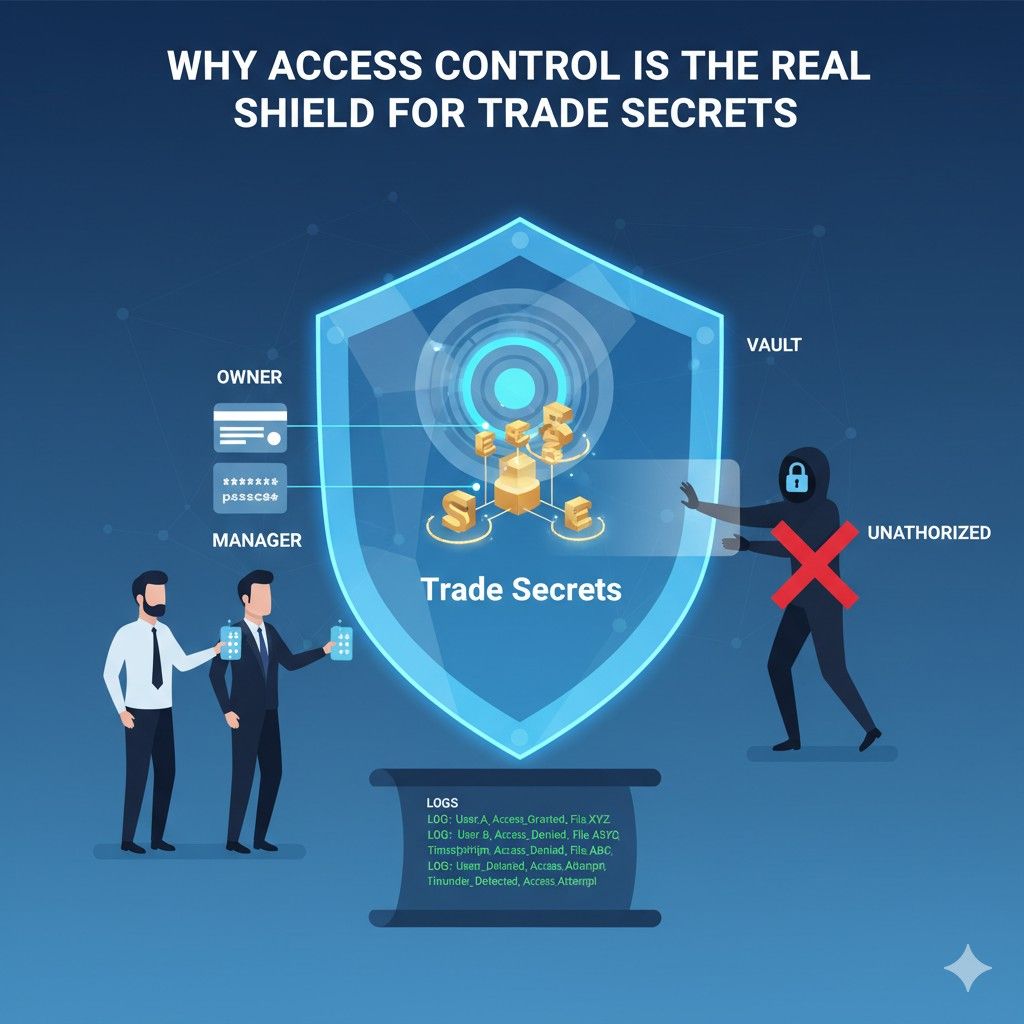
When files live in clear places, people stop copying them into random corners. These habits build a story of care that matters later.
Control Is About Reducing Surface Area
A useful way to think about access control is surface area. Every extra person, tool, or folder that can touch your secret increases the chance of loss.
The goal is not to hide everything. The goal is to shrink exposure until only the right paths exist.
Businesses should ask one simple question often. If this secret leaked today, where could it have come from. If the answer is unclear, the surface area is too large.
Tight access control makes the answer obvious, and that alone changes how teams behave.
Why Speed Without Control Is a Hidden Risk
Fast-growing companies often believe control slows them down. In reality, lack of control creates drag later. When access is wide and unclear, teams waste time checking what is safe to share.
Leaders hesitate before partnerships. Legal cleanup becomes expensive and stressful.
When access rules are clear, speed increases. Engineers know where core logic lives. Sales knows what can be shown. New hires ramp faster because boundaries are visible.
Control creates confidence, and confidence is a speed multiplier.
Access Control Signals Ownership
Ownership is not just about who invented something. It is about who managed it responsibly.
When a business shows clear access control, it signals that it knew the value of what it built. This matters deeply during funding, audits, and acquisitions.
Investors often ask how sensitive work is protected. Buyers always do. A clean access story reduces doubt. It shortens diligence. It avoids painful last-minute questions.

This is one reason PowerPatent founders think about protection early, while systems are still easy to shape. You can see how that mindset works in practice here: https://powerpatent.com/how-it-works
The Difference Between Privacy and Control
Privacy and control are not the same. Privacy hides information. Control governs movement. A company can be private and still careless. Files can be hidden but shared too freely once found.
Access control focuses on movement. Who can open. Who can edit. Who can export. Who can grant access to others.
This is where real protection lives. Businesses that understand this stop relying on secrecy and start relying on structure.
Control Turns Trust Into a System
Trust is important, but trust alone does not scale. As teams grow, trust must be supported by systems that do not rely on memory or good intentions. Access control is how trust becomes durable.
When access is granted based on role and need, no one feels singled out. The system decides.
This removes awkward conversations and reduces mistakes. It also protects good people from being blamed for failures caused by weak structure.
How Clear Boundaries Prevent Accidental Disclosure
Most trade secret leaks are accidents. Someone shares too much in a pitch. Someone reuses a slide. Someone pulls an example from real code without thinking. Clear access boundaries reduce these accidents.
When sensitive work lives in controlled spaces, it stops blending into general materials. Teams learn, without being told, that some things are different. This quiet separation does more than training ever could.
Access Control Creates Evidence Without Extra Work
Evidence matters when something is challenged. The best evidence is created naturally. Access control systems do this quietly. They show who had access, when it was granted, and when it ended.

This record protects the business even if people leave or memories fade. It shows discipline over time. Businesses that rely on informal sharing have nothing to point to when questions arise.
Building Control Early Is Easier Than Fixing It Later
The easiest time to build access control is when a company is small. Fewer people. Fewer tools. Fewer exceptions. Early decisions shape habits that last for years.
Waiting until a problem appears is costly. By then, secrets are scattered, access is tangled, and cleanup feels overwhelming. Early control avoids this pain entirely.
This is why smart founders treat access control as part of building, not as a legal task at the end.
Access Control Supports Future Patents
Many founders do not realize that weak access control can hurt patent plans. Public exposure, unclear sharing, and loose internal handling can raise questions about ownership and novelty.
Strong access control supports the story behind a patent. It shows the invention was developed internally, handled carefully, and not casually shared.
PowerPatent helps founders align how they build with how they protect, so nothing valuable slips through the cracks. You can explore that approach here: https://powerpatent.com/how-it-works
Control Is a Leadership Decision
Access control reflects leadership values. When leaders treat secrets casually, teams follow. When leaders ask thoughtful questions about access, the culture shifts.

This does not require micromanagement. It requires intention. Clear rules. Clear tools. Clear ownership. Once set, these systems run quietly in the background, doing their job without noise.
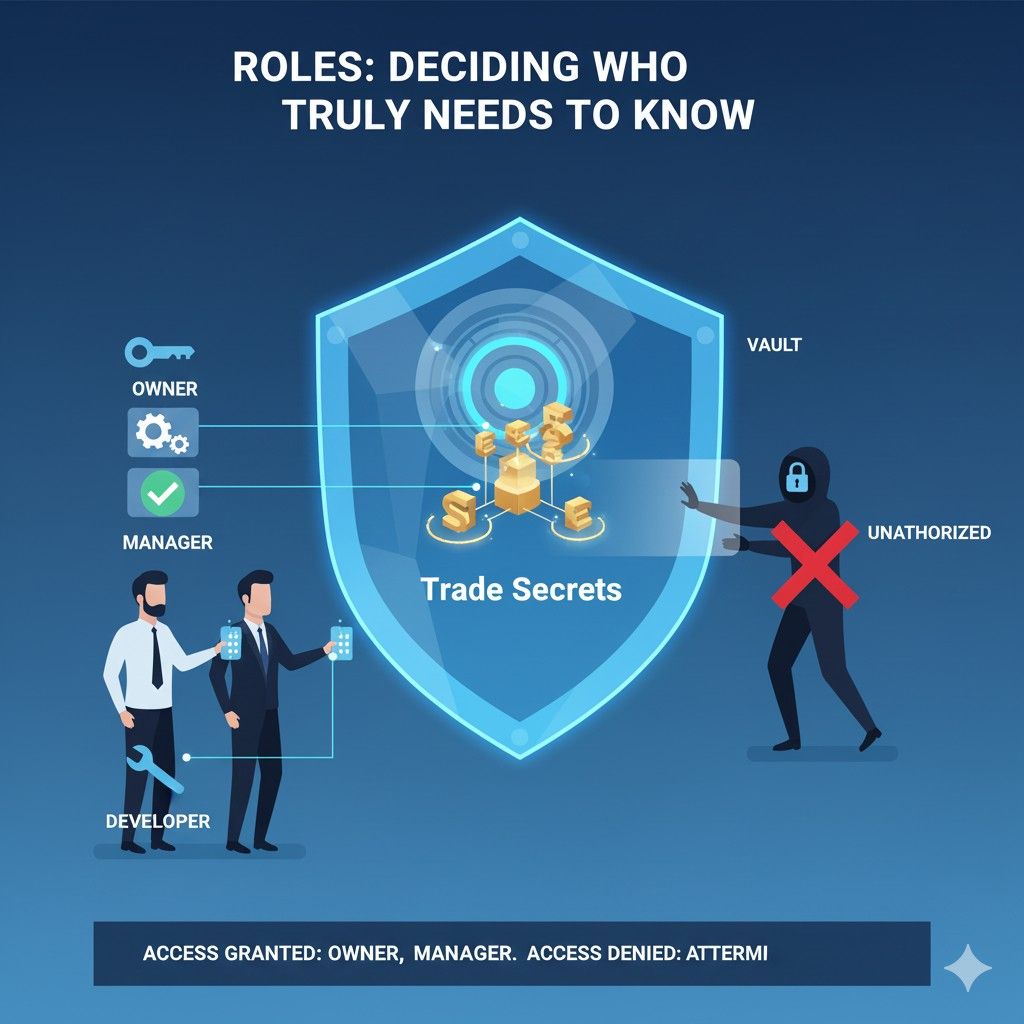
Roles: Deciding Who Truly Needs to Know
Roles are where access control either becomes clean or collapses into chaos. Most companies confuse roles with job titles. That mistake quietly opens doors that should stay closed.
A role is not who someone is. A role is what they need to touch to do their work well and nothing more.
This section is about designing roles that protect your trade secrets without slowing your team down. When roles are clear, access decisions become obvious.
When they are vague, everything feels negotiable, and secrets start to spread.
Roles Are About Function, Not Status
Many access problems begin with status-based thinking. Founders assume senior people should see everything. Early employees are given broad access out of loyalty.
Advisors are added everywhere because they feel important. None of this is strategic.
Strong role design starts with function. What exact work does this person perform today.
What inputs do they truly need. What outputs do they create. Anything outside that path should be restricted, even if the person is trusted and respected.

This mindset removes emotion from access decisions. It turns protection into a design choice instead of a judgment call.
The Danger of Default Access
Default access is one of the most common trade secret killers. New hires are added to shared drives. Engineers are given full repo access without thinking. Contractors are onboarded with broad permissions to save time.
Default access feels efficient, but it creates long-term risk. Every default becomes permanent unless someone actively removes it.
Over time, the company forgets who can see what, and no one wants to be the person who tightens things later.
The better approach is to start with no access and add only what is needed. This feels slower for a moment but saves massive effort later.
Roles Should Change as Work Changes
Roles are not fixed. They should move as the company moves. A person who needed deep access during early development may not need it once systems are stable. Someone who shifts teams may no longer need exposure to core logic.
Companies rarely revisit access because it feels awkward. Access control systems that tie permissions to roles instead of people solve this quietly. When a role changes, access changes with it.
No conversations. No reminders. No risk of forgetting.
This is one of the simplest ways to reduce exposure without adding work.
Separating Creation From Use
A powerful access pattern is separating those who create secrets from those who use them.
For example, the team that designs a core algorithm may not be the same team that uses its output. Giving both teams full access is often unnecessary.
When creation and use are separated, secrets become more contained. Fewer people can explain them. Fewer people can copy them. This also creates clearer ownership, which matters when questions arise later.
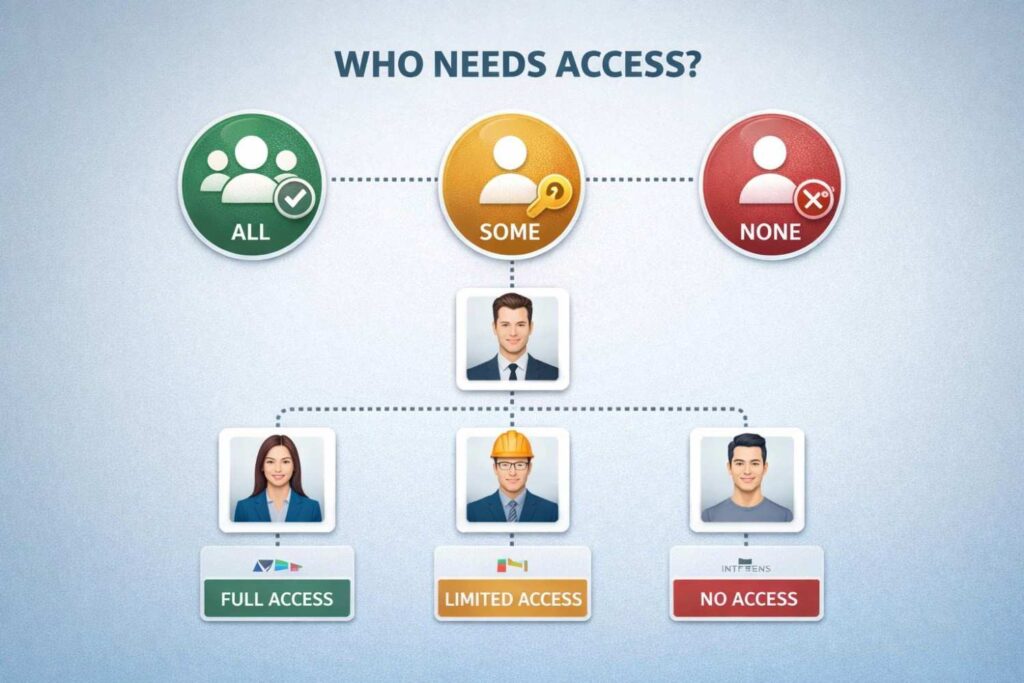
This separation does not block collaboration. It simply channels it through defined paths.
Why Founders Should Limit Their Own Access
Founders often assume they need access to everything. In reality, founders benefit most from clarity, not exposure.
When founders operate through dashboards, summaries, and defined interfaces, they reduce the risk of accidental sharing.
Limiting founder access also sends a strong cultural signal. It shows that control applies to everyone. This removes pressure on managers to justify limits and makes protection feel fair instead of restrictive.
Leadership discipline is one of the strongest signals of serious protection.
Handling Advisors and Investors Carefully
Advisors and investors are a special risk category. They are trusted, experienced, and well-connected. They also sit outside your company systems. Casual sharing with them is common and often undocumented.
Smart companies design specific roles for external access. These roles expose only what is needed for guidance or review. They avoid raw files, internal tools, and core logic whenever possible.
When sharing is structured, conversations stay focused and safer. It also makes it easier to say no without tension.
Contractors Are Not Temporary Employees
One of the most overlooked access mistakes is treating contractors like short-term employees.
Contractors often receive broad access because it feels easier than managing exceptions. When the contract ends, access is sometimes forgotten.
Contractor roles should be narrow by default. Access should expire automatically. Extensions should require a clear reason. This protects both sides and keeps boundaries clean.
Many trade secret disputes begin years later with former contractors who still had access long after their work ended.
Documenting Roles Without Creating Bureaucracy
Documentation does not have to be heavy. A simple written description of each role and what it can access is enough. This can live in a shared internal space and be updated as roles evolve.
The act of writing forces clarity. It reveals overlap. It highlights unnecessary exposure. It also creates a record that shows intent, which matters later.

PowerPatent encourages founders to build this kind of clarity early because it aligns how teams work with how inventions are protected. You can see that philosophy here: https://powerpatent.com/how-it-works
Training Through Design Instead of Rules
Most companies try to train people not to leak secrets. Training helps, but design works better. When roles are clear and access is limited by default, people learn boundaries through daily use.
They stop asking whether something is safe to share because the system already answered. This reduces stress and mistakes at the same time.
Good access control removes the burden of constant judgment from individuals.
Roles Create Accountability
When roles are tight, accountability becomes natural. If only a few roles can access a secret, investigations are focused and fair. This is not about blame. It is about clarity.
This clarity protects good people from suspicion and helps leaders respond quickly if something goes wrong. Vague access spreads responsibility so thin that no one feels accountable.
Designing Roles Is a Strategic Act
Role design is not an IT task. It is a strategy decision. It reflects how a company sees its value and how seriously it takes protection.
Founders who invest time here gain leverage later. They move faster in deals. They answer questions with confidence. They avoid painful cleanup work.
Roles are the first real line of defense for trade secrets. When done right, they are almost invisible. When done wrong, everything else fails quietly.
In the next section, we will move from people to places and trails. Vaults and logs are where access decisions become visible and provable.
Vaults and Logs: Where Secrets Live and How Trails Protect You
Trade secrets do not float in the air. They live somewhere. They move through systems.
They are opened, edited, copied, and shared. Vaults decide where secrets are allowed to live. Logs decide whether their movement leaves a trace. Together, they turn intention into proof.
This section focuses on building places that respect sensitive work and trails that protect you when questions arise. Done right, this does not feel heavy. It feels calm, predictable, and safe.
A Vault Is a Boundary, Not a Box
Many teams hear the word vault and imagine something locked and hard to use. In reality, a vault is simply a clear boundary. It is a place where sensitive work belongs and where normal shortcuts stop working.
A vault does not have to be complex. It can be a restricted repository, a secured folder, or a controlled system. What matters is that it is distinct. When people enter it, they know they are handling something important.

This mental shift changes behavior without extra rules.
Why Scattered Secrets Are Hard to Protect
One of the biggest risks for trade secrets is sprawl. Code copied into multiple repos. Docs saved in personal drives. Diagrams pasted into chat threads. Each copy weakens control.
Centralizing secrets into defined vaults reduces this risk fast. When there is one clear home, people stop making their own. This also makes updates safer because changes happen in one place instead of many.
The goal is not perfection. The goal is fewer hiding spots for risk.
Vaults Should Match How Work Actually Happens
A common mistake is designing vaults that fight daily work. When vaults feel slow or awkward, people work around them. This creates shadow copies that no one tracks.
The best vaults fit naturally into existing workflows. Engineers should not need extra steps to access core logic. Designers should not export files just to share internally. When vaults feel normal, they get used.
This requires listening to teams and adjusting structure until protection and speed align.
Access Is Meaningless Without Visibility
Access control without logs is blind. You may know who should have access, but without logs, you cannot see what actually happened. Logs turn access rules into evidence.
Logs show when access was granted, when it was used, and when it ended. They do not accuse. They record. This record is what protects you if something goes wrong or if ownership is questioned later.
Visibility creates confidence because nothing is hidden from the system.
Logs Change Behavior Without Policing
People act differently when actions leave a trace. This is not about fear. It is about awareness. When teams know access is logged, they pause before copying or sharing sensitive work.
This pause prevents many accidents. It also reduces the need for constant reminders. The system becomes the reminder.
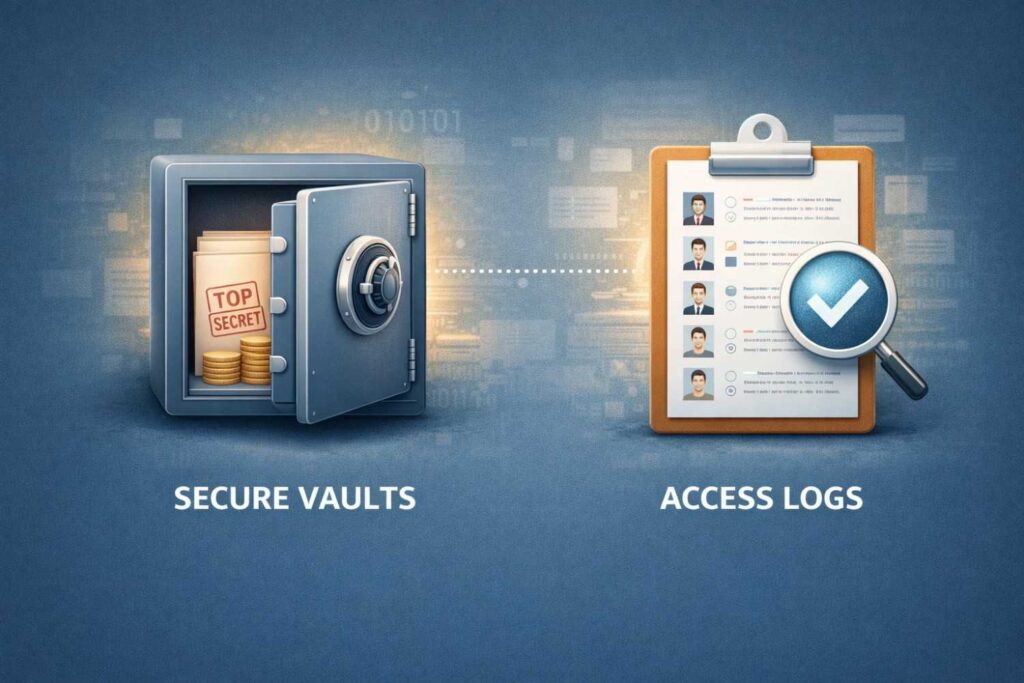
Importantly, logs should be quiet. They should not interrupt work. Their power comes from existing, not from being watched.
Designing Logs That Matter
Not all logs are useful. Good logs focus on meaningful events. Access granted. Access removed. File exported. Repo cloned. These moments tell a story.
Overlogging creates noise. Underlogging creates gaps. The balance is recording actions that could move a secret outside its boundary.
Businesses should periodically review logs not to monitor people, but to understand flow. Patterns reveal where controls are too loose or too tight.
Vaults Help Separate Core Value From Supporting Work
Not everything deserves vault-level protection. When everything is treated as sensitive, nothing is. Vaults should hold only what truly matters.
Separating core trade secrets from supporting materials clarifies value. Teams know where the crown jewels are. This reduces accidental exposure and simplifies conversations about what is safe to share.
This clarity also helps when preparing patents or disclosures because the important parts are already defined and contained.
Logs Support Clean Offboarding
People leave. This is normal. What matters is what leaves with them. Logs make offboarding clean and confident.
When access is removed, logs show that it happened. When questions arise later, there is proof that systems worked as designed. This protects both the company and the individual.

Offboarding without logs relies on trust and memory. That is rarely enough when stakes are high.
Vaults Reduce Over-Sharing in Collaboration
Collaboration does not require full exposure. Vaults allow teams to share outcomes without exposing internals. This keeps partnerships focused and safer.
For example, a partner may need results, not methods. A customer may need performance, not design. Vaults support this separation naturally.
This makes external relationships smoother because boundaries are built into systems, not enforced by awkward conversations.
Logs Turn Questions Into Answers
When something feels off, logs provide answers quickly. Who accessed this. When. From where. Without logs, teams speculate. Speculation damages trust.
Clear logs shorten investigations and reduce tension. They also discourage finger-pointing because facts replace assumptions.
This clarity is invaluable during audits, disputes, or diligence.
Vaults Support a Strong Ownership Story
Ownership is a story told through actions. Vaults show that a company knew where its value lived. Logs show that it watched over that value responsibly.
This story matters when raising capital, selling the company, or enforcing rights. It shows maturity without saying a word.
PowerPatent helps founders build this story early, aligning daily systems with long-term protection. You can see how that works here: https://powerpatent.com/how-it-works
Avoiding the Trap of Tool Overload
More tools do not equal more protection. Too many systems create confusion and gaps. Secrets slip through the cracks between tools.
It is better to have a few well-chosen vaults with clear logs than many overlapping platforms. Simplicity supports discipline.
Regularly ask whether a tool adds clarity or just complexity.
Making Protection Invisible but Real
The best vaults and logs fade into the background. People stop thinking about them because they work. Access feels natural. Trails are automatic.
This is the ideal state. Protection without friction. Control without noise.

When vaults and logs are designed well, teams build freely, leaders sleep better, and trade secrets stay where they belong.
Wrapping It Up
Trade secrets do not fail all at once. They fade. They slip. They spread quietly until one day they are no longer secrets at all. What separates companies that keep their edge from those that lose it is not luck or silence. It is structure.
Access control is that structure. Roles define who truly needs to know. Vaults define where sensitive work belongs. Logs define what actually happened over time. Together, they turn protection from an idea into a living system that works every day without drama.
Leave a Reply