
Global annuities sound simple on the surface—you pay to keep your patent alive, and each country wants that payment on time. But the moment you start looking across borders, things get messy fast. Every country has its own timing rules, its own fee structure, its own grace periods, its own penalties, and its own little surprises that can throw you off if you’re not watching closely. And if you miss a deadline in the wrong country, the consequences can be brutal. Your patent rights can weaken, shrink, or vanish altogether.
Why Annuities Matter More Than Most Founders Realize
Annuities often feel like background noise in the patent world. They sneak up slowly, year after year, until one day they turn into a real strategic concern.
Most founders do not think about them early on because they are busy building, shipping, and keeping the business alive.
But the truth is that annuities shape the long-term strength of your IP far more than you might expect.
When you understand how they work and why they matter, you start making smarter moves that save money, protect markets, and keep you from scrambling at the worst possible moment.
Annuities Control the Real Lifespan of Your Patent
Many founders think once a patent is granted, it simply stays alive for twenty years. But that only happens if you keep paying the annuities on time in every country where you want protection.
These payments act like a heartbeat. Each one keeps your rights alive for another cycle. When one payment is missed, the protection you worked hard to secure does not taper off slowly. It simply ends.

That means a competitor can step in, copy your technology, and operate legally in that country. When you are growing a startup and your product is gaining attention, that kind of gap can become a major threat.
Annuities Shape Your Global Expansion
When you file patents in multiple countries, you are not committing to stay in all those places forever. You are giving yourself options. As the business evolves, annuities become a way to shift your protection toward the markets that actually matter.
Maybe one region becomes too costly, or another market becomes more valuable. Annuities help you course-correct without rewriting your entire patent strategy.
You can choose to keep paying in the countries where you see traction and quietly drop coverage where it no longer makes sense. This gives you control without forcing you to restart or refile anything.
Annuities Reveal Which Markets Deserve Investment
As your company grows, your patent portfolio will likely expand. More filings mean more obligations. Over time, annuities become a clear signal of what is working and what is not.
When you sit down once a year and review which countries are worth protecting, you start seeing patterns. Some regions show user growth, active sales, or strategic partnerships.
Others stay quiet for years. By paying attention to where your portfolio gives value, you avoid wasting money on markets that do not support your business goals.
This simple habit can save a surprising amount of cash, especially once your startup scales internationally.
Annuities Protect Your Competitive Edge
When your product starts gaining traction, competitors will look at your filings. They will watch for weak spots and missed payments. A lapse becomes an open door. Even large companies rely on this tactic.
They monitor competitor portfolios and step in the moment a right disappears. By staying on top of annuities, you make sure your competitors stay one step behind you instead of one step inside your market.

This is especially important for software, AI models, robotics hardware, and any tech where replication is fast and cheap.
Annuities Are Easier to Manage When You Plan Early
The biggest mistake founders make is ignoring annuity planning until the deadlines stack up. When you plan early, you can estimate your long-term costs, align protection with your go-to-market plan, and keep your resources focused on growth rather than emergencies.
This is where tools like PowerPatent make a real difference. Instead of juggling spreadsheets, reminders, and calendars, the platform tracks every deadline, gives you visibility across your entire portfolio, and lets you adjust your strategy as your company changes.
You keep your speed without losing control, which is exactly what fast-moving teams need.
Annuities Can Become Leverage When Raising Capital
Investors look at your patent portfolio as a sign of seriousness and long-term thinking. When they see that you manage your annuities well, it signals that your IP is looked after and maintained with intention.
A clean record shows you treat patents like real assets rather than paperwork. This can strengthen your valuation, build confidence in your defensibility, and make your fundraising story stronger.
On the other hand, a messy annuity history raises questions about risk and discipline. Founders who can show control here stand out immediately.
How to Make Annuities Work for You Instead of Against You
The simplest way to stay ahead of annuities is to treat them as part of your overall business planning instead of something separate. First, connect each patent to a business goal.
That way, each payment becomes a strategic choice, not a routine fee. Second, review your portfolio at least once a year to decide which markets still matter and which ones no longer align with your direction.

Third, move your annuity tracking to a system that does not depend on human memory. This is one of the biggest reasons founders use PowerPatent, because it eliminates the fear of missing deadlines and gives you a clear dashboard of every upcoming obligation.
If you want to see how PowerPatent helps founders stay ahead of annuities with far less stress, you can explore the full workflow here: https://powerpatent.com/how-it-works
How Patent Annuities Work Around the World
When founders first look at global annuities, the rules often feel random. Every country seems to have its own way of deciding when you pay, how much you pay, and what happens if you miss a deadline.
The truth is that annuities grow out of each country’s own laws, market behavior, and view of innovation. Once you understand that, the chaos starts to make sense.
This section gives you a clear, simple picture of how annuities really work around the world, why the systems differ so much, and how you can use that knowledge to build a smarter global IP plan even as your business is still growing.
How Timing Creates Hidden Pressure
Every country sets its own calendar for annuities. Some start the payments from the day you file your patent application. Others start when the patent is granted.
Some require yearly payments without exceptions, while others allow longer cycles. This is one of the first places where founders get caught off guard. If your portfolio covers five or ten countries, you may end up tracking several different sets of deadlines at once.

The variations create pressure because a single missed date can erase years of work. When you know how timing works in each region, you can place your attention where it matters most and avoid unpleasant surprises when your team is already stretched thin.
How Fee Structures Shape Your Budget
Fees vary wildly across the world. Some regions charge very little in the early years and then raise the cost over time. Others keep the fees steady. Some countries charge more simply because their systems require more internal processing.
These differences can make long-term budgeting tricky if you do not plan early. For a growing startup, unpredictable costs can quickly snowball, especially when your portfolio expands from one invention to several.
When you understand how each country sets its fees and why the costs climb in certain places, you get the power to shape a budget that works with your growth plans instead of fighting against them.
How Grace Periods Save You When Things Get Busy
Most founders only learn about grace periods when they are already in trouble. Every country decides whether it offers a safety window after a missed payment.
Some offer months of extra time. Some offer almost none. This matters a lot more than people realize. A grace period is not something you should rely on, but it becomes a vital shield for busy teams handling dozens of deadlines at once.
When you know which countries have strong grace periods and which ones do not, you can place more attention on the regions where the stakes are higher.
This helps you stay calm even when your schedule gets chaotic, because you are making decisions with clarity instead of guesswork.
How Penalties Reveal Each Country’s Risk Level
Countries do not treat late payments the same way. One country might charge a small penalty. Another might immediately weaken your rights. Another might start a countdown to full termination.
This is why founders who treat annuities as simple renewals often end up shocked when something serious happens. When you understand how each country handles lateness, you see the real risk level long before anything goes wrong.

You can decide which patents deserve closer attention and which ones give you a little more breathing room. This shift from reactive to proactive thinking is one of the simplest ways to protect your IP without adding stress.
How Government Policy Shapes the Rules
Every country sees patents differently. Some want to attract new technology and support growing industries, so their annuity system is designed to be friendly and predictable.
Others prioritize internal markets or local innovation, so they charge higher fees or shorten timelines. Some regions want to encourage companies to keep only the patents that matter most, so they make later-year payments more expensive.
Once you see the logic behind the rules, you stop treating each country as a mystery. You start thinking about how each market aligns with your real goals. This helps you build a portfolio that supports your expansion instead of draining your resources.
How Local Markets Influence Your Decisions
A country’s market size, customer behavior, and competitive landscape should affect how you think about annuities. If you are entering a region with fast growth, strong demand, or active competitors, keeping your patent alive becomes a strategic move.
If a region is slow, small, or irrelevant to your long-term plan, paying the annuity might not make sense. These decisions become easier once you understand the annuity system for each place.
Some countries give you more flexibility. Others require early commitment. When you know the rules, you can time your decisions with care instead of reacting on the fly.
How International Filings Turn Into Local Obligations
Many founders start with international filings like the PCT because it gives them time before deciding which countries to enter. But once the national phase begins, each country’s annuity rules come into play.
This transition catches people off guard because the PCT feels simple and unified, but local requirements do not follow the same pattern. If you understand how annuities work ahead of time, the shift feels natural instead of overwhelming.
You know what costs to expect, what deadlines matter most, and which markets deserve your early attention. This keeps you from spreading resources too thin or locking yourself into fees that do not match your growth path.
How Automation Changes the Entire Experience
Handling global annuities manually is almost impossible for a modern startup. Calendars, reminders, emails, and spreadsheets create confusion because each country behaves differently.
This is why automation is becoming a central part of smart IP management. A platform like PowerPatent keeps track of deadlines across all countries, sends early alerts, and removes guesswork from the process. It gives you a single dashboard instead of a fragmented mess.
This turns annuity management from a source of stress into a simple operational rhythm that takes minutes instead of hours. When your team is moving fast, this difference becomes priceless.

If you want to see exactly how PowerPatent handles global annuity tracking and long-term portfolio care, you can explore the workflow here: https://powerpatent.com/how-it-works
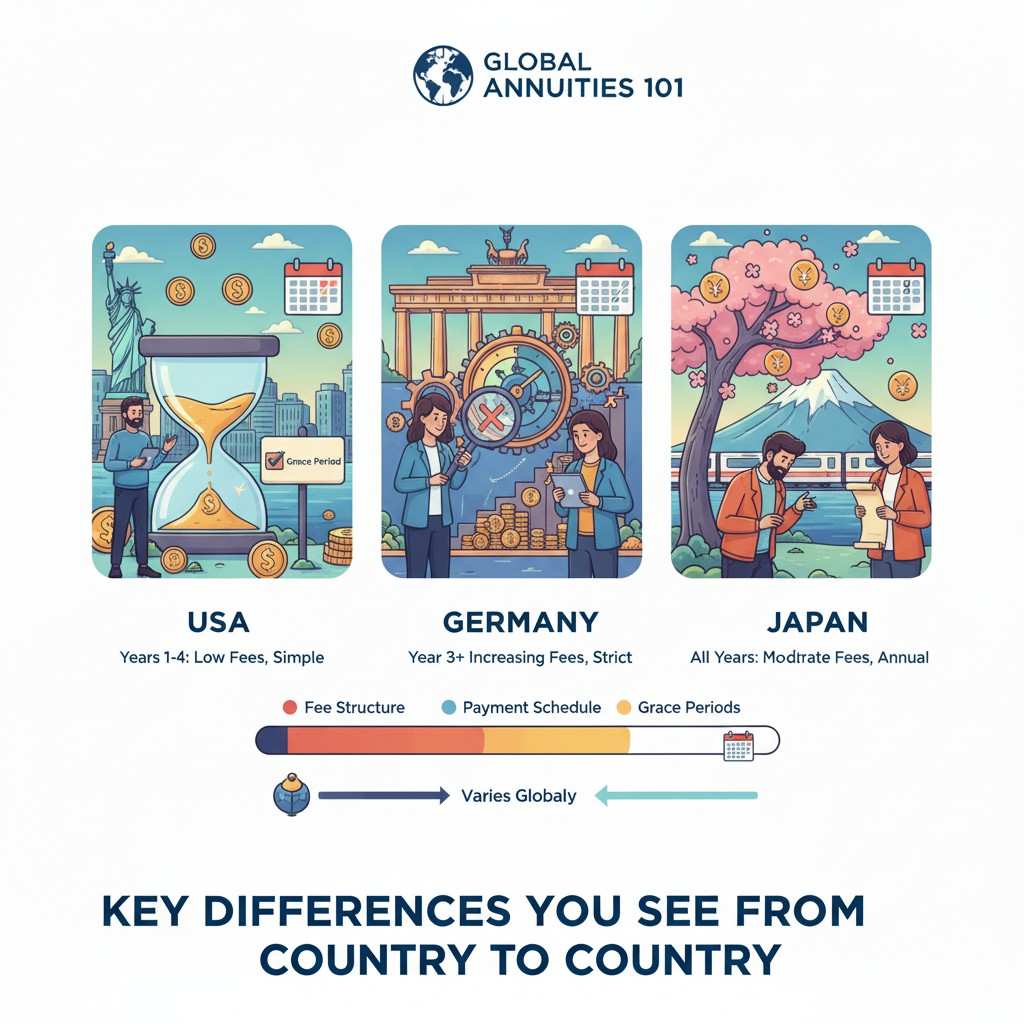
Key Differences You See From Country to Country
When you look closely at how countries handle annuities, the differences are not small quirks. They are deep structural variations that come from each country’s legal culture, economic goals, and philosophy around innovation.
These differences can affect everything from your yearly budget to your long-term global protection strategy. Understanding them early helps you avoid unnecessary costs, reduce confusion, and stay in control even as your patent portfolio grows across borders.
This section breaks down the real factors that make each country behave differently so you can make smarter choices with far more confidence.
How Deadlines Shift Depending on the Country
Each country sets its own rules for when annuities are due, and these patterns can feel scattered when you first encounter them. Some countries want payments on the anniversary of your filing date.
Others anchor the payments to the anniversary of your grant date. Some countries shift the deadline to the end of the calendar year. This matters far more than founders expect.

When you do not understand these variations, you end up tracking multiple timelines at once without a clear sense of priority.
When you do understand them, you can build a timeline that makes sense and plan ahead with clarity instead of scrambling when reminders suddenly pop up.
How the Starting Point Changes Your Strategy
In some regions, annuities begin right after you file your patent application. In others, they do not start until your patent has been examined and granted. This split creates big differences in how your early costs build up.
If you are operating in markets where annuities start during the application stage, you must plan for early expenses even before your patent is approved. In markets where payments begin after grant, you get a longer runway before the fees begin.
Founders who understand this difference can plan their finances with far more confidence.
Founders who do not often find themselves shocked when early invoices arrive in countries they assumed would behave the same way as others.
How Prices Increase Over Time
Countries do not treat annuity pricing in a uniform way. Some countries keep the price steady for the entire life of the patent. Others increase the fee every year, sometimes dramatically.
This structure exists to encourage companies to keep only patents that still matter. From a business perspective, this means you must think about the lifetime value of each patent early on.
If the cost rises sharply in later years, you must ask whether the technology will still be valuable by that point.
This helps you avoid spending money on protection that no longer supports your business goals. When you understand which countries raise fees and how fast they rise, you can shape a smarter long-term financial plan.
How Grace Periods Reflect the Country’s Risk Tolerance
Some countries offer generous grace periods after annuity deadlines. Others offer narrow windows or none at all. A strong grace period can save you from losing rights if a deadline slips during a busy quarter.
A weak or nonexistent grace period means you must be extremely attentive to that country’s deadlines. The difference reveals how much a country prioritizes strict enforcement versus flexibility.
When you know which regions offer more time and which are unforgiving, you can allocate attention accordingly. This reduces anxiety because you no longer treat every deadline as equally risky.
You focus where the consequences are highest, which helps you protect your rights with less noise.
How Enforcement Shapes the Local Patent Culture
Enforcement rules vary widely. In some countries, missing one payment immediately starts the termination process. In others, the process allows more time for recovery.
Some countries treat late payments as correctable errors. Others treat them as irreversible lapses. These differences shape how aggressively you need to manage your annuity schedule in each market.
When you understand the enforcement climate, you know where to place more oversight and where you have a bit more flexibility.
This also helps you understand how other companies behave in those regions, which becomes useful when evaluating competitor activity or planning market entry.
How Exchange Rates Affect Real Costs
Because annuities are paid in local currencies, your real costs may shift from year to year as exchange rates change. This matters most when you hold patents in countries with currencies that fluctuate.
A single swing in the market can increase your costs unexpectedly. Many founders do not consider currency risk when planning annuities, yet it can significantly affect your long-term IP budget.
Understanding which countries pose higher currency exposure helps you plan smarter and build buffers into your budget rather than reacting suddenly to shifting prices.
How Local Innovation Policies Influence Fees
Some countries intentionally keep annuity fees low to encourage local and foreign innovation. Others raise fees to push companies to maintain only their most valuable patents.
Some structure fees to support specific industries, such as biotech or energy. When you understand the logic behind each country’s fee model, you start to see patterns that help you decide where to invest.
If you are entering a country where fees stay low for many years, it may be wise to take a long-term position.
If you enter a country where fees spike significantly in later years, you may choose a shorter-term approach unless the market is core to your business.
How Local Demand Affects the Value of Protection
Patent value is shaped by the strength of the local market. A country with high consumer demand, strong competition, or fast technology adoption usually delivers higher value for patent protection.
A country with limited market potential or slow adoption may not justify long-term annuity payments. Because annuity systems differ so much by country, aligning your payments with market value becomes even more important.
When you understand the rules for each region, you can see whether the cost lines up with the opportunity. This helps you make clearer decisions about where to maintain protection and where to step back.
How Economic Stability Influences Policy
Countries experiencing economic changes, inflation, or shifting regulatory priorities may update their annuity fees more frequently. Stable countries tend to maintain predictable schedules.
Understanding the wider economic climate helps you anticipate how your future costs might evolve. This is something founders often overlook, yet it can influence long-term portfolio planning in meaningful ways.
When you watch how a country evolves, you gain insight into how your annuity obligations might shift over time.
How Technology Sectors Affect Local Practices
Some regions place heavier focus on certain industries. If your startup operates in AI, robotics, or deep tech, you may find that some countries offer lower fees or more predictable systems in those sectors.
Others may impose higher fees because the sector drives higher value. Learning how your industry fits within each country’s framework helps you build a more efficient portfolio that supports your real growth, not just your paperwork.
These differences are the reason founders benefit from platforms like PowerPatent, which automatically tracks and adapts to each country’s schedule and rules.

Instead of juggling dozens of moving parts across borders, you can manage everything from one place with clear visibility and zero guesswork. If you want to see how PowerPatent keeps all these differences organized for you, you can explore the workflow here: https://powerpatent.com/how-it-works
How to Stay Ahead of Every Deadline Without Losing Focus
Staying ahead of annuity deadlines is not about being perfect. It is about building a simple system that protects your rights while letting you keep your energy on building your product and growing your company.
Most founders think they need to memorize rules or rely on scattered reminders, but none of that works once your portfolio grows across borders.
This section will show you how to stay ahead without adding complexity to your day. It will also help you understand why a steady, predictable approach beats reactive scrambling every time.
Why Clear Visibility Matters More Than Anything
When you can see all your annuity deadlines in one place, something shifts. You stop feeling anxious because nothing is hidden. You can look ahead and understand which fees are coming and how each one fits into your broader business plan.
Most founders operate in the dark for far too long, waiting for invoices or reminders to show up. That reactive pattern creates stress because you are always responding instead of directing.
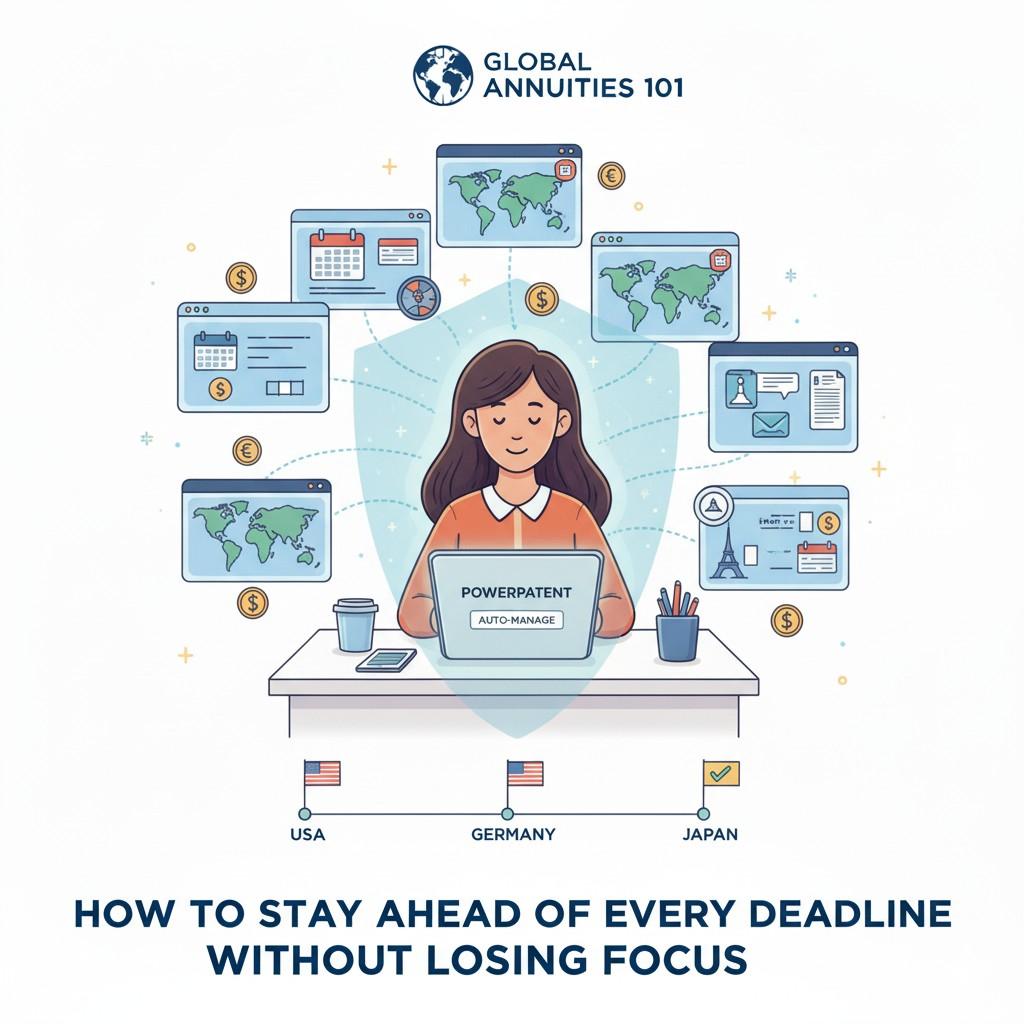
When you organize your annuity data into one clear view, every decision becomes easier. You start operating with intention rather than fear. This simple change keeps your team aligned and prevents surprises from disrupting your momentum.
Why You Need a Predictable Rhythm for Review
A healthy annuity strategy depends on regular check-ins. Not constant attention, just predictable review moments that keep you in control. Some founders look at their portfolio once a year.
Others check every quarter. The exact timing does not matter as much as the consistency. When you review your portfolio on a schedule, you start spotting patterns long before they become problems.
You notice which markets are gaining traction, which countries are draining resources, and which patents no longer match your product roadmap. These insights help you adjust your strategy calmly instead of reacting under pressure.
A predictable rhythm gives you stability, which is something every fast-moving startup needs.
Why You Should Connect Annuities With Business Priorities
Annuities make sense only when they support your business goals. If a market is not part of your expansion plan, paying high annuity fees in that region may not be a wise move.
If a country shows strong traction, active users, or rising demand, keeping your patent alive there becomes essential. The key is linking each annuity payment to something meaningful.
When you attach a business reason to each payment, the decisions become clearer and you avoid wasting money. You also gain a sharper sense of where your global footprint is growing.
This connection helps you shape your long-term IP strategy in a way that matches your company’s direction.
Why Automation Helps You Move Faster
When you move at startup speed, manual systems break quickly. Spreadsheets fall out of date. Reminders get lost. Emails pile up. That is why automation matters so much in annuity management.
A tool that tracks every country’s deadlines, alerts you early, and adapts to changes gives you freedom to focus on what you do best. Instead of learning every country’s unique rules, you rely on a system that keeps the details organized and accurate.
This reduces cognitive load, saves time, and prevents costly mistakes. Automation is not about replacing human judgment. It is about giving your judgment a better foundation so you can make strong decisions with less effort.
Why Collaboration Strengthens Your IP
Annuities may seem like a solo responsibility, but they affect your entire company. Product teams need to know which markets you plan to protect. Operations teams need to plan budgets. Leadership needs to set expansion priorities.
Attorneys need clarity on your timeline. When your annuity system is shared and visible, your team can collaborate more effectively. You prevent confusion because everyone sees the same information.

You prevent misplaced assumptions because the data is always accessible. This kind of transparency strengthens your company’s ability to plan ahead and reduces the chance of last-minute surprises that disrupt execution.
Why Early Warnings Prevent Real Damage
Missing an annuity deadline is more than a clerical mistake. It can result in losing rights you spent years building. Early warnings are essential because they give you time to adjust your plans without scrambling.
When your system alerts you months before a deadline, you have room to make informed choices. You can decide whether the patent is still worth keeping, whether the cost fits your current budget, or whether it is time to shift focus to a different market.
These early signals protect your rights and reduce stress. They also give you the confidence that nothing is slipping through the cracks while your team is busy shipping new features or scaling your product.
Why You Should Avoid Relying on Email-Based Systems
Email is one of the easiest places for important messages to disappear. As your company grows, your inbox becomes busy with customer requests, investor updates, team communication, and vendor messages.
Relying on email alone for annuity reminders is risky because you lose control over the timing and visibility. A real system keeps everything in one place and ensures your deadlines are not buried under unread messages.
When annuity management moves outside the inbox, you protect yourself from preventable mistakes and free your mind from constant monitoring. This makes your workflow smoother and your IP stronger.
Why Cost Forecasting Gives You Power
Annuities can become expensive as your portfolio grows. When you understand upcoming costs months or years in advance, you can budget with precision. This gives you leverage during fundraising and strengthens your planning discussions with your team.
When you know what is coming, investors trust your operational discipline. When founders guess or approximate, it creates uncertainty.
Forecasting annuities gives you confidence and makes your portfolio predictable instead of unpredictable. Predictability is one of the most valuable traits a founder can bring to scaling a company.
Why You Should Think About the Whole Lifecycle
An annuity is not a one-time cost. It is a long, ongoing commitment. When you look at the entire lifecycle of your patent—from filing to grant to global expansion—you see how costs accumulate over time.
This helps you plan with clarity, not just for the next year but for the full twenty-year term. Some patents may be worth supporting for decades. Others may lose relevance earlier.
Understanding the trajectory helps you match your IP investment with your product’s true lifespan. This alignment keeps your budget healthy and your strategy smart.
How PowerPatent Helps You Stay Ahead With Ease
PowerPatent makes this entire process far simpler. Instead of juggling every country’s rules, the platform gives you a clean dashboard of deadlines, costs, and upcoming obligations.
You get early alerts, automatic tracking, and real-time clarity across all your filings. It removes the guesswork so you can make thoughtful decisions without slowing down your work.

Founders use it because it keeps them fast, focused, and confident while protecting the IP that drives their competitive edge.
If you want to see exactly how PowerPatent keeps teams ahead of every annuity deadline, you can explore the full workflow here:
https://powerpatent.com/how-it-works
Wrapping It Up
Bringing everything together, global annuities are not just fees you pay to keep a patent alive. They are signals, choices, and long-term commitments that shape the strength of your IP across the world. When founders understand how these payments work country by country, they gain real leverage. They stop reacting and start guiding their global protection with clarity. This matters because patents are not abstract legal tools. They are shields that protect the work you are pouring your time, energy, and future into. When they stay strong, your market position stays strong. When they lapse, your competitors gain space you can never get back.
Leave a Reply