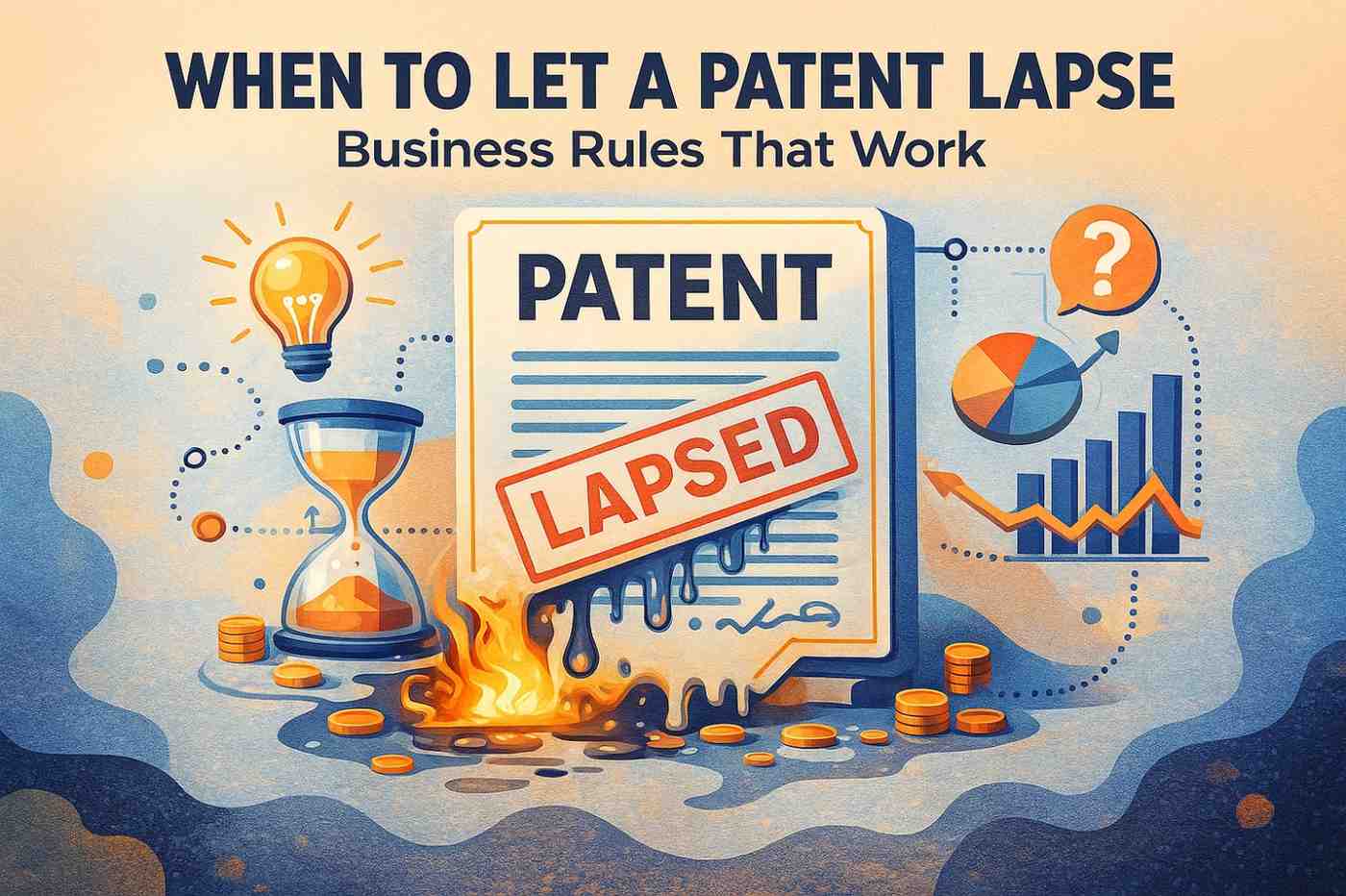
Letting a patent lapse sounds scary the first time you think about it. Most founders assume every patent must be protected forever or the whole company is at risk. But the truth is more practical. Smart teams let some patents go all the time. Not because they don’t care about their IP, but because they understand the real business math behind what’s worth keeping and what’s safe to release.
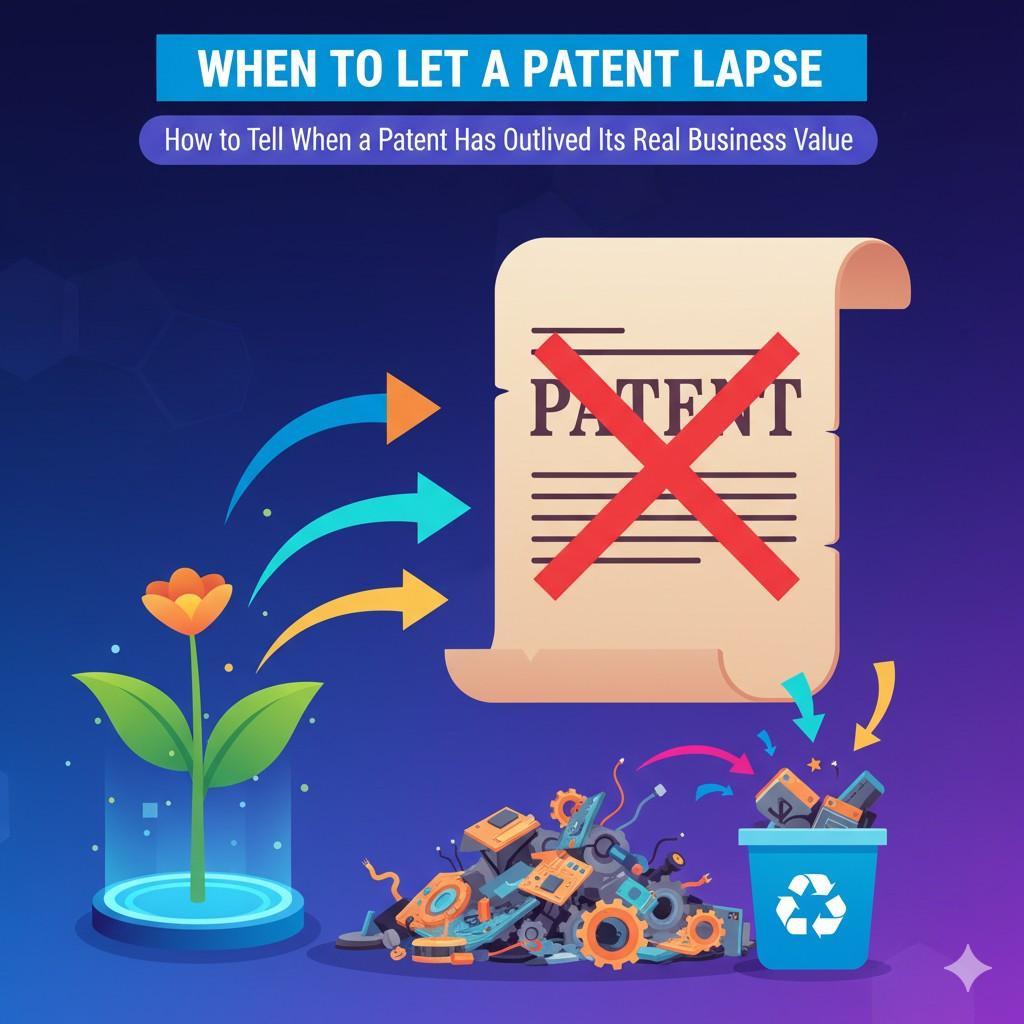
How to Tell When a Patent Has Outlived Its Real Business Value
Before digging into the detailed signs and signals, it helps to understand the purpose of this section. You want to know when a patent no longer plays a real role in your business.
You want to make smart choices, not emotional ones. And you want a simple way to see when a patent is helping you grow or quietly draining money and attention.
The goal here is to give you clear, founder-friendly ways to evaluate a patent’s true value using plain business logic instead of guesswork or legal jargon.
When Your Product Has Shifted Far Away From the Original Idea
Every fast-moving startup outgrows old versions of itself. You may have begun with one method, workflow, or model, and now you operate in a completely new direction.
When this happens, a patent tied to the old version starts losing relevance. The invention it protects becomes a leftover piece of your early thinking.
Even if you feel attached to it because it reminds you of where you started, it no longer serves the product your customers use today.

If the invention is not influencing your current build or future roadmap, that is one of the strongest signs the patent has reached the end of its useful life.
When the Market No Longer Cares About the Problem the Patent Solved
The world changes quickly, and sometimes the original problem your patent addressed no longer matters at scale.
This usually happens when technology platforms shift or customer expectations evolve. A patent that once covered a breakthrough may now protect something the market has moved past.
In that moment, the business value is not tied to the brilliance of the idea but to whether anyone still needs it. If demand has faded and your competitors are solving problems in completely different ways, holding on to an outdated patent rarely provides strategic protection.
When You Can’t Connect the Patent to a Real Business Goal
A strong patent fits into your business story without effort. You can explain how it protects revenue, supports a feature, or blocks a competitor. When a patent no longer connects to anything in your plans, you begin forcing explanations.
You talk about someday scenarios or vague possibilities instead of real outcomes.
That emotional pull is normal, but it clouds judgment. When a patent stops supporting a real business goal, that usually signals it has reached the end of its practical value.
When the Invention Is Easy for Competitors to Avoid
Some patents lose value not because the idea is bad but because the industry evolves and workarounds become simple. When another team can sidestep the patented invention with a basic adjustment, the defensive power of the patent weakens.

A patent with little defensive value becomes more symbolic than strategic. If competitors are no longer bumping into your protected space, it may not be worth paying to maintain the patent.
When Maintenance Fees Keep Rising but the Patent’s Value Fades
As patents age, their maintenance fees increase. This is one of the places where founders overspend without realizing it. You may keep paying because it feels safer than letting go.
But if a patent gives you no active protection and has no link to revenue, product plans, or market position, then those rising fees become a drain.
The business math becomes simple: paying for a patent that does not protect the business is not a sign of caution; it is a sign of wasted capital.
When the Patent No Longer Plays Any Role in Your Competitive Moat
Your moat is what keeps you safe from copycats or fast followers. If a patent once helped shape that moat but no longer plays a part in your differentiation, the protection it provides becomes minimal.
This often happens when your company grows into new areas and leaves older concepts behind.
A moat made of dead ideas is not a moat. When a patent no longer reinforces what makes your product special, it may be time to release it.
When Your Roadmap Never References the Invention Anymore
A simple but powerful way to measure patent value is to scan your internal roadmap. Look for the invention covered in the patent.
If it has been absent from engineering plans, sprint discussions, or product conversations for a long time, you’re seeing a clear sign.
A patent tied to a forgotten invention usually holds little long-term value. If your team no longer plans to improve, expand, or revisit that idea, the patent becomes a relic instead of a tool.
When You Can Pitch Your Company Without Mentioning the Patent
Imagine explaining your company to a potential investor, partner, or customer. If you can tell a compelling story about your technology and never once need to mention that particular patent, it shows the idea is no longer central to the business.
Investors usually care about patents that protect something essential. If the patent feels like an extra detail instead of a core part of your narrative, its strategic value has likely faded.
When You Keep the Patent Only Because You Fear Letting Go
Fear is one of the biggest reasons founders keep old patents alive. You worry that someday you’ll need it. Or that a competitor might somehow use it. Or that investors will ask about it.
But fear is not a business strategy. If logic says the patent has little value, but fear keeps you holding on, it is time to step back and evaluate its purpose more clearly.

In many cases, letting go frees up money and focus that can support patents that actually matter.
When You Realize the Patent Was More Experimental Than Foundational
Many early patents are exploratory. You were testing ideas, experimenting with workflows, and capturing possible future paths. Those patents can be helpful at the start, but they are not always the foundation of your company.
If a patent describes a direction you never committed to, and your core product ended up somewhere else entirely, the experimental patent may no longer serve a purpose.
Keeping it alive may feel safe, but it does not strengthen your actual IP position.
When the Patent No Longer Helps You Raise Money or Close Deals
Some patents deliver value simply by strengthening your credibility during fundraising or enterprise sales.
But when you notice that partners, customers, or investors no longer care about that patent, the external value fades. This often happens when you’ve developed stronger technology since the patent was filed.
If the old patent no longer supports your story or helps move deals forward, it may be time to let go.
When the Patent Isn’t Helping You Build the Future
The simplest rule is the most important one. A patent should help you build forward, not backward.
When you look at your next phase of growth and see no role for the invention, the patent has likely completed its job.
The best portfolios are not made of everything you created in the past; they are made of everything that will protect where you are going next.
When you have modern tools guiding these decisions, the process becomes much easier. PowerPatent helps founders see which patents are still aligned with their roadmap and which ones have drifted into legacy territory.
It brings clarity to a process that usually feels foggy and slow. If you’d like to see how PowerPatent makes this simple and fast, you can explore the workflow at https://powerpatent.com/how-it-works
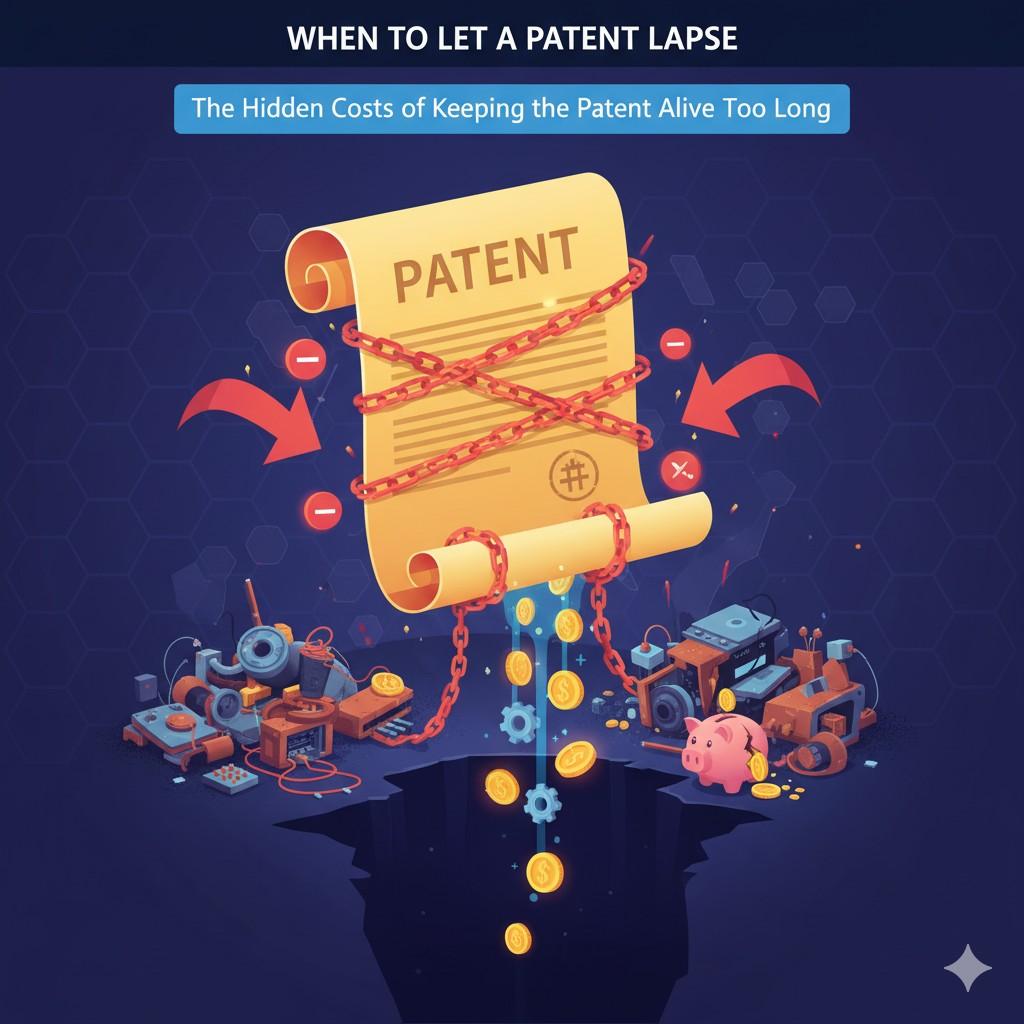
The Hidden Costs of Keeping a Patent Alive Too Long
Before exploring the hidden costs, it helps to understand why this topic matters so much.
Many founders hold on to patents longer than they should simply because letting a patent lapse feels risky. But the real danger often comes from keeping a patent alive when it no longer supports the business. The costs are not just financial.
They affect focus, strategy, momentum, and even how you make decisions as a team. This part of the article helps you see those costs clearly so you can make smarter, calmer choices that protect your runway and sharpen your IP strategy.
When Quiet Costs Add Up Without You Noticing
Every patent comes with maintenance fees that rise over time. In the early years, these fees feel small and manageable.
But as the patent ages, the cost to keep it alive can climb to levels that surprise founders who are not tracking the fee schedule.
The real issue is that these quiet costs tend to blend into the background. They do not show up in dramatic ways, but they chip at your budget month after month.
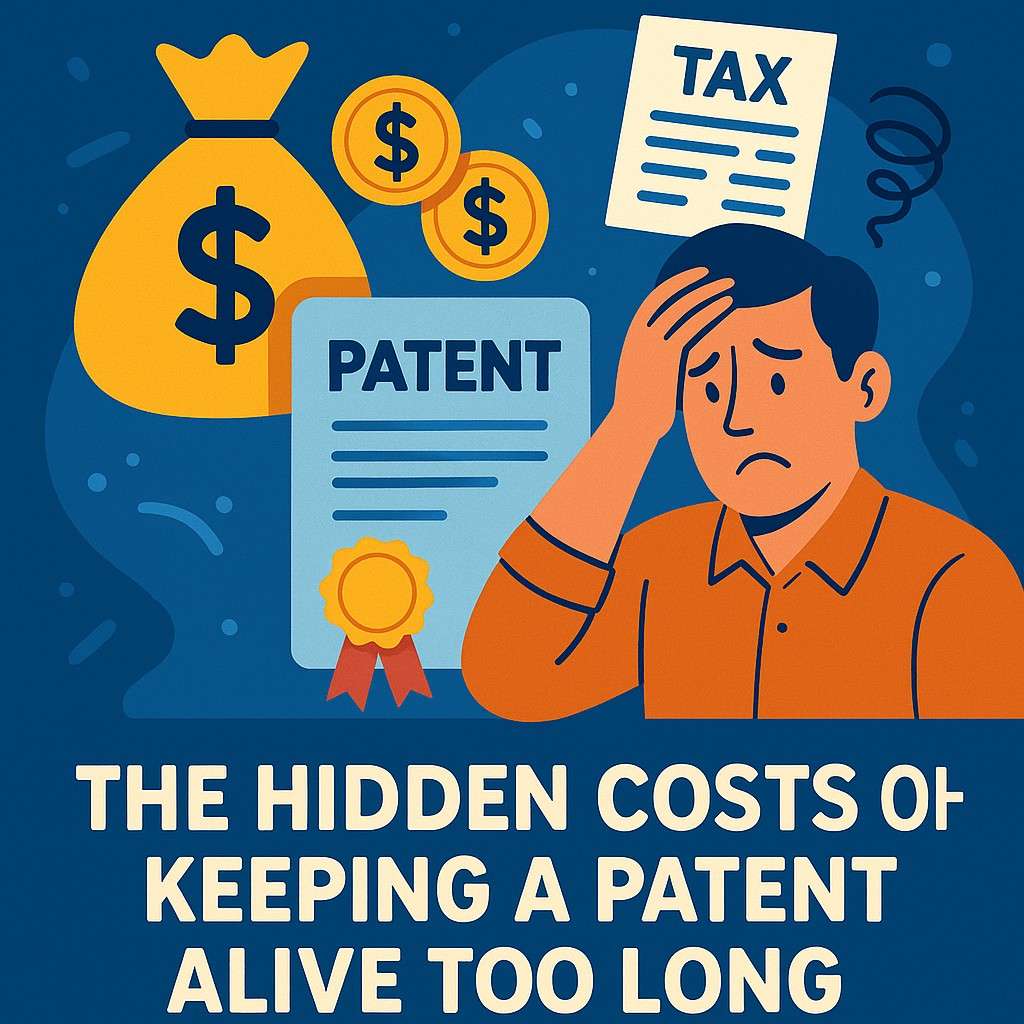
When the patent is no longer tied to a core feature or revenue stream, these costs become unnecessary weight your company is carrying for no real gain.
When You Spend Money Protecting an Idea You Already Abandoned
There is a strange emotional bond many founders feel with their earliest inventions.
Even when the company has evolved into something bigger and better, those early ideas still feel personal. But paying to protect something that no longer exists in your product drains money that could fuel engineering time, customer growth, or future patents with real strategic value.
Your budget should protect what matters most today, not what mattered at the very beginning.
When Holding Too Many Patents Confuses Your Actual Strategy
A patent portfolio should tell a clean story about what you protect and why. When you hold on to old patents that no longer match your direction, your portfolio becomes harder to read.
Investors may struggle to understand which inventions represent the heart of your technology.
Partners may get mixed signals about your roadmap. Even your team may lose clarity on what matters. This confusion slows decision-making. A smaller, sharper portfolio often gives you more power than a large, unfocused one.
When You Spend Time Reviewing Patents That No Longer Matter
Every year, founders and legal teams revisit their patent list to decide which ones to keep paying for. When your portfolio is full of patents that no longer support your goals, that review process becomes longer, messier, and more frustrating.
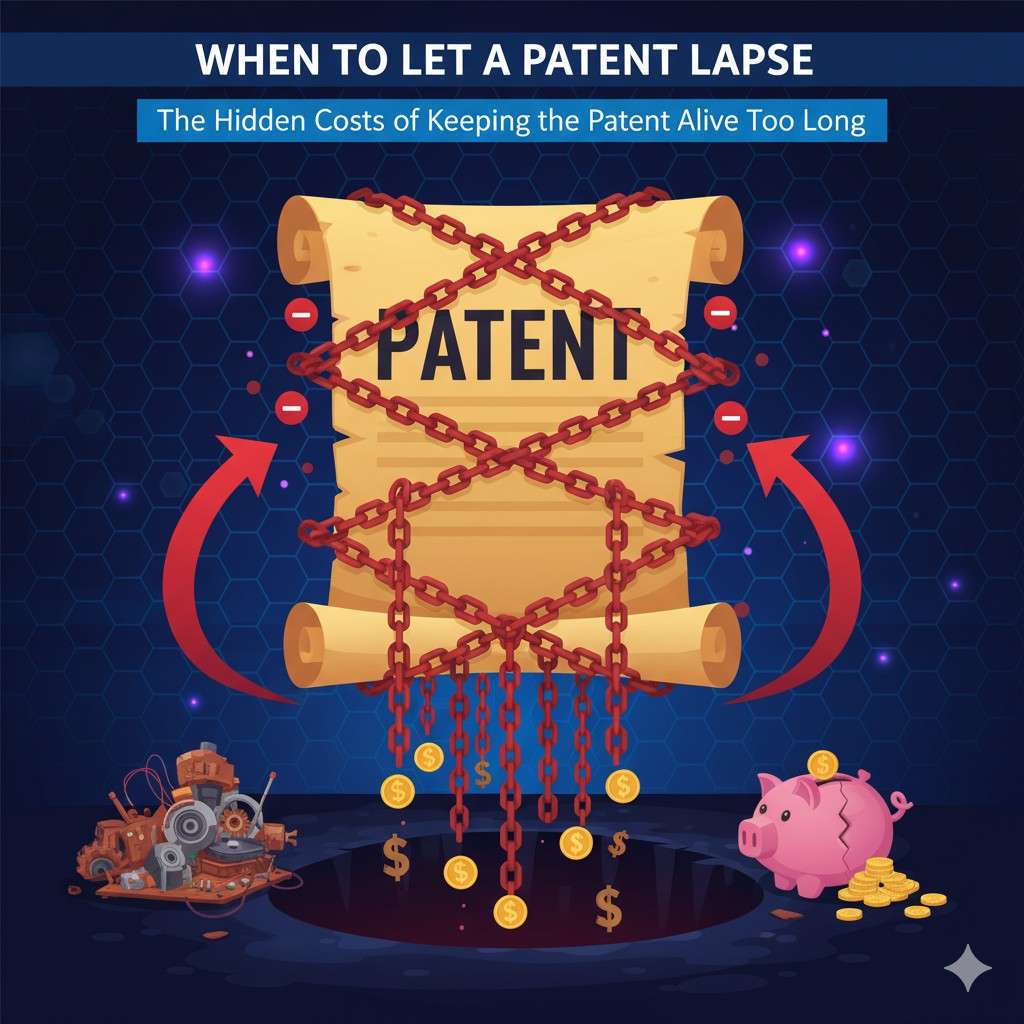
You end up spending time analyzing inventions that no longer shape your future. This steals hours and energy that should be spent building the next big thing. A leaner portfolio gives you more focus and clearer conversations.
When Old Patents Make You Hesitate to Pivot
A patent can feel like a commitment. When you’ve spent money protecting an idea, you may feel pressured to keep investing in it even if your instincts tell you the business should move on.
This emotional weight can slow down big decisions. It creates a hesitation that doesn’t belong in a startup environment where speed matters.
When a patent is no longer aligned with your new direction, keeping it alive can tie you to a version of the company that no longer exists.
When Investors Misread Your Priorities
Investors often review patent portfolios looking for alignment with the company’s vision.
If your portfolio is cluttered with patents tied to old technology, it can appear that your priorities are scattered. You want your IP to amplify your story, not blur it.
When investors see outdated patents still being maintained, they may question why you’re spending money on them instead of protecting the technology that actually drives your product forward.
When Old Patents Send Mixed Messages to Your Team
Your team watches what you invest in. When they see the company paying to maintain patents tied to long-abandoned ideas, they may misunderstand what the long-term plan is.
This can create internal confusion or misalignment. Clear portfolios communicate clear direction.
A patent should be a signal about where the business is going. Old patents can send signals that contradict your current mission.
When Aged Patents Don’t Add Any Real Defensive Value
Some founders believe that any patent, even an irrelevant one, is better than no patent at all. But patents only protect you when they block meaningful competitive moves.
If a patent no longer covers anything essential, it does not defend your market, and it does not create friction for potential copycats.

When the defensive value drops to zero, the money you spend to maintain the patent becomes a pure cost with no return.
When Legacy Patents Keep You from Filing New, Stronger Ones
Budgets are real, even for well-funded companies. Money spent on maintaining legacy patents can take resources away from filing new patents that protect the technology you are building today.
Many teams delay filing because they assume they can handle it later, but this delay can cost them priority dates and competitive edge. When you free yourself from old patents, you make room to protect what truly matters now.
When an Outdated Patent Creates False Confidence
Sometimes a team believes they are protected because they have a patent, but they never stop to check if the patent covers their current product. This creates a gap between what the team believes and what is actually protected.
This false sense of safety can become dangerous. A competitor could move into your space while you hold onto a patent that no longer stands guard over anything real.
Letting outdated patents fall away helps you see the gaps more clearly so you can protect the technology that matters.
When Unnecessary Patents Create Legal Noise
Every patent increases the complexity of legal work. More documents to track, more maintenance dates, more filings to review.
When you keep patents that no longer protect your current technology, you increase the noise without increasing the value.
This noise slows you down. It distracts your attorneys. It makes your portfolio harder to manage. A smaller, intentional portfolio reduces risk and keeps everything cleaner.
When Your Business Feels Stuck in the Past
A patent portfolio is a story about where your company is going. When it is filled with old ideas, it creates a sense that your company’s best days are behind you instead of ahead.
You want a portfolio that pulls you forward. You want it to reflect your newest breakthroughs, not your earliest experiments.
Releasing outdated patents clears space and invites a future-focused mindset that helps your team innovate faster.
PowerPatent helps founders make these decisions with clarity. It shows you which patents truly matter, which ones support your strategy, and which ones have become expensive leftovers.
With the help of real attorneys and simple software, you get a clear view of your IP without slowing down your build process. You can explore how it works and see how it keeps your portfolio clean at https://powerpatent.com/how-it-works.
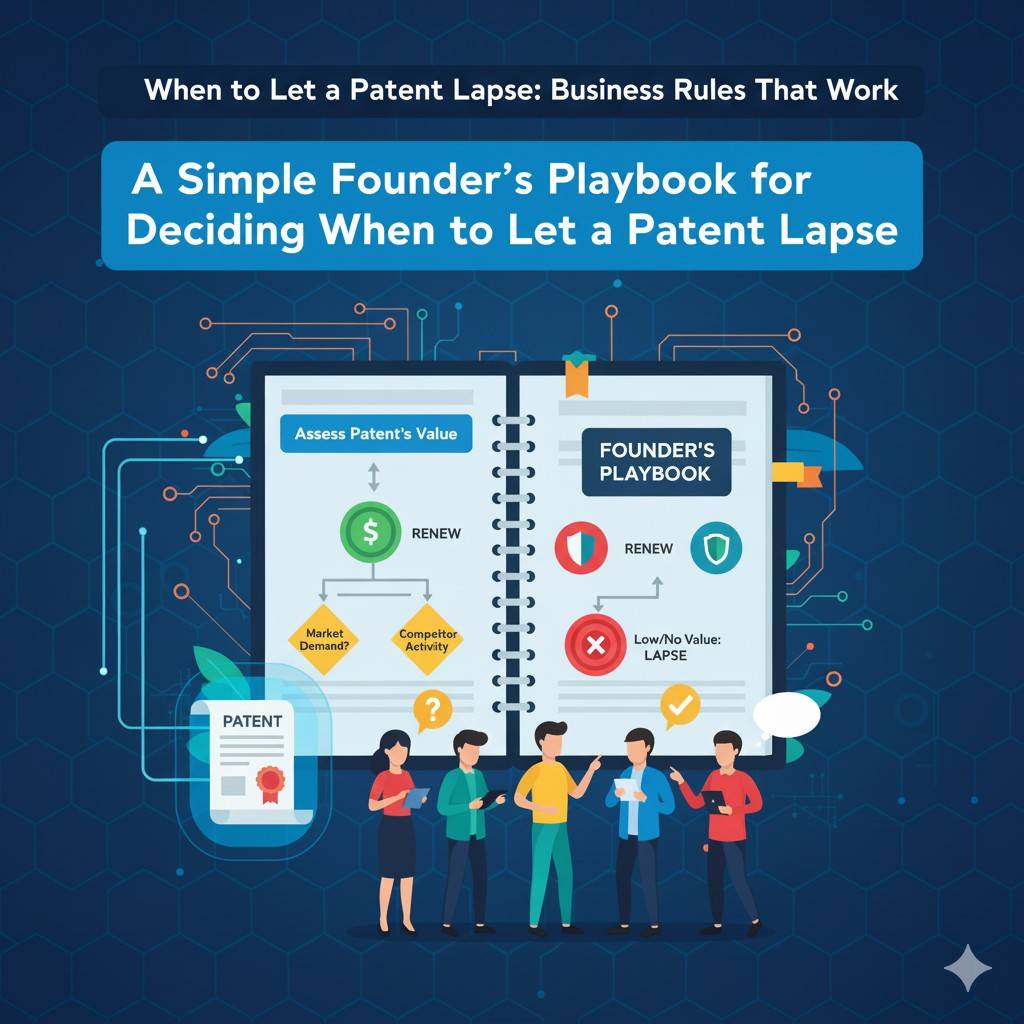
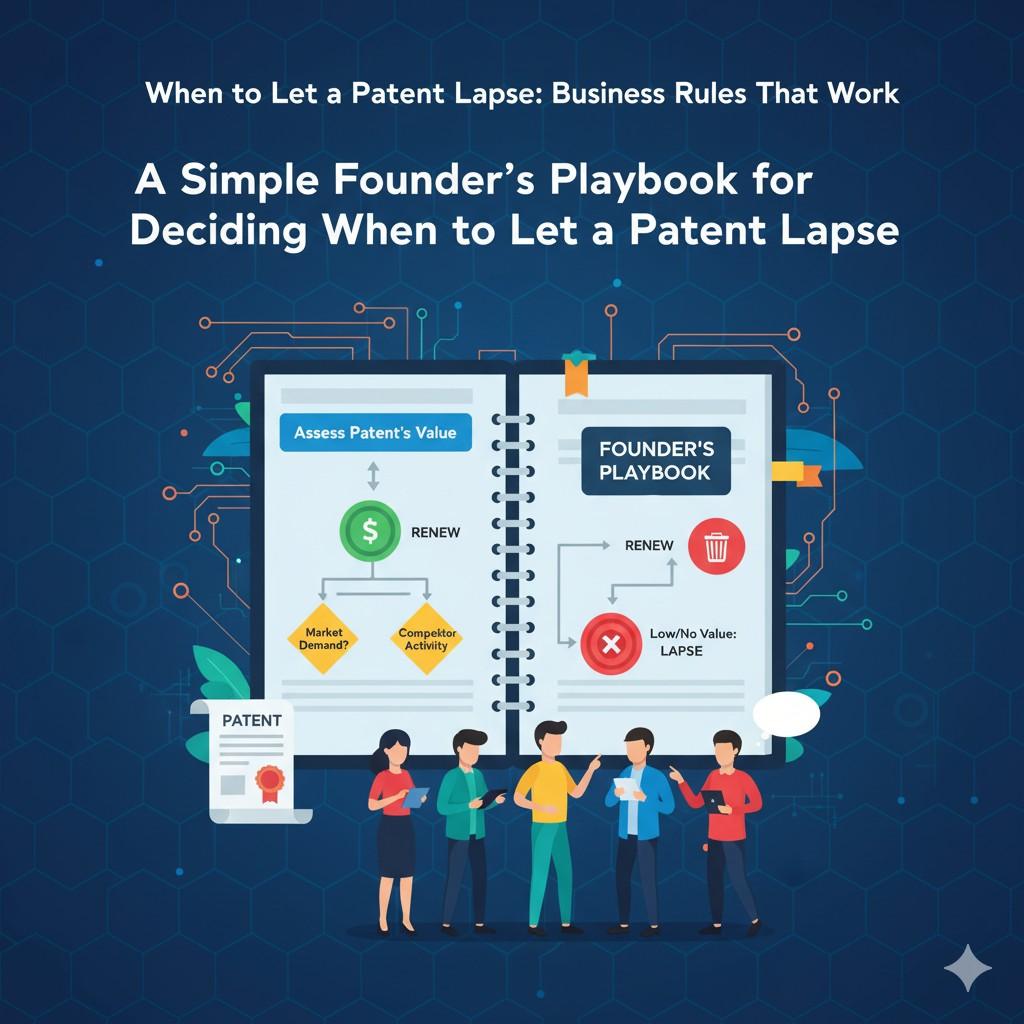
A Simple Founder’s Playbook for Deciding When to Let a Patent Lapse
Before we get into the deeper guidance, it helps to understand the purpose of this playbook. This section is not meant to overwhelm you with legal rules or complex frameworks.
It is meant to give you a calm, practical way to make confident decisions about which patents deserve ongoing investment and which ones are safe to release.
Think of this as a way to protect your focus, your cash, and the future of your company. The goal here is to keep everything simple, strategic, and tied to the real world you operate in every day.
Understanding What the Patent Truly Protects
A good starting point is revisiting what the patent actually covers. Many founders remember the big idea but forget the fine details over time.
When you look closely, you may find that the invention protected in the patent no longer matches what your product does today. This mismatch can happen quietly as your team keeps shipping updates and exploring new directions.

Taking time to read the patent with fresh eyes brings clarity. It helps you see whether the invention is still central to your technology or if it has drifted away from your core value.
When the protection no longer guards anything essential, that’s when the decision becomes clearer.
Measuring the Patent’s Real Influence on Your Tech
Once you understand what the patent protects, the next step is seeing how it connects to your current technology.
The question is simple: does this patent still matter at the code level, architecture level, or product experience level? If the invention has become a small footnote in your stack instead of a pillar, it may not be worth holding onto.
You want your patents to protect the parts of your system that truly define your edge. When a patent stops influencing the technology your engineers actively maintain, it loses its strategic purpose.
Checking How the Patent Supports Your Revenue
A patent has strong value when it protects the flow of money into your business.
If the invention helps you sell your product, enables a feature customers rely on, or blocks a competitor who could steal your users, then the patent has direct revenue impact.
But when the invention has no connection to how you make money today, its value becomes abstract.
If you can remove the patent and nothing changes about your ability to grow or keep customers, then the patent may no longer deserve the operational cost that comes with keeping it alive.
Looking at Competitors and Their Current Direction
Competitors shape the real-world value of a patent. If competing companies have moved into new technologies or have adopted methods that no longer relate to your patented invention, then the protective shield the patent offers may not matter anymore.
A patent is strongest when it sits directly in the path of where competitors want to go.
When it no longer sits in that path, it becomes a weaker asset. Watching what others are building helps you see whether the patent is still blocking anything meaningful.
Seeing If the Patent Still Scares Anyone
One of the easiest indicators of a patent’s true power is noticing whether anyone reacts to it. When you discuss the patent with investors, partners, or even potential competitors, do you see interest, concern, or respect? Or do people shrug because the invention feels outdated?
A patent that no longer creates tension or caution in the ecosystem around you may not be worth carrying into the future. A strong patent makes someone pause. When that pause disappears, the value often does too.
Understanding Whether the Patent Helps You Tell a Strong Story
Your narrative as a founder matters. A good patent can help you explain your technology in a way that feels solid, original, and defensible. But when a patent doesn’t fit your story anymore, it starts creating confusion.
If you find yourself skipping over the patent when describing your tech stack or your competitive advantage, it may not be helping you.
A healthy patent should strengthen your pitch, not sit awkwardly on the side. When it stops supporting your story, that’s a sign it may be ready to retire.
Checking Whether the Patent Helps Future You
Founders often focus only on today, but patents are long-term tools. A smart way to evaluate a patent is to look ahead. Ask yourself if you see any future where this invention becomes important again.
Sometimes the answer is yes, because the technology may cycle back or because you see expansion opportunities that make the patent relevant. Other times the answer is clearly no, and keeping the patent alive becomes an unnecessary drag.
When you picture the future and see no role for the patent, it often means the patent has reached the end of its useful life.
Making Sure You Are Not Keeping It for Emotional Reasons
It is normal to feel attached to your early ideas. Your first inventions reflect your early energy, your creativity, and your risk-taking as a founder. But patents are business tools, not trophies.
When you keep a patent because it reminds you of your early days instead of because it protects your current business, you take resources away from what will help you grow.

The emotional pull is strong, but letting go of patents that no longer serve the mission is part of building a mature and focused company.
Checking the Cost Against the Actual Value
Maintenance fees become more expensive over time.
When you compare the cost against the real value the patent provides, the math usually becomes clear. If the cost feels high but the benefit feels vague, that’s a sign the patent may not be earning its place in your portfolio.
This simple cost-versus-value check helps push emotion out of the equation. It gives you a grounded way to decide. Strong patents justify their cost. Weak ones do not.
Asking Whether Keeping the Patent Helps Your Momentum
Startups grow fast when they stay focused. Every extra asset or responsibility can slow you down. Patents that no longer support your mission can clutter the way you think, plan, and act.
When a patent begins to take more mental energy than strategic value, it creates friction.
You want a portfolio that speeds you up, not one that holds you back. A patent that slows your momentum is usually a patent that no longer belongs in your core strategy.
Looking at Whether the Patent Still Fits Your Moat
A patent is strongest when it fits cleanly into the wall that protects your company from copycats.
When you look at your competitive moat and see gaps that the patent no longer fills, that is a sign of natural decline in value. Strong patents work together as part of a system.
When one falls out of the system, it becomes a stray piece with little ability to protect anything meaningful. If the patent no longer helps your moat, letting it lapse becomes a logical step.
Making the Decision with Clear Eyes
Deciding to let a patent lapse should feel like a calm, confident choice. It should come from understanding your business, your technology, and your future—not from fear or uncertainty.
When you see clearly that a patent no longer protects revenue, technology, product strategy, or competitive space, the choice becomes easier. You are not losing anything of value. You are simply freeing your resources so you can protect what truly matters.
PowerPatent makes this entire process easier by giving founders a simple way to evaluate their portfolio with guidance from both smart software and real attorneys.
You get clarity without slowing down, and you avoid the expensive mistakes that happen when patents are managed blindly. If you want to see how PowerPatent simplifies this decision-making process, you can explore the workflow at https://powerpatent.com/how-it-works.
Wrapping It Up
Before closing this out, it helps to step back and look at the bigger picture. Letting a patent lapse is not a sign of weakness. It does not mean you are giving up on your ideas or leaving your company exposed. It means you are choosing to protect what matters most and clearing away everything that no longer moves your business forward. A strong patent strategy is not about keeping everything forever. It is about building a portfolio that evolves as fast as your company does.
Leave a Reply