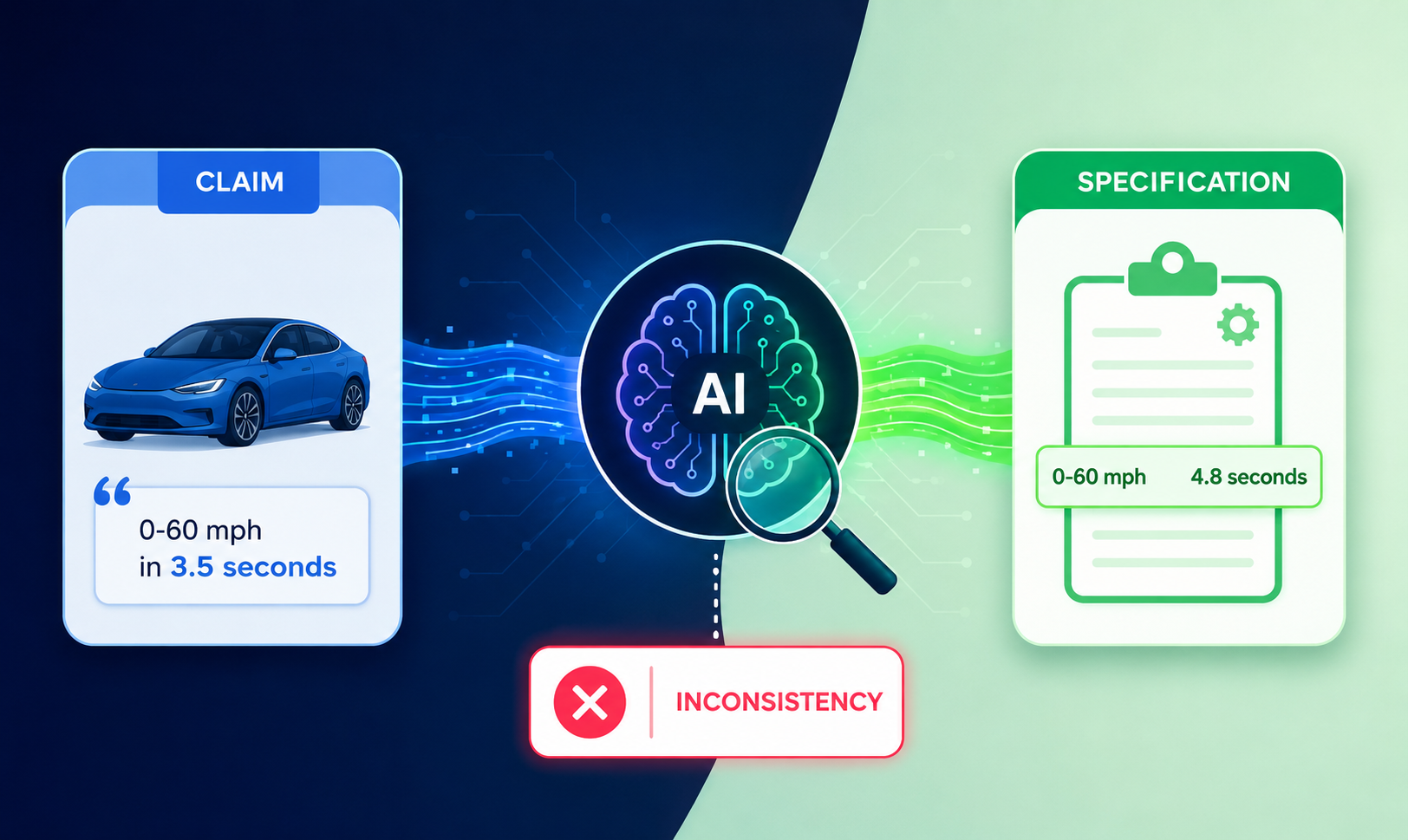
A patent can look strong on the surface and still have a hidden problem inside. The claims may say one thing. The specification may say something slightly different. That gap can hurt the patent later. That does not replace a real patent attorney. It gives the attorney better signals faster. PowerPatent combines smart AI tools with real attorney oversight, so founders can move quickly without guessing. You can see how that works here: https://powerpatent.com/how-it-works
Why claim and specification alignment matters more than most founders think
A patent is not just a long paper with drawings and technical words. It is a protection map. The claims show the border of what the founder wants to protect.

The specification explains the invention, how it works, and why it matters. When these two parts do not match, the map gets blurry.
That blurry map can create real trouble. A patent examiner may push back. A competitor may later argue that the patent does not support what it claims.
An investor may feel less sure about the strength of the company’s IP. A founder may think they protected the best part of the invention, only to find out the written patent does not fully back it up.
This is why consistency matters so much. The claims and the specification must tell the same story from two different angles. The claims set the protection. The specification gives the support.
Claims are the fence around the invention
Claims are the part of the patent that define what is protected. They are usually the most important part because they decide how wide or narrow the patent may be.
A strong claim can help protect the core idea behind a product, system, model, method, device, or workflow.
But a claim cannot stand alone. It needs support from the rest of the patent. If the claim says the invention uses a special way to train a model, the specification should explain that training method in clear detail.
If the claim says a system changes its output based on user behavior, the specification should explain how the system tracks that behavior and what changes happen after that.
When that support is missing, the claim may feel like an empty promise. It may sound broad, but it may not be strong.
The danger starts when small wording gaps create big meaning gaps
Many mismatch problems look small at first. A claim may use the word “ranking,” while the specification mostly talks about “scoring.”
A claim may refer to a “prediction engine,” while the specification calls it a “classification model.” A claim may require a “real-time update,” while the specification only describes batch updates that happen later.
These gaps may not seem scary to a busy founder. Engineers use different words all the time. Product teams rename features.
Models change. Code names shift. But in a patent, words matter. Small changes in language can change what a reader thinks the invention actually covers.
AI can help by catching those word shifts early. It can compare the claims against the specification and flag places where the terms do not line up. Then a real patent attorney can review the issue and decide what needs to be fixed.
That mix of fast software and attorney judgment is the kind of workflow PowerPatent is built for. Founders can see how it works here: https://powerpatent.com/how-it-works
How AI reads the patent like a careful second reviewer
AI does not get tired after reading page ten. It does not skim because the draft looks “mostly fine.”
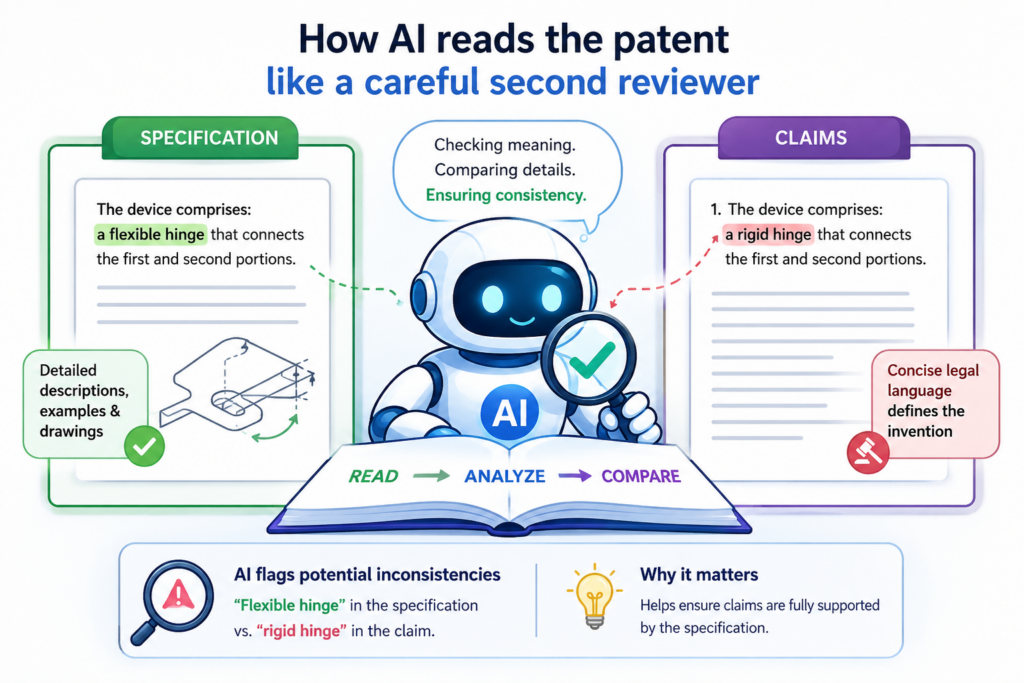
It can scan every claim, every section, every drawing label, and every repeated term with steady focus. That makes it useful for finding problems that humans may miss during a rushed review.
This matters because patent drafts are dense. A single filing can include several versions of the same idea.
There may be system claims, method claims, software claims, device claims, and examples that all describe the invention in slightly different ways. A human reviewer can catch many issues, but AI can add another layer of checking.
The key is not that AI “understands” the invention the same way an engineer does. The value is that AI can spot patterns, conflicts, missing links, and wording changes very quickly.
AI compares meaning, not just exact words
A basic text search can find whether a word appears in a document. That is helpful, but it is not enough. The real issue is whether the meaning of the claim is supported by the specification.
For example, a claim may say the system “adjusts a model based on live sensor data.” The specification may never use that exact phrase.
But it may explain that sensor signals are received every second, passed through a filter, and used to update model weights. In that case, the support may be present even though the exact words are different.
AI can help connect those ideas. It can look for related meaning across different sections. It can point to the text that may support a claim. It can also flag when the claim seems broader than the explanation.
The best AI review still needs human legal judgment
AI can find the smoke. A patent attorney still needs to check whether there is fire.
That distinction matters. A flagged mismatch is not always a true problem. Sometimes the specification already has enough support, just in different words.
Sometimes the claim should be revised. Sometimes the specification should be expanded. Sometimes the issue is deeper and needs a better invention story.
PowerPatent’s approach is built around that balance. Smart software can speed up review, but real attorney oversight helps turn the findings into better patent decisions.
That is what founders need. Not just faster drafts. Better filings with fewer hidden risks. Learn more here: https://powerpatent.com/how-it-works
How AI finds missing support for claim elements
One of the most useful things AI can do is break each claim into smaller pieces. Each piece is often called a claim element. In simple terms, it is one required part of the claim.
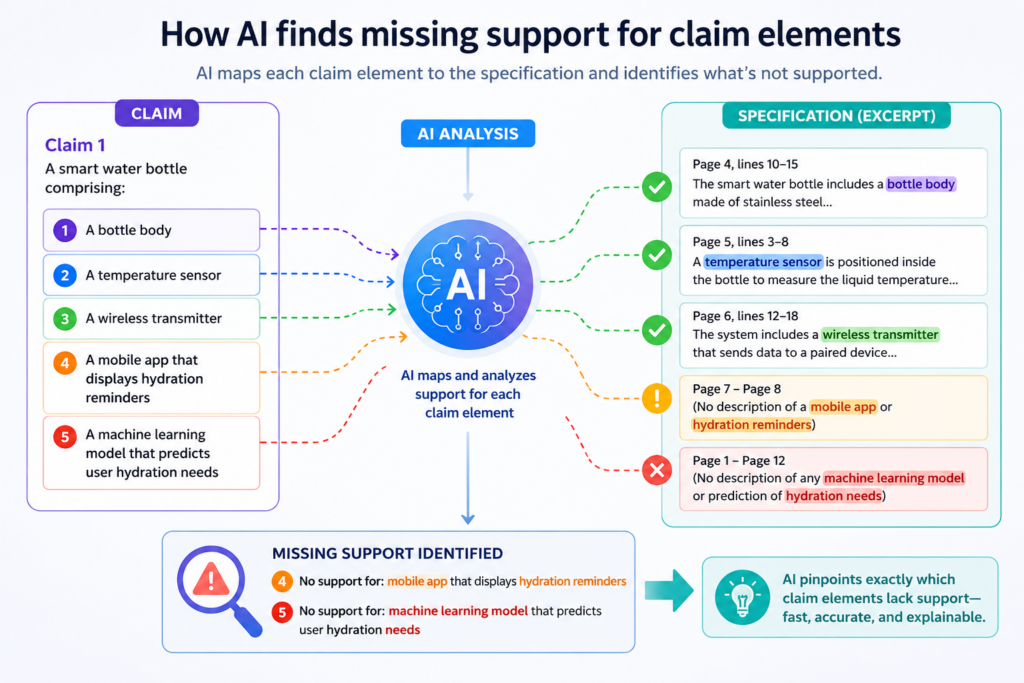
If the claim says a system has a processor, a data store, a model, a ranking step, and an alert output, each of those parts needs support in the specification.
This is where many problems begin. A founder may describe the broad idea well, but leave out one step that later appears in the claims.
Or the draft may explain the product as it exists today, while the claims try to protect the larger idea. That can create a support gap.
AI can go line by line through the claim and ask a simple question. Where is this part explained in the specification?
Each claim element should have a clear home in the specification
Think of the specification as the house and the claims as the front gate. Every important piece in the gate should have a room inside the house.
If a claim includes a “confidence threshold,” the specification should explain what that threshold is, how it is used, or at least give enough context so the reader understands it.
If a claim includes “generating a control signal,” the specification should not stop at saying the system makes a decision.
It should explain what signal is generated, what receives it, and what happens next. The point is not to drown the patent in extra words. The point is to give the claims a firm base.
AI can flag claim elements that appear weakly supported. It may show that a term appears only once.
It may show that a key step in the claim has no matching explanation. It may show that the drawings do not include the component named in the claim.
Missing support can make a strong invention look weaker than it is
This is frustrating because the founder may have already built the missing part. The code may work.
The system may be live. The team may have test data. But if the patent draft does not explain it, the patent may not capture it well.
That is why founders should not treat patent drafting as a formality. It is not just paperwork after the product is done. It is a careful translation of the invention into a form that can protect the business.
A strong AI-assisted review helps founders catch these gaps while they are still easy to fix. Instead of waiting for an office action or a later challenge, the team can improve the draft before filing.
That can save time, reduce stress, and give the founder more confidence.
How AI catches terms that drift across the draft
Patent drafts often use many names for the same thing. In normal writing, that can make the text feel less repetitive.
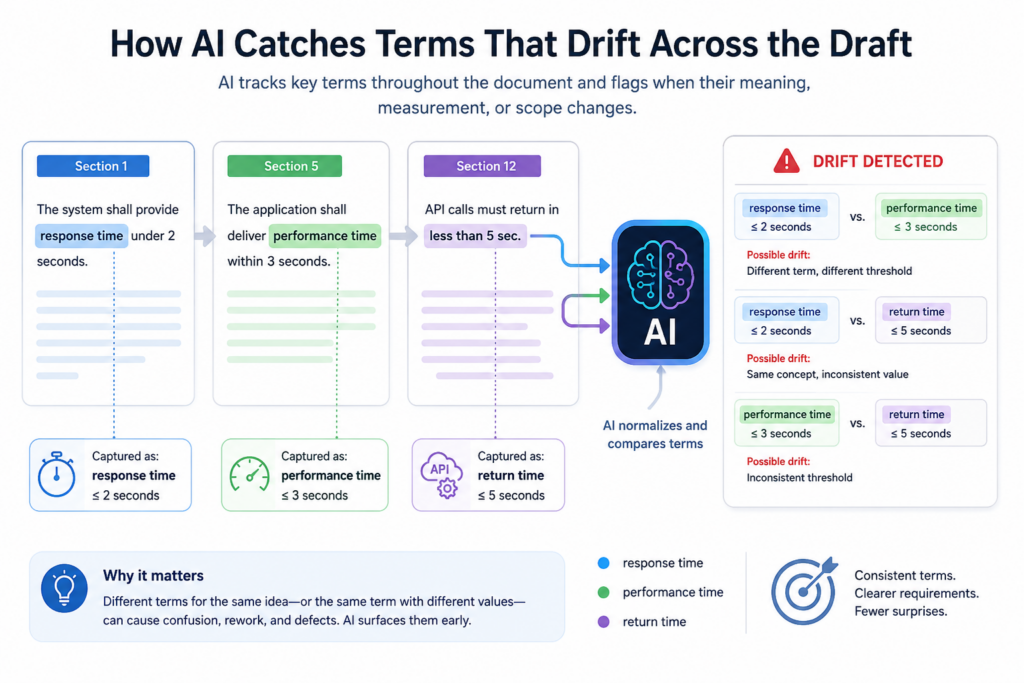
In patents, it can cause confusion. A “recommendation engine,” “ranking module,” “decision unit,” and “AI layer” may all refer to the same thing in the founder’s mind. But a patent reader may not know that.
Term drift happens when the draft changes words without making the relationship clear. It is common when several people touch the draft. An engineer may describe the invention one way.
A product person may use another name. A patent attorney may use more formal terms. AI-generated drafts can also create naming changes if not carefully reviewed.
AI is very useful here because it can map the terms across the whole patent and show where the language changes.
Consistent words make the patent easier to defend
When the same part is named the same way across the draft, the patent becomes easier to read. The claims feel tied to the description. The drawings feel connected to the written text. The examples support the larger idea.
This does not mean every sentence must repeat the exact same phrase. Good patents can use related words. But the relationship should be clear.
If the draft uses both “scoring model” and “prediction model,” the specification should explain whether these are the same thing, different parts, or different examples.
AI can help by building a term map. It can find all the key terms in the claims and then search for how each term appears in the specification.
It can show whether a term is used often, rarely, or never. It can also point out when two terms seem to be used for the same part.
Term drift is especially risky for software and AI inventions
Software teams move fast. They rename features often. A model may start as a “classifier,” become a “risk engine,” then become an “agent,” then become part of a larger “automation system.”
All of those names may make sense inside the company. But a patent needs clean language.
This is even more important for AI inventions because the technical pieces can already be hard to explain. If the words keep changing, the invention can feel less solid than it really is.
A careful AI review can catch the drift before the filing goes out. Then the patent team can decide whether to standardize the terms, add definitions, or explain that certain terms are examples of the same larger idea.
This is one more way PowerPatent helps founders move fast without letting important details slip. See the process here: https://powerpatent.com/how-it-works
How AI checks whether the specification supports the full claim scope
A claim can be too narrow, too broad, or just unclear. The hard part is finding the right level of protection.
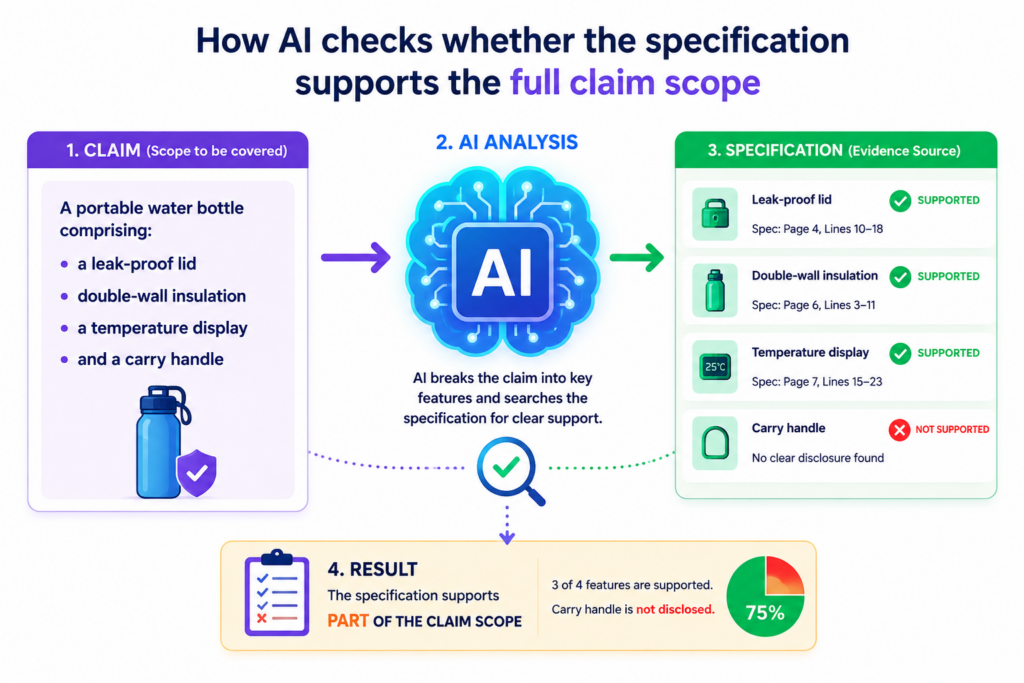
Founders usually want broad protection because they do not want competitors to make small changes and copy the idea. That makes sense. But broad claims need broad support.
If the specification only describes one version of the invention, while the claim covers many versions, there may be a gap. For example, the specification may describe the invention working on medical images, but the claim may cover all image data.
The specification may describe one type of neural network, while the claim may cover any machine learning model. The specification may describe one sensor, while the claim may cover many sensor types.
AI can help spot when the claim reaches beyond what the specification clearly teaches.
Broad protection needs enough examples and enough explanation
A patent does not need to list every possible version of the invention. But it should give enough detail so the broader idea feels supported.
If the founder wants to protect a general method, the specification should explain the method in a way that is not locked to one narrow product setup.
This is where AI can compare the breadth of the claim against the depth of the specification.
It can flag words like “any,” “all,” “each,” “automatically,” “real-time,” “dynamic,” and “based on” when the specification does not give much detail. These words can be useful, but they should be backed by clear support.
AI can also compare examples. If the claims cover several use cases, the specification should ideally describe more than one.
If the claims cover different system setups, the specification should not only explain a single fixed setup unless that is truly the invention.
The goal is not to make the patent longer for no reason
A longer patent is not always a better patent. Extra words can create their own problems if they are careless. The goal is to make the support match the claim.
That means adding the right detail in the right place. It may mean explaining more versions of the invention.
It may mean adding a short example. It may mean making a claim narrower so it better fits the disclosure. It may mean changing a word that sounds wide but is not needed.
This is why AI works best as a guided review tool, not a final decision-maker. It can show where the scope may be stretched. Then the attorney and founder can decide the smart move.
How AI spots claim steps that do not match the order of the invention
Some patent problems are not about missing words. They are about the order of the work. A claim may describe steps in one order, while the specification explains them in another order.
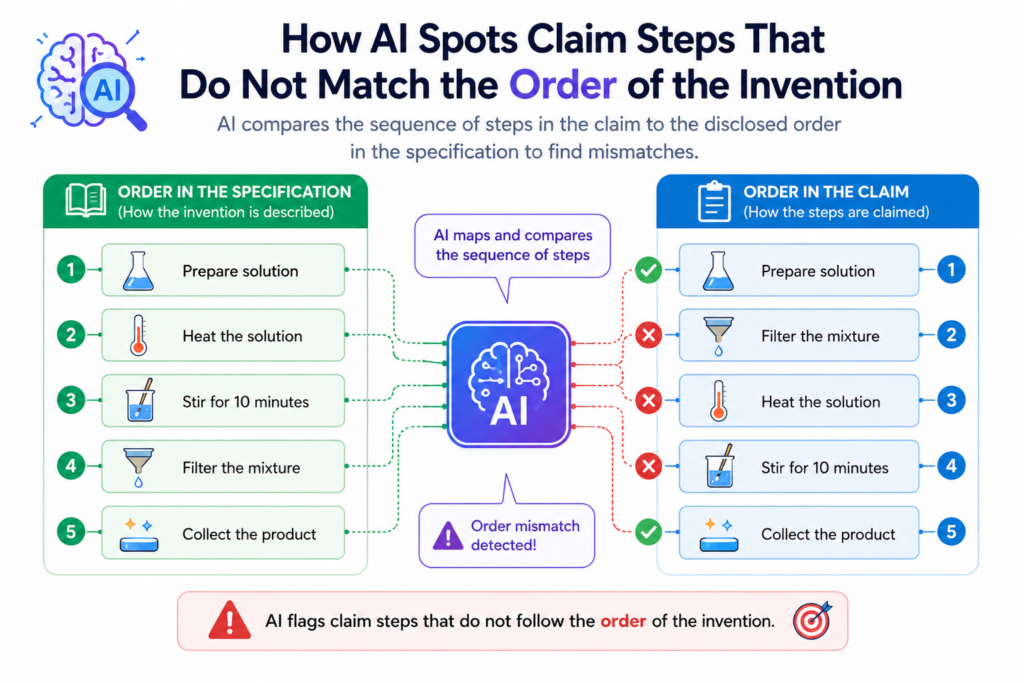
At first, this may seem small. But for software, AI, robotics, biotech tools, sensor systems, and automation workflows, order can change the whole meaning.
For example, a claim may say the system first receives user data, then trains a model, then generates a score. But the specification may say the model is trained before any user data is received. That could create confusion.
Is the claim covering live training? Is it covering a pre-trained model? Is the score made after a new update, or from a model that already exists?
AI can flag this kind of mismatch by reading the verbs in the claim and comparing them against the story in the specification.
It looks for action words like receiving, storing, training, selecting, generating, updating, sending, ranking, and displaying. Then it checks whether the same flow is explained in the written description.
The order of steps can change what the claim protects
In many inventions, the order of steps is part of the value. A fraud detection system may work because it checks risk before approving a transaction.
A robotics system may work because it updates the path before moving the arm. A medical software tool may work because it filters raw data before making a prediction.
If the claim gets that order wrong, the patent may not protect the real invention well. Worse, it may protect a version that the team does not actually use. That creates a gap between the product and the patent.
AI can help by building a simple action map. It can show how the claim says the invention works. Then it can show how the specification says the invention works. When those two maps do not line up, the review team gets a clear signal.
This is where founders should bring the product team into the patent review
A patent draft should not be reviewed only as a legal document. It should also be checked against how the invention really works.
The founder, CTO, lead engineer, or product owner should be able to look at the flow and say, “Yes, that is what we built,” or “No, that misses the key step.”
AI makes that review easier because it can pull the flow out of dense patent text and make the mismatch easier to see. Then a patent attorney can revise the claims or specification so the patent matches the real system.
This saves time because the team does not have to hunt through the whole draft by hand. It also reduces the chance that a small ordering error turns into a larger protection problem later.
PowerPatent is built for this kind of founder-friendly review, where smart software helps surface issues and real attorneys guide the final filing. You can see the workflow here: https://powerpatent.com/how-it-works
How AI finds when the claims use a feature that the specification treats as optional
Another common mismatch happens when a claim makes something sound required, while the specification describes it as optional.
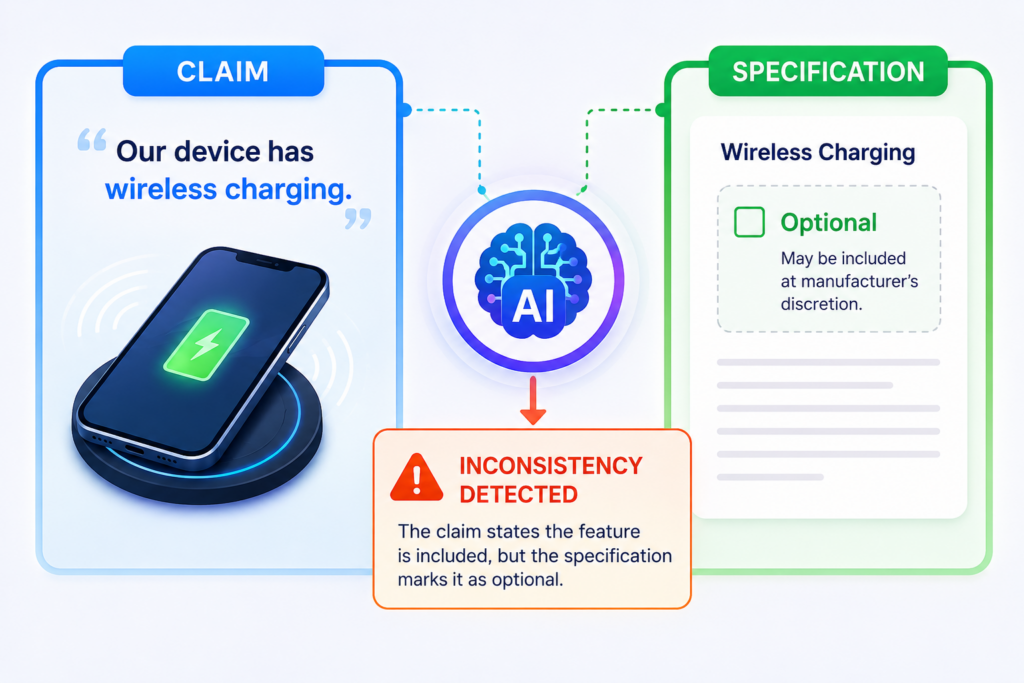
This matters because required parts can limit the claim. If the claim says the invention must use a certain feature, then a competitor may avoid the patent by leaving that feature out.
For example, the specification may say the system can use GPS data, Wi-Fi data, or device motion data. But the claim may only say the system uses GPS data.
That may be too narrow if the real invention works with many location signals. The reverse can also be a problem. The claim may broadly cover many types of data, but the specification may only explain GPS in any real detail.
AI can look for words that show whether a feature is required or optional. Words like “must,” “requires,” and “always” may signal a required feature. Words like “may,” “can,” “in some examples,” and “optionally” may signal a flexible feature.
The AI can then compare how the same feature appears across the claims and the specification.
Optional features should not accidentally become claim limits
Founders often care about broad protection because their product will change. The first version may use one data source, one model type, one interface, or one hardware setup.
The next version may use something different. If the claims lock the invention to the first version by mistake, the patent may age poorly.
This is especially common in fast-moving startups. The product may evolve while the patent is being prepared. A feature that looked central in January may be optional by March.
A model that was once the main engine may become one piece of a larger system. A manual review step may later become fully automated.
AI can help by finding these changing roles in the draft. It can show when a feature is described as optional in one place and required in another.
That gives the team a chance to choose the right wording before the patent is filed.
Good patent drafting protects the invention without trapping it in one product version
A strong patent should capture the real inventive idea, not just a screenshot of the product at one moment in time.
That does not mean the draft should be vague. It means the draft should be clear about what is core and what is just one way to build it.
AI can help separate those ideas. It can flag parts that appear in every claim and every example. Those may be core features. It can also flag parts that appear only in one example.
Those may be optional details. The attorney and founder can then decide how to write the claims so they protect the business plan, not just the current release.
This is one reason PowerPatent focuses on speed and quality together. A fast patent process is useful only if it still captures what matters.
With software plus real attorney oversight, founders can move quickly while still thinking clearly about scope, support, and future product changes.
How AI catches conflicts between drawings, claims, and written text
Patent drawings are not decoration. They help explain the invention. They show systems, parts, data flows, process steps, user screens, device layouts, model pipelines, and other key pieces.
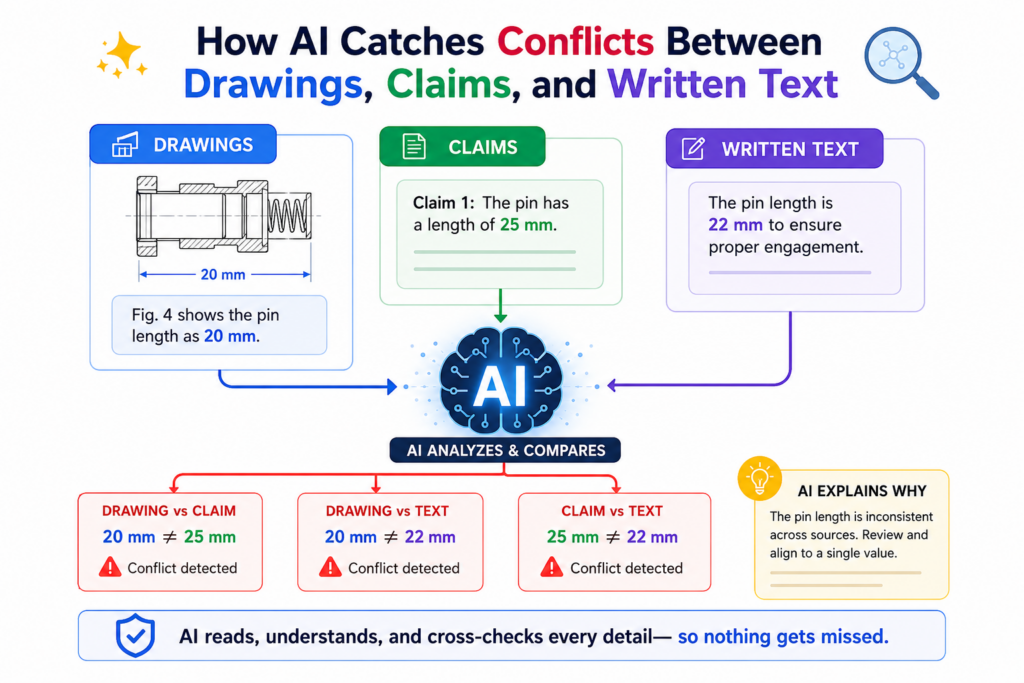
When drawings do not match the claims or specification, the whole draft can feel less clear.
A claim may refer to a “model update module,” but the drawings may show only a “training server.” The specification may describe three data stores, while the drawing shows one.
A flowchart may show an alert being sent before a risk score is made, while the claim says the score comes first.
These conflicts are easy to miss because people often review drawings separately from text. AI can help connect them.
It can compare figure labels, reference numbers, claim terms, and written descriptions. It can flag when something appears in one place but not another.
Drawings should support the same story as the claims
When the claims, drawings, and written text all point in the same direction, the patent becomes easier to understand.
The examiner can follow the invention faster. The attorney can explain the value more clearly. The founder can feel more confident that the draft reflects the product.
But when the drawings say one thing and the claims say another, the reader has to guess. Guessing is not good for patent quality. The goal is to make the invention feel clear, supported, and deliberate.
AI can check whether each claimed component appears in the drawings. It can check whether each flowchart step has a matching explanation.
It can find reference numbers that are used in one section but never explained elsewhere. It can also catch old labels that remain after a draft has been revised.
Drawing mismatches often come from normal startup speed
Founders move fast. A system diagram may be made for an investor deck. A technical flow may be pulled from an engineering doc.
A draft may be updated after a product pivot. A new claim set may be added after the attorney learns more about the invention.
None of this is unusual. But it creates many chances for mismatch. The patent draft may contain parts from different moments in the product’s life.
AI can act like a cleanup layer. It can surface places where the draft still carries old wording, missing labels, or incomplete figure support.
This is tactical because it gives the team specific fixes. Add a label. Update a drawing. Rewrite a paragraph. Align the claim term.
Remove an old term. Explain how two parts connect. These are not abstract changes. They are concrete edits that can make the patent stronger before filing.
Founders who want this kind of guided, software-backed process can explore PowerPatent here: https://powerpatent.com/how-it-works
How AI finds hidden conflicts between examples and claim language
Examples are powerful in a patent draft because they make the invention easier to understand. They show how the system may work in a real setting.
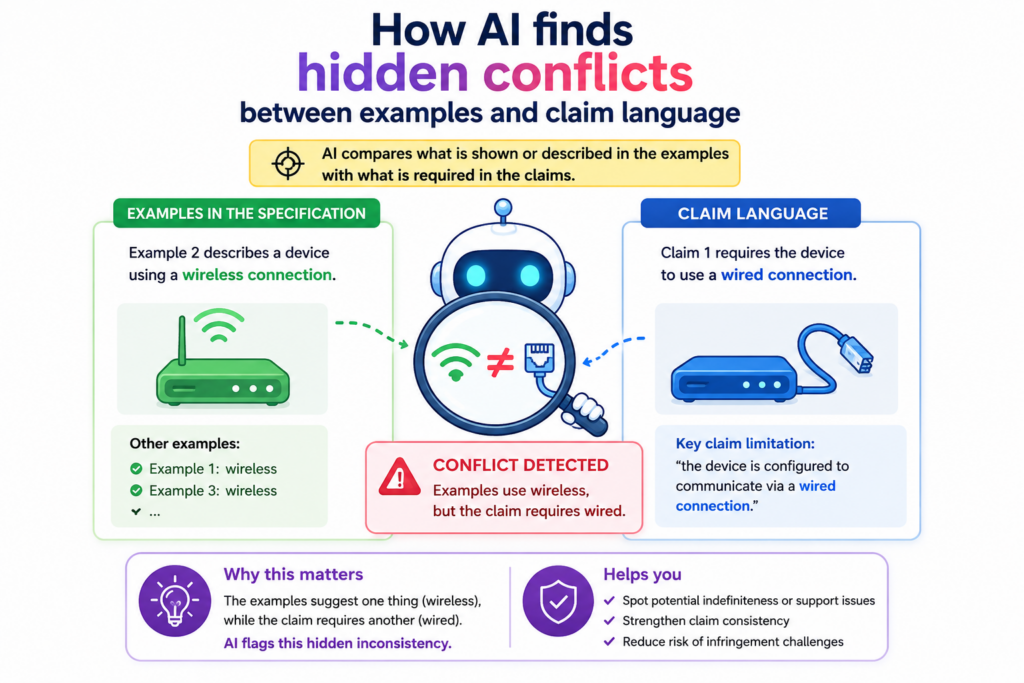
For a founder, examples can turn a hard idea into something clear. But examples can also create trouble when they do not match the claims.
A claim may describe a wide system that works across many use cases. The examples may only show one narrow use case.
That is not always a problem, but it can become one if the rest of the specification does not support the wider idea.
The opposite can also happen. The examples may describe a smart feature, but the claims may leave that feature out. In that case, the draft may explain something valuable without actually trying to protect it.
AI helps by comparing the claim language against the examples. It can see whether the examples support the main claim terms. It can also flag when the examples introduce new parts that never appear in the claims.
Examples should support the claims without shrinking the invention
A good example should make the invention clearer. It should not trap the invention inside one narrow version unless that narrow version is the true point. This matters a lot for startups because the first use case is often not the final use case.
A founder may first build an AI tool for hospitals, but the same core method may later work for labs, clinics, or insurance teams.
A robotics startup may start with warehouse robots, but the same control method may also help factory robots. A data platform may start with finance data, but the same pipeline may later handle supply chain data.
AI can help spot when the example language sounds too limiting. It may flag phrases that make one use case seem like the only use case.
It may also find places where the specification does not explain that the invention can work in other settings.
The strongest examples teach the idea without closing the door
The best examples give enough detail to support the claims while still leaving room for the invention to grow. They show one way the system can work, but they do not make the reader think it is the only way.
AI can help review that balance. It can show whether each example connects back to the claims. It can also show whether a claim has no example support at all.
From there, a patent attorney can decide whether to add another example, adjust the claim, or clarify the language.
This is where PowerPatent’s mix of smart software and real attorney review can help founders move with more control. The software can surface weak spots quickly.
The attorney can help shape the filing so it fits the business goal. You can see how PowerPatent works here: https://powerpatent.com/how-it-works
How AI catches claim words that are too vague for the specification
Some words sound useful because they feel broad. Words like “smart,” “optimized,” “efficient,” “adaptive,” “secure,” and “intelligent” may describe the product well in a pitch deck.
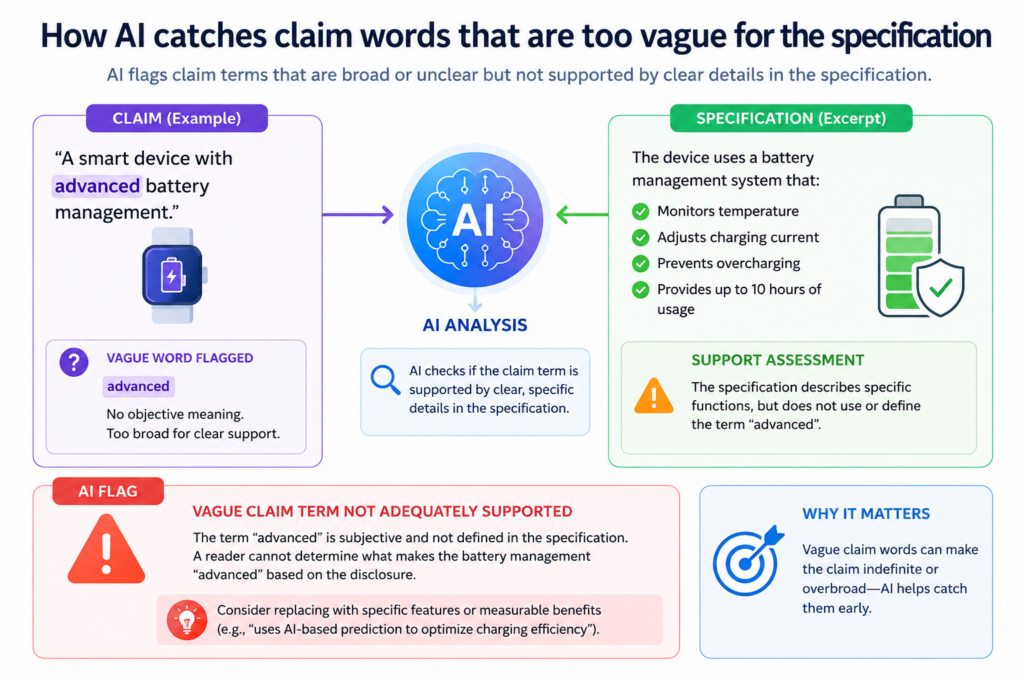
But in a patent claim, broad words need clear support. If the specification does not explain what those words mean in the context of the invention, the claim may become hard to read or hard to defend.
This does not mean founders should avoid strong words. It means the words should be backed by real detail.
If the claim says the system is “adaptive,” the specification should explain what changes, when it changes, and what data causes the change.
If the claim says the system “optimizes” a result, the specification should explain what is being improved and how the system decides that one result is better than another.
AI can flag vague words and then check whether the specification explains them with enough care.
Clear words make the invention easier to protect
A patent is not helped by fancy words. It is helped by clear meaning. The reader should be able to understand what the invention does and how the claim connects to that function.
For example, a claim that says a system “improves model output” may be too soft if the specification never explains the improvement. Does the system reduce false positives?
Does it speed up a response? Does it use less memory? Does it give a better ranking? Does it make fewer bad predictions?
AI can look for these gaps. It can find claim words that carry a lot of weight and then check whether the specification gives those words real support. It can also suggest where a founder or attorney may need to add a clearer explanation.
Vague language often hides a strong idea that needs better wording
Many vague patent phrases come from a good place. The founder knows the system is better. The team has seen the results. The product solves a real problem. But the draft may not yet explain the invention in a way that makes the value clear.
That is a missed chance. A strong patent should not make the reader guess why the invention matters. It should show the core improvement in simple, grounded terms.
AI helps by pointing to the places where the draft sounds broad but thin. That gives the team a chance to turn weak language into stronger support.
Instead of saying the system is “smart,” the draft can explain what data it uses, what decision it makes, and what changes because of that decision.
For founders, this is not just a writing issue. It is a protection issue. Clearer drafting can help the patent better match the real invention and the real business value behind it.
How AI finds contradictions between different claim sets
A patent application may include different types of claims. One claim may cover a system. Another may cover a method. Another may cover software stored on a device.
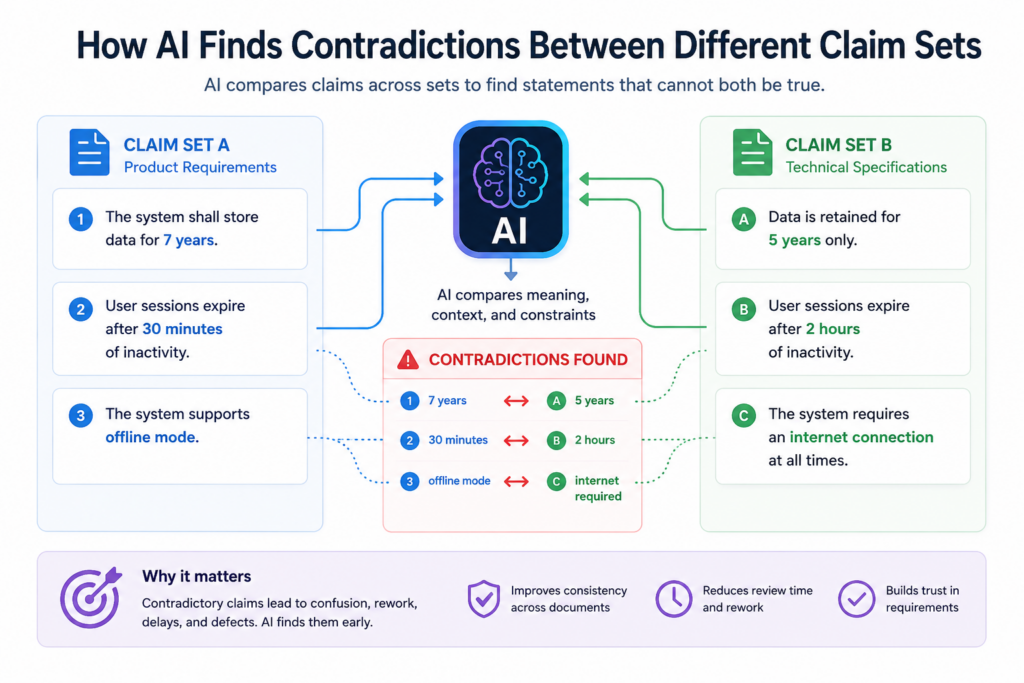
These claims may describe the same invention from different angles. That can be useful, but it also creates room for mismatch.
The system claim may say there is a trained model. The method claim may say the model is trained during use. The software claim may say the model is selected from a group of models.
Each version may make sense by itself, but together they may create confusion if the specification does not explain how they relate.
AI can compare claim sets against each other. It can find when one claim requires a feature that another claim leaves out.
It can find when two claims use different names for the same part. It can also find when the same step appears in a different order across claim types.
Claim sets should work together like parts of the same story
Different claim types should not feel like they came from different inventions. They should support one main story.
The reader should be able to see how the system, method, and software versions connect.
This is very important for software and AI startups. A product may be described as a platform, a model pipeline, a workflow, an API, a user interface, or a cloud service. Each view may be true. But the patent should bring those views together in a clean way.
AI can build a side-by-side comparison of the claims. It can show whether the system claim has a component that the method claim never uses.
It can show whether the method claim has a step that the system claim does not support. It can also show whether the terms are consistent across the claim set.
Consistency across claims helps avoid confusion later
When claims conflict with each other, the patent can become harder to explain. That can slow down review.
It can also create openings for competitors later. They may argue that the patent is unclear or that the claims do not match the written description.
AI can reduce that risk by catching the issue early. The fix may be simple. A term may need to be changed.
A step may need to be added. A claim may need to be narrowed. The specification may need a sentence that explains how the different versions relate.
This kind of review is hard to do by hand when a draft is long. It is even harder when the team is moving fast.
PowerPatent helps founders handle this with software that can scan for issues and attorneys who know how to turn those signals into stronger filings. See how it works here: https://powerpatent.com/how-it-works
How AI checks whether the claim still matches the invention after product changes
Startups do not stand still. The product changes. The model changes. The workflow changes. A feature that seemed central last month may be replaced this month.
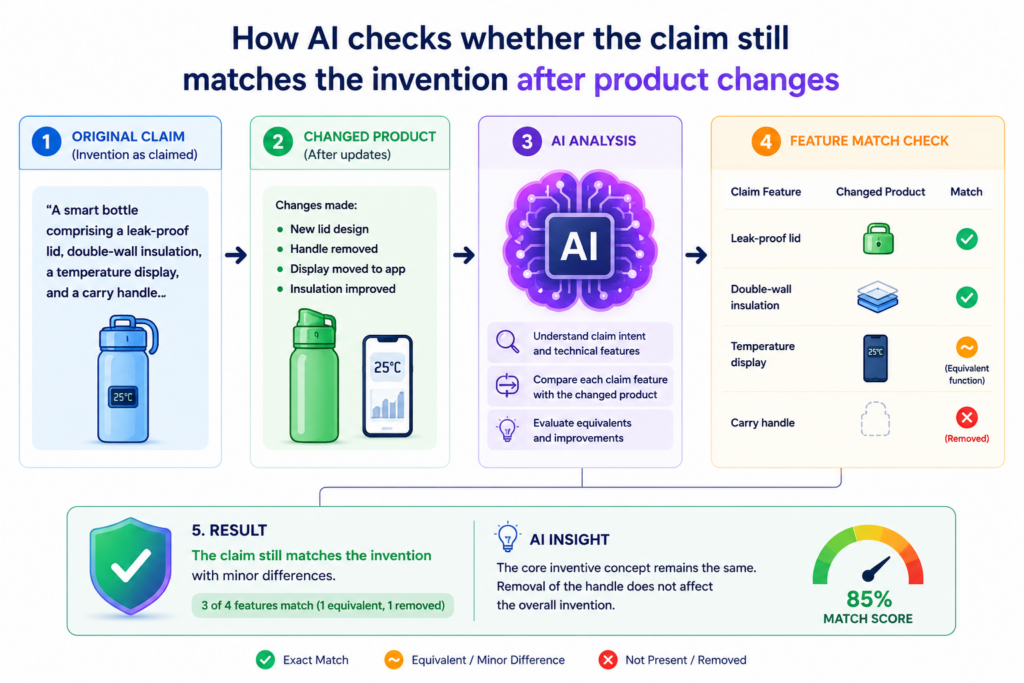
A system that started as a manual tool may become automated. A single model may become a group of models. A simple dashboard may turn into a full decision engine.
This is normal startup life. But it can create patent problems when the draft does not keep up. A claim may describe an older version of the product.
The specification may include newer details. Or the claims may be updated after a founder call, while the examples and drawings still describe the old system.
AI can help by finding signs that the draft has been patched over time. It can spot old terms, unused labels, inconsistent feature names, and steps that appear in one part of the draft but not another.
Patent drafts should evolve with the invention before filing
Before a patent is filed, the team should make sure the draft still matches the invention they want to protect. This does not mean the patent should only describe the current product.
A good patent may cover future versions too. But the draft should be deliberate. The team should know what is core, what is optional, and what has changed.
AI can compare the claims against the latest technical notes, product descriptions, or invention disclosures when those materials are available in the review process.
It can help surface places where the patent text may be out of date. This is valuable because founders often do not have time to read every line of a long draft.
The goal is not to let AI decide what the invention is. The goal is to help the founder and attorney see where the draft may no longer match the company’s thinking.
Old product language can quietly weaken a new patent strategy
A patent draft may carry old words like “dashboard,” even though the product is now an API. It may refer to a “rules engine,” even though the system now uses a trained model.
It may describe “manual review,” even though the newest version automates the decision.
These changes matter. If the claims and specification do not reflect the real direction of the company, the patent may protect the past more than the future.
AI can help catch those stale terms. Then the team can decide whether to keep them as examples, update them, or remove them. That gives founders more control over the filing and helps avoid costly cleanup later.
For startups, this is the kind of practical patent support that matters. Not slow back-and-forth. Not confusing legal talk.
Just a better way to turn the real invention into a strong filing. PowerPatent’s process is built around that idea: https://powerpatent.com/how-it-works
How AI helps founders prepare better invention notes before drafting starts
The best way to fix claim and specification mismatch is to avoid it early. That starts before the patent draft is written.
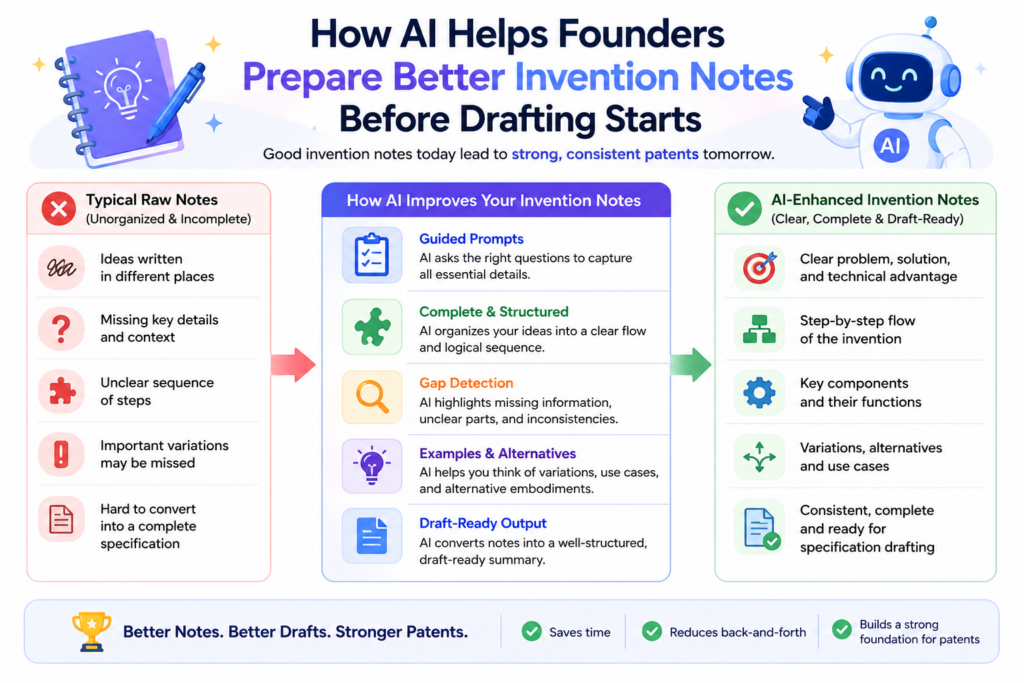
If the invention notes are clear, the claims and specification have a stronger base. If the notes are messy, the draft may carry that mess forward.
Many founders start with scattered material. There may be code comments, diagrams, pitch slides, product docs, test results, customer notes, and Slack messages.
Somewhere inside all of that is the invention. The hard part is pulling out the core idea in a clean way.
AI can help organize these materials before drafting starts. It can find repeated themes. It can identify key parts of the system. It can pull out steps in the workflow. It can help separate what is new from what is just normal setup.
Better inputs lead to better patent drafts
A patent draft is only as strong as the invention story behind it. If the founder can clearly explain the problem, the old way, the new way, and the key technical improvement, the draft becomes easier to align.
AI can help ask better questions. What data enters the system? What happens to the data? What decision does the system make?
What changes because of that decision? What part is different from the common way? What can vary without changing the core idea?
When those answers are clear, the claims and specification are less likely to drift apart. The claims can focus on the core protection. The specification can support that protection with clear detail.
Founders should treat patent prep like product thinking
Good patent prep is not just a legal task. It is a product strategy task. It forces the team to name what is truly special about the invention.
That can help with fundraising, customer trust, and long-term moat building.
AI can make that process less painful. Instead of asking founders to start from a blank page, it can help turn raw technical material into a cleaner invention record. Then a real patent attorney can shape that record into a filing strategy.
This is one of the biggest benefits of a modern patent workflow. Founders do not have to choose between speed and care.
With PowerPatent, they can use smart tools to move faster while still getting real attorney oversight where it counts. Learn more here: https://powerpatent.com/how-it-works
How AI helps catch claims that protect the wrong feature
A patent can be well written and still focus on the wrong thing. This happens when the claims protect a feature that is easy to copy around, while the real invention sits deeper in the system.
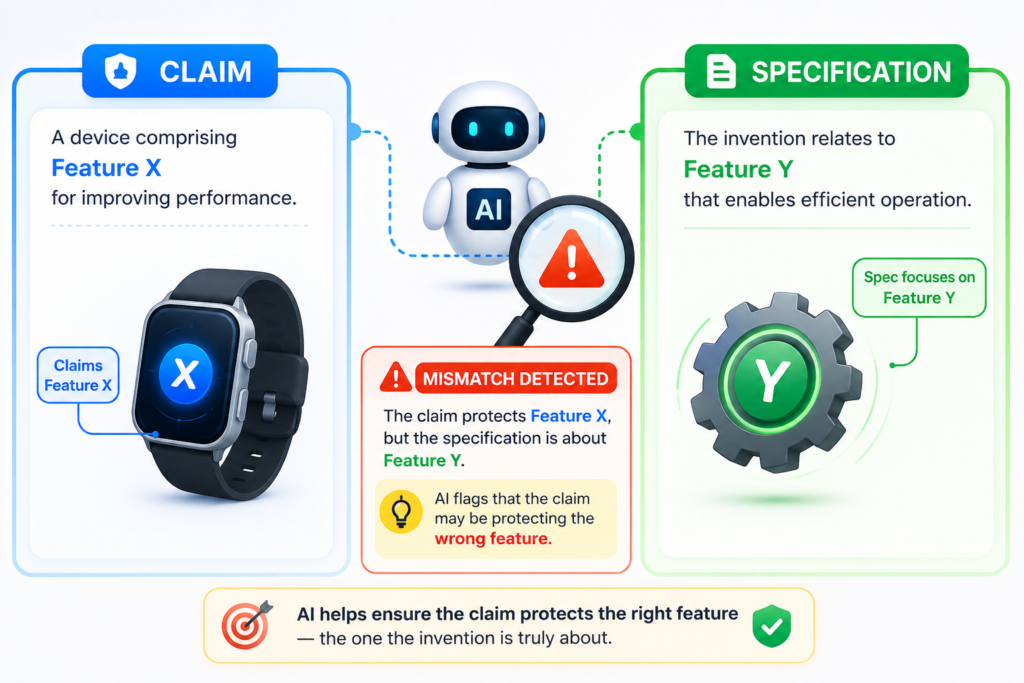
For founders, this is a painful mistake because the patent may look complete, yet fail to protect the part that gives the product its edge.
This can happen in AI, software, medical tools, robotics, hardware, and data systems. A claim may focus on the user screen, while the real invention is the model pipeline behind it.
A claim may focus on sending an alert, while the real invention is how the system decides when to send that alert. A claim may focus on collecting data, while the real invention is how the data is cleaned, ranked, changed, or used.
AI can help by comparing the claims to the full specification and looking for where the strongest technical detail appears.
If the specification spends many pages explaining a special model update method, but the claims barely mention it, that may be a sign that the patent is not aiming at the most valuable part.
The claim should point at the real inventive core
Founders often describe the invention from the outside because that is how users see it. They talk about the app, the result, the report, or the workflow.
That is useful, but patents often need to go deeper. The strongest protection may come from the hidden system that creates the result.
AI can help surface this gap. It can show which features are described with the most detail in the specification. It can also show which features are central in the claims.
If those two areas do not line up, the team should pause and ask a hard question: are we protecting the real invention or just the product wrapper?
That question can save a founder from filing a patent that feels good but does not carry enough weight.
Good patent review asks what a competitor would copy
A useful way to test a claim is to ask what a competitor would take if they wanted the same result. Would they copy the screen? Would they copy the data flow?
Would they copy the model training step? Would they copy the control logic? Would they copy the way the system selects between choices?
AI can help frame that review by pulling out the functional pieces of the invention. It can show the attorney and founder where the draft spends its energy.
From there, the team can decide whether the claim needs to move closer to the core technical idea.
PowerPatent helps founders do this faster by combining software review with real attorney guidance. The goal is not just to file something.
The goal is to file smarter, with more confidence and less waste. See how the process works here: https://powerpatent.com/how-it-works
How AI spots when the specification describes value but the claims miss it
Many strong inventions have a clear business value. They save time. They reduce errors. They improve decisions. They lower compute cost. They make a device safer.
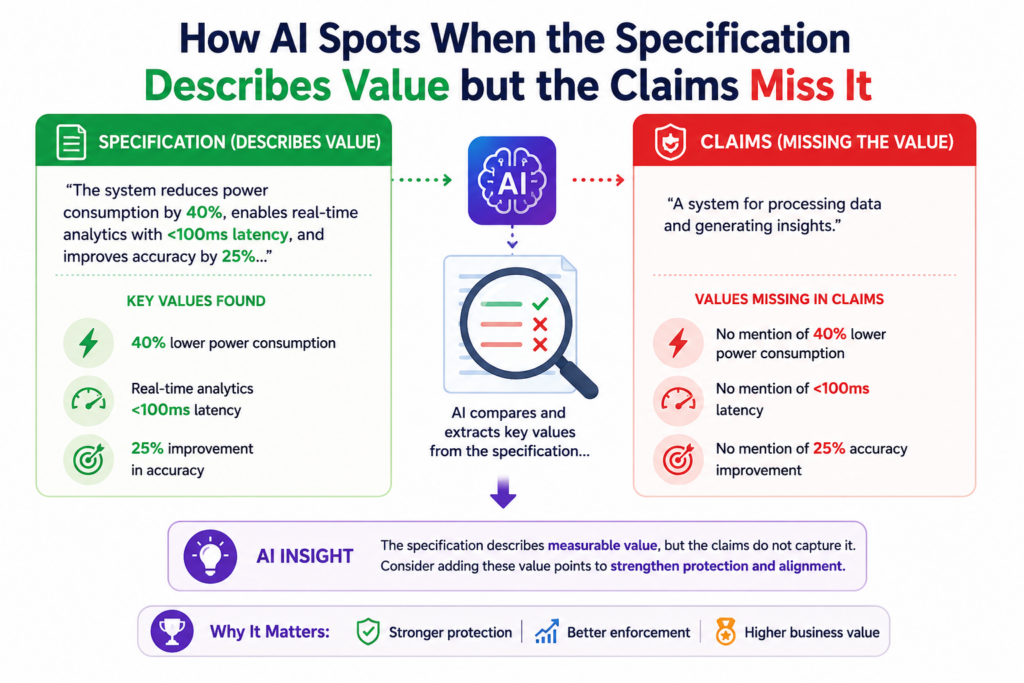
They help a team act sooner. But a patent claim should not only sound like a business promise. It should capture the technical action that creates that value.
A mismatch can happen when the specification explains the value of the invention, but the claims fail to capture the feature that causes it.
For example, the specification may explain that a system reduces false alerts by comparing live data with a learned pattern. But the claims may only say the system sends alerts. That misses the more important part.
AI can find this by comparing benefit language against claim language. It can look for places where the specification says the invention improves something, then check whether the claims include the technical steps tied to that improvement.
Value should be tied to action in the patent text
A patent should make the invention feel real. It should not only say that something is faster, better, safer, or smarter. It should show what the system does to create that result.
If the system saves memory, the specification should explain how. If the model gets better over time, the draft should explain what data changes it.
If the robot moves with fewer errors, the patent should explain how the motion path is updated. If the platform reduces bad matches, the draft should explain what comparison, filter, ranking, or feedback step makes that happen.
AI can help catch thin spots where the result is described but the mechanism is missing from the claims.
A strong patent connects the why with the how
Founders are good at explaining why their product matters. They have to do it for customers, investors, and hires. But patents also need the how. That is where the claim and specification alignment becomes critical.
AI can pull out the “why” language from the specification and compare it with the “how” language in the claims.
When the claims do not include the steps that create the value, the attorney may revise the claim strategy.
This is not about making the patent longer. It is about making the protection sharper. A good claim should not cover only the final result. It should reach the engine that makes the result possible.
How AI helps avoid accidental narrow claims
A narrow claim is not always bad. Sometimes a focused claim is the right move. But an accidentally narrow claim can hurt.
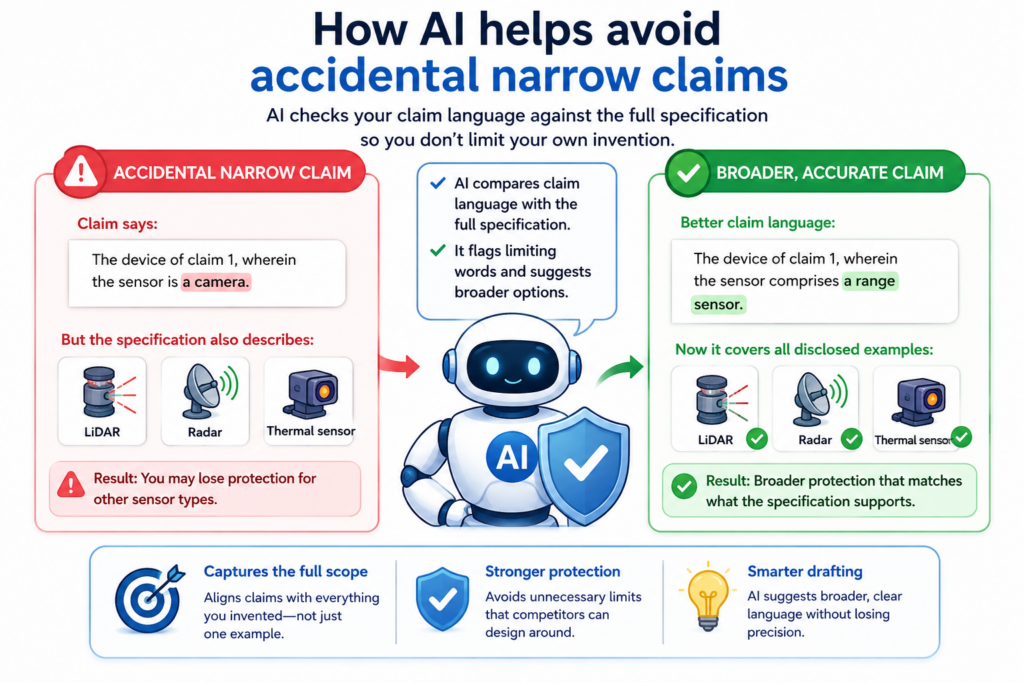
It can protect one small version of the invention while leaving other valuable versions open.
This often happens when a claim includes details that are not truly required. A founder may mention a certain data format, device type, model type, cloud setup, sensor, interface, or user step because that is how the current product works.
The claim may then lock onto that detail even though the broader invention does not need it.
AI can help spot this by comparing required claim language against the specification’s broader teaching.
If the specification says the system can use many model types, but the claim only names one, AI can flag that. If the specification says data may come from many sources, but the claim requires one source, that may deserve review.
Narrow wording can give competitors an easy path around the patent
A competitor does not need to copy every detail. If a claim requires a specific feature, and the competitor can avoid that feature, the patent may be less useful against them. That is why every required claim detail should earn its place.
AI can help founders and attorneys review those details with more care. It can ask, in effect, whether each claim limitation is truly central or just one example.
It can compare the claim against the specification and show where the draft may have turned an optional feature into a required one.
This kind of review is very practical. It helps founders think about the future, not just the current build.
The best claims leave room for product growth
A startup product will change. The company may move from one customer group to another.
The model may be replaced. The data flow may change. The front end may be rebuilt. The backend may move from one stack to another.
A patent should be written with that movement in mind. It should protect the inventive idea in a way that can still matter as the product grows.
AI can help by showing where the claim may be tied too closely to today’s product details.
Then the attorney can decide whether to broaden the language, add more support in the specification, or write different claim layers with different levels of scope.
PowerPatent is designed for this kind of founder-focused patent work. It helps teams move fast while still asking the right protection questions before filing. Learn more here: https://powerpatent.com/how-it-works
How AI checks whether dependent claims match the main claim
Dependent claims add more detail to a main claim. They can be useful because they create fallback positions.
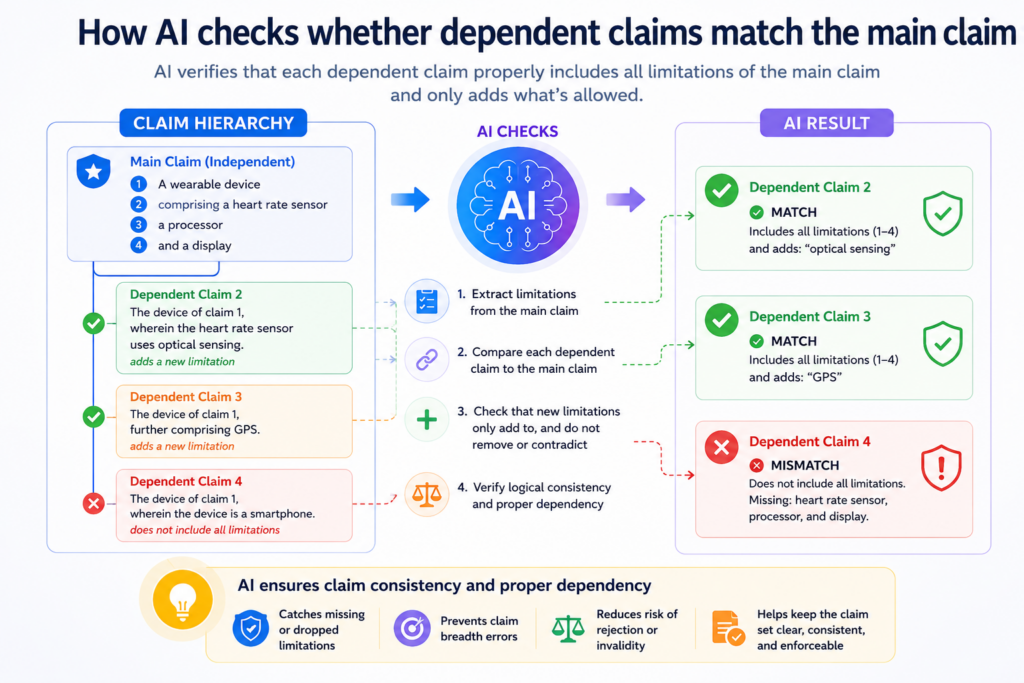
In simple words, they give the patent more layers. If a broad claim faces pushback, a narrower claim may still have value.
But dependent claims can create mismatch problems too. A dependent claim may add a feature that does not fit with the main claim.
It may refer to a part that was never introduced. It may describe a step that does not make sense in the order of the main claim. It may use a term that the specification barely supports.
AI is very helpful here because it can read the claim chain. It can check whether each dependent claim properly builds on the claims before it.
It can also compare every added feature against the specification.
Every added detail should connect cleanly to the claim it depends on
A dependent claim should feel like a natural next layer. If the main claim describes a system that ranks items, a dependent claim might explain a certain ranking signal.
If the main claim describes updating a model, a dependent claim might explain the feedback data used for that update.
Problems start when the dependent claim adds something that feels disconnected.
For example, the main claim may describe a cloud platform, while the dependent claim suddenly mentions an edge device without explaining how that device fits.
The specification may support both ideas, but the claim chain may still need cleaner wording.
AI can flag those jumps. It can show where a dependent claim introduces a new component, new data type, or new action that needs better support.
Claim chains should be easy to follow from broad to specific
A strong claim set often moves from broad to more specific in a clear path. The main claim covers the larger idea. The dependent claims add useful details, backup positions, and stronger examples.
AI can help test whether that path makes sense. It can show whether the dependent claims cluster around the real inventive features or scatter across unrelated details. It can also show whether important fallback ideas are missing.
This is useful for founders because the dependent claims often carry hidden value. They may protect practical product features that are hard for competitors to avoid.
When AI helps clean up these layers, the whole patent can become more useful and easier to manage.
How AI finds unsupported negative language in claims
Sometimes a claim says what the invention does not do. This is called negative language in a broad sense, but founders can think of it more simply: the claim excludes something.
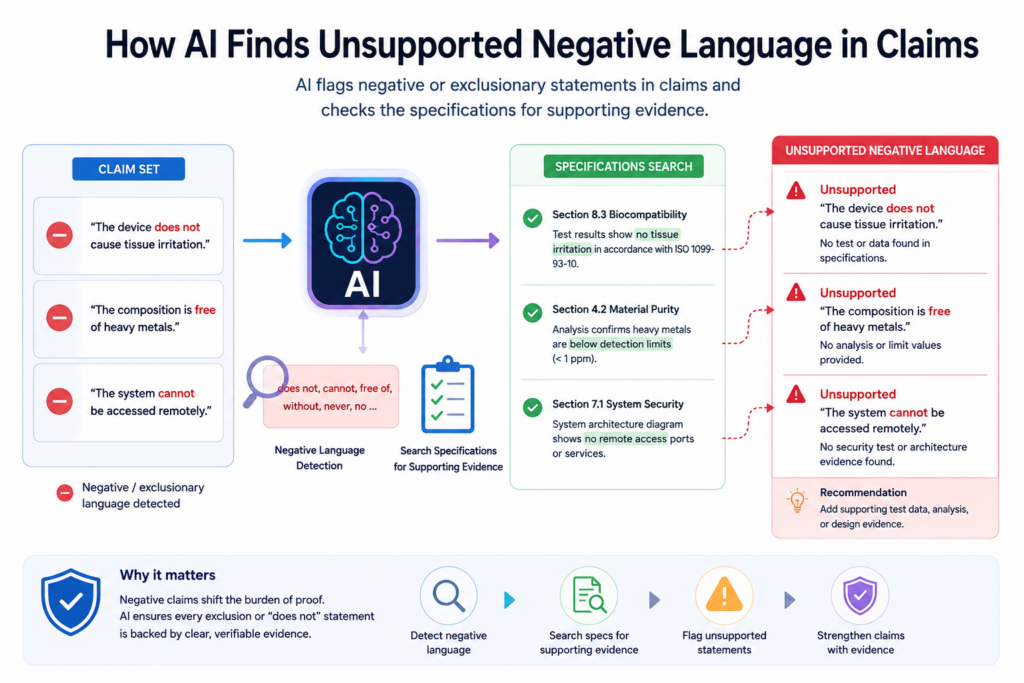
For example, a claim may say the system works “without manual review,” “without storing raw data,” or “without using a central server.”
That kind of language can be powerful when it is true and well supported. It can show a clear difference from older systems. But it can also cause problems if the specification does not explain the exclusion.
If the claim says the system works without a certain step, the specification should help the reader understand how and why that is possible.
AI can flag these exclusions and check whether the written text supports them.
Excluding a feature should be done with care
Founders may want to say their system avoids a slow, costly, or risky step. That can be a real advantage. A medical tool may avoid sending private data to the cloud.
A security system may avoid storing passwords. A robotics system may avoid stopping the machine for manual calibration.
But the patent draft should explain the technical reason this works. If the claim says the system does not use raw data, the specification should explain what it uses instead.
If the claim says the process does not need manual review, the draft should explain how the system makes the decision on its own.
AI can help by finding claim phrases that exclude a feature and then searching for the matching explanation in the specification.
Unsupported exclusions can create avoidable risk
When a claim excludes something without enough explanation, the draft may feel incomplete. It may sound like a marketing claim instead of a technical teaching. That can weaken the filing.
AI can catch this early. It can show the attorney where the draft needs more detail or where the claim language may be too strong.
The fix may be to add support, soften the claim language, or move the exclusion into a narrower dependent claim.
For founders, this is another example of why patent quality is not just about writing more. It is about writing what matters.
A patent should explain the invention in a way that supports the protection being asked for. PowerPatent helps make that easier by pairing smart AI review with real attorney oversight. See how it works here: https://powerpatent.com/how-it-works
How AI spots claim language that sounds broader than the real disclosure
A claim can sound strong because it uses wide words. It may say the system works across “multiple data sources,” “various devices,” “different model types,” or “a plurality of user contexts.”
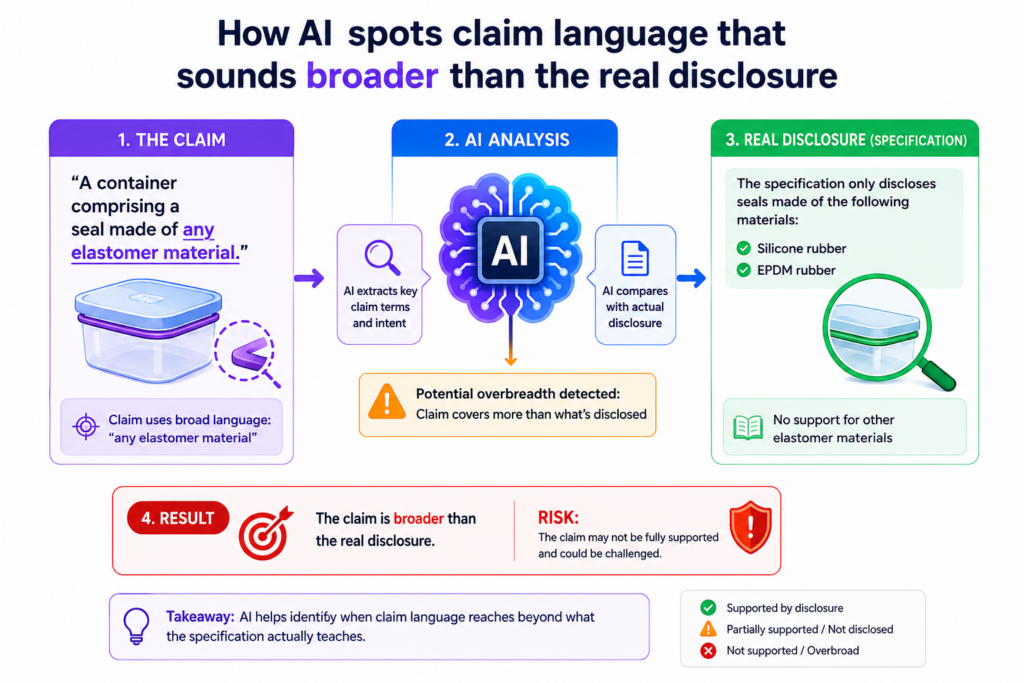
That kind of language can be useful, but only when the specification gives enough support for it.
The problem starts when the claim reaches farther than the specification explains. A founder may want broad protection, which makes sense.
But the patent draft still has to show that the founder actually described the invention in a way that supports that reach.
AI can help by finding broad words in the claims and checking whether the specification gives real examples, clear detail, or enough explanation to back them up.
If the claim says the invention works with many inputs, but the specification only explains one input, the AI can flag that gap.
If the claim says the system works across many devices, but the draft only talks about one server setup, the AI can raise a warning.
Broad claims need a strong base in the written description
Broad claims are not bad. In fact, founders often need them. A startup does not want a patent that protects only one narrow build while competitors copy the core idea with small changes.
But broad claims need a strong base. The specification should explain the invention in a way that shows the bigger idea, not just one product screen or one test setup.
It should help the reader understand what can change and what must stay the same.
AI can compare the claim scope with the support in the specification. It can find where the claim says “multiple,” but the draft gives only one example.
It can find where the claim says “any,” but the specification gives no reason to believe the idea works that broadly.
The right fix is often better support, not weaker protection
When AI flags a broad claim, the answer is not always to make the claim smaller. Sometimes the better move is to add stronger support to the specification.
The draft may need another example, another system version, or a clearer statement about how the invention works across different settings.
This is where a real patent attorney matters. AI can find the gap, but the attorney helps decide the right fix.
PowerPatent combines both, so founders can move fast without leaving important support issues buried in the draft. You can see how the process works here: https://powerpatent.com/how-it-works
How AI finds places where the specification teaches one thing but the claim says another
Some mismatches are direct conflicts. The specification says the system does one thing. The claim says it does something else.
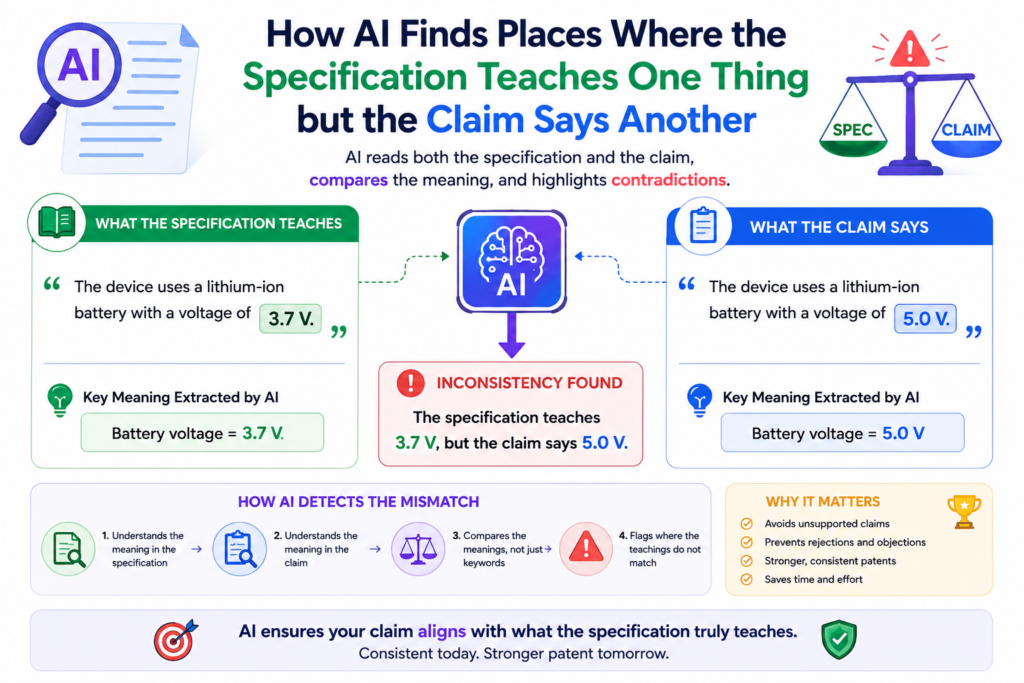
These conflicts can be easy to miss because they may be buried in long paragraphs or spread across different sections.
For example, the specification may say the system stores only processed data, while a claim says it stores raw data.
The specification may say a model is trained offline, while a claim says the model is trained in real time. The specification may say a user approves a result, while a claim says the system automatically approves it.
These are not small style issues. They can affect what the patent appears to cover. They can also make the draft harder to explain during review.
AI can compare technical statements across the full draft
AI can look for statements that point in opposite directions. It can compare verbs, objects, timing words, data types, and system roles. It can also detect when the same feature is described in conflicting ways.
This is especially helpful when a patent draft has gone through several rounds of edits. One section may have been updated, while another section still carries old language.
A founder may revise the claims after a product change, but forget to update the examples. A drawing may still show an old process flow.
AI can catch these leftover conflicts because it reviews the draft as a whole.
Direct conflicts should be fixed before filing
A conflict in the draft can make the invention look less clear than it really is. That is a shame, because the product may work beautifully. The problem may only be in the words.
The fix may be simple. The claim may need a small change. The specification may need to clarify that both versions are possible. An old paragraph may need to be updated. A figure may need a new label.
The key is catching the issue before filing. Once a patent application is filed, fixes can become harder, slower, and more limited. That is why AI review before filing is so useful for founders who care about speed and quality.
Conclusion
AI can make patent review faster, cleaner, and much less stressful by finding gaps between claims and the specification before they become costly problems. It can spot missing support, mixed terms, weak examples, narrow wording, broad claims, and stale product language.
But the real power comes when AI works with skilled patent attorneys who know how to turn those signals into stronger protection. For founders, that means more speed, more control, and fewer blind spots while building the company. PowerPatent brings smart software and real attorney oversight together so you can protect your invention with confidence: https://powerpatent.com/how-it-works
Leave a Reply