
If your team builds from different cities, time zones, or even countries, your ideas can slip through the cracks fast. A breakthrough shared on Slack today can be forgotten next week. A new model tweak discussed on Zoom can disappear in a sea of notes. And when you finally think about filing a patent, you realize the key details are gone.
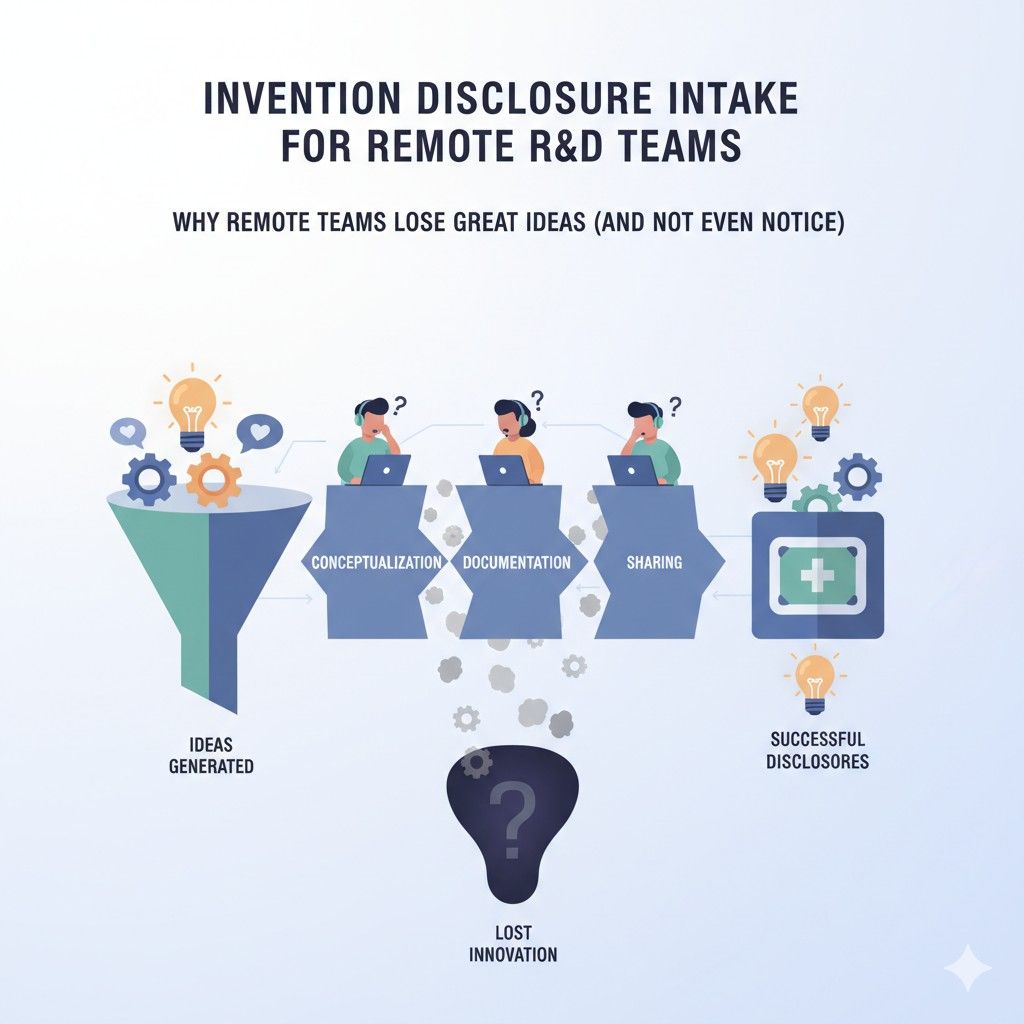
Why Remote Teams Lose Great Ideas (And Do Not Even Notice)
Remote R&D teams do not lose ideas because they lack talent. They lose them because there is no clear moment when an idea becomes “official.”
In an office, someone might sketch on a whiteboard and leave it up for weeks. In a remote team, that same sketch lives in a screenshot buried in a chat thread.
When you build across time zones and tools, ideas scatter. Slack holds one part. GitHub holds another. Notion has meeting notes. Someone’s local machine has test results. No single place tells the full story.
That is where the real risk begins.
Ideas Feel Small in the Moment
Most breakthroughs do not feel like breakthroughs at first. They feel like small fixes.
An engineer adjusts a training pipeline to reduce drift. A hardware lead changes a material to improve heat control. A backend developer rewrites a piece of logic to cut latency in half. These moments feel like normal work.
No one stops to say, “This might be patentable.”
In remote teams, this problem is worse. There is no hallway conversation where someone says, “Wait, that’s new. We should write this down.” There is no shared whiteboard to circle and revisit.
Actionable advice starts here. You need to train your team to see invention in everyday work.
At the end of major sprints, add one simple question to your demo or retro: “Did we solve a problem in a new way?” Do not make it legal. Do not make it formal. Just ask it every time.

Repetition builds awareness. Awareness captures ideas.
Chat Tools Create Memory Illusion
Remote teams trust their tools too much. Slack, Teams, Discord, email. It all feels saved. Searchable. Safe.
But searchable does not mean usable.
An idea discussed in a fast thread at 11:30 p.m. gets buried under hundreds of messages by morning. Six months later, when you try to reconstruct who came up with what and when, it becomes guesswork.
This is dangerous for two reasons. First, you lose clarity about the invention itself. Second, you lose clean records of contribution, which can create ownership problems later.
To fix this, create a habit that no invention lives only in chat. If a technical change solves a real problem, someone must move it from chat into a structured place within 24 hours.
That place could be a simple internal invention intake form or a shared document designed for disclosures.
The rule is simple. Chat is for discussion. Structured capture is for protection.
Async Work Breaks the Story
Remote R&D is often async. One engineer pushes code. Another tests it hours later. A third refactors it the next day. The final solution is a blend of many small moves.
When you try to file a patent months later, you need a clear story. What was the problem? What did you try? What failed? What finally worked?
Async work breaks that story into fragments.
Without a clean intake system, your patent attorney will have to reverse engineer your invention from code commits and memory. That slows everything down. It also weakens the patent because key details are missing.
A strategic move here is to connect invention capture to major technical milestones. When a feature moves from experimental to production-ready, trigger a short invention review.
Ask the lead engineer to explain, in plain words, what was hard and how the team solved it. Record it while it is fresh.

You are not asking for a legal memo. You are capturing context. Context is power when drafting strong claims later.
Remote Culture Avoids “Extra Work”
Engineers hate busywork. Founders hate slowing down shipping. So when invention disclosure feels like paperwork, it gets ignored.
In remote teams, this resistance is silent. No one openly rejects the process. They just do not use it.
The deeper issue is this: if your intake system feels separate from building, it will fail.
The solution is to embed it into existing workflows. Do not create a long legal form. Instead, design a short set of questions that feel like a technical debrief. What problem were you solving? Why did existing solutions not work? What makes your approach different?
Make it take less than 15 minutes to complete. If it takes an hour, adoption will drop.
From a business standpoint, this is critical. A weak intake process means weak patents. Weak patents mean weak leverage with investors, acquirers, and competitors.
Ownership Confusion Grows in Distributed Teams
When everyone works in different places, lines blur.
Contractors contribute. Advisors suggest ideas. Open source code gets mixed in. A co-founder messages a solution idea over text while on a plane.
If you do not capture inventions early, you risk confusion about who contributed what. Later, during due diligence, investors will ask clear questions. Who invented this? When? Is everyone properly assigned?
If your answer is “We think so,” that is a red flag.
To avoid this, build a habit where every invention disclosure clearly names contributors at the moment of submission. Do not wait until you are drafting the patent. Capture names, roles, and a short description of each person’s input early.

This protects you during fundraising and acquisition. It also avoids painful internal disputes.
Speed Hides Risk
Remote teams often move fast. They ship updates weekly. They iterate daily. Speed feels like progress.
But speed can hide IP gaps.
You might release a feature publicly before filing. You might publish a technical blog post that discloses your method. You might demo at a conference without realizing you just shared core innovation.
Invention intake acts as a checkpoint. It creates a moment to ask: “Should we protect this before we show it?”
Make this a standard question before public releases. Tie your product launch checklist to your invention intake system. If a feature represents a new technical approach, flag it for review before marketing pushes it out.
This is not about slowing down. It is about being intentional.
The Silent Cost of Delay
Many founders assume they can “file later.” But delay has a cost.
Memories fade. Engineers leave. Context disappears. What felt obvious at the time becomes hard to explain months later.
A strong patent depends on detail. Why your method works. What alternatives you considered. What trade-offs you made. Those details are hardest to recreate after the fact.
For remote teams with turnover or rapid growth, this risk doubles. New hires will not know the origin story of early breakthroughs.
The most strategic move is to treat invention intake like version control for ideas. Just as you would never rely on memory instead of Git, you should never rely on memory for innovation.
Capture early. Refine later.
When No One “Owns” IP
In many startups, product has an owner. Engineering has a leader. Sales has a head.
But IP often has no clear owner.
In remote environments, this becomes invisible. Everyone assumes someone else is tracking patents. Months pass. Nothing gets filed.
Assign clear responsibility. It does not need to be a full-time role. It can be a founder or a senior engineer who acts as IP champion.
Their job is simple: review disclosures, nudge the team, and connect with outside counsel or a platform like PowerPatent when something is worth filing.
Without ownership, invention intake dies quietly.
With ownership, it becomes part of company culture.
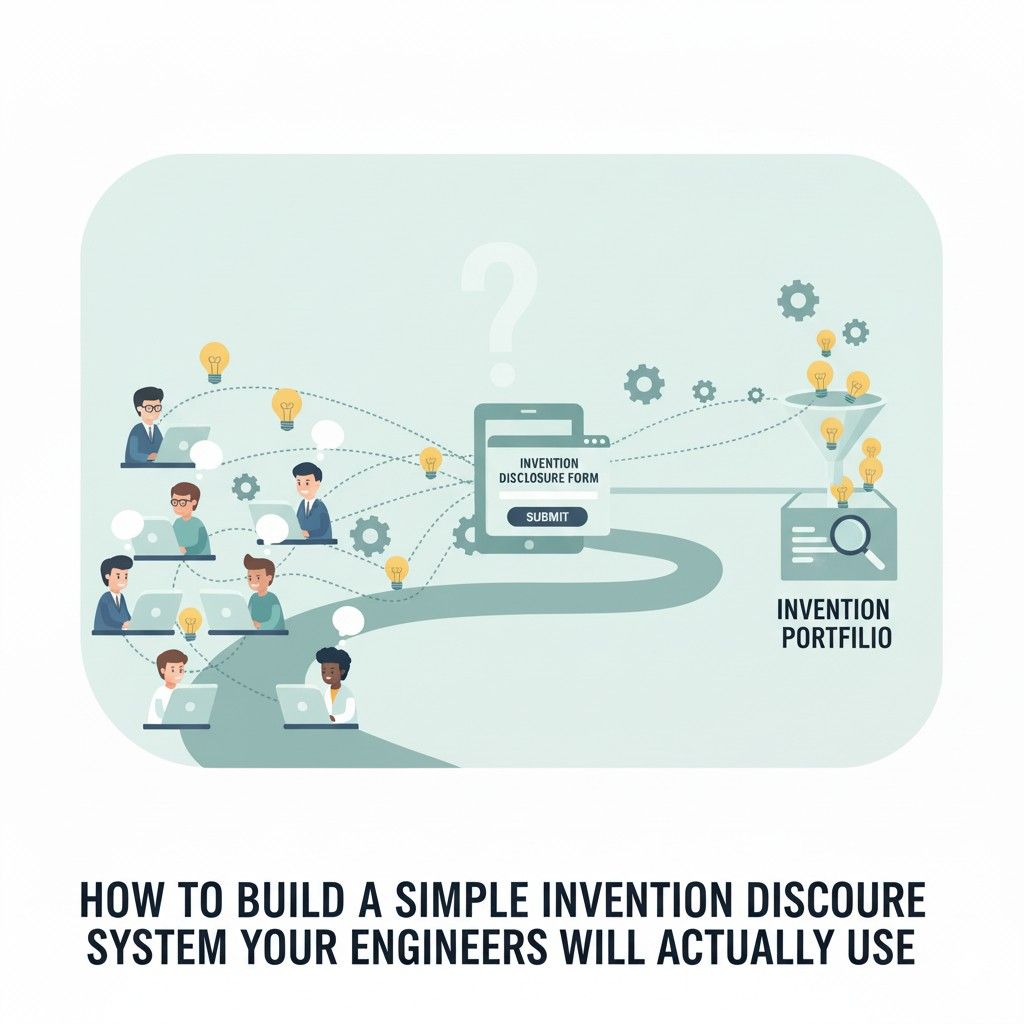
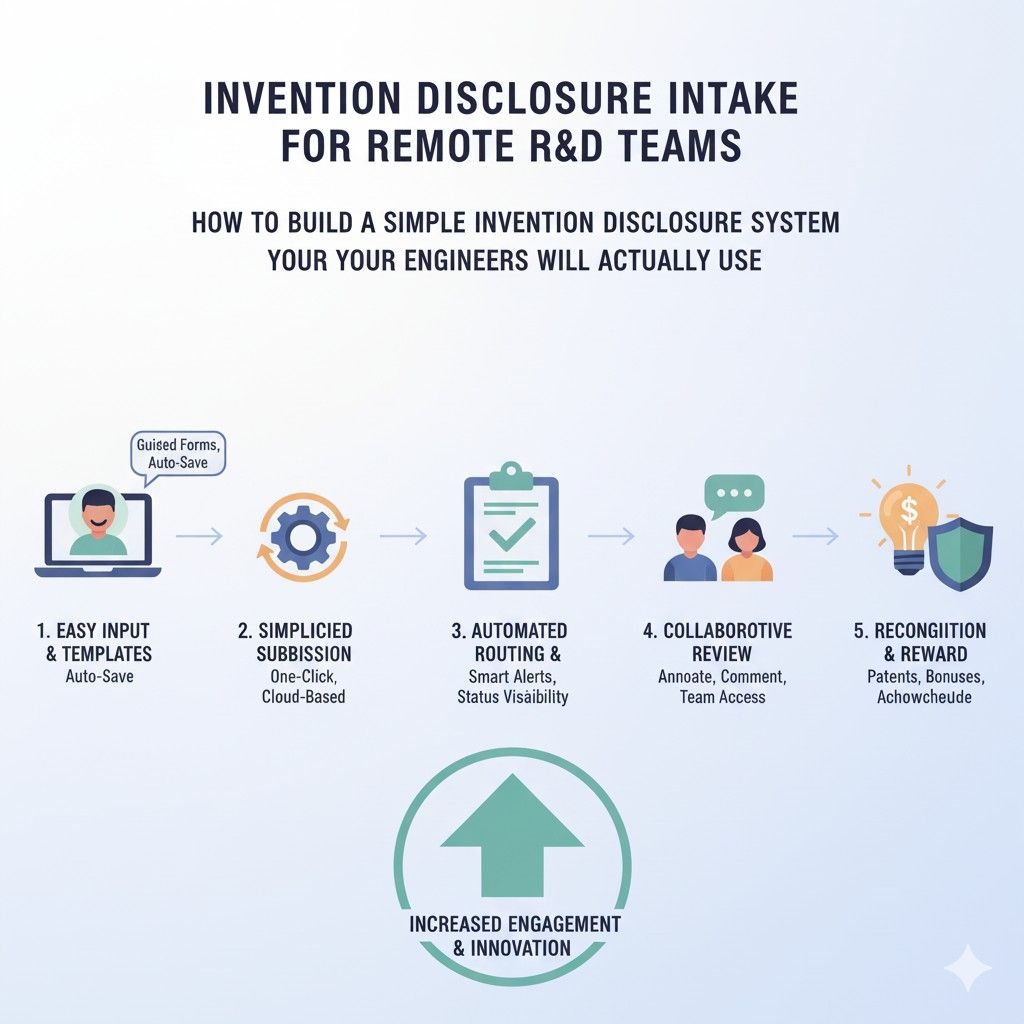
How to Build a Simple Invention Disclosure System Your Engineers Will Actually Use
If your system feels heavy, your team will ignore it. If it feels legal, they will delay it. If it feels slow, they will work around it.
The goal is not to build a “perfect” process. The goal is to build a system so simple that engineers use it without thinking twice.
A good invention disclosure system should feel like part of building, not like paperwork added after the fact. It should take minutes, not hours. It should help engineers explain what they built in clear terms.
And it should give founders confidence that nothing valuable slips away.
Let’s walk through how to design that kind of system.
Start With the Outcome, Not the Form
Most companies begin by drafting a long intake form. They ask for technical details, prior art analysis, diagrams, contributor names, use cases, and more.
That approach fails.
Engineers do not want to fill out legal forms. They want to solve problems. So instead of starting with fields and boxes, start with one simple question:
What do we need captured today so we can file a strong patent later?
You do not need everything on day one. You need the core story. The problem. The solution. Why it is different. Who was involved.

Build your system around capturing that story fast.
Design for 15 Minutes, Not 60
If your intake takes an hour, it will not happen. It might get done once. It will not become a habit.
Set a hard rule internally: the first version of any invention disclosure must take no more than 15 minutes to complete.
This forces clarity.
Ask engineers to describe the problem in plain words. Then ask them to explain how they solved it and why their approach is not obvious. That is it for the first pass.
You can always expand later when you work with patent counsel. But if you do not capture the basics quickly, you will never get to that stage.
When you design your intake this way, you remove fear. It feels light. That is the point.
Build It Into Tools They Already Use
Do not ask your team to log into a new platform they will forget. Meet them where they already work.
If your team lives in Notion, build a simple template there. If they use Jira, create a linked invention tag for certain tickets. If Slack is central, create a shortcut that opens a short disclosure form.
The system should feel like one extra click, not a new workflow.
For example, after a sprint demo, the tech lead could drop a link into the channel that says, “If this solution is new, submit it here.” Over time, this becomes normal.

The less friction, the more capture.
Make It Safe to Submit “Rough” Ideas
Engineers hesitate when they feel they must be certain an idea is patentable. That mindset kills submissions.
Your system must allow rough input. Make it clear that submissions are not commitments to file. They are flags for review.
When someone submits an idea, respond quickly. Even a short note that says, “Got it. We will review,” builds trust. Silence discourages future use.
The goal is volume first. Refinement comes later.
Tie Disclosure to Real Milestones
The best time to capture inventions is not random. It is when something meaningful happens.
When a feature moves from research to production. When a performance metric jumps significantly. When a customer praises a unique capability. When your team solves a problem competitors struggle with.
Connect your disclosure process to these moments.
You can formalize this by adding a short invention review step to release checklists. Before pushing a major update live, ask whether anything inside it represents a new technical method.
This does not slow shipping. It adds awareness at the right time.
Assign a Clear Owner
Without ownership, the system fades.
Choose one person responsible for reviewing submissions weekly. This could be a founder, head of engineering, or product lead. Their job is not to judge harshly. It is to scan for real innovation and move promising ideas forward.
They act as the bridge between engineering and patent strategy.
This single point of responsibility creates momentum. It prevents disclosures from sitting untouched.
When founders stay close to this process, they gain deep insight into what makes the company defensible.
Keep the Language Technical, Not Legal
The fastest way to lose engineers is to introduce legal terms too early.
Do not ask them to define claims. Do not ask them to search prior patents. Do not ask them to prove novelty.
Ask them to explain their thinking like they would to another engineer.
What was broken? What did you try first? Why did that fail? What changed when you built this new method?
These details are gold for patent drafting. And they are easy for engineers to describe while fresh.
Legal shaping can happen later with real patent attorneys who understand how to turn technical stories into strong filings. That is where a platform like PowerPatent becomes powerful.
It lets your team focus on describing the invention clearly, while experienced attorneys and smart software shape it into something defensible.
If you want to see how that process works in practice, you can explore it here: https://powerpatent.com/how-it-works
Review Fast and Decide Fast
Speed builds trust.
When a disclosure comes in, review it within a week. Decide whether to explore filing, park it for later, or combine it with another idea.
Even if the answer is “not now,” explain why. This teaches the team what types of innovations matter most.
Over time, submissions get sharper. Engineers start thinking in terms of defensibility. That shift is powerful.
It turns invention capture from an afterthought into part of strategy.
Connect Intake to Filing Without Friction
The final step is the bridge from intake to patent application.
This is where many startups stall. They collect disclosures but delay action because traditional patent firms are slow, expensive, and hard to manage.
A modern system removes that bottleneck.
When you use a platform that combines smart software with real attorney oversight, you can move from captured idea to drafted application without weeks of back and forth.
Engineers can upload diagrams, code snippets, and explanations directly. Attorneys review and refine, rather than starting from scratch.
This keeps your team moving fast while still building strong protection.
If you want a clearer picture of how this can work for your remote R&D team, take a look here: https://powerpatent.com/how-it-works
The right system does not feel heavy. It feels like control. It gives founders confidence that every real breakthrough is captured, reviewed, and protected before it leaks into the world.
And when your competitors try to copy what you built, you will be glad you took invention intake seriously.
Turning Raw Ideas into Strong, Defensible Patents Without Slowing Down Development
Most startups do not struggle with ideas. They struggle with follow-through.
An engineer builds something new. The team knows it is powerful. Everyone agrees it feels unique. Then product deadlines hit. Customers need features. Investors want updates. The idea sits in a folder labeled “patents” and gathers dust.
Months later, a competitor launches something similar. Now it feels urgent. But by then, key details are fuzzy. Public demos may have already happened. The window may be smaller than you think.
The real challenge is not coming up with inventions. It is turning raw, messy, real-world innovation into strong patents without slowing your team down.
That is possible. But only if you approach it the right way.
Raw Ideas Are Not Patent-Ready
Engineers think in systems, code, models, and experiments. Patent documents require structure. They require clarity around what is new and why it matters.
There is a gap between those two worlds.
If you try to force engineers to write patent-ready documents, development will slow. If you wait for lawyers to extract everything from scratch, the process will drag and cost more than it should.
The smart move is to respect both sides.
Let engineers describe what they built in their own words. Let them share diagrams, commit links, architecture notes, and test results. Do not ask them to translate their work into legal language. That is not their job.

Instead, build a bridge between raw technical insight and structured patent drafting.
This is where modern tools change the game.
Capture the Technical Depth Early
Strong patents are not vague. They are specific. They explain how something works in enough detail that someone skilled in the field could understand and reproduce it.
That level of detail is easiest to capture right after the invention is built.
When your team finishes a major technical breakthrough, schedule a short technical walkthrough focused only on the invention. Record it. Ask the engineer to explain the architecture, the trade-offs, and the alternatives they rejected.
Why did they choose this method over another? What performance gains did it unlock? What edge cases did it solve?
These answers shape strong patent claims later.
If you wait six months, those insights fade. Capturing them early does not slow development. It rides alongside it.
Separate Filing Speed from Engineering Speed
One common fear is this: “If we start filing patents, we will slow down.”
That fear usually comes from bad experiences with traditional law firms. Endless email chains. Repeated document drafts. Weeks between feedback.
It does not have to be that way.
Your engineers should not be stuck in long legal calls. Their role is to explain the invention clearly once. After that, the drafting process should move forward with minimal disruption.
This is why the structure of your patent partner matters.
With a modern platform like PowerPatent, engineers can upload their raw materials directly. The software helps organize the invention. Real patent attorneys review, refine, and strengthen it. The back-and-forth is focused and efficient.

You stay in control. You see progress clearly. You avoid the black hole of traditional billing.
If you want to see how that works step by step, you can explore it here: https://powerpatent.com/how-it-works
Speed and strength do not have to compete. When the system is right, they reinforce each other.
Focus on Core Technical Advantage
Not every feature deserves a patent. Not every improvement is strategic.
To avoid slowing down development, focus only on protecting what creates real leverage.
Ask one key question: if a competitor copied this exact method, would it hurt us?
If the answer is yes, it is worth serious review.
Strong patents protect core engines. The training method that improves accuracy. The hardware structure that cuts energy use. The system design that scales better than anything else on the market.
When you focus on protecting these core pieces, you avoid filing noise. You build a tight, meaningful portfolio that supports fundraising, partnerships, and exit.
This focus keeps your patent work aligned with product strategy.
Draft Broad, But Grounded in Reality
A weak patent describes only one narrow version of your idea. A strong patent covers variations. It anticipates small changes competitors might make.
But broad does not mean abstract.
The best patents start with a real working implementation. Then they expand outward. They describe alternative methods, system configurations, and use cases based on your technical insight.
This is why early technical capture matters. The more your patent team understands your real system, the better they can draft protection that covers both your current version and future evolutions.

When done right, patent drafting becomes a strategic exercise, not a paperwork chore.
Protect Before You Announce
Remote teams love to share progress. Launch threads. Demo videos. Conference talks. Technical blog posts.
Visibility builds momentum. But public disclosure can limit your patent rights if you are not careful.
The solution is not silence. It is timing.
Before major public releases, quickly review whether the underlying technical approach has been captured and filed. This does not need to delay marketing by months. With the right system, you can move from disclosure to filing quickly.
This creates a simple rule inside your company: protect first, promote second.
That discipline compounds over time. It builds a wall around your innovation while you grow.
Keep Engineers Focused on Building
Your best developers should not become part-time patent managers.
Their role is to innovate. Your system’s role is to capture that innovation with minimal distraction.
When you use structured intake, fast review, and modern drafting support, engineers spend limited time explaining their ideas once. After that, updates are short and targeted.
This keeps morale high. It keeps product velocity strong.
At the same time, founders gain peace of mind. They know the company is not just shipping features. It is building assets.
That difference matters in board meetings. It matters in investor due diligence. It matters when competitors enter your space.
Turn IP Into a Strategic Asset, Not a Legal Expense
When done poorly, patents feel like a cost center.
When done well, they become leverage.
Strong patents can block competitors. They can increase valuation. They can create licensing opportunities. They can make your startup harder to copy and easier to defend.
But that only happens if you treat invention intake and patent drafting as part of strategy, not as a last-minute legal task.
Remote R&D teams already operate with discipline around code, version control, and deployment. Apply that same discipline to intellectual property.
Capture early. Review quickly. File strategically.
And do it with a system designed for speed and clarity, backed by real attorneys who understand deep tech.

If you are ready to see how you can turn your raw technical ideas into strong, defensible patents without slowing your team down, take the next step here: https://powerpatent.com/how-it-works
Your team is already building the future. Make sure you own it.
Wrapping It Up
Remote R&D teams are not at a disadvantage. In many ways, they are stronger. They move faster. They hire global talent. They build around the clock. But speed without structure creates risk. If you do not capture your inventions as you build them, you are leaving value on the table. Ideas get buried in chat threads. Context fades. Engineers move on. And when it is finally time to file, you are working from memory instead of facts.
Leave a Reply