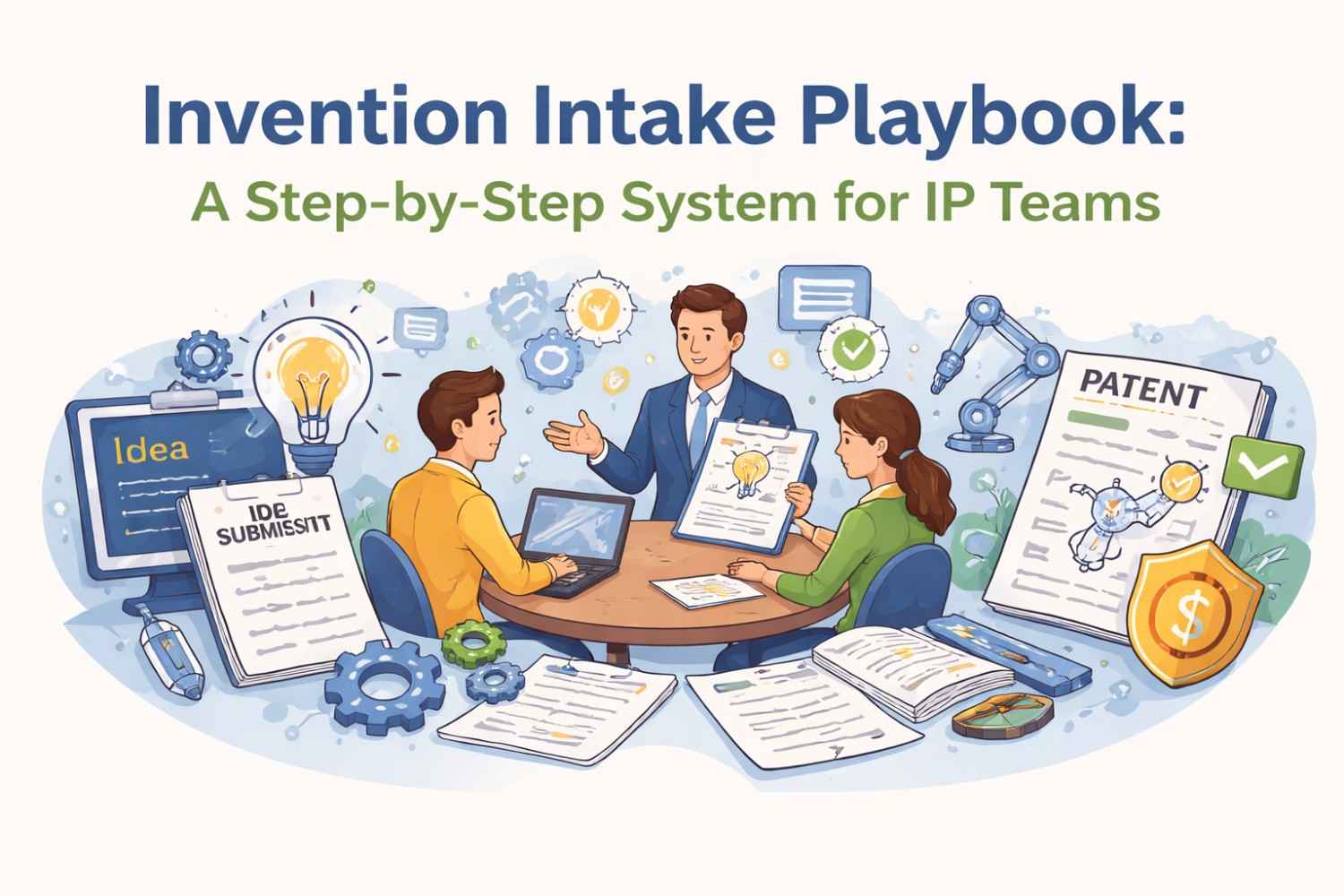
Every strong patent starts long before the legal draft begins. It starts the moment an idea is shared, explained, questioned, and captured the right way. That is where many teams lose time, miss key details, and create risk without even knowing it. A good invention intake system fixes that. It gives IP teams a clear path for turning raw ideas from founders, engineers, and product teams into strong, usable patent work.
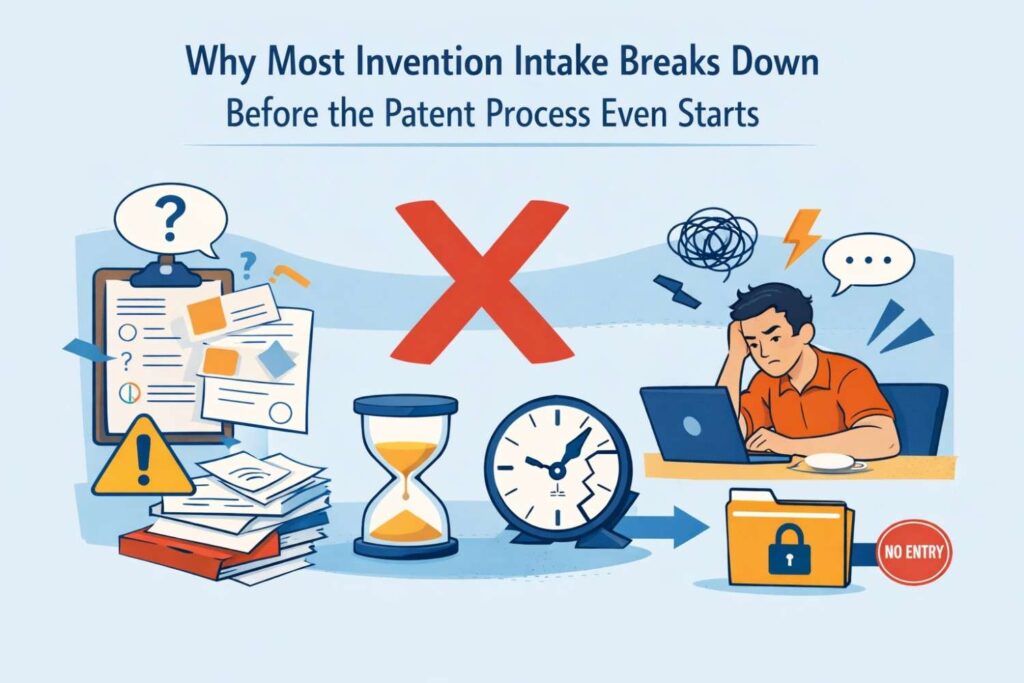
Why Most Invention Intake Breaks Down Before the Patent Process Even Starts
A weak intake process does not fail because people do not care. It fails because the work often begins too late, starts with the wrong questions, and depends on memory instead of a clear system.
In many businesses, invention intake is treated like a form to complete after the real work is done.
That is the mistake. Intake is the start of strong IP strategy. It shapes what gets protected, how fast teams move, and how much value the business can create from technical work that already exists.
When this stage is loose, rushed, or unclear, the result is almost always the same. Important details stay in the heads of engineers. Product teams describe outcomes but not the technical path.
Legal teams get broad claims but not the real point of difference. Leadership wants protection, but the company lacks a repeatable way to surface its best ideas at the right time.
The good news is that these problems are fixable. Once a business sees where breakdown happens, it can build a better intake system that gives IP teams stronger raw material from day one.
Intake Usually Starts After the Best Details Are Already Gone
In many companies, invention intake begins only after a release, after a demo, or after a founder says, “We should probably patent this.” By then, the most useful facts may already be hard to recover.
Teams forget what tradeoffs they faced, what options they rejected, and what exact step made the solution work better than what came before.
This delay is costly because strong patent work depends on detail. It is not enough to know that a product became faster, safer, or smarter.
The IP team needs to know how it became faster, why the old way failed, what changed in the design, and what technical choices made the result possible.
When intake begins too late, the team often gets a cleaned-up story instead of the real invention story.
The memory gap hurts more than most teams think
A business may believe its technical team can simply explain the invention later. In practice, that almost never works as well as expected.
Once people move on to the next sprint, the next model, or the next customer issue, small but vital points fade fast. These small points are often the very things that make an invention worth protecting.
A smart fix is to tie intake to the moment of technical change, not the moment of legal review. Businesses should make invention capture part of the product and engineering rhythm.
When a team ships a new method, solves a deep system problem, changes the way data flows, or creates a new model pipeline, that should trigger intake right away.
The lesson is simple: do not wait for perfect timing. Capture while the work is still fresh.
Businesses should treat invention capture like product logging
Most companies already track bugs, features, test results, design changes, and launch notes. That same thinking should apply to invention intake. If a business logs technical progress well, it should also log technical novelty well.
One useful approach is to create a simple internal habit. At the end of a major build cycle, ask the team one short question: what did we solve in a way others would not solve it?
That one question often reveals more than a long legal form. It helps teams focus on what changed in the method, not just what shipped to users.
Teams Confuse Product Value With Patent Value
A common intake problem starts with a false idea that the most important product feature is also the most important invention. That sounds reasonable, but it is often wrong.
A feature customers love may sit on top of a more important technical breakthrough buried deep in the system. If intake focuses only on what is easy to see, the business may miss the real protectable edge.
This happens often in software, AI, hardware, and platform businesses. Leaders talk about the product promise. Engineers talk about system design. The IP team needs to bridge both.
It needs to hear the business story, but it must also uncover the technical work that made the story possible.
The visible feature is not always the real invention
A customer might notice that onboarding became faster. A founder might say the product now gives better answers. A sales team might point to new automation.
But the patent value may live in the data handling, the model routing, the processing order, the error control, or the system structure behind that outcome.
Businesses that want stronger intake should train teams to separate market impact from technical novelty. During intake, one part of the discussion should cover what the customer sees.
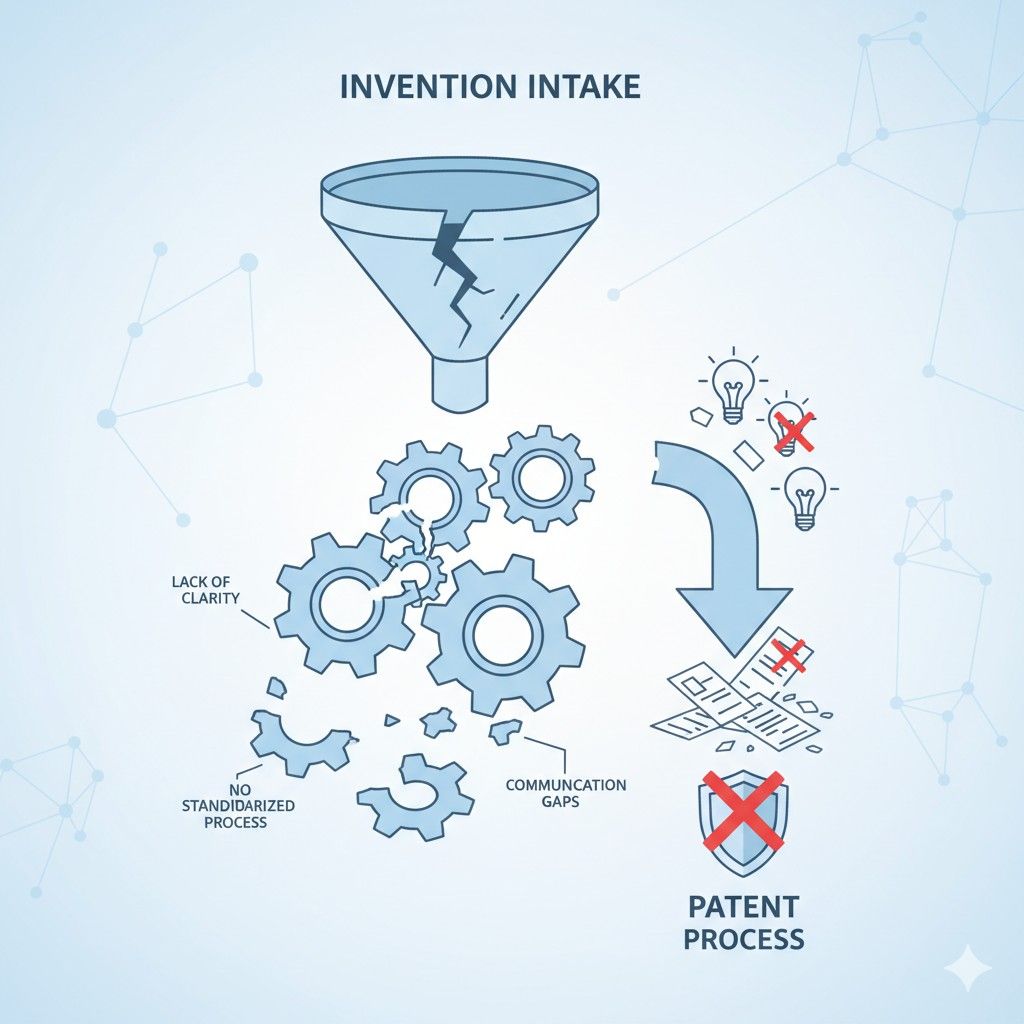
Another part should focus on what had to be built under the hood to make that result possible. That split helps IP teams find inventions that competitors may copy even if customers never notice the mechanism directly.
Actionable advice for business leaders
A very practical move is to require two plain-language descriptions for every invention submission. The first should explain the business result. The second should explain the technical change that created it.
When those two are forced apart, weak thinking becomes easy to spot and strong invention stories become easier to build.
This also helps business leaders make better patent decisions. Instead of filing around broad product claims, they can target the real technical assets that support product advantage over time.
Intake Often Becomes a Form-Filling Exercise Instead of a Discovery Process
Many businesses assume invention intake is about getting people to fill out a template. Templates do help, but they do not solve the core problem. A form can collect facts, yet still miss the real invention.
That is because the best invention details often appear only when someone asks follow-up questions, challenges assumptions, and digs into why a team made a certain technical choice.
When intake becomes a paperwork task, teams rush through it. Engineers write short answers.
Founders give high-level language. Legal or IP staff try to reconstruct the story later. The result is not just incomplete. It is strategically weak.
Good intake is a guided conversation, not a box-checking task
The strongest intake systems treat the first submission as the start, not the finish. A short written summary should lead into a structured conversation where the IP team explores the path of the invention.
That means asking what problem existed before, what other methods were tried, what failed, what changed, and what now works better.
This kind of discussion uncovers assets that a form alone rarely captures. It can reveal fallback designs, alternate versions, system branches, and future extensions.
Those details often matter because they widen what the business can protect and how flexible the patent strategy can become.
A strong intake meeting should sound more like product review than legal review
This is where many businesses get real gains. If the intake session feels formal, legal, and distant from the way engineers normally think, people will hold back or oversimplify.
But if the session feels like a serious technical review, teams are more likely to explain the invention in useful depth.
Businesses should design intake conversations around curiosity. Ask what changed. Ask what made the old method weak. Ask what was surprisingly hard.
Ask what part would be hardest for a competitor to rebuild. Those questions create better records and better filings.
The Wrong People Often Own the First Draft of the Invention Story
In many companies, the first written version of an invention comes from whoever has time, not whoever has the deepest understanding. Sometimes that is a manager who knows the roadmap but not the implementation.
Sometimes it is a lawyer working from notes. Sometimes it is a founder describing the vision rather than the system.
This creates a subtle but serious problem. Once the first story takes shape, later work tends to follow it. If that first version is shallow, the whole intake process starts from a weak frame.
Technical depth has to enter early
The most effective invention intake systems bring technical builders into the process at the start. That does not mean every engineer needs to write long summaries.
It means the people who made the key design choices must have a direct way to explain what happened, in their own words, before the story gets polished.
For businesses, the lesson is simple: the closer the intake starts to the actual builder, the stronger the result. A manager can help shape context. Legal can help shape protection. But the technical core should come from the source.
Give engineers an easier way to contribute
Many engineers do not avoid intake because they dislike patents. They avoid it because they expect a slow, unclear process. Businesses can change that by making contribution easier.
Let engineers speak, sketch, annotate diagrams, or walk through a system flow. Let the IP team do the work of pulling the story into a clean structure.
This shift matters. It reduces friction and increases accuracy at the same time.
Companies Ask Broad Questions That Produce Weak Answers
Another reason intake breaks down early is that businesses ask questions that are too broad to be useful. Questions like “Describe your invention” often lead to vague summaries.
That is not because the team lacks insight. It is because broad prompts invite broad answers.

Strong intake depends on sharp prompts. Specific questions help people recall technical choices, design paths, and system logic. Without that, the intake record becomes a marketing summary instead of a strategic IP document.
Better questions create better invention records
A more useful intake process asks things like: what was the exact problem in the old system, what part of the solution is new, what alternatives were considered, what tradeoff did you solve, and what would a competitor likely copy first?
These kinds of questions pull out decision points, not just outcomes.
For businesses, this is one of the easiest areas to improve quickly. Review your current intake template or interview style. If your prompts could apply to almost any project, they are too generic.
Better questions lead to better patents because they lead to better raw material.
The quality of intake depends on the quality of prompts
This is not a minor editing issue. It is a strategic lever. The prompts a business uses shape the kind of IP it sees. Weak prompts surface broad ideas. Sharp prompts surface protectable technical methods.
That means companies should test intake questions the same way they test product messaging or internal workflows. If a question keeps producing thin answers, rewrite it.
Small changes in wording can unlock much stronger invention disclosures.
The Process Breaks When Teams Fear It Will Slow Them Down
Many invention programs struggle because builders think intake is a drag on shipping. They assume it means meetings, paperwork, delays, and legal overhead.
Once that belief spreads, invention capture becomes reactive. Teams share ideas only when pushed, and even then they keep it brief.
This is not just a process problem. It is a trust problem. If teams believe intake steals time without giving value back, they will never engage with it fully.
IP teams need to show speed, not just rigor
Businesses that run strong intake systems understand that responsiveness matters. When an engineer shares a potential invention, the process should move quickly.
The review should be focused. The next steps should be clear. People should see that good submissions lead somewhere useful.
This is where operational design matters. A business should set simple service rules for intake. For example, every submission gets an initial review fast.
Every qualified idea gets a follow-up conversation. Every decision gets a clear explanation. These small habits build trust over time.
The best way to improve participation is to reduce drag
If a company wants more invention submissions, it should start by measuring friction. How long does it take to submit an idea? How long before the inventor hears back?
How many times does the same detail have to be repeated? Where do people drop off?
These are business questions, not just legal questions. They reveal whether the intake system supports innovation or slows it down.
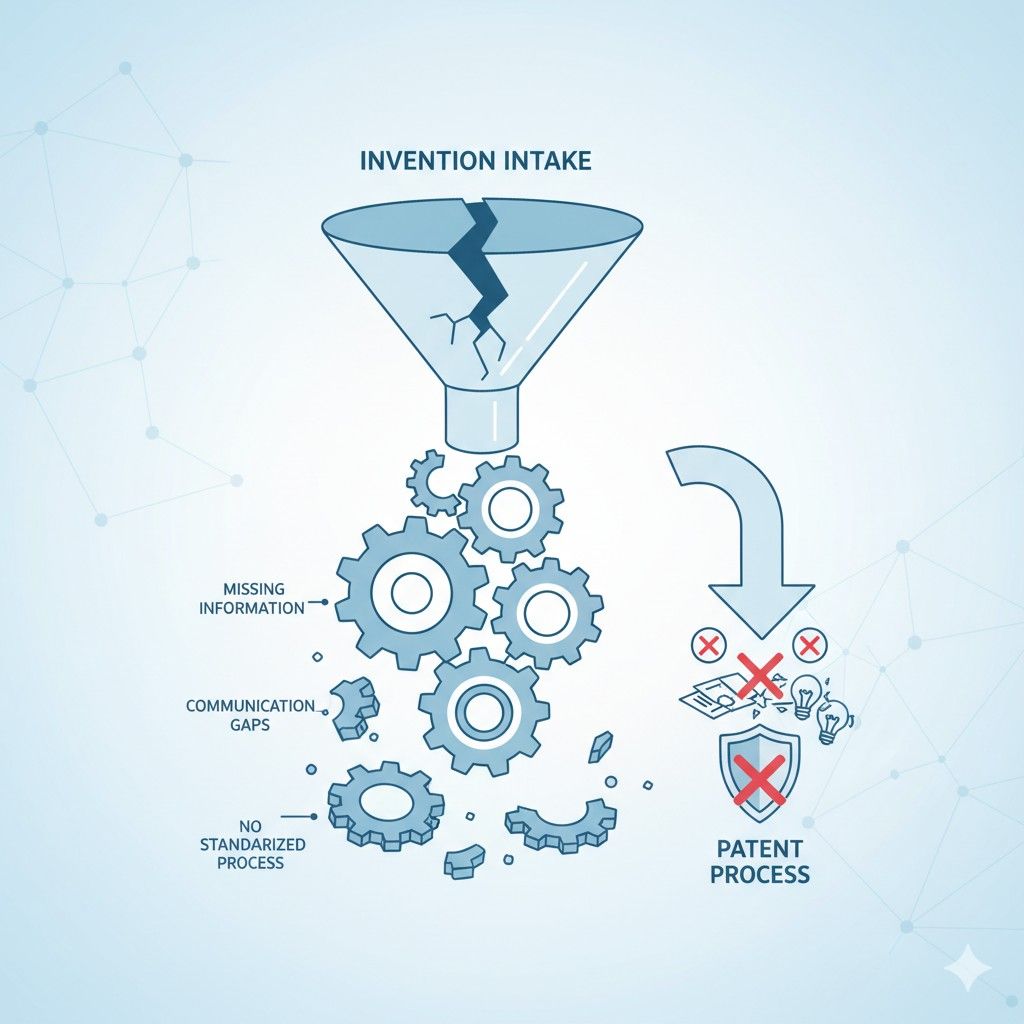
Companies that remove drag usually see a quick rise in both submission volume and submission quality.
The Step-by-Step Intake System IP Teams Can Use to Capture Better Inventions Faster
A strong intake system does not happen by luck. It is built on purpose. The goal is simple. Help the right people share the right invention details at the right time, in a way the business can act on fast. Most teams do not need more theory here.
They need a clean working system that fits the pace of product, engineering, research, and legal work without creating drag.
The best intake process does two things at once. It makes it easy for inventors to explain what they built, and it gives the IP team enough structure to spot what matters quickly.
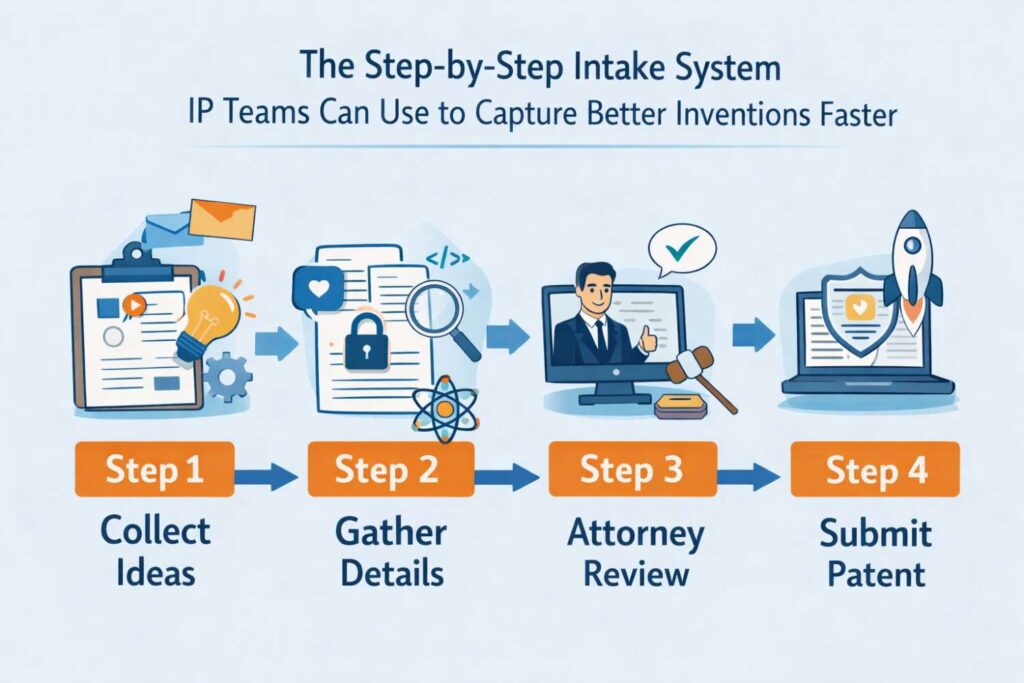
When those two things come together, the company moves faster, captures better ideas, and wastes less time fixing weak intake later. What follows is a practical system IP teams can use to get there.
Start with a Trigger, Not a Request
A good intake process begins before anyone says, “We should patent this.” That is because most inventors are busy building. They are not sitting around thinking about intake timing.
If the process depends on someone remembering to raise a hand at the perfect moment, the business will miss a lot of good work.
That is why strong teams build intake around triggers. A trigger is a business event that tells the company it is time to capture invention details. This removes guesswork and makes intake part of how work gets done.
Tie intake to moments where technical value is created
The strongest triggers usually come from normal business activity.
A major feature launch, a new system architecture, a model training breakthrough, a new hardware design, a solved bottleneck, or a shift in performance can all trigger intake.
The point is not to patent every change. The point is to create a reliable moment for invention review before the details fade.
This helps businesses in a very real way. Instead of hoping inventors volunteer ideas, the company creates a repeatable path for surfacing them. That means fewer missed opportunities and better timing for patent decisions.
Do not wait for certainty before intake starts
One of the biggest mistakes teams make is waiting until they are sure an invention is “important enough.” That slows down the process and leads to weak records.
Intake should happen while ideas are still live, even if the company is not yet sure a filing will happen.
That small change has a huge payoff. It separates capture from commitment. The team can gather facts first and decide later. That gives the business more flexibility and far better raw material.
Use a Simple First-Step Submission
The first step in intake should be easy. If the first ask feels heavy, long, or too formal, people will delay it.
Then the IP team ends up chasing details after the fact. A simple opening submission lowers friction and makes early capture much more likely.
This first step should not try to do everything. It should only do enough to start the process in a useful way.
Keep the opening prompt short but sharp
A strong first-step submission should ask for plain-language answers, not polished patent language.
The inventor or team should explain what problem existed, what changed, and why the new way works better. That is enough to start a serious review.
The reason this works is simple. Teams are far more likely to respond well to a small clear ask than to a long disclosure form. A short start creates motion. Motion matters more than perfection at this stage.
Ask for supporting material early
Even when the written summary is short, the submission should invite files that help explain the invention.
That can include diagrams, screenshots, design notes, code snippets, internal docs, test results, system flows, or architecture sketches. These materials often tell the story more clearly than a written summary alone.
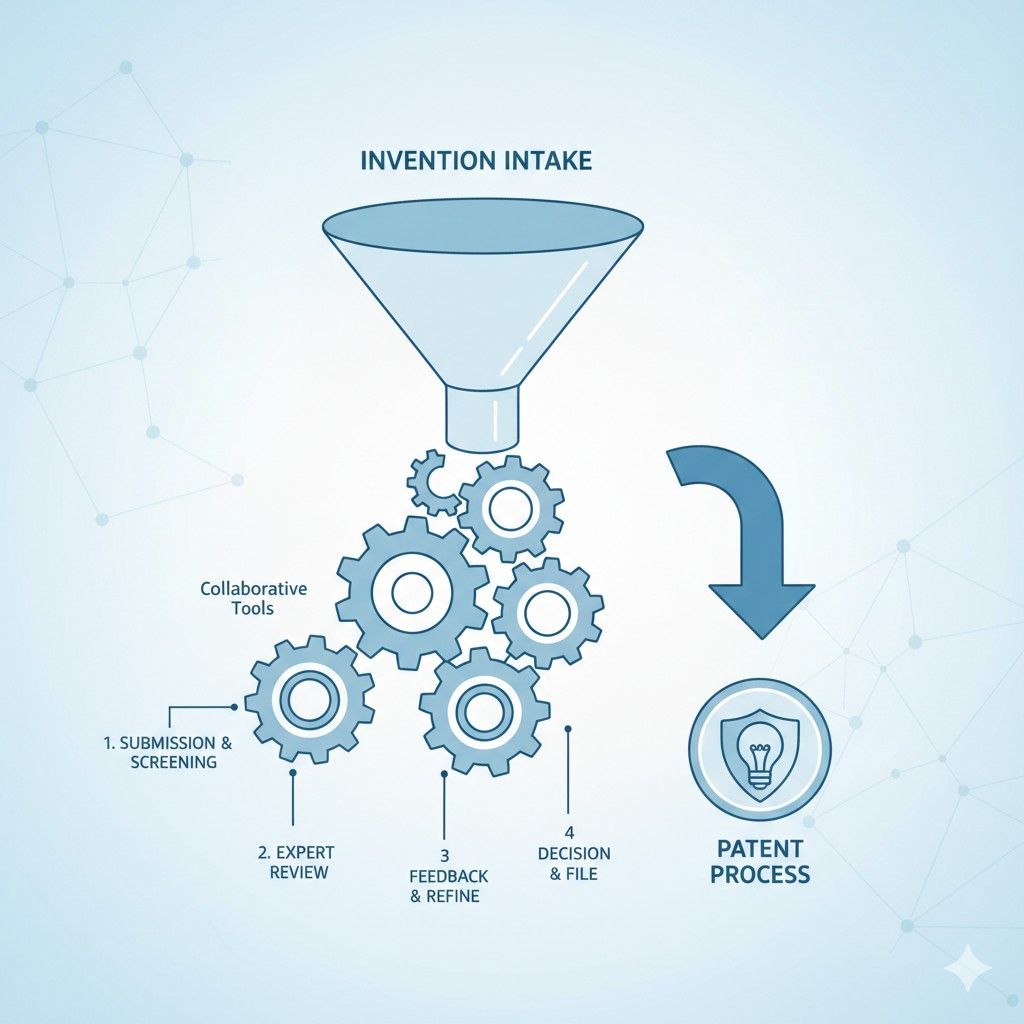
For businesses, this is a practical edge. Supporting material reduces follow-up confusion and helps the IP team understand what really changed without waiting for long explanations.
Set an Early Triage Review
Once an idea comes in, the next step should happen fast. Slow response is one of the main reasons intake systems lose trust.
When inventors submit something and hear nothing back, they assume the process is not important or not useful.
A strong system solves that with early triage. Triage does not mean a final legal decision. It means a quick first look to decide whether the idea deserves deeper review, more facts, or no further action right now.
Fast review builds confidence across the company
The speed of this early step matters more than many IP teams realize. A fast response shows the business that invention intake is alive. It tells inventors that the company takes technical work seriously.
It also keeps the process close to the time the invention happened, which improves accuracy.
For businesses, this creates more than goodwill. It creates participation. Teams are more likely to share strong ideas when they know someone will review them quickly and thoughtfully.
Triage should focus on the right questions
At this stage, the goal is not to perfect claims. The goal is to understand whether there is likely technical novelty, strategic value, or both.
The IP team should ask whether something meaningful changed, whether the solution appears different from ordinary approaches, and whether the invention ties to an area the company cares about protecting.
That frame helps businesses make better use of time. It avoids overloading the full review process with weak inputs while still giving promising ideas the attention they deserve.
Move Quickly Into a Guided Discovery Conversation
After triage, the most promising ideas should move into a live discussion. This is where the intake process becomes much stronger.
A live conversation reveals details that almost never appear in a form. It helps the IP team uncover the deeper technical story behind the initial summary.
This step is often where businesses either gain real patent leverage or lose it. If the conversation is handled well, the invention becomes clearer, broader, and more useful.
If it is rushed or shallow, the company may end up protecting only a thin version of what was actually built.
The goal is to understand the invention path
A good intake conversation focuses on the path the team took, not just the result.
It should explore what the old approach looked like, what kept failing, what change unlocked progress, and what tradeoff the inventors solved. Those details are often where the true value lives.
This matters for business strategy because the path reveals defensible advantage. It shows not just what the company made, but what kind of know-how competitors would struggle to copy.
Let inventors explain in their own words first
One of the smartest things an IP team can do in this conversation is avoid jumping too quickly into legal framing. Let the technical team tell the story the way they naturally would.
Ask follow-up questions. Keep pulling on the thread until the logic becomes clear.
That approach improves both trust and substance. Inventors feel heard, and the IP team gets closer to the actual design thinking behind the invention.
Capture the Problem Before the Solution
Many intake systems jump straight to the new method. That sounds efficient, but it often creates weak records.
Without a clear understanding of the old problem, the business loses the context that makes the invention important and easier to defend.
A strong intake system makes room for the pain that came before the fix. That context often sharpens the invention story in a powerful way.
The old pain explains why the new method matters
When teams describe what was broken before, they reveal more than background.
They show why the change was needed, what limits existed, and what kind of technical barrier had to be overcome. This helps the IP team understand what is truly different and where the invention may stand out.
For businesses, this creates stronger internal decision-making too. It becomes easier to see whether the invention solves a deep company problem or only a narrow edge case.
Ask what was tried before the breakthrough
A very practical move in every intake conversation is to ask what the team tested before landing on the current solution. That question often surfaces alternate designs, rejected paths, and system constraints that are highly useful later.
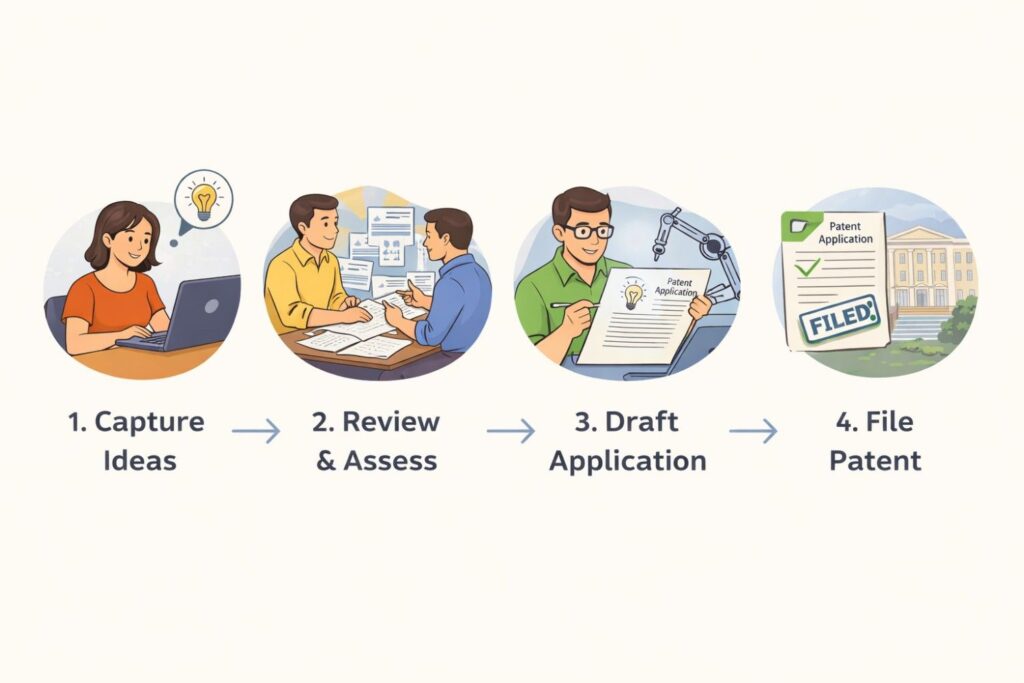
This is more than helpful detail. It can shape how broadly the invention is captured and how well the company protects surrounding approaches, not just the final version that shipped.
Separate the Business Story from the Technical Story
One of the cleanest ways to improve intake is to keep these two stories apart on purpose. The business story explains why the invention matters to the company.
The technical story explains how it works. Both matter, but they serve different goals.
When teams blend them together too early, the result is often muddy. The story sounds impressive, but the protectable details are hard to find.
The business story gives direction
The business side of the invention helps leadership understand why the work matters.
It shows whether the invention supports a product moat, a core platform, a pricing edge, a new market move, or future fundraising value. This helps the company decide where to invest filing resources.
That kind of framing is important because not every invention carries the same business weight. The intake process should make that clear without letting strategy blur the technical facts.
The technical story gives protection value
The technical side should stay focused on system logic, design steps, architecture choices, process flow, data handling, model behavior, hardware interaction, or whatever made the solution actually work.
This is the part that gives the IP team real material to work with.
For businesses, keeping these stories separate leads to better judgment. Leaders can prioritize more clearly, and IP teams can draft from stronger substance.
Build a Clean Record While the Details Are Fresh
A good intake system does not depend on memory later. It creates a clean record right away. This means the company should store invention details, discussion notes, diagrams, files, and follow-up answers in one connected place.
This sounds basic, but it is a major strategic advantage. Strong records reduce delay, prevent loss, and make every later step easier.
One invention should have one working record
A common problem in weak systems is that details get spread across email threads, chat messages, meeting notes, slides, and personal memory. That creates risk.
Each new handoff loses meaning, and each later review takes more time than it should.
A better approach is simple. Give each invention a single home where all core materials live. That record should grow as the review develops, so the team can see the full picture without hunting across tools.
Record decisions, not just facts
It is not enough to save technical detail. The intake record should also capture what the company decided and why. Did the team move forward for deeper review?
Did it hold for later? Did it decide the invention was not a fit right now? That reasoning matters.
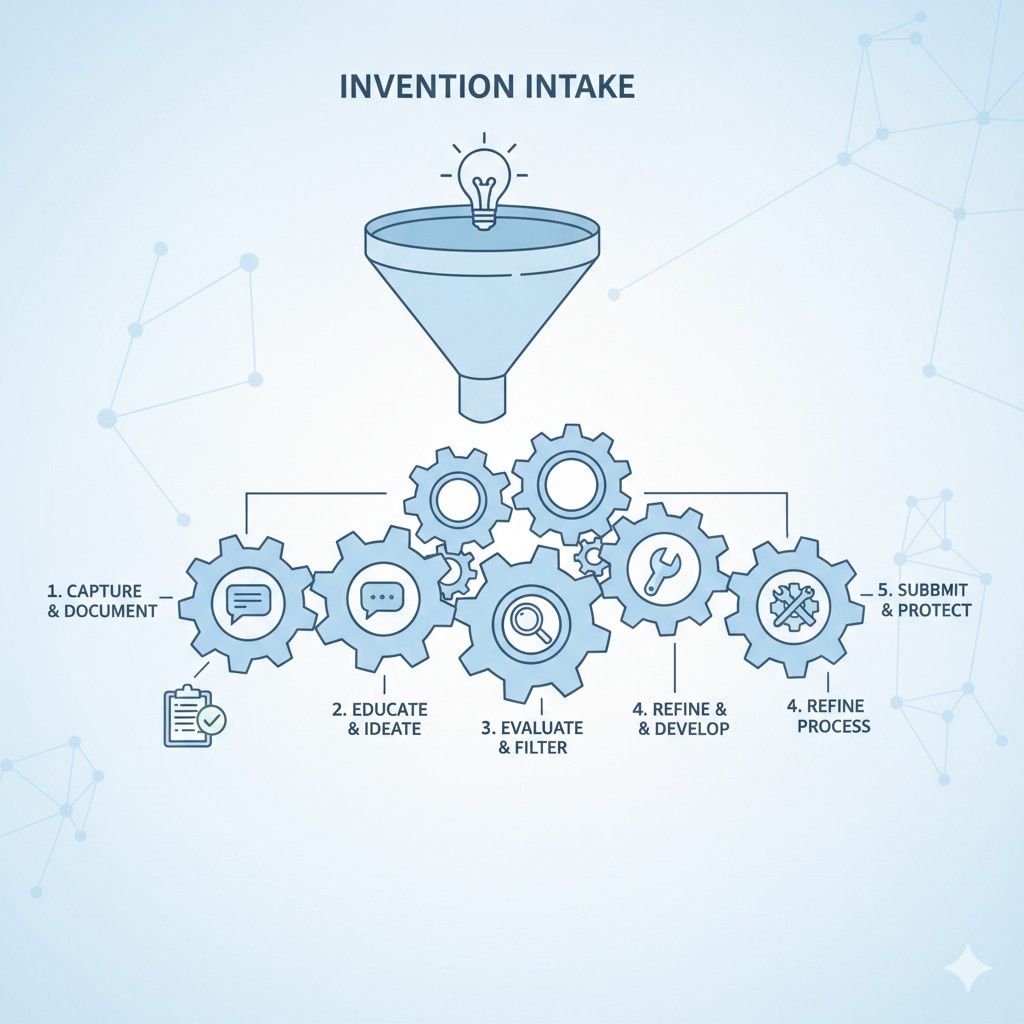
From a business point of view, this creates accountability and learning. Over time, the company can see patterns in what it chooses to protect and where it may be leaving value behind.
How to Turn Raw Technical Ideas Into Clear, Defensible Patent Work
Raw ideas almost never arrive in a clean form. They show up in pieces. One part may live in a founder’s head. Another may sit inside code, test data, diagrams, product notes, or a design review.
The problem for IP teams is not that technical people lack good ideas. The problem is that valuable invention details often come wrapped in fast-moving work, half-finished language, and internal shorthand that does not travel well outside the team.
That is why turning raw technical ideas into strong patent work needs a real process. Not a loose handoff. Not a rushed summary. Not a legal rewrite of a product update.
It takes a method that can pull signal out of noise, uncover what is actually new, and shape that into something clear enough to protect and strong enough to matter.
When businesses do this well, they do not just get better filings. They get a better grip on what they have built, why it matters, and where their real edge lives.
Most raw ideas are too close to the build process to be useful on their own
Technical teams usually explain ideas the way they built them. That makes sense inside engineering. It often fails inside patent work.
Builders talk in shortcuts, jump between system parts, skip assumptions, and focus on what was hard for them in that moment. But a defensible patent story needs more than that.
It needs a clear explanation of what changed, why that change matters, and what part of the solution should actually be protected.
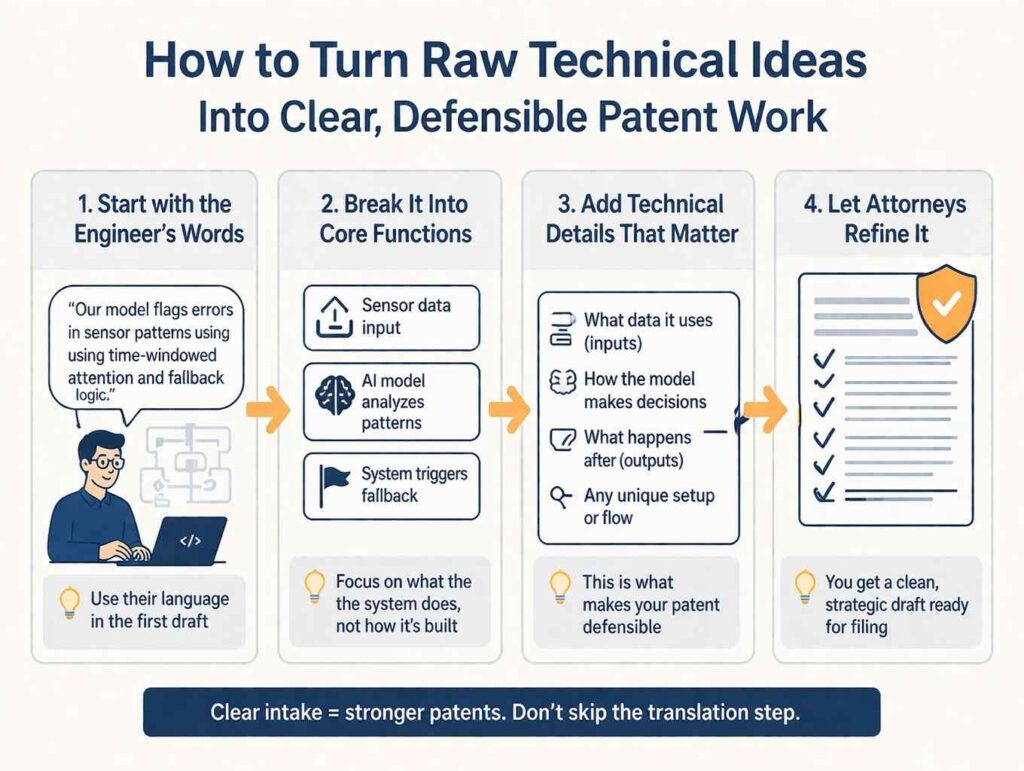
This is the first shift businesses need to make. The raw idea should not be treated as the final input. It should be treated as the starting material.
Good patent work starts by slowing the idea down
When a team is moving fast, it often describes the end result before it explains the path. That creates weak inputs.
The IP team hears that latency dropped, accuracy improved, or automation got better, but still does not know what technical move created the gain. A strong process slows the story down just enough to expose the logic underneath it.
This does not mean making the process heavy. It means taking a raw technical explanation and breaking it into parts that can be understood, questioned, and preserved.
The business benefit is simple. When the invention story becomes clearer early, the company can make better filing choices later.
The first job is to find the real point of novelty
A raw technical idea often contains too much at once. It may include the problem, the implementation, the roadmap, the product outcome, and several versions of the solution all mixed together.
If the IP team tries to capture everything at the same level, the result gets muddy fast. The real work is to isolate the point of novelty before the story expands.
That point of novelty is the heart of the invention. It is the part that changed the old way of doing things. It is the technical move that unlocked a result, removed a limit, or created a new path that was not there before.
The visible result is often not the novel part
A company may see a better user result and assume that is the invention. Many times it is not. The true novelty may sit much deeper.
It may live in the sequencing of system steps, the way data is prepared, how a model is selected, how edge cases are handled, how hardware interacts with software, or how resources are assigned under load.
This matters because patent strength depends on protecting the technical core, not just the visible outcome. Businesses that learn to dig beneath the feature layer usually uncover more protectable value than they first expected.
Ask where the old system failed
One of the fastest ways to find novelty is to ask what kept breaking in the old way.
That question forces the team to describe the true constraint. Once that constraint is visible, the new technical move becomes easier to spot. It also becomes easier to explain why it matters.
For businesses, this is highly actionable. During every invention review, push the team to describe the exact failure, bottleneck, or limit that existed before. That answer often points straight to the core invention.
Clear patent work depends on a clean technical narrative
Once the real novelty is identified, the next step is to shape the invention into a technical narrative that makes sense from start to finish. This is where many teams lose force.
They have the right substance, but the explanation comes out scattered. One paragraph talks about architecture. The next jumps to business goals. Then it shifts into implementation details without showing how the pieces connect.
A defensible patent story needs a logical flow. It should explain the problem, the system context, the new approach, the steps or structure involved, and the result that follows.
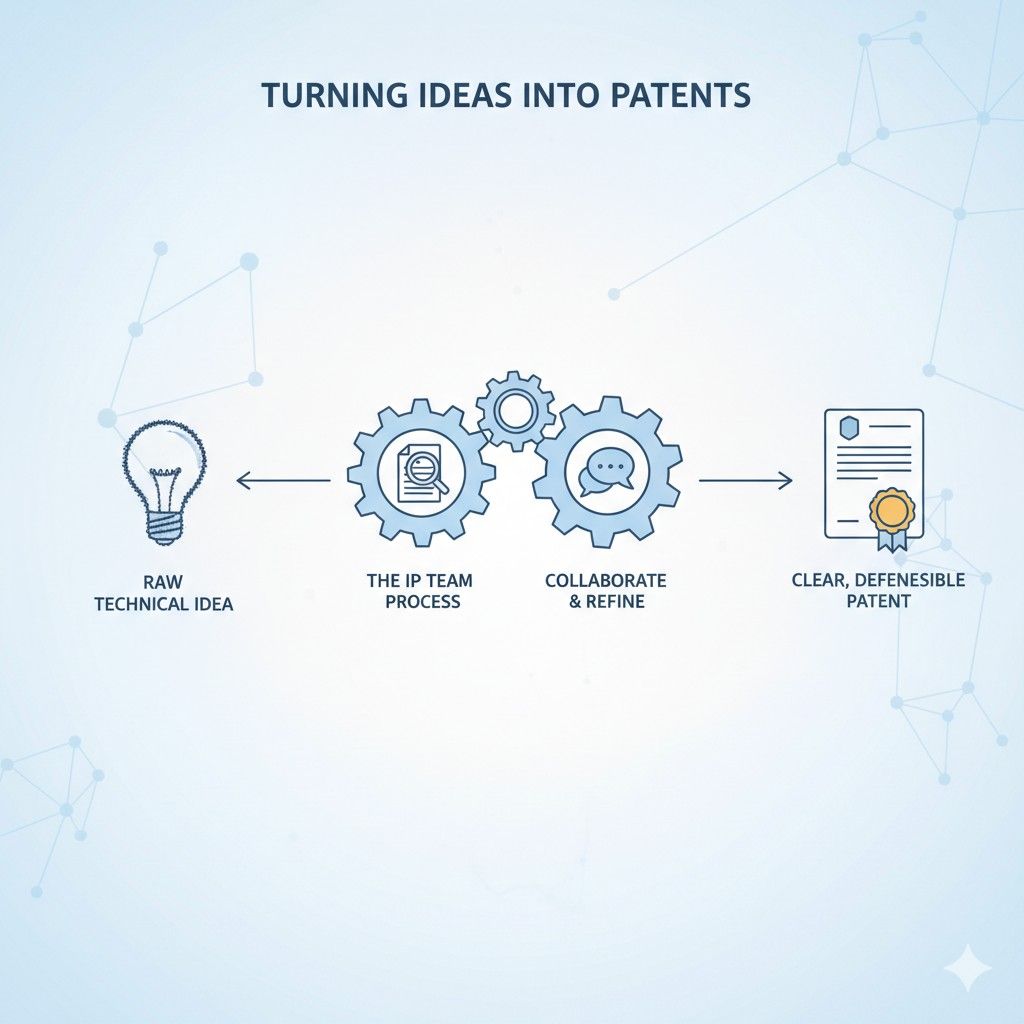
That does not mean it has to sound formal or legal. It means it has to make technical sense in a way another person can follow.
The story should move in a straight line
A good invention narrative does not wander. It starts with what existed before, shows what was lacking, introduces the new method or structure, and then explains how that method or structure changes the outcome.
When the logic moves in a straight line, the invention becomes easier to understand and easier to defend.
This is valuable for businesses because clear internal explanation leads to stronger outside execution.
Whether the work moves to in-house counsel, outside counsel, or a hybrid patent team, clean technical narratives reduce confusion and improve drafting quality.
Use plain language before legal language
One of the smartest habits an IP team can build is to explain the invention in simple words first.
If the team cannot explain the technical logic clearly in plain language, the story is probably still too fuzzy. Legal language should come later. Clarity should come first.
This does not weaken the work. It strengthens it. Plain language forces clean thinking. Clean thinking leads to stronger protection.
The raw idea has to be separated from the product pitch
Technical teams and founders often describe an invention the same way they describe the product to investors, customers, or internal leadership. That is useful for business messaging.
It is not enough for patent work. Product language focuses on value, speed, growth, or market impact. Patent work needs the technical mechanism that creates that value.
If those two stories stay mixed together, the invention can sound exciting without becoming protectable.
Product framing can hide the strongest technical details
This happens more often than teams expect. A founder says the system gives better recommendations.
A product lead says onboarding is now automated. A sales lead says the platform is easier to scale. All of that may be true, but none of it tells the IP team what technical change made the improvement happen.
Businesses should train themselves to split these stories early. One story explains why the invention matters to the company. The other explains how the system actually works.
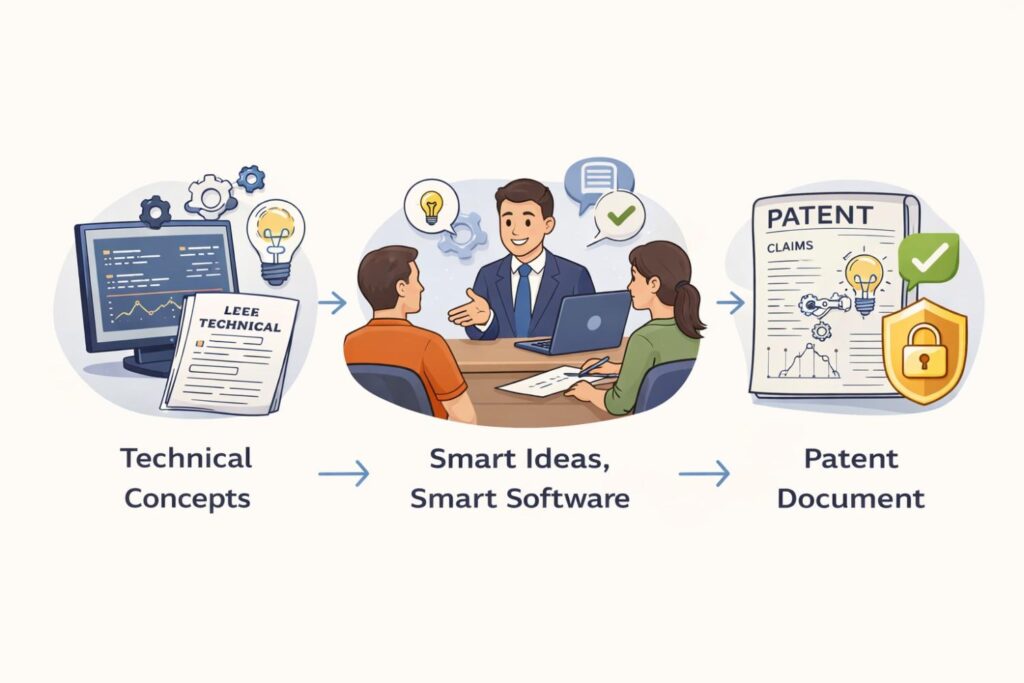
When those stories are separated on purpose, both become stronger.
A simple internal rule improves quality fast
A very useful rule is this: every invention explanation should include one business sentence and one technical sentence, and those two sentences should not say the same thing.
This pushes teams to separate market impact from technical novelty.
That small change can improve invention intake almost right away because it forces sharper thinking without adding much work.
Defensible patent work requires more than the final shipped version
Many technical teams only explain the version that made it into production. That is understandable, but it leaves value on the table.
A patent strategy becomes stronger when it captures not just the final build, but also nearby versions, alternate paths, and variations that rely on the same inventive idea.
This is where raw ideas often hold hidden value. During development, teams usually test several routes before choosing one. Those rejected or postponed routes may still matter because they help define the wider invention space.
Variations make protection harder to design around
If a company protects only the exact version it shipped, a competitor may sidestep that protection by changing one layer, one sequence, one component, or one input source.
Broader invention capture helps reduce that risk. It shows that the inventive idea can live across multiple forms.
This is not about making things abstract for the sake of it. It is about understanding the full technical range of the solution. Businesses that do this well usually come away with more strategic patent assets, not just narrower documents tied to one moment in the roadmap.
Ask what else would still work
A strong way to uncover useful variations is to ask the inventors what else would still work, even if they did not build it. That question opens up adjacent versions without drifting into fantasy.
It keeps the discussion grounded in technical reality while expanding what the team can protect.
This is actionable because it can be built into every invention conversation. Before the meeting ends, ask the team what parts could change while the core inventive idea stays the same.
Technical detail has to be gathered at the right depth
Another common problem is imbalance. Some raw invention inputs are too vague. Others are too deep in the weeds.
Both create risk. If the detail is too high-level, the invention becomes hollow. If the detail is too narrow, the patent story may become trapped inside one implementation.
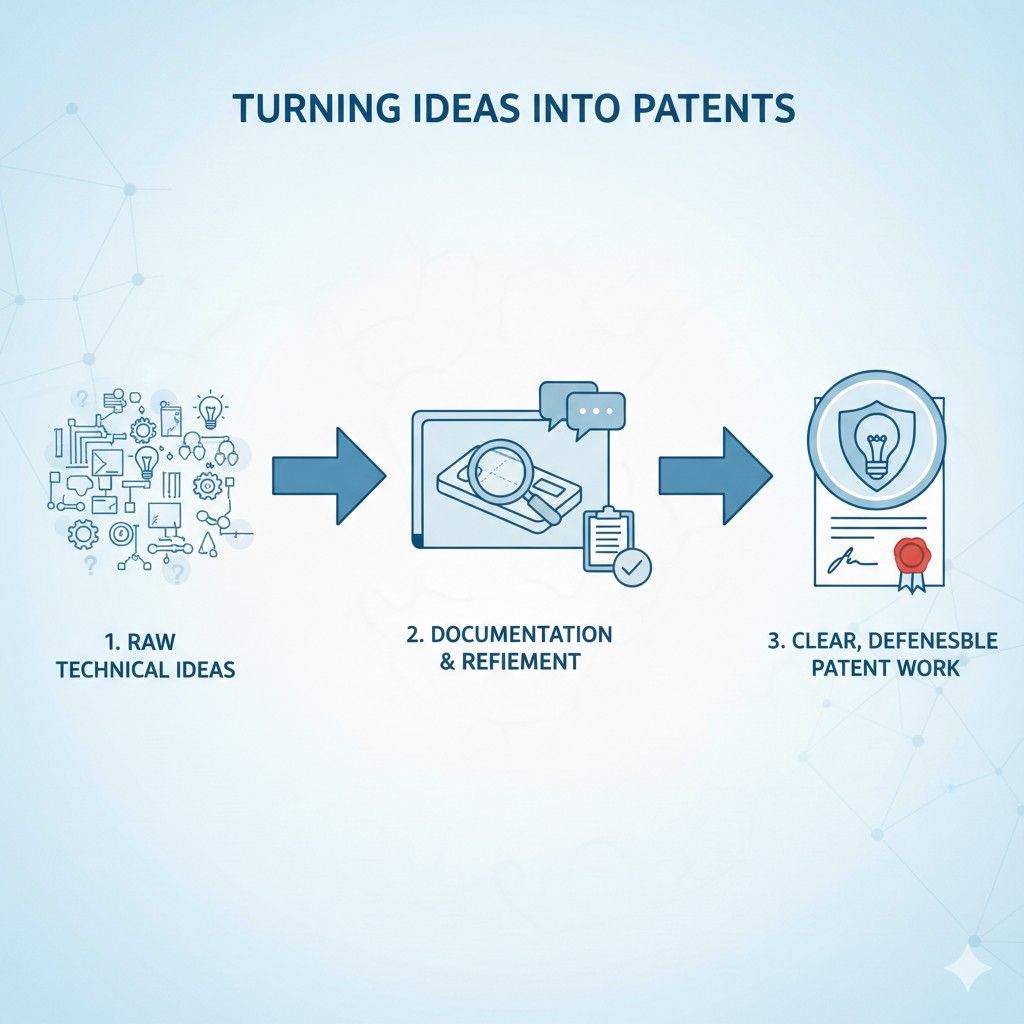
The right approach is to gather detail at a depth that explains how the invention works without chaining it too tightly to a single code branch, one model version, or one product release.
Wrapping It Up
Turning raw technical ideas into clear, defensible patent work is not about adding more process for the sake of process. It is about making sure the company does not lose the value of what it already built. The real risk is not that teams fail to invent. The real risk is that important invention details stay buried inside product work, engineering shortcuts, fast decisions, and half-documented breakthroughs that never get turned into strong protection.
Leave a Reply