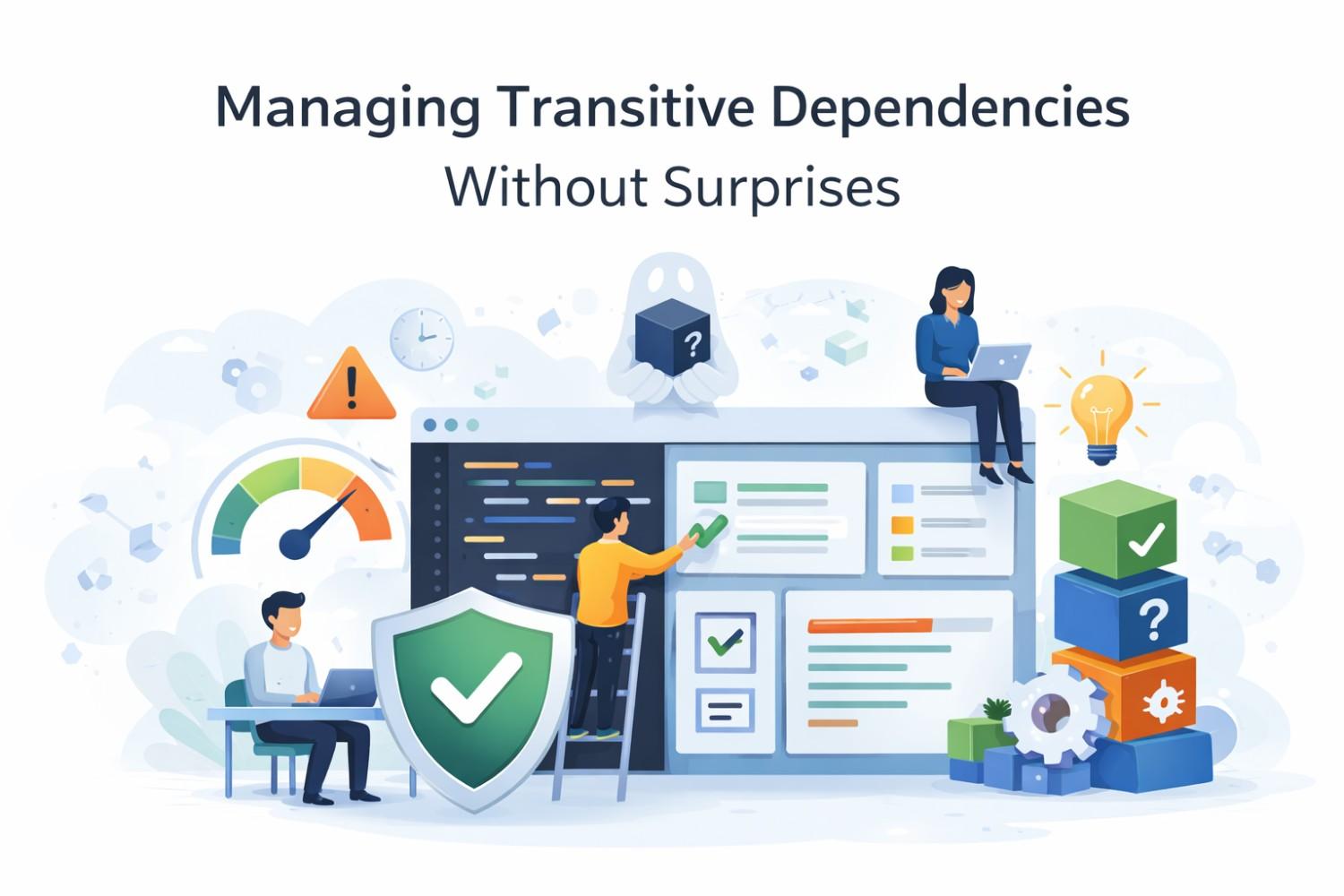
Most teams do not break because of bad ideas. They break because of small things they did not see coming. One of the biggest of those small things is transitive dependencies.
If you build software, you already depend on other code. That is normal. What is not normal is when hidden code you never chose starts to control your product, your speed, and even your risk. This is how teams get surprised, blocked, or burned months later when it is too late to fix things cleanly.
This article is about taking control again.
The Code You Never Chose Still Runs Your Product
This is the part most teams never slow down to think about. You made careful choices about your main tools. You picked a framework. You chose a language.
You approved a few core libraries. That all felt clean and intentional. But under those choices sits a much larger body of code that you never reviewed, never approved, and never planned for. That code still runs every time your product runs.
This section is about seeing that reality clearly and learning how to manage it without panic or slowdown.
How Transitive Code Sneaks Into Serious Products
When teams add a dependency, they usually focus on the problem it solves right now. The library works. The tests pass. The demo looks good.
What gets missed is that every dependency brings its own dependencies. Those extra layers come along silently, like guests who bring their friends without asking.
This is not a failure of discipline. It is how modern software works. Most popular libraries depend on dozens or even hundreds of other packages. Each one adds behavior, rules, and future risk.

Over time, your product becomes a mix of your ideas and decisions made by people you have never met.
The danger is not that this code exists. The danger is that it exists without visibility.
Why This Becomes a Business Problem, Not Just a Code Problem
Hidden code does not stay a technical issue for long. As your company grows, questions change. Investors ask what you own. Customers ask about security.
Buyers ask about risk. Lawyers ask about licenses. At that point, “we didn’t know” is not a good answer.
Transitive dependencies can decide how fast you can move later. They can block upgrades. They can force rewrites. They can even limit what parts of your system can be protected or defended as your own work.
For founders, this is not abstract. It shows up when time and money matter most.
Teams that manage this early do not move slower. They move with fewer shocks.
The Illusion of Control in Early Builds
Early-stage teams often feel in control because everything still fits in one head. The codebase feels small. The dependency file looks short. This is where the illusion lives.
What looks small on the surface often hides a deep tree underneath.
The mistake is assuming that because you did not write it down, it does not exist. Build systems and package managers are very good at hiding complexity.
They are doing their job. But leadership still needs to understand what is really running in production.
Control starts with awareness, not restriction.
Treating Dependencies as Long-Term Commitments
One helpful mental shift is to stop thinking of dependencies as quick tools and start thinking of them as long-term partners.
Every piece of code you pull in becomes part of your product’s future. It affects upgrades, hiring, audits, and protection.
Before adding anything new, teams should pause and ask a simple question: would we still be happy with this choice two years from now if it becomes hard to remove?
That question alone changes behavior without slowing progress.
This does not mean avoiding dependencies. It means choosing them with open eyes.
Mapping What Actually Runs in Production
Most surprises come from not knowing what is truly deployed. A useful practice is to regularly generate a full view of your dependency tree and review it at a high level.
Not line by line, but shape by shape. Where are the deep chains? Which packages pull in the most others? Which ones have not been updated in a long time?
This is not busy work. It is risk discovery. When teams do this quarterly, they catch problems while they are still cheap.
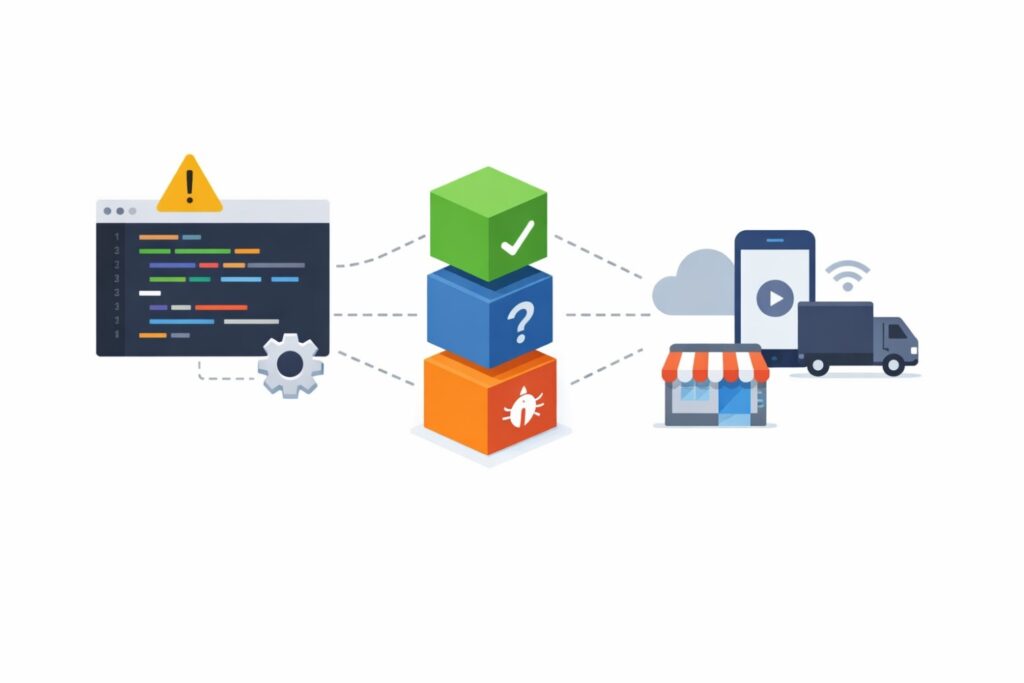
Over time, this habit builds intuition. You start to recognize patterns. You learn which ecosystems stay healthy and which ones decay quietly.
Understanding Ownership Boundaries Early
One of the least discussed effects of transitive dependencies is how they blur ownership. When large parts of your system behavior come from outside code, it becomes harder to explain what is truly novel about your work.
This matters deeply for patents and defensibility. If your core logic depends heavily on external behavior, it becomes harder to claim what is unique. Strong teams isolate their true innovation.
They make sure the heart of their system is theirs, not borrowed.
This does not mean rewriting the world. It means being intentional about where your real value lives.
Designing Your System to Reduce Hidden Impact
Architecture choices can limit how much transitive code affects your core. When dependencies are wrapped, isolated, or kept at the edges, they are easier to replace later.
When they are spread everywhere, removal becomes painful.
Teams that plan for change do not assume dependencies will last forever. They assume change will happen and design accordingly. This is not extra work. It is a way to avoid future rewrites that drain morale and time.
The goal is not perfection. The goal is optionality.
Keeping Dependency Decisions Visible to Leadership
One common failure is keeping dependency choices locked inside engineering discussions. Business leaders often do not realize how much product risk lives there.
A short, regular update that explains major dependency changes in plain language goes a long way.
This builds shared understanding. It also creates better questions. When leaders know what runs the product, they make better calls about timing, scope, and protection.
Transparency reduces surprises more than any tool.
Connecting Dependency Awareness to IP Strategy
For companies that care about protecting what they build, dependency awareness is not optional. Patent strategy works best when it reflects real system boundaries.
Knowing what you control and what you rely on shapes what can be claimed and defended.
PowerPatent works with teams to capture what is truly theirs, not what was borrowed.
That process becomes much smoother when founders already understand their dependency landscape. It saves time, avoids rework, and leads to stronger outcomes.

If you want to see how that kind of clarity fits into a modern patent process, you can explore it at https://powerpatent.com/how-it-works.
Managing transitive dependencies is not about fear or purity. It is about respect for the future version of your company. When you see the code you never chose, you can finally choose how it affects you.
Why Small Dependency Decisions Create Big Future Risk
At the moment a dependency is added, it almost never feels important. It feels like a quick fix. A shortcut. A smart reuse of work that already exists. That feeling is not wrong.
The risk is not in the decision itself. The risk is in how that decision compounds over time when nobody revisits it.
This section is about understanding how small, reasonable choices quietly turn into large constraints later, and how businesses can prevent that without slowing delivery.
The Time Gap Between Cause and Effect
One reason dependency risk is so misunderstood is timing. The decision happens today.
The impact shows up months or years later. By then, the context is gone. The person who made the choice may not even be on the team anymore.
When a system breaks or becomes hard to change, teams often blame growth or complexity. In reality, many of those problems trace back to tiny decisions made under pressure early on.
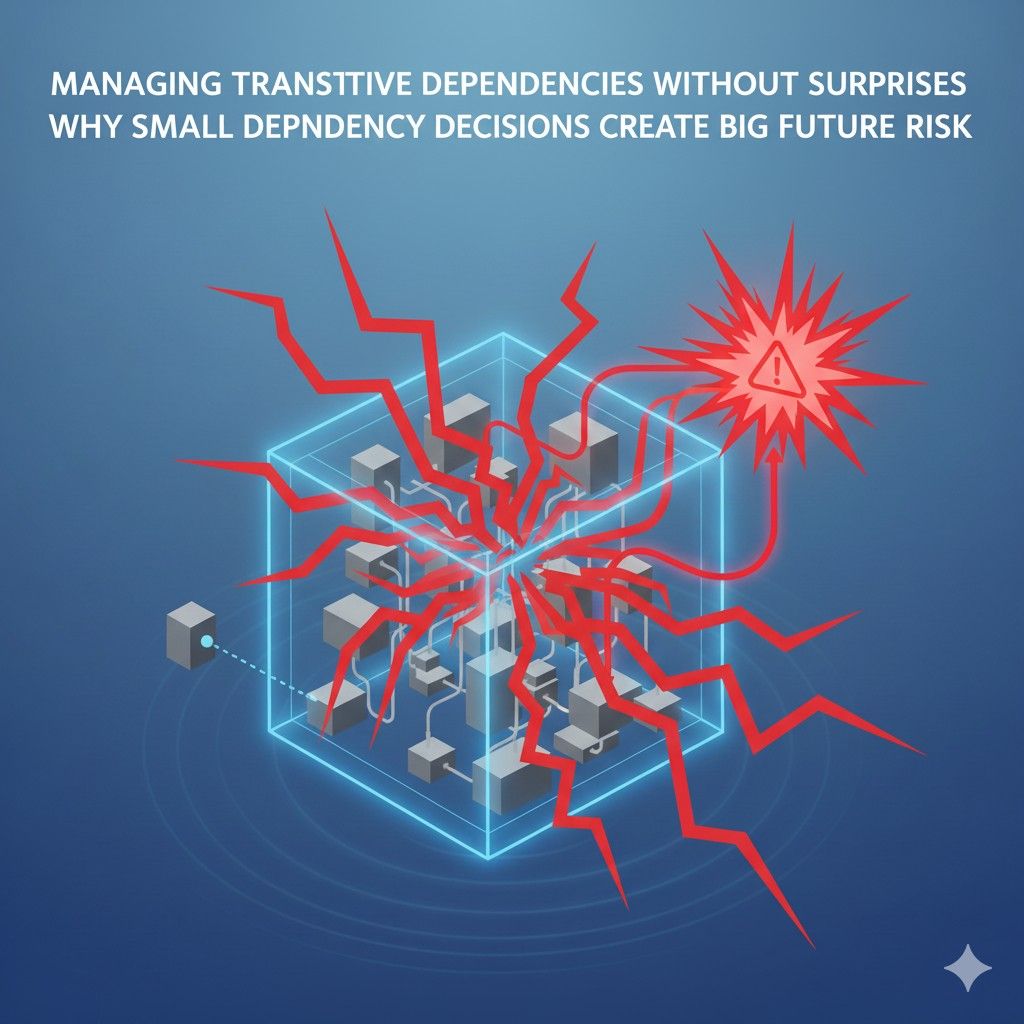
A library chosen for speed. A plugin added to meet a deadline. A version pinned and never revisited.
Understanding this delay helps teams act earlier. You do not need to fix everything. You need to know which decisions will age badly if ignored.
How Dependencies Lock In Behavior
Every dependency comes with opinions. Some decide how errors are handled. Some decide how data flows. Some decide how fast things can change. Once those opinions spread through your code, they become hard to unwind.
What starts as a helper slowly becomes a rule-set. Your system begins to behave in certain ways because it has to, not because you designed it that way. This is how teams lose flexibility without noticing.
Strong teams regularly ask whether their system behaves the way they want or the way their dependencies force it to behave.
Version Drift and Silent Fragility
Another risk grows quietly through version drift. Dependencies update. Their dependencies update. Security fixes land. Breaking changes slip in. Teams delay upgrades because everything still works.
This delay builds tension. The longer you wait, the harder the upgrade becomes. At some point, change feels dangerous. Teams freeze. Innovation slows.
The solution is not constant upgrades. It is steady, planned movement. When upgrades are treated as normal maintenance, they stop being scary. When ignored, they turn into fire drills.
How Risk Hides During Fast Growth
Fast-growing companies are especially exposed. New features matter more than cleanup. New hires assume existing choices are correct. Nobody wants to touch old code that still passes tests.
This is how fragile foundations form. Everything looks fine until scale hits. Then performance drops, bugs multiply, and fixes take longer than expected.
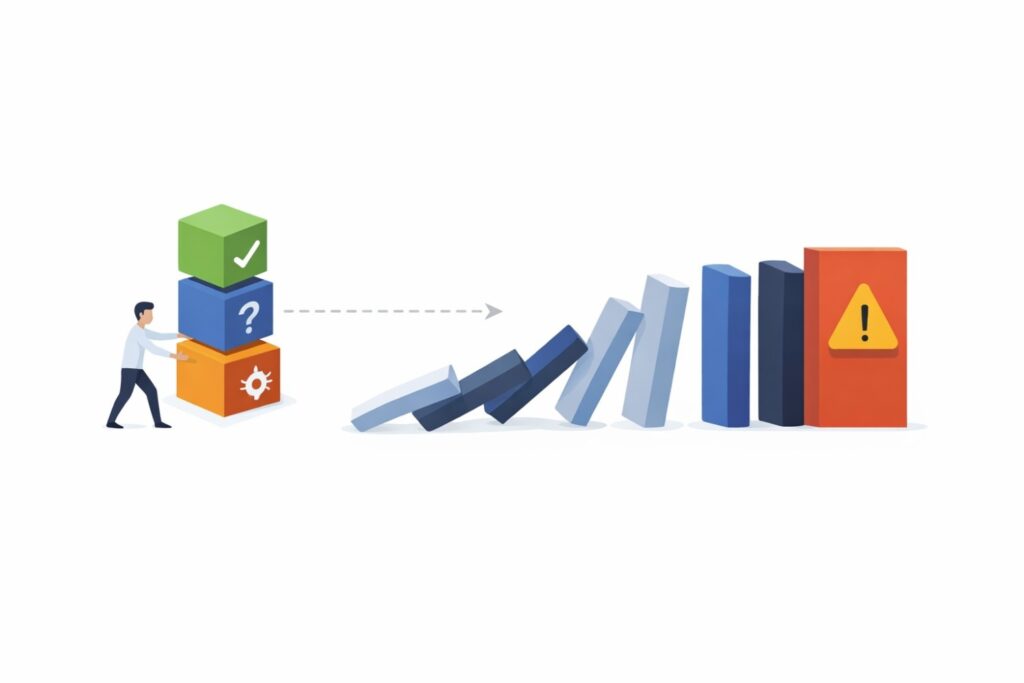
Businesses that survive growth do one thing well. They make time to pay down invisible risk before it becomes visible pain.
The Cost of Emergency Refactors
When dependency risk finally explodes, it often does so at the worst time. During a customer rollout. Before a fundraise. In the middle of a security review.
Emergency refactors are expensive. They pull senior engineers off roadmap work. They introduce new bugs. They create stress across the team.
Most of these crises are preventable. They come from ignoring small signals early. A warning during install. A skipped update. A dependency nobody understands anymore.
Turning Dependency Review Into a Business Habit
The best teams treat dependency review as a business habit, not a technical chore. They connect it to risk, speed, and ownership. They talk about it in simple terms.
This does not require long meetings. It requires regular attention. A short review during planning. A quick check before major launches. A shared understanding of which parts of the system are most sensitive.
When leadership understands this, engineers feel supported instead of blocked.
Why This Matters for Long-Term Value
Ultimately, dependency decisions shape the value of your company. Buyers and investors care about maintainability. They care about risk. They care about what you truly control.
A clean, well-understood dependency structure signals maturity. It shows that the team builds for the long term, not just the next demo. That signal carries real weight.
This also connects directly to how your innovation is documented and protected. Clear boundaries make strong claims easier. Messy foundations create questions no one wants to answer late in the game.
PowerPatent helps teams align what they build with how they protect it. When dependency risk is managed early, that alignment becomes natural instead of forced.
You can learn more about that process at https://powerpatent.com/how-it-works.

Small choices matter. Not because they are wrong, but because they last longer than we expect. Teams that respect that fact build products that age well.
How Hidden Dependencies Quietly Shape Ownership and Control
Most founders believe they own their product because they wrote the code. That belief feels natural. You hired the team. You paid the salaries. You shipped the features.
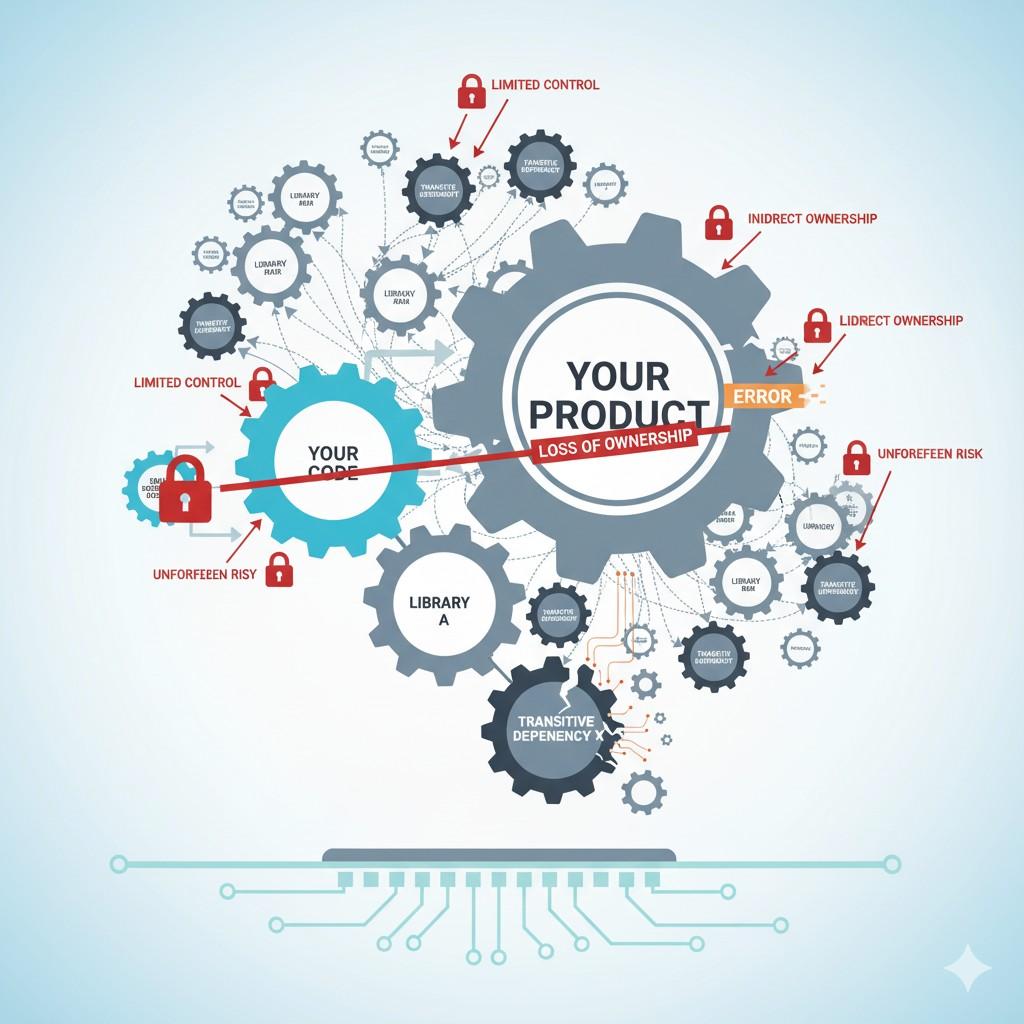
But ownership in software is not only about effort. It is about boundaries. And hidden dependencies have a way of moving those boundaries without asking.
This section focuses on how transitive dependencies influence control, leverage, and long-term ownership in ways that many businesses only discover when it is expensive to respond.
Ownership Is About What You Can Change
True ownership shows up when change is needed. If you can adjust behavior, fix problems, or evolve your system without waiting on someone else, you are in control. If you cannot, then part of your product is not really yours.
Hidden dependencies reduce this control slowly. At first, they help. Later, they decide. When a critical path runs through code you do not manage, your ability to move depends on external timelines and priorities.
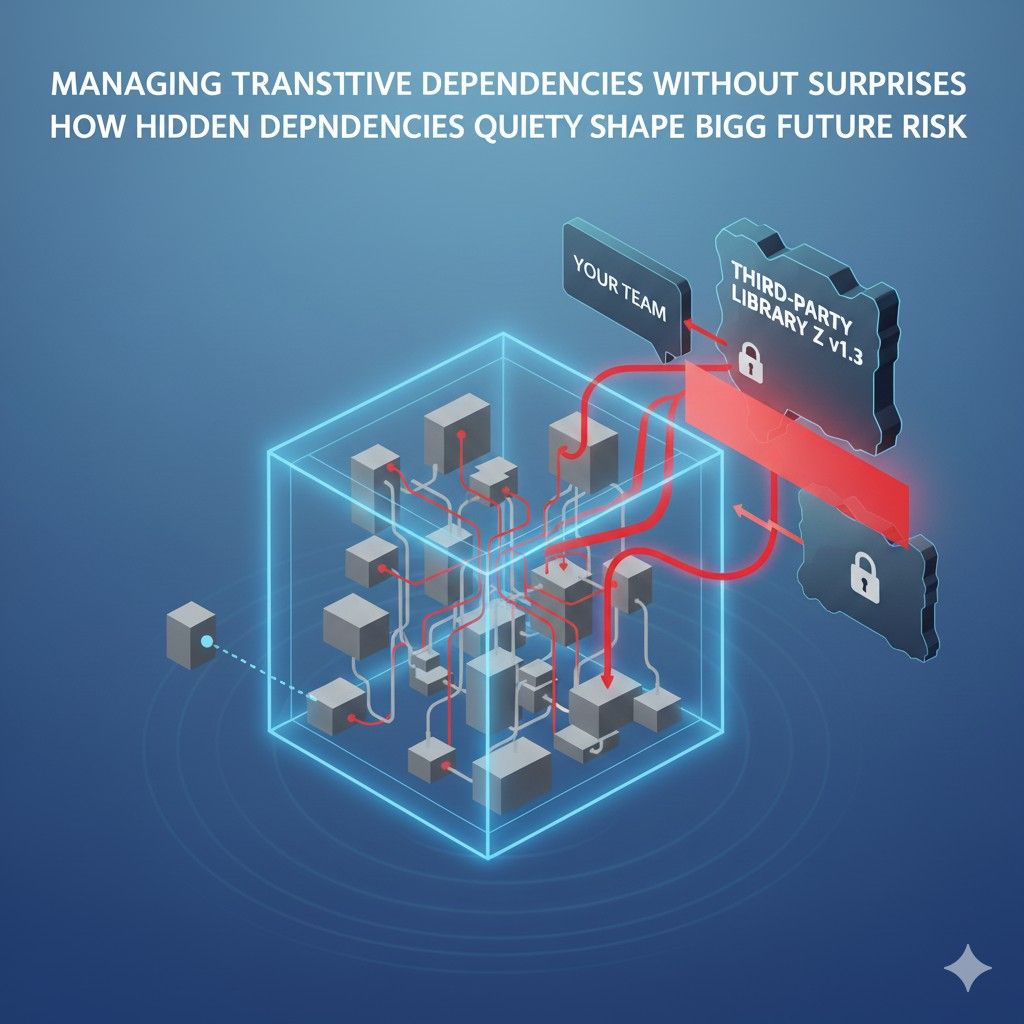
Teams that understand this early design systems where their core logic remains changeable no matter what happens outside.
When External Code Defines Your Product Experience
Many products end up feeling the way they do because of dependency behavior, not product decisions.
Error messages, performance limits, data handling, and even user flows can be shaped by third-party code buried deep in the stack.
This becomes a problem when those behaviors conflict with business goals. Maybe you want to handle data differently. Maybe you need stronger guarantees. Maybe customers expect something your system cannot easily deliver.
If those limits come from hidden dependencies, fixing them is harder than expected. Awareness is the first step to reclaiming choice.
The Silent Influence of Licenses and Terms
Another layer of control sits in licenses. Transitive dependencies often bring licenses no one reviewed. Most of the time, nothing bad happens. But when it does, it happens suddenly.
Certain licenses can limit distribution, usage, or future deals. Even if risk is low, uncertainty alone can slow negotiations and raise questions during due diligence.
Smart teams track not just what code they use, but under what terms. This does not require legal deep dives. It requires visibility and basic understanding.
How Dependency Sprawl Weakens Strategic Leverage
As dependency trees grow, leverage shrinks. The more external code your core relies on, the fewer options you have when negotiating partnerships, pricing, or exits.
This is not about avoiding open tools. It is about keeping your leverage where it matters most. Your core system should not be easily replicated by swapping dependencies.

When your unique value is clearly separated from shared infrastructure, your position stays strong.
Designing for Replaceability Without Rewriting Everything
One practical strategy is designing for replaceability. This means assuming that any external dependency might change, degrade, or disappear.
When teams wrap dependencies behind simple interfaces, they keep control even if the underlying tool changes. This makes future shifts manageable instead of catastrophic.
Replaceability is not about paranoia. It is about respect for change.
Making Ownership Visible Inside the Company
Ownership clarity should not live only in the heads of senior engineers. It should be visible and shared. Teams should know which parts of the system are truly internal and which are borrowed.
This shared understanding leads to better decisions. Engineers build with intent. Product managers plan with realism. Leaders invest in the right areas.
When everyone knows what the company truly owns, alignment improves.
The Link Between Control and Defensibility
Control and defensibility are deeply connected. The more control you have over your core systems, the easier it is to defend them as unique. This matters in markets where ideas move fast and competition is aggressive.
Strong IP is not created by paperwork alone. It starts with clear technical ownership. Dependency awareness strengthens that foundation.
PowerPatent helps founders capture and protect what is genuinely theirs. That process becomes far more effective when the system’s boundaries are already clear.
You can see how that works in practice at https://powerpatent.com/how-it-works.
Hidden dependencies do not steal ownership overnight. They reshape it slowly. Teams that see this early stay in control longer and with fewer surprises.
Taking Back Control Without Slowing Your Team Down
Many teams hear about dependency risk and assume the fix will slow everything down. They picture long reviews, heavy rules, and blocked engineers.
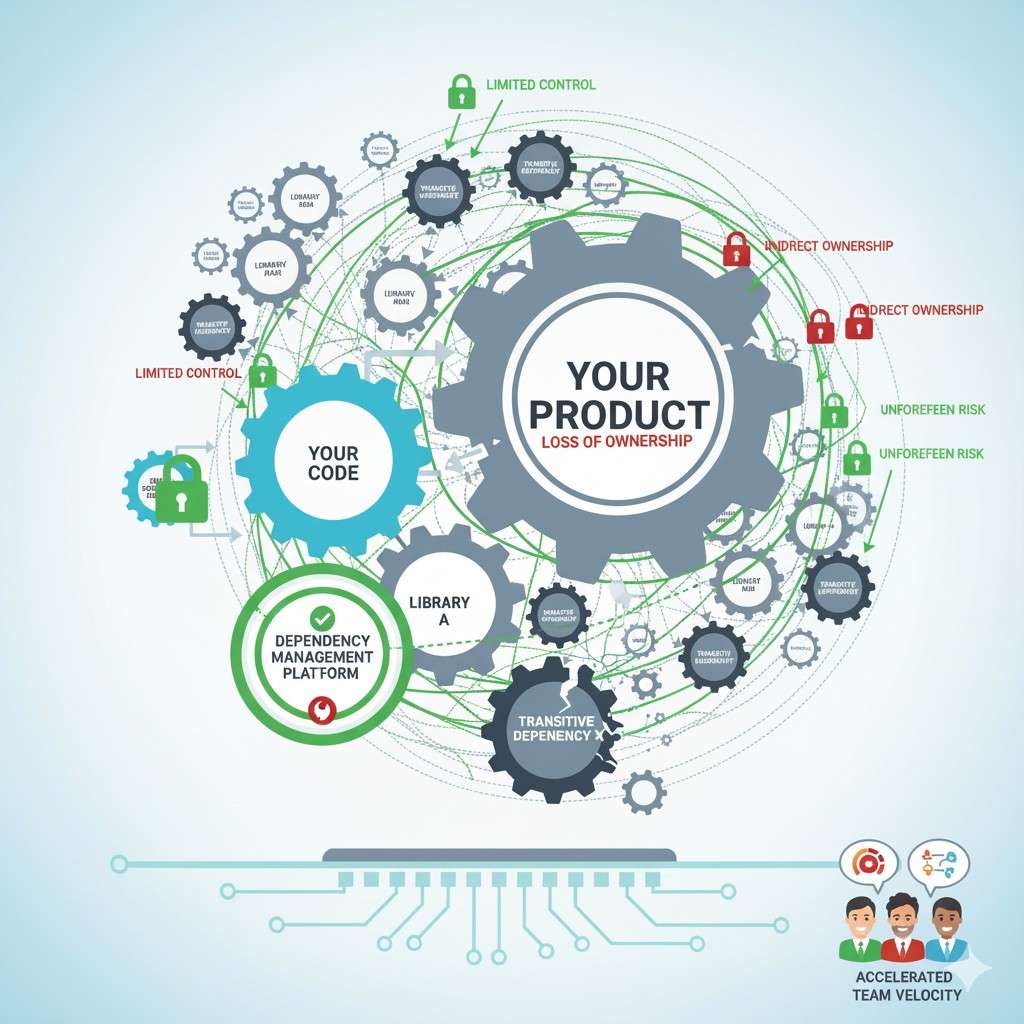
That fear is understandable, but it is also misplaced. The goal is not to add friction. The goal is to remove future drag.
This section is about practical ways businesses regain control over transitive dependencies while keeping momentum high and morale intact.
Control Comes From Rhythm, Not Restriction
The fastest teams are not the ones with no rules. They are the ones with clear rhythms. Dependency control works the same way. Instead of stopping every decision, teams set regular moments to review and adjust.
When review becomes routine, it loses its weight. Engineers do not feel judged. Leaders do not feel blindsided. Decisions improve because they are expected, not forced.
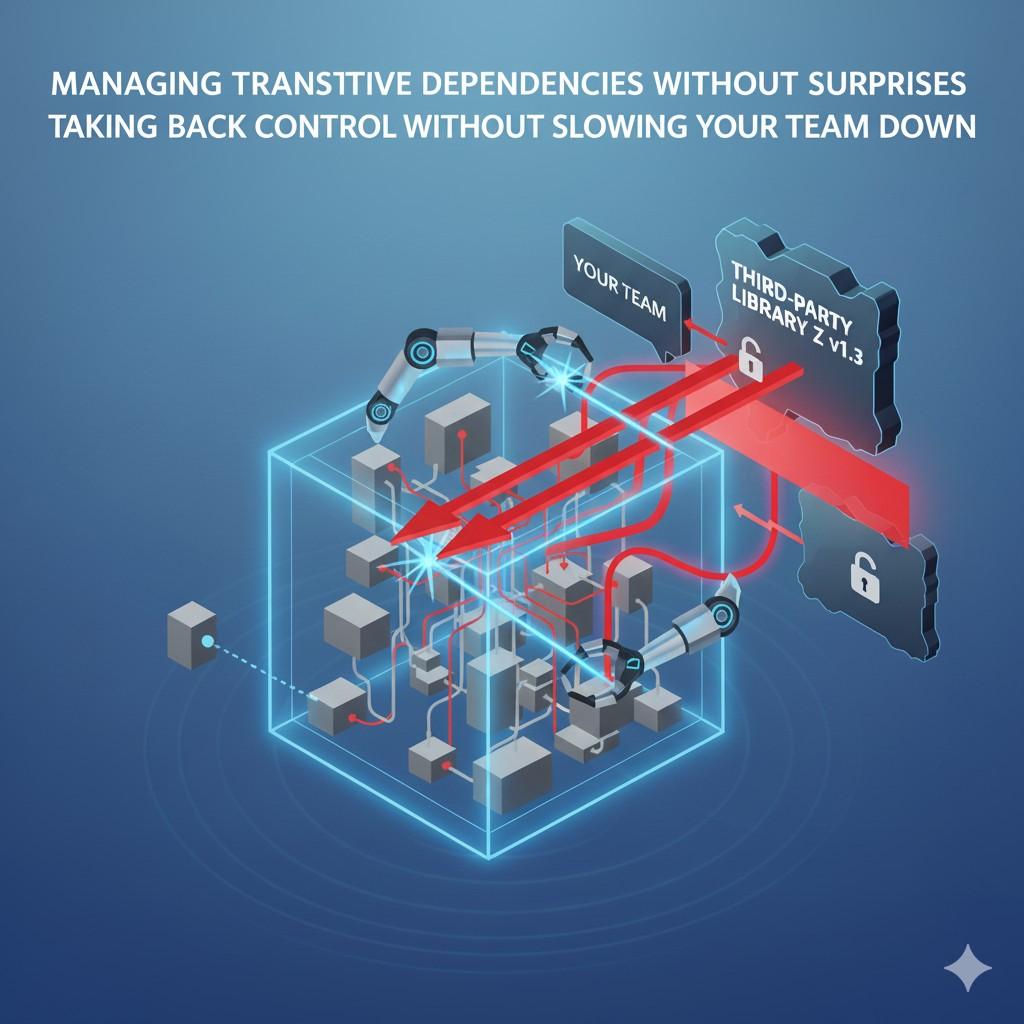
A steady rhythm beats reactive cleanup every time.
Shifting From Reactive Fixes to Planned Attention
Most dependency problems are handled only after something breaks. A build fails. A security issue appears. A feature becomes impossible to ship. At that point, options are limited and stress is high.
Planned attention flips this. By checking dependency health before pressure hits, teams keep options open. They choose when to act instead of being told when to act.
This shift alone changes how teams experience risk.
Making Dependency Health Part of Product Thinking
Dependencies should not live in a separate technical bucket. They shape product outcomes. Performance, reliability, and flexibility all depend on them.
When product planning includes questions about dependency impact, decisions improve. Tradeoffs become clear. Deadlines become more realistic.
This does not mean adding meetings. It means adding awareness.
Empowering Engineers With Clear Ownership
Control improves when ownership is clear. When someone knows they are responsible for a dependency area, it gets attention. Updates happen. Risks surface early.
This is not about blame. It is about care. Clear ownership creates pride and accountability without pressure.
Teams that do this see fewer surprises because someone is always watching.
Turning Documentation Into a Living Asset
Documentation often fails because it is treated as a chore. Dependency documentation works best when it is lightweight and alive. Short notes. Clear purpose. Easy updates.
When engineers understand why a dependency exists and what it affects, future changes become easier. New hires ramp faster. Decisions stay consistent.

This kind of clarity pays for itself quickly.
Using Change Windows to Reduce Fear
One simple tactic is defining change windows. These are planned times when updates and replacements are expected. Outside those windows, stability rules. Inside them, improvement is welcome.
This approach lowers fear. Engineers know when change is safe. Leaders know when risk is contained.
Change becomes normal instead of disruptive.
Aligning Dependency Control With Business Goals
The strongest control systems tie technical choices to business goals. If speed matters most, choose tools that age well. If security matters most, choose tools with strong maintenance.
If defensibility matters, protect your core logic fiercely.
When dependency strategy matches business intent, decisions feel obvious instead of debated.
This alignment also strengthens long-term value.
Connecting Technical Control to Legal Confidence
Legal confidence comes from clarity. When you know what runs your product and why, audits are easier. Reviews are faster. Protection is stronger.
This is where technical discipline supports legal outcomes. Teams that manage dependencies intentionally give themselves cleaner stories and fewer unknowns.
PowerPatent exists to help founders turn real technical clarity into real protection. When dependency decisions are under control, that translation becomes smooth and fast.
You can explore how this works at https://powerpatent.com/how-it-works.
Taking back control is not about doing more work. It is about doing the right work at the right time. Teams that master this move faster, not slower, because they are no longer surprised by their own systems.
Wrapping It Up
Most software problems do not arrive loudly. They build quietly, hidden behind tools that once saved time. Transitive dependencies are one of the clearest examples of this pattern. They enter with good intent and stay long after the original context is gone.
Managing them is not about control for its own sake. It is about protecting momentum. It is about making sure your product behaves the way you intend, not the way hidden code forces it to behave. It is about keeping your options open when the business evolves.
Leave a Reply