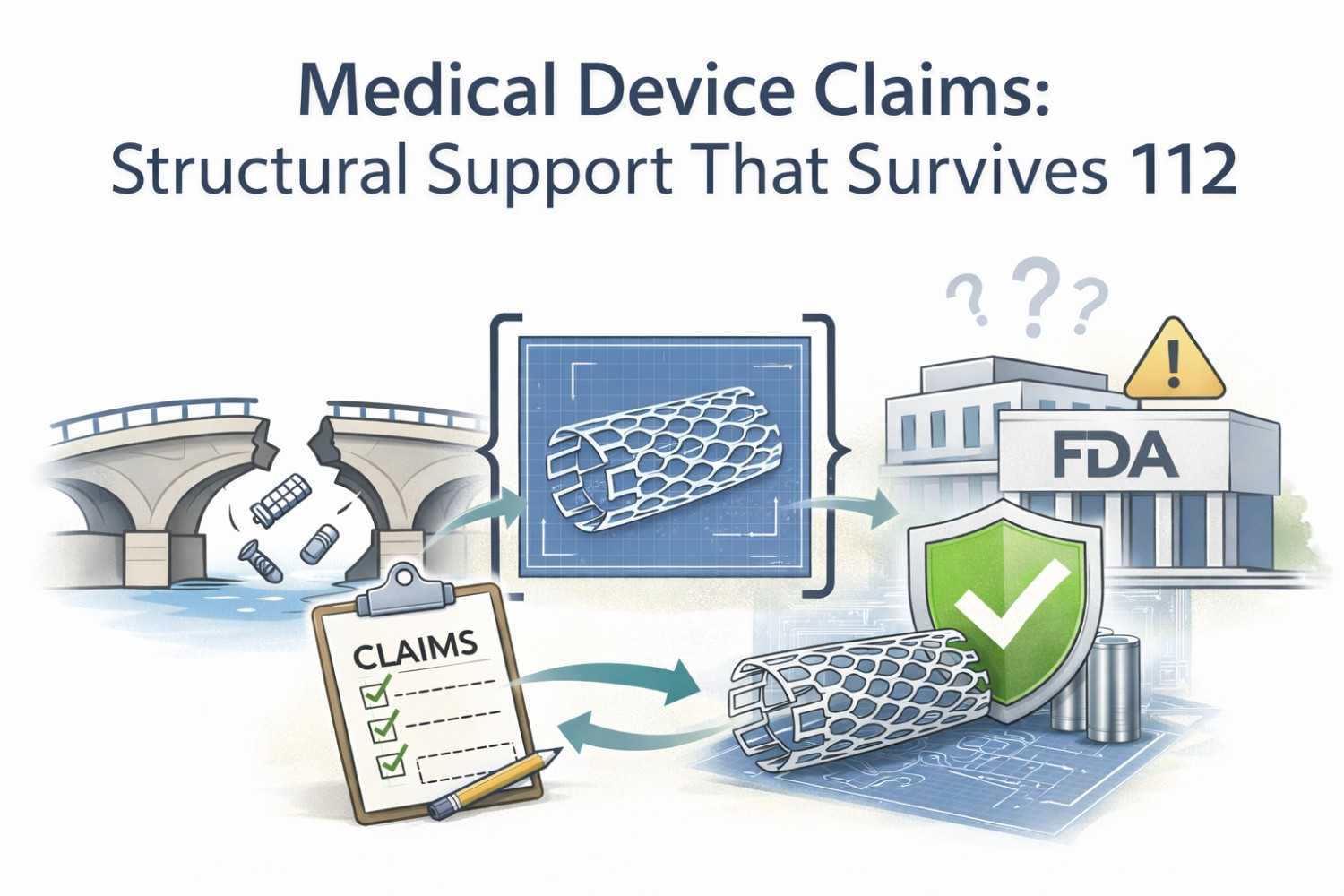
Most medical device patents fail for one quiet reason. The idea is strong, the tech works, the product saves lives, but the patent claims fall apart because they are not supported well enough. Not because the inventor did something wrong, but because the rules around patent support are unforgiving and badly explained. This article is about fixing that. We are going to talk about how to write medical device claims that actually stand up. Claims that do not collapse under Section 112. Claims that protect the real value of what you built, not just a thin shell around it. No legal fog. No filler. Just clear guidance you can use right away.
Why Medical Device Claims Fail Before They Ever Reach the Market
Medical device patents do not usually fail because the invention is weak. They fail because the story inside the patent does not match the reality of the device.
The patent looks fine at first glance, but when it is read closely, the foundation is missing.
Section 112 does not forgive gaps, guesses, or vague language. It demands clarity, structure, and proof that the inventor truly understood what they built.
This section explains where things go wrong before a product ever reaches a patient, an investor, or a regulator. More importantly, it explains how teams can fix these problems early, while there is still time to protect real value.
The Problem Starts Before the First Claim Is Written
Most failures begin long before the claims page. They start during early drafting, when speed is favored over accuracy.
Founders are moving fast. Engineers are heads-down. The patent feels like paperwork that can be handled later.
That mindset quietly creates risk.
When the technical story is rushed, the claims end up resting on thin explanations.
Section 112 looks for clear support in the description. If the description does not fully explain how the device is built and how it works in real life, the claims become fragile. The result is a patent that looks broad but breaks the moment it is challenged.
The fix is simple in concept but hard in practice. Slow down just enough to document what actually exists. Not what might exist later. Not what marketing wants to say. What the device truly is today.
PowerPatent is designed around this idea. It pulls real technical detail directly from the people building the product, while it is still fresh and accurate. You can see how that works here: https://powerpatent.com/how-it-works
Vague Descriptions Create Unsupported Claims
A common failure point is vague language. Words like module, unit, element, or system are used without clear structure. The patent says the device does something, but not how it does it physically or logically.
Under Section 112, this is dangerous.
Medical devices are expected to have concrete structure. If a claim says a component performs a function, the specification must explain what that component is and how it achieves that function.
If the explanation is missing or too generic, the claim can be rejected or invalidated.
Teams can avoid this by grounding every function in something real. If a device senses, describe the sensor.
If it moves, explain the mechanism. If it controls flow, show the physical or logical path. The goal is not to overwhelm the patent with detail, but to show that nothing is imaginary.
Functional Language Without Structure Is a Red Flag
Medical device claims often lean heavily on what the device does, not what it is. This is especially common in software-driven devices, diagnostics, and monitoring tools.
Section 112 does not like this.
When claims describe results without describing structure, they invite scrutiny. Examiners and courts want to see that the inventor possessed the invention, not just the outcome.
If the claim says the device analyzes, adjusts, or determines something, the description must explain how that happens in a real, repeatable way.
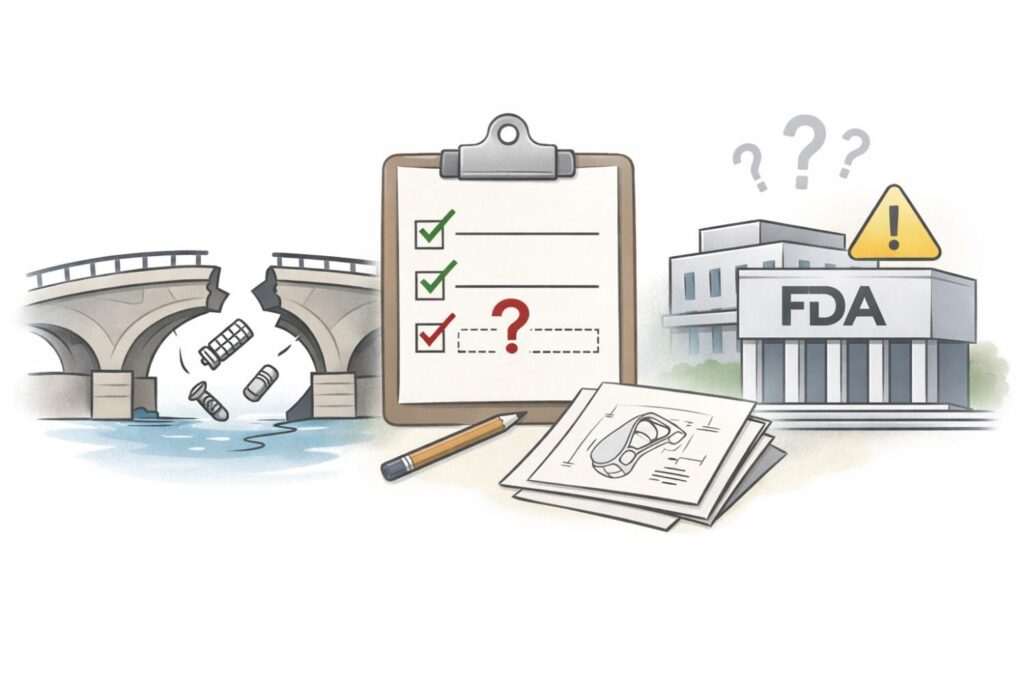
A practical habit that helps is to read each claim and ask a simple question. Could someone skilled in the field build this device using only what is written? If the answer is no, there is likely a 112 problem waiting.
Overreliance on Drawings Without Explanation
Drawings are powerful in medical device patents. They show form, placement, and relationships. But drawings alone are not enough.
A frequent mistake is assuming that a labeled figure replaces written explanation. Section 112 requires that the written description stand on its own.
The text must explain what the drawings show and why the structure matters.
When drawings are not fully explained, claims that rely on those structures become weak. This often shows up later, when a competitor designs around the patent by changing small details that were never described in words.
Strong patents treat drawings as support, not substitutes. Every critical component shown should be described clearly in the text, with enough context that its role is undeniable.
Claims Written Too Early Lock in Bad Assumptions
Timing matters more than most teams realize. Writing claims before the device design has stabilized is risky. Early assumptions often turn out to be wrong, incomplete, or too narrow.
When those early assumptions are baked into the patent, Section 112 becomes a trap. The claims end up unsupported by the final design, or the description fails to match how the device actually works.
A better approach is to treat the patent as a snapshot of real understanding, not a wish list. That does not mean waiting forever. It means aligning patent drafting with meaningful technical milestones.
This is where modern tools make a difference. PowerPatent helps teams update and refine their technical descriptions as the product evolves, without restarting from scratch.
That flexibility reduces the chance of locking in mistakes. Learn more here: https://powerpatent.com/how-it-works
Medical Devices Face Higher Scrutiny by Default
Medical device patents live in a tougher environment. They are examined more closely because they affect health and safety. Examiners expect precision. Ambiguity is punished faster here than in many other fields.
This means that shortcuts that might slide in other industries often fail in medical devices. Structural support must be explicit. Terminology must be consistent. The relationship between parts must be clear.
Companies that understand this early gain an advantage. They invest slightly more effort upfront and avoid costly rewrites, rejections, or weakened patents later.
The Specification Does Not Match the Claims
Another silent failure happens when claims evolve but the specification does not. Claims are adjusted during prosecution to get around prior art, but the description is left behind.
Section 112 looks at the entire document. If the claims drift beyond what the specification clearly supports, the patent becomes vulnerable.
A strong practice is to treat the specification as a living foundation. When claims change, the description should be checked and reinforced if needed. This keeps support aligned and defensible.
PowerPatent builds this alignment into the process by connecting claim strategy directly to the underlying technical disclosure.
That connection helps prevent drift and keeps the patent solid as it moves forward. You can explore that process here: https://powerpatent.com/how-it-works
Founders Underestimate How Literal Patent Review Is
Many founders assume that intent matters. They believe that because they understood the invention, others will too. Patent law does not work that way.
Section 112 is literal. It does not assume. It reads what is written and nothing more. If something is not clearly described, it does not exist for patent purposes.
The most effective founders learn to step outside their own heads. They write as if the reader has never seen the device before. They explain structure patiently and clearly, even when it feels obvious.
That habit alone prevents many early failures.
Early Patent Weakness Hurts the Business Later
When a medical device patent fails early, the damage spreads. Investors notice weak protection. Partners hesitate. Competitors feel safer moving closer.
This is why Section 112 issues are not just legal problems. They are business problems.
Strong structural support in claims builds confidence across the board. It shows that the company understands its technology deeply and has taken the time to protect it properly.
That confidence is hard to fake and easy to lose.
If you want help building patents that support real business outcomes without slowing your team down, PowerPatent was built for that exact problem. You can see how it works here: https://powerpatent.com/how-it-works
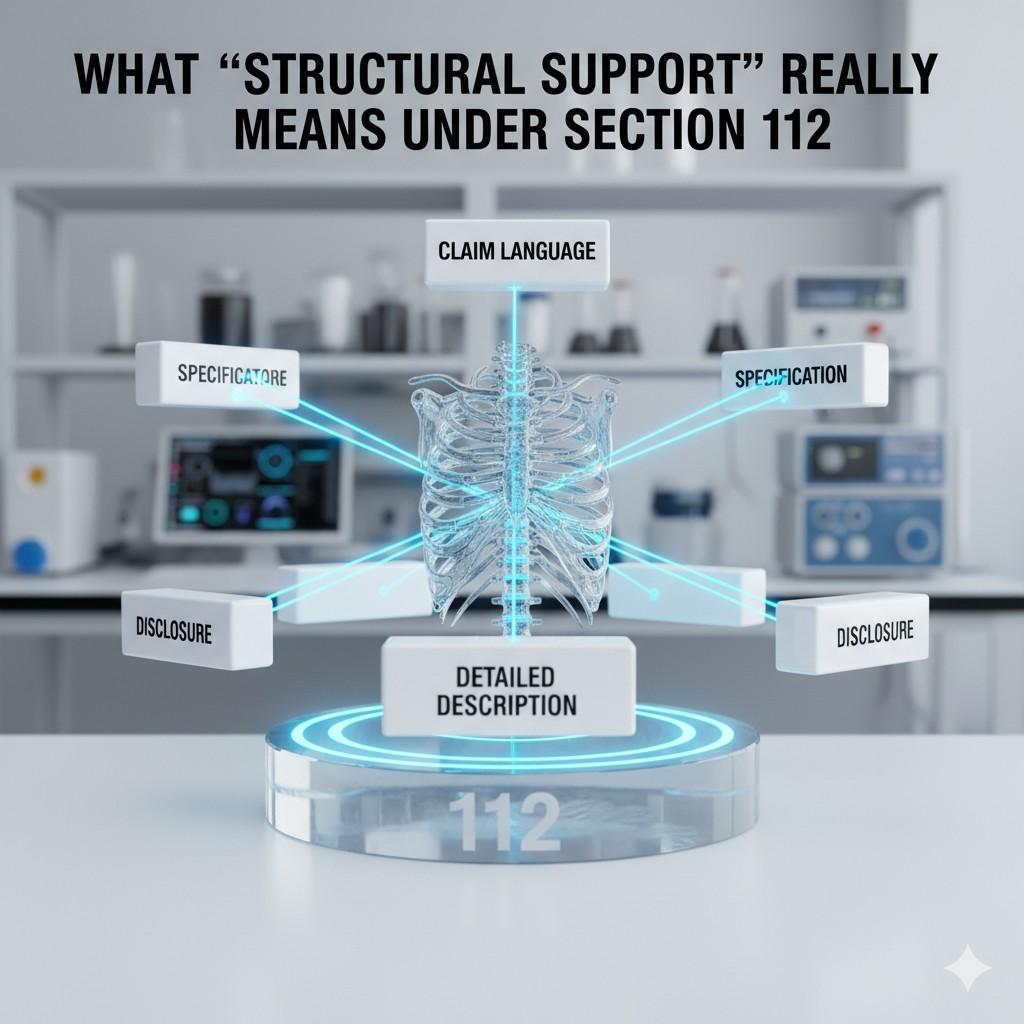
What “Structural Support” Really Means Under Section 112
Structural support is one of those phrases that sounds technical but really comes down to something very basic. It asks one simple question. Did you actually explain what you built in a way that proves you understood it?
Section 112 is not trying to trick inventors. It is trying to confirm that the patent is earned. For medical devices, that confirmation depends almost entirely on structure.
Not marketing language. Not outcomes. Not promises. Structure.
This section breaks down what structural support truly means in practice, and how businesses can use it to create patents that hold up under real pressure.
Structure Is About Proof, Not Detail for Detail’s Sake
Many teams hear “structural support” and panic. They imagine hundreds of pages of drawings and text. That is not the goal.
Section 112 does not reward volume. It rewards clarity.
Structural support exists when the description proves that the inventor possessed the invention at the time of filing.
That proof comes from explaining how parts fit together, how signals flow, how physical components interact, and how the device behaves under normal use.
The key is relevance. Every structural detail should earn its place by supporting at least one claim. If a component matters to the invention, it should be described. If it does not, it can be left out.
This mindset keeps patents strong without making them bloated.
Structure Is Different From Function, Even When They Seem Linked
In medical devices, structure and function are often tightly connected. A sensor detects. A pump moves. A processor analyzes. That overlap creates confusion.
Section 112 draws a hard line between what something does and what it is.
When a claim relies on a function, the specification must explain the structure that performs that function. It is not enough to say a processor analyzes patient data.
The description must explain how the processor is configured, what inputs it receives, and how it produces outputs in the context of the device.
This does not require revealing trade secrets or source code. It requires showing that the function is grounded in real architecture, not a black box.
Software Inside Medical Devices Still Needs Structure
Many modern medical devices are software-heavy. Algorithms drive decisions. Models adapt over time. This leads some teams to assume that structure is less important.
The opposite is true.
When software plays a key role, Section 112 becomes stricter, not looser. The patent must explain how the software is implemented within the device. What hardware runs it. What data it uses. How it interacts with physical components.
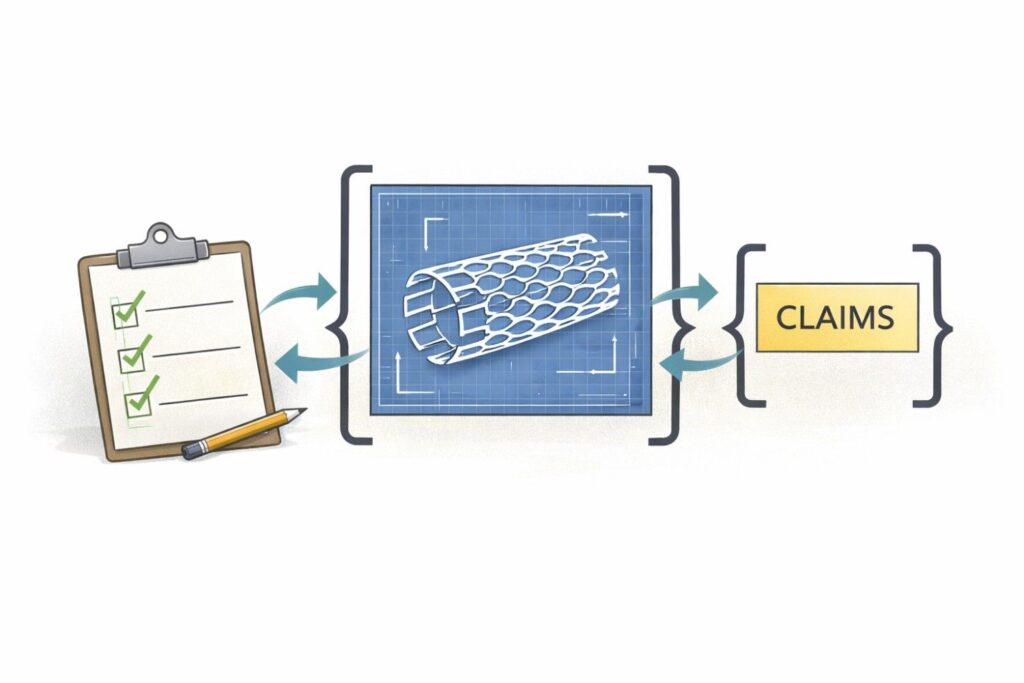
The goal is to show that the software is part of a system, not an abstract idea floating on its own.
Teams that do this well often describe software behavior in relation to the device’s physical constraints. Timing, memory limits, sensor noise, and response paths all help anchor software in structure.
Naming Parts Is Not the Same as Explaining Them
Another common misunderstanding is that labeling components equals support. A patent might name a controller, interface, or module and assume that is enough.
Section 112 disagrees.
Names without explanation are placeholders. They do not prove possession. Structural support comes from describing what the part is made of, how it connects to other parts, and why it exists in the system.
Even a short explanation can make the difference. One clear paragraph explaining how a controller receives input, processes it, and drives an actuator can support multiple claims.
This is where many patents quietly fail. The names are there, but the understanding is missing.
Structure Must Match the Scope of the Claims
Claims define how broad the protection is. Structure must stretch far enough to support that breadth.
If a claim covers multiple configurations, the description must show that the inventor contemplated those variations. If a claim covers a general class of devices, the specification must describe representative structures across that class.
This does not mean listing endless alternatives. It means showing enough diversity that the claim feels earned.
Businesses that align claim scope with structural disclosure avoid painful rejections and later invalidation. Those that do not often find their claims narrowed or struck down.
Section 112 Punishes Assumptions About the Reader
Many technical founders write as if the reader shares their background. They skip steps that feel obvious. They rely on industry norms without explaining them.
Section 112 assumes nothing.
The reader is skilled, but not psychic. If a relationship between components matters, it must be stated. If a constraint matters, it must be explained.
A good habit is to imagine the description being read by someone new to the project but experienced in the field. If that person could rebuild the device with confidence, the structure is likely sufficient.
Structural Support Is Built Across the Whole Document
Support does not live in one paragraph. It is built through consistency across the entire patent.
Terms must be used the same way every time. Components should not shift roles. Figures should align with text. Claims should feel like a natural summary of what was already explained.
When everything lines up, Section 112 issues become rare. When things drift, even strong inventions look weak on paper.
PowerPatent focuses heavily on this alignment. By connecting technical input directly to claim language and attorney review, it reduces the gaps that lead to 112 problems.
You can see how that system works here: https://powerpatent.com/how-it-works
Structural Support Protects Against Future Design Changes
One overlooked benefit of strong structure is flexibility. When the patent explains why the device works, not just how one version works, it can protect future iterations.
This matters in medical devices, where designs evolve due to testing, feedback, and regulation. A patent with solid structural foundations can adapt. One with thin support breaks as soon as the product changes.
Teams that think ahead use structure to describe principles, not just parts. That approach keeps patents useful longer.
Strong Structure Signals Seriousness to the Market
Beyond legal strength, structural support sends a message. It tells investors, partners, and acquirers that the company knows its technology deeply.
That signal matters.
A well-supported patent feels different when read. It feels intentional. Grounded. Real. That impression can influence deals long before any dispute arises.
If you want help building that level of confidence into your patents without slowing product development, PowerPatent was built to do exactly that. Learn more here: https://powerpatent.com/how-it-works
How to Draft Claims That Protect the Device You Actually Built
This is where everything comes together. Claims are not marketing lines. They are not summaries.
They are the legal edge of the business. If the claims do not match the real device, the patent may exist on paper but fail in practice.
Drafting strong claims is not about sounding smart. It is about being precise, honest, and strategic. This section focuses on how businesses can draft claims that reflect the real product, survive Section 112, and still leave room to grow.
Start With the Device as It Exists Today
The strongest claims begin with reality. Not the roadmap. Not the vision. Not what the device might become after funding or trials.
Section 112 rewards what you can prove you possessed at filing. That possession comes from what you actually built, tested, or fully designed.
When claims are written around real components and real behavior, support becomes natural. The specification already contains the answers. There is no need to stretch language or invent placeholders.
This does not limit growth. It creates a strong base. Later filings can expand coverage as the product evolves.
Claims Should Read Like a Clean Map of the System
A good claim feels like a clear map. Each part has a role. Each relationship makes sense. Nothing feels random or decorative.
When drafting claims, it helps to imagine the device assembled step by step. Each element in the claim should correspond to something tangible in that assembly. If an element cannot be pointed to in the real system, it is a warning sign.
This approach keeps claims grounded and defensible. It also makes them easier to explain to investors, partners, and attorneys.
Use Language the Specification Already Supports
One of the fastest ways to trigger Section 112 issues is to introduce new language in the claims that the specification does not fully explain.
Strong claim drafting pulls words and concepts directly from the description. The claim should feel like a distilled version of what was already taught.
This reduces risk and speeds prosecution. Examiners can see the support clearly. There is less back and forth. Fewer surprises.
Businesses that align claim language tightly with the specification spend less time fixing problems later.
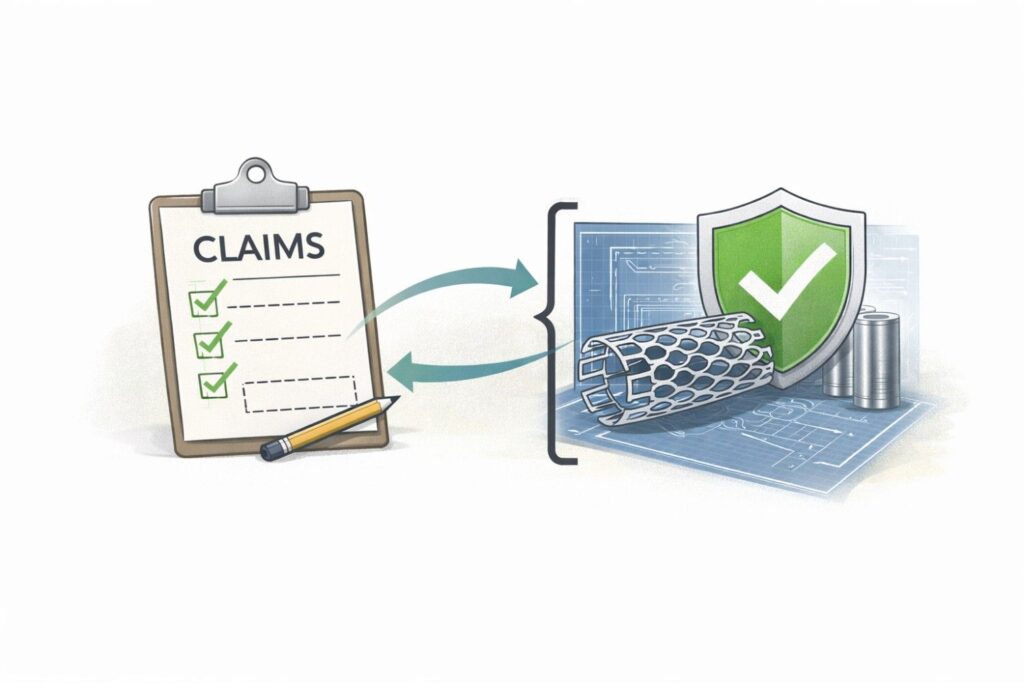
Broad Claims Still Need Anchors
Every company wants broad protection. That is reasonable. Broad does not mean vague.
Broad claims survive when they are anchored in solid structure. That anchor can be a core architecture, a key interaction, or a defining constraint that all versions share.
When claims are drafted around these anchors, they can cover variations without losing support. The specification explains why the anchor matters and how it appears in different forms.
This is especially powerful in medical devices, where the same core system may appear in many product lines.
Avoid Claiming Outcomes Without the Path
A common mistake is claiming the result instead of the mechanism. The device reduces error. The device improves accuracy. The device optimizes treatment.
These outcomes may be true, but Section 112 does not protect outcomes by themselves.
Claims should focus on how the device achieves those results. The physical arrangement. The signal flow. The decision logic tied to structure.
When the path is clear, the outcome is implied. That is far safer than the reverse.
Claims Should Match How the Device Is Used
Medical devices live in real environments. Hospitals, clinics, homes, labs. Claims that ignore use context often miss important structure.
How is the device initialized. How does it interact with a user. How does it respond to input or error. These behaviors often reveal key structural relationships.
When claims reflect real use, they become harder to design around. Competitors cannot easily copy the benefit without copying the structure.
This also helps during enforcement. A claim tied to real-world behavior is easier to explain to non-technical audiences.
Do Not Hide the Core Innovation in the Middle
Many weak patents bury the most important idea inside a dependent claim or a long paragraph.
The core innovation should appear clearly in the independent claims. It should be obvious what makes the device different.
This does not mean giving away secrets. It means identifying the true value and claiming it confidently.
When the core is clear, the rest of the claims can build around it naturally.
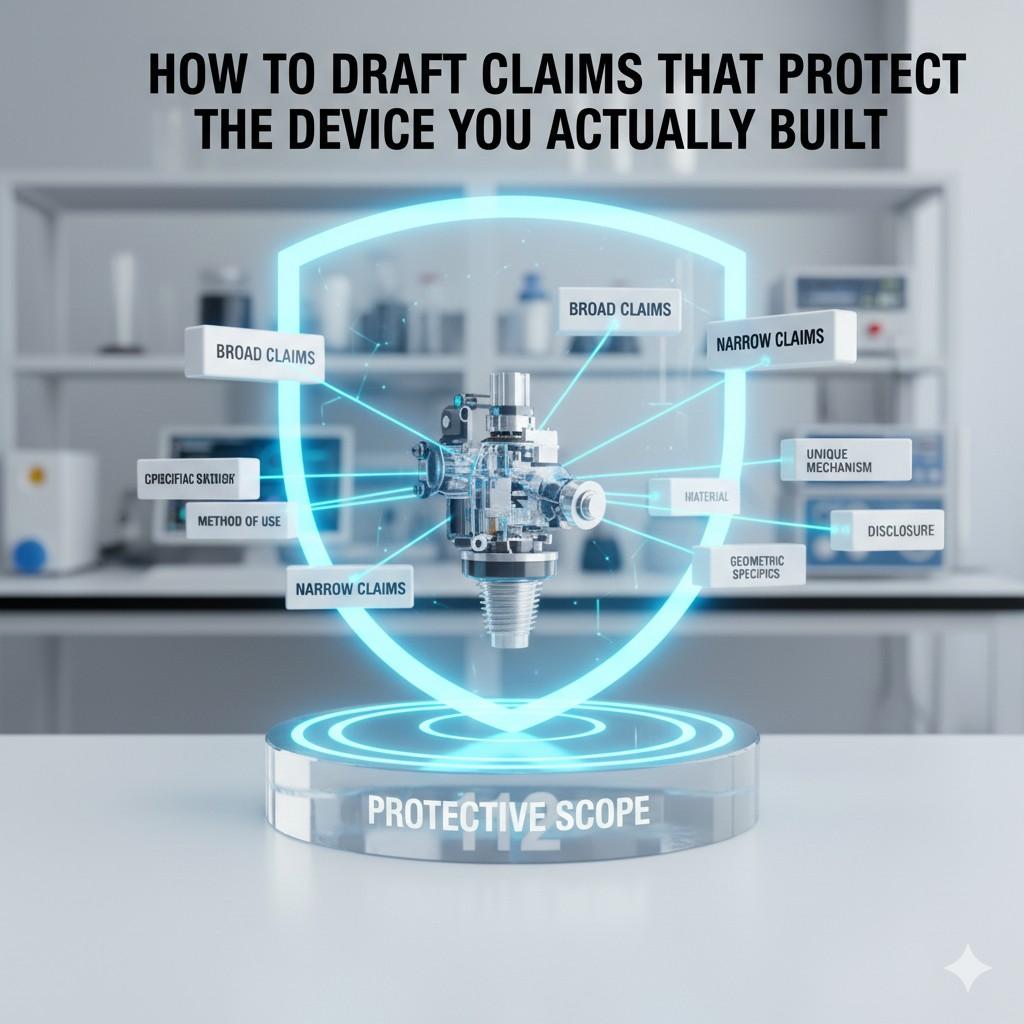
Claims Should Leave Room for Reasonable Change
Products evolve. Claims should not freeze the device in one exact form unless that form is essential.
This is where careful wording matters. Describing relationships instead of fixed positions. Describing ranges instead of single values. Describing roles instead of brand-specific parts.
The specification must support this flexibility, but when it does, claims can cover future versions without breaking Section 112.
This balance is hard to strike without experience. It is one reason founders struggle when doing this alone.
PowerPatent helps by combining founder input, smart software, and attorney review to shape claims that protect today while anticipating tomorrow. You can see how that works here: https://powerpatent.com/how-it-works
Claims and Business Strategy Must Align
Claims are not written in a vacuum. They should reflect how the company plans to compete.
If the business advantage is speed, claims should protect the structure that enables that speed. If the advantage is accuracy, claims should protect the architecture that delivers it.
This alignment makes the patent more than a legal asset. It becomes a business tool.
Companies that treat patents this way often make better decisions earlier, because they are forced to articulate what really matters.
Review Claims Like a Challenger Would
A powerful exercise is to read the claims as if you wanted to break them. Where is the ambiguity. Where is the assumption. Where is the gap.
If a competitor could argue that a claim covers something not described, Section 112 risk exists. If a competitor could build around the claim by changing a small detail that was never explained, value is leaking.
Catching these issues early saves time, money, and stress.
Strong Claims Reduce Future Legal Spend
Well-supported claims cost less over time. They face fewer rejections. They require fewer amendments. They are easier to defend.
This matters for startups watching burn rate. Investing in strong drafting upfront often reduces total patent cost significantly.
It also reduces distraction. Founders can focus on building instead of fixing paperwork.
If you want help drafting claims that truly protect the device you built, without slowing your team down or drowning in legal language, PowerPatent was designed for that exact need.
Learn more here: https://powerpatent.com/how-it-works

This section brings us close to the heart of Section 112 strategy. I can continue with the next part, focusing on how to future-proof medical device patents against examination, competition, and growth.
Wrapping It Up
At the end of the day, Section 112 is not the enemy. It is a filter. It separates patents that are real from patents that only look real. For medical device companies, that filter is strict because the stakes are high. Lives, safety, trust, and long-term value all sit behind the words on the page. Medical device claims fail when they drift away from structure. They fail when they describe hopes instead of hardware, outcomes instead of architecture, or ideas instead of systems. They fail when speed replaces clarity and when assumptions replace explanation.
Leave a Reply