
Let’s be very clear from the first line. The rules around non-competes are changing fast, and many founders still think they are protected when they are not. If you are building something valuable, something that lives in your code, your model, your data, or your process, you cannot afford confusion here. For years, non-compete agreements felt like a safety net. You hire someone, they sign a paper, and you assume your work is safe. Today, that safety net has holes. Big ones. Courts are pushing back. States are banning or limiting non-competes. Even when they exist on paper, they often fail when tested.
Why Non-Competes Are Failing Founders Right Now
Founders are waking up to a hard truth. Non-competes no longer give the safety they once promised. What used to feel like a strong wall is now more like a thin curtain.
You can see through it, and so can everyone else. This section goes deeper into why this is happening, how it affects real businesses today, and what founders should be thinking about instead if they want to protect real value.
The Promise of Non-Competes Was Always Bigger Than Reality
Non-competes were sold to founders as a simple fix. The idea was clean and comforting. If someone leaves, they cannot compete, so your company stays safe. In practice, this promise rarely matched reality.
Even when non-competes were more accepted, enforcing them was slow, expensive, and uncertain.
Today, that gap between promise and reality has grown wider. Many founders still believe they are protected because a document exists. That belief can delay smarter decisions.
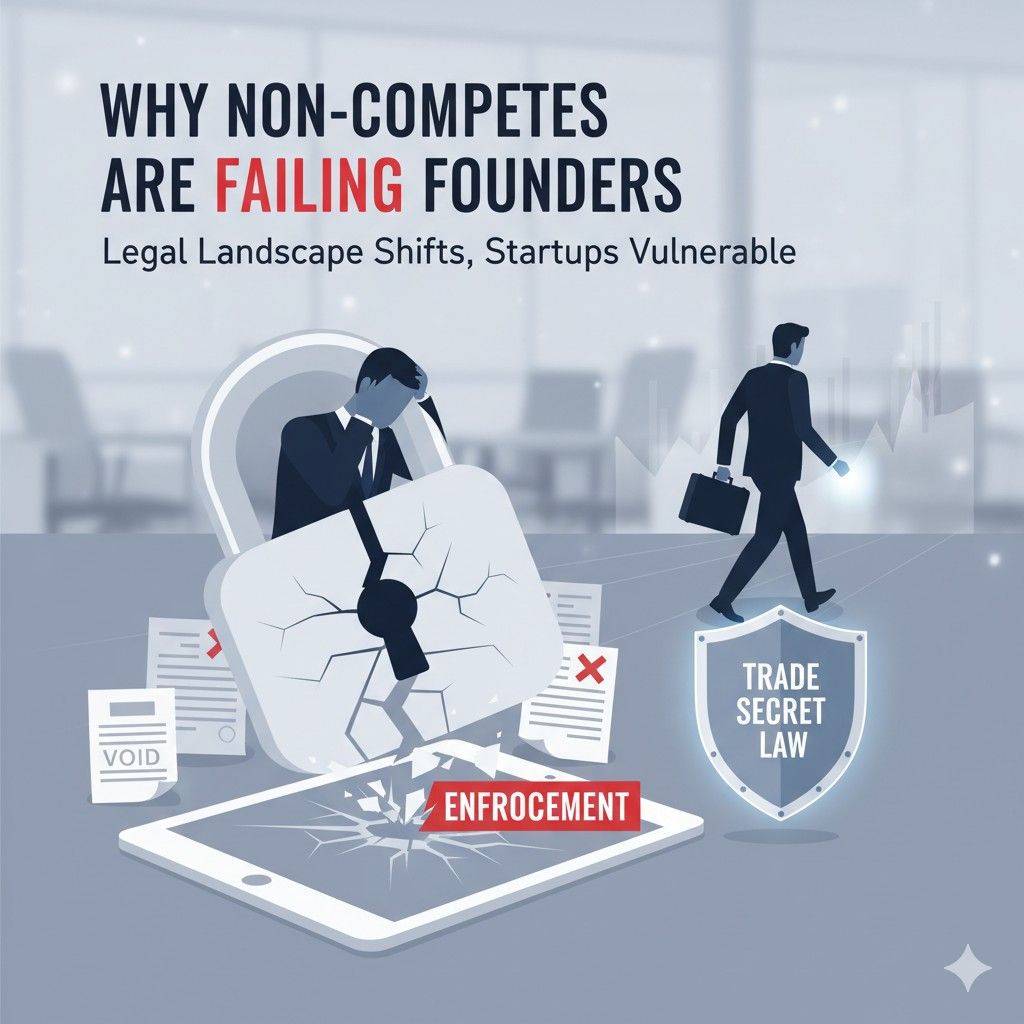
The first strategic step is accepting that non-competes were never the shield they were made out to be.
Enforcement Happens Too Late to Matter
Even in the rare case where a non-compete is enforceable, the timing works against you. By the time a dispute reaches a courtroom, the damage is often already done.
Knowledge has been used. Relationships have shifted. Momentum has moved on.
Startups cannot afford protection that only works after harm occurs. Founders need protection that prevents loss of ownership from the start, not remedies it years later.
This is one of the core reasons non-competes fail modern businesses.
Regulators Are Actively Targeting Non-Competes
This is not just a quiet legal trend. Regulators are openly challenging non-competes as harmful to innovation and worker mobility. That signals a long-term direction.
Even if a non-compete is valid today, there is no guarantee it will be tomorrow.
Founders who plan around unstable tools put their company at risk. Strategic planning means choosing protections that are becoming stronger over time, not weaker.
Betting on non-competes today is betting against the direction of policy.
The Startup Talent Market Rejects Restrictions
Top engineers and operators are more selective than ever. Many avoid companies that rely heavily on restrictive agreements. They see non-competes as a red flag, not a sign of seriousness.
This creates a hidden cost. Founders may lose access to strong talent or attract people who are less confident in their own future.

A company built on fear-based controls often struggles to build trust. Protection should not come at the cost of talent quality.
Non-Competes Do Not Scale With Growth
What works for a five-person team often breaks at fifty. As a company grows, more people touch the product, the data, and the systems. Non-competes do not scale cleanly across teams, roles, and regions.
Every new hire adds complexity. Every jurisdiction adds risk. Founders who rely on non-competes end up managing paperwork instead of building defensibility. Scalable protection focuses on the asset, not the headcount.
Founders Confuse Silence With Safety
Many founders assume things are fine because nothing has gone wrong yet. Employees leave quietly. Competitors appear slowly. There is no clear moment of failure. This silence creates false confidence.
In reality, ideas spread gradually. They show up in subtle ways. By the time a founder realizes something valuable leaked, tracing it back becomes nearly impossible.
Non-competes offer no help here. They do not create visibility or clarity around ownership.
Contractors and Advisors Fall Through the Cracks
Modern startups rely heavily on contractors, freelancers, and advisors. Non-competes often do not apply cleanly to these relationships. Even when they do, enforcement is even harder.
This is one of the biggest blind spots for founders. Critical work is often done by people outside traditional employment structures. Relying on non-competes leaves large gaps where ownership is unclear and unprotected.
Founders Misjudge What Actually Creates Risk
The real risk is not someone working for a competitor. The real risk is losing exclusive rights to the core idea. Non-competes aim at behavior, not ownership. They try to block actions instead of securing assets.
Strategic founders flip this thinking. They focus on locking down what makes their company unique so that even if someone leaves, the company retains full control. That mindset shift is where strong protection begins.
Legal Costs Turn Non-Competes Into a Tax
When founders do try to enforce non-competes, the cost is often staggering. Legal fees, time, distraction, and stress add up quickly. For early-stage companies, this can be fatal.
Protection should reduce risk, not introduce new financial threats. Any strategy that requires a lawsuit to work is a weak strategy for a startup. The best protection quietly does its job without drama.
Non-Competes Do Not Create Clear Ownership Records
Ownership clarity matters more than ever. Acquirers, investors, and partners want clean answers. Who owns the technology. How it was created. When rights were secured.
Non-competes do not answer these questions. They do not document invention.
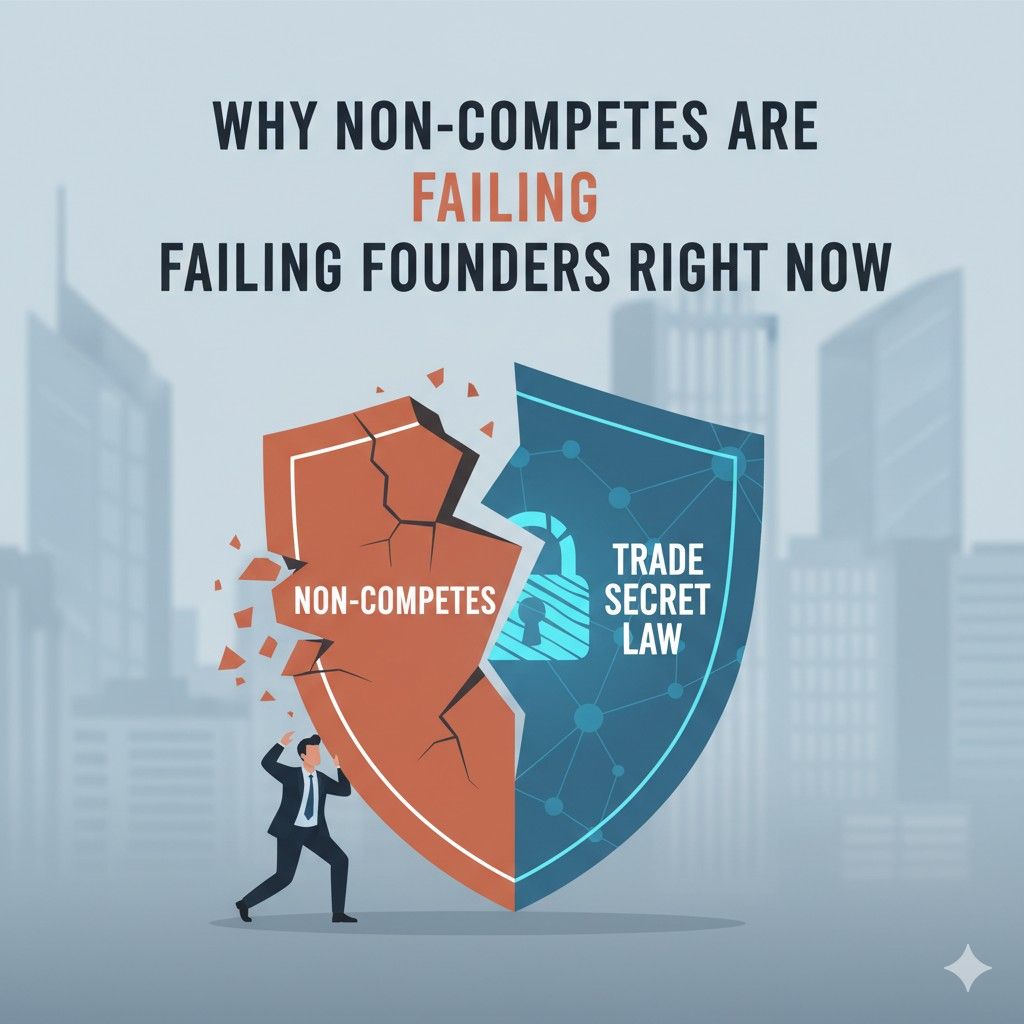
They do not define boundaries. They do not show originality. Founders who rely on them often struggle during diligence because they lack a clear paper trail of ownership.
The Market Now Rewards Portable Companies
Companies are bought, merged, and funded faster than ever. Portability matters. A strong company can prove its value without relying on specific people staying put.
Non-competes tie value to human restriction. That makes a company feel fragile. Durable companies show that value lives in documented, owned innovation. This is where serious leverage comes from.
Founders Need Protection That Works Without Conflict
The strongest protection never needs to be enforced. It simply exists, clearly and confidently. Everyone knows where ownership lies. There is no gray area.
Non-competes thrive on conflict. They only matter when things go wrong. Founders should aim for protection that works even when everyone acts in good faith. That is how real trust and speed are maintained.
Building Real Protection Is a Strategic Advantage
When founders move beyond non-competes, something interesting happens. They stop thinking defensively and start thinking strategically. Protection becomes part of company building, not an afterthought.
This is where tools like PowerPatent change the game. Instead of relying on fragile agreements, founders capture and lock in their inventions early, with real attorney oversight and smart systems.
That creates confidence, not fear. You can see how that process works at https://powerpatent.com/how-it-works.
The Future Belongs to Founders Who Act Early
Waiting is the enemy. Most protection failures happen not because founders chose the wrong tool, but because they waited too long. Non-competes encourage waiting by creating a false sense of safety.
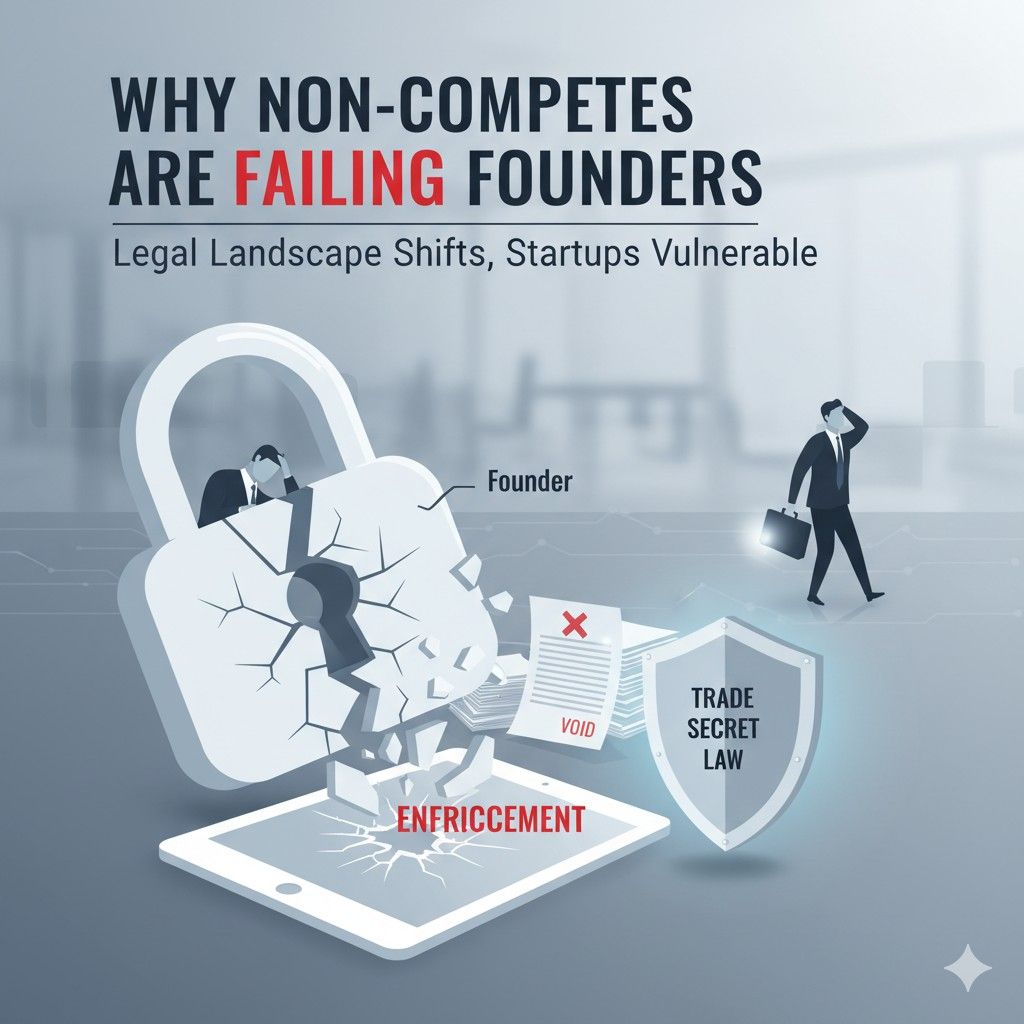
Founders who act early, document early, and secure ownership early build companies that are harder to copy and easier to defend. That is the real lesson behind the decline of non-competes.
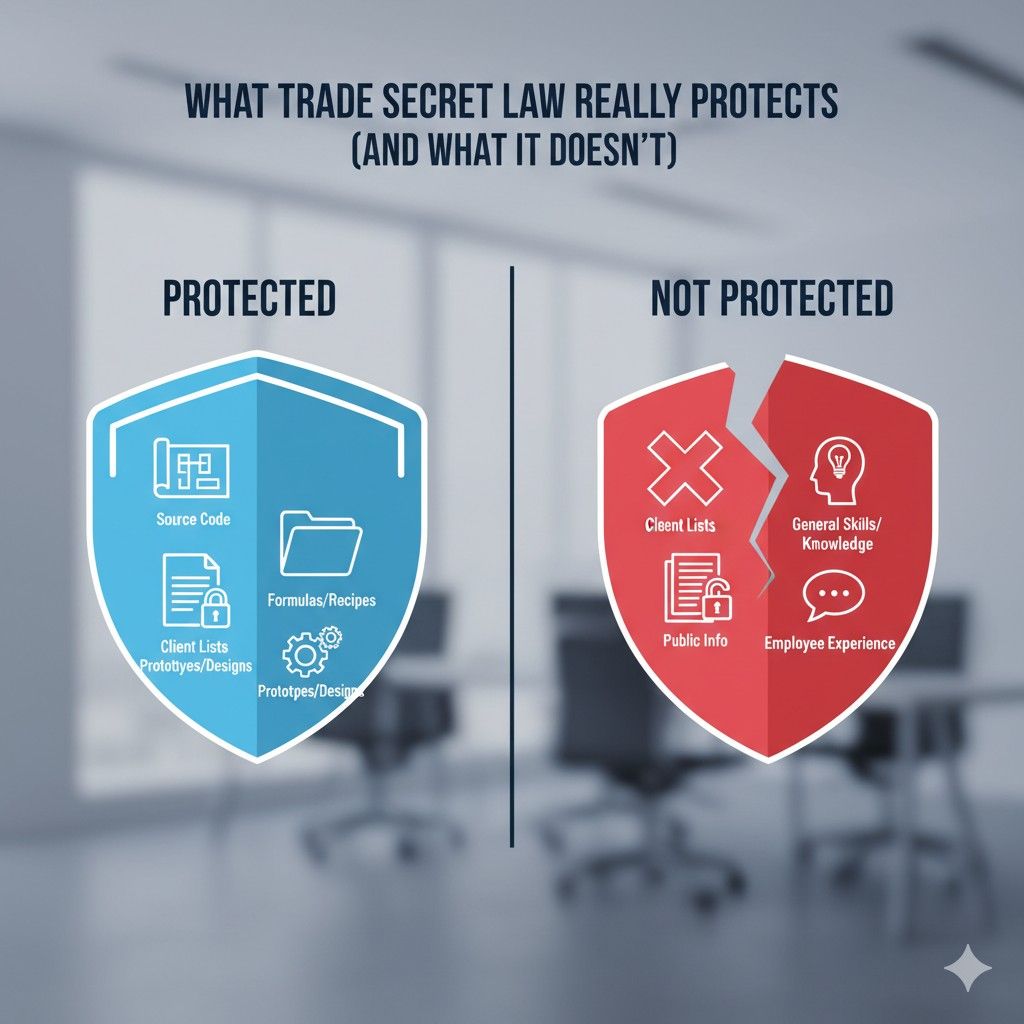
What Trade Secret Law Really Protects (And What It Doesn’t)
Trade secret law sounds powerful, and in many ways it is stronger than non-competes. But it is also widely misunderstood. Many founders assume trade secrets automatically protect anything important inside their company.
That assumption creates blind spots. This section explains what trade secret law truly covers, where it breaks down, and how founders should use it wisely instead of blindly trusting it.
Trade Secrets Protect Information, Not Ideas in Your Head
Trade secret law protects information that is kept secret and has business value because it is secret. This distinction matters more than most founders realize. If something lives only in someone’s mind, it is much harder to protect.
Once information is shared without controls, written casually, or discussed openly, it starts to lose protection. Founders need to understand that trade secrets are fragile. They only exist as long as secrecy is real and provable.
Secrecy Is a Daily Practice, Not a One-Time Decision
Trade secret protection depends on behavior. Courts look closely at how a company treats its information day to day. If access is loose, documentation is unclear, or sharing is casual, protection weakens fast.
Many startups move quickly and value openness. That culture is healthy, but it must be balanced with intention.
Strategic founders decide early what must stay controlled and build habits around that decision. Trade secrets reward discipline, not good intentions.
Trade Secrets Do Not Protect What Becomes Obvious
If something can be easily figured out by studying your product, trade secret protection may not apply.
This is a critical weakness for software and tech startups. Once a product is live, parts of it become visible through use, testing, or reverse engineering.
Founders often overestimate how hidden their systems really are. If a competitor can reasonably recreate something without stealing, trade secret law offers little help.
This is where many founders feel protected until it is too late.
Employee Memory Is a Gray Zone
Trade secret law does not erase what people remember. Employees are allowed to use general skills and experience when they leave.
The line between protected secrets and personal knowledge is blurry and heavily debated.
This uncertainty creates risk. Founders who rely only on trade secrets often discover that proving misuse is difficult.
Courts require clear evidence, not suspicion. Without strong documentation, enforcement becomes an uphill battle.
Proof Is the Hidden Cost of Trade Secrets
Trade secret cases are proof-heavy. You must show the information was secret, valuable, and reasonably protected. You must also show how it was taken or misused.
For startups, this burden can be overwhelming. Many fail not because the secret lacked value, but because the company could not clearly prove its boundaries. Strategic founders plan for proof long before conflict appears.
Trade Secrets Do Not Expire, But They Can Vanish Overnight
Unlike patents, trade secrets do not have a fixed end date. They can last forever. But they can also disappear instantly if secrecy is lost.

One accidental leak, one unclear handoff, one public demo can destroy protection. Founders should view trade secrets as high-maintenance assets. They are powerful, but they demand constant care.
Investors View Trade Secrets With Caution
Investors appreciate trade secrets, but they are cautious. They know how easily they can be lost. During diligence, they ask how secrets are defined, who has access, and how risk is managed.
If answers are vague, confidence drops. Trade secrets work best when paired with clear ownership strategies that do not rely on secrecy alone. This combination signals maturity and foresight.
Trade Secrets Favor Mature Companies, Not Early Chaos
Large companies with stable teams and processes are better positioned to maintain trade secrets. Early-stage startups operate in chaos by design. Rapid iteration, hiring, and pivoting make strict secrecy harder.
Founders must be honest about their stage. Trade secrets can play a role, but they should not be the only line of defense. Early chaos demands protection that tolerates change.
Trade Secrets Do Not Create Public Recognition of Ownership
Trade secret protection is invisible. There is no public record. This can be a weakness. Competitors do not know where boundaries lie. Investors cannot easily assess scope.
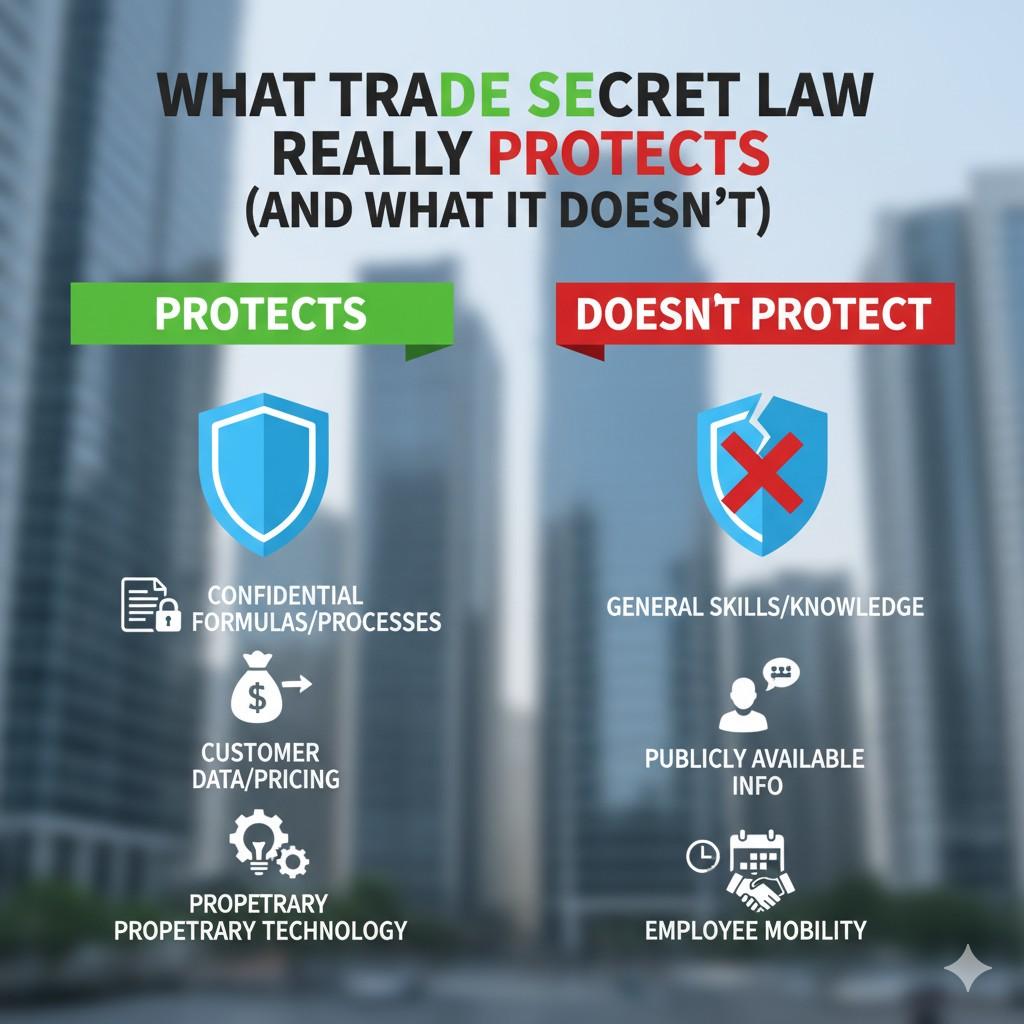
Public signals of ownership often deter copying before it starts. Trade secrets operate silently, which can invite accidental overlap or intentional risk-taking by others.
The Best Use of Trade Secrets Is Strategic, Not Absolute
Trade secrets work best when founders are selective. Not everything needs to be secret. Trying to hide everything often leads to hiding nothing well.
Smart founders identify what truly creates advantage and treat it with care, while securing stronger, clearer protection for the core invention itself. This layered approach reduces reliance on secrecy alone.
Trade Secrets Are Stronger When Backed by Ownership
When trade secrets sit on top of clear ownership, enforcement becomes easier. Documentation, timelines, and authorship matter.
This is where many founders miss an opportunity. Capturing inventions early, with proper structure and attorney oversight, strengthens trade secret claims later.
PowerPatent helps founders do this without slowing product velocity. You can explore how that works at https://powerpatent.com/how-it-works.
Trade Secrets Are a Tool, Not a Strategy
The biggest mistake founders make is treating trade secrets as a complete strategy. They are not. They are one tool in a broader system of protection.
Founders who understand this avoid overconfidence. They build protection that survives leaks, turnover, and growth. That mindset separates durable companies from fragile ones.
Understanding Limits Is the Source of Strength
Trade secret law is powerful precisely because it has limits. Founders who respect those limits use it wisely. Those who ignore them often learn the hard way.
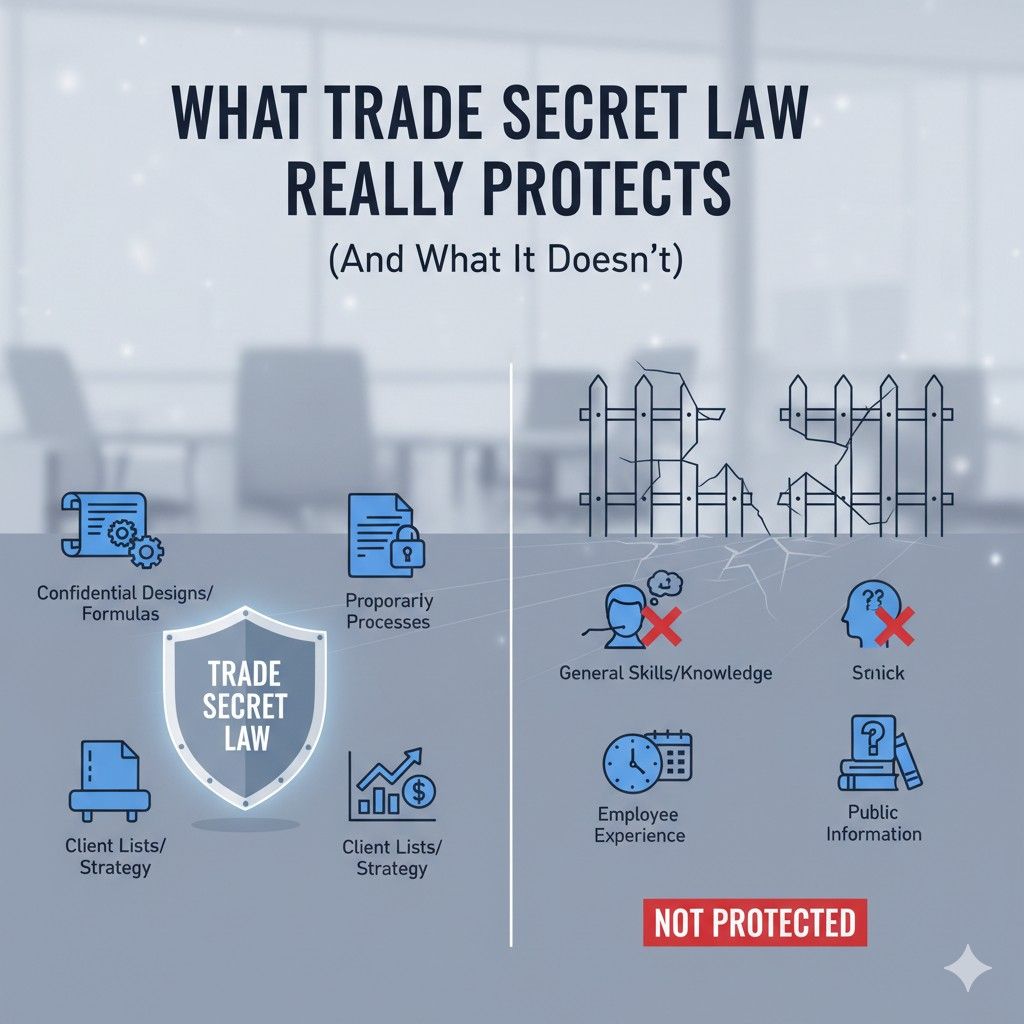
Knowing what trade secrets protect, and what they cannot, allows founders to design protection that fits reality, not theory.
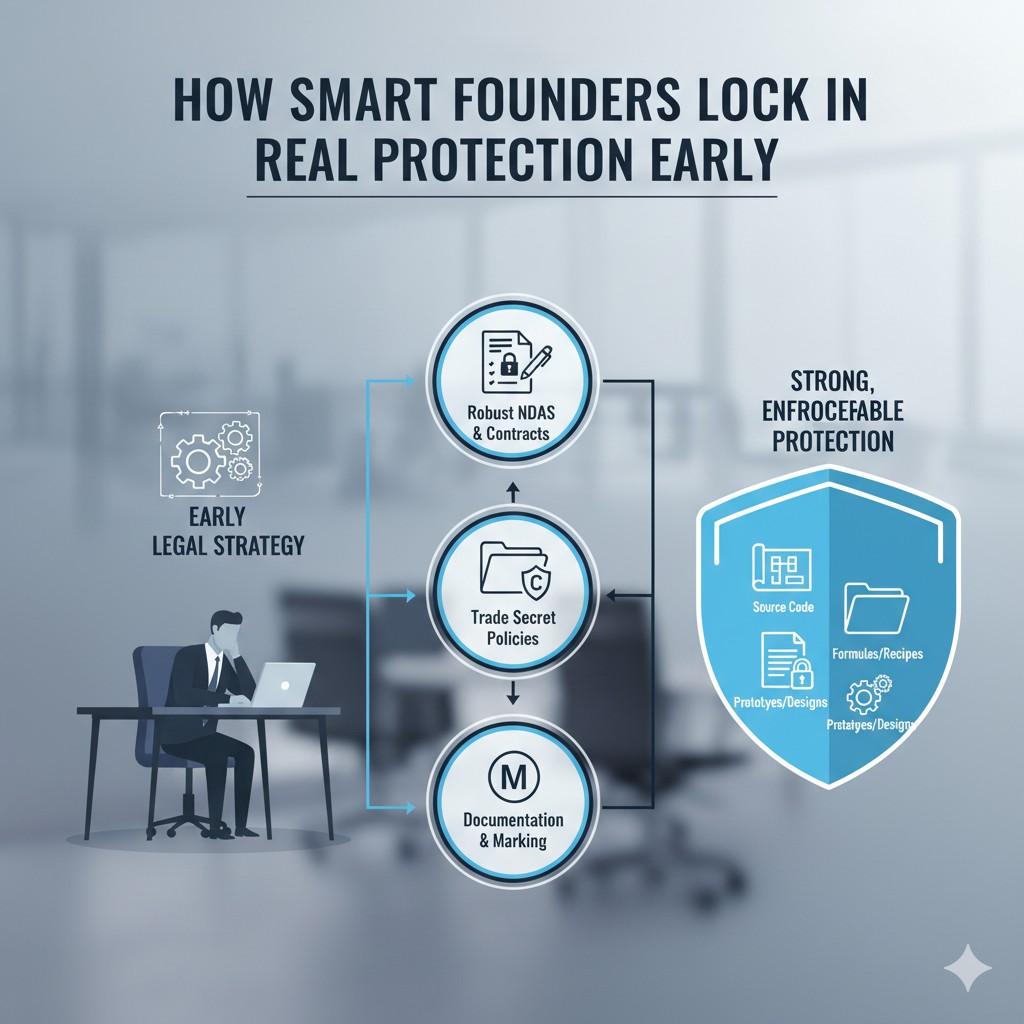
How Smart Founders Lock In Real Protection Early
Founders who win long term do something very different from everyone else. They do not wait for problems to show up before they act.
They assume movement, growth, and turnover are coming, and they build protection that holds up through all of it.
This section goes deep into how strong founders think about protection early, what they focus on instead of non-competes and fragile secrecy, and how they turn protection into a real business advantage.
They Start With the Question of Ownership, Not Fear
Weak protection starts with fear. Fear of employees leaving. Fear of copying. Fear of losing control.
Strong protection starts with ownership. Smart founders ask a simple question early on: what exactly does this company own that no one else can claim.
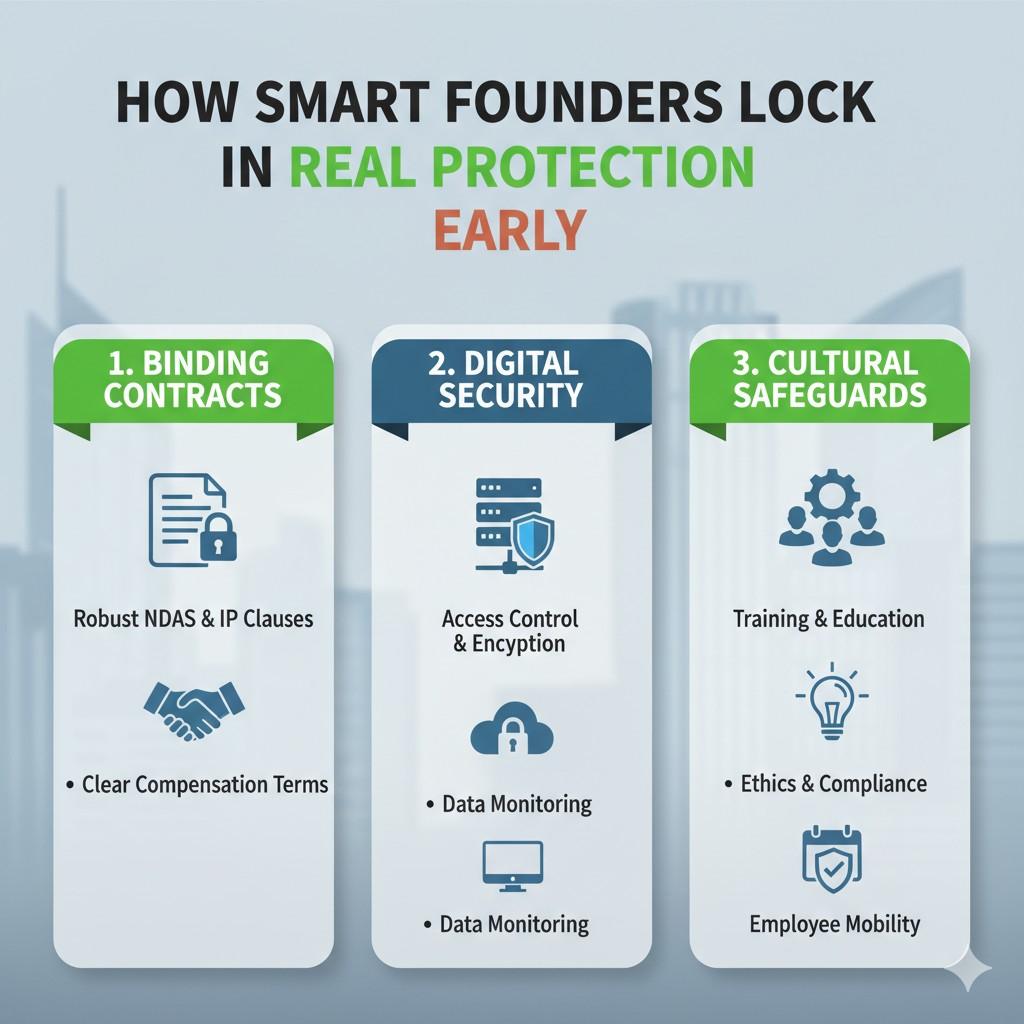
This shift matters. When you focus on ownership, you stop reacting and start designing. You think about what makes your product different at its core, not just how to stop others from moving fast.
Ownership thinking creates clarity, and clarity drives stronger decisions.
They Capture Innovation While It Is Still Fresh
Most founders wait too long to document what they are building. They tell themselves they will clean it up later. Later almost never comes. By then, the product has evolved, contributors have changed, and memory is blurry.
Smart founders capture innovation as it happens.
Not perfectly, not with heavy process, but clearly enough that the origin and logic are preserved. This creates a timeline that matters later, whether for investors, acquirers, or enforcement.
They Do Not Rely on Memory or Trust Alone
Trust is important, but trust is not protection. Memory is even worse. Smart founders assume people will leave, forget details, or remember things differently.
Instead of relying on verbal understanding, they build written clarity. What was created. When it was created. Who contributed. Why it matters. This removes ambiguity before it becomes a problem.
They Separate People From the Asset
One of the biggest mistakes founders make is tying value too closely to individuals. When a key person leaves, the company feels exposed.
Strong founders design systems where the asset lives with the company, not the person. This does not mean removing people’s importance. It means ensuring the company remains whole even as individuals come and go.
They Understand That Speed and Protection Are Not Opposites
Many founders believe protection slows them down. They imagine long legal processes and heavy paperwork. As a result, they delay action.
The best founders reject this tradeoff. They look for ways to move fast and protect at the same time. Modern tools and workflows make this possible. Protection only slows you down when it is bolted on late.
They Treat Protection as Part of Product Strategy
Protection is not just a legal task. It is a product decision. What you choose to protect shapes how you build, how you communicate, and how you compete.

Smart founders align protection with roadmap thinking. They ask which parts of the system are core and which are replaceable. This helps them focus effort where it matters most.
They Avoid Over-Sharing Too Early
Founders love to talk about what they are building. That energy is good, but timing matters. Smart founders are thoughtful about when and how they share details.
They know that once something is public, control is lost. This does not mean secrecy everywhere. It means intention. Share outcomes, not internals, until ownership is secured.
They Create Clear Internal Boundaries
Inside the company, clarity is just as important as secrecy. Everyone should know what belongs to the company and why. Ambiguity breeds risk.
Strong founders communicate ownership expectations early. This reduces conflict later and builds a culture of respect around what is being built.
They Think About Diligence From Day One
Even at the earliest stage, smart founders think ahead. They imagine the questions investors or acquirers will ask. Who owns this. How was it created. Is it clean.
By planning for those questions early, they avoid painful cleanup later. Protection becomes a quiet strength instead of a last-minute scramble.
They Use Layered Protection, Not One Tool
Strong protection is never a single move. It is a system. Trade secrets play a role. Contracts play a role. Ownership documentation plays a role.
Smart founders do not over-rely on any one method. They build layers that support each other. If one fails, the others still hold.
They Do Not Wait for Revenue to Act
A common mistake is waiting until the company feels real enough to protect. By then, value may already be exposed.
Founders who act early gain leverage. Early protection is cheaper, simpler, and more effective. Waiting only increases risk and cost.
They Avoid DIY Legal Guesswork
Many founders try to piece together protection on their own. Templates, blog posts, and guesses fill the gaps. This often creates false confidence.
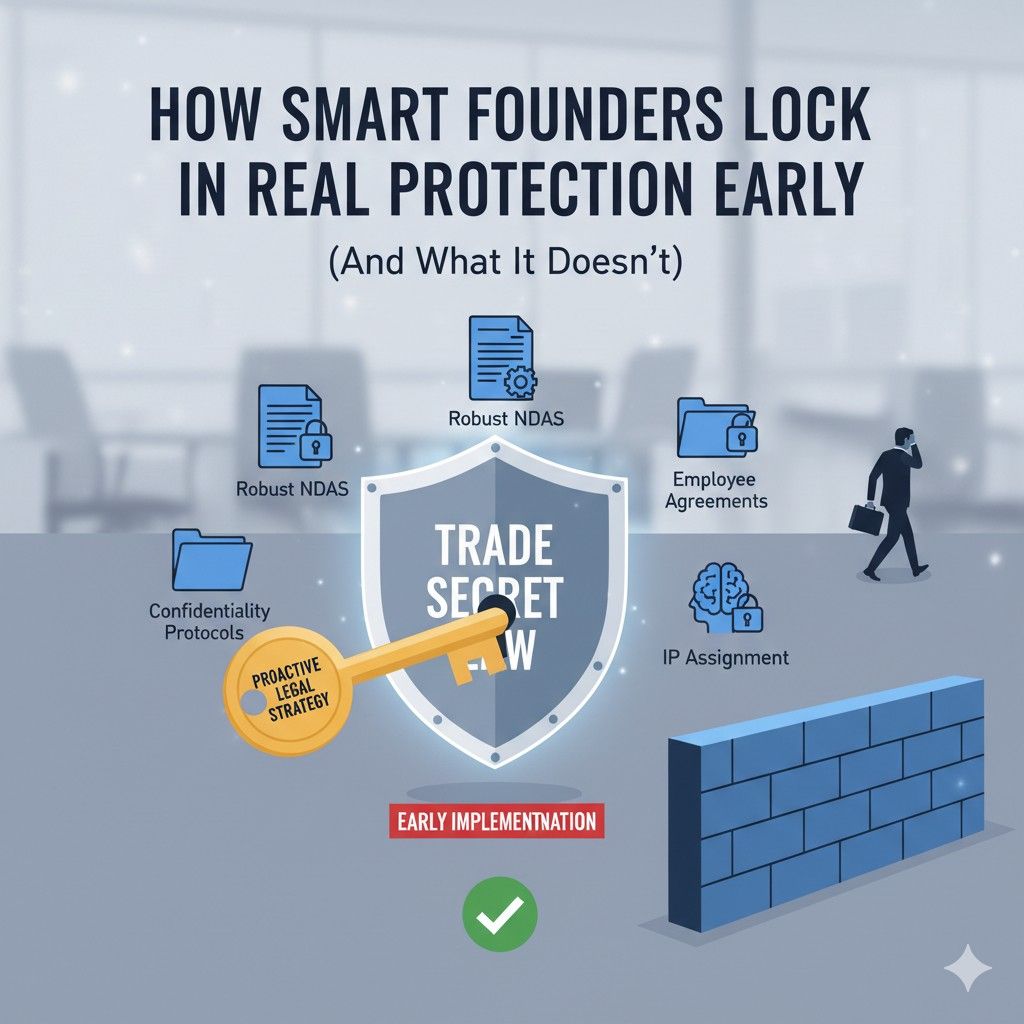
Smart founders know where to save time and where to get help. They use tools that combine software efficiency with real expert oversight, so mistakes are caught early instead of years later.
They Turn Protection Into Confidence
When protection is done right, founders stop worrying. They stop second-guessing conversations, hires, and growth decisions.
That confidence shows. It improves leadership, negotiation, and focus. Protection becomes an enabler, not a burden.
They Build for Change, Not Stability
Startups are defined by change. Products pivot. Markets shift. Teams evolve.
Strong protection is flexible. It survives change because it is tied to the core idea, not the current version. Smart founders design protection that grows with the company.
They Make Ownership Visible and Verifiable
Visibility matters. Clear records matter. When ownership can be shown quickly and confidently, power shifts.
Founders who do this well control the narrative. They are not defensive. They are prepared.
They Use Modern Tools Built for Startups
Old legal systems were built for slow, mature companies. Startups need something different.
Modern founders use tools designed for speed, clarity, and iteration. PowerPatent was built specifically for this reality.
It helps founders lock in ownership early, with smart software and real attorney oversight, without slowing down building. You can explore how that works at https://powerpatent.com/how-it-works.
They Understand That Protection Is a Leadership Skill
At the end of the day, protection reflects leadership. It shows how seriously a founder takes what they are building.
Smart founders do not outsource responsibility or ignore it. They face it early, handle it cleanly, and move forward stronger.
Wrapping It Up
By now, one thing should be clear. The old playbook no longer works. Non-competes are weakening, trade secrets are fragile, and relying on either alone puts modern startups at risk. Founders who keep using outdated tools are not being cautious. They are being exposed. The companies that win today understand a simple truth. Protection is not about controlling people. It is about owning what matters.
Leave a Reply