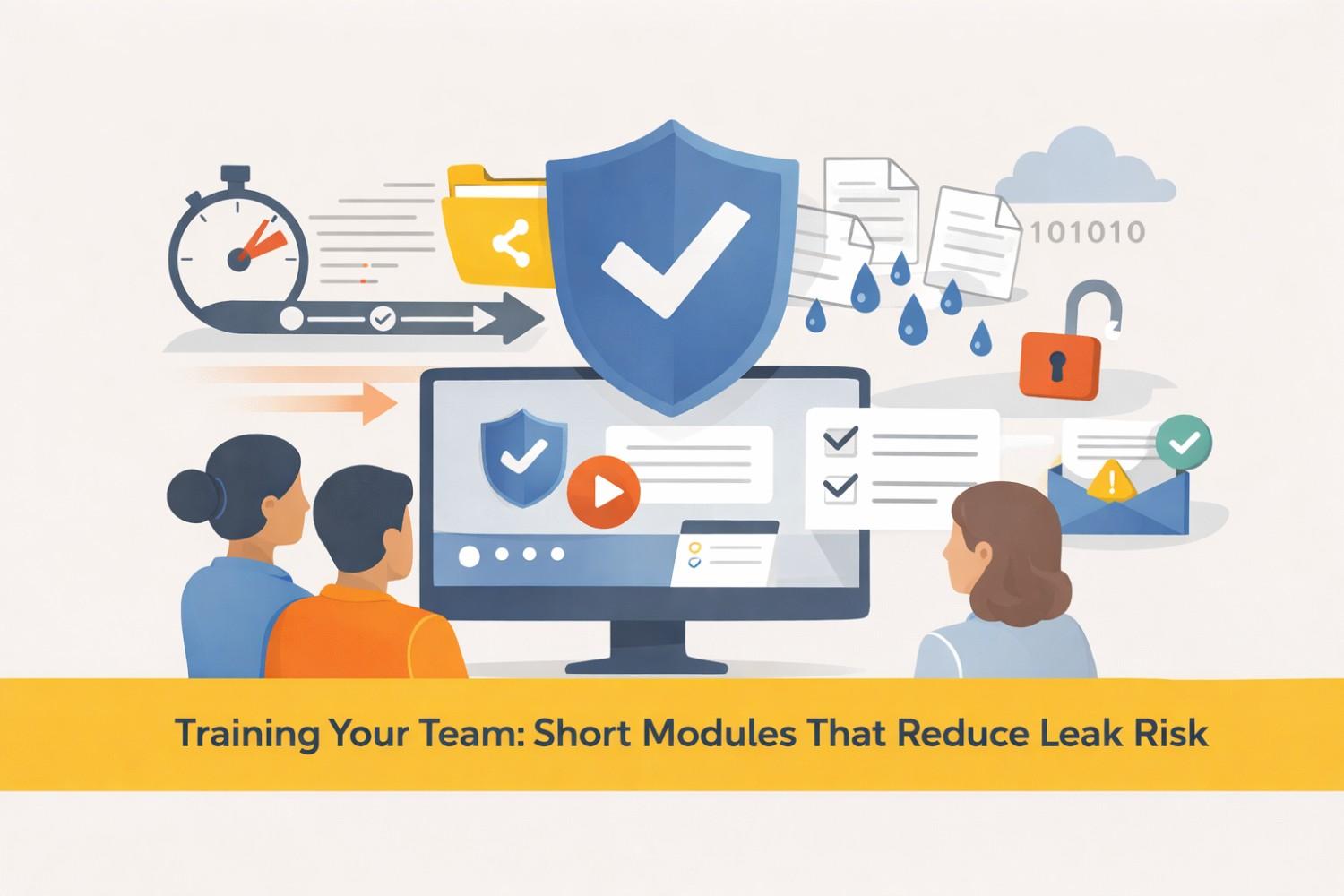
Most leaks do not come from bad people. They come from fast teams trying to move forward without clear rules. A file shared too widely, a demo shown too early, a quick answer given without thinking. This is how ideas slip out. Protection does not start with lawyers or paperwork. It starts with training. Short, clear training that fits into real workdays. Ten minutes of the right lesson can stop a costly mistake. When teams know what matters, what stays private, and how to act in small moments, protection becomes natural. Short modules make this possible. They teach without slowing work down, they stick because they are simple, and they turn safety into a habit instead of a chore.
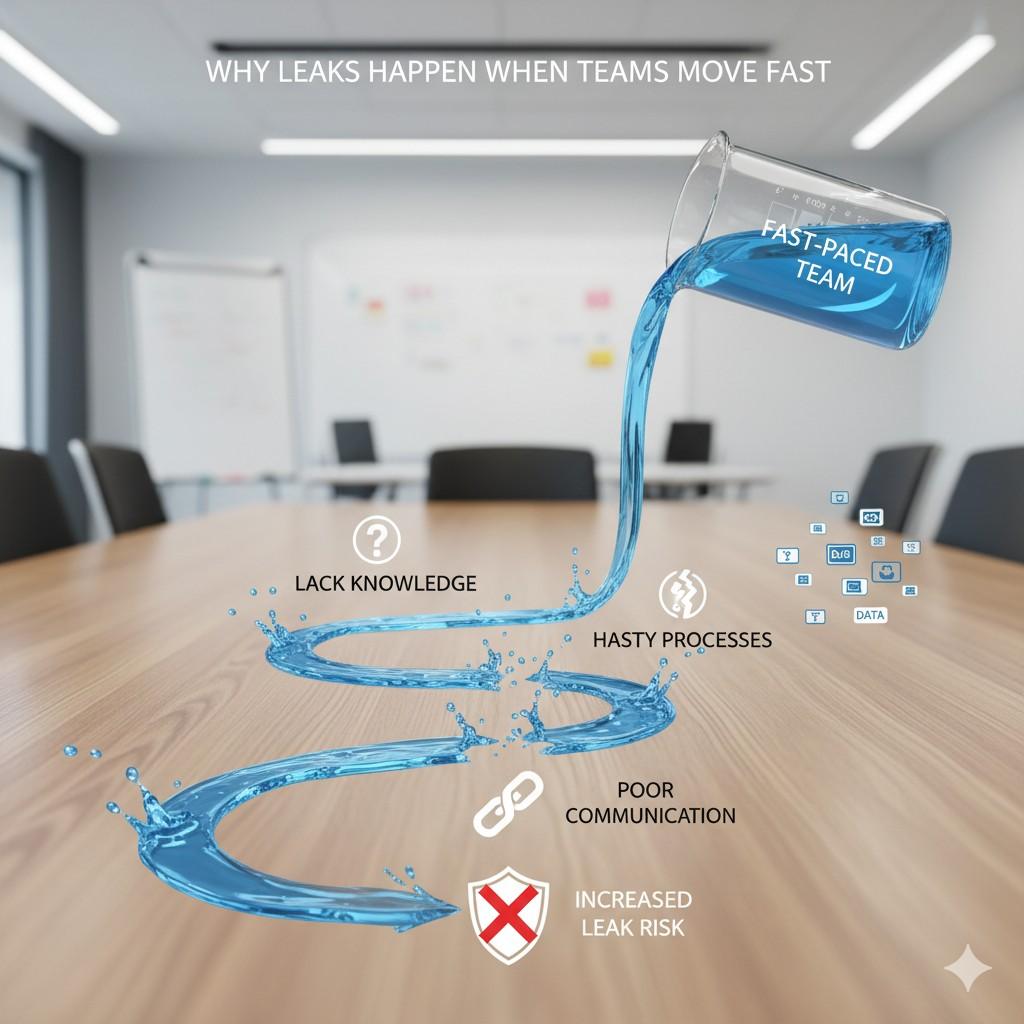
Why Leaks Happen When Teams Move Fast
Speed is often treated as a badge of honor. Teams celebrate fast shipping, quick decisions, and rapid growth. In early stages, this mindset helps companies survive.
But the same force that drives progress can quietly increase risk. When speed becomes the default setting, protection becomes an afterthought. Leaks do not happen because teams do not care.
They happen because speed changes how people behave, how they think, and how they communicate. To reduce leak risk, businesses must first understand these hidden patterns.
Speed Pushes People Into Auto Mode
When teams are moving fast, they stop thinking in full sentences. They think in actions. Send. Share. Reply. Forward. The brain shifts from careful reasoning to pattern matching.
People repeat what worked yesterday without stopping to ask if today is different. This is not laziness. It is efficiency.
The problem is that sensitive work often looks the same as non-sensitive work on the surface. A doc is a doc. A link is a link. When everything moves quickly, people treat all actions as equal.

Training should focus on breaking this auto mode in key moments. Not everywhere. Just where it matters.
Teaching teams to recognize “slow moments” inside fast work is one of the most powerful leak prevention tools a company can use.
Urgency Replaces Judgment
Urgency has a way of crowding out judgment. When a deal is on the line or a deadline is close, people focus on outcomes, not consequences. They want to be helpful.
They want to be responsive. In these moments, sharing more feels like the right move.
Businesses should train teams to separate urgency from importance. Just because something is urgent does not mean it needs full exposure.
Teams should learn how to give enough information to move forward without giving away the core.
This skill can be taught through real examples from the company’s own work, not abstract rules. When people see how to balance urgency and protection, they stop treating them as opposites.
Fast Growth Creates Uneven Understanding
In fast-growing teams, knowledge spreads unevenly. Early employees often know what is sensitive because they lived through its creation. Newer employees did not.
They join into a system that already exists, with invisible lines they cannot see.
This gap creates risk. People assume shared understanding that does not exist. Training should not assume anything. Even obvious things should be stated plainly.
What matters most. What gives the company its edge. What should never leave internal walls. Repeating this information in short modules helps align understanding across time, not just across roles.
Access Expands Faster Than Awareness
As teams scale, access grows quickly. Tools are connected. Permissions are granted. Files are shared across functions. This often happens before people fully understand the responsibility that comes with access.
Instead of locking everything down, smart companies focus on awareness. Training should explain why access exists, not just that it exists.

When people understand why they have access to something, they are more careful with it. Awareness creates restraint without enforcement. This is far more effective than relying on rules alone.
Context Gets Lost in Motion
Fast teams communicate in fragments. Short messages. Quick calls. Half explanations. This style keeps work moving, but it strips away context. Without context, people fill in the gaps themselves. This is where mistakes happen.
Training can help teams slow down communication just enough to preserve meaning. Teaching people to add one line of context when sharing something sensitive can make a big difference.
Context helps others understand how information should be handled. Without it, even well-meaning teammates may misuse what they receive.
Pressure Encourages Over-Sharing
Under pressure, people often believe that more information equals more trust. They think that sharing everything will speed up decisions or build confidence. In reality, over-sharing often creates confusion and risk.
Businesses should train teams to think in layers. What is needed now. What can wait. What should stay internal. This does not require complex frameworks.
It requires a simple habit of asking, “what is the smallest safe thing I can share to move this forward?” Over time, this habit reduces leaks without slowing deals or development.
Fast Feedback Loops Increase Exposure
Modern teams thrive on fast feedback. Early demos. Rough drafts. Work in progress. This is healthy for building great products. But early work is often the most sensitive. It shows direction, not just results.
Training should help teams separate internal feedback loops from external ones. Not all feedback needs to come from outside the company. When it does, teams should know how to sanitize what they show.
Teaching people how to demo safely, share partial views, or explain concepts without revealing implementation details is a powerful form of protection.
Assumptions Multiply at Speed
Speed creates assumptions because there is no time to check. People assume approvals happened. They assume agreements exist. They assume boundaries were already set.
Each assumption adds a small amount of risk. Together, they create real exposure.
Training should make checking feel normal, not cautious. Asking “is this okay to share?” should be seen as professional, not slow.
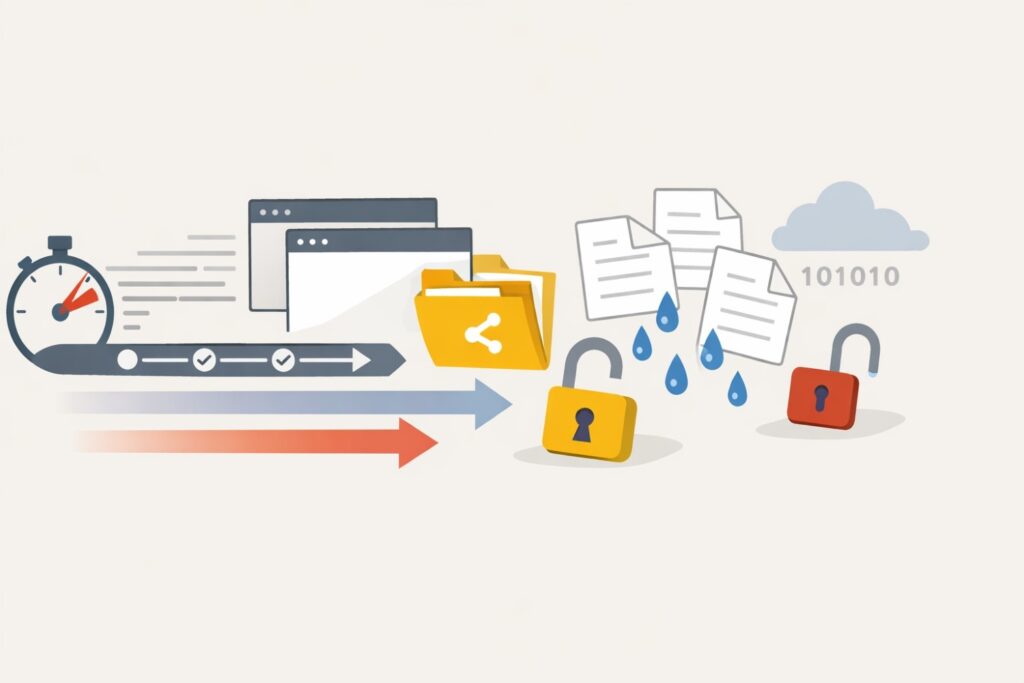
Leaders can reinforce this by responding positively when people check. When checking is rewarded, assumptions disappear.
Informal Communication Becomes Dangerous
Fast teams rely heavily on informal channels. Chat tools. Side conversations. Quick calls. These spaces feel safe, but they often lack controls. Information shared casually can travel far without anyone noticing.
Businesses should train teams to recognize that informal does not mean private.
A quick message can be copied. A casual call can be repeated. Teaching people to treat all communication as potentially permanent creates a healthy level of care without fear.
Speed Hides the Cost of Small Mistakes
The most dangerous thing about speed is that the cost of mistakes is delayed. A leak today may not hurt until months later. When consequences are not immediate, teams do not connect cause and effect.
Training can close this gap by telling real stories. Not scary stories, but honest ones. Stories about how small moments led to big outcomes.
When people see the long arc of a leak, they understand why small actions matter. This understanding changes behavior more than rules ever will.
Fast Teams Need Lightweight Guardrails
The goal is not to slow down. The goal is to guide. Fast teams perform best when they have clear edges. Short training modules act as these edges. They remind people where to move freely and where to pause.
When guardrails are light and clear, teams move faster with less risk. Protection becomes part of how work flows, not something added on top. This is how speed and safety coexist.
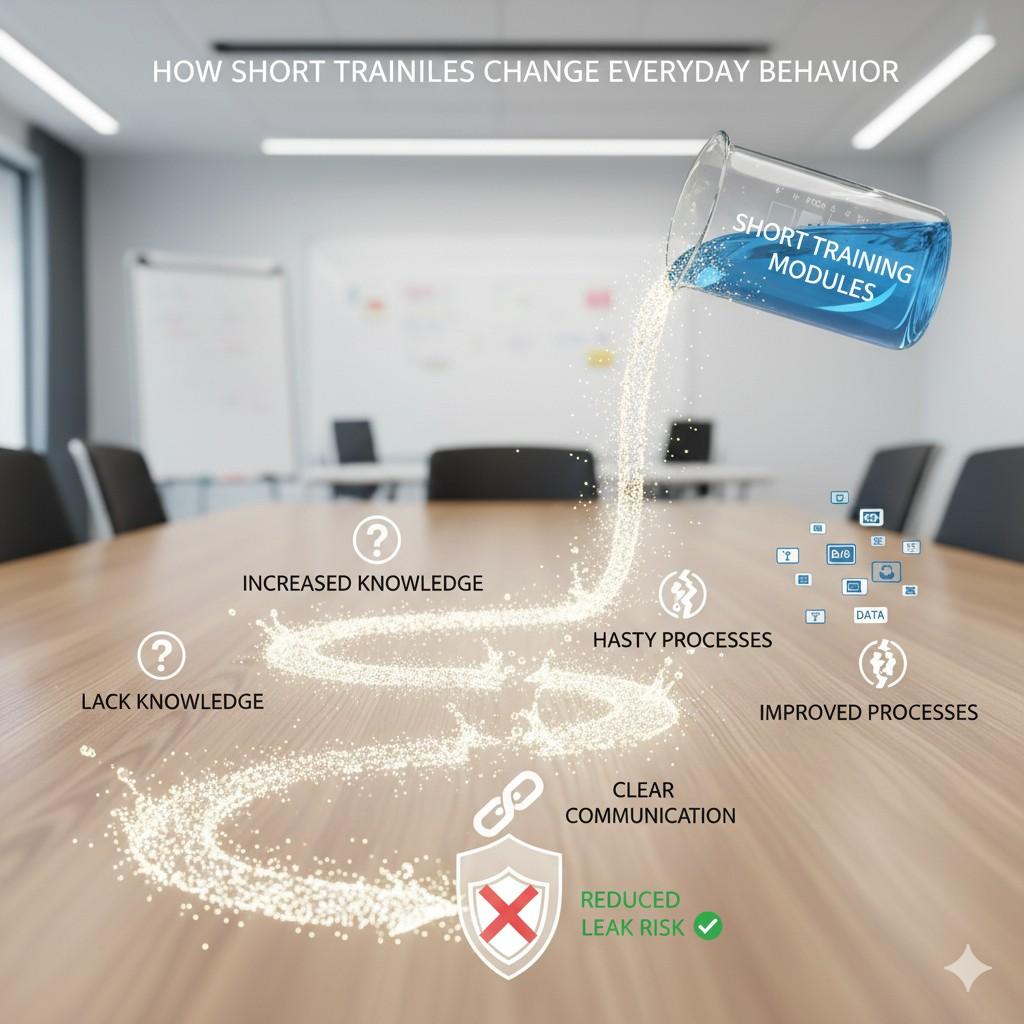
How Short Training Modules Change Everyday Behavior
Most companies fail at training not because the content is wrong, but because the format is wrong. Long sessions overwhelm people. Dense documents get ignored.
One-time talks fade from memory. When training feels heavy, teams push it aside to get back to work. Short training modules succeed because they respect how people actually work, think, and remember.
They fit into motion instead of fighting it. When designed well, they quietly reshape daily behavior without anyone feeling slowed down.
Short Training Matches How Adults Learn
Adults do not learn the same way children do. They learn through relevance. If something connects directly to a problem they face today, they remember it. If it feels abstract or distant, it disappears.
Short modules work because they focus on one idea at a time and tie it to a real moment.
A five or ten minute lesson that explains what to do before sharing a file is far more powerful than an hour-long session about security in general. It gives people something they can use immediately.
When learning leads straight to action, it sticks.
Small Lessons Create Mental Triggers
The goal of training is not knowledge. It is behavior. Short modules are effective because they create mental triggers. A simple phrase. A clear question.
A familiar example. These triggers show up later, right when a decision is about to be made.
For example, a short module that teaches teams to ask one simple question before sharing external information can change hundreds of future actions. People may forget the lesson itself, but they remember the question.
That question becomes a pause. That pause prevents leaks.
Repetition Without Annoyance
Repetition is essential for behavior change, but repetition often feels annoying. Long training repeated often frustrates teams. Short modules avoid this problem.
Because they are brief, they can be repeated without resistance.
When the same core idea appears in different short modules over time, it slowly becomes part of culture. People hear it during onboarding. They hear it again before a product launch.
They hear it again before a big partnership. Each time reinforces the last without feeling redundant. This layered repetition is how habits form.
Training Becomes Part of the Workflow
The best training does not live in a separate place. It lives next to the work. Short modules can be delivered at the right moment, not just at the start of employment. This timing is critical.
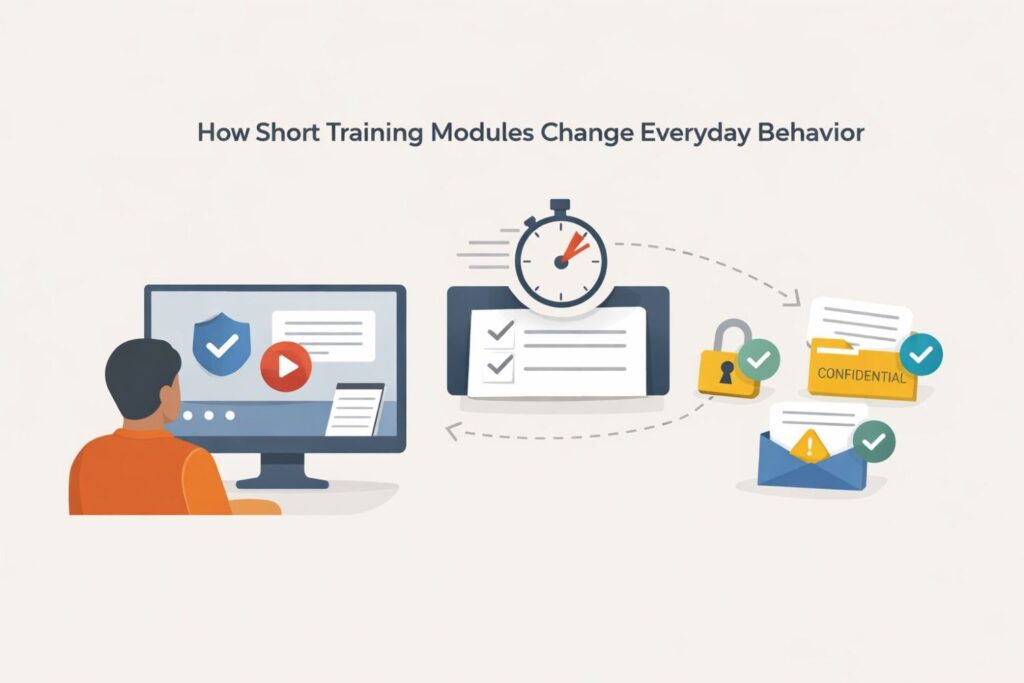
A short lesson about safe demos right before a sales push is far more effective than the same lesson given months earlier. When training meets people where they are, behavior changes naturally.
Businesses should think of training as a series of small nudges placed along the path of work, not a single event.
Short Modules Reduce Fear and Defensiveness
Long training sessions often feel like warnings. They can make teams nervous or defensive. Short modules feel lighter. They feel supportive instead of corrective. This tone matters.
When people feel trusted, they act responsibly. Short modules communicate trust by giving guidance without drama. They say, “Here is how to do this well,” not, “Here is what you did wrong.”
This approach builds confidence instead of fear, which leads to better decisions under pressure.
Focused Training Respects Attention
Attention is limited, especially in fast-moving companies. Short modules work because they respect this reality. They do not ask people to hold many ideas at once. They focus on one behavior, one risk, one solution.
This focus makes training clearer and more actionable. People leave knowing exactly what to do differently. Over time, many small changes add up to strong protection. This is far more effective than trying to cover everything at once.
Short Modules Make Expectations Visible
One of the biggest causes of leaks is unclear expectations. People are not sure what is okay and what is not. Short training modules make expectations visible and specific.
Instead of saying “be careful with information,” a short module can explain what careful looks like in a real situation. This clarity removes doubt. When expectations are clear, people stop guessing. When guessing stops, leaks drop.
Training Shifts Responsibility to the Moment
Policies often place responsibility at the top. Training places responsibility at the moment of action. Short modules teach people how to make good decisions when no one is watching.
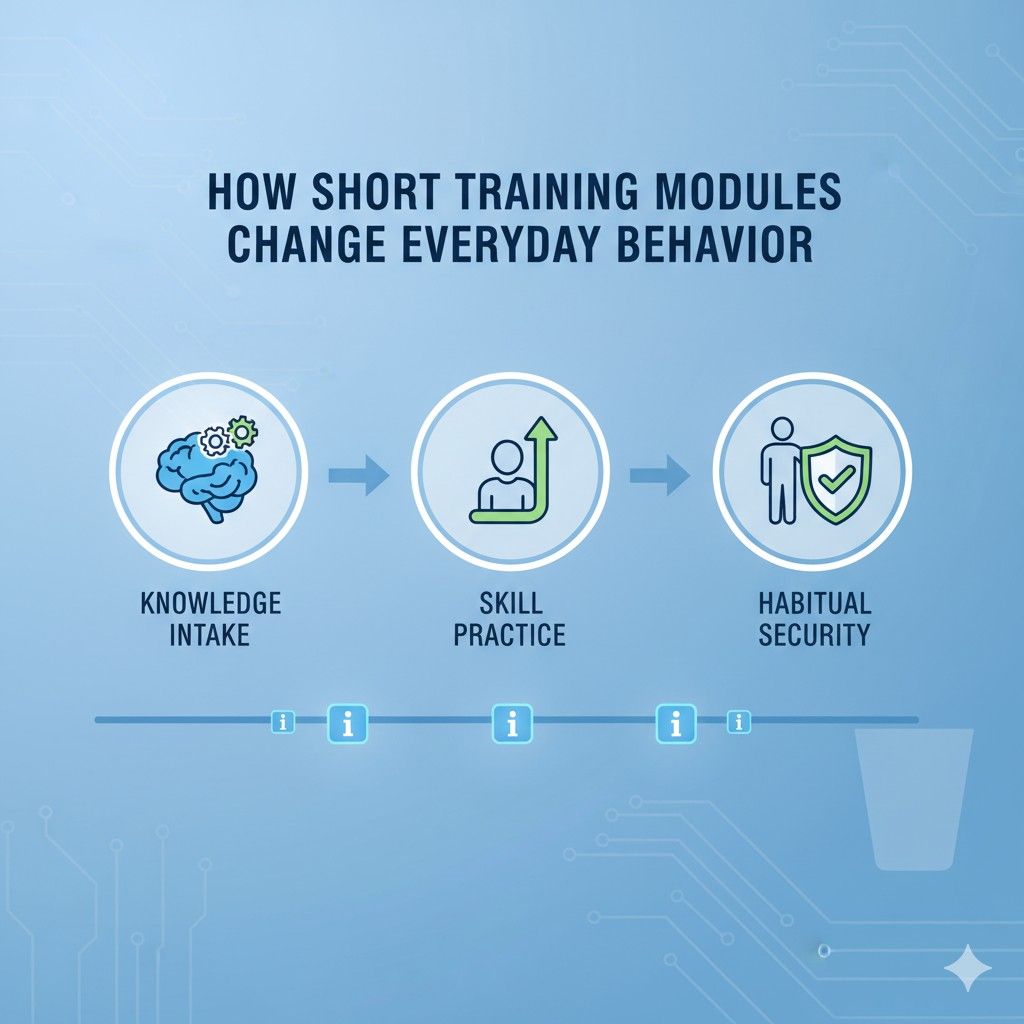
This shift is powerful. It turns every team member into a protector of the company’s edge. Instead of relying on approvals after the fact, businesses rely on good judgment before the fact. Short modules are how that judgment is built.
Learning Feels Like Support, Not Control
Fast teams resist anything that feels like control. They want autonomy. Short modules succeed because they support autonomy instead of limiting it. They give people tools, not restrictions.
When teams know how to act safely on their own, they need fewer rules. This balance is critical for scaling companies. Protection grows without bureaucracy. Freedom remains intact.
Modules Create a Shared Language
Short training modules often introduce simple phrases or ideas that teams start using with each other. This shared language becomes a subtle form of enforcement.
When someone says, “Let’s keep this internal,” or “Let’s share a lighter version,” they are using language learned through training.
This language allows teams to self-correct without escalation. It keeps protection peer-driven instead of top-down.
Training Adapts as the Company Grows
As companies evolve, risks change. Short modules are easy to update. New lessons can be added without reworking the entire program. This flexibility is critical for growing businesses.
Instead of rewriting policies, companies can introduce a new short module that addresses a new risk. This keeps training relevant and alive. When training stays current, behavior stays aligned.
Behavior Changes Before Incidents Happen
The true value of short training modules is that they work quietly. When they are effective, nothing happens. No leaks. No incidents. No crises.
This makes them easy to underestimate. But over time, their impact is massive. They shape how people think, speak, and share. They create a culture where protection is normal, not forced.
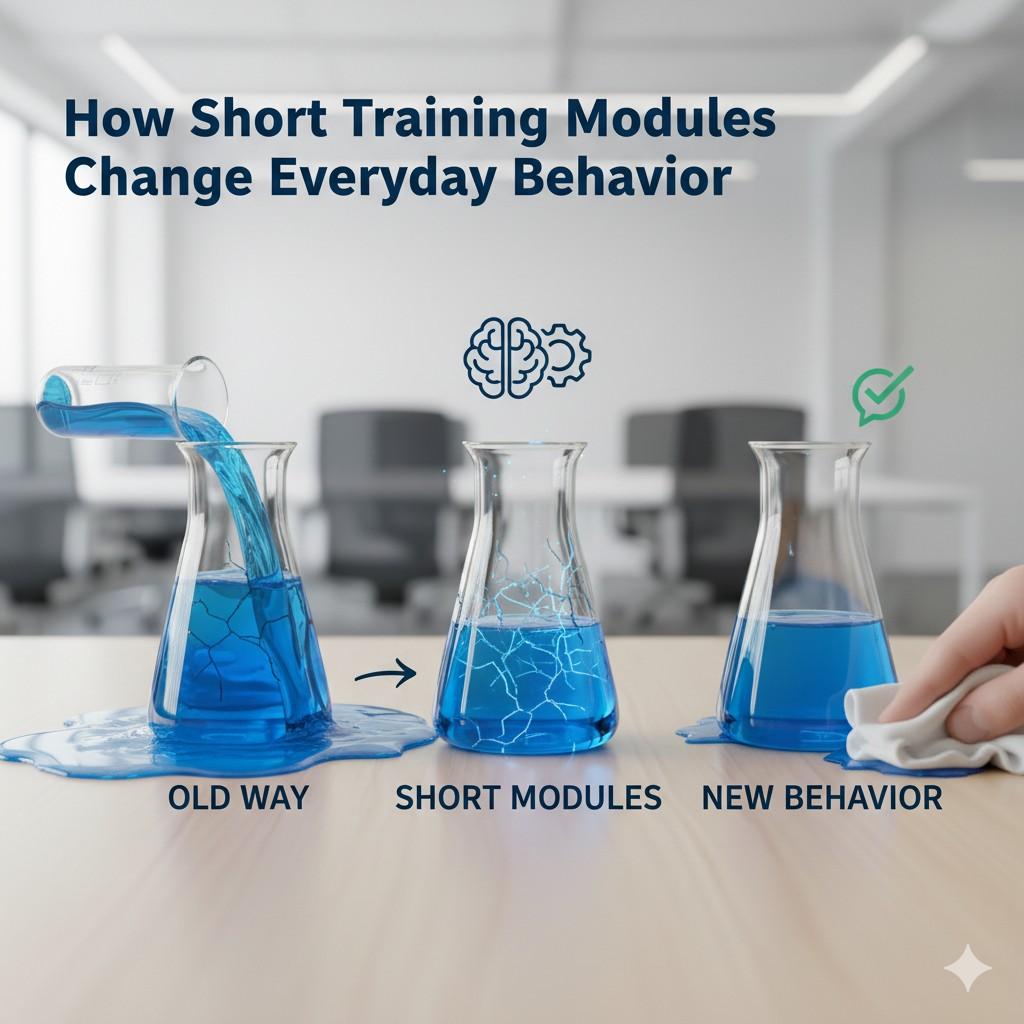
Short modules do not slow teams down. They sharpen them. They remove uncertainty. They replace hesitation with clarity. And in fast-moving companies, clarity is the most powerful protection of all.
Turning Protection Into a Daily Habit, Not a Burden
Most companies talk about protection as a rule set. Rules are easy to write and easy to forget. Habits are harder to build, but once they exist, they run on their own. The real goal of training is not awareness.
It is habit. When protection becomes a daily habit, teams stop thinking about it as extra work.
It simply becomes how work is done. This section explains how short training modules turn protection from a task into a natural part of everyday behavior.
Habits Form in Small Moments
Habits are not built in meetings. They are built in moments. The moment before a file is shared. The moment before a demo is shown. The moment before a question is answered.
These moments are short, often only seconds long, but they repeat every day.
Short training modules are designed for these moments. They teach people what to do right before action happens. Over time, the brain links the lesson to the moment.
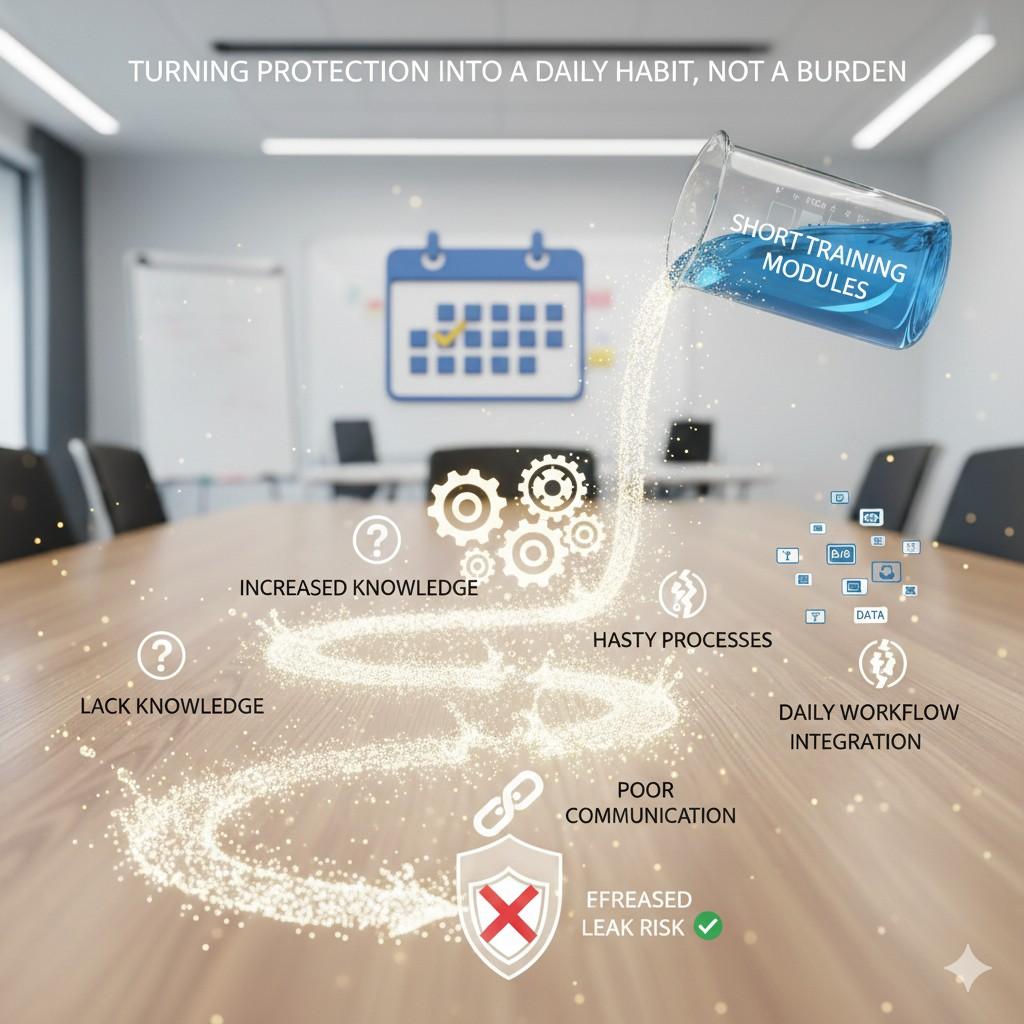
The pause becomes automatic. The question appears without effort. This is how protection turns into habit.
Consistency Beats Intensity Every Time
Many companies try to train once, intensely, and then move on. This rarely works. Intensity fades. Memory fades. What stays is what people see again and again in small ways.
Short modules work because they can be delivered consistently. A few minutes every few weeks creates far more impact than hours once a year.
This steady rhythm keeps protection top of mind without overwhelming anyone. Consistency is what turns learning into muscle memory.
Habits Remove the Feeling of Extra Work
One reason teams resist protection is because it feels like added effort. Another step. Another check. Another delay. Habits remove this feeling. When something is habitual, it no longer feels like work. It feels like part of the flow.
Short modules help create this effect by simplifying decisions. When people know exactly what to do in common situations, they stop debating. They stop hesitating.
They act quickly and safely at the same time. This is the sweet spot for fast teams.
Clear Defaults Drive Safe Behavior
People follow defaults. When unsure, they choose the easiest path. Training should define safe defaults so that the easiest choice is also the safest one.
Short modules can clearly state these defaults. For example, what information stays internal by default. What version of a document is safe to share by default.
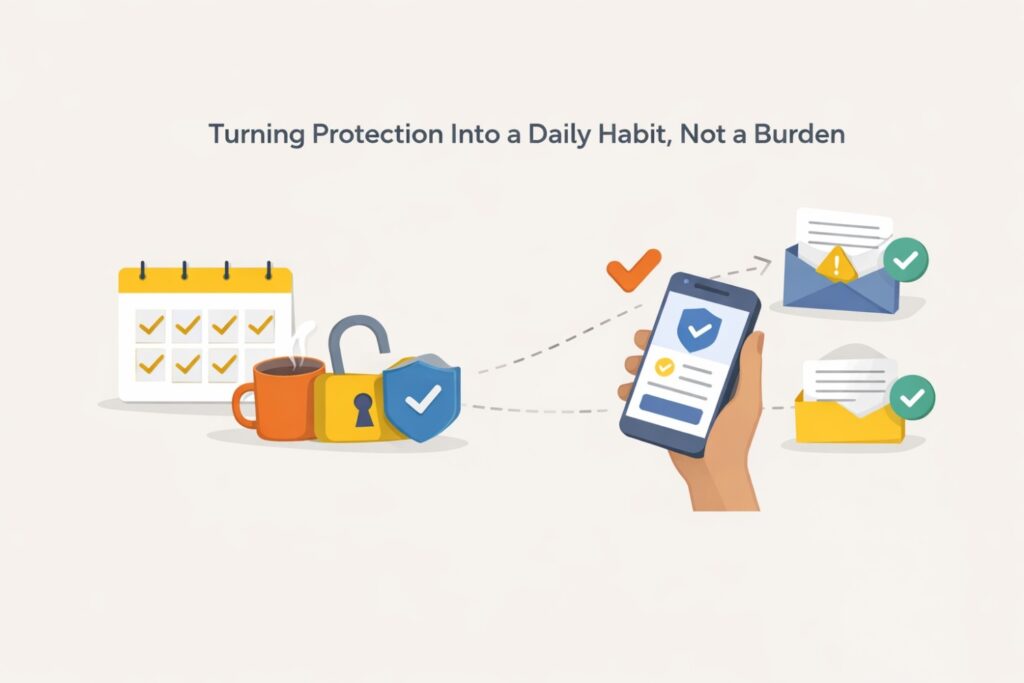
When people know the default, they do not need to think. This reduces both risk and mental load.
Habits Spread Through Observation
People learn habits by watching others. When trained behaviors are visible, they spread quickly. One person asking a smart question before sharing sets an example. Another person follows. Soon it becomes normal.
Short modules support this by giving teams shared behaviors to model. When many people learn the same small habit, it becomes part of the group’s identity. Protection stops being a personal burden and becomes a shared standard.
Removing Fear From Protection
Fear-based protection does not scale. When people act out of fear, they hide mistakes and avoid questions. This increases risk over time.
Habit-based protection removes fear. It replaces it with clarity. People know what to do and why. Short modules explain the reasoning behind behaviors in simple terms.
When people understand the purpose, they feel confident instead of cautious. Confidence leads to better decisions under pressure.
Making the Right Action Feel Normal
Normalization is powerful. When the right action feels normal, people stop questioning it. They stop feeling awkward. They stop worrying about looking slow or difficult.
Short training modules normalize safe behavior by presenting it as the expected way of working. Not special. Not exceptional. Just normal. Over time, unsafe behavior starts to feel unusual instead of the other way around.
Habits Reduce the Need for Policing
When protection relies on rules, it needs enforcement. When protection relies on habits, it needs reminders. This is a major shift.
Short modules act as reminders rather than controls. They refresh habits without accusing anyone. This reduces tension between teams and leadership.
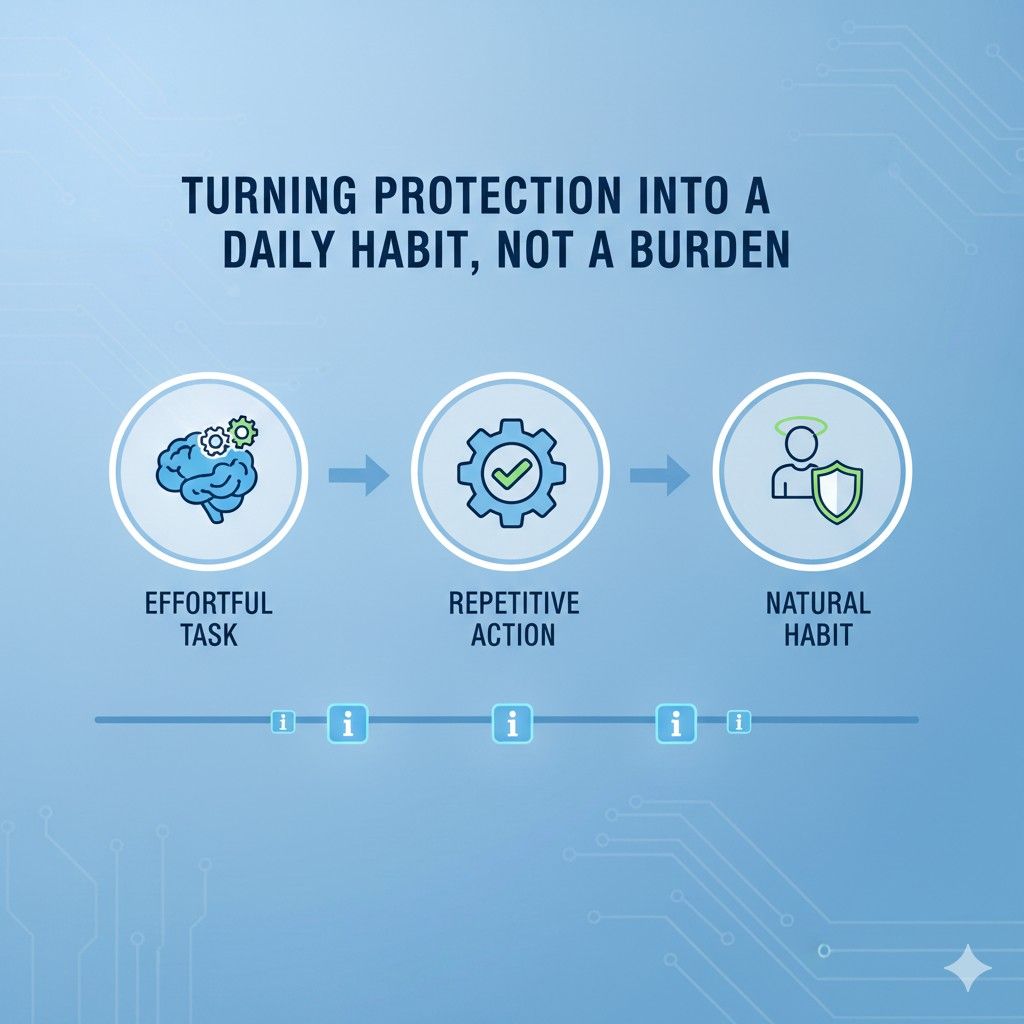
It also frees leaders from constant oversight. Trust increases because behavior becomes reliable.
Daily Habits Protect During Stress
The true test of protection is stress. Deadlines. Deals. Crises. In these moments, people fall back on habits, not instructions.
Short modules prepare teams for stress by building habits ahead of time. When pressure hits, people do not need to remember policies. They simply act as they have practiced. This is when habits prove their value.
Habits Scale Better Than Rules
As companies grow, rules multiply. Complexity increases. Habits scale more cleanly. A habit learned by ten people can be learned by a hundred without change.
Short modules make habits easy to pass along. New hires pick them up quickly. Teams stay aligned even as roles change. Protection remains consistent without constant rewriting.
Turning Training Into Culture
Culture is just shared habits. When protection is habitual, it becomes cultural. People protect the company not because they are told to, but because it feels right.
Short training modules are the building blocks of this culture. Each module adds one small behavior. Over time, these behaviors stack. What begins as training becomes instinct. What begins as effort becomes identity.
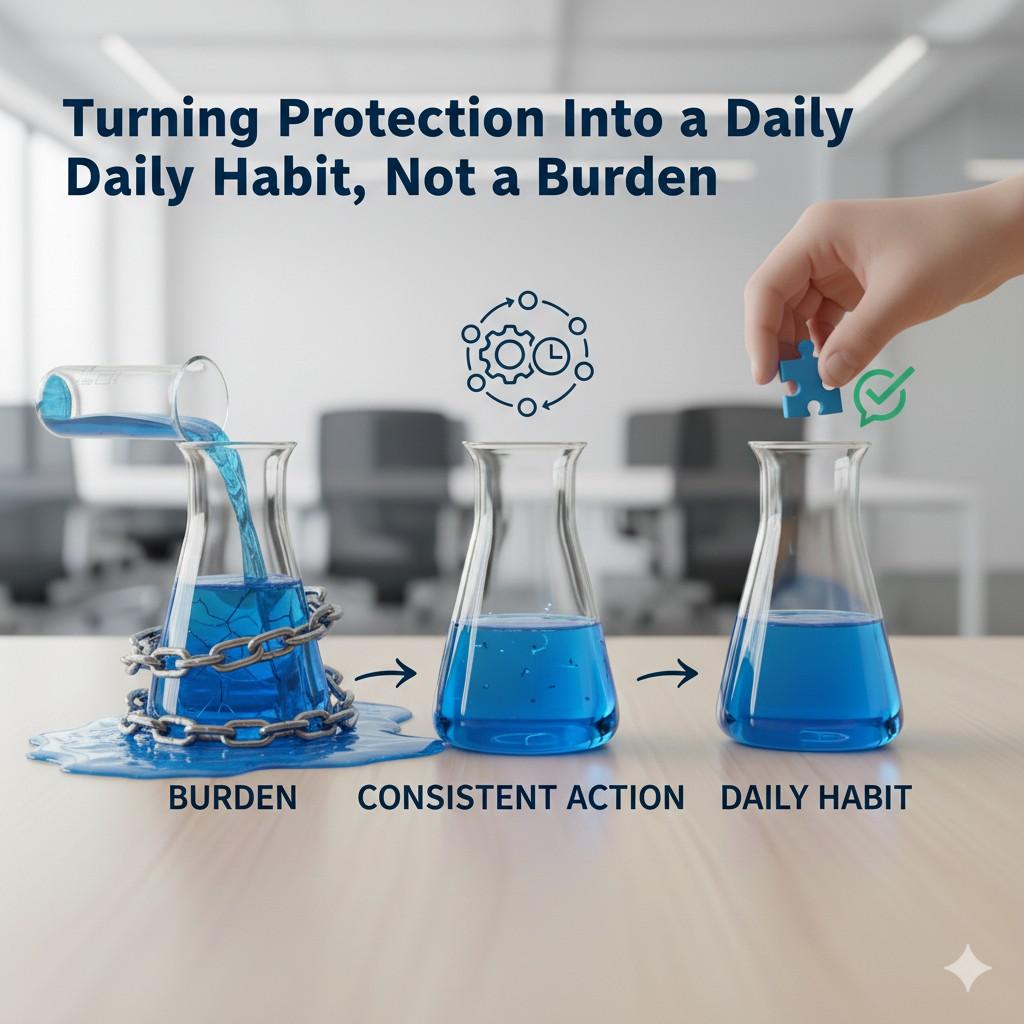
This is how protection stops feeling like a burden. It becomes a quiet strength that supports speed instead of fighting it.
Wrapping It Up
Leak risk is not a people problem. It is a process problem. More specifically, it is a training problem. Fast teams do not leak because they are careless. They leak because they are focused, moving quickly, and trying to do the right thing without clear guidance in the moments that matter most. Short training modules solve this in a way long policies never can. They meet teams where work actually happens. They shape behavior in real time, not in theory. They replace guessing with clarity, fear with confidence, and rules with habits. Most importantly, they allow companies to stay fast without becoming fragile.
Leave a Reply