Most founders don’t think about their patent portfolio until they have to. Maybe a new investor asks about it. Maybe a competitor starts getting close. Maybe a big customer wants proof that your tech is truly yours. And suddenly you’re staring at a stack of filings, old drafts, half-written ideas, and office actions you meant to respond to months ago.
Why Every Startup Needs a Patent Portfolio Health Check
Before a startup grows, things move fast. Ideas shift. Code evolves. Models change. What you filed last year may no longer describe what you are actually building today.
A patent portfolio health check helps you slow down just long enough to make sure every piece of protection still works for the business you are running right now, not the version of your company that existed months or years ago.
When done well, it gives you clarity, confidence, and control. It turns your IP from a dusty set of documents into a living asset that supports your roadmap, your fundraising goals, and your market position.
Seeing Your Patents as a Working Part of the Business
Most founders treat patents like a one-time task. You file something early, maybe add a provisional or two, then get pulled back into building the product.
Over time, the portfolio stops matching the company. A health check brings your attention back to the core purpose of IP: protecting what gives your product its edge.
It helps you reconnect the dots between your tech, your go-to-market strategy, and the inventions that deserve real, long-term ownership.
During a health check, you start to see your filings the same way investors see them.
Not as paperwork, but as proof of depth. Proof that your advantage is real. Proof that you are not just another team writing code, but a company creating something others cannot easily recreate.
Finding Silent Gaps That Can Become Expensive Later
Almost every startup has quiet gaps they do not see. Maybe a new algorithm was shipped before anyone wrote down the underlying method.
Maybe your hardware changed and now your claims no longer match your actual design. Maybe a key workflow is still sitting in a private Slack thread instead of a patent draft.
These gaps become dangerous when the company enters a new stage. A big customer may ask for your IP position.
A partner might want exclusivity. A competitor could file something close to your idea. A health check helps you spot these issues long before they show up in a board meeting or due-diligence call.
The most valuable part of this process is how it forces you to map your real innovation, not just the parts that were easiest to file.
It becomes clear which features are now core, which ideas deserve filings, which are safe to leave alone, and which might need rewriting so they truly match the product you are scaling.
Protecting What You Plan to Build Next
A powerful portfolio is not just about what you already built. It is also about where you are going. A health check helps you line up your next steps.
You look at your roadmap and ask whether your future features, models, and technology layers will be covered when they ship. Many founders only file once a feature is already live.
That timing creates a risk window where competitors can move fast. When your patents and roadmap are aligned, you create a protective shell around your next releases before they even reach customers.
This forward-looking approach also keeps your budget under control. Instead of rushing into last-minute filings, you plan ahead and file strategically.
You decide what deserves protection, what can wait, and what is not worth the cost. You avoid wasting money on filings that do not move the business forward.
Making Your Company Easier to Fund, Acquire, or Partner With
Investors, acquirers, and enterprise buyers all think in one simple way: if your technology is important, they want to know it cannot be taken away. A strong patent portfolio becomes a trust signal.
A health check strengthens that signal by ensuring your filings are clean, updated, organized, and aligned with where your company is going.
When your portfolio is clear and defensible, it removes friction. Deals move faster because the other side is not worried about surprises.
They can see that the key inventions behind your product are yours alone, and that you took the time to protect them properly. This can boost valuation, speed up negotiations, and reduce the number of questions you get during due diligence.
A health check also helps you avoid uncomfortable moments. No founder wants to be in a fundraising meeting where an investor asks about IP, and the answer requires guessing.
With a clean, structured portfolio, you can answer confidently and clearly, and every answer strengthens the story you are telling about your company.
Giving Founders a Sense of Control Instead of Confusion
A lot of founders secretly feel unsure about their patents. They do not know what is strong or weak. They worry they missed something important. They wonder if a competitor could challenge them or design around them.
This uncertainty creates hesitation. A health check replaces that uncertainty with a real sense of command.
You understand what you own. You understand what you should improve. You understand what is coming next. And you know exactly how your filings support the business you are growing. Instead of reacting to IP issues, you lead with intention.
This clarity also makes conversations inside your team smoother. Engineering knows which features need invention docs. Product knows when to loop in patent review.
Leadership knows which filings support strategic goals. Everything becomes easier when the portfolio stops being a mystery and becomes a real part of your operating rhythm.
Turning Your Patents Into a Real Competitive Moat
A patent only matters if it blocks someone from copying the parts of your product that matter most. A health check looks closely at whether your filings actually do this.
You may discover that an old filing only covers a small piece of your system, or that a claim was written too narrowly, or that a competitor could easily build around it.
Once you see this, you can take action by filing continuations, adding new claims, updating descriptions, or creating new filings that match your current architecture.
The goal is simple: when someone tries to follow your path, they should hit a wall. A portfolio that has been reviewed, updated, and aligned with your product gives you that wall.
It is not about having the most patents. It is about having the right ones. A few strong filings that cover your core workflows can give you more real protection than a dozen scattered ones.
Making Patents Feel Simple Instead of Stressful
One overlooked benefit of a health check is how much simpler it makes the entire patent process. Once you know the state of your portfolio, every future step becomes easier.
Filing becomes faster. Drafting becomes cleaner. Working with attorneys becomes cheaper. Your team no longer feels overwhelmed because the entire system has shape and direction.
This is exactly the experience PowerPatent was built for. You can see how our smart software and attorney-backed workflow make this process faster, clearer, and more founder-friendly at https://powerpatent.com/how-it-works.
When you have the right tools, a health check stops feeling like a task and starts feeling like a simple step that strengthens your company every quarter.
How to Spot Weak Patents Before They Become Big Problems
Every startup assumes its patents are solid until something forces them to take a closer look. The truth is, most weak patents look fine on the surface. They have the right paperwork, the right dates, and the right titles.
But internally they may be thin, outdated, too narrow, or disconnected from the real value of your technology.
This section helps you understand what weakness actually looks like so you can fix it before it slows down a deal, weakens your moat, or limits your ability to defend your market.
Understanding What Makes a Patent Weak
A weak patent is usually not weak because it was filed poorly. It becomes weak because the company evolves, and the patent stays frozen in time. Maybe the product changed.
Maybe the architecture got reworked. Maybe the core insight behind your original invention is now only a small part of your system.
As your tech grows, a patent that once felt strong may no longer describe anything central to your product.
Weakness also appears when claims are written too narrowly. This often happens when founders rush filings or try to save cost by writing applications without deep strategic review.
Narrow claims allow competitors to design around your work by changing one small step. When that happens, your patent sits in your portfolio but offers no real power.
There is another quiet weakness that founders rarely see. If your patent focuses only on a feature and not the mechanism behind the feature, it becomes easier for others to replicate the idea using a different technique.
A strong patent protects the logic, not just the surface. A weak one protects only what you can see, not what makes it work.
Checking Whether the Claims Actually Cover Your Real Advantage
A simple way to test strength is to ask whether your core competitive edge is fully covered. You do not need legal training for this. You just need to look at what truly gives your product its magic.
If you strip your product down to the thing no one else can copy, is that thing described clearly in your filings? If not, the patent may not be serving you.
This is a moment where founders often discover surprises. They read an old filing and realize it covers an early version of the product that no longer exists.
Or they see that the most important insight behind their model is missing because no one documented it at the time.
A portfolio health check helps you catch these gaps early, before a competitor uses them as a path into your market.
When you identify these gaps, you gain the chance to fix them. You may file new applications that match your updated architecture. You may add continuation filings to broaden coverage.
You may revise claim strategy to match the competitive landscape. These adjustments turn old filings into modern defenses.
Seeing Where Competitors Could Get Around You
One of the most useful parts of identifying weak patents is looking at your filings through the eyes of a competitor. If another team wanted to build a similar feature, could they avoid infringing by changing a small detail?
Could they swap out one step, one workflow, one model, or one part of your system and stay clear of your claims? If the answer is yes, the patent may be too narrow.
Competitors often exploit the smallest gaps. If a claim requires something to happen in a specific order, they reverse it.
If a claim depends on one type of data, they switch to another. If a claim describes a single implementation, they build a parallel one.
You want claims that describe the principle, not a single version of the principle. You want filings that defend your idea in the wide sense, not in a brittle one.
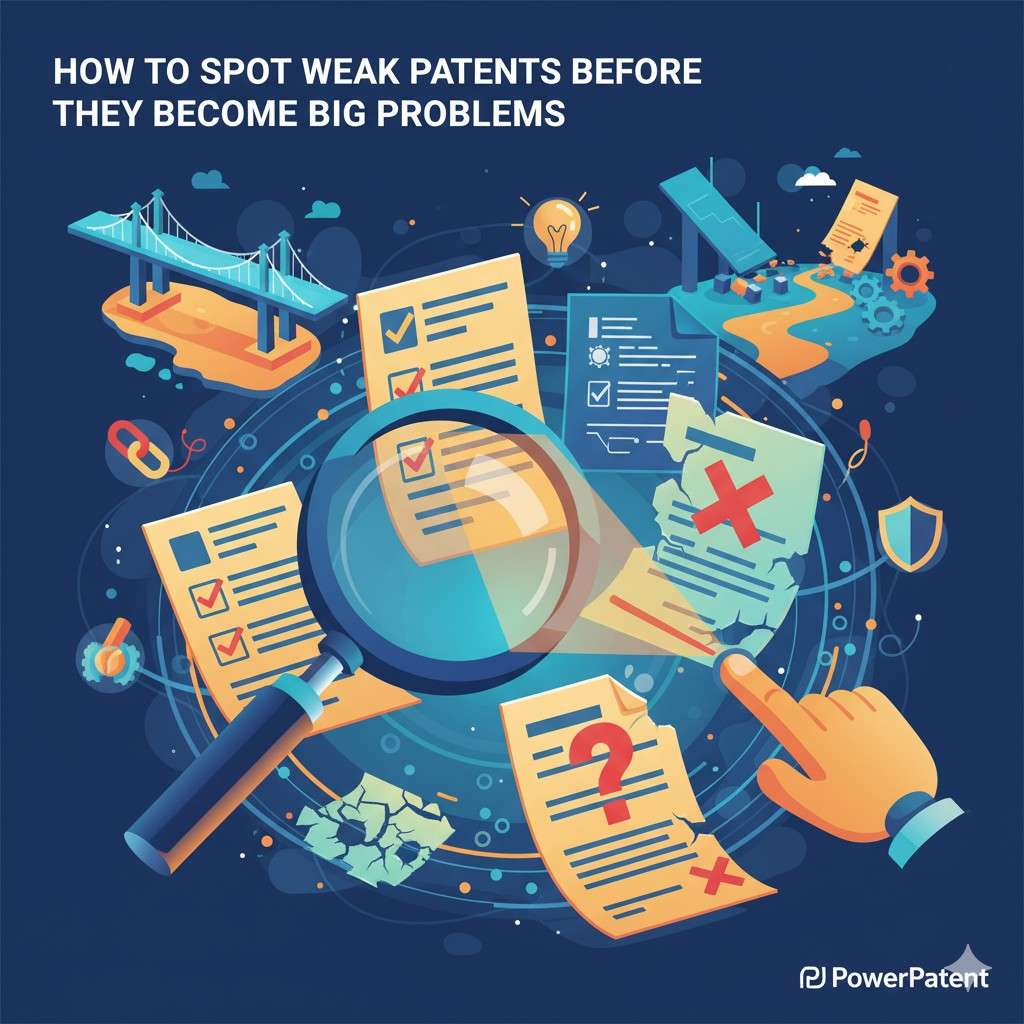
A health check gives you a chance to strengthen this. You can identify where the claims limit you and where you need more flexibility. You can broaden the conceptual framing so the protection matches your real innovation, not just your first prototype.
Making Sure Your Filings Are Not Missing Critical Technical Details
Another common weakness appears when a patent lacks enough detail to support strong claims. This is easy to miss because the application may look complete.
It may have diagrams, flow steps, and architecture descriptions. But strong claims come from strong explanations. If an examiner or court ever questions your filing, you want the application to explain exactly how your invention works.
If your patent describes only high-level ideas without technical grounding, it becomes harder to enforce. It may also allow others to argue that you did not fully describe your invention at the time of filing.
This can weaken your position and limit how broad your claims can be.
During a health check, you read your filings with fresh eyes. You ask a simple question: would an expert understand exactly what makes this invention special?
If not, you know where to strengthen future filings. This clarity also helps you capture new inventions more accurately as your product grows.
Keeping Your Claims Ahead of Industry Shifts
A patent can become weak not because of something you did wrong, but because the market changed. Maybe a new technique became popular. Maybe a new standard emerged.
Maybe a different architecture gained adoption. When the field moves, a patent that once felt cutting-edge may no longer block important paths.
This matters because patents should not only protect what you invented at a moment in time; they should also protect the position your company plans to take as the field evolves.
If the industry shifts and your claims do not shift with it, competitors may find space to innovate around you. A regular health check keeps your filings aligned with market reality.
By seeing where your claims still align with the future and where they fall behind, you can adapt. You can file new applications that expand into emerging areas.
You can update descriptions to match new architectures. You can steer your portfolio so it grows ahead of the field, not behind it.
Using Weakness as a Map for New Strength
The most empowering part of spotting weak patents is that every weakness becomes a roadmap. It tells you exactly where to improve. A weak claim shows you where you need broader protection.
A missing detail shows you what needs better documentation. An outdated description shows you where your invention has grown. A gap in your coverage shows you where new filings can become strategic assets.
Instead of seeing weakness as a problem, you begin to see it as guidance. It shows you where your competitive moat can become deeper.
It shows you where your product has evolved beyond your IP. It shows you where your next filings will create real value.
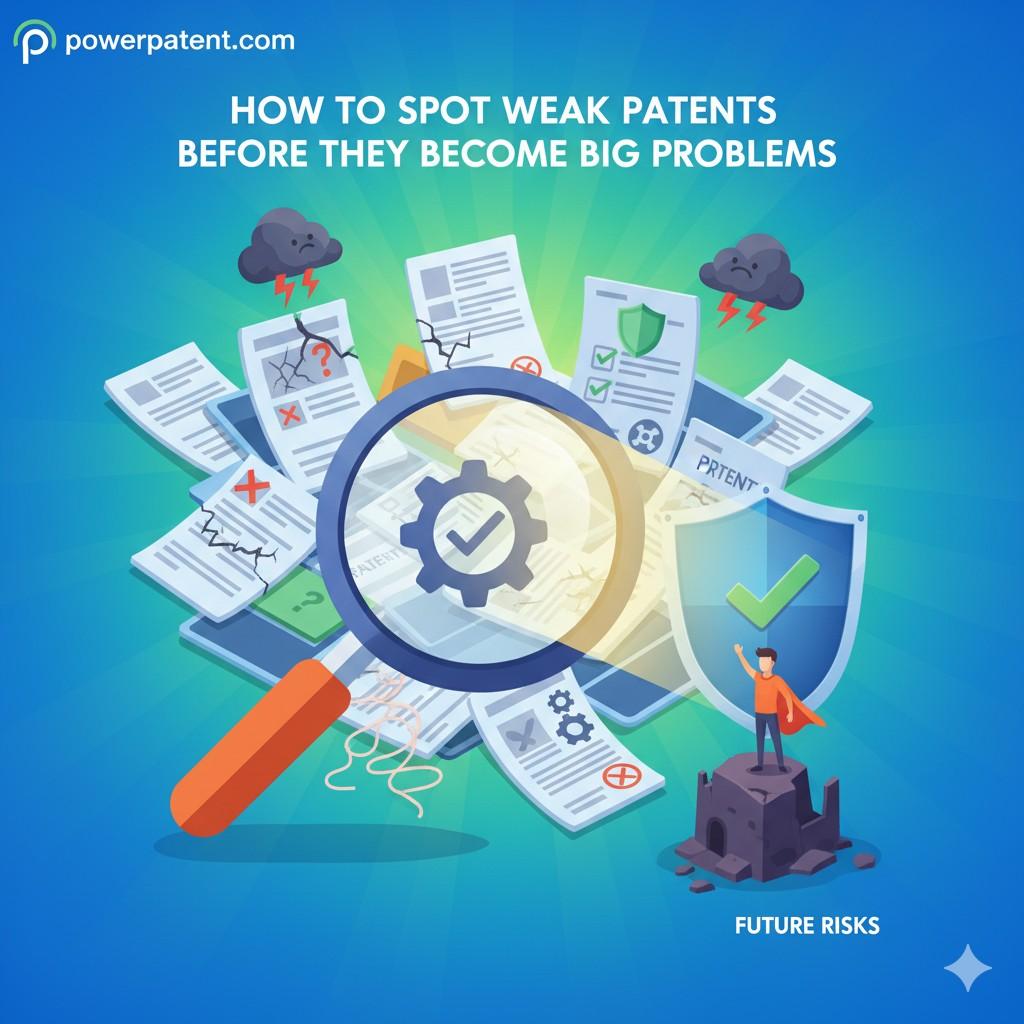
This is also where working with the right tools matters. PowerPatent helps founders run this entire process quickly, clearly, and with real attorney insight. You can see how it works at https://powerpatent.com/how-it-works. Once you see the weak points, strengthening them becomes simple.
Making Sure Your Portfolio Matches Your Product and Roadmap
As startups grow, the product moves forward in ways the patents often do not. Features reshape. Back-end engines get rebuilt. Machine learning models evolve. Hardware changes form. Entire workflows get replaced.
And while the product keeps maturing, the portfolio stays frozen in the moment each filing was created. This misalignment creates quiet risk.
A patent that no longer connects to your actual product loses its defensive power and stops helping you in key moments like fundraising, partnerships, or diligence.
That is why this part of the health check matters so much. It ensures your patents protect the company you are today and the company you plan to become.
Understanding Where Your Product Has Outgrown Your Early Filings
When you review your portfolio with fresh eyes, the first thing you notice is how different your current product is from your earlier versions. Startups ship fast. They pivot. They optimize.
They remove steps that felt essential a year ago. They replace old logic with new architecture. And when this happens, filings can become disconnected from the heart of your product.
A patent written for the first version of a model may not capture the new insight that makes the current version stronger. A filing describing an early workflow might not mention the new pipeline that actually gives you the edge.
A provisional written in a rush may focus on something you no longer even use. This is normal. What matters is catching it early so you can realign your IP with your latest innovation.
The moment you see these mismatches, you begin to understand where your filings need to evolve.

You can update claim strategy, capture the new architecture, and protect the new insights that you now rely on. Instead of letting your patents drift behind your product, you bring them back into sync.
Capturing the Real Core of Your Technology
Every product has a core. It may be a method, a data process, a model behavior, a control system, or a mechanism that no competitor can easily recreate. But that core often changes as products mature.
Early on, you might believe one feature is the reason people will choose your product.
Later, you realize the real value comes from something deeper. Maybe the magic is in how your system collects signals. Maybe it is how you process them. Maybe it is how your tool adapts to user behavior.
When you look at your patents during a health check, you ask whether the filings truly protect this deeper layer. If your filings only cover surface features, your moat may be thinner than you think.
If your filings focus on early implementations instead of the principles behind your advantage, competitors may find room to move.
This process is not about rewriting history. It is about learning from it. Once you understand the real engine behind your product, you can create stronger protection around it.
You can file applications that describe the principles, not just the early prototypes. You can expand claims to match the real value of your system. And you can ensure your patents defend not only what you built, but why it works.
Making Your Patents Track Your Roadmap
A portfolio that only describes what you have already shipped is always one step behind the market. Strong portfolios look forward.
They match the roadmap. They cover what you plan to build months before it arrives in users’ hands. When your patents and roadmap grow together, you create a protective shield around your future releases.
A health check helps you see where your roadmap is moving faster than your filings. You may discover entire feature sets that are not yet documented. You may spot new models or algorithms that deserve immediate protection.
You may notice upcoming integrations or hardware improvements that competitors could try to mimic unless you secure them early.
This kind of planning gives you speed and safety at the same time. You launch features knowing the core ideas are already protected.
You talk to customers and investors without worrying that someone could steal your next release.

And you steer your patent budget toward the parts of your roadmap that produce real competitive advantage.
Identifying Features That Need New Filings
As you analyze how the product has evolved, you naturally uncover areas where new filings are needed. These are not always the big headlines of your roadmap.
Sometimes the most important inventions hide in the small things. A new optimization in your inference engine.
A clever data routing method. A subtle decision logic that turns a slow model into a fast one. A workflow that quietly improves accuracy.
During a portfolio health check, these overlooked pieces often rise to the surface. You begin to see the difference between features your users notice and mechanisms that truly drive your advantage.
The mechanisms matter more. Those are the parts that deserve the strongest, clearest filings.
When you start looking at your product through this lens, you realize how much value is sitting inside your code and architecture. But unless you write it down and protect it, it remains vulnerable.
New filings turn those hidden strengths into durable assets that make your company harder to copy.
Aligning Technical Teams and Patent Strategy
A portfolio health check also helps you bring engineering, product, and leadership into the same conversation. In most startups, these groups operate on different rhythms.
Engineering ships fast. Product plans ahead. Leadership makes decisions based on what moves the business. Patent filings happen when someone remembers to do them. This rhythm mismatch causes gaps.
During review, you often find places where engineers built a brilliant new system but no one captured the idea in a patent draft. Or where product planned an upcoming release but did not share it with the team managing filings.
A health check resets that communication. It puts everyone on the same page. It creates a habit of documenting important ideas early. It sets a rhythm where innovation and protection move together instead of drifting apart.
This alignment also reduces stress. Engineers no longer feel rushed to prepare last-minute invention notes. Product no longer worries about missing opportunities.
Leadership gets a clear picture of the company’s defensibility. Everything moves smoother when the portfolio is part of the normal workflow.
Using the Portfolio to Strengthen Your Position in the Market
When your filings match your product and roadmap, something powerful happens. Your patents begin to support your story in the market. They show investors that your advantage is not only real but protected.
They show customers that your technology is built on unique ideas. They show competitors that you have locked down the most important pathways in your space.
This does not happen when patents are outdated or misaligned. It happens when they reflect the true state of your innovation. A health check brings you to that point.
It shows you where to strengthen your claims, where to broaden your protection, and where to capture new ideas that give you leverage in your industry.
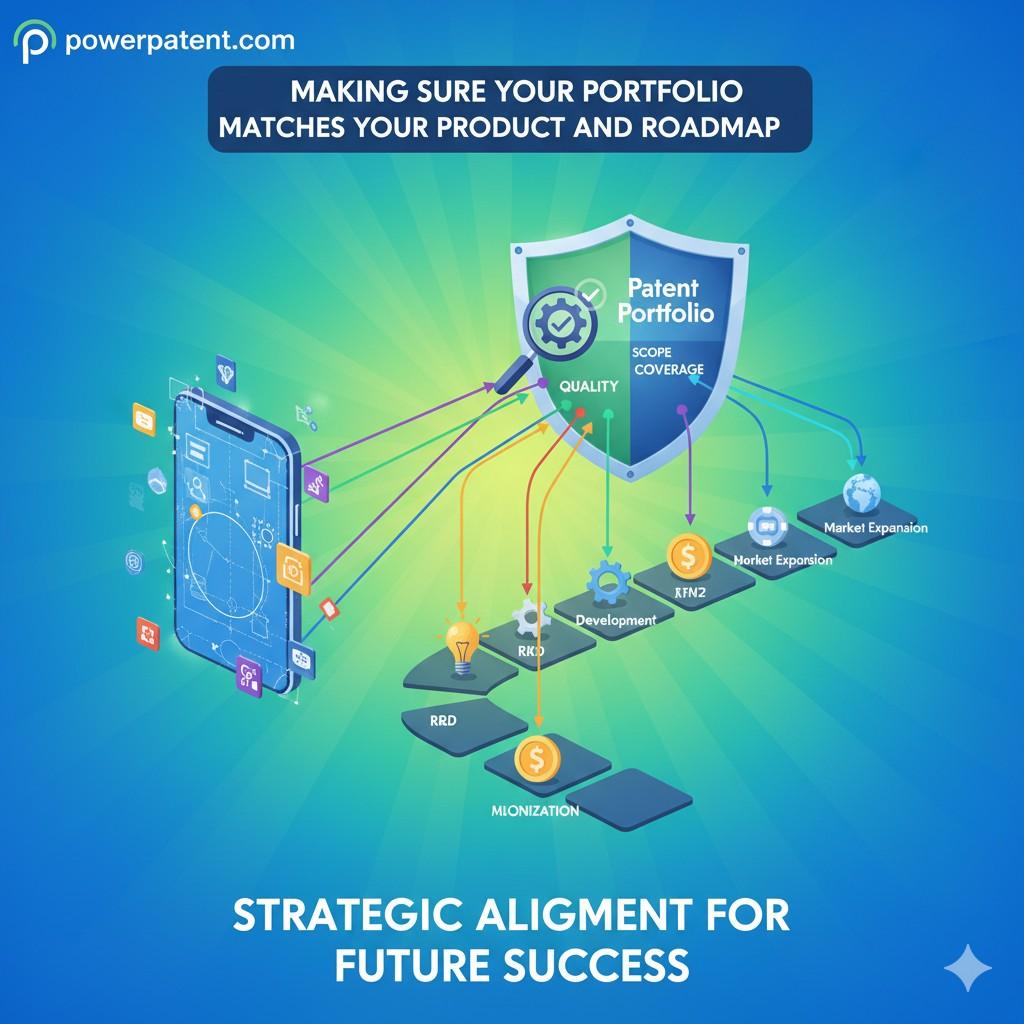
This is also where the right tools make it easier. PowerPatent helps founders keep patents and product aligned by giving them a simple way to document ideas, draft filings, and work with real attorneys without slowing down the team. You can see how it works at https://powerpatent.com/how-it-works.
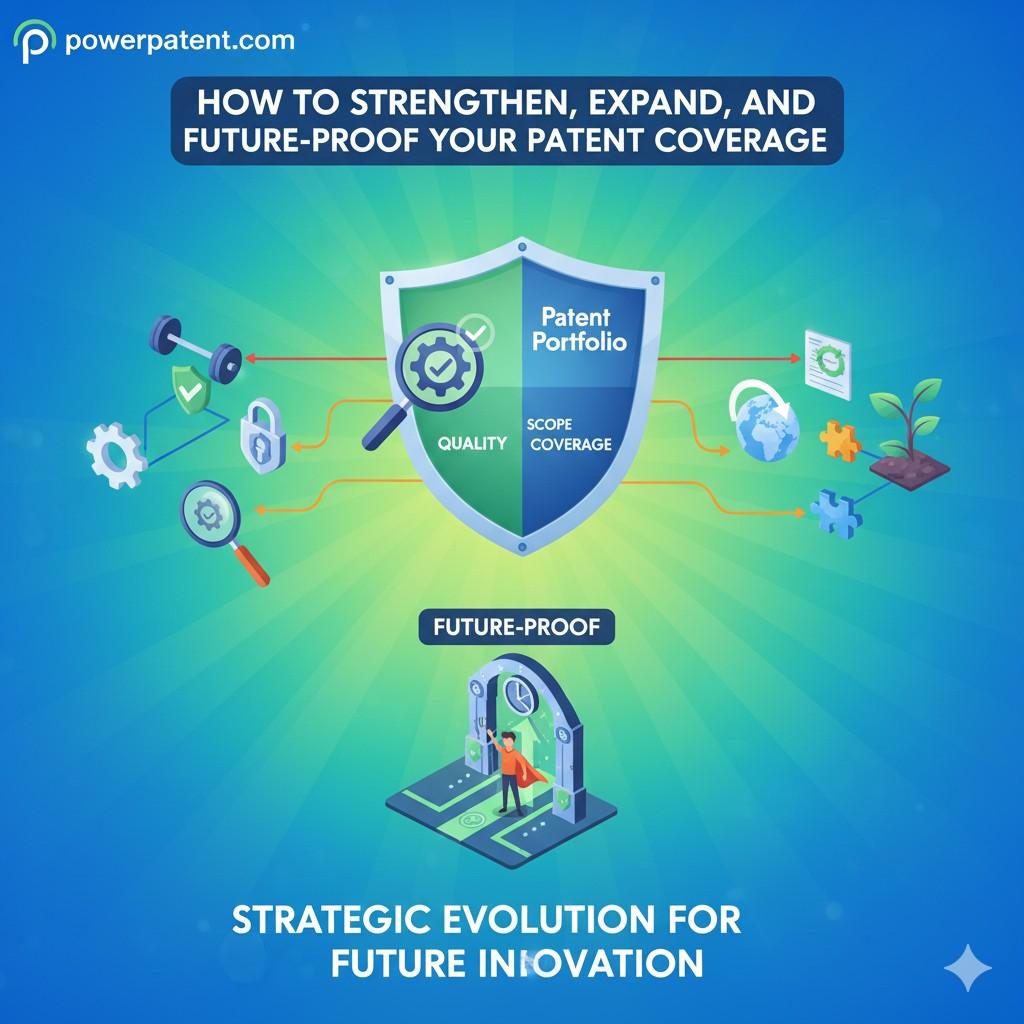
How to Strengthen, Expand, and Future-Proof Your Patent Coverage
As your startup grows, your technology becomes more layered, more refined, and more valuable. But the world around you changes just as fast. Competitors learn. Markets shift. New methods, models, and architectures appear.
A patent portfolio that was strong a year ago may not be enough to protect your edge today. This is why the final stage of a portfolio health check is about strengthening, expanding, and future-proofing your protection.
You want a portfolio that grows with your product, shields your future plans, and makes it harder for anyone to follow your path.
Understanding Where Your Protection Needs More Depth
When you look closely at your portfolio, you often find places where the coverage is thin. Sometimes the claims are too narrow and describe your invention in a way that only matches one specific version of your product.
Sometimes the description does not go far enough and leaves out important variations, fallback methods, or alternative designs that your competitors could use to copy your idea without triggering infringement.
Strengthening your portfolio starts with depth. You need claims that describe the core idea at a level broad enough to block multiple paths.
You need applications that explain not just how your system works, but why it works. You need filings that include variations, examples, and alternatives so your protection covers the full shape of your invention, not just one version of it.
Depth turns a patent from a fragile document into something solid. A competitor reading your patent should feel boxed in. They should not see easy escape routes.

They should not find workarounds by making small changes. A strong patent makes those paths much harder to follow.
Expanding Outward to Capture Adjacent Technologies
Once you have depth, the next step is breadth. A strong portfolio does not just protect the exact implementation you built. It also protects the natural extensions of your idea.
It covers adjacent workflows, related data methods, alternative architectures, and other forms of the same insight.
This outward expansion matters because competitors often copy ideas sideways.
They may not replicate your product line by line, but they may build something almost identical with a different data layout, a slightly different optimization, or a new interface. If your patents only cover the exact way you built your system, these sideways moves stay open.
During a portfolio review, you look at your invention and ask a simple question: what are the obvious variations that others could try? When you can name these variations, you can protect them.
You can create filings that close the gaps and make your moat wider. Instead of defending only the narrow core of your invention, you defend the full territory around it.
Ensuring Your Protection Keeps Up With Technical Progress
Technology does not stay still. New frameworks, hardware platforms, and learning methods appear. Standards shift. Tools evolve. If your patents describe only outdated methods, your protection becomes easier to avoid.
Competitors may use newer techniques that did not exist when you first filed, and unless your claims are flexible enough, they may escape your reach.
Future-proofing means writing patents that survive technical change.
You do this by focusing on the function and logic of your invention, not the temporary tools. Instead of tying your claims to a specific library, you describe the transformation it performs.
Instead of anchoring your filing to one model type, you describe the behavior the model produces. Instead of limiting your descriptions to one hardware layout, you describe the purpose of each component and how they interact.
When you think this way, your protection becomes durable. It stays valid even as the field evolves. It covers both the versions you built and the versions others might try.

This approach gives your patent portfolio a longer lifespan, which means your competitive advantage lasts longer too.
Using Continuations to Strengthen Your Claims Over Time
One of the most powerful ways to keep a portfolio strong is by using continuation filings. A continuation lets you build new claim sets from the foundation of an earlier application.
This means you can keep expanding and refining your protection without restarting the process. You can add broader claims, narrower claims, or new versions of your idea based on what you learn from the market or from competitors.
Continuations keep your protection adaptable. If you see a competitor moving toward a specific feature, you can adjust your claim strategy. If your own product grows in a new direction, you can update your filings.
This flexibility is one of the most valuable tools founders have, but many do not use it because they are not aware of the benefits.
A portfolio health check shows you where continuations can turn a decent patent into a powerful one. It helps you identify which filings deserve extended protection and which ones should remain as they are.
This is how you turn your portfolio into an evolving asset instead of a static set of documents.
Building Protection Around Your Data and Your Models
More startups today rely on data pipelines, machine learning models, and training workflows. These are often the deepest parts of the product’s value, yet they are also the parts founders overlook when drafting filings.
Many assume that only the model output matters. In reality, the method, the training system, the feedback loops, and the data selection process often contain the real invention.
Strengthening your portfolio means capturing these elements. If your product relies on data insight, protect the insight. If it relies on an adaptive system, protect the system.
If it relies on a specific training method, protect the method. Many of the strongest AI and software patents today come not from the end result, but from the process behind it.
During a health check, you often discover that the mechanisms behind your product have never been written down in a defensible way. Once you document them, you create new layers of protection that make your technology much harder to copy.
Positioning Your Portfolio for Scale and Long-Term Strength
The final part of future-proofing is making sure your portfolio can grow with your company. You want filings that support the business you will have at scale.
You want claims that reinforce your brand, your platform, and your long-term strategy. You want protection that makes sense for the next stage of your company, not just the current one.
This requires you to step back and ask where your company is heading. Are you expanding into new markets? Are you planning new product lines? Are you integrating new technologies?
Are you shifting from one architecture to another? A portfolio aligned with your long-term vision gives you leverage. It allows you to shape the market rather than react to it.
This is also where the right tools become essential. PowerPatent gives founders a faster, clearer way to build long-term, attorney-backed protection without slowing down development.
You can explore how it works at https://powerpatent.com/how-it-works. When strengthening and expanding your portfolio becomes part of your growth rhythm, your IP starts working for you instead of holding you back.
Wrapping It Up
Every founder wants to move fast, ship great products, and stay ahead of the market. But speed only works when you also protect what makes your company special. A patent portfolio health check is how you make sure your ideas, systems, and breakthroughs stay yours. It brings your filings up to the level of your product. It helps you see what is strong, what is outdated, what is missing, and what deserves more protection. It turns your IP into something you use, not something you simply store.
Leave a Reply