If you are building something new and valuable, there will be moments when the patent system does not move as fast or as clean as you need it to. A filing is late, a document is missing, a deadline slips, or the Patent Office makes a call that just does not feel right. That is where petitions come in. A petition is simply your way to ask the Patent Office to fix something, allow something, or undo something so your patent can keep moving forward. When used the right way, petitions are not scary, slow, or risky. They are often quick wins. In this guide, we will walk through how petition filing works inside Patent Center, the most common petitions founders actually use, and how smart startups turn petitions into momentum instead of delays.
Why Petitions Exist and When You Actually Need One
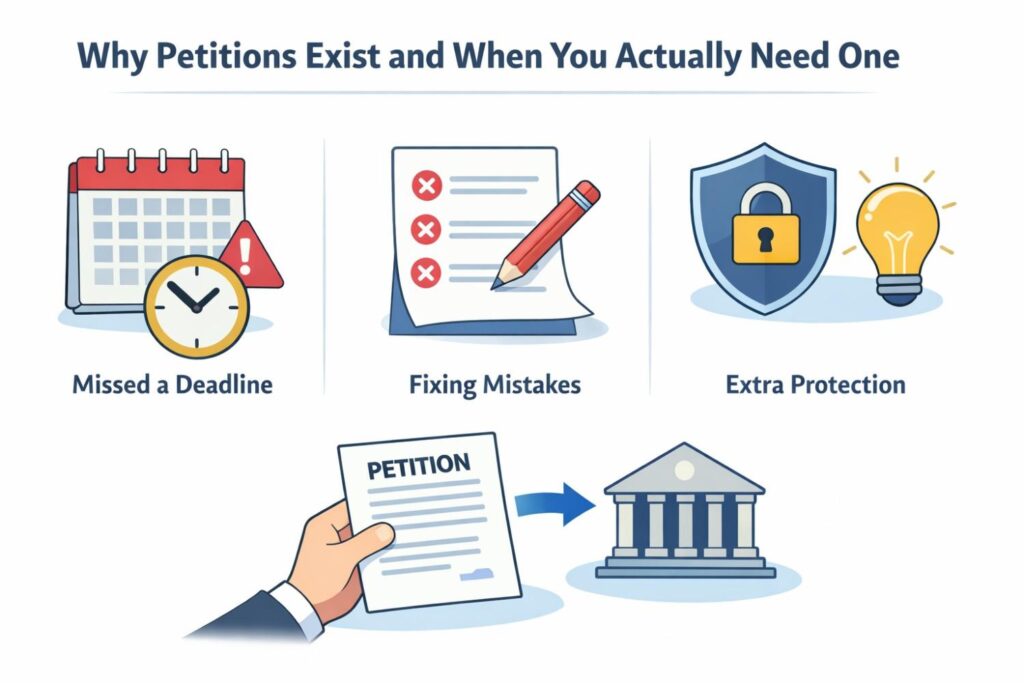
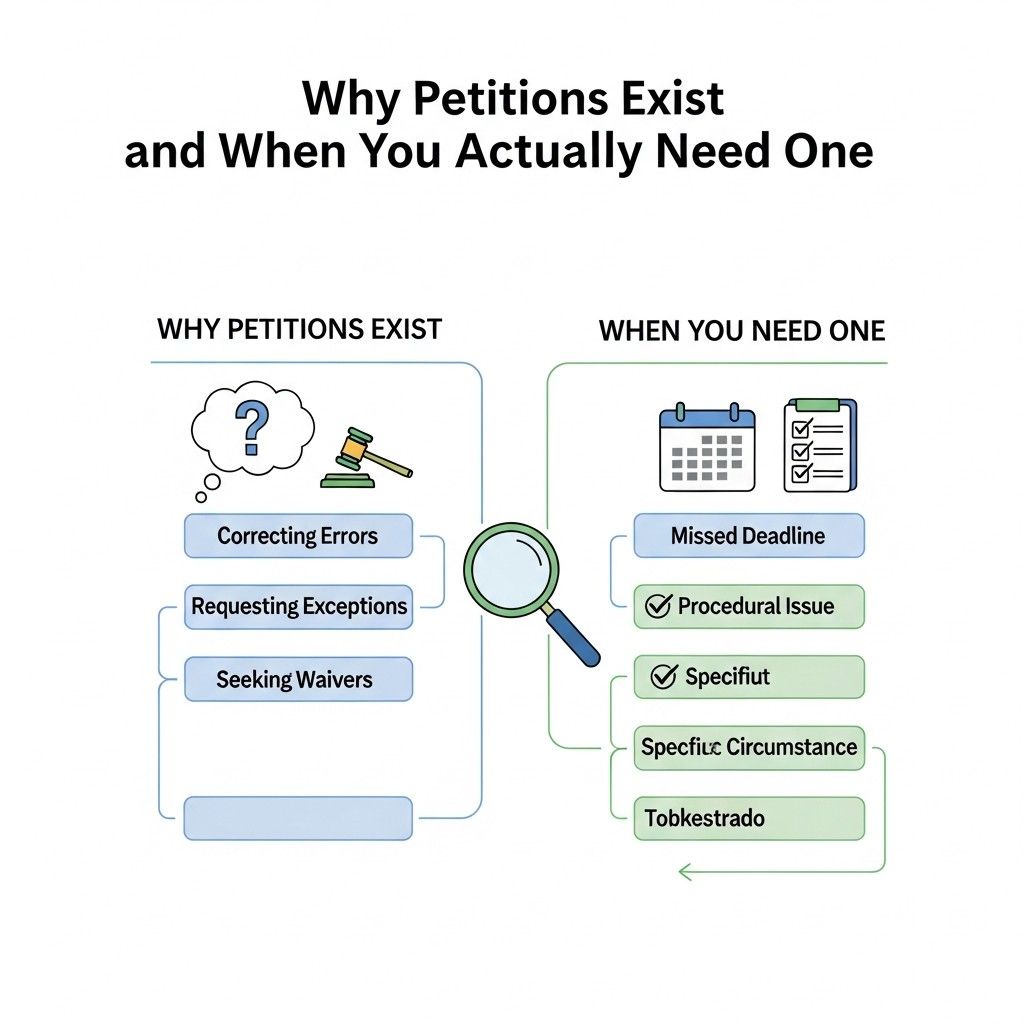
Petitions exist for one simple reason. The patent system is rigid, but real life is not. Founders move fast. Teams change. Deadlines get missed. Systems fail. Even the Patent Office makes mistakes.
A petition is the official pressure-release valve that keeps your application alive when something goes off script.
For businesses, understanding this early can be the difference between losing years of work and keeping control of your invention.
At a high level, petitions are not about arguing the value of your invention. They are about process.
They are about timing, rules, and fairness. If you know when to use them, petitions stop being a last-ditch move and start becoming a strategic tool.
Petitions Are About Process, Not Technical Merit
Most founders assume every interaction with the Patent Office is about explaining how smart or new their idea is. Petitions are different. They focus on the paperwork and procedure side of patents.
That means things like deadlines, fees, missing documents, or requests for special handling.
This matters because many startups waste time over-explaining the invention when the real issue is procedural.
When you treat a petition as a process fix instead of a technical argument, your chances of success go up fast. The Patent Office wants clean files and clear rules. Give them that, and they often say yes.
Why the Patent Office Even Allows Petitions
The Patent Office knows its system is strict. Deadlines are fixed. Forms are exact. Fees must be paid on time. Without petitions, one small mistake could permanently kill an application.
That would not be fair, especially to small companies and first-time filers.
Petitions exist to balance that strict system with reasonable flexibility. They allow examiners and officials to correct errors, forgive honest mistakes, and keep innovation moving.
From a business point of view, this means the system expects things to go wrong sometimes and gives you a way to recover if you act correctly and quickly.
The Business Cost of Ignoring Petition Options
Many startups walk away from strong patent rights simply because they do not know a petition was available. An application goes abandoned, and the team assumes it is over. In reality, a simple petition could have revived it.
The real cost here is not the petition fee. It is the loss of leverage. A dead application means weaker investor confidence, fewer defensive options, and less protection against competitors.
Knowing when a petition is possible keeps your IP assets alive and valuable.
When a Petition Is the Right Tool
A petition makes sense when the issue is not about whether your invention should be patented, but whether your application deserves to keep moving forward.
This includes missed deadlines, unpaid fees, filing errors, or requests for special treatment.
If the problem feels administrative, there is a good chance a petition is the correct move.

Founders who pause and ask, “Is this a process issue or a substance issue?” tend to make better decisions and avoid wasting months going down the wrong path.
Missed Deadlines and Human Error
Missed deadlines are one of the most common reasons petitions exist. Startups are busy. Founders juggle product, hiring, fundraising, and customers. Patent emails get lost. Calendars fail.
The system recognizes that honest mistakes happen. If you act fast and explain clearly, a petition can often undo the damage. The key is speed. The longer you wait, the harder it becomes to show good faith.
Errors Caused by the Patent Office
Not every mistake is your fault. Sometimes the Patent Office misroutes a document, misapplies a fee, or marks something incorrectly. When that happens, a petition is your way to put the issue back on record.
From a business standpoint, this is about protecting your timeline. If you do not challenge an error early, it can ripple into months of delay later. Petitions allow you to correct the record before those delays compound.
When You Should Not File a Petition
Petitions are powerful, but they are not magic. They are not meant to fight rejections based on prior art or argue claim scope. Using a petition in the wrong situation wastes time and money.
A good rule is this. If the issue is about the invention itself, you are likely looking at an amendment or an appeal. If the issue is about how the application was handled, a petition is probably the right move.
Timing Is a Strategic Advantage
Timing is everything with petitions. Many have strict windows. Filing too late can kill your chances, even if your reasoning is solid.
Businesses that treat petitions as urgent tasks instead of background admin work get better outcomes.
The smartest teams build petition awareness into their patent process. They monitor notices closely, act quickly, and never assume a bad notice is final without checking their options.
How Smart Founders Think About Petitions
Experienced founders treat petitions like insurance. They hope they never need them, but they know exactly how to use them if something goes wrong. This mindset reduces panic and leads to faster decisions.
Instead of asking, “Did we mess this up?” they ask, “What is the fastest procedural fix?” That shift alone can save weeks or even years in patent time.
Turning Petitions Into Control and Confidence
At the end of the day, petitions give you control. They turn uncertainty into action. They allow you to respond instead of react. For startups, that control translates into confidence when talking to investors, partners, and acquirers.
When you understand why petitions exist and when to use them, you stop seeing the patent system as fragile.

You start seeing it as flexible, recoverable, and manageable. That is a huge mental shift for any founder building something new.
The Most Common Patent Center Petitions Founders File
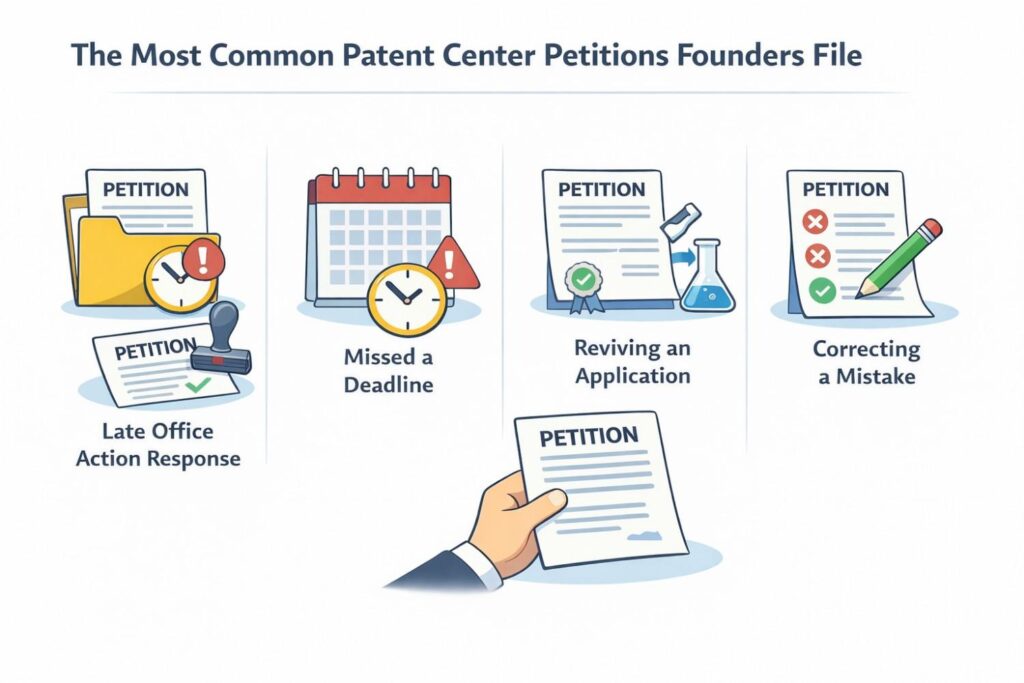
This section matters because most petitions filed by startups fall into a small group. These are not rare edge cases. They are everyday problems that show up when real businesses try to move fast inside a slow system.
When founders understand these common petitions ahead of time, they stop panicking when something goes wrong and start fixing issues with confidence.
The key idea to keep in mind is this. Most petitions are not signs of failure. They are signs that you are actively managing your patent like a business asset instead of a fragile document.
Petition to Revive an Abandoned Application
This is the petition most founders wish they had known about sooner. An application becomes abandoned when a deadline is missed. That could be a response deadline, a fee deadline, or a filing deadline.
When that happens, many teams assume the application is dead forever.
In many cases, that is not true. A petition to revive exists to bring the application back to life when the delay was unintentional. For startups, this is often caused by growth chaos.
A founder changes email addresses. A law firm changes staff. A notice gets buried during fundraising.
The strategic move here is speed and honesty. The faster you act after discovering the abandonment, the more reasonable your request looks.
From a business view, this petition protects sunk cost and preserves future leverage. Reviving an application is often far cheaper than starting over.
Understanding Unintentional Delay in Plain Terms
The Patent Office uses the phrase unintentional delay, but founders often overthink it. It does not mean you need a dramatic story. It means you did not plan to miss the deadline.
Trying to over-lawyer this explanation can backfire. Clear, simple language works best. State what happened, show that it was not deliberate, and show that you acted quickly once you noticed.
This approach aligns with how the Patent Office actually reviews these requests.
Petition for Extension of Time
Sometimes you know you cannot meet a deadline before it passes. This is where extensions come into play. In Patent Center, extensions allow you to buy more time for certain responses by paying a fee.
From a startup strategy view, extensions are about control. They give you breathing room during product pivots, fundraising cycles, or team transitions. The mistake founders make is waiting until the last minute and rushing a weak response.

Using an extension intentionally allows you to submit a stronger response that aligns with your long-term IP goals. That often leads to fewer rejections later, which saves time and money overall.
Knowing When an Extension Is a Bad Idea
Extensions are helpful, but they should not be automatic. Each extension pushes your timeline out. If speed matters for investor discussions or competitive reasons, an extension might hurt more than help.
Strong founders weigh the tradeoff. Is the extra time improving quality or just delaying a hard decision? Petitions work best when they support a clear strategy, not when they are used to avoid action.
Petition to Accept a Late Fee or Document
This petition comes up when something was filed, but not filed correctly. A fee was short. A document uploaded wrong. A form was missing a signature. Patent Center is better than old systems, but mistakes still happen.
This type of petition asks the Patent Office to accept what you already tried to submit. It is less about forgiveness and more about cleanup. The faster you notice the issue, the easier it is to fix.
For businesses, this is about monitoring. Teams that regularly check their filing receipts and status notices catch these issues early. That turns a potential abandonment into a minor delay.
The Hidden Cost of Small Filing Errors
Small errors feel harmless, but they can snowball. A missing fee today can lead to abandonment tomorrow. That abandonment can lead to lost priority. Lost priority can destroy international strategy.
This is why experienced founders treat even small Patent Center notices seriously. Petitions are the safety net, but awareness is the real defense.
Petition for Special Status
Some petitions are not about fixing mistakes. They are about asking for special handling. This includes requests for faster review under certain programs or based on specific criteria.
For startups, the most important idea here is alignment. Faster is not always better. Accelerated review can lead to faster costs and faster rejections if the application is not ready.
Smart teams use these petitions when timing truly matters, such as before a major product launch or acquisition discussion. The petition becomes a business lever, not just a legal move.
Petition to Withdraw an Improper Holding of Abandonment
Sometimes the Patent Office marks an application abandoned even though the founder believes everything was filed correctly. This is where a petition to withdraw the holding of abandonment comes in.
This petition is about correcting the record. It is not an apology. It is a clarification. You are saying the system made a mistake, and here is the proof.

From a strategy point of view, documentation is everything. Founders who keep clean records of submissions, receipts, and confirmations have a much easier time winning these petitions.
Why Proof Beats Emotion Every Time
When filing this type of petition, emotion does not help. The Patent Office is not judging intent or frustration. It is checking facts.
Clear timelines, clear evidence, and clean explanations win. This mindset applies across all petitions. Treat them like business memos, not personal appeals.
Petition Related to Priority Claims
Priority errors are common, especially for startups filing provisionals early and non-provisionals later. A missed reference, a wrong date, or a clerical error can put your priority at risk.
Certain petitions allow you to correct or accept delayed priority claims. This is critical because priority affects who wins if two companies file similar ideas.
For founders, this is not academic. Priority can decide who owns the market. Petitions here protect your place in line.
Using Petitions to Protect Long-Term Value
Each of these petitions has one thing in common. They protect value that already exists. They do not create new rights. They preserve the rights you earned by building and filing early.

The most successful startups treat petitions as part of asset management. They review application status the same way they review financials. Problems are addressed early, calmly, and strategically.
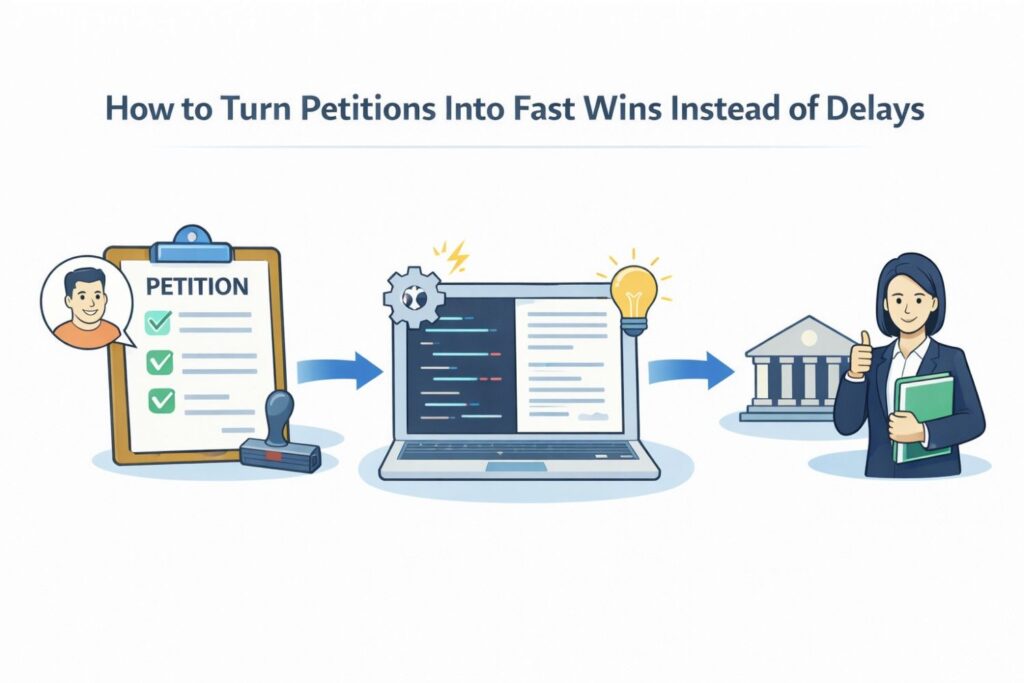
How to Turn Petitions Into Fast Wins Instead of Delays
Most founders think petitions slow things down. In reality, the opposite is often true. Petitions only feel slow when they are filed late, written poorly, or treated as an afterthought.
When handled with intent, petitions can remove blockers, reset timelines, and restore momentum faster than almost any other patent action.
The difference between a delay and a win is not the petition itself. It is how you prepare, how you frame it, and how quickly you move.
Thinking of Petitions as a Business Tool
The first mental shift is simple but powerful. A petition is not paperwork. It is a decision point. It is a moment where you either protect forward progress or allow friction to grow.
Strong businesses treat petitions the same way they treat customer issues or payment errors.
They respond quickly, clearly, and with ownership. This mindset alone changes outcomes because it drives speed and clarity, which the Patent Office values.
Speed Creates Credibility
Speed is the single biggest factor in petition success. The faster you act after an issue appears, the more credible your request looks. Waiting weeks or months sends the wrong signal, even if your reason is valid.
From a tactical view, this means checking Patent Center notices regularly and assigning clear ownership internally.
Someone must be responsible for watching deadlines and messages. When that person acts fast, petitions often feel routine instead of stressful.
Writing Petitions Like a Clear Business Memo
Petitions fail when they read like emotional letters or legal essays. They succeed when they read like clean internal memos.
The best petitions explain what happened, why it happened, and what you are asking for, all in plain language. There is no drama. There is no over-explaining. This makes it easier for the reviewer to say yes and move on.
For founders, this is good news. You do not need fancy words. You need clarity and honesty.
Using Simple Language to Reduce Review Time
Patent officials review thousands of requests. When they see a petition that is easy to understand, it moves faster. Long explanations slow things down because they create questions.
Clear language reduces back and forth. Less back and forth means quicker outcomes. This is one of the most overlooked advantages founders have when they stop trying to sound formal and start trying to sound clear.
Choosing the Right Petition the First Time
One hidden cause of delay is filing the wrong petition. Patent Center offers many options, and picking the wrong one can lead to rejection or requests for correction.

Strategically, this means slowing down before you file. Read the notice carefully. Identify the exact issue. Match it to the petition designed for that issue. This small upfront effort saves weeks later.
Paying the Right Fees Without Guessing
Fee errors are a common source of delay. Paying too little or skipping a required fee can stall a petition or cause it to be dismissed.
Smart founders double-check fees before submission. They confirm the entity status, confirm the petition type, and confirm payment confirmation. This removes friction and keeps the petition moving cleanly through the system.
Attaching Only What Matters
More documents do not equal stronger petitions. Extra files often confuse the issue. The goal is not to overwhelm. The goal is to prove.
Attach only what directly supports your request. If the issue is timing, show dates. If the issue is submission, show receipts. This focused approach speeds review and increases approval odds.
Avoiding the Most Common Founder Mistake
The most common mistake founders make is assuming silence means failure. Petitions often take time, but that does not mean they are denied.
During this waiting period, the worst move is filing multiple follow-ups or new petitions without guidance. That creates confusion. The better move is patience paired with monitoring.
Knowing When to Escalate and When Not To
Some petitions require patience. Others justify follow-up. The difference is context.
If a petition is time-sensitive and blocking business activity, a controlled follow-up can make sense. If it is a standard administrative fix, waiting is often the best move. Strategic founders know the difference and act accordingly.
Building Petition Awareness Into Your IP Process
The fastest teams bake petition readiness into their workflow. They do not scramble when something goes wrong. They already know what to do.
This includes tracking deadlines, saving receipts, and keeping filing records organized. When a petition is needed, everything is ready. That preparation turns stress into speed.
Using Petitions to Protect Investor Confidence
From the outside, investors do not care about petition mechanics. They care about certainty.
When a founder can calmly explain that an issue is procedural and already under petition review, it builds trust. Panic kills confidence. Preparedness builds it.
Petitions allow you to say, “This is under control,” and mean it.
Turning Small Fixes Into Long-Term Wins
Many petitions fix small problems, but their impact lasts years. Restoring priority, reviving an application, or correcting a record can protect market position long after the petition itself is forgotten.
Founders who see this long view treat petitions with respect. They know a quick fix today can protect millions in value tomorrow.
Why the Best Time to Learn Petitions Is Before You Need Them
Learning about petitions during a crisis makes everything harder. Learning about them early makes them boring. Boring is good.

When founders understand petitions before something goes wrong, they move faster, choose better options, and avoid emotional decisions. That readiness is what turns petitions into quick wins instead of delays.
Wrapping It Up
By the time a founder reaches the point of filing a petition, something has already gone off plan. That is normal. What matters is not the mistake, the delay, or the notice from the Patent Office. What matters is how fast and how clearly you respond. Petitions exist to keep strong ideas alive. They are not loopholes. They are part of the system working as intended. When used with purpose, they restore control, protect value, and keep your patent aligned with your business timeline instead of fighting against it.
Leave a Reply