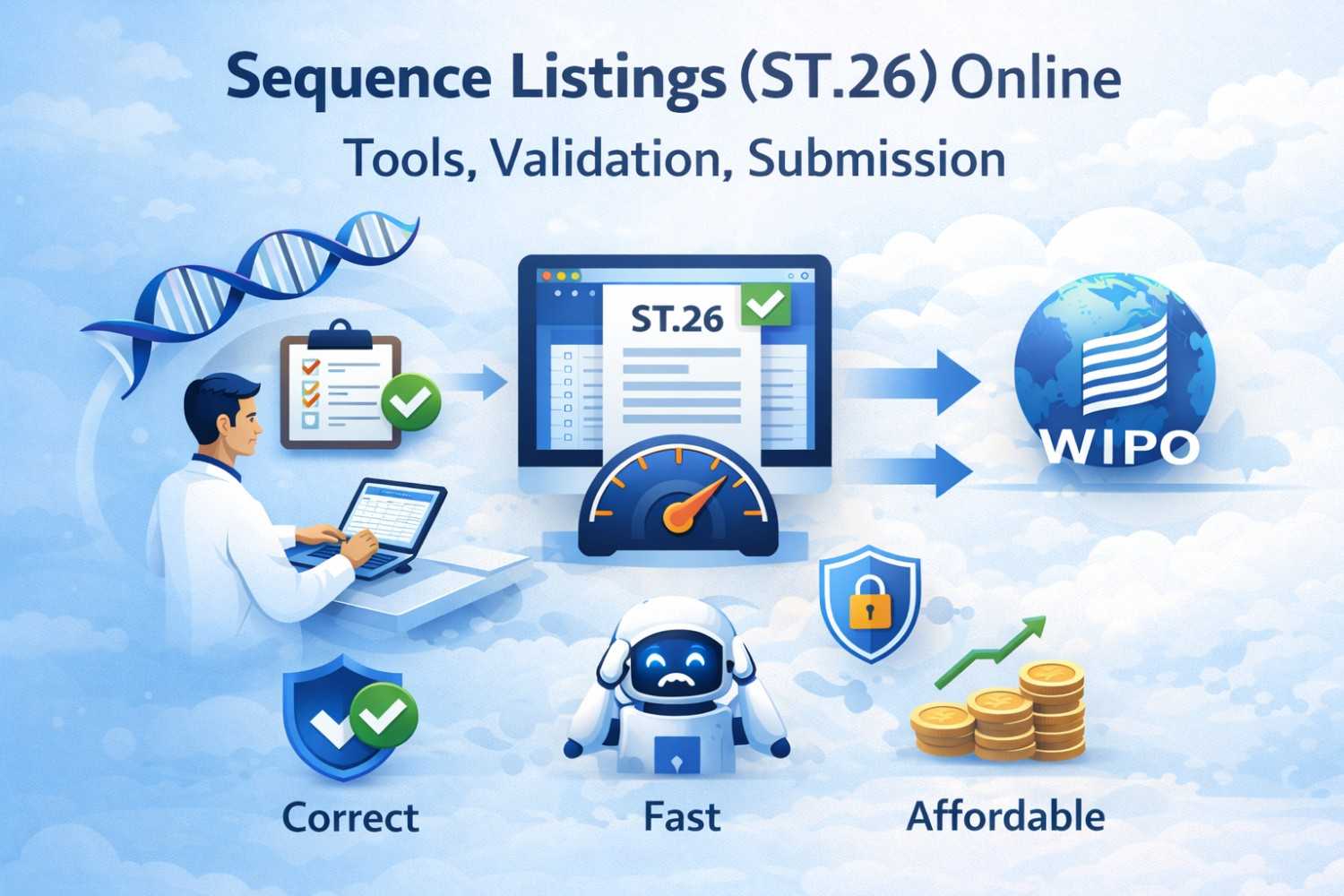
Sequence listings used to be one of those quiet traps in patent filing. Easy to ignore, hard to fix later, and very expensive when done wrong. With ST.26 now fully in force, that trap is bigger than ever. If you work with DNA, RNA, proteins, or any bio-based invention, sequence listings are no longer a side task. They are a core part of your patent. And they must be done online, in a very specific way, or your application can fail before it even starts. This article explains ST.26 in plain language. What it is, why it matters, how online tools actually work, how validation really happens, and how submission works in real life—not in theory. If you want to file faster, avoid rejections, and stay in control, this is for you.
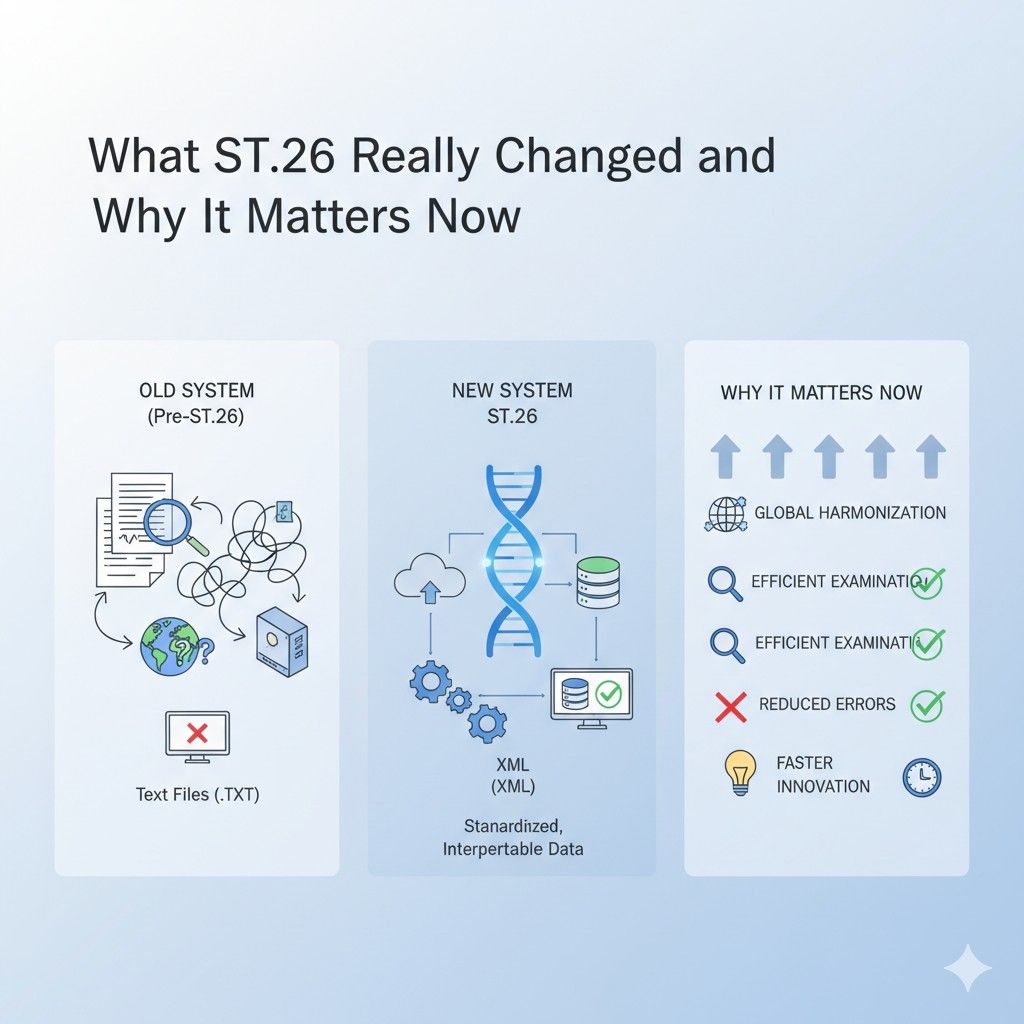
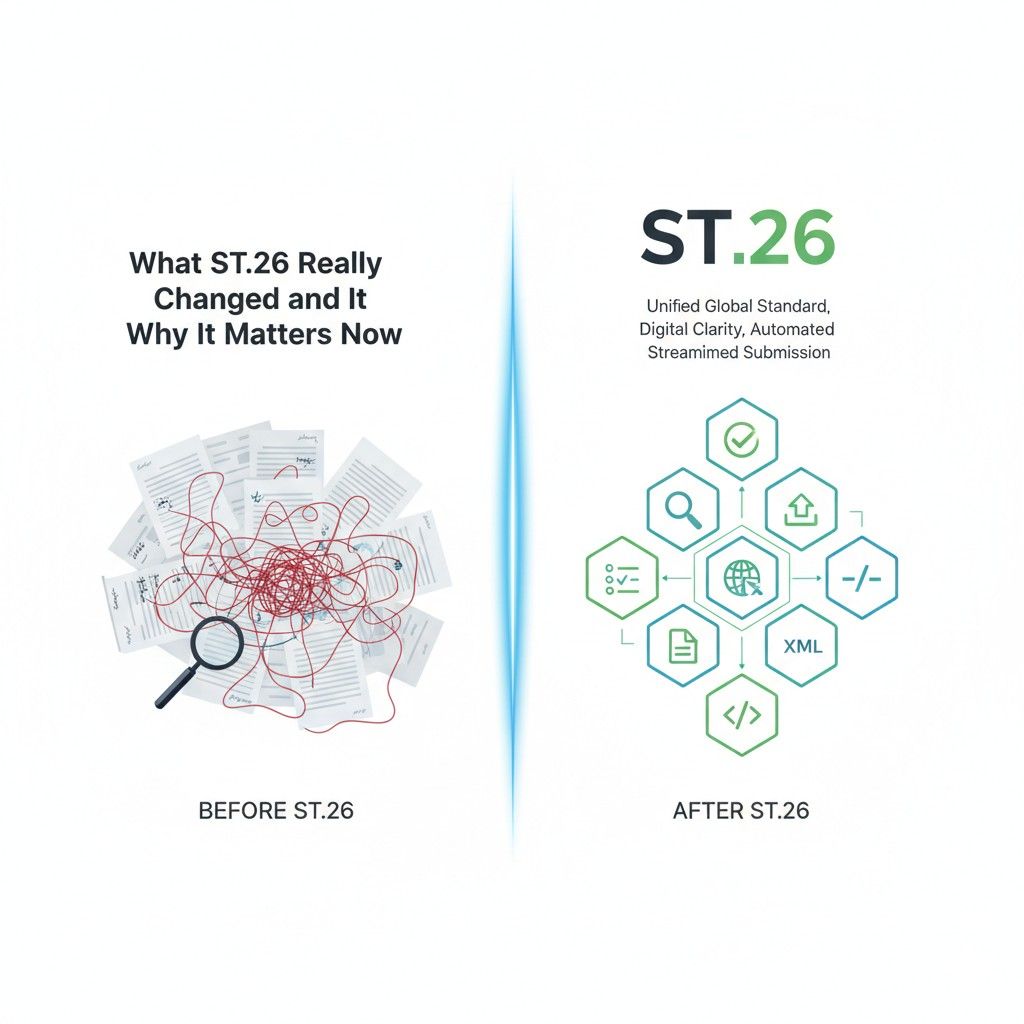
What ST.26 Really Changed and Why It Matters Now
ST.26 did not just update a rule. It changed the entire mindset around how biological inventions are reviewed, shared, and protected. Before ST.26, many teams treated sequence listings like an attachment.
Something you add at the end. Something a paralegal or outside vendor could “handle.” That world is gone. Today, your sequence data is part of the core invention story.
Examiners read it. Systems validate it. Errors stop applications cold. This section explains what truly changed, why businesses must care now, and how smart teams turn ST.26 from a risk into an advantage.
From Static Documents to Living Data
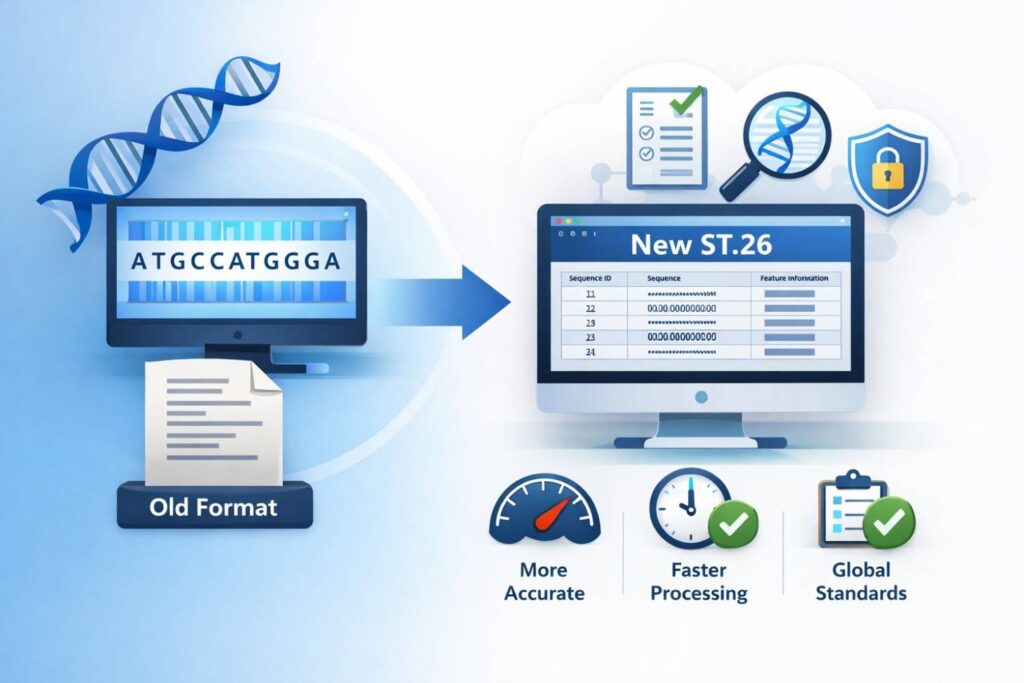
The biggest shift with ST.26 is that sequence listings are no longer just documents. They are structured data files.
This matters more than it sounds. Under older standards, sequence listings could live in long text files that humans mostly read. With ST.26, machines read first.
Software checks structure, symbols, formats, and tags before an examiner ever sees your invention.
For businesses, this means you cannot “clean it up later.” The file must be correct at the time of filing. If your data is messy, unclear, or copied from lab notes without care, the system will reject it.
A simple mismatch between a sequence ID and its description can trigger a stop.
Actionable takeaway: treat sequence data like source code. It needs version control, review, and ownership. One person should be responsible for sequence accuracy from lab to filing. This alone prevents most ST.26 failures.
Why Timing Now Matters More Than Ever
ST.26 is not new anymore. Patent offices expect compliance. There is no grace period in practice. If you file wrong, you lose time. If you delay fixing issues, you risk priority dates. In fast-moving biotech markets, months matter.
Investors are also paying closer attention. During diligence, weak IP is spotted quickly. A clean ST.26-compliant filing shows maturity.
It signals that the company understands how to protect its core technology. Sloppy sequence handling sends the opposite message.
Actionable takeaway: align ST.26 preparation with your funding timeline. Do not wait until a round is closing to clean up sequence listings. Prepare them early so filings support valuation, not slow it down.
PowerPatent helps teams do this without pulling founders away from building. You can see how at https://powerpatent.com/how-it-works.
ST.26 Forces Clarity in Your Invention Story
One quiet benefit of ST.26 is that it forces you to be precise. Every sequence must be clearly defined. Every feature must map cleanly to what you claim. This exposes weak spots early.
Many teams discover that their invention description and their actual sequences do not fully match. Under old systems, this could slip through. Under ST.26, the gap is obvious.
While this feels painful, it is actually a gift. Fixing clarity issues before filing makes your patent stronger and harder to attack later.
Actionable takeaway: use ST.26 prep as a design review. Ask whether each sequence truly supports the value you want to protect. If not, refine now instead of fighting later during prosecution.
The End of Copy-Paste Biology
A common habit in bio startups is copying sequences from databases, papers, or old filings and adjusting them slightly.
ST.26 makes this dangerous. Formatting rules are strict. Source annotations matter. Unsupported changes stand out.
This change protects you, too. It reduces accidental overlap with prior art and lowers the risk of someone claiming your filing is unclear or misleading.
Actionable takeaway: document where every sequence comes from and why it exists in your invention. Even if this documentation never leaves your company, it makes ST.26 compliance faster and safer.
Why Global Filings Feel Different Now
ST.26 is global. That is the point. One standard across patent offices. This sounds simple, but it changes filing strategy. Errors follow you everywhere. A mistake made once can echo across jurisdictions.
The upside is speed. When done right, one clean ST.26 file travels smoothly. No rework. No country-specific fixes. This is especially powerful for startups planning international expansion early.
Actionable takeaway: design your ST.26 sequence listing with global protection in mind from day one.
Do not optimize only for one office. PowerPatent’s system is built for this exact need, combining software checks with attorney review so global filings stay aligned. Learn more at https://powerpatent.com/how-it-works.
ST.26 as a Competitive Filter
Not every competitor will get this right. Many will stumble. Some will delay filings. Others will file weak or narrow patents to avoid complexity. Teams that master ST.26 quietly pull ahead.
Strong, clean sequence listings lead to broader claims, faster examination, and fewer office actions. Over time, this compounds into real business leverage.
Actionable takeaway: view ST.26 not as compliance, but as a moat. Investing in doing it right early creates long-term protection others may struggle to match.
The Hidden Cost of Getting It Wrong
When ST.26 goes wrong, the cost is not just legal fees. It is lost time, lost focus, and lost confidence. Engineers pulled into emergency fixes. Founders distracted during key moments. Momentum stalls.
These costs rarely show up on a balance sheet, but they hurt growth. The smartest companies design systems that prevent these fires entirely.
Actionable takeaway: automate what can be automated and review what matters. This is exactly why PowerPatent exists. It removes busywork while keeping human oversight where it counts.
If you want to see how modern teams handle ST.26 without stress, visit https://powerpatent.com/how-it-works.
How Online Sequence Listing Tools Actually Work
Online sequence listing tools are often misunderstood. Many teams think these tools are simple form fillers. Others assume they are black boxes that magically produce compliant files.
The truth sits in between. These tools are systems designed to turn biological data into structured, machine-readable files that patent offices can accept.
Understanding how they work helps businesses choose better tools, avoid silent errors, and move faster with confidence.
The Real Job of an ST.26 Tool
At its core, an ST.26 tool translates biology into structure. It takes sequences, metadata, descriptions, and links them together in a very strict way.
The tool must ensure every sequence has a clear identity, every symbol is valid, and every relationship makes sense to both machines and examiners.
What many businesses miss is that the tool is not thinking for you. It does not know what your invention is. It only knows rules.
If you feed it unclear or inconsistent data, it will still produce a file. The risk shows up later during validation or examination.
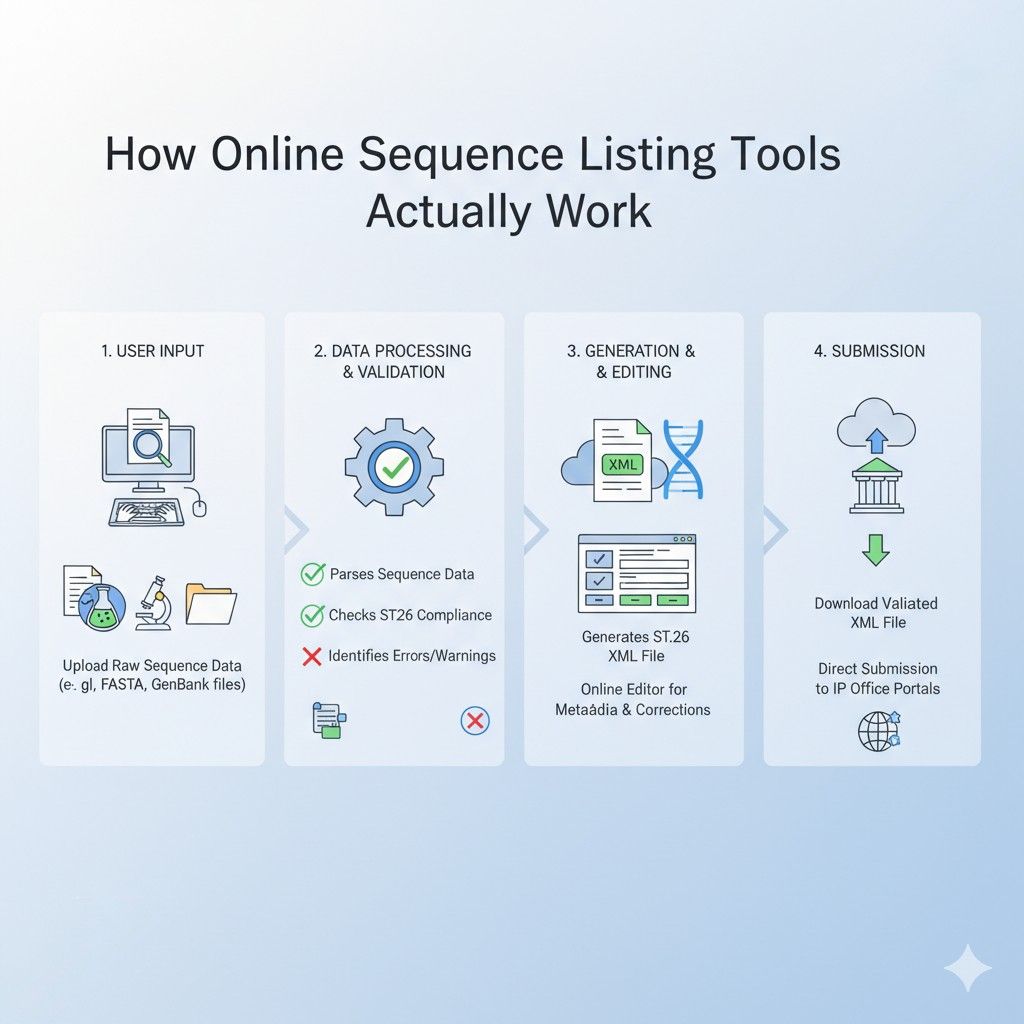
The most effective teams treat the tool as a translator, not an author. The invention story still comes from you. The tool simply makes it readable by the system.
Input Is Where Quality Is Won or Lost
Most ST.26 issues start at the input stage. Sequences copied directly from lab software often contain hidden problems. Symbols may be invalid. Sequence names may not align with descriptions. Features may be implied but not stated.
Good online tools guide users during input. They flag issues early. They ask clarifying questions. Poor tools wait until the end and then dump a long error report that no one wants to read.
For businesses, this difference is huge. Early feedback saves hours and prevents rework. It also reduces reliance on outside fixes that cost time and money.
Why Validation Is Not the Same as Quality
Many tools advertise validation. This sounds reassuring, but validation only checks rules. It does not check whether your sequence listing supports your business goals. A file can pass validation and still be weak.
Validation confirms structure, not strategy. It ensures the file will be accepted by the system. It does not ensure your claims are well supported or that your invention is clearly protected.
Smart teams use validation as a baseline, not a finish line. They pair it with human review to ensure the sequences actually align with what they want to protect.
This is where PowerPatent’s approach stands out. Software handles the rules. Real patent attorneys check the story. You can see how this works in practice at https://powerpatent.com/how-it-works.
How Errors Quietly Sneak In
One of the hardest parts of ST.26 is that errors are often silent. A sequence may be technically valid but logically wrong. A feature may exist but be disconnected from the claims.
A description may be accurate alone but inconsistent in context.
Online tools vary widely in how they surface these risks. Some do not surface them at all. They assume the user knows what they are doing. For early-stage companies, this is dangerous.
The best tools encourage review, not just completion. They slow you down in the right places. They make inconsistencies visible before submission.
Collaboration Matters More Than People Expect
ST.26 work often involves scientists, engineers, and legal teams. Many online tools are built for a single user. This creates friction. Files get emailed. Versions drift. Comments get lost.
Modern tools support collaboration. They allow shared review. They track changes. They make it clear who approved what and when. This is not just a convenience. It is risk control.
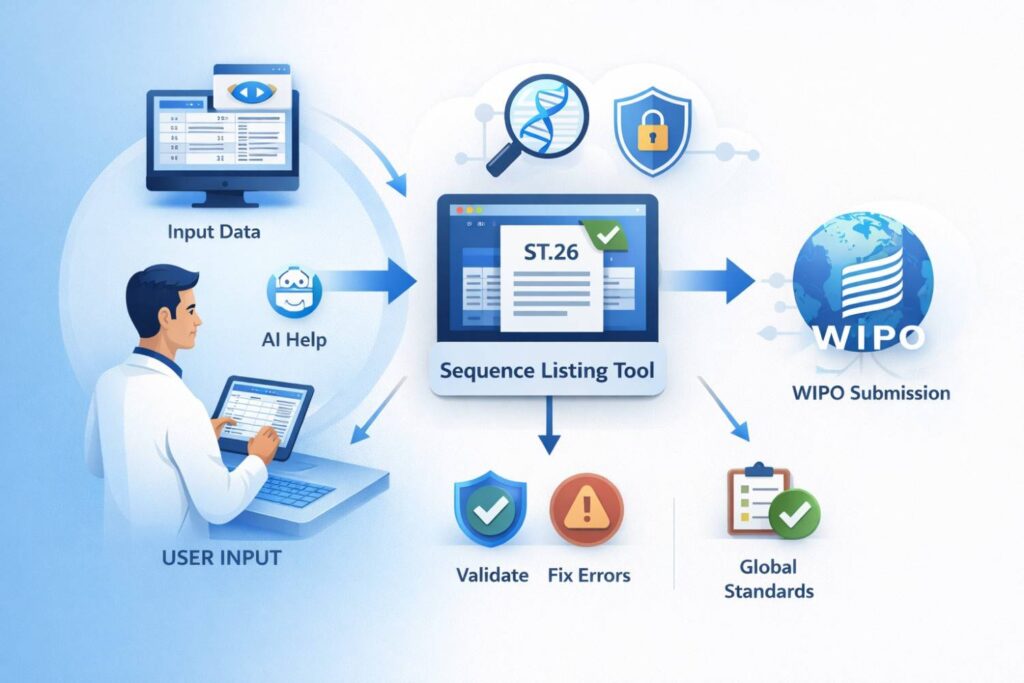
For businesses, collaborative tooling reduces dependency on memory and heroics. It builds repeatable process. That matters as teams grow.
Why Speed Depends on Structure
Founders often worry that ST.26 slows them down. In reality, poor tools and unclear workflows cause delays. Well-designed tools speed things up by removing guesswork.
When input flows cleanly, validation passes quickly. When reviews are structured, approvals happen faster. When submission-ready files are produced automatically, there is no last-minute scramble.
Speed is not about rushing. It is about reducing friction. The right tool does this quietly in the background.
Choosing Tools With the End in Mind
Many teams choose tools based on price or surface features. This is short-sighted. The real question is whether the tool helps you reach allowance faster and with stronger protection.
A tool that only creates files may be cheaper today but costly later. Office actions, amendments, and lost scope add up. Tools that integrate legal review early prevent these downstream costs.
This is why PowerPatent blends software with attorney oversight. The tool does not replace expertise.
It amplifies it. If your goal is strong patents without slowing down, this model matters. Learn more at https://powerpatent.com/how-it-works.
Turning Tools Into a Strategic Asset
When used well, online sequence listing tools become more than compliance software. They become part of your IP strategy.
They help you understand your invention better. They surface gaps early. They support cleaner filings and stronger claims.
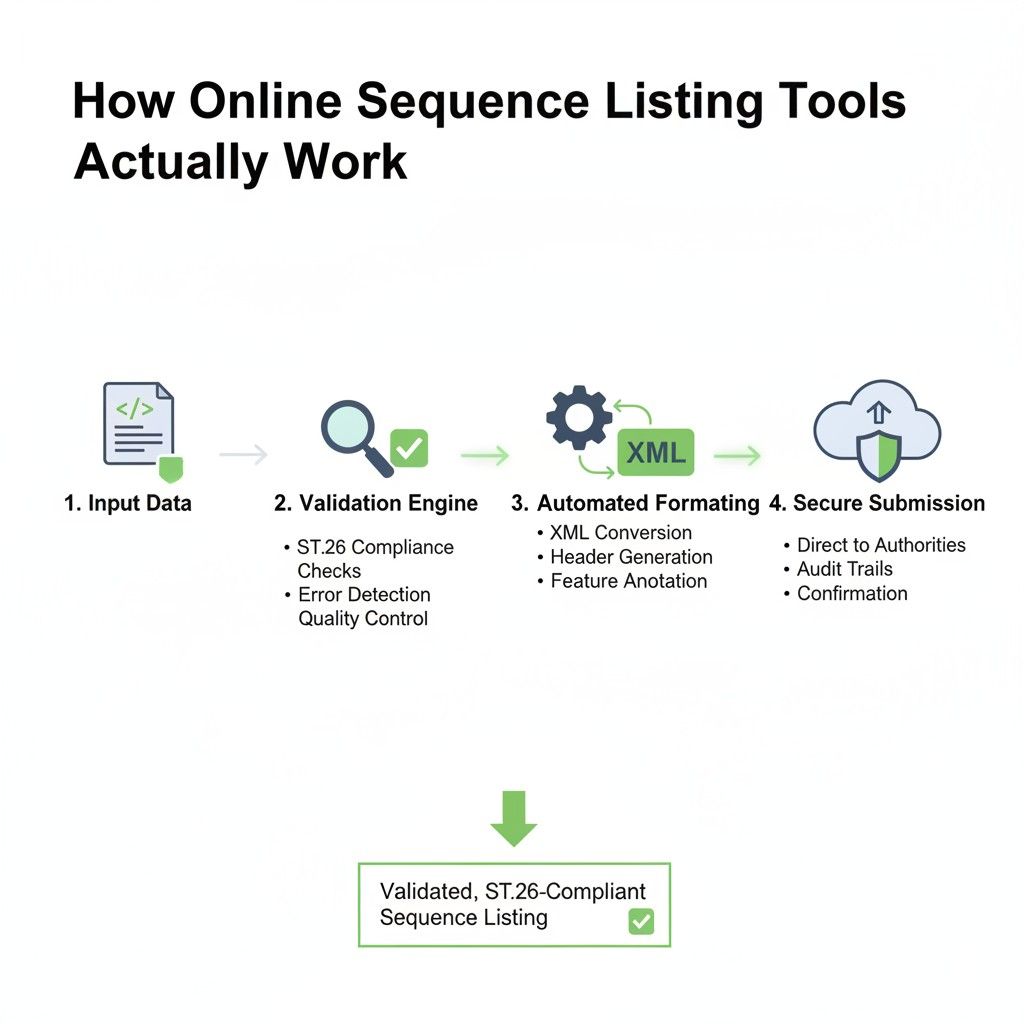
Businesses that embrace this mindset gain leverage. They file with confidence. They move faster internationally. They reduce surprises.
The key is not just using a tool, but using it intentionally.
Validation: Where Most Applications Break
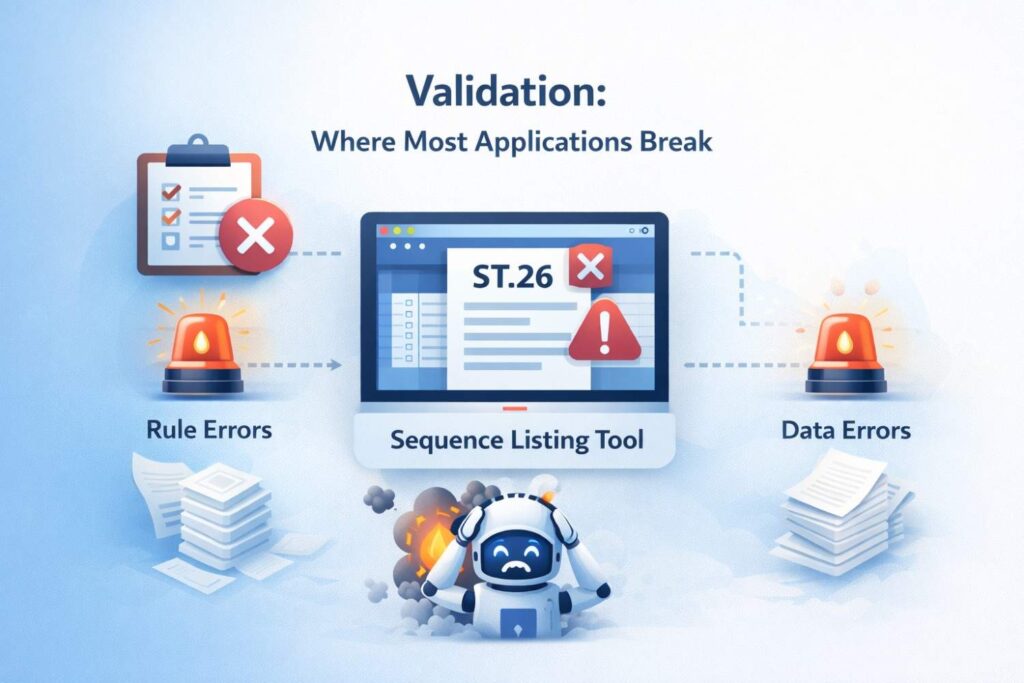
Validation is where confidence meets reality. Many teams believe that once a sequence listing file is generated, the hard work is done. This is rarely true. Validation is the moment where systems stop being polite and start being strict.
It is also the moment where small gaps turn into real delays. Understanding how validation works, and why so many applications fail here, is critical for any business working with biological inventions.
What Validation Really Is
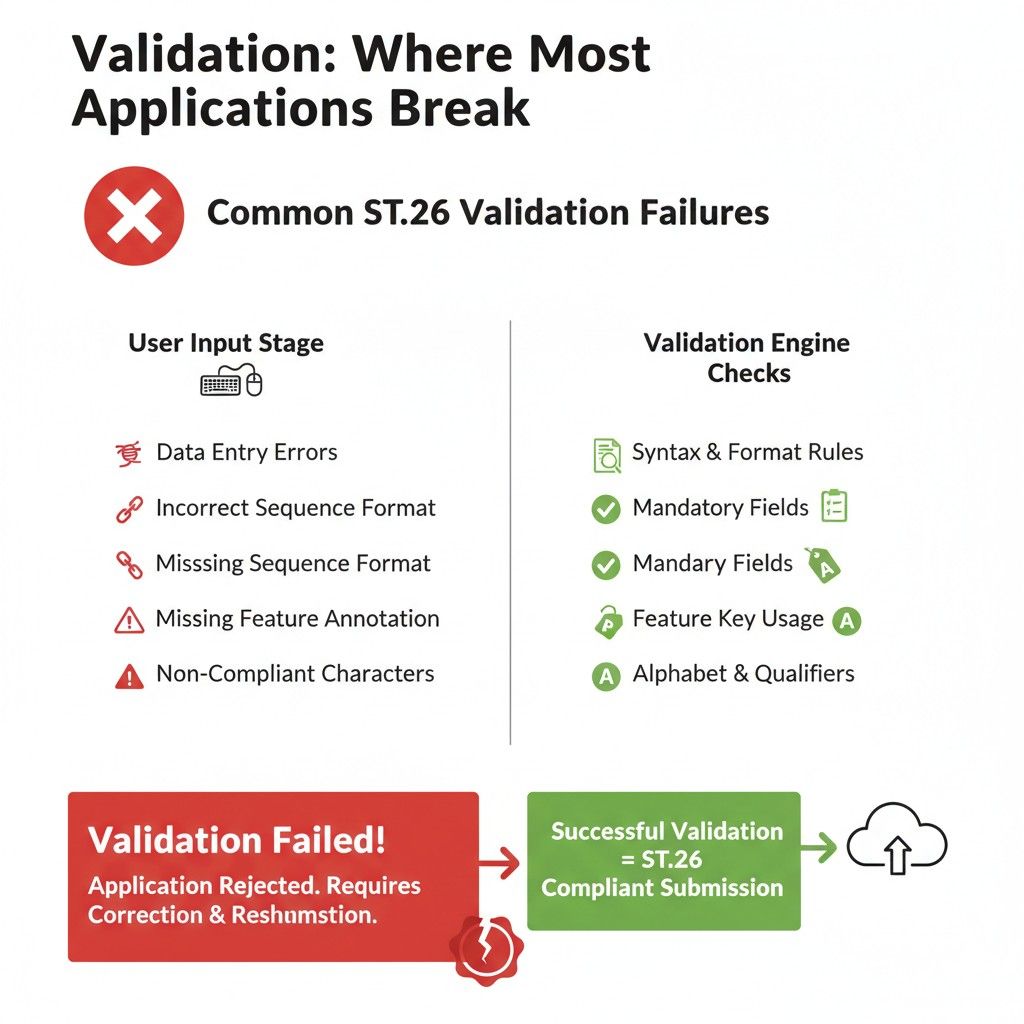
Validation is not a review of your invention. It is a rules check. The system looks at your ST.26 file and asks one simple question: does this follow every required rule, without exception. If the answer is no, the process stops.
This matters because the system does not care how innovative your work is. It does not care how much money you raised or how urgent your timeline is. Validation is binary. Pass or fail.
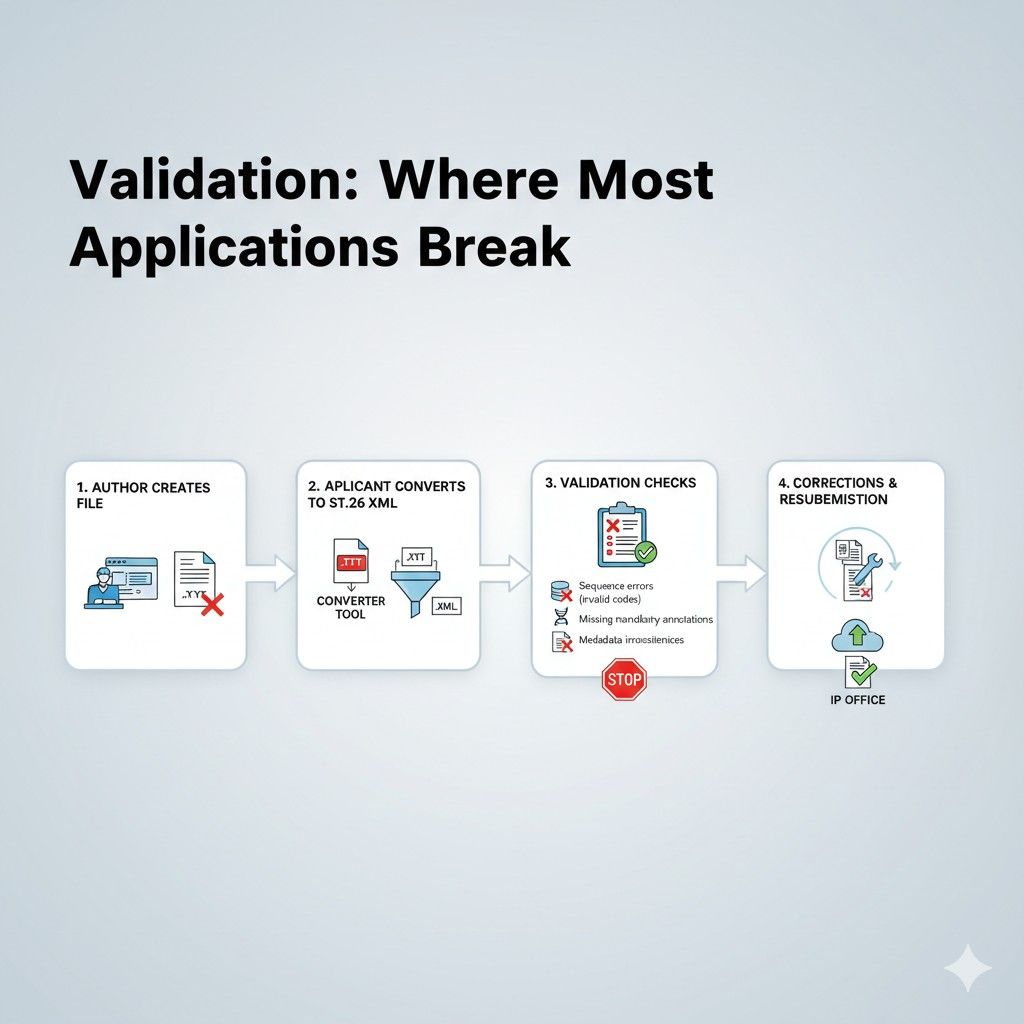
For businesses, this means validation must be treated as a gate, not a formality. Planning for it early avoids panic later.
Why Passing Once Is Not Enough
A common mistake is assuming that if a file passes validation in one tool, it will pass everywhere. Different offices and systems can surface different issues. A file that looks fine locally may fail during submission.
This is especially risky for companies filing internationally. Each delay compounds. Priority dates slip. Teams lose focus.
The smartest teams validate early, validate often, and validate with context. They do not wait until the night before filing to see if things work.
The Hidden Danger of Clean Errors
Some of the most damaging validation problems do not look like errors at all. They look clean. A sequence may be valid, but its description may not match how it is used in the claims. A feature may be formatted correctly but placed in the wrong context.
These issues often pass basic checks but surface later during examination. At that point, fixes are harder and more costly.
This is why validation alone is not protection. It is only the first filter.
How Businesses Accidentally Set Themselves Up to Fail
Many companies split responsibility in the wrong way. Scientists handle sequences. Legal teams handle claims. No one owns the connection between them.
Validation systems do not bridge that gap. They only check syntax. When ownership is unclear, mismatches are almost guaranteed.
A simple internal rule can prevent this. One person, or one small group, should own the full sequence story from data to filing. This creates accountability and clarity.
Why Late Fixes Hurt More Than You Think
When validation fails late, the cost is not just delay. It creates stress. Founders get pulled in. Engineers stop building. Decisions get rushed.
Late fixes also increase the risk of mistakes. Under pressure, teams patch problems instead of solving them. This can weaken the patent without anyone noticing.
Businesses that care about speed and quality invest in early validation workflows. They treat it like testing before release, not debugging in production.
Validation as a Strategic Signal
Passing validation cleanly sends a signal. To patent offices, it shows professionalism. To investors, it shows maturity. To competitors, it shows seriousness.
This signal matters more as markets get crowded. Strong IP starts with clean fundamentals. Validation is one of them.
Teams that repeatedly fail validation gain a quiet reputation. Teams that do it right build trust over time.
Why Human Review Still Matters
No validation system understands intent. Only humans do. This is why the strongest workflows combine automated checks with expert review.
A real patent attorney can spot when a sequence technically passes but strategically fails. They can see when scope is too narrow or support is thin.
PowerPatent is built around this balance. Software handles the rules. Attorneys handle judgment.
The result is fewer breaks at validation and fewer surprises later. You can see how this works in practice at https://powerpatent.com/how-it-works.
Turning Validation Into a Habit, Not a Crisis
The goal is simple. Validation should feel boring. When it becomes routine, risk drops. Timelines stabilize. Teams stay focused on building.
This only happens when validation is part of the process, not an afterthought. Businesses that reach this stage move faster with less stress.
Validation is not where innovation stops. It is where strong protection begins.
Submitting ST.26 the Right Way Without Slowing Down
Submission is the final door your invention must pass through before it becomes a real patent application. By this point, most teams are tired. Deadlines feel close. Pressure is high.
This is exactly why submission is where many good ST.26 files still stumble. The goal is not just to submit, but to submit cleanly, calmly, and without creating new problems.
When done right, submission should feel uneventful. When done wrong, it can undo months of careful work.
Why Submission Is More Than Uploading a File
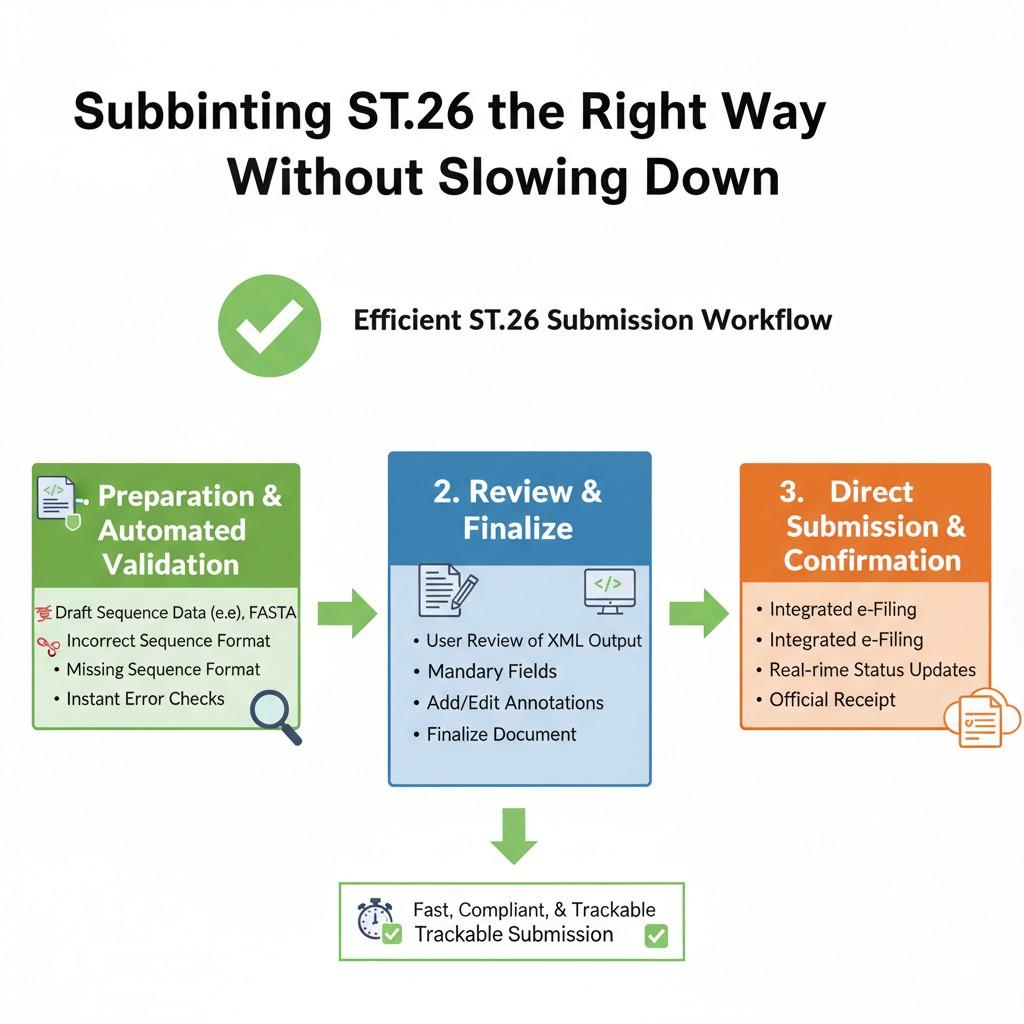
Many founders assume submission is just clicking upload. In reality, submission is a handshake between your file and the patent office system. The system checks file integrity, links documents together, and locks in dates.
If anything is off, the handshake fails. The system may accept the application but flag defects later. Or worse, it may reject the submission outright.
Businesses should treat submission as a controlled process, not a last step. Knowing how the system behaves reduces risk.
How Timing Impacts Risk
Submitting early in the day is safer than late at night. Submitting days before a deadline is safer than submitting hours before. These sound obvious, but many teams ignore them.
Patent office systems can slow down. Maintenance happens. Support is limited outside business hours. When something goes wrong close to a deadline, options shrink fast.
Actionable insight for businesses is simple. Build buffer into submission. Treat deadlines as internal targets, not finish lines.
File Consistency Matters at Submission
One quiet source of submission issues is inconsistency between documents. The ST.26 file must align with the specification, claims, and figures. Names must match. References must line up.
Even small mismatches can trigger notices or requests for correction. These cost time and create unnecessary back-and-forth.
Teams that centralize document generation reduce this risk. When files are produced from the same system, consistency improves naturally.
This is one reason PowerPatent’s integrated approach matters. It reduces the chance of mismatch by design. You can see how the system keeps everything aligned at https://powerpatent.com/how-it-works.
International Submissions Add Hidden Complexity
Submitting ST.26 for one office is manageable. Submitting for multiple offices adds layers. File formats must travel. Translations may be needed. Timing rules differ.
A clean ST.26 file makes this easier, but process still matters. Teams that plan international submissions early avoid scrambling later.

Businesses should map where they plan to file before submission begins. This helps avoid rework and missed opportunities.
The Risk of Post-Submission Changes
Once submitted, changes become harder. Some fixes are allowed. Others are not. Even allowed changes may raise questions or narrow scope.
This is why submission quality matters so much. It is the last moment where you fully control the content.
Rushing submission often leads to long-term regret. Slowing down slightly at this stage saves far more time later.
Using Submission as a Confidence Check
Smart teams use submission as a final confidence check. They ask whether the file truly reflects what they want to protect. They review sequence mappings one last time. They confirm alignment with business goals.
This is not about paranoia. It is about professionalism.
When submission feels calm, it is a sign the process worked.
Why Support During Submission Matters
When issues arise during submission, speed matters. Having access to both technical and legal support makes a huge difference.
Many low-cost tools leave users alone at this stage. When something breaks, there is no one to call. This creates panic.
PowerPatent was built to avoid this exact problem. Real attorneys are involved. Support exists when it matters most.
This reduces risk and stress at the worst possible moment. Learn more at https://powerpatent.com/how-it-works.
Submission as the Start, Not the End
Submission is not the finish line. It is the starting point of examination. A clean submission sets the tone for everything that follows.
Examiners see a well-structured file. Questions are fewer. Office actions are clearer. Timelines improve.
Businesses that submit well move forward with confidence. Those that submit poorly spend months recovering.
Building a Repeatable Submission Process
For growing companies, submission should not be reinvented each time. A repeatable process saves time and reduces error.
Document what worked. Refine what did not. Over time, submission becomes routine instead of stressful.

This is how strong IP programs scale.
Wrapping It Up
ST.26 is often framed as a rule to follow. In reality, it is a system to master. Tools, validation, and submission are not separate steps. They are one continuous workflow. When businesses treat them as disconnected tasks, friction appears. When they design them as a single process, everything becomes easier. The strongest teams start with intent. They decide what they want to protect and why it matters to the business. From there, sequences are prepared with care, not rushed at the end. Online tools are used thoughtfully, not blindly. Validation becomes routine instead of stressful. Submission becomes calm instead of chaotic.
Leave a Reply