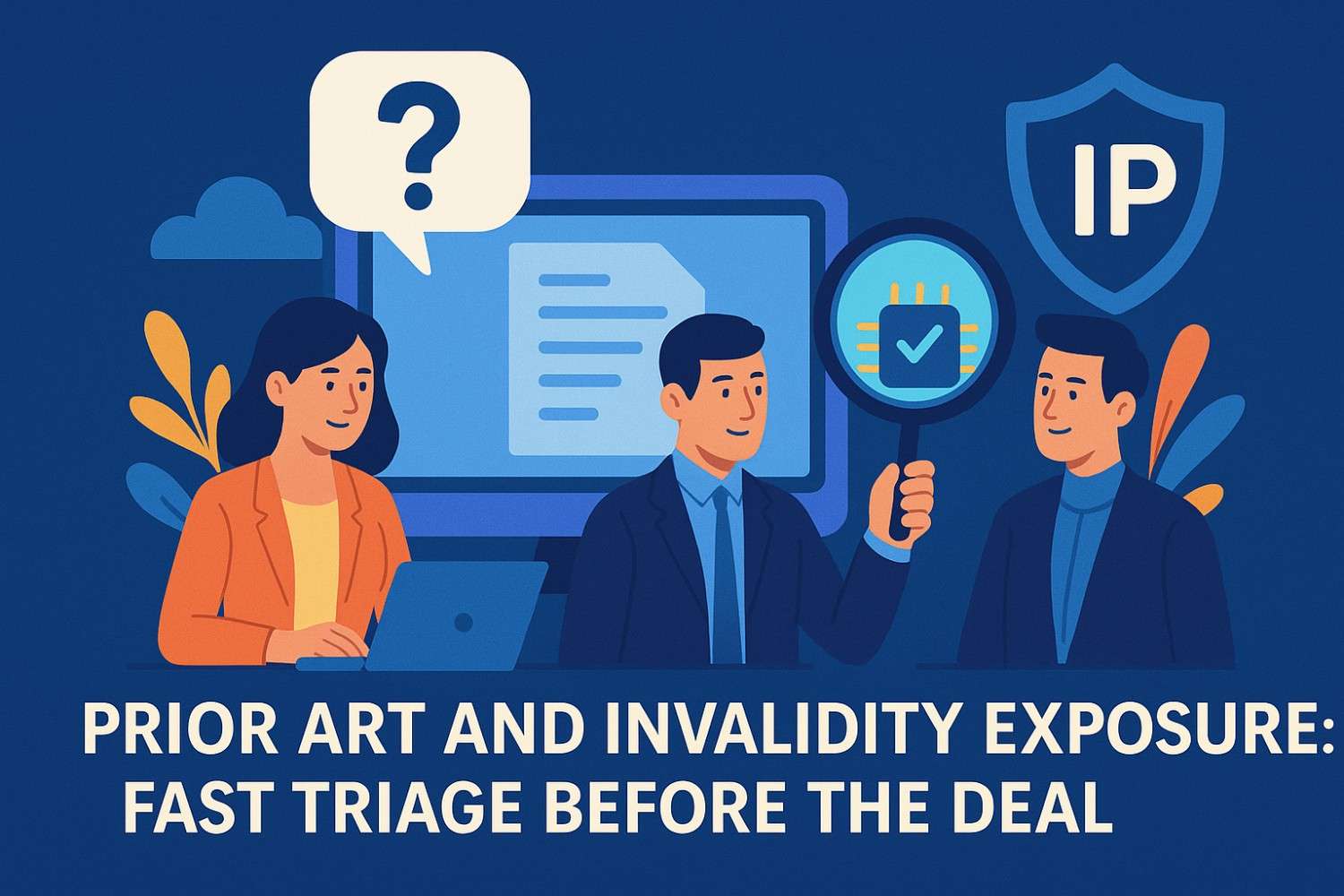
When a startup is heading into a big deal—whether it’s a funding round, a partnership, or an acquisition—everyone wants to know one thing: Is the IP solid, or is there a hole hiding in the walls? Most founders only find out the answer when it’s too late, usually during due diligence, when the other side’s lawyers start digging. At that point the clock is loud, the pressure is heavy, and even small problems can turn into deal-breakers.
Why Fast Prior Art Triage Matters Before Any Big Deal
Before any major deal, your patents suddenly become more than paperwork. They become proof that your idea is real, defensible, and worth betting on.
Investors, partners, and acquirers all look at the same thing first: whether your IP can hold up when pressure hits.
Fast prior art triage gives you a clean, early read on your true risk so you can move with clarity instead of fear.
It is not about diving into legal theory. It is about seeing your exposure in plain language so you can protect your momentum.
The Hidden Clock Running In Every Deal
Every deal has an invisible timer. The deeper the due diligence goes, the louder that timer gets. The other side wants answers fast, and they want those answers to be accurate.
If your team cannot show clear understanding of the prior art around your invention, the narrative slips out of your hands. A fast triage puts you ahead of the clock.

It helps you spot weak claims early, fix what is fixable, and show the other side that you understand your own risk landscape. That alone can build trust faster than any pitch deck.
How Early Visibility Shapes Your Valuation
A company that knows its IP strength is simply more valuable. When you can show how your claims stand apart from older technology, it becomes easier to justify pricing, equity terms, and deal confidence.
Without that clarity, investors build in a risk discount. They assume you may be exposed. They assume something might show up.
A fast prior art sweep lets you walk into the room with evidence that your position is strong or at least well understood. You remove the guesswork that often drives down valuation.
Why Surprises Hurt More When They Arrive Late
If a harmful reference appears late in the deal cycle, it creates panic. Your team has to react in real time while also trying to negotiate.
Even if the issue is fixable, the emotional impact makes the other side wonder what else you missed.
Fast triage prevents this kind of late-stage scramble. When you already know where the edge of your risk is, even bad news becomes manageable. You can shape the story instead of reacting to it.
Turning Uncertainty Into Leverage
A strange thing happens when you face your prior art risk early. You turn it into leverage. When you understand the landscape better than the other side, you negotiate from strength.
You can speak clearly about what is protected, what is not, and how your roadmap handles the gaps.
Smart founders use early IP clarity as part of their narrative. It signals maturity. It signals discipline. It signals that you are building something real.
The Role Of Clean Storytelling In IP Diligence
Every strong deal has a clean story behind the product. Investors and acquirers want to see that your IP fits into that story smoothly. If your claims match the core of your technology, the deal flows.
If there is confusion around what is truly new, the tension rises. Fast triage helps shape the story you want to tell.

When you know what prior art is out there, you can explain how your work moves beyond it. You can guide the listener instead of overwhelming them with complexity.
How Prior Art Triage Protects Your Engineering Roadmap
One of the biggest hidden benefits of fast triage is that it protects the work your team has not even built yet. When you understand where the crowded areas are, your engineers can steer into open space.
They can innovate with fewer blind spots and fewer future patent headaches. Triage is not only for legal safety; it is for product strategy. It keeps your team moving in directions that create real defensible value.
Why Clean Claims Speed Up Third-Party Review
During due diligence, external counsel will review your patents line by line. When your claims are clear, narrow where needed, and supported by a solid view of prior art, reviewers move faster.
That speed matters. Slow reviews often create bottlenecks and force deal teams to extend timelines. Every extension increases risk.
Fast triage helps your patents read cleanly and reduces the number of questions that bounce back to your team.
How Triage Helps You Decide What To Fix And What To Leave Alone
Not every issue needs a repair. Some weaknesses are harmless. Others are deal-breaking. Fast triage helps you know the difference. When you see which claims have strong novelty support and which claims are shaky, you can decide where to invest your time. You avoid wasting energy on low-impact problems. You also avoid ignoring the one issue that might cause a buyer or investor to slow down.
Why Internal Teams Need A Shared Understanding
A founder might think the IP is solid. A CTO might think it needs work. An attorney might see gaps the team missed. With fast triage, you give everyone the same clear picture.

When everyone sees the same map, decisions move faster. Product, legal, and leadership can align on risk, messaging, and next steps. Deals break down when teams are not on the same page. Fast triage creates alignment.
How Early Clarity Reduces Last-Minute Chaos
Chaotic deals usually come from late discoveries. Someone finds a reference. Someone challenges a claim. Someone questions whether a patent even covers the core tech.
These moments create pressure and often lead to rushed amendments or hurried explanations.
When you run fast triage early, the late game becomes calm. You walk into diligence with answers ready. You carry yourself differently because you know what you are walking into.
The Power Of Showing Preparedness To Buyers And Investors
People invest in teams that look prepared. When you show up with a clean breakdown of your prior art landscape, it tells the other side that you operate with discipline.
You are not guessing. You are not hoping everything is fine. You have done the work. This kind of preparedness reduces the emotional friction in negotiations. Buyers and investors lean forward when they sense competency.
Why The Old Way Is Too Slow For Modern Startups
Traditional IP reviews take too long. They require long meetings, slow searches, back-and-forth emails, and long legal memos. Startups do not have that kind of time. Deals move fast.
Product cycles move even faster. Fast triage is built for the modern pace.
With the right blend of smart software and attorney oversight, you can get clarity in days, not months. That speed changes everything for a growing company.
How PowerPatent Makes Fast Triage Practical
Most founders avoid early triage because they fear cost, complexity, or delay. PowerPatent removes that fear by pairing advanced search and analysis tools with real attorney review in a single flow.
You get speed without sacrificing quality. You get clarity without the legal maze. You get actionable answers you can use in pitches, data rooms, and negotiations.

It gives you the clean, early view that protects your momentum and strengthens your deal story. If you want to see how this process works step by step, you can explore it at https://powerpatent.com/how-it-works.
How to Spot Invalidity Risk Early Without Slowing Down Your Team
Before any team can move fast with confidence, it needs to know which parts of its patent position are strong and which parts might collapse under pressure.
Invalidity risk is the silent weight hanging behind every investor meeting and every term sheet. When you learn how to spot that risk early, you remove fear from the process.
You trade guesswork for clarity. You give your team room to execute instead of worrying about hidden threats. This section breaks down how founders can uncover these risks quickly and calmly, without putting the brakes on product timelines.
Why Early Invalidity Checks Feel Like x-ray Vision
Most founders work for years before someone finally tells them their patent might be weak. That discovery usually happens during a deal, when the other side’s lawyers run deep searches. By then, the pressure is too high, and the damage is already done.
When you spot invalidity risk early, it feels like x-ray vision. You can see cracks before anyone else sees them.
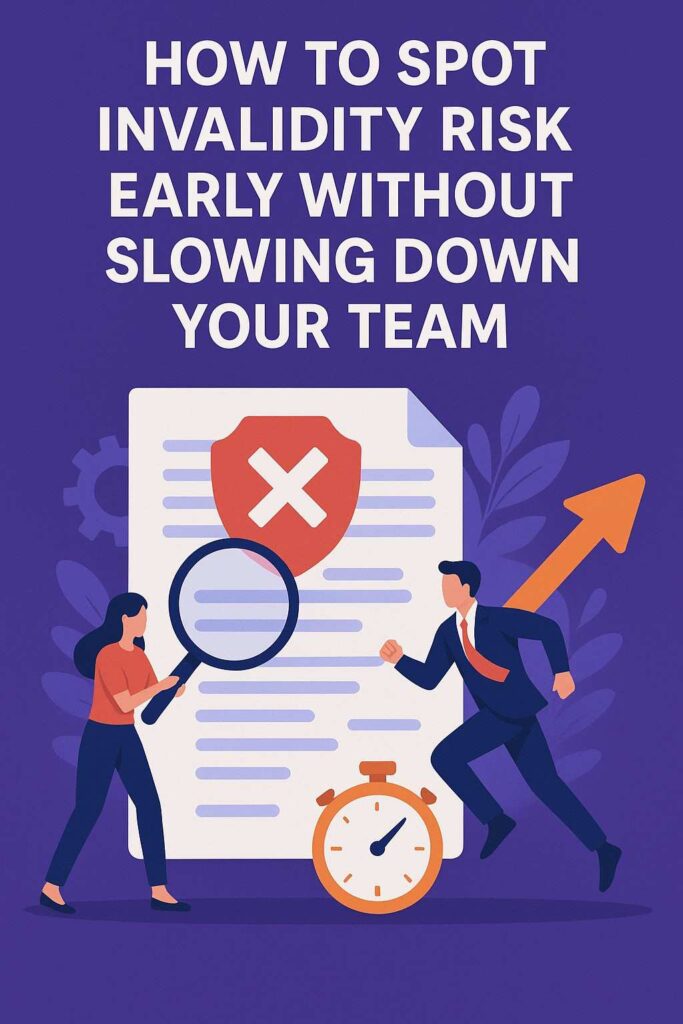
You know what can be defended and what cannot. You understand which claims have strong novelty and which claims need tightening. This early view shapes better decisions across the company.
How Realistic Scenarios Help You Test Your Patent Strength
Patents do not fail in theory. They fail when someone points to a real piece of prior art and shows the overlap. One of the fastest ways to expose risk is by imagining how a challenger would attack your claim. You ask simple questions.
What would they cite? What would they argue is already known? What part of your claim is easiest to copy?
When you think in real scenarios instead of abstract rules, you get a practical read on your exposure. This makes your understanding sharper and your messaging stronger.
Why Weak Claims Slow Down Negotiations
Invalidity exposure does not only affect legal outcomes. It affects negotiations. When a buyer or investor senses that part of your claim set might not survive a challenge, they hesitate.
They slow their pace. They start asking extra questions. Even if the risk is small, the uncertainty alone creates friction.
The earlier you understand your weaknesses, the faster you can fix them or reframe your story around more solid ground. Deals accelerate when you can talk about your IP with stability instead of doubt.
Why You Should Treat Each Claim As Its Own Asset
Many founders think of their patent as one large object. In reality, each claim is its own asset. Some claims are strong, some are mediocre, and some are fragile.
The easiest way to spot invalidity risk is to evaluate each claim separately. You ask if the claim stands on its own. You ask if the language is too broad. You ask if the idea was already known.
When you treat claims as individual units, you begin to see which parts of your patent are carrying the weight and which parts are exposed.
Why Broad Claims Are Not Always Better
Every founder wants broad protection. But broad claims often carry more invalidity risk because they overlap with more prior art.
Narrow claims can be surprisingly powerful because they capture the exact thing you built. They create clean separation from earlier work.
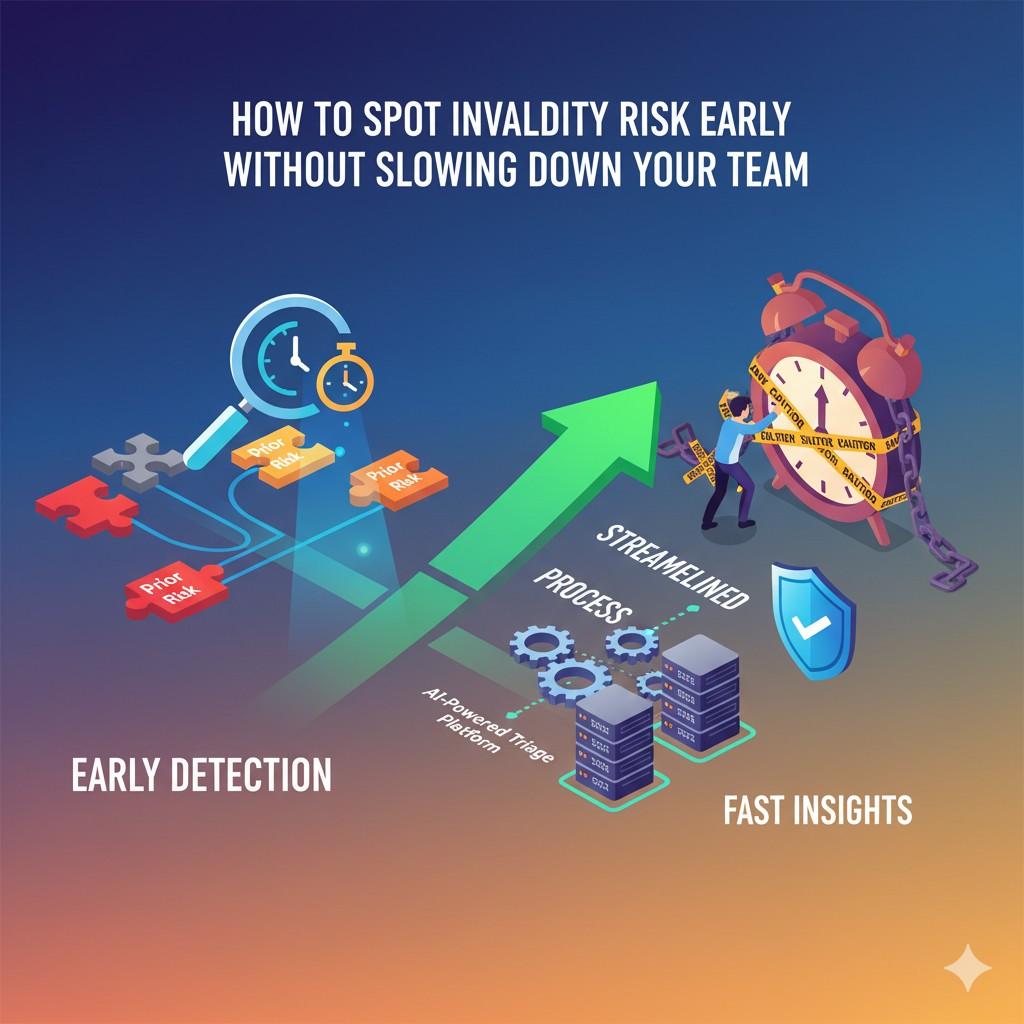
A fast triage often reveals that tightening a claim or adjusting its scope makes the entire patent far more defensible. Strength often comes from clarity, not from size.
The Role Of File History In Early Risk Detection
Invalidity analysis is not just about outside references. It is also about your own file history. If your patent went through heavy back-and-forth at the Patent Office, some of that conversation may weaken the claims later.
Small phrases, examiner comments, or claim amendments can shift your legal footing. Early review of these details helps you understand how an opponent might use them. This gives you a more complete picture of your risk profile.
Why Your Product Roadmap Should Influence Claim Strategy
A patent is not frozen. It should evolve with your product. The fastest way to spot future invalidity risk is to look at where your technology is heading. When parts of your roadmap drift beyond what the claims protect, you face gaps.
When your claims cover features you no longer build, you lose value. Aligning your claims with your actual product direction reduces both invalidity risk and business risk.
It keeps your protection close to where your team is investing time and money.
The Power Of A Second Set Of Eyes
Invalidity risk is easier to spot when someone outside the engineering team reviews the claims. Founders and engineers often think in product terms, not in legal distinctions.
A fresh perspective helps reveal assumptions, overlaps, or missing elements. You do not need long memos or long meetings.
You just need a quick, structured conversation with someone who knows how to read claims and search for parallels. When this review is done with a blend of AI and attorney insight, you get speed and depth at the same time.
Why You Should Not Wait For A Perfect Draft Before Checking
The biggest mistake founders make is waiting until a patent application is final or filed before checking for invalidity exposure. By that point, making changes becomes more costly and more complex.

The best time to run a fast validity check is right after drafting, before things are locked in. This simple habit prevents years of downstream risk and gives you more room to adjust strategy with ease.
How Fast Triage Keeps Your Engineers Focused
Deep IP reviews used to pull engineers into long meetings, slow reviews, and heavy paperwork. Fast triage is different. It gives you an early read without interrupting the product team.
Engineers can keep building while the triage runs in the background. When the results come in, the insights are simple and clear. This protects velocity while strengthening your IP position at the same time.
Why Small Red Flags Become Big Problems Later
A minor overlap with prior art might seem harmless today, especially if the startup is still small. But once money is on the table, the same issue can become a major point of leverage for the other side.
Early triage helps you handle small red flags now, when the stakes are low. You can amend claims, file continuations, adjust descriptions, or shift the narrative. Early action always costs less than late-stage scramble.
How PowerPatent Makes Early Invalidity Checks Smooth And Fast
Traditional invalidity reviews take hours of manual searching, expensive expert time, and back-and-forth confusion.
That is why most startups skip them. PowerPatent makes early checks simple by pairing automated prior art discovery with real attorney oversight.
You get clarity in a clean, founder-friendly way. You get a direct explanation of your risk in plain language. You get guidance you can use immediately in fundraising and product planning.

And you get all of this without slowing down your team. You can see how this modern triage flow works at https://powerpatent.com/how-it-works.
The PowerPatent Way: Clear Answers, Fast Checks, and Stronger IP Confidence
Before teams can scale, hire, fundraise, or negotiate partnerships, they need one thing that rarely comes easy: clear confidence in their patents. You want to know that what you built is actually protected.
You want to know that the story you tell investors matches the legal reality behind it. And you want this clarity without slowing down your momentum.
This is where the PowerPatent workflow transforms the old, slow process into something founders can actually use. It merges smart software with real attorney oversight so you get depth without delay.
This section breaks down how this blended approach gives you control, speed, and peace of mind.
Why Founders Need Clarity Faster Than Traditional Firms Can Deliver
Most law firms move at a pace that made sense decades ago. They send long memos. They wait for weeks to gather references. They require heavy meetings and confusing explanations.
Startup time moves differently. Your team does not have months to wait for an answer that shapes your valuation or your roadmap. You need fast signals. You need simple language.

You need something you can act on the same day. PowerPatent is built for that pace. It delivers clarity in a fraction of the time by removing the old bottlenecks that keep founders waiting.
How Smart Automation Opens The Door To Better IP Strategy
Automation is not here to replace attorneys. It is here to remove the slow, manual tasks that stop attorneys from focusing on meaningful work.
When software handles the early search, the comparison, and the pattern matching, attorneys can spend their time on the high-value part: reviewing the results, spotting nuances, and shaping a strategy you can actually use.
This blend of automation and human insight gives you fast answers that still meet a high standard. It is the difference between random search results and a true, usable picture of your risk.
Why Plain Language Turns Complex IP Into Actionable Insight
A founder cannot afford to decode legal jargon during a deal. You need clear statements. You need direct explanations. You need to know what is safe, what is exposed, and what steps matter next.
PowerPatent focuses on simple words because simple words lead to strong decisions. When you understand your claims in clear terms, you can explain them to investors without stumbling.
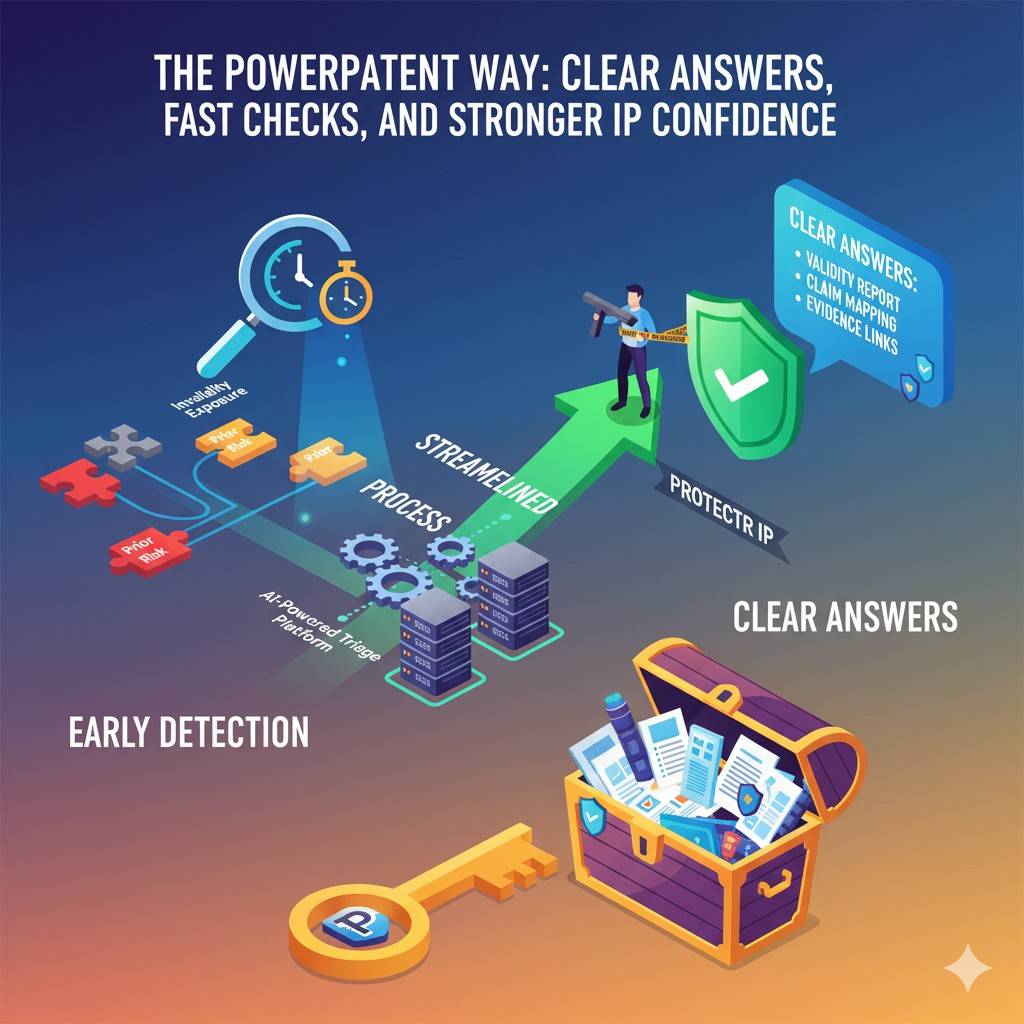
You can guide your team with confidence. You can negotiate without guessing. Plain language becomes a strategic advantage.
Early Triage As A Signal Of Maturity To Investors
When investors see a startup that has already run a fast triage, it sends a powerful message. It shows discipline. It shows seriousness. It shows that the team respects risk and handles it early.
Investors do not expect perfection, but they do expect awareness. A founder who can speak calmly about prior art and exposure looks prepared in a way that others do not.
PowerPatent helps founders reach that level of maturity early by giving them a clear, digestible view of their IP landscape.
Why Deal Teams Move Faster When Your IP Story Is Clean
Every negotiation is easier when your story is clean and consistent. When your claims match your product. When your explanations match the file history.
When the prior art picture matches the confidence you project. PowerPatent’s process helps align all of these pieces so due diligence does not become a guessing game.
The more clarity you show upfront, the faster the other side moves. They have fewer concerns to chase and fewer areas to question. A clean IP story clears the runway for the deal you want.
How Faster Answers Free Your Team From Endless Back-And-Forth
Traditional searches lead to long conversations and follow-up meetings because the findings are unclear or incomplete. Teams spend hours trying to understand what the results mean.
PowerPatent shortens this cycle by delivering clarity from the start. You get direct explanations and visual comparisons that help you see where your invention truly stands.
This means fewer meetings, fewer questions, and fewer interruptions for your engineers and leadership team.
Reducing The Emotional Weight Of IP Unknowns
IP uncertainty is stressful. It creates a low-grade fear that you might be exposed without knowing it. This fear grows louder before big deals. It distracts teams and slows decisions.
One of the unexpected benefits of PowerPatent’s fast triage is emotional relief. When you finally see the landscape clearly, even if there are weaknesses, the fear dissolves.
You move from doubt to direction. You know what matters and what does not. This emotional shift helps founders lead with more confidence.
Why Stronger Claims Create Stronger Roadmaps
A clear understanding of your IP strength does not only help with legal risk. It helps with product planning. When you see which parts of your invention are most defensible, you can invest there.
When you see which areas are crowded by prior art, you can innovate elsewhere.
PowerPatent’s triage gives teams insight that shapes smarter product choices. It turns IP from a legal afterthought into a strategic steering tool.
Continuations And Claim Adjustments That Fit Your Growth Stage
PowerPatent does not just expose risk. It guides you on practical steps you can take next. Sometimes the right move is tightening a claim. Sometimes it is adding a continuation to protect a new feature.
Sometimes it is shifting language to match what the market is adopting. These steps do not have to be slow or confusing.

When you see the path clearly, adjustments become simple. You take small steps now that save you from large problems later.
Making Your Data Room Look Deal-Ready
A blurry IP story in a data room makes investors pause. It raises questions. It slows momentum. A clear triage report changes the tone. It shows that you know your landscape better than most startups.
It shows that you anticipate diligence rather than fear it. It makes the review smoother because everything is already organized, explained, and mapped.
PowerPatent gives founders the IP story they want investors to see, not the one they hope no one questions.
Why Rapid IP Checks Keep You Ahead Of Competitors
Competitors are always watching. They file patents. They shift strategies. They search for openings. When you have a fast, reliable way to check your own claims, you stay ahead of them.
You know where your strengths lie and where you need to reinforce. You move faster because you trust your position. Fast IP checks help you avoid being blindsided and let you shape a more aggressive, confident strategy.
A Workflow That Matches The Rhythm Of Startup Life
Every startup runs on speed and clarity. You cannot afford long lags or unclear answers. PowerPatent’s workflow matches that rhythm. Fast searches. Clear explanations.
Direct steps you can act on. This lets you fold IP strategy into your normal decision-making, instead of treating it as an occasional, painful process. IP becomes part of your growth engine, not a break in your momentum.
How PowerPatent Turns Confusing Systems Into A Simple Flow
Most founders do not enjoy IP work because it feels like a maze. Too many rules. Too many documents. Too much back-and-forth. PowerPatent simplifies everything into a smooth sequence. You upload what you have.
The system analyzes it.

Attorneys refine the insights. You get a clear, founder-friendly summary. No noise. No heavy memos.
Just the truth you need. If you want to see how the full flow works in practice, you can explore it at https://powerpatent.com/how-it-works.
Wrapping It Up
Every startup faces pressure when heading into a major deal. Investors and partners want speed, clarity, and confidence. They want to know the value behind your technology is real and protected. They look for signs that your IP can survive tough questions and real competition. When you take control of your prior art and invalidity exposure early, you remove the guesswork that slows everything down. You show the market that your team does not wait for problems. You find them before anyone else does. This final section brings all these threads together into a simple message: early clarity is your greatest advantage.
Leave a Reply