
Deals do not die because the tech is bad. They die because trust breaks. Investors, acquirers, and partners all look for reasons to say no. Most of those reasons are not loud. They are quiet signals that something is off. A missing document. A vague answer. A patent story that does not add up. A founder who moves fast on product but slow on ownership.This article is about those signals.
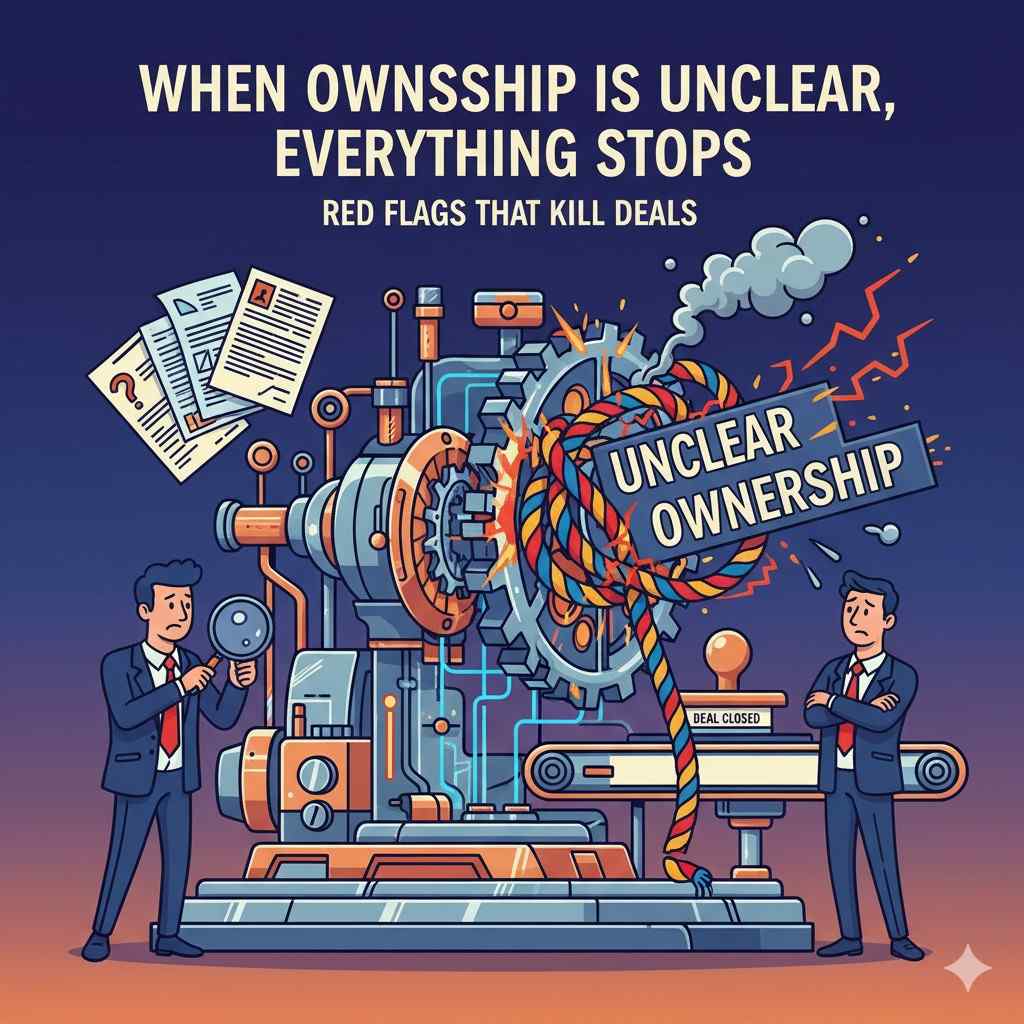
When Ownership Is Unclear, Everything Stops
Ownership confusion is not a small issue that can be cleaned up later. It is a hard stop. The moment a buyer, investor, or partner feels unsure about who truly owns the core idea, momentum disappears.
Calls slow down. Emails get vague. Deals quietly drift away. This section explains how ownership problems form, how they show up during diligence, and how smart teams fix them early before they turn into deal killers.
Ownership Is About Control, Not Just Credit
Most founders think ownership is about who came up with the idea. That is not how deals work. Ownership is about control in writing. If control is not clear on paper, it does not exist in the eyes of the other side.
During diligence, nobody cares about verbal stories. They care about signed agreements, clean chains of title, and simple proof that the company controls the IP today.
If that proof is missing, the deal pauses until it appears, and many times it never does.
The most effective move is to treat ownership as a system, not a feeling. Every invention, line of code, model, design, and improvement must flow into the company in a clean and repeatable way.
Founders Forget That Early Work Still Counts
Many ownership issues begin before the company even exists. Work done on nights and weekends. Code written on a personal laptop. A prototype built with a friend. A pitch deck that included technical details.
Later, when a deal is on the table, someone asks a simple question. When was this built, and who owned it at that time? If the answer starts with “well” or “basically,” the problem is already visible.
The fix is not complex, but it must be intentional. Early work needs to be formally assigned to the company.
Waiting only increases risk. The longer the gap, the harder it is to fix cleanly, especially if people have moved on or relationships have changed.
Co-Founders Drift, Ownership Does Not
Teams change. Co-founders leave. Early contributors fade out. That is normal. What is not normal is when their IP rights quietly stay behind with them.
A buyer will always ask whether former founders or early builders still have any claim to the core technology. If the answer is unclear, the deal slows down fast. Nobody wants to buy a future lawsuit.
The smart move is to review ownership every time a role changes. When someone leaves, confirm that all IP created during their time is properly assigned. This is not about mistrust. It is about protecting everyone involved.
Contractors Are Not Employees, and That Matters
One of the most common ownership traps comes from contractors. Designers, developers, researchers, and consultants often build critical parts of the product. Many founders assume payment equals ownership. It does not.
Without a proper invention assignment, contractors usually own what they create. That single fact has killed more deals than most technical failures.

The solution is simple but must be done before work begins.
Every contractor agreement should clearly state that all work product belongs to the company. Fixing this after the fact is possible, but it is slower, more expensive, and sometimes impossible if the contractor is no longer reachable.
Open Source Can Quietly Complicate Ownership
Open source is powerful and useful, but it can quietly blur ownership if used without care. Investors and buyers do not fear open source itself. They fear not knowing how it was used.
If core functionality depends on code with restrictive licenses, or if modifications were made without tracking obligations, ownership and control become uncertain. That uncertainty creates hesitation.
The best teams document open source usage as they go. They know what licenses apply and where boundaries are. This clarity builds confidence and keeps deals moving instead of triggering legal review cycles.
Universities and Labs Change the Ownership Rules
Academic work follows different rules. If any part of the technology came from a university, lab, or sponsored research program, ownership may not be straightforward.
Institutions often retain rights, even if a founder did the work personally. A deal will pause immediately if institutional claims are unclear.
The right approach is early disclosure and clean licensing. Waiting until diligence to uncover university involvement almost always leads to delays. Clear agreements upfront signal maturity and professionalism to the other side.
Patents Without Clear Ownership Raise More Questions Than Answers
A patent is supposed to reduce risk. When ownership is unclear, it does the opposite. A buyer will ask whether all inventors are named correctly and whether each inventor has assigned their rights to the company.
If even one inventor has not signed an assignment, the patent becomes fragile. That fragility makes the asset less valuable, not more.
Strong teams treat patent ownership with the same care as product ownership. They ensure inventorship is correct and assignments are completed immediately.

This is one area where speed and accuracy matter more than perfection.
Informal Fixes Create Formal Problems
Founders sometimes try to fix ownership issues informally. A quick email. A handshake promise. A shared understanding. These solutions feel fast but fail under scrutiny.
During diligence, informal fixes do not count. Only signed documents matter. If the fix cannot survive review by outside counsel, it is not a fix.
The practical move is to formalize everything while the stakes are low. Clean paperwork early feels boring. Cleaning it under deal pressure feels painful.
Buyers Look for Signals, Not Just Documents
Ownership clarity is also a signal of how the company operates. Clean IP tells a story of discipline, foresight, and seriousness. Messy IP tells a story of shortcuts.
Even if a buyer believes issues can be fixed, they may still walk away because they fear what else might be hidden. Ownership problems create doubt far beyond IP.
The best founders understand this psychology. They do not wait to be asked. They volunteer clarity early. That confidence builds trust and keeps conversations moving forward.
Building an Ownership Habit Inside the Company
The most effective teams make ownership part of their culture. New hires sign invention assignments on day one. Contractors are onboarded with clear terms. Changes are documented as they happen.
This is not legal overkill. It is operational hygiene. Just like version control or access permissions, ownership tracking is part of building real value.
When diligence starts, these teams do not scramble. They respond calmly because the answers already exist.
How PowerPatent Helps Reduce Ownership Risk Early
Many ownership problems begin during the patent process itself. Ideas are shared casually. Drafts are passed around. Inventors are unclear. Assignments are delayed.
PowerPatent is designed to reduce that risk from the start. It helps founders capture inventions clearly, align inventorship correctly, and ensure assignments are handled with real attorney oversight.

That means fewer gaps and fewer surprises when a deal appears.
If you want to protect what you are building while keeping ownership clean and simple, you can see how PowerPatent works here: https://powerpatent.com/how-it-works.
Process Gaps That Make Buyers Nervous
Process gaps do not look dangerous at first. In fact, inside a fast-moving startup, they often feel like speed. Things get done quickly. Decisions happen in Slack.
Files live wherever they landed last. Everyone knows what is going on, so nothing feels broken.
From the outside, it looks very different.
To a buyer or investor, process is how they measure risk. Not because they love paperwork, but because process shows whether the company can scale without breaking.
When process is missing or messy, they assume hidden problems exist, even if the product is strong.
This section explains the process gaps that quietly raise red flags, why they matter so much in deals, and how to close them without slowing your team down.
Speed Without Structure Feels Unsafe to Outsiders
Founders often confuse speed with chaos. Moving fast does not require being disorganized, but many teams blur the line early. Decisions are made verbally. Changes are not tracked. Important approvals live in memory.
During diligence, this creates a simple problem. There is no single source of truth. When buyers ask how decisions were made or how risks were handled, answers vary by person. That inconsistency creates doubt.
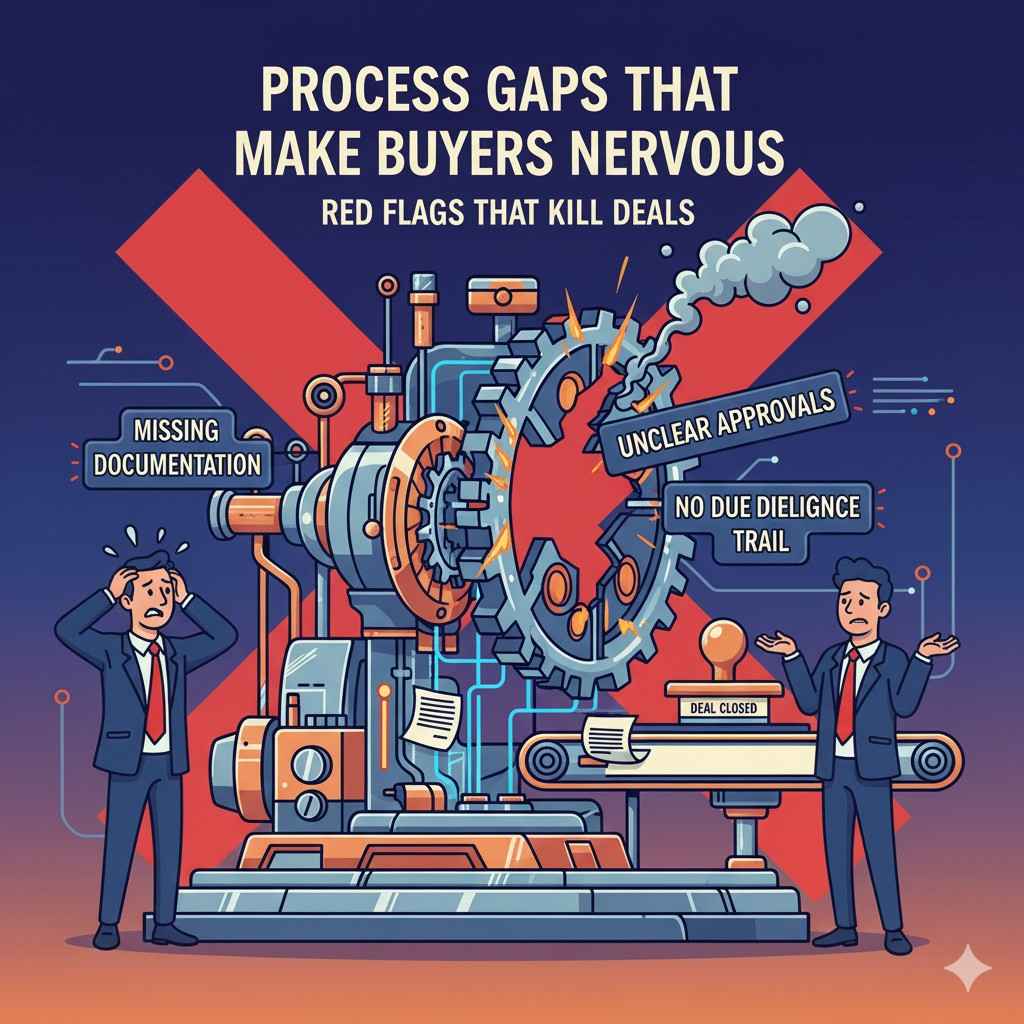
The fix is not heavy process. It is light structure. Clear ownership of decisions. Written records of key choices. A simple way to show how the company thinks and acts.
Missing Documentation Signals Future Pain
Documentation is not about the past. It is about the future. Buyers want to know whether the company can onboard new people, hand off responsibilities, and survive transitions.
When core processes live only in founders’ heads, the business feels fragile. If one person leaves, what breaks? That question alone can stall a deal.
Strong teams document only what matters. How IP is created and approved. How security decisions are made. How key vendors are chosen. This level of clarity reduces perceived risk without adding bureaucracy.
Verbal Agreements Create Silent Risk
Many startups run on trust. That is healthy internally, but it becomes a liability in deals. Verbal agreements with vendors, partners, or early customers create uncertainty that is hard to price.
A buyer will always ask what commitments exist and what obligations are outstanding. If the answer relies on memory instead of contracts, risk goes up instantly.
The practical move is to convert important verbal agreements into simple written form. Not long contracts. Clear terms that reflect reality. This protects both sides and removes doubt during diligence.
Inconsistent IP Handling Breaks Confidence
One of the fastest ways to lose confidence is inconsistent IP handling. If some inventions are documented, some are not, and some live only in decks, buyers struggle to understand what they are actually buying.
Process gaps around IP often show up as scattered files, unclear version history, and missing approvals. Even if ownership is technically correct, the lack of a clear process feels risky.
High-quality teams treat IP creation like product development. There is a flow. Ideas are captured. Reviewed. Approved. Filed or protected. That rhythm builds confidence and signals maturity.
Security Process Is Now Deal-Critical
Security used to be a later concern. That is no longer true. Buyers now view weak security process as a direct threat to value.
This does not mean enterprise-level systems are required. It means showing that access is controlled, data is handled intentionally, and risks are understood.
If security questions are met with vague answers, deals slow down. Clear, simple explanations move them forward.
Financial Process Reflects Operational Discipline
Even non-financial buyers look closely at financial process. Not because they expect perfection, but because finance reveals how the company thinks.
Are expenses tracked? Are approvals clear? Is revenue recognition understood? Sloppy answers suggest deeper operational issues.
Founders do not need complex systems. They need consistency. The ability to explain how money moves through the business without hesitation builds trust quickly.
Hiring Process Shows How the Company Grows
Hiring decisions shape future risk. Buyers want to know how people are added, evaluated, and managed.
If hiring feels random or undocumented, concerns arise about culture and scalability. If roles are clear and expectations are written, the company feels stable.

Even a simple hiring framework sends a strong signal. It shows the team plans ahead instead of reacting under pressure.
Process Gaps Often Appear During Q&A, Not Audits
Many founders think process issues appear during formal audits. In reality, they show up earlier, during casual questions.
When buyers ask how something works and receive different answers from different people, they notice. When follow-up questions are delayed because information is hard to find, they notice.
These moments create friction that compounds over time. Reducing them requires preparation, not perfection.
The Goal Is Confidence, Not Compliance
Process is not about checking boxes. It is about making others feel safe moving forward.
A buyer wants to believe the company can handle growth, change, and pressure. Clear process supports that belief. Gaps weaken it.
The smartest founders design process to answer the questions buyers will ask later. That foresight shortens deal cycles and improves outcomes.
How PowerPatent Fits Into Strong Process
Patent work is often where process breaks first. Inventions move fast. Ideas change. Documentation lags.
PowerPatent helps teams build a clean, repeatable process around invention capture and protection. It creates a clear trail from idea to filing, with real attorney oversight built in. That trail becomes a powerful signal during diligence.

If you want to strengthen your internal process while protecting your IP, you can explore how PowerPatent works here: https://powerpatent.com/how-it-works.
Process gaps do not look dramatic, but they quietly shape deal outcomes. Closing them early turns uncertainty into confidence.
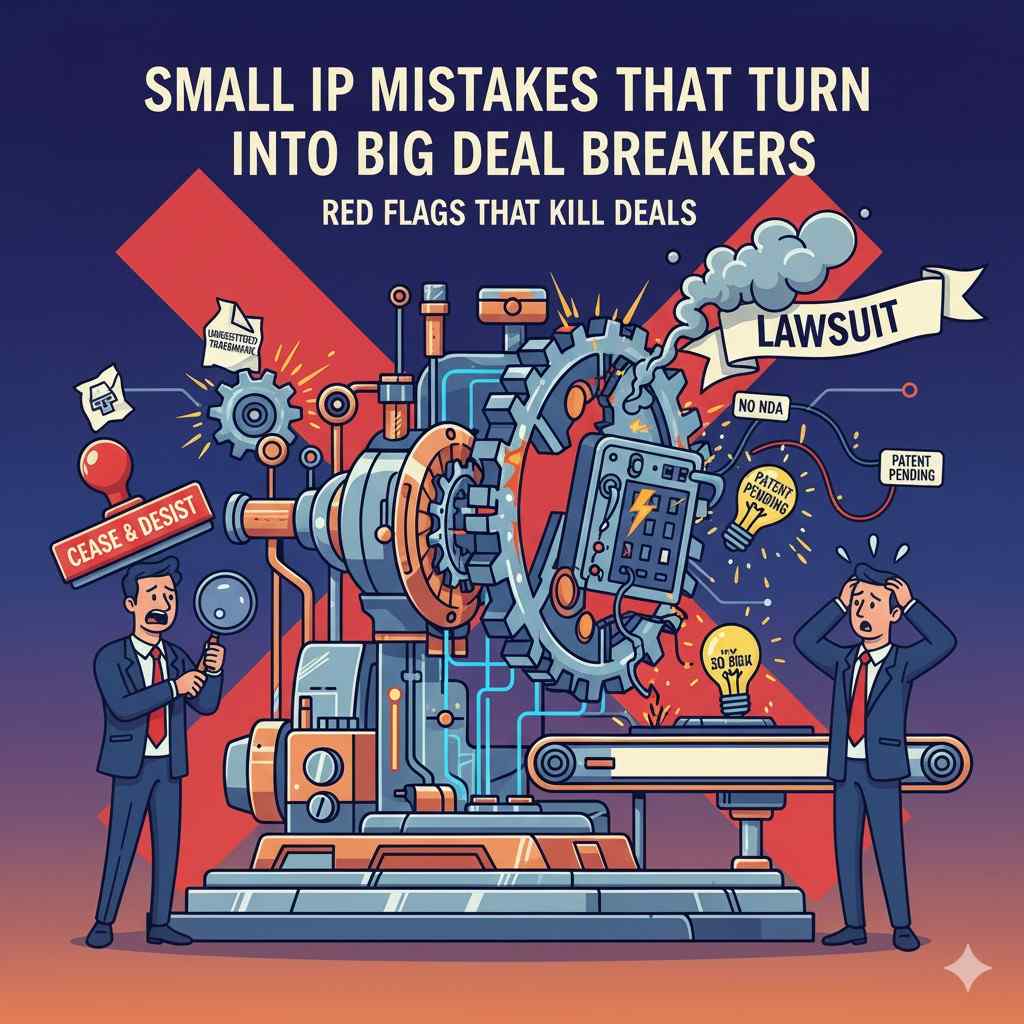
Small IP Mistakes That Turn Into Big Deal Breakers
Small IP mistakes are dangerous because they hide in plain sight. They do not feel urgent.
They do not break the product. They do not slow down sales. But when a deal gets serious, these small gaps suddenly matter more than months of progress.
Buyers and investors do not expect perfection. What they look for is intent and care.
When IP mistakes suggest shortcuts or confusion, trust drops fast. This section focuses on the quiet errors that seem harmless early on but become major friction later, and what smart teams do to fix them before they are exposed.
Treating IP as a Filing Instead of an Asset
Many teams think of IP as a one-time task. File a patent. Check the box. Move on. That mindset creates risk.
IP is not a document. It is a living asset that grows with the product. When filings do not reflect what is actually being built, buyers notice the gap. They ask whether the protection truly covers the value.
The practical fix is alignment. IP should track the real product, not an old version of it. Regular check-ins between engineering and whoever handles IP keep protection relevant and credible.
Waiting Too Long to Capture Core Ideas
Founders often delay IP capture because things are still changing. That delay feels logical, but it creates exposure.
When ideas are shared before they are captured, rights can become unclear. Public demos, investor decks, beta users, and early pilots all create risk if core concepts are not documented first.
The most effective teams capture ideas early, even if they evolve later. Early capture creates a record. That record matters when timelines are reviewed during diligence.
Confusing Trade Secrets With Silence
Some teams rely on secrecy instead of strategy. They assume that not writing things down keeps them safe.
In reality, silence is not a plan. If employees leave, contractors move on, or systems are breached, undocumented know-how is hard to protect.

Trade secrets require process. Clear rules. Limited access. Written understanding. Without those elements, claims of secrecy fall apart under review.
Overlooking International Exposure
IP mistakes often happen when teams grow globally. Remote hires. Overseas contractors. Cloud tools. Each step can trigger new ownership or disclosure issues.
Founders sometimes assume that U.S.-based protection covers everything. Buyers know that is not always true. They ask where work was done and by whom.
The fix is awareness. Know where your IP is created and accessed. Make sure agreements match reality. This clarity reduces surprises and speeds up deals.
Misunderstanding Inventorship
Inventorship is technical and often misunderstood. It is not about seniority or job title. It is about contribution to the invention itself.
Incorrect inventorship weakens patents. Buyers will look closely at this, especially if patents are central to the deal.
Smart teams take inventorship seriously. They review contributions carefully and correct mistakes early. Fixing inventorship later is possible, but it raises questions that could have been avoided.
Using Templates Without Context
Templates feel efficient. They are also risky when used blindly.
IP agreements copied from the internet or previous companies may not fit the current situation. Buyers spot mismatches quickly. They question whether the team understood what they signed.
The better approach is simple review. Make sure agreements reflect how the company actually works. Clarity beats complexity every time.
Letting IP Live in Too Many Places
Scattered IP is hard to trust. When documents live in personal drives, old emails, shared folders, and outdated tools, diligence becomes slow and painful.
Buyers want a clear picture. What exists. What is protected. What is pending.

Centralizing IP records is one of the easiest ways to reduce friction. It signals control and readiness without changing how the team builds.
Forgetting That Diligence Is a Story
Every deal involves a story. The buyer is asking whether this company is careful, intentional, and prepared.
Small IP mistakes interrupt that story. Each one creates a pause. Too many pauses break momentum.
Founders who think ahead remove those pauses. They anticipate questions. They prepare answers. They turn IP from a liability into a strength.
How PowerPatent Helps Prevent These Mistakes
Many of these mistakes happen because founders are focused on building, not paperwork. PowerPatent is designed to fit into that reality.
By helping teams capture inventions early, align filings with real products, and keep ownership clean with attorney oversight, PowerPatent reduces the risk of small errors becoming big problems later.

If you want to protect what matters while keeping deals smooth, you can see how PowerPatent works here: https://powerpatent.com/how-it-works.
Small IP mistakes rarely feel urgent. Until they are. Fixing them early is one of the highest leverage moves a founder can make.
Wrapping It Up
Deals are not lost in the final meeting. They are lost weeks earlier, in small moments that feel harmless at the time. A slow follow-up. An unclear answer. A document that takes too long to find. A detail that does not quite match the story. By the time a buyer or investor walks away, the decision has already been made internally. The reason is rarely stated directly. Instead, it is framed as timing, focus, or strategy. Underneath, it is almost always about risk.
Leave a Reply