
Every serious startup deal comes down to one quiet question: what is the company really worth? Not the pitch. Not the story. Not the deck. The real answer lives inside the intellectual property. Your code. Your models. Your designs. Your methods. The things that make your company hard to copy. When a term sheet lands, investors look at IP with sharp eyes. They want to know if it is real, owned, protected, and strong enough to defend the value they are about to fund. Founders often feel this moment slip out of their control. Numbers appear. Discounts show up. The IP gets waved away as “hard to value.”
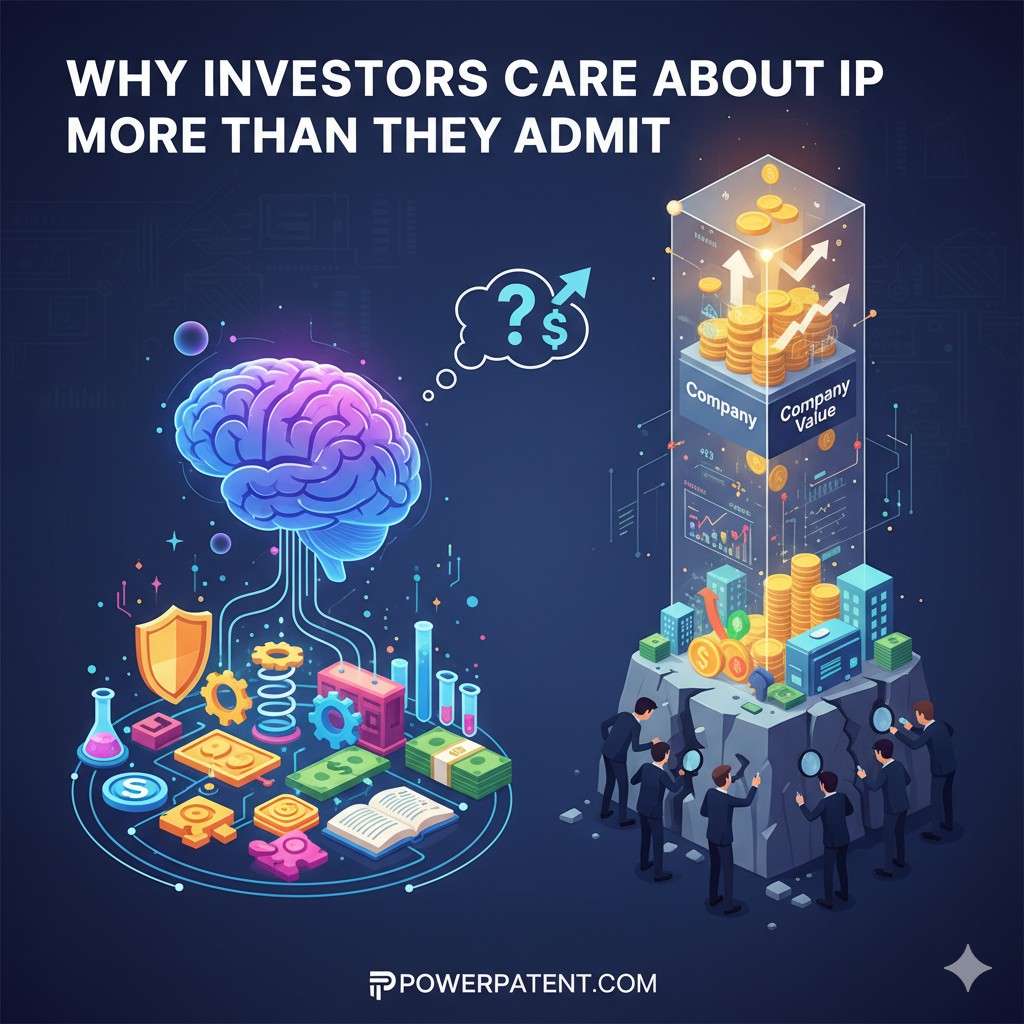
Why Investors Care About IP More Than They Admit
Investors rarely open a term sheet by talking about patents or ownership records. Instead, they talk about market size, traction, team, and growth.
But behind closed doors, and often behind polite language, IP is doing heavy work in the decision.
It shapes risk, pricing, control, and long-term upside. This section explains what investors are really thinking and how founders can act on it before it shows up as a valuation haircut.
IP Is the Only Thing That Still Matters When the Story Breaks
Every startup has a story. Early on, that story can carry a lot of weight. But investors assume the story will change.
Markets shift. Products pivot. Teams evolve. When that happens, IP becomes the anchor.
After the excitement fades, investors ask a simple question: if this company struggles, what is left that still has value? Strong IP answers that question. Weak or unclear IP makes the entire investment fragile.
Founders who understand this do not treat IP as paperwork. They treat it as insurance that works even when things go sideways.

The most actionable step here is to pressure test your own company the same way. Ask what still holds value if growth slows or the market turns.
If the answer depends on your core technology, that technology needs to be clearly owned and protected before the term sheet shows up.
IP Quietly Sets the Floor on Valuation
Valuation feels like a math problem, but it often starts as a risk problem. Investors decide how much downside they can live with before they decide how much upside they want.
IP sets the floor. If the IP is clean, owned by the company, and hard to recreate, the downside feels limited. That supports a higher valuation without anyone saying so out loud.
If the IP is messy, shared, or undocumented, the downside feels open-ended. That leads to discounts, tighter terms, or stalled deals.
Founders can act on this early by making IP review boring instead of scary. When everything is in one place and easy to explain, investors stop digging. When it is scattered or unclear, they keep pulling threads until something snaps.
Investors Use IP to Measure Founder Discipline
Investors often talk about execution, but IP is one of the clearest signs of how a team actually operates. A company that treats IP seriously usually treats other hard things seriously too.
Clear assignment agreements, thoughtful filings, and consistent ownership signals discipline.
Missing signatures, unclear contributors, or last-minute fixes signal chaos. Investors notice this pattern even if they never say it directly.
The practical move is to treat IP hygiene like financial hygiene. Do not wait for diligence. Set a standard early. When a new hire joins, IP ownership is handled the same day.
When a contractor helps, terms are clear before work starts. This removes doubt long before it can affect a deal.
IP Is a Proxy for Competitive Moat
Most early-stage companies do not have deep moats yet. Investors know this. What they look for instead is evidence that a moat can exist.
IP acts as that evidence. Not because a patent magically stops competition, but because it shows the company understands what makes its product different.
A well-scoped patent or filing tells investors that the team has identified its edge and taken steps to lock it in.

Actionable founders do not file everything. They file what matters. They focus on the core technical insight that competitors would struggle to copy. That focus is what investors respect, not the number of filings.
IP Changes How Power Is Split in Negotiations
Term sheets are about leverage. IP quietly shifts that leverage.
When IP is strong, investors compete on price and terms. When IP is weak, investors compete on control.
Protective provisions, liquidation preferences, and other terms start to creep in as ways to manage risk that IP should have covered.
Founders can protect their leverage by making IP strength obvious early. This means being able to explain what is protected, why it matters, and how it connects to revenue.
When investors understand this without guessing, they have less reason to push for downside protection elsewhere.
Investors Care About IP Because Acquirers Care About IP
Even when investors say they are focused on long-term growth, they are always thinking about exits. Acquirers care deeply about IP. They want clean ownership, defensible claims, and no surprises.
Investors know this. They price it in from day one.
If IP is unclear, it becomes a future problem that someone else has to fix. That reduces present value. Founders who want better terms should think like an acquirer early.
Would a large company feel safe buying this technology as-is? If not, that gap will show up in the term sheet.
IP Reduces Personal Risk for Investors
Behind every fund is a group of people who have to explain their decisions. Strong IP gives investors something concrete to point to if things go wrong.
They can say the technology was real, protected, and valuable, even if execution failed. That matters more than founders often realize. It is one reason investors push so hard on IP diligence even when traction looks good.
The founder takeaway is simple. Make it easy for investors to defend the investment. Clear IP gives them confidence not just in the upside, but in their own decision-making.
How Founders Can Use This Knowledge Right Now
Understanding why investors care about IP is only useful if it changes behavior. The smartest founders use IP as a tool, not a checkbox.
They document core ideas while they are fresh. They avoid sharing sensitive details without clarity on ownership.
They build IP into their narrative early, not as a reaction to diligence. Most importantly, they do not wait for a law firm to slow them down.
This is exactly where modern tools matter. PowerPatent was built so founders can move fast, stay in control, and create investor-grade IP without friction.
If you want your IP to strengthen your next term sheet instead of weakening it, you can see how the process works here: https://powerpatent.com/how-it-works
How IP Quietly Shapes Valuation Before Numbers Appear
Long before a valuation number is typed into a term sheet, a quiet process is already underway. Investors are forming a price in their heads based on risk, confidence, and future control.
IP plays a central role in that process, even when it is never named directly. This section breaks down how that happens and how founders can shape those thoughts early instead of reacting late.
Valuation Starts as a Feeling, Not a Formula
Most founders expect valuation to come from revenue, growth rate, or comps. Those matter, but they come later. Early valuation starts as a feeling of safety.
Investors ask themselves whether this company feels solid or fragile. IP strongly influences that feeling.
When IP is clear, owned, and defensible, the company feels grounded. When IP is vague or unspoken, the company feels exposed.

Founders can influence this by talking about IP naturally, not defensively. When you explain your technology with clarity and confidence, and you show that ownership is settled, investors relax.
That calm shows up later as better numbers.
IP Sets the Frame for How Big the Company Can Become
Before investors care about today’s metrics, they care about how big this can get. IP shapes that belief.
If the technology can be copied easily, the upside feels capped. If the technology is protected in a way that supports expansion into new markets or products, the upside feels open-ended.
That difference alone can swing valuation dramatically.
Founders should connect IP to future growth early. Not in abstract terms, but in practical ones.
Explain how the protected core can support new features, new customers, or new use cases over time. This reframes IP from a defensive tool into a growth engine.
Strong IP Reduces the Need for Conservative Pricing
When investors feel uncertain, they protect themselves with price. Lower valuation is the easiest lever to pull.
Strong IP reduces that instinct. It gives investors confidence that even if growth is slower than planned, the company still holds something valuable. That confidence allows them to price more aggressively without feeling reckless.
The actionable move here is to remove ambiguity. If an investor has to guess who owns what, they will assume the worst. Clear documentation and simple explanations remove the need for conservative assumptions.
IP Influences How Investors Compare You to Others
Investors always compare deals, even when they say each company is unique. IP is one of the easiest comparison points.
Two companies with similar traction can feel very different if one has protected technology and the other does not. The protected company feels more mature, even if it is not older. That perception often leads to better terms without a fight.

Founders can use this by understanding the landscape. Know what competitors have filed, claimed, or left open. When you can show that your IP position is stronger or more thoughtful, you change how investors rank you internally.
IP Shapes the Speed of the Deal
Valuation is not just about price. It is also about momentum. Deals that drag often lose value.
When IP is clean, diligence moves quickly. When IP is messy, questions pile up. Each delay gives investors time to reconsider pricing, add conditions, or walk away.
Founders who prepare IP early protect not just valuation but timing. Speed keeps leverage on your side. The faster you can answer questions with confidence, the less room there is for doubt to grow.
IP Signals How Much Future Dilution Is Needed
Investors think ahead. They ask whether this company will need many more rounds to win.
Strong IP suggests durability. It implies that future competitors will face friction and that the company can grow without constant defensive spending. That reduces the perceived need for heavy future dilution.
Weak IP suggests the opposite. Investors assume the company will need more capital to compete, defend, or pivot. That assumption lowers present valuation.
Founders can counter this by showing how IP supports long-term independence. Explain how protection reduces future risk and capital needs. This shifts how investors model the future.
IP Affects How Investors Model Exit Scenarios
Even at early stages, investors think about exits. They imagine who might buy the company and why.
IP often sits at the center of that story. Acquirers pay premiums for technology they can own outright and integrate safely. If IP ownership is unclear, exit scenarios feel speculative. That uncertainty flows backward into valuation.
Founders should tell an IP-aware exit story. Not hype, but logic. Who would care about this technology, and why would ownership matter to them? When that story makes sense, valuation becomes easier to justify.
Founders Can Shape Valuation Before It Is Discussed
The most important insight is this: by the time valuation is negotiated, most of the decision has already been made.
IP gives founders a way to shape that decision early. Not by arguing numbers, but by building confidence. Clear IP, thoughtful protection, and calm explanations do more work than aggressive negotiation ever will.
This is why many founders choose to handle IP proactively with tools designed for speed and clarity.

PowerPatent helps teams turn real innovation into investor-ready IP without slowing down building. If you want IP to quietly lift your valuation before numbers appear, you can see how it works here: https://powerpatent.com/how-it-works
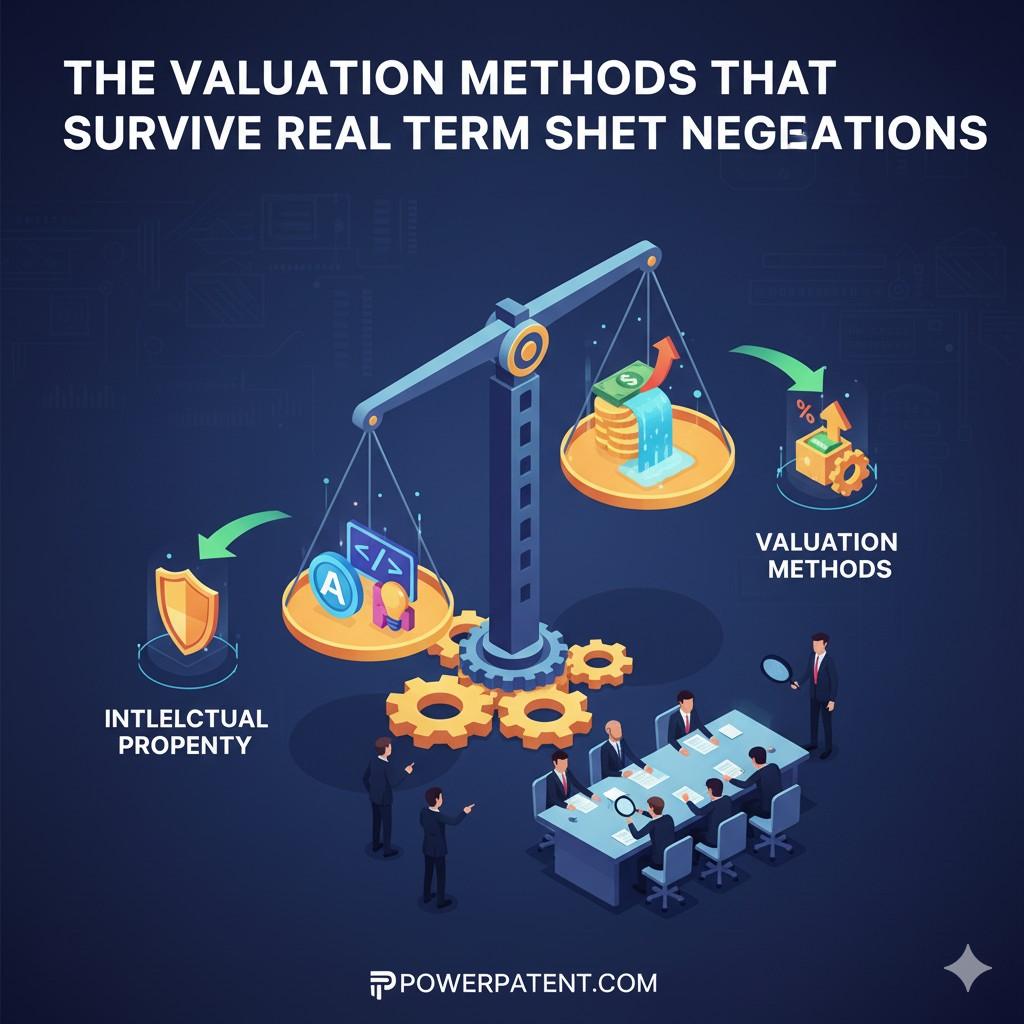
The Valuation Methods That Survive Real Term Sheet Negotiations
When valuation is finally discussed, it often feels sudden. Numbers appear. Comparisons get made.
Founders are told what “the market” is paying. But behind those numbers are a few core ways investors think about value. These methods are rarely written down, yet they consistently survive real negotiations. IP sits at the center of all of them.
Investors Do Not Value IP in Isolation
One of the biggest misunderstandings founders have is thinking that IP has a standalone price. In practice, investors almost never value IP on its own.
Instead, they look at how IP supports the entire business. The question is not what the patent is worth, but how much risk it removes and how much upside it protects.
IP that directly supports revenue, differentiation, or future expansion carries far more weight than IP that lives on the edge of the product.

Founders can act on this by always tying IP back to business outcomes. When you talk about your technology, explain how protection strengthens your position with customers, partners, or future buyers. This keeps valuation grounded in reality.
The Cost-to-Rebuild Lens Shapes Early Pricing
A common mental shortcut investors use is asking how hard it would be to recreate what you have built.
If the answer is “a small team could copy this in a few months,” valuation pressure appears. If the answer is “this would take deep expertise, time, and careful work,” pricing moves up.
IP changes that calculation. Protected core technology raises the perceived cost to rebuild. Even if a competitor could eventually replicate it, the friction matters.
Founders should document the hard parts. Not in legal language, but in plain terms. What took the longest to figure out? What mistakes did you avoid through experience? When that knowledge is protected and explained, the rebuild cost feels real.
The Risk Discount Is Where IP Does the Most Work
Investors often start with a target value and then apply discounts for risk. Market risk, execution risk, team risk, and technology risk all get weighed.
IP primarily reduces technology risk. When IP is strong, one major category of uncertainty shrinks. That alone can preserve millions in valuation without any debate.
The actionable move here is to identify where investors might apply a technology risk discount and address it head-on. Show that the core innovation is not just clever, but protected and controlled by the company.
Comparables Are Adjusted Quietly for IP Strength
When investors reference comparable deals, they rarely explain how those numbers are adjusted. IP is one of the biggest hidden variables.
Two companies in the same space with similar traction can command very different valuations based on IP strength. Investors may cite a comparable, then quietly adjust down if IP feels weaker.
Founders can counter this by controlling the narrative. When comparables come up, explain how your IP position compares. If your protection is stronger or more focused, say so. This reframes the comparison instead of accepting it blindly.
Future Optionality Carries Real Weight
Investors value options. The ability to expand, pivot, or license technology later increases perceived value today.
IP enables that optionality. A protected core can be repurposed, licensed, or extended into new markets. Without IP, those options feel theoretical.
Founders should articulate optionality clearly. Not as a wish list, but as realistic paths that IP makes possible. This shows that valuation is not just about today’s product, but about tomorrow’s flexibility.
Control and Defensibility Affect Term Economics
Valuation is not the only number that matters. Control terms, preferences, and protective rights are often used to manage risk.
Strong IP reduces the need for these protections. When investors feel secure about defensibility, they are less likely to push for aggressive terms that limit founder control.
The practical takeaway is that IP strength can improve the entire term sheet, not just the headline number. Founders whoinvest in IP early often gain better economics across the board.
Why Weak IP Leads to Over-Engineered Terms
When IP is unclear, investors compensate. They add structure, conditions, and downside protection.
This complexity is a signal. It often means valuation is doing work that IP should have done. Lower numbers and heavier terms become tools to manage uncertainty.
Founders can avoid this by removing uncertainty early. When IP answers questions cleanly, there is less need for complicated protections later.
How Founders Can Prepare for These Methods
Founders who understand these valuation methods prepare differently. They do not wait for diligence to organize IP. They build it into their story from the beginning.
They know which parts of their technology matter most and protect those first. They explain IP in simple business terms. They treat IP as a strategic asset, not a legal task.
This is why many teams choose modern platforms that align IP work with startup speed. PowerPatent helps founders create strong, focused IP that investors can understand and respect without slowing the company down.

If you want valuation methods to work in your favor instead of against you, you can see how it works here: https://powerpatent.com/how-it-works
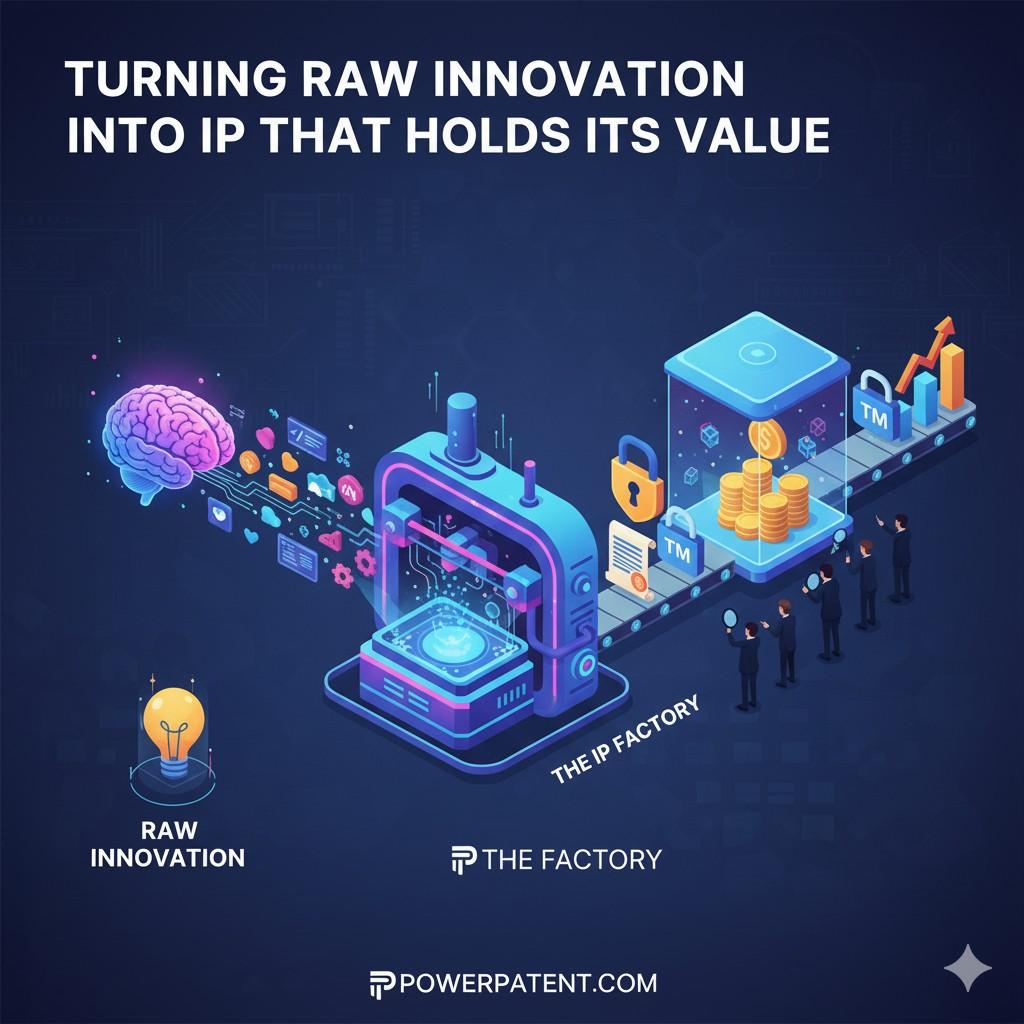
Turning Raw Innovation Into IP That Holds Its Value
Great companies are built on ideas that work in the real world. But ideas alone do not hold value in a term sheet. What holds value is how those ideas are captured, owned, and defended over time.
This final section is about turning what you have already built into IP that investors trust, respect, and price correctly.
Raw Innovation Is Fragile Until It Is Claimed
Most founders assume that because they built something first, they own it. In practice, innovation is fragile until it is clearly claimed by the company.
Code lives in repos. Designs live in docs. Models live in notebooks. Without structure, those assets feel scattered. Investors see that scatter as risk, even if the technology is strong.
The first step is mental. Treat innovation as something that needs to be named and framed.

What exactly is the core insight? What problem does it solve in a way others cannot easily copy? When that is clear, turning it into IP becomes straightforward instead of overwhelming.
Ownership Clarity Comes Before Protection Strength
Founders often rush to protect ideas before confirming ownership. This creates hidden problems.
If contributors are unclear, if past work was done under loose terms, or if early collaborators were not properly assigned, protection loses credibility. Investors worry less about how many filings exist and more about who truly owns them.
The most effective move is to clean ownership early. Make sure the company owns what it depends on. When ownership is clear, protection becomes meaningful. Without it, even strong filings feel hollow.
Focus Beats Volume Every Time
Some founders believe more IP equals more value. Investors rarely agree.
They look for focus. A small number of filings that protect the heart of the technology signals strategic thinking. A large number of scattered filings signals confusion or box-checking.
Founders should ask one question: if a competitor wanted to copy us, what would hurt them the most to lose? That answer points directly to what should be protected. Everything else can wait.
Timing Shapes Perceived Maturity
When IP is created matters almost as much as what it covers.
Late, rushed filings made during diligence feel reactive. Early, thoughtful filings feel intentional. Investors read timing as a signal of maturity and foresight.
This does not mean filing too early or locking in details before learning. It means capturing core ideas as they emerge, then refining over time. That steady approach builds confidence without freezing innovation.
Simple Explanations Increase Investor Trust
The best IP in the world loses power if it cannot be explained simply.
Investors do not want legal language. They want clarity. They want to understand what is protected, why it matters, and how it connects to the business.
Founders should practice explaining their IP in plain words. If it takes more than a few sentences to explain the core protection, it may be too broad or too vague. Simplicity is not weakness here. It is strength.
IP Should Support the Company Story, Not Replace It
IP is not the story. It supports the story.
The strongest founders weave IP naturally into their narrative. They show how protection reinforces product advantage, market position, and future growth. IP becomes part of why the company wins, not a separate topic.
This alignment makes valuation feel earned rather than argued. Investors see coherence instead of complexity.
Preparation Beats Negotiation Every Time
Many founders think valuation is won at the negotiating table. In reality, it is won months earlier through preparation.
Strong IP reduces the need to negotiate hard. It changes the conversation from “why should this be worth more” to “how do we move forward.” That shift is subtle but powerful.
Founders who invest in IP early often find that numbers settle faster and with less friction. The work is done before the discussion begins.
Building IP Without Slowing Down the Company
The biggest fear founders have is that IP will slow them down. That fear comes from old models built for a different era.
Modern tools exist to align IP creation with startup speed. When the process fits how teams actually build, IP stops being a burden and starts being leverage.

PowerPatent was designed for this exact moment. It helps founders turn real work into real protection, with clarity and speed, backed by experienced attorneys.
If you want your IP to hold its value when it matters most, you can see how it works here: https://powerpatent.com/how-it-works
Wrapping It Up
When founders think about valuation, they usually focus on numbers. Revenue. Growth. Comparables. But what actually holds those numbers together is confidence. And nothing builds or breaks that confidence faster than intellectual property. IP is not just a legal layer added at the end. It is the quiet structure underneath the deal. It shapes how investors see risk, how they imagine the future, and how comfortable they feel writing a check. Long before a valuation is negotiated, IP has already done its work.
Leave a Reply