
If you own standard-essential patents, you already know this truth: the value is not just in having patents. The value is in keeping the right ones alive, clean, and ready to be enforced or licensed at the exact moment they matter. Most SEP portfolios do not fail because the tech is weak. They fail because no one treated the portfolio like a living system. Renewals get paid on autopilot. Old patents sit around without purpose. Strong assets get buried under noise. And slowly, year by year, the portfolio becomes expensive, messy, and less powerful than it should be.
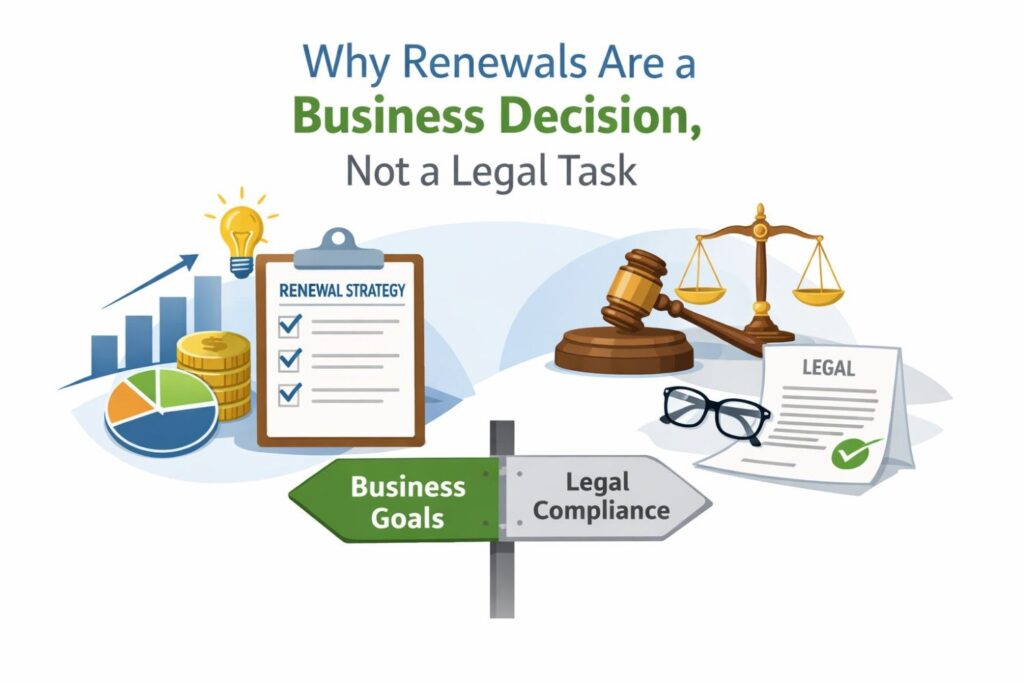
Why Renewals Are a Business Decision, Not a Legal Task
Renewals are often treated like background noise. Something that happens once a year. Something the legal team or outside counsel handles. Something that gets approved without much thought.
For SEP owners, this mindset quietly destroys value.
Renewals decide what power you keep and what power you give up. They shape how credible your portfolio looks to licensees.
They determine whether your patents support real products in the market or sit disconnected from reality. This is not paperwork. This is strategy.
Renewals Decide Where You Place Your Long-Term Bets
Every renewal payment is a signal. It says this invention still matters. It says this technical idea still maps to real standards and real devices.
When renewals are paid without asking hard questions, companies keep betting on the past instead of the future.
A strong SEP owner treats renewals like capital allocation. The same way you decide which product lines to fund or which markets to enter, you should decide which patents deserve more years of life.
This means tying each renewal to where the standard is actually used today, not where it was five or ten years ago.
If a patent no longer aligns with active parts of the standard, paying to keep it alive does not make you safer. It makes you slower and more expensive. Over time, this creates a portfolio that looks large but feels weak when tested.
Legal Ownership Is Not the Same as Business Relevance
Many companies confuse legal validity with business value. A patent can be perfectly valid and still be useless to your SEP strategy.
Courts, licensees, and partners do not care how clean the prosecution history is if the claims no longer hit real implementations.
Renewals should force a relevance check. Does this patent still read on mandatory parts of the standard? Do current chipsets, base stations, or devices still practice these claims? If the answer is unclear, that is already a warning sign.
Smart teams revisit this question before every major renewal window. They do not wait for disputes or licensing talks to discover gaps. They build this review into the rhythm of the business.
Renewals Shape Your Negotiation Leverage
SEP portfolios are not judged by count. They are judged by pressure. When renewal decisions are made blindly, pressure leaks out of the system. Licensees sense it quickly.
They see patents that are old, unfocused, or spread across obsolete sections of the standard.
A tight renewal strategy creates clarity. It sends a message that every surviving patent has a job. This makes licensing conversations faster and more grounded. It reduces discounting.
It reduces challenges. It reduces the need to rely on volume instead of strength.
This is one of the biggest hidden benefits of good portfolio hygiene. You are not just saving money. You are sharpening leverage.
The Cost of Renewals Is Small Compared to the Cost of Confusion
Many renewal decisions are driven by fear of losing sunk cost. Teams think about what they already spent, not what they still stand to gain. This leads to paying renewals year after year simply because the patent exists.
The real cost is not the renewal fee. The real cost is carrying patents that confuse your own team.
Engineers forget what matters. Licensing teams struggle to explain the portfolio. Executives lose confidence in what the company actually owns.
Clean portfolios are easier to understand. They are easier to explain. They are easier to defend. Renewals are how you keep the signal high and the noise low.
SEP Renewals Should Follow the Standard, Not the Calendar
Standards evolve constantly. Features move from optional to mandatory. Old sections get deprecated. New releases shift where value lives. Renewal calendars do not reflect this reality.
Business-driven SEP owners align renewals with standard evolution. They track which parts of the spec are gaining adoption and which are fading out. They adjust renewal decisions accordingly.
This does not require perfect foresight. It requires awareness. Even a light review of standard updates can prevent years of wasted spend.
Over time, this creates a portfolio that moves with the market instead of lagging behind it.
Renewals Are a Chance to Reclaim Control
For many companies, renewals feel automatic because the process is fragmented. Data lives in spreadsheets. Analysis lives in emails. Decisions get rushed at the last minute.
This creates dependence on outside counsel and removes ownership from the business.
Treating renewals as a business decision puts control back where it belongs. Product leaders, engineers, and licensing teams should have input. Not on legal mechanics, but on relevance and impact.
Modern tools make this far easier than it used to be. When patent data, standard mapping, and renewal timelines live in one place, decisions become clearer and faster.
This is exactly why platforms like PowerPatent exist. To help teams see the full picture before money is spent, not after.
If you want to understand how this kind of visibility works in practice, you can explore it here: https://powerpatent.com/how-it-works
The Best Time to Fix Renewal Strategy Is Before the Bill Arrives
Most renewal mistakes happen under time pressure. Invoices show up. Deadlines loom. Decisions get rushed. The default becomes paying instead of thinking.
Strategic SEP owners work ahead. They review upcoming renewals months in advance. They flag patents that need deeper review. They give teams time to ask the right questions.
This small shift changes everything. Renewals stop being reactive. They become intentional. Over time, this creates a portfolio that feels designed, not inherited.
Renewals Are Where Discipline Becomes Visible
Anyone can file patents. Discipline shows up years later, when hard choices must be made. Renewals are where that discipline is tested.
When SEP owners treat renewals as business decisions, portfolios become leaner, stronger, and more credible. Money is spent with purpose. Teams regain confidence. Leverage increases quietly but steadily.
This is not about cutting for the sake of cutting. It is about clarity. It is about making sure every patent you keep is there because it earns its place.
And when that happens, your SEP portfolio stops being a cost center and starts acting like the strategic asset it was always meant to be.
How SEP Portfolios Quietly Get Bloated and Weak Over Time
Most SEP portfolios do not collapse overnight. They fade. Slowly. Quietly. Almost politely. On the surface, everything looks fine. The patent count grows. Renewals get paid.
Reports look full. But underneath, strength is leaking out year by year.
This section is about how that happens, why it happens to even very smart companies, and how to spot the warning signs before real damage sets in.
Growth Without Direction Is the First Warning Sign
At the start, SEP portfolios grow with purpose. Early filings are close to the core invention. Claims are tight. The link to the standard is clear. Everyone remembers why each patent exists.
Over time, growth becomes mechanical. Continuations are filed because they can be. New families are added to keep numbers up. Filings drift further away from the original technical heart.
No one pauses to ask how these new assets will be used five or ten years later.
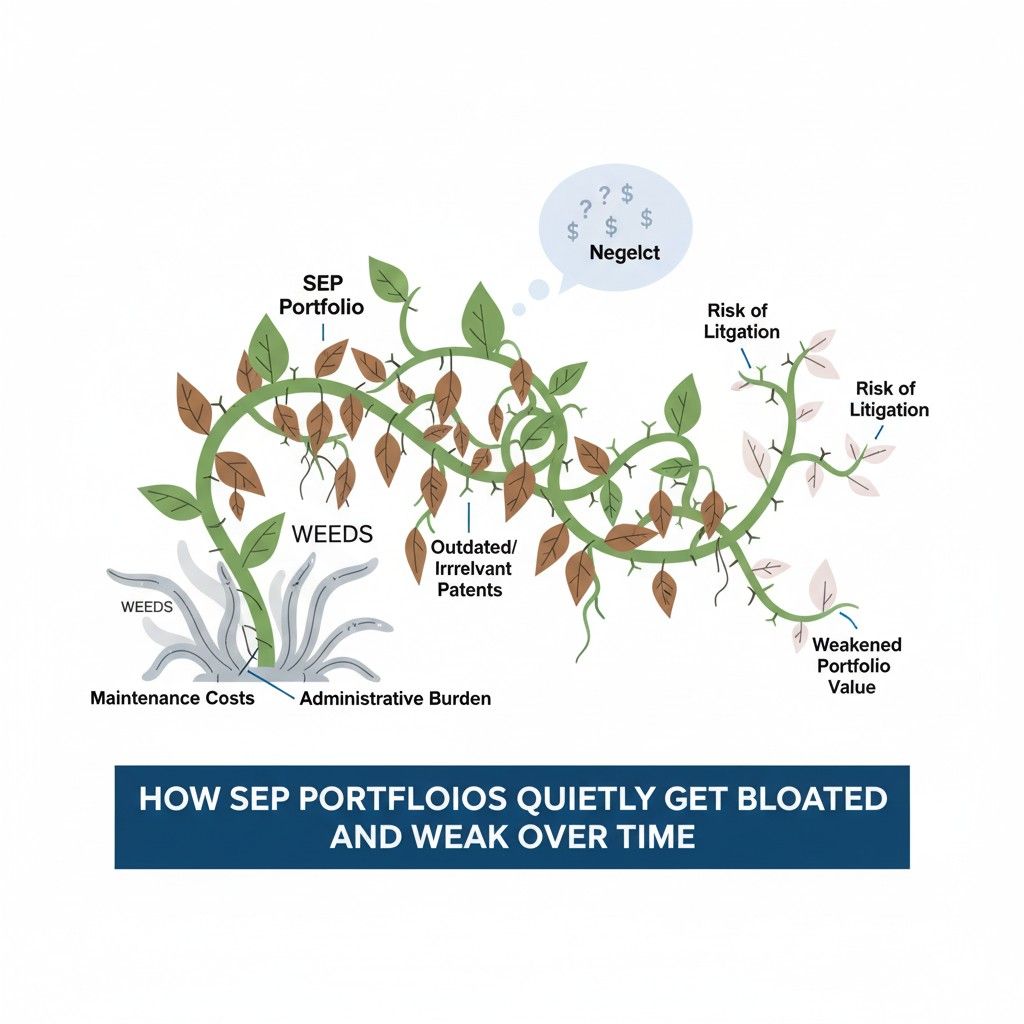
This is how portfolios grow wider but not deeper. When renewal time comes, no one knows which patents actually matter. Paying everything feels safer than choosing. And that is how bloat begins.
Old Decisions Keep Living Long After Their Value Is Gone
Many renewal choices are inherited. The person who made the original filing decision may have left the company years ago. The business context has changed.
The standard has moved on. But the patent keeps getting renewed because no one wants to be the one to kill it.
This creates a quiet drag on the portfolio. Money flows toward assets that no longer support licensing or enforcement. Meanwhile, newer and more relevant patents may not get the attention they deserve.
Weakness does not come from a single bad patent. It comes from years of unchallenged assumptions.
Standards Change Faster Than Portfolios Do
One of the biggest reasons SEP portfolios weaken is timing. Standards move forward quickly. Releases stack up. Implementations shift. Entire sections of a spec can become less important without anyone formally announcing it.
Patent portfolios, on the other hand, move slowly. Claims are fixed. Filing dates are locked. If renewals are not actively aligned with how the standard is actually used today, the portfolio drifts out of sync.
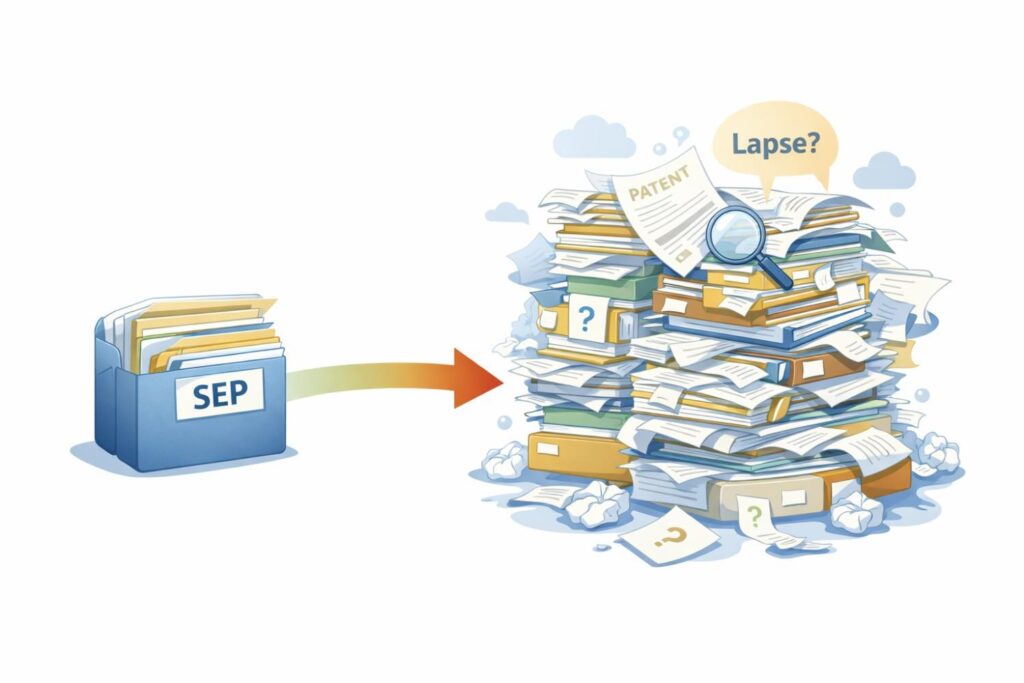
When this happens, the portfolio may still look impressive on paper, but its real-world pressure drops. Licensees notice. Courts notice. And fixing this gap later is far harder than preventing it early.
Volume Starts Replacing Conviction
As portfolios grow, conviction often fades. Early patents are defended with confidence. Teams know what they cover and why they matter. Later, explanations become vague. Language shifts from specific to general.
This is a dangerous moment. When teams rely on volume instead of clarity, portfolios become harder to defend. Challenges increase. Discounts grow. Negotiations drag on longer than they should.
Renewals are the last line of defense against this drift. When that line is not used, weakness compounds quietly.
Internal Teams Lose the Thread
Another hidden cost of bloat is internal confusion. Engineers stop recognizing the patents as connected to real products. Business teams struggle to explain the portfolio to partners.
Leadership sees patent spend rise without seeing clearer outcomes.
This loss of internal trust matters. When teams do not believe in the portfolio, they do not use it effectively. Licensing slows down. Enforcement becomes reactive instead of planned.
Strong SEP portfolios are understood inside the company first. That understanding erodes when renewal discipline disappears.
Renewal Autopilot Masks Strategic Failure
Many companies believe they are being safe by renewing everything. In reality, they are avoiding hard decisions. Autopilot feels comfortable. It avoids conflict. It avoids risk. But it also avoids improvement.
Over time, autopilot creates a false sense of strength. The portfolio looks large. Costs feel predictable. But when real scrutiny arrives, cracks appear fast.

Strategic renewal decisions are uncomfortable by nature. They force tradeoffs. They require saying no. But that discomfort is a sign of health, not danger.
The Market Eventually Exposes Weak Hygiene
SEP portfolios are ultimately tested outside the company. In licensing talks. In disputes. In valuation exercises. That is when hygiene issues surface.
Licensees push back on relevance. Experts question mappings. Judges look for substance. Portfolios that were never cleaned struggle under this pressure.
At that point, renewal savings no longer matter. The cost shows up as lost leverage, delayed deals, or weaker outcomes.
Weak Portfolios Are Hard to Fix Late
One of the hardest truths is that portfolio hygiene is easier early than late. Dropping weak patents gradually is manageable. Rebuilding credibility after years of bloat is not.
This is why forward-looking SEP owners treat hygiene as ongoing work, not a one-time cleanup. Renewals become checkpoints, not chores.
Modern platforms help here by making patterns visible early. When teams can see which patents still map cleanly to the standard and which do not, decisions become clearer.
This is where tools like PowerPatent change the game by giving teams a live view of portfolio health instead of a static list.
If you want to see how that kind of clarity works in real teams, you can explore it here: https://powerpatent.com/how-it-works
Quiet Weakness Is the Most Expensive Kind
The most dangerous portfolios are not obviously broken. They are quietly inefficient. Money flows out. Confidence slips. Leverage erodes. And by the time action is taken, years of opportunity are gone.
Renewals are where this quiet weakness can be stopped. Not with dramatic cuts. With steady, thoughtful decisions made early and revisited often.
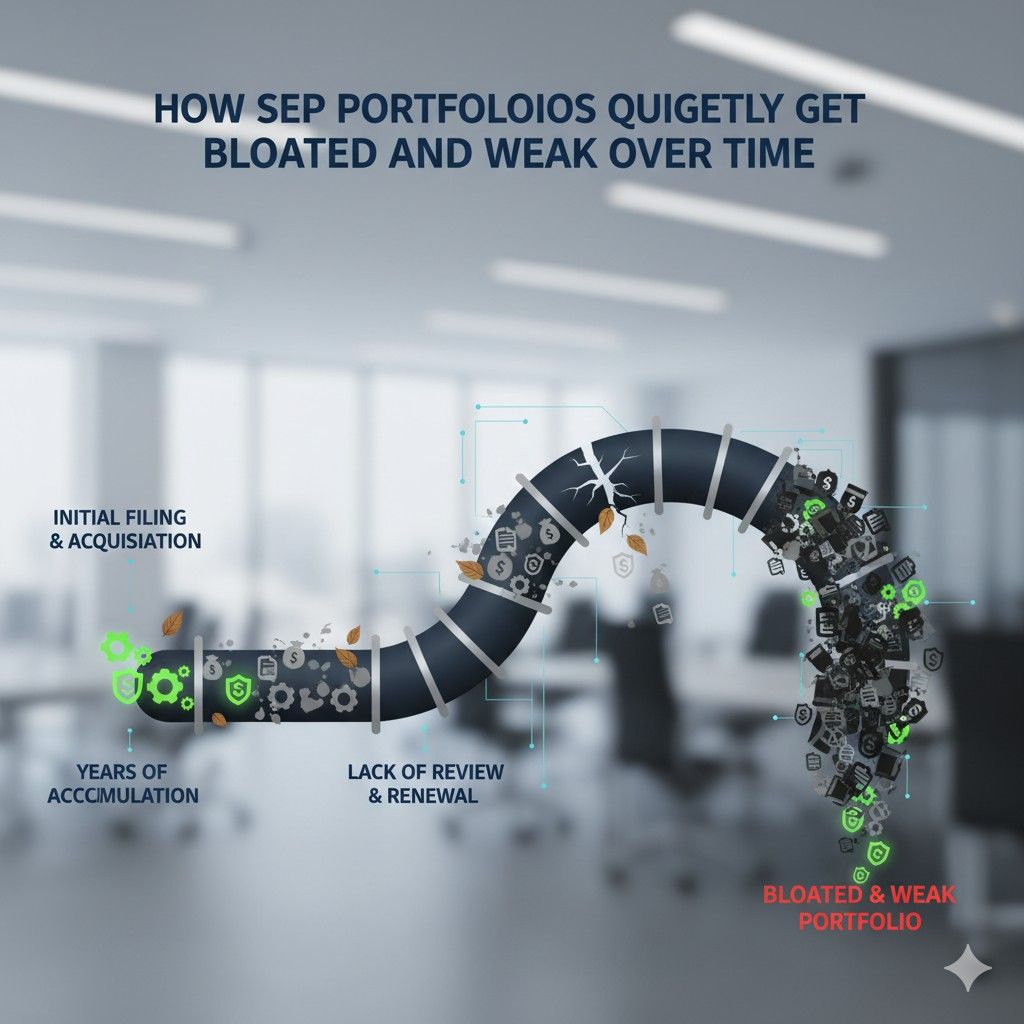
That is how strong SEP owners stay strong.
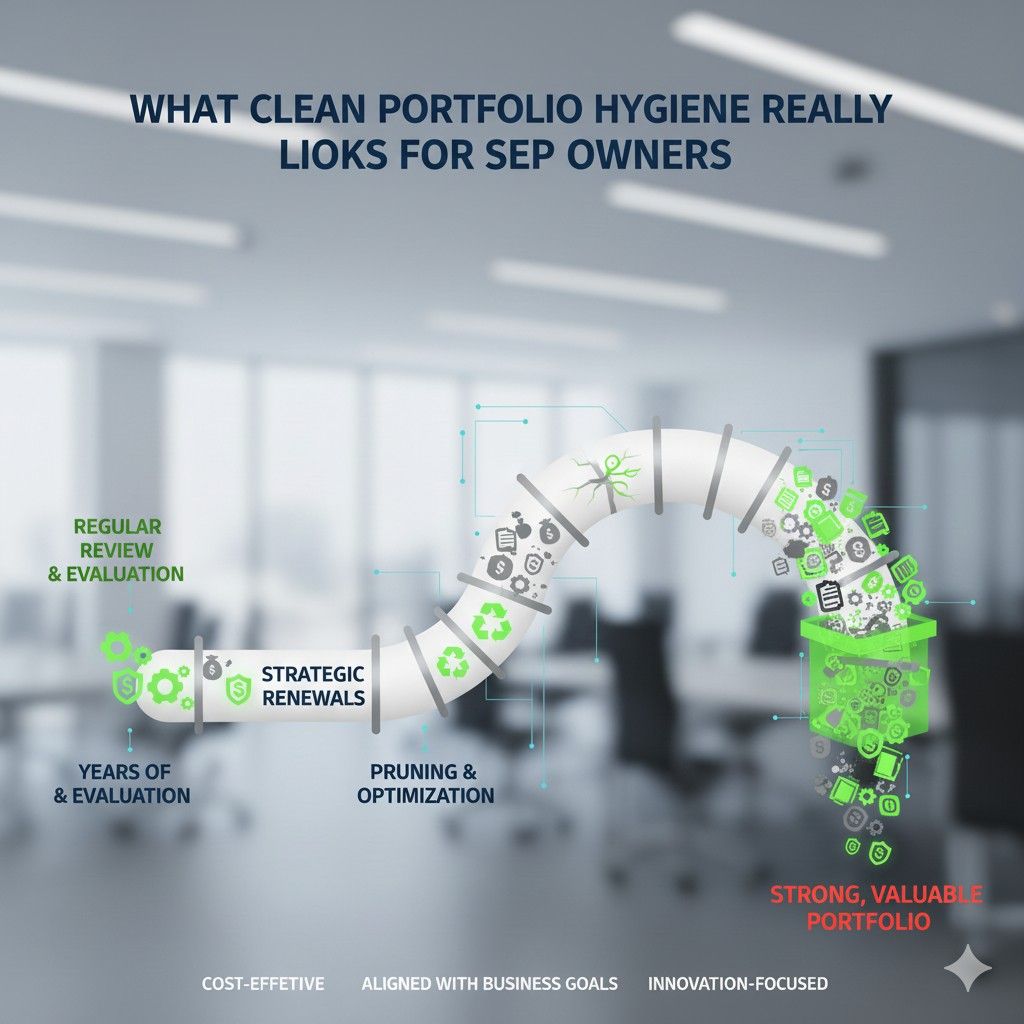
What Clean Portfolio Hygiene Really Looks Like for SEP Owners
Clean portfolio hygiene is not about having fewer patents. It is about having patents that make sense together, support each other, and clearly connect to how standards are used in the real world.
For SEP owners, hygiene is the difference between a portfolio that looks impressive and one that actually works when it matters.
This section explains what “clean” really means in practice, and how businesses can move toward it without slowing down or creating internal friction.
Clean Does Not Mean Small, It Means Intentional
A clean SEP portfolio can be large. It can span many jurisdictions and many years.
What makes it clean is intention. Every patent has a reason to exist. Every family fits into a broader story about the standard and its implementation.
When someone asks why a patent is still being renewed, there is a clear answer. Not a guess. Not a vague explanation. A real reason tied to products, releases, or mandatory parts of the spec.
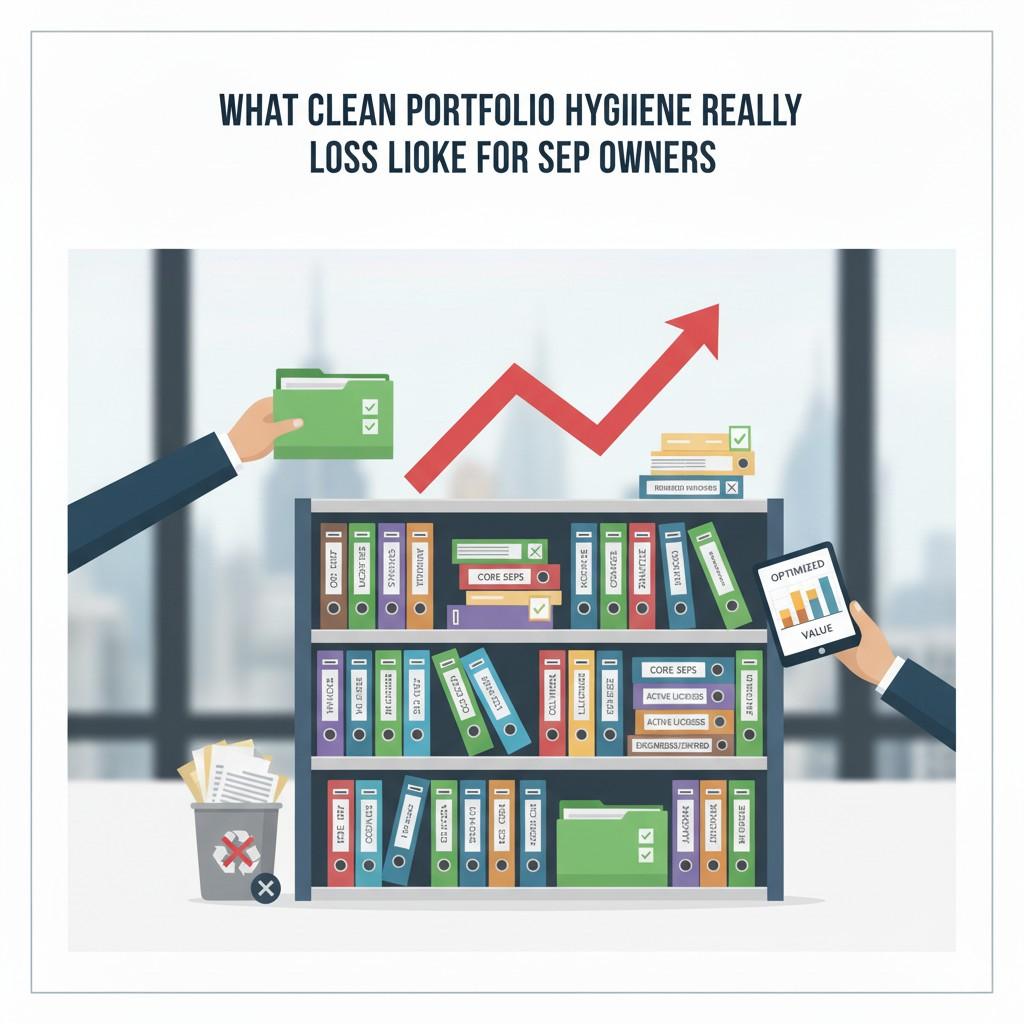
This level of clarity does not happen by accident. It comes from treating hygiene as an ongoing process, not a cleanup project.
Each Patent Has a Job to Do
In a healthy SEP portfolio, patents are not just assets. They are tools. Some support early releases of the standard. Some cover later updates. Some provide fallback positions.
Some exist mainly to strengthen negotiation posture.
The key is that each patent has a role. When a patent no longer serves any role, hygiene demands a decision. Keeping it “just in case” is how clutter starts.
This mindset changes renewal conversations. Instead of asking “Is this patent valid?” the better question becomes “What does this patent still do for us?”
Hygiene Starts With Mapping, Not Counting
Many companies rely too heavily on counts. How many SEPs they own. How many families are alive. How many jurisdictions are covered. These numbers are easy to track but tell very little about health.
Clean hygiene starts with mapping. Mapping claims to standards. Mapping standards to products. Mapping products to markets. This reveals gaps and overlaps that counts hide.
When mapping is clear, renewal decisions become easier. Patents that sit outside the map stand out quickly. Patents that anchor key parts of the standard become obvious priorities.
Overlap Is Not Always Strength
It is common for SEP portfolios to have multiple patents covering similar ideas. Some overlap is useful. Too much overlap creates noise.
Clean hygiene looks at overlap honestly. Are multiple patents truly adding pressure, or are they repeating the same story in slightly different words?
If one strong patent does the work of three weaker ones, renewals should reflect that reality.

This does not weaken the portfolio. It sharpens it.
Geographic Coverage Should Match Real Markets
Another hygiene issue hides in geography. Many portfolios carry patents in countries where enforcement is unlikely or commercial impact is minimal. These renewals often continue simply because they always have.
Clean portfolios align geography with business reality. Where are products sold? Where are licensing discussions happening? Where do courts actually matter?
This does not mean abandoning global protection. It means being honest about where each patent family earns its cost. Geography is strategy, not tradition.
Hygiene Requires Cross-Team Awareness
SEP hygiene cannot live in one department. Legal teams understand filings. Engineers understand the tech. Business teams understand markets. When these views stay separate, portfolios drift.
Healthy SEP owners create simple ways for these perspectives to meet. Not in endless meetings, but in shared visibility. When everyone sees the same portfolio picture, decisions improve naturally.
This is where modern patent platforms help.
They reduce translation gaps. They let teams talk about patents in business terms instead of legal ones.
PowerPatent was built around this idea, helping teams see and manage portfolios as living systems rather than static documents.
If you want to see how that works in practice, you can explore it here: https://powerpatent.com/how-it-works
Clean Portfolios Age Better
Standards do not stop evolving. Neither should portfolios. Clean hygiene makes aging graceful instead of painful.
Older patents are reviewed with context. Some remain valuable anchors. Others are respectfully retired. Newer patents are integrated with purpose, not just added on top.
This creates continuity. The portfolio tells a coherent story across generations of the standard, which is exactly what courts and licensees look for.
Hygiene Builds Confidence Internally and Externally
One of the most underrated benefits of clean hygiene is confidence. Internal teams trust the portfolio. Leadership understands what is owned. External parties sense preparation and seriousness.
This confidence changes behavior. Licensing discussions become calmer. Challenges become more focused. Decisions feel grounded instead of rushed.
All of this starts with hygiene, and hygiene starts with how renewals are handled.
Cleanliness Is a Habit, Not an Event
There is no finish line for portfolio hygiene. Standards change. Markets shift. Products evolve. Clean portfolios stay clean because habits are in place.
Renewals become regular checkpoints. Mapping stays current. Assumptions get questioned early. Small adjustments prevent large problems later.
This is how SEP owners stay ahead without constant stress. Not by doing more work, but by doing the right work at the right time.
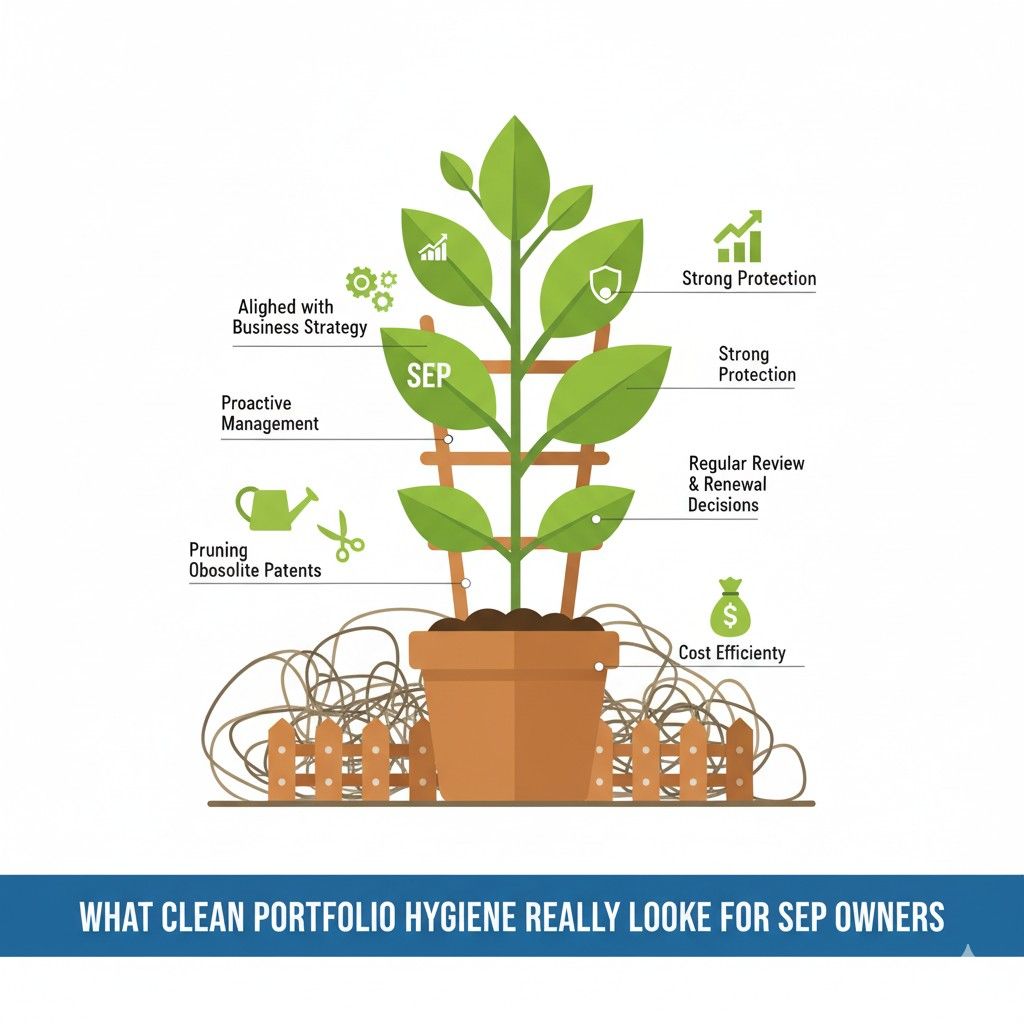
Clean portfolio hygiene is not glamorous. But it is powerful. It turns patents from passive assets into active tools. It protects leverage quietly and steadily.
And for SEP owners, that quiet strength is everything.
Wrapping It Up
SEP ownership is often talked about in terms of power, scale, and long-term value. But none of that exists without discipline. Renewals and portfolio hygiene are where that discipline shows up in real life. Not in theory. Not in presentations. In the actual choices made year after year. The strongest SEP owners are not the ones who renew the most patents. They are the ones who know exactly why each patent is still alive. They understand how their portfolios connect to real standards, real products, and real markets. They are comfortable letting go of assets that no longer serve a purpose because they trust the strength of what remains.
Leave a Reply