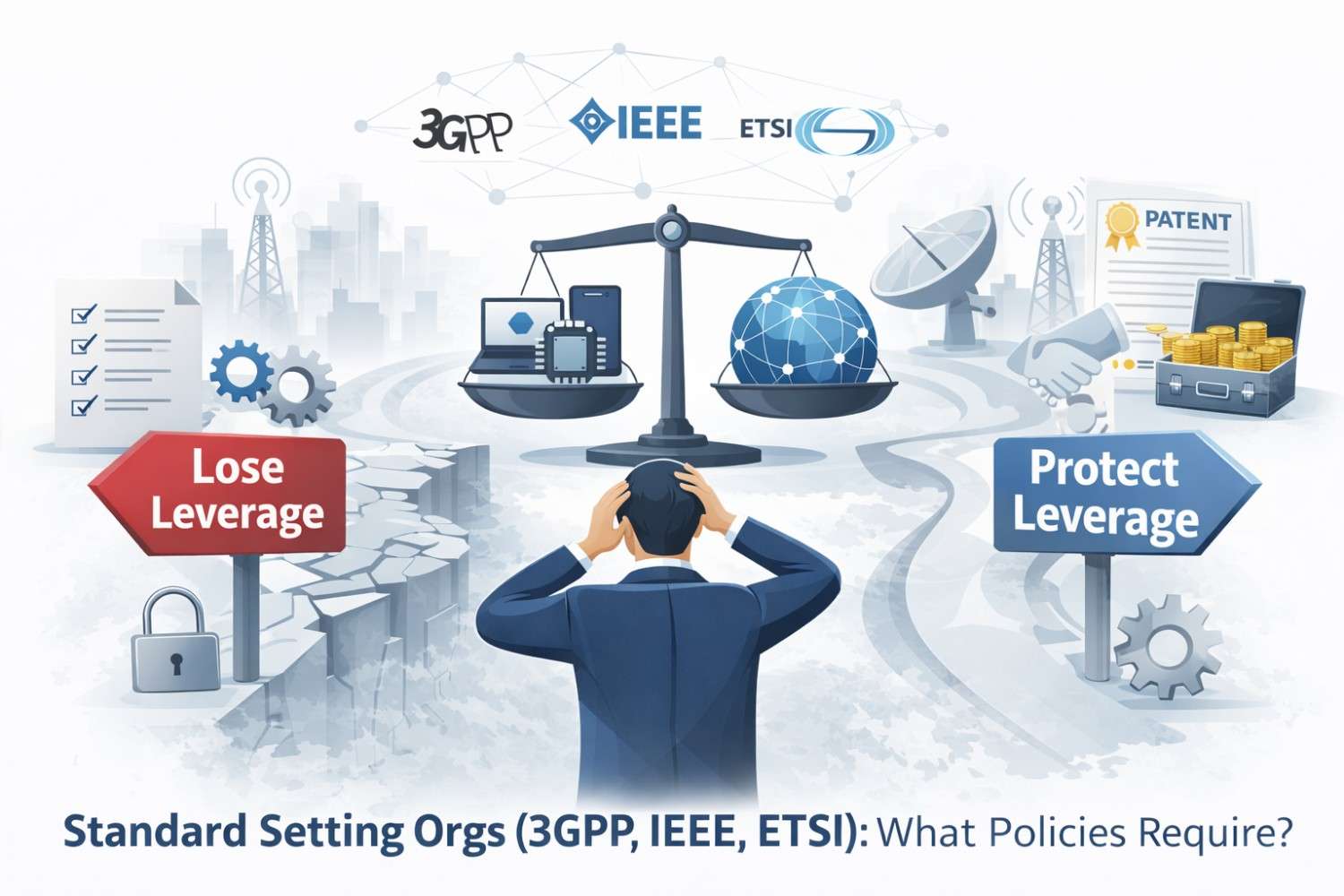
If you are building real tech, not slides, not hype, but actual systems that talk to other systems, then standard setting groups already affect you. Even if you have never heard of them. Even if you never planned to deal with them. The moment your product touches wireless, networking, video, hardware, or core software, you are playing on a field shaped by standards.
Why Standard Setting Groups Quietly Control the Tech Market
Standard setting groups do not sell products. They do not raise venture money. They do not ship code. Yet they shape the outcome of entire markets long before startups know a market even exists.
If you build technology that needs to connect, communicate, or work with others, these groups already influence your future. This control is quiet, slow, and extremely powerful. Understanding how it works gives founders a real edge.
Standards decide what “normal” looks like
Every market has an invisible baseline. That baseline defines what works out of the box and what feels risky or strange. Standards are what create that baseline.
When a standard is adopted, it becomes the default way things are built. Buyers expect it. Partners demand it. Regulators often reference it. Once that happens, any product that does not follow the standard feels broken, even if it is better.
For a startup, this means the market is not neutral. The rules are already written. If your product fits inside the standard, you ride the wave. If it does not, you fight gravity.

The key move for founders is to study which standards already shape your space before you lock in your design. Do not wait until customers ask. By then, the window to influence the rules is often closed.
Standards lock in technical paths early
Once a standard is agreed on, changing it is slow and painful. That is not an accident. These groups are designed to create stability, not speed.
This means early technical choices matter far more than most founders expect. A small design decision that becomes part of a standard can shape products for ten or twenty years.
At the same time, a smart idea that misses the standard may never reach scale, no matter how good it is.
Founders should treat standards discussions like early market validation. If your idea solves a real problem and fits cleanly into how standards evolve, you gain long-term leverage.
If it fights the direction of the standard, you may spend years pushing uphill.
A smart move is to map your core features to existing or emerging standards and ask one simple question. Does this align, extend, or conflict? Alignment gives speed. Extension gives power. Conflict creates risk.
Standards decide who must license and who collects
One of the least understood parts of standard setting is how it affects money. When a technology becomes part of a standard, it often becomes unavoidable. Anyone who builds a compliant product must use it.
That is where patents come in.
If your patented invention is required to meet a standard, it may become a standard essential patent. That status can be incredibly valuable, but only if handled correctly.
Standards bodies require certain promises about licensing. If you agree without understanding the impact, you may cap your upside forever.
This is why founders should think about standards before filing patents, not after.
The way you describe your invention, the timing of your filing, and what you disclose can all affect whether your patent gives you leverage or limits you.
If you are unsure how to do this without slowing down, this is exactly where PowerPatent helps. You can see how the process works here: https://powerpatent.com/how-it-works
Standards reward participation, not silence
Many founders assume standards are something you comply with after the fact. In reality, the companies that shape standards are often the ones who show up early and often.
Participation does not always mean sending a team to meetings. It can mean tracking proposals, understanding roadmaps, and knowing which technical problems are being debated.
This awareness lets you position your product and patents ahead of the curve.
Silence has a cost. If you never engage, others define the rules around you. When you finally enter the market, you may find that the standard assumes solutions that work well for incumbents, not startups.
A practical step is to assign one person, even part-time, to monitor standards activity related to your product. This is not busy work. It is competitive intelligence.
Standards create trust at scale
Markets move faster when trust exists. Standards create that trust by giving everyone a shared expectation. Devices connect. Systems interoperate. Buyers feel safe choosing from many vendors.
For startups, this trust can shorten sales cycles and lower friction. If your product complies with a known standard, you borrow credibility. Customers worry less about lock-in and compatibility.
The flip side is that non-compliance raises questions. Even a superior product can struggle if buyers fear it will not work with the rest of their stack.

Founders should plan for compliance early, even if full certification comes later. Designing with standards in mind avoids painful rewrites and delays when traction hits.
Standards shape regulation without being law
Many founders think regulation comes only from governments. In practice, standards often become regulation by reference.
Agencies and regulators frequently point to standards when defining safety, performance, or compliance. This means a private group’s technical decision can turn into a public requirement.
If your product operates in regulated spaces like telecom, health devices, or infrastructure, standards matter even more. Ignoring them can lead to blocked markets or expensive redesigns.
A smart strategy is to treat standards as future law. If you can meet them early, you reduce regulatory risk later.
Standards move slower than startups, but last longer
Startups move fast by design. Standards move slowly on purpose. This mismatch causes frustration, but it also creates opportunity.
Because standards take time, founders who anticipate where they are heading can get ahead. You do not need to wait for a final document. Drafts, discussions, and working group debates all signal direction.
The most effective founders use this lag to their advantage. They build flexible architectures that can adapt as standards evolve. They file patents that cover likely future paths, not just current ones.
This approach turns slow-moving standards into a roadmap rather than a barrier.
Standards favor those who plan patents early
One of the biggest mistakes startups make is treating patents as a late-stage task. In standard-driven markets, that is backwards.
By the time a standard is final, it is often too late to file meaningful patents that read on it. The window closes quietly.
Founders who understand standards use them to guide patent strategy. They identify which parts of the system are likely to be required and protect those areas early. This does not mean guessing blindly. It means informed planning.
If you want to move fast without missing this window, PowerPatent is built for exactly that balance. You can learn more here: https://powerpatent.com/how-it-works
Standards create invisible moats
When a standard locks in certain approaches, it creates a moat that is hard to cross. This moat is not about branding or scale. It is about compatibility.
If your product aligns deeply with a standard and others build around you, switching becomes costly for the market. This can protect a startup far earlier than traditional network effects.
The trick is to aim for parts of the stack where standards define behavior but still allow room for innovation. That is where small teams can have outsized impact.
Standards are not optional, but leverage is
The final truth is simple. If you build connected tech, standards will touch you whether you like it or not. Ignoring them does not avoid the rules. It just means you learn them too late.

Founders who understand standards early gain choice. Choice about design. Choice about patents. Choice about licensing. That choice is leverage.
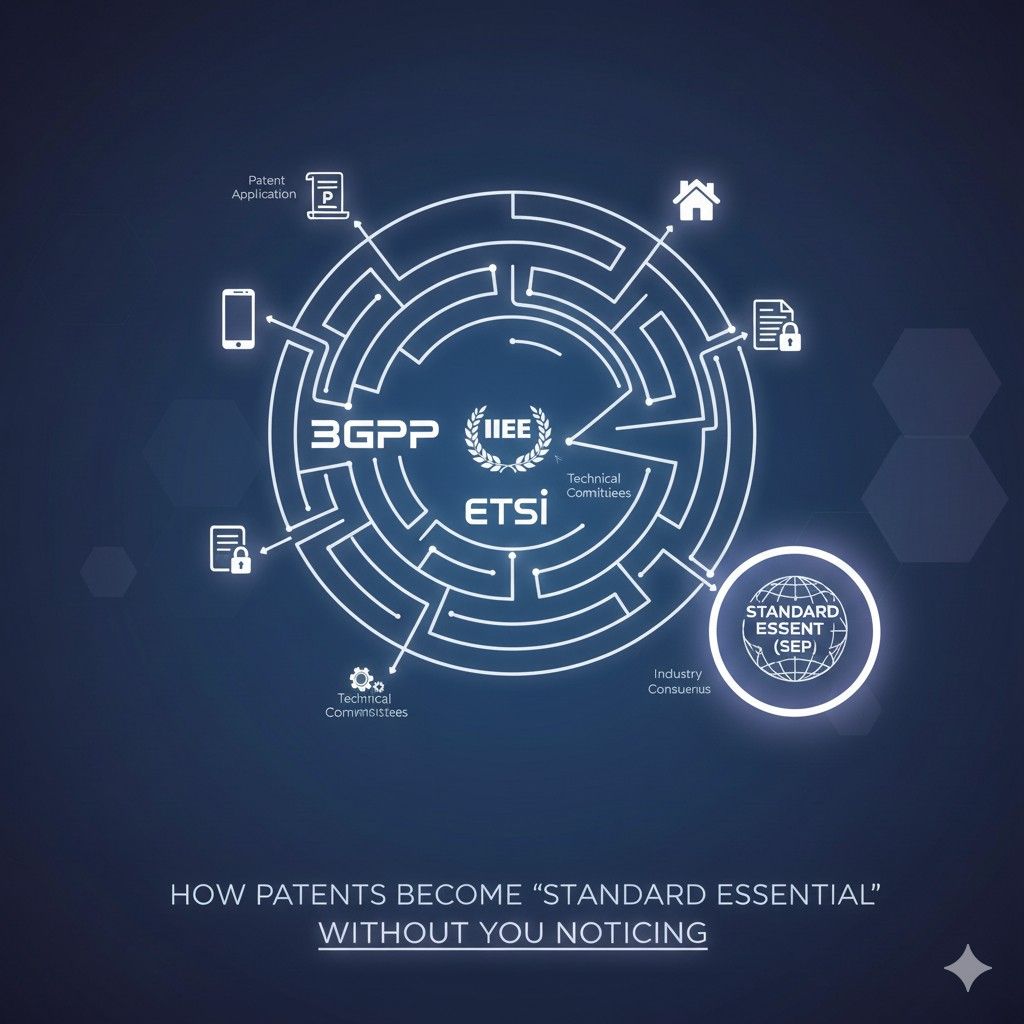
How Patents Become “Standard Essential” Without You Noticing
Most founders do not wake up one day and decide to create a standard essential patent. It happens quietly, often without intent, and sometimes without consent.
A feature you built to solve a narrow problem slowly becomes required behavior. A method you assumed was just implementation detail turns into a rule everyone must follow.
By the time the market notices, the standard is set and your patent is either incredibly valuable or tightly constrained.
This section explains how that transformation happens and how founders can stay in control while it does.
The moment your idea becomes unavoidable
A patent becomes standard essential when there is no reasonable way to follow a standard without using that patented idea. That is the entire test. It does not matter if your idea is small.
It does not matter if it feels obvious in hindsight. If compliance requires it, the patent is essential.
This often happens when a working group chooses a specific approach because it is efficient, proven, or already deployed. Startups that ship early versions of real systems are especially exposed.

Your implementation can quietly become the reference model others build around.
Founders should watch for one signal above all others. If partners, customers, or competitors start saying “this is how it’s done” about something you built, that is a warning and an opportunity.
Standards pull inventions in, not the other way around
Many people assume patents are pushed into standards. In reality, standards pull inventions in.
A standard group is trying to solve a problem for the whole industry. When a solution works well and is easy to adopt, it gains momentum. Once enough people support it, the group formalizes it.
If your invention solves a problem cleanly, it can be absorbed into the standard even if you never intended it. At that point, the rules of the standards body apply to you whether you planned for them or not.
This is why founders should treat any technical discussion with standards bodies, even informal ones, as high stakes. What you share and when you share it matters.
Disclosure rules trigger earlier than founders expect
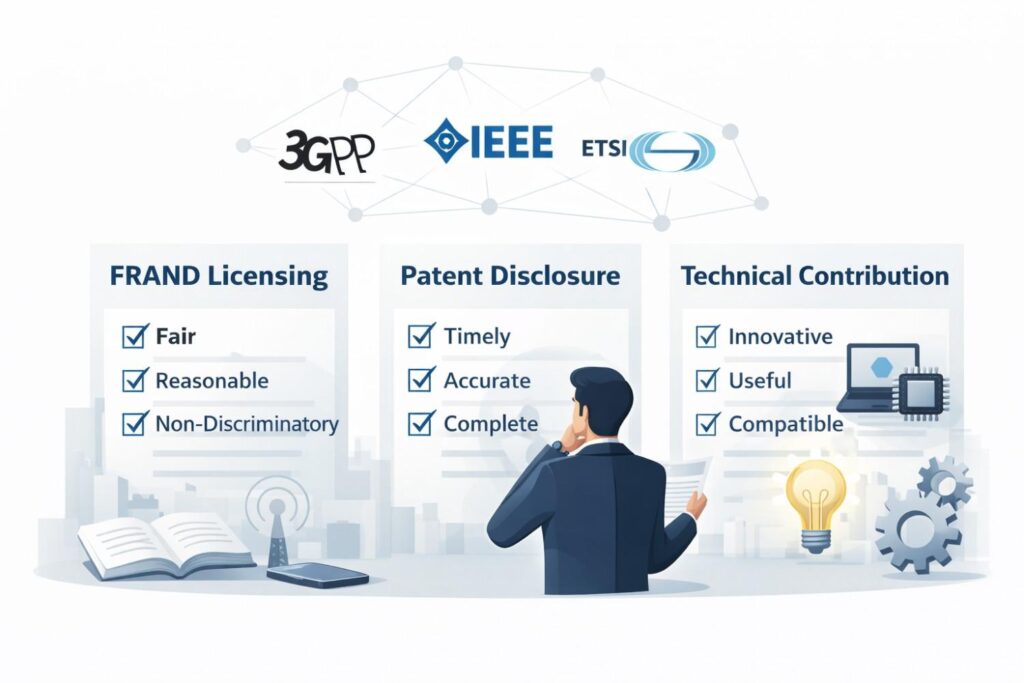
Most standard setting organizations require participants to disclose patents that may be essential. The word “may” is important. You are often required to speak up before certainty exists.
Founders often assume they can wait until a patent is granted or until a feature is finalized. That assumption can backfire. If you miss a disclosure window, you may lose leverage or face accusations of bad faith later.
The actionable step here is to align patent filing with standards exposure. If your team is discussing technology that could land in a standard, you should already be thinking about filings. Speed matters.
This is one reason startups use PowerPatent. It lets you file quickly, with real attorney review, without slowing product work. You can see how it works here: https://powerpatent.com/how-it-works
The language of your patent shapes your future rights
How you write a patent matters even more in standards-driven markets. Narrow language may limit coverage. Overly broad language may trigger early disclosure or licensing obligations.
The goal is not to hide. The goal is to describe your invention in a way that protects core value while allowing flexibility.

Founders should avoid copying internal code structure directly into patents without thought. Standards evolve. If your patent only covers one narrow version, it may miss the final form the standard takes.
Strategic patent drafting anticipates variation. It protects the idea, not just the current build.
FRAND promises change the game
Most standards bodies require a promise to license standard essential patents on fair, reasonable, and non-discriminatory terms. This is often called FRAND.
Many founders hear this and assume it kills value. That is not true. FRAND changes how value is captured, not whether it exists.
The danger is agreeing to terms you do not understand or making promises earlier than required. Once made, these promises are hard to unwind.
Founders should know exactly when a FRAND commitment is triggered and who has authority to make it. A casual email or meeting comment can have lasting impact.
Silence can be treated as consent
In some standards processes, failing to disclose can be interpreted as agreeing to license anyway. This is one of the most painful traps for startups.
You may think staying quiet preserves flexibility. In reality, it can strip it away.
The safest path is informed participation. You do not need to reveal everything. You do need to understand the rules well enough to act deliberately.
Timing decides leverage
The difference between a powerful standard essential patent and a weak one often comes down to timing. File too late and you miss the window. Disclose too early and you may limit terms.
Founders who plan ahead can thread this needle. They file early enough to establish rights but structure engagement to preserve options.
This is not about gaming the system. It is about respecting how it works.
When competitors benefit from your invention
One strange aspect of standards is that your competitors may depend on your technology. This can feel uncomfortable, but it can also be powerful.
If handled well, this dependence creates steady leverage across the market. If handled poorly, it creates resentment and pressure.
The key is predictability. Markets accept licensing when rules are clear. They push back when surprises appear.
Founders should aim to be firm, fair, and consistent. That reputation matters.
Planning before the spotlight hits
Once a technology is widely seen as essential, attention follows. Lawyers get involved. Negotiations harden. Options shrink.
The best time to plan is before that moment. When your product is still growing. When standards work is still in draft. When patents are still flexible.
This is where early, thoughtful patent strategy pays off most.
If you want help doing this without hiring a large firm or slowing your team, PowerPatent was built for this exact stage. You can explore it here: https://powerpatent.com/how-it-works
That covers how patents quietly become standard essential and why founders often miss the shift.
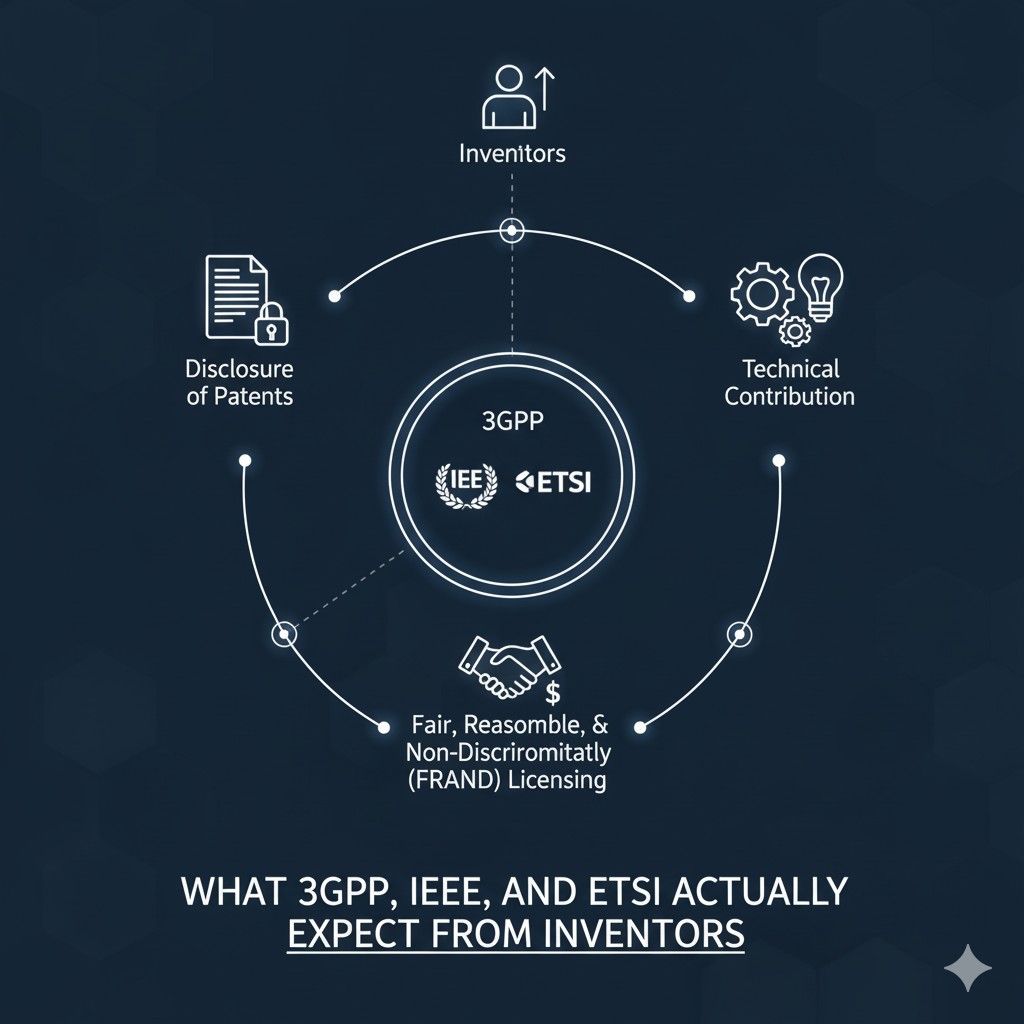
What 3GPP, IEEE, and ETSI Actually Expect From Inventors
Each major standards organization has its own culture, process, and policy language. On the surface, they look complex and intimidating. Underneath, they all want the same thing.
They want predictable behavior from inventors so standards can move forward without legal chaos.
For founders, the challenge is not agreeing with that goal. The challenge is understanding what is expected before you accidentally give up leverage.
This section explains what these groups really expect when your technology enters the room.
Why policies exist in the first place
Standards bodies are not courts. They do not want to resolve disputes. Their policies exist to prevent fights before they start.
When dozens or hundreds of companies collaborate, uncertainty around patents can freeze progress. No one wants to build on a technology only to face surprise claims later.
So these groups create rules that force transparency and early commitment.

For founders, this means one thing. The moment your invention becomes relevant to a standard, the spotlight turns on. The rules are designed to surface who owns what and under what terms it can be used.
Understanding this intent helps you respond calmly and strategically instead of defensively.
How 3GPP views contributor responsibility
3GPP sits at the center of mobile technology. It shapes how phones, towers, and networks work worldwide. Its policies focus heavily on disclosure.
3GPP expects participants to disclose patents that might be essential as soon as they become aware of them. This awareness standard is broad. It does not require certainty. It requires honesty.
For founders, this creates a risk zone. Engineers may attend meetings or submit technical input without realizing patent obligations are triggered.
The organization does not care whether you intended to participate formally. Contribution is contribution.
The actionable move is simple. If your team engages with 3GPP in any way, there must be internal alignment between engineering and IP strategy. No exceptions.
Why early filings matter more in 3GPP environments
3GPP standards evolve fast and are adopted globally. Once a feature lands, it spreads quickly.
If your patent is filed after technical alignment forms, it may be too late to matter. Worse, it may expose you to disclosure duties without giving you strong coverage.
Founders should treat any 3GPP-related work as patent-first territory. File before discussing. File before sharing. File before submitting.
This does not mean slowing down. It means building filing into your workflow. That is exactly why PowerPatent exists. You can move at startup speed while staying protected. Learn how here: https://powerpatent.com/how-it-works
IEEE’s focus on clarity and commitment
IEEE governs many core technologies, from Wi-Fi to Ethernet. Its policies are known for being explicit and structured.
IEEE expects patent holders to submit written assurances about licensing. These are not casual gestures. They are binding commitments.
Once you provide an assurance, it defines how you can license your patent forever within that standard. You cannot renegotiate later because the market changes.
Founders often underestimate this step. They treat it as paperwork. In reality, it is a strategic decision with long-term consequences.
Before submitting any assurance, founders should understand what rights they are preserving and what rights they are giving up.
The danger of boilerplate responses
IEEE forms and processes can feel standardized and routine. That is intentional. It encourages speed and consistency.
The danger is signing something you did not shape. Boilerplate language may not fit your business model or future plans.
Founders should never delegate IEEE patent assurances without review. Even if the form looks simple, the implications are not.
A small investment in understanding this step can preserve years of flexibility.
ETSI’s balance between openness and enforcement
ETSI operates at the heart of European telecom standards but influences global markets. Its policy framework tries to balance broad participation with enforceable rights.
ETSI requires disclosure of essential patents and expects licensing on fair terms. At the same time, it recognizes that patents are property and must retain value.
This balance creates opportunity for founders who understand it. ETSI does not cap rates or dictate business models. It focuses on process and fairness.
Founders who engage early and transparently often find ETSI environments more predictable than expected.
Awareness is the trigger most founders miss
Across all three organizations, the most misunderstood concept is awareness.
You do not need a granted patent to trigger obligations. You do not need full certainty. If someone on your team knows or reasonably should know that a patent might be essential, the clock starts.
This creates a management challenge. Knowledge inside a startup spreads unevenly. One engineer may know something others do not.
The solution is process, not fear. Founders should create a simple internal rule. Any work tied to standards gets flagged early. That flag triggers a quick patent review.
Why “non-participation” is not always safe
Some founders believe they can avoid obligations by staying out of standards discussions. This works only up to a point.
If your product implements a standard, your patents may still be relevant. If your technology becomes widely used, it may still be pulled into standards later.
Non-participation reduces some obligations but also removes influence. You lose the chance to shape outcomes that affect your business.
Founders should make this trade-off consciously, not by default.
Policies are enforced by markets, not meetings
Standards bodies do not usually punish violations directly. Enforcement happens later, through courts, negotiations, and reputation.
If you fail to disclose properly, you may face claims that you acted unfairly. If you make unclear commitments, you may face pressure to accept unfavorable terms.
The cost shows up when your company has leverage and wants to use it. That is the worst time to discover a past mistake.
Planning your stance before engagement
The most effective founders decide their standards posture before engaging. They know which technologies they are willing to license broadly and which ones they want to protect tightly.
This clarity guides behavior. It shapes what is disclosed, how it is worded, and when commitments are made.
Without this plan, teams react in the moment. That is when errors happen.
Turning policy into advantage
Policies are not just constraints. They are signals.
They tell you which technologies matter. They reveal where markets are headed. They show where incumbents are invested.
Founders who read policies strategically gain insight into future demand and pressure points.
This insight can guide product roadmaps and patent strategy together.
Staying fast without losing control
The fear many founders have is that engaging with standards will slow them down. That fear is understandable but outdated.
With the right tools and guidance, you can file quickly, engage intelligently, and keep building.
PowerPatent is designed for exactly this reality. It helps founders protect inventions early, with real attorney oversight, without dragging development to a halt.
You can explore how it works here: https://powerpatent.com/how-it-works
That covers what these organizations actually expect and why those expectations matter.
Where Founders Lose Leverage and How to Protect It Early
This is the section most founders wish they had read sooner. Not because the rules were hidden, but because the consequences were invisible at first. Leverage is rarely lost in one dramatic moment.
It leaks away quietly, through small decisions that feel harmless at the time. By the time the stakes are clear, the options are gone.
This section focuses on where that leakage happens and how founders can stop it before it starts.
Losing leverage by waiting too long to file
The most common mistake is delay. Founders wait for traction. They wait for revenue. They wait for clarity. In standard-driven markets, waiting is expensive.
Standards move while you wait. Discussions happen. Drafts form. Consensus builds. Once technical direction hardens, filing a patent that truly reads on the standard becomes much harder.
The painful part is that this delay often feels responsible. Founders think they are saving money or staying focused. In reality, they are trading long-term leverage for short-term comfort.
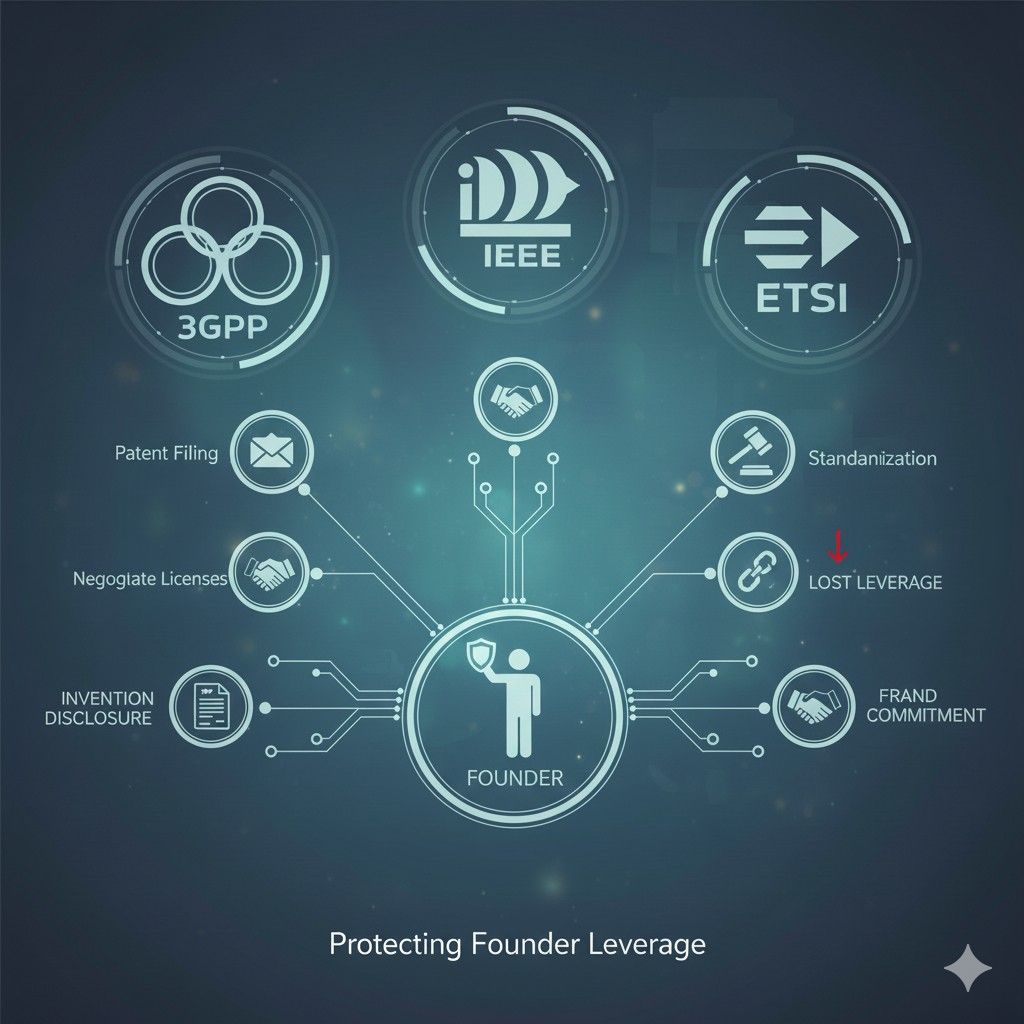
The practical fix is to file earlier than feels natural. Not dozens of patents. Just the right ones, filed fast, covering the core idea before the window closes.
This is exactly why PowerPatent exists. It lets startups file early without the cost, delay, or confusion of traditional firms. You can see how it works here: https://powerpatent.com/how-it-works
Losing leverage through casual technical sharing
Engineers love to explain how things work. In standards settings, that instinct can be costly.
A slide deck. A whiteboard session. A helpful clarification in a meeting. These moments feel informal, but they can shape standards decisions. Once your approach is adopted, disclosure obligations may follow.
The leverage loss happens when sharing comes before protection. At that point, your invention may help the world but limit your upside.
Founders do not need to silence their teams. They need sequencing. Protect first, then share. That order preserves both influence and value.
Losing leverage by treating patent language as an afterthought
Patent language is not just documentation. It is strategy.
When patents are written narrowly, they may miss the final form of a standard. When written carelessly, they may trigger obligations earlier than needed.
Many founders outsource this entirely and never review the details. That is risky in standards-heavy fields.
The fix is involvement, not micromanagement. Founders should understand what problem the patent claims protect and how flexible that protection is. You do not need to be a lawyer. You need clarity.
Losing leverage by letting the wrong person speak
In many startups, engineers interact with standards bodies directly. That is normal and often necessary. The risk is when those engineers are not aligned with IP strategy.
A well-meaning comment like “we’re fine licensing this” can be remembered long after context is lost. Even if it is not legally binding, it shapes expectations.
Founders should define who can speak on patent and licensing topics and what language is safe to use. This is not about control. It is about consistency.
A short internal guideline can prevent long-term damage.
Losing leverage by assuming FRAND means low value
Many founders hear FRAND and mentally write off upside. That assumption is wrong.
FRAND does not mean free. It does not mean cheap. It means reasonable in context.

The companies that earn the most from standard essential patents often operate under FRAND commitments. Their success comes from preparation, portfolio strength, and timing.
Founders lose leverage when they assume the game is over before it starts. In reality, FRAND shifts the game. It does not end it.
Losing leverage by ignoring portfolio shape
One patent rarely provides strong leverage in a standards market. Portfolios do.
A single claim can be worked around. A set of related patents covering different aspects of the same requirement is much harder to avoid.
Founders who think in portfolios early, even small ones, retain far more negotiating power later. This does not mean filing endlessly. It means filing thoughtfully, with coverage in mind.
Planning portfolio shape early is far easier than trying to fix gaps later.
Losing leverage by reacting instead of planning
The most damaging pattern is reactive behavior. A founder learns about an obligation only after it is triggered. At that point, choices narrow.
Planning feels slower upfront but saves enormous time and value later. A simple standards and patent posture, decided early, guides decisions automatically.
This posture answers basic questions. Which parts of our tech are we willing to license broadly. Which parts are core and must be protected. Which standards matter most to us.
Once this is clear, day-to-day decisions become easier.
Losing leverage by copying incumbents blindly
Large companies engage with standards differently than startups. They have massive portfolios, long histories, and legal teams on standby.
When startups copy their behavior without context, they often lose. What works for an incumbent may expose a startup.
Founders should design a strategy that fits their size, speed, and goals. That strategy can still be sophisticated. It just needs to be intentional.
Losing leverage through poor record keeping
Standards discussions span years. People leave. Memories fade. When disputes arise, records matter.
If you cannot show when you filed, what you disclosed, and how you engaged, your position weakens.
Founders should keep simple records of standards involvement and patent timelines. This is not bureaucracy. It is insurance.
Protecting leverage by aligning product and IP early
The strongest position comes when product strategy and patent strategy move together.
When you know which features are likely to become required, you can protect them early. When you know which standards matter, you can prioritize filings accordingly.
This alignment does not slow product teams. It gives them clarity.
Protecting leverage while staying fast
Speed and protection are not opposites anymore. The old trade-off is gone.
Modern tools let founders move quickly and file smartly. Attorney oversight no longer means months of delay.
PowerPatent was built for founders who want to keep building while staying protected. It turns IP from a drag into a support system. You can explore how it works here: https://powerpatent.com/how-it-works
The real cost of lost leverage
Lost leverage does not show up on a dashboard. It shows up later, when a company wants to license, partner, or exit.
Suddenly, the questions appear. Why are our terms capped. Why do we have to license this. Why do others control this part of the stack.
By then, the answers are historical.
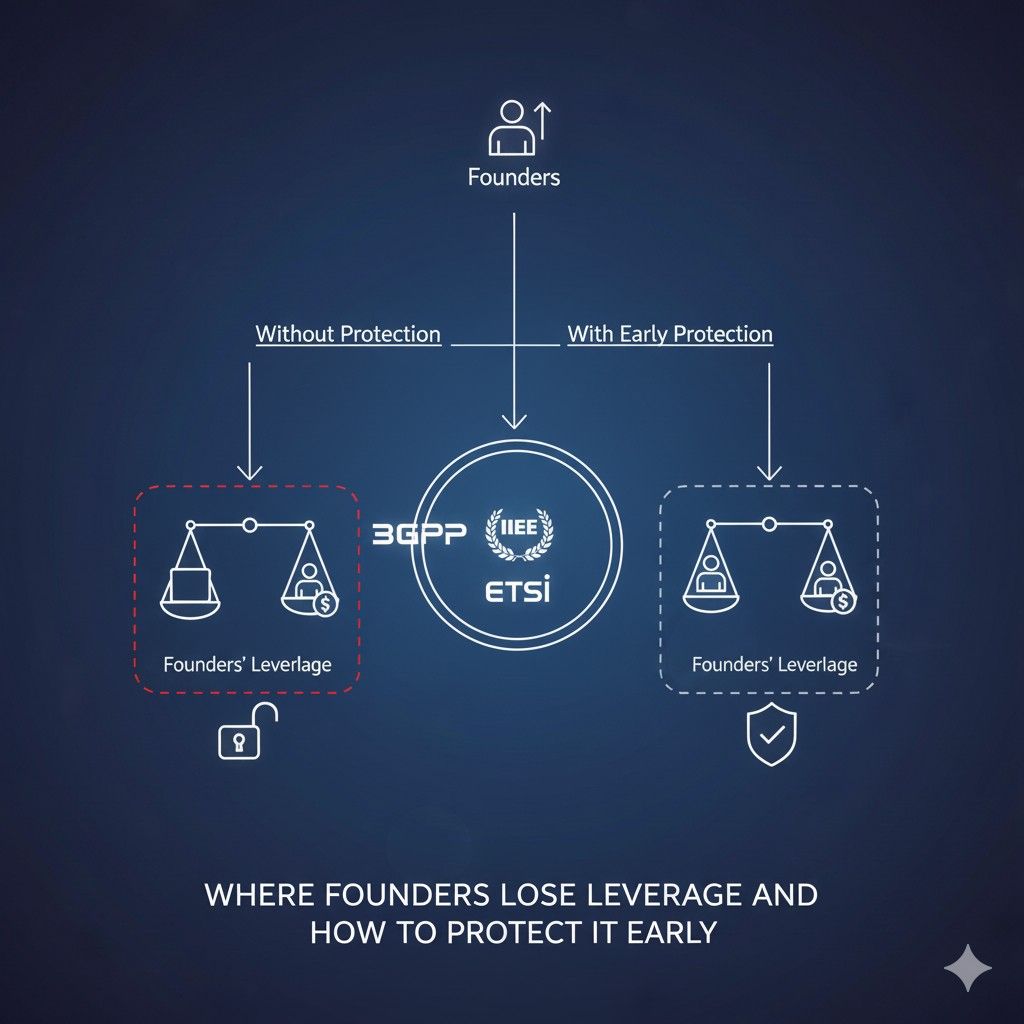
Founders who protect leverage early buy freedom later. Freedom to negotiate. Freedom to grow. Freedom to decide how value is shared.
That is what this is really about.
This completes the core sections of the article.
Wrapping It Up
If there is one idea to take away from all of this, it is simple. Standards are not a side topic. They are part of the competitive landscape. They shape who wins quietly, long before markets feel crowded and long before pricing pressure shows up. Founders often discover standards only when they feel boxed in. At that point, the rules feel unfair and restrictive. In reality, the rules were always there. The difference is whether you saw them early enough to plan.
Leave a Reply