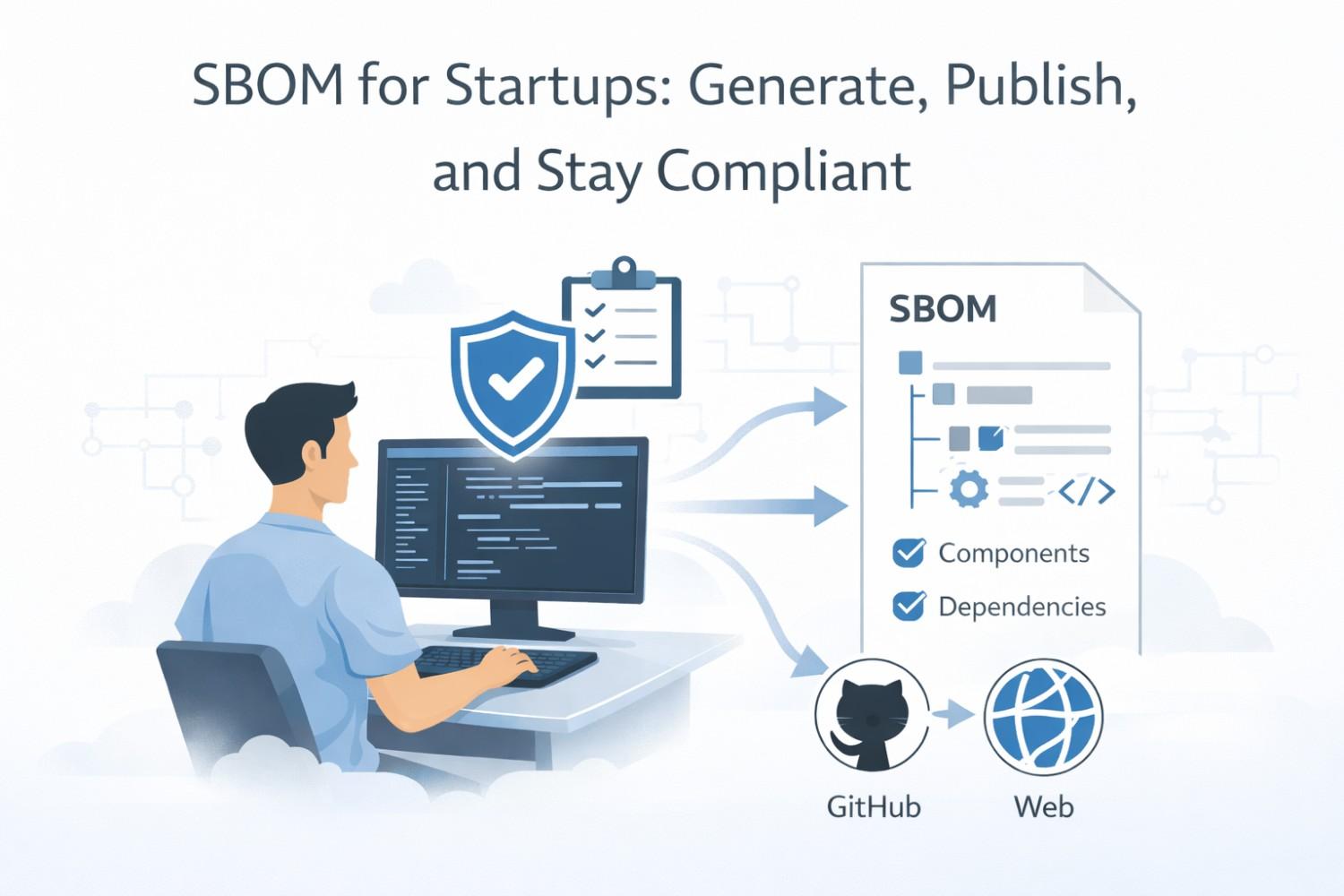
Software moves fast. Startups move even faster. Code ships daily, tools stack up, and open-source parts slide quietly into products without much thought. That speed is a strength, but it also creates risk. Today, customers, partners, and governments want to know exactly what is inside the software they rely on. That is where SBOM comes in. An SBOM, or Software Bill of Materials, is quickly becoming a must-have, not a nice-to-have. For startups, it can feel like yet another box to check. Another thing that slows you down. Another rule made for big companies with big teams.
What an SBOM Really Is and Why Startups Cannot Ignore It
An SBOM sounds complex, but the idea behind it is simple. It is about knowing what you are shipping.
For startups, this section matters because it explains why SBOMs are no longer optional and how they connect directly to trust, revenue, and long-term survival.
This is not about theory. This is about real pressure already showing up in the market.
Understanding an SBOM Without the Jargon
An SBOM is a clear record of every software part inside your product. That includes open-source code, third-party libraries, and tools you did not write yourself. Think of it as a full ingredient label for your software.
For a startup, this matters because modern software is rarely built from scratch.
Even a simple app may rely on hundreds of outside components. Without an SBOM, you are shipping blind. You do not fully know what you depend on, what risks you carry, or how exposed you are when something breaks.

The actionable move here is to start treating your software like a product that needs transparency. If you cannot explain what is inside it, someone else will ask you to prove it.
Why SBOMs Are Suddenly Everywhere
SBOMs did not appear out of nowhere. They became urgent after high-profile supply chain attacks showed how hidden dependencies could harm thousands of companies at once.
Governments responded first, then large enterprises followed.
Today, SBOMs show up in contracts, vendor reviews, and security checks. Even if you are small, your customers may not be. When they are audited, they pass that pressure down to you.
The smart move is to assume SBOM questions will come before they do. Startups that prepare early avoid rushed fixes later, when deals are on the line.
SBOMs as a Trust Signal, Not Just a Rule
Many founders see SBOMs as a compliance chore. That mindset misses the bigger opportunity. An SBOM is a signal that you take security and quality seriously.
When a startup can calmly provide an SBOM, it changes the tone of the conversation. You stop sounding defensive. You sound prepared. That builds confidence with buyers, partners, and investors.
A practical step is to treat SBOM readiness as part of your sales posture. It belongs next to uptime stats and security policies, not buried as an afterthought.
The Real Risk of Ignoring SBOMs Early
Ignoring SBOMs does not feel risky at first. Early customers may not ask. Small teams are focused on shipping. But risk grows quietly.
When a known vulnerability hits a common library, companies without SBOMs scramble. They do not know if they are affected. They cannot answer customers quickly. That delay erodes trust fast.
The better approach is to build awareness early. Even a basic SBOM gives you the ability to respond with clarity instead of panic.
SBOMs and Startup Speed Can Coexist
A common fear is that SBOMs slow teams down. In reality, chaos slows teams down. Manual audits, surprise requests, and emergency patches steal far more time.
When SBOM thinking is baked into development, it fades into the background. Tools update automatically. Teams know where dependencies live. Decisions get easier, not harder.

The key action is to align SBOM generation with your existing build and release flow instead of treating it as a separate task.
Open Source Is Powerful but Needs Visibility
Startups thrive on open source. It accelerates development and lowers cost. But it also increases responsibility.
Using open source without tracking it is like borrowing parts without keeping receipts. When a problem surfaces, you do not know what you touched or where.
The most effective move is not to avoid open source, but to document it as you go. SBOMs let you enjoy the upside without carrying hidden risk.
Customers Are Asking Better Questions Now
Security questions used to be generic. Now they are specific. Buyers ask which libraries you use. They ask how fast you patch. They ask if you can provide an SBOM.
Startups that answer clearly move faster through procurement. Those that cannot often stall, even if their product is strong.
A tactical step is to review recent security questionnaires you have received. If you see patterns around components or dependencies, an SBOM directly addresses them.
SBOMs Help You Internally Too
SBOMs are not just for outsiders. They help your own team understand the product better.
When onboarding new engineers, an SBOM shows the landscape instantly. When planning upgrades, it highlights outdated parts. When bugs appear, it narrows the search.
The internal value alone can justify the effort. External compliance is just the bonus.
Early SBOM Work Is Cheaper Than Late Fixes
The cost of SBOM adoption rises with complexity. Early-stage products are simpler. Dependencies are fewer. Ownership is clearer.
Waiting until you are under pressure means working backward through years of decisions. That is painful and expensive.
The smartest action is to start now, even with a lightweight approach. You can refine it as you grow, but you cannot recover lost visibility.
How SBOM Awareness Connects to IP Strategy
One overlooked angle is how SBOMs intersect with intellectual property. Knowing what you own versus what you rely on matters deeply when filing patents or raising money.
Clear records protect you from claiming what you do not own and strengthen claims around what you truly built. This is where compliance and IP strategy quietly meet.

This is also where platforms like PowerPatent become valuable. When your technical foundation is clear, turning innovation into strong protection becomes faster and safer.
You can see how that works at https://powerpatent.com/how-it-works.
How SBOM Requirements Are Showing Up in Deals, Security Reviews, and Sales Calls
SBOMs are no longer hidden in policy documents. They are showing up in real conversations that affect revenue.
This section focuses on where founders actually feel the pressure and how to handle it without losing momentum. The goal is not to scare you, but to help you recognize patterns early and respond with confidence.
The Quiet Shift in Buyer Expectations
Buyers rarely announce that they require an SBOM upfront. Instead, the expectation appears gradually.
It starts as a security questionnaire. Then a follow-up email asks about dependencies. Later, someone from procurement wants documentation.
For startups, this can feel sudden, but it is part of a larger shift. Buyers are being audited themselves. They are expected to know what runs inside their systems. That responsibility flows down the chain.

The most useful action here is to assume that any serious buyer will eventually care. Planning for that reality removes surprise from the process.
Security Reviews Are Getting More Specific
Security reviews used to focus on high-level controls. Now they dig into the software supply chain. Reviewers want to know how you track third-party code and how quickly you respond to issues.
An SBOM answers these questions directly. Without one, you are forced to rely on vague explanations. That creates friction and slows approvals.
A smart approach is to prepare a simple internal explanation of how your SBOM is generated and updated. Even before sharing the document itself, the clarity of your process builds trust.
SBOM Requests During Late-Stage Sales
The worst time to learn about SBOM expectations is during a late-stage deal. At that point, timelines are tight and stakes are high.
Founders often scramble, pulling engineers off roadmap work to assemble information manually. This creates stress and risk right when you want calm execution.
The preventative move is to treat SBOM readiness as part of deal hygiene. If you can produce it quickly, you control the pace instead of reacting to it.
Enterprise Customers and Downstream Pressure
Enterprise customers are under strict rules. When they buy from you, your software becomes part of their risk profile.
If they cannot explain what is inside your product, they may pause or walk away. This has nothing to do with your feature set and everything to do with accountability.
The practical takeaway is that SBOMs help you fit into larger ecosystems. They make your startup easier to buy from, even if your product is new.
Government and Regulated Markets
If you sell to government agencies or regulated industries, SBOMs are moving from preference to requirement.
Even startups that do not target these markets today may find themselves there tomorrow. A pivot, a partnership, or a new customer segment can trigger new obligations overnight.
Even startups that do not target these markets today may find themselves there tomorrow. A pivot, a partnership, or a new customer segment can trigger new obligations overnight.

The forward-looking action is to build habits that scale into regulated environments. That way, expansion does not require a full operational reset.
Investor Questions Are Changing Too
Investors are becoming more aware of software risk. During diligence, some now ask how startups manage dependencies and security exposure.
An SBOM demonstrates maturity without heavy explanation. It shows that the team understands modern risk and has systems in place.
For founders, this is a chance to turn compliance into a positive signal rather than a defensive one.
SBOMs and Contract Language
More contracts now include language about software components and disclosure obligations. Founders often sign these clauses without fully realizing the implications.
When a customer later asks for proof, the absence of an SBOM becomes a contractual issue, not just a technical one.
A wise step is to review contract language through the lens of SBOM readiness. Knowing what you have committed to helps you avoid surprises.
Sales Teams Need Clear Answers
Sales teams struggle when technical questions stall deals. Without clear documentation, they rely on engineers for every answer.
An SBOM empowers sales to respond confidently or route questions correctly. This keeps deals moving and reduces internal friction.
The operational benefit is real. Fewer interruptions mean more focus for everyone.
SBOMs Reduce Back-and-Forth
One hidden cost of not having an SBOM is endless follow-up. Buyers ask one question, then another, then another.
A clean SBOM often resolves multiple concerns at once. It shortens review cycles and simplifies communication.
The actionable insight is that preparation saves time on both sides of the table.
Turning Compliance Into Leverage
Startups that handle SBOMs well stand out. While others scramble, you stay composed.
That composure can be leverage. It positions you as a reliable partner, not a risky experiment.
This is where tools and systems matter. The less manual effort required, the more consistent your response becomes.
And when your product innovation is protected alongside compliance, your position strengthens further.

PowerPatent supports that balance by helping founders protect what they build while staying aligned with modern expectations. You can explore that at https://powerpatent.com/how-it-works.
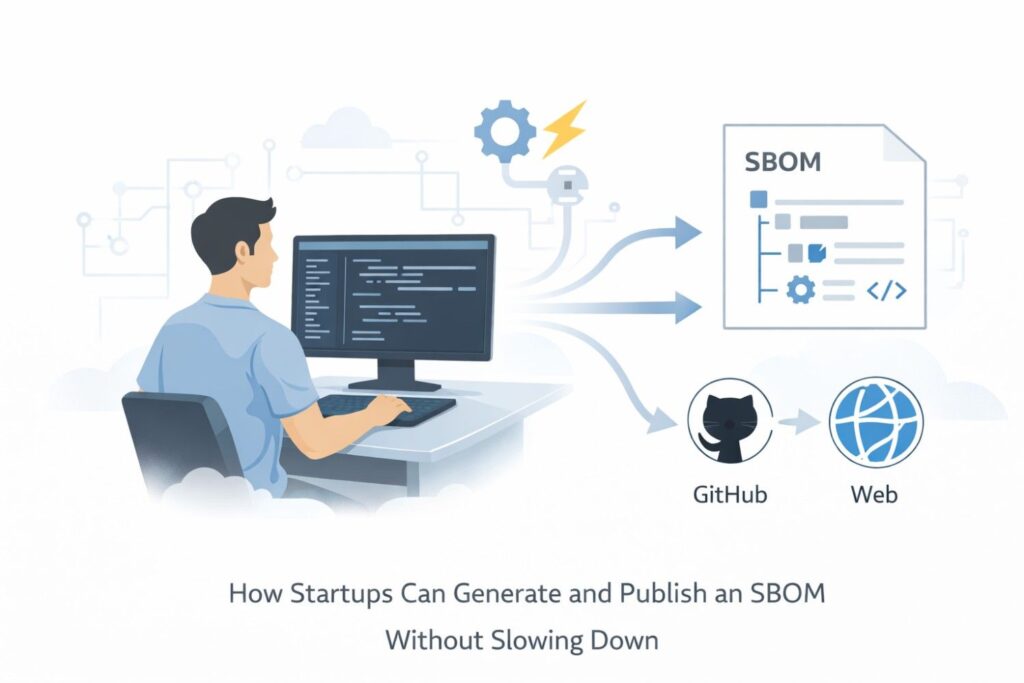
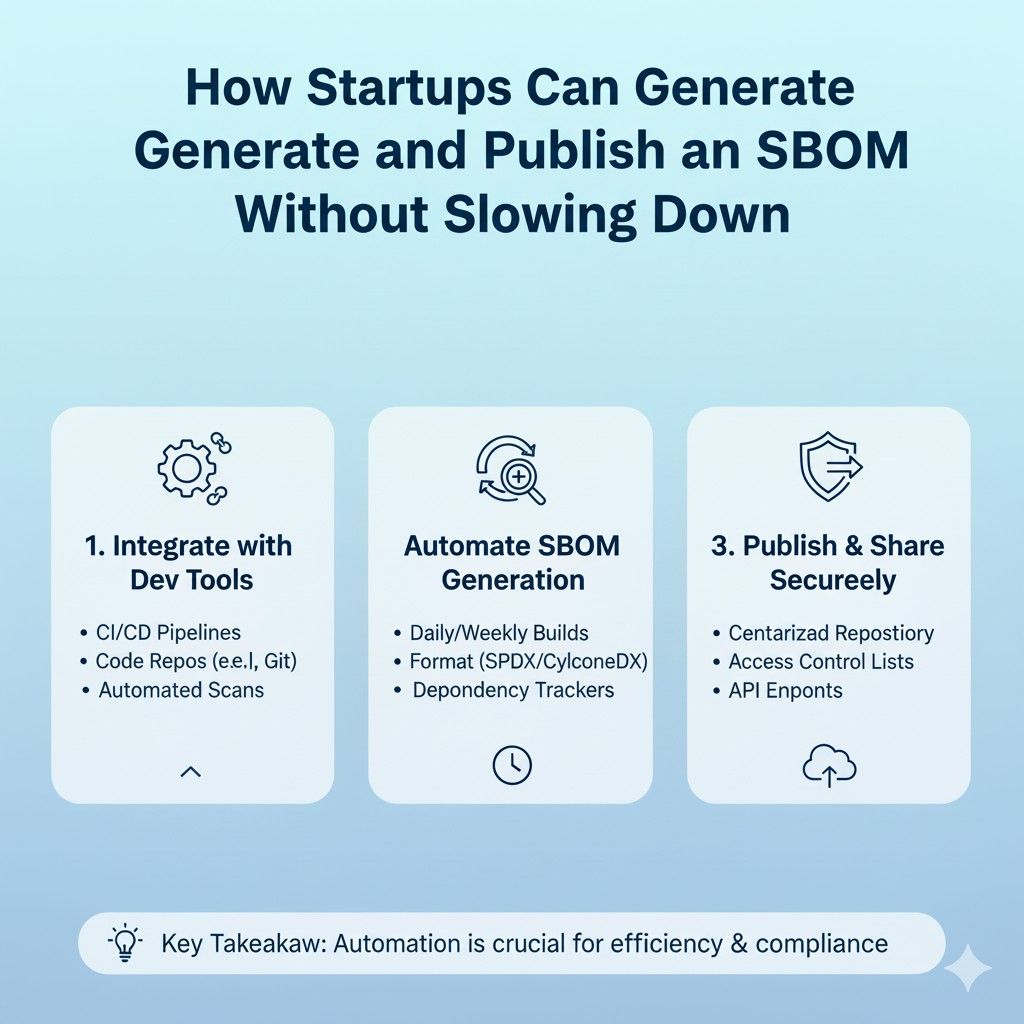
How Startups Can Generate and Publish an SBOM Without Slowing Down
This is the section most founders worry about. They understand why SBOMs matter, but they fear the work involved.
The good news is that generating and publishing an SBOM does not need to slow your team or distract you from building. When done right, it becomes part of the background, not a burden.
SBOMs Are a Process, Not a One-Time Task
Many startups make the mistake of thinking an SBOM is a document you create once and forget. That approach always fails. Software changes too often.
An SBOM works best when it is treated as a living output of your build process. Each release naturally produces an updated view of what is inside your product.

The practical move is to stop thinking in terms of paperwork and start thinking in terms of automation. If your software already builds and deploys, an SBOM can be generated alongside that flow.
Start With What You Already Have
Most startups already track dependencies in some form. Package managers, lock files, and build tools hold a lot of the data you need.
The key is to surface that information in a clear way instead of recreating it manually. Many teams waste time re-documenting things that already exist in their systems.
A strong starting point is to review your current build setup and ask a simple question. Where do dependencies get defined today? That answer usually reveals the easiest SBOM path.
Keep the First Version Simple
Founders often overcomplicate SBOMs at the start. They aim for perfection instead of usefulness.
A basic SBOM that lists components and versions is far better than nothing. You can always add detail later as requirements evolve.
The strategic move is to aim for clarity, not completeness. Early SBOMs are about visibility, not audits.
Make Engineers Part of the Design
SBOMs fail when they are forced onto engineering teams without context. Engineers need to understand why this matters and how it fits their work.
When teams see SBOMs as a way to reduce future interruptions, they are far more likely to support the effort.
The actionable advice is to frame SBOM generation as a time-saving measure. Less scrambling later means more focus now.
Publishing Does Not Mean Oversharing
One common fear is that publishing an SBOM exposes sensitive details. In reality, publishing means sharing it with the right people in the right context.
Most startups do not post SBOMs publicly. They provide them upon request to customers or partners.
The important step is to define where your SBOM lives and who can access it. Clear ownership prevents confusion.
Decide Where the SBOM Lives Internally
An SBOM should be easy to find when needed. If it is buried in someone’s inbox, it might as well not exist.
Some teams store it with release artifacts. Others keep it in internal documentation systems. The location matters less than consistency.
The actionable point is to pick one place and stick to it. Everyone should know where to look.
Align SBOM Updates With Releases
The easiest way to keep SBOMs current is to tie updates to releases. If a new version ships, a new SBOM is generated.
This removes guesswork and ensures accuracy. It also makes it easy to answer questions like which version a customer is running.
The operational benefit is fewer manual checks and fewer mistakes.
Avoid Manual Work as Much as Possible
Manual SBOM creation does not scale. It breaks as soon as the team grows or the release cycle speeds up.
Automation is not about complexity. It is about reliability.
The strategic advice here is simple. If a human has to remember to update the SBOM, it will eventually be wrong.
Prepare a Simple Explanation for Customers
Customers often ask how SBOMs are created, not just for the file itself.
Having a short, clear explanation ready saves time and builds confidence. It shows that your process is intentional.
This explanation does not need to be technical. It just needs to be honest and consistent.
SBOMs Reduce Fire Drills
When a vulnerability is announced, companies with SBOMs respond calmly. They check the list, assess impact, and communicate clearly.
Without an SBOM, teams panic. They search through codebases and dependencies under pressure.
The difference shows up fast, both internally and externally.
SBOMs Support Faster Decision-Making
When planning upgrades or removing components, an SBOM provides instant context.
Instead of guessing what might break, teams can see dependencies clearly.
This speeds up technical decisions and reduces risk.
Connect SBOM Efforts to Long-Term Strategy
SBOMs should not live in isolation. They connect to security posture, customer trust, and even intellectual property clarity.
Knowing what you built versus what you integrated helps define ownership boundaries. That clarity matters when protecting your innovation.
This is where forward-thinking startups gain an edge. When compliance work aligns with IP strategy, everything moves faster.
PowerPatent helps founders turn technical clarity into strong protection without slowing product velocity. You can see how that works at https://powerpatent.com/how-it-works.
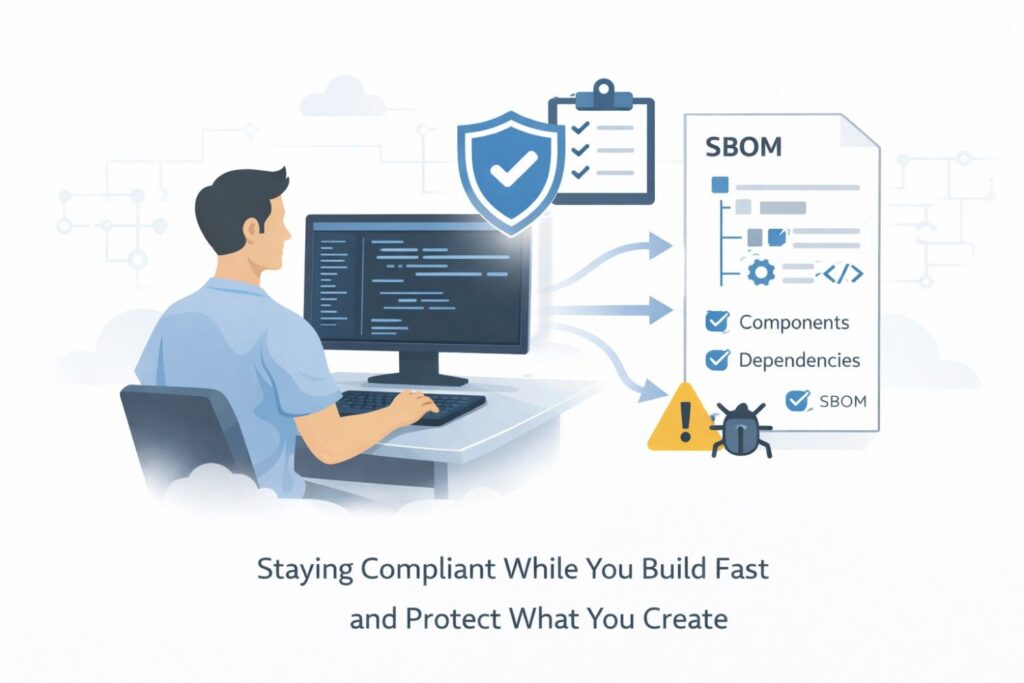
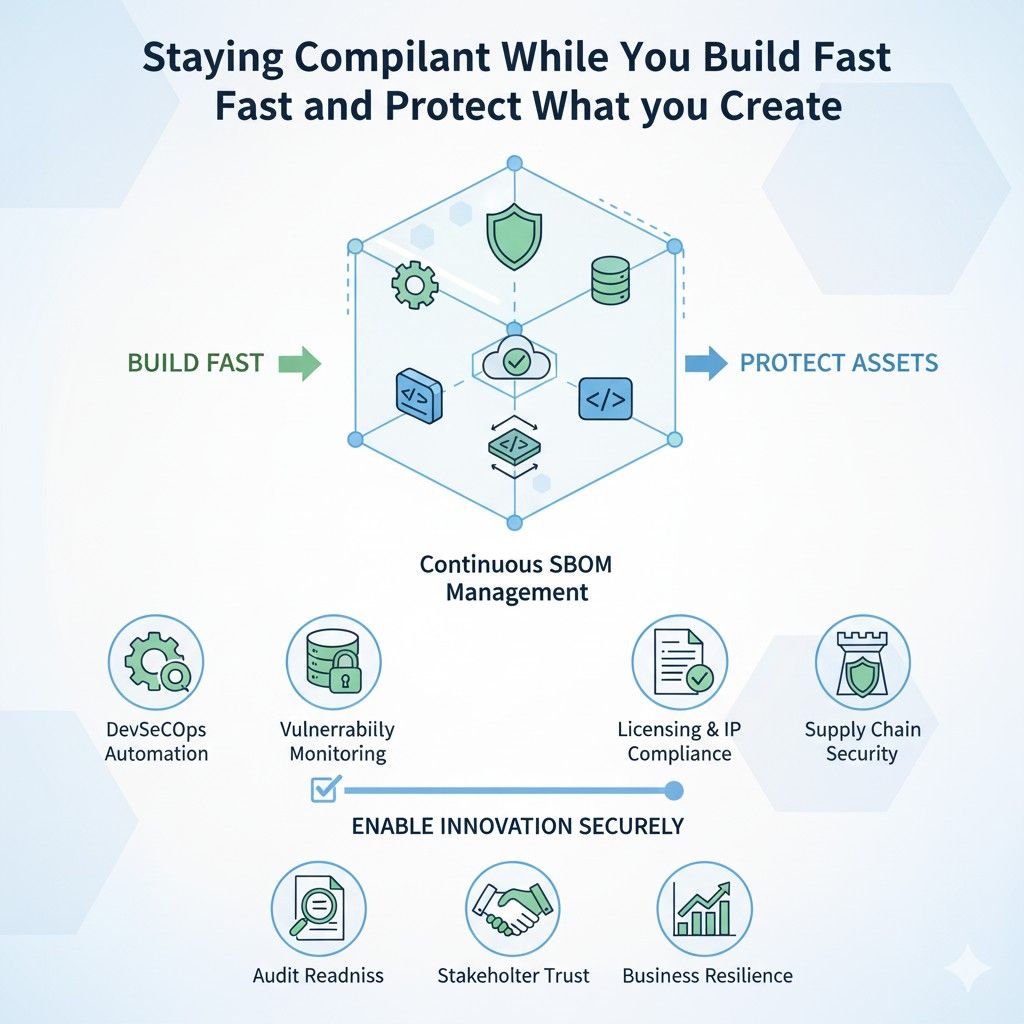
Staying Compliant While You Build Fast and Protect What You Create
Compliance often feels like the enemy of speed. For startups, that tension is real. You want to move fast, test ideas, and ship improvements without friction.
At the same time, expectations around security, transparency, and ownership keep rising.
This section focuses on how to stay compliant with SBOM requirements while keeping your momentum and protecting the value you are creating.
Compliance Works Best When It Is Invisible
The most effective compliance systems are the ones you barely notice. When compliance becomes a separate workflow, it slows teams down and creates resistance.
SBOM compliance works when it is embedded into everyday engineering habits. Builds happen, releases go out, and documentation updates quietly in the background.
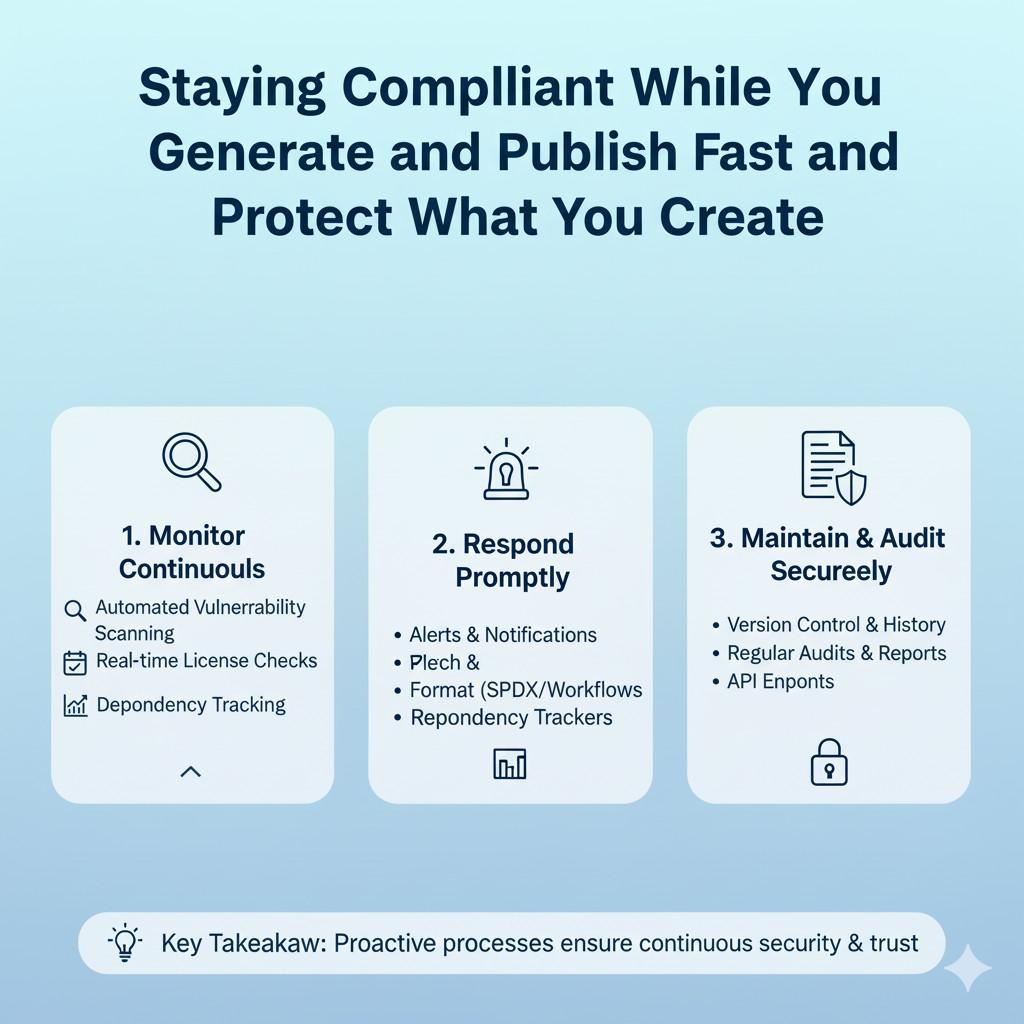
The strategic move is to design compliance so it feels like infrastructure, not overhead. When it runs automatically, it stops competing with innovation.
Treat Compliance as a Product Feature
Founders often think of compliance as a cost. In reality, it can be a feature that helps you win deals.
When customers see that you can answer questions quickly and clearly, they feel safer choosing you. That confidence can outweigh missing features or a shorter track record.
The actionable insight is to position SBOM readiness as part of your reliability story. It belongs in conversations about trust, not buried in technical details.
Stay Ahead of Rules Instead of Chasing Them
Rules around software transparency will continue to evolve. Waiting for exact requirements before acting always puts you behind.
Startups that build flexible systems adapt easily when expectations change. Those that wait often scramble.
The smart approach is to focus on principles rather than checklists. Visibility, traceability, and repeatability will matter regardless of specific rules.
Reduce Compliance Stress by Narrowing Scope
One reason compliance feels overwhelming is unclear scope. Teams are not sure how much is enough.
With SBOMs, more detail is not always better. Accuracy and consistency matter more than depth.
The tactical advice is to define what your SBOM covers and communicate that clearly. Setting expectations reduces friction.
Build Clear Ownership Inside the Team
Compliance breaks down when no one owns it. Everyone assumes someone else is handling it.
Assigning clear ownership does not mean adding work. It means ensuring accountability.
The practical step is to decide who is responsible for SBOM accuracy and who responds to external requests. Clarity saves time.
SBOMs and Incident Response Go Hand in Hand
When something goes wrong, speed matters. SBOMs give you a head start.
You can quickly identify affected components, assess impact, and communicate next steps.
This capability turns potential crises into manageable events. Customers notice the difference.
Avoid Over-Communicating and Under-Delivering
Some startups promise more than they can consistently deliver. This creates risk.
If you claim real-time updates or deep audits, you must support that claim.
The safer approach is to promise what you can reliably maintain. Consistency builds long-term trust.
Use SBOMs to Support Cleaner Architecture
SBOMs often reveal unnecessary complexity. Duplicate libraries, outdated components, and unused tools become visible.
This insight allows teams to simplify their stack over time.
The long-term benefit is lower maintenance cost and fewer security issues.
Compliance and IP Protection Are Linked
Understanding your software components helps define what you truly own.
This clarity matters when protecting innovation. You cannot claim what you did not build.
Startups that track dependencies clearly avoid accidental overreach and strengthen legitimate claims.
Prepare for Growth, Not Just Today
What works at ten engineers may fail at fifty. What works for small customers may fail with large ones.
SBOM practices that scale save you from painful transitions later.
The actionable advice is to choose tools and processes that grow with you, even if they feel slightly ahead of your current needs.
Keep Documentation Human
Documentation does not need to be long or complex. It needs to be understandable.
Clear language beats perfect formatting. Honest explanations beat buzzwords.
This applies to SBOMs and everything around them.
Make Compliance Part of Company Culture
When teams see compliance as protection, not punishment, behavior changes.
People care more when they understand the why.
Sharing real examples of deals saved or issues avoided helps reinforce that mindset.
Protecting What You Build While Staying Compliant
At the end of the day, SBOMs are about clarity. Clarity builds trust. Trust unlocks growth.
The same clarity supports strong intellectual property. When you know what is inside your product, protecting it becomes easier and safer.
This is where smart systems matter.
PowerPatent helps founders turn technical work into strong, defensible patents without slowing down progress. When compliance and protection move together, startups gain confidence instead of friction.
You can explore how that works at https://powerpatent.com/how-it-works.
Wrapping It Up
SBOMs are no longer a future problem. They are a present reality for startups that want to sell, scale, and earn trust. What makes them feel heavy is not the work itself, but the uncertainty around when and how to start. Once that uncertainty is removed, SBOMs become manageable, predictable, and even helpful. The key takeaway is simple. Knowing what is inside your software gives you control. Control over risk. Control over conversations with customers. Control over how fast you can respond when something changes. Startups that embrace this early move with more confidence than those that delay.
Leave a Reply