Software today is built fast. Really fast. Most teams do not write everything from scratch. They pull in open source code, shared libraries, and ready-made tools so they can ship sooner. That speed is great. But it also hides real risk. Software Composition Analysis, or SCA, is how you see what is inside your code before it causes trouble. It shows you what third-party code you are using, where it came from, and whether it can hurt your product, your company, or your future.If you are building a startup, this matters more than you think. Hidden license problems can block deals. Security holes can kill trust. And messy code history can weaken your patents. Yes, your patents. At PowerPatent, we see this every day. Founders come in with great tech, but no clear picture of what their software is made of. That makes it harder to protect what they built. The good news is this is easy to fix if you set it up early and do it right.
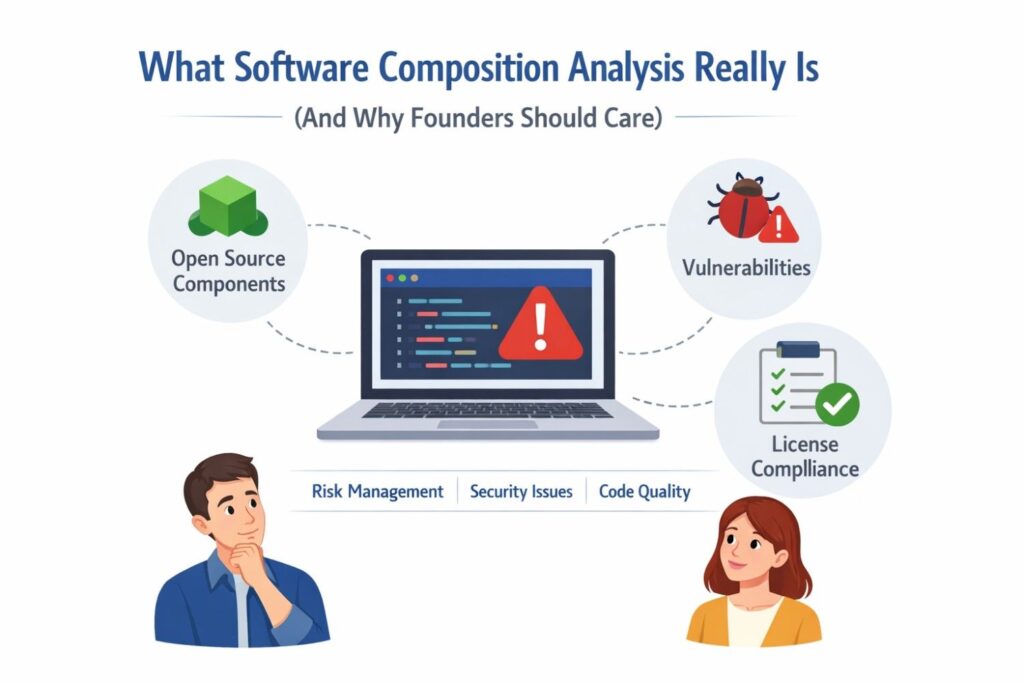
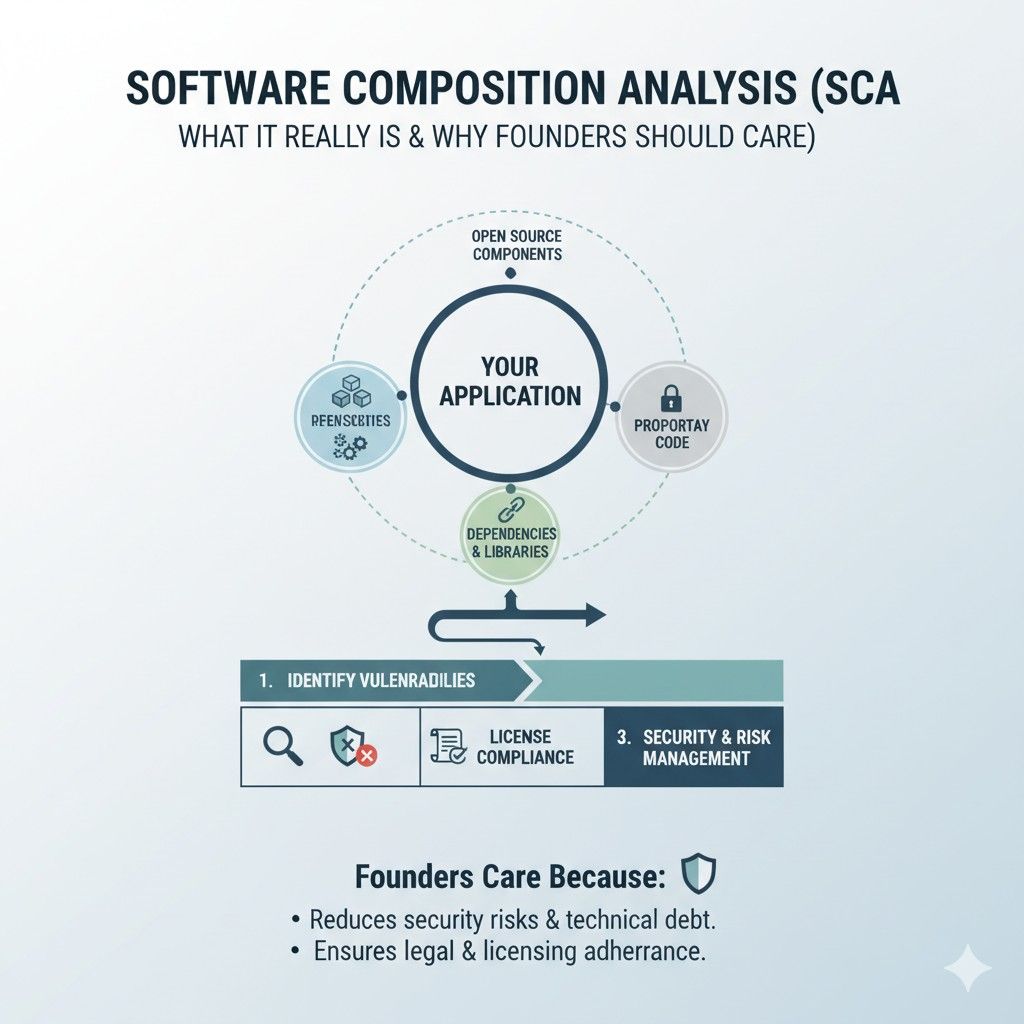
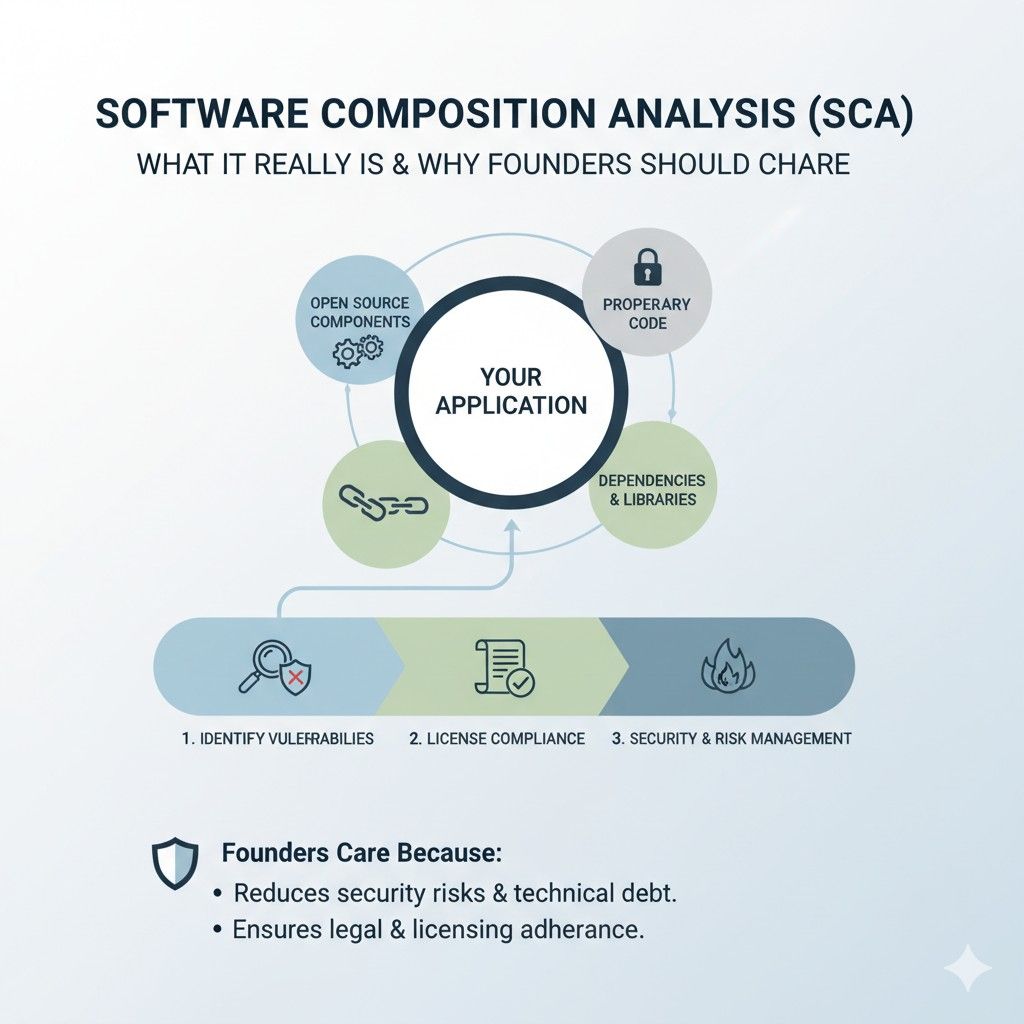
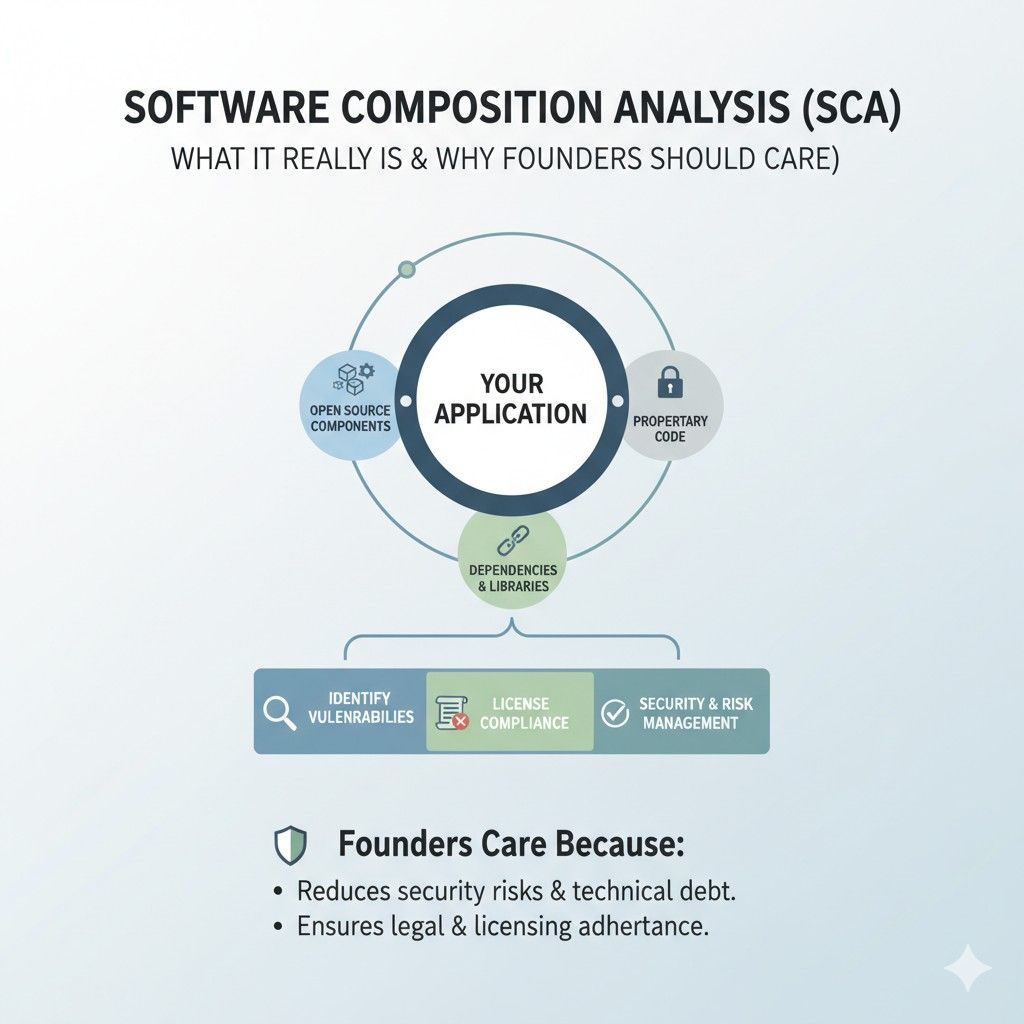
What Software Composition Analysis Really Is (And Why Founders Should Care)
Software Composition Analysis sounds complex, but the idea is simple. It is the process of understanding what your software is made of. Not what you think is in it.
What is actually in it. Every file, every package, every borrowed piece of code that made its way into your product.
Most founders assume they know their code because their team wrote it. That assumption is wrong more often than people like to admit. Modern software is a mix of original work and outside code pulled in over time.
SCA gives you clarity. And clarity is power when you are building a company that needs to move fast and still be safe.
When you know what your software contains, you can make better choices. You can fix issues early. You can avoid future blockers. And you can protect what is truly yours. This is not a security-only tool. It is a business tool.
SCA Is About Visibility, Not Fear
At its core, SCA is about seeing clearly. It scans your codebase and shows you which third-party parts are inside your product. It tells you where they came from and what rules come with them.
This matters because open source code is not free in the way many people think. It comes with terms. Some are friendly. Some are strict. Some can force you to share your own code if you are not careful.
SCA does not judge your choices. It simply shows you the facts so you can decide what to do next.
For founders, visibility removes stress. You are no longer guessing or hoping nothing breaks later. You are operating with real information. That alone puts you ahead of most early-stage teams.
Why Founders Often Ignore This Until It Hurts
Early teams are focused on speed. Shipping matters. Customers matter. Fundraising matters. SCA feels like something to deal with later.
The problem is that later usually arrives at the worst possible time. During due diligence. During a big enterprise deal. During an acquisition talk. That is when someone asks a simple question. What open source code are you using?
If you do not have a clean answer, everything slows down. Deals pause. Lawyers get involved. Trust drops. What could have been a quick check turns into a deep audit. SCA is how you avoid that moment entirely.
SCA Is a Business Risk Tool Disguised as a Tech Tool
Many people think SCA is only for security teams. That view is too narrow. Yes, it can show security issues. But its real value for startups is risk control.
Licensing risk can be more damaging than a bug. A single wrong license can force you to open source your core product or rewrite large parts of it. That risk grows quietly as your codebase grows.
SCA helps you spot these problems while they are still small and easy to fix.
This is especially important if you plan to raise money, sell to large customers, or file patents. Clean software history builds confidence across the board.
How SCA Protects Your Ability to Patent Software
Patents care about what is new. If your core system is a mix of copied code and unclear ownership, it becomes harder to show what you actually invented.
SCA helps draw a clear line between what your team built and what came from outside. That line matters when you work with patent attorneys. It helps them focus on the real innovation instead of sorting through noise.
At PowerPatent, we help founders turn real engineering work into strong patents. When teams already understand their software composition, that process becomes faster, cheaper, and stronger.
You can learn how this works at https://powerpatent.com/how-it-works.
What Founders Should Actually Do With SCA Results
Running an SCA scan is only step one. The real value comes from acting on the results in a smart way.
Founders should look for patterns, not perfection. If a risky license shows up once, it may be easy to replace. If it shows up everywhere, that is a signal to slow down and rethink.
If a package has known issues and no one is maintaining it, that is a future problem waiting to happen.
The key is to treat SCA findings as guidance, not blame. The goal is not to shame developers. The goal is to build software that will not block your growth later.
SCA as Part of Your Regular Build Process
The best time to run SCA is not once a year. It is every time your software changes in a meaningful way. When SCA is part of your normal build flow, it becomes invisible. Issues get caught early. Fixes are small. No drama.
This also creates a culture of ownership. Engineers become more thoughtful about what they add. Founders gain confidence that nothing is slipping through the cracks.
Over time, this discipline compounds. Your codebase stays clean. Your risk stays low. Your company stays ready.
Why Early Setup Beats Emergency Cleanup Every Time
Cleaning up software composition after years of growth is painful. It costs time, money, and focus. Setting it up early is simple.
When you know what is inside your product from day one, you avoid emergency rewrites and last-minute legal fixes. You keep momentum. And you protect your ability to move fast when opportunities appear.
SCA is not about slowing down. It is about removing future friction. That is exactly the kind of leverage founders need.
If you want to build software that is ready for customers, investors, and patents, start with clarity.
And when you are ready to protect what you are building the right way, PowerPatent is here to help. You can see how founders use our platform to move faster with confidence at https://powerpatent.com/how-it-works.
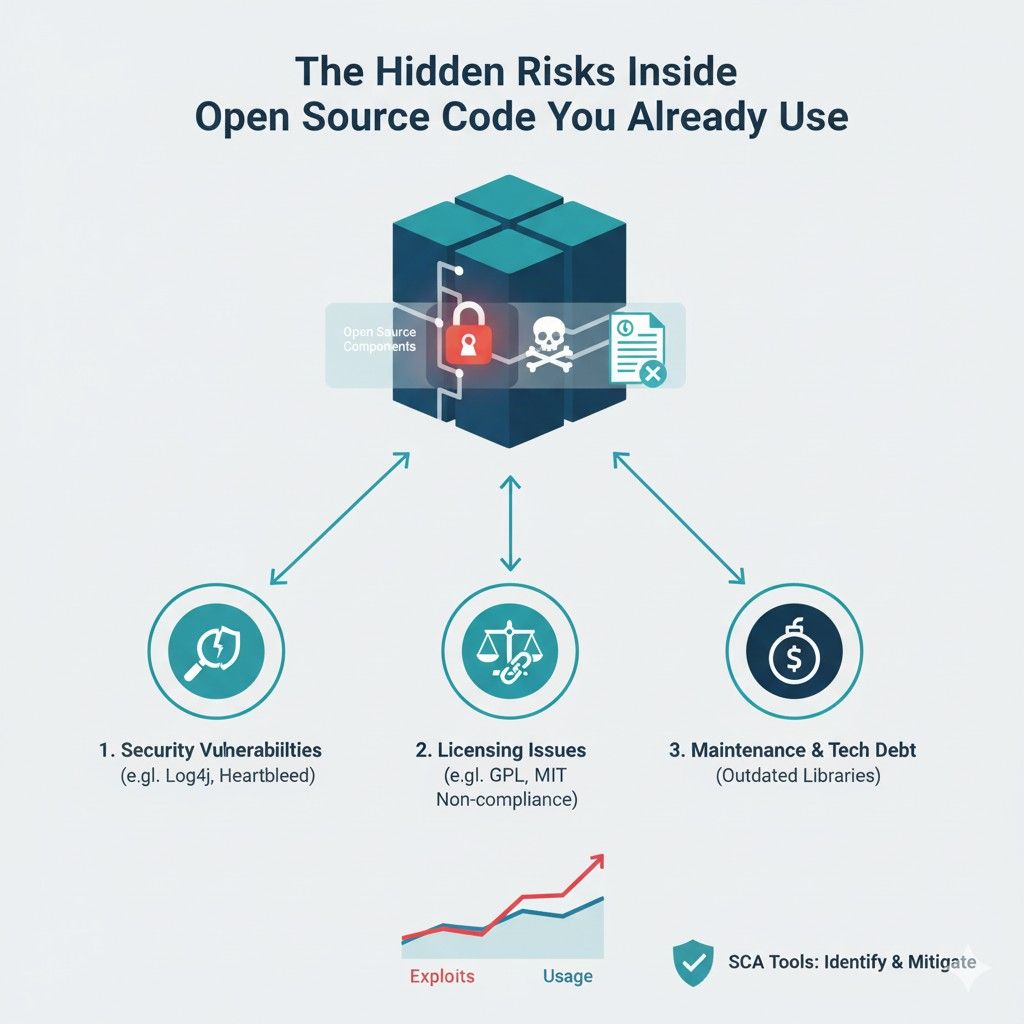
The Hidden Risks Inside Open Source Code You Already Use
Open source code feels safe because everyone uses it. It shows up in almost every modern product. It helps teams move faster and avoid building boring parts from scratch.
That trust is understandable, but it is also where many teams get caught off guard.
The risk is not in using open source. The risk is using it without knowing the rules that come with it.
Most problems do not show up right away. They sit quietly in your code until your company reaches a moment where scrutiny increases. That is when hidden issues become very real business problems.
This section is about those risks. Not in a scary way, but in a practical one. Once you see them clearly, they are easy to manage.
Open Source Is Shared Code With Shared Rules
Every open source package comes with a license. That license is not just a formality. It is a set of terms that explains how the code can be used, changed, and shared.
Some licenses are relaxed. They let you use the code freely in almost any way. Others are strict. They may require you to share your own code if you ship a product that includes them. Many founders do not realize this until it is too late.
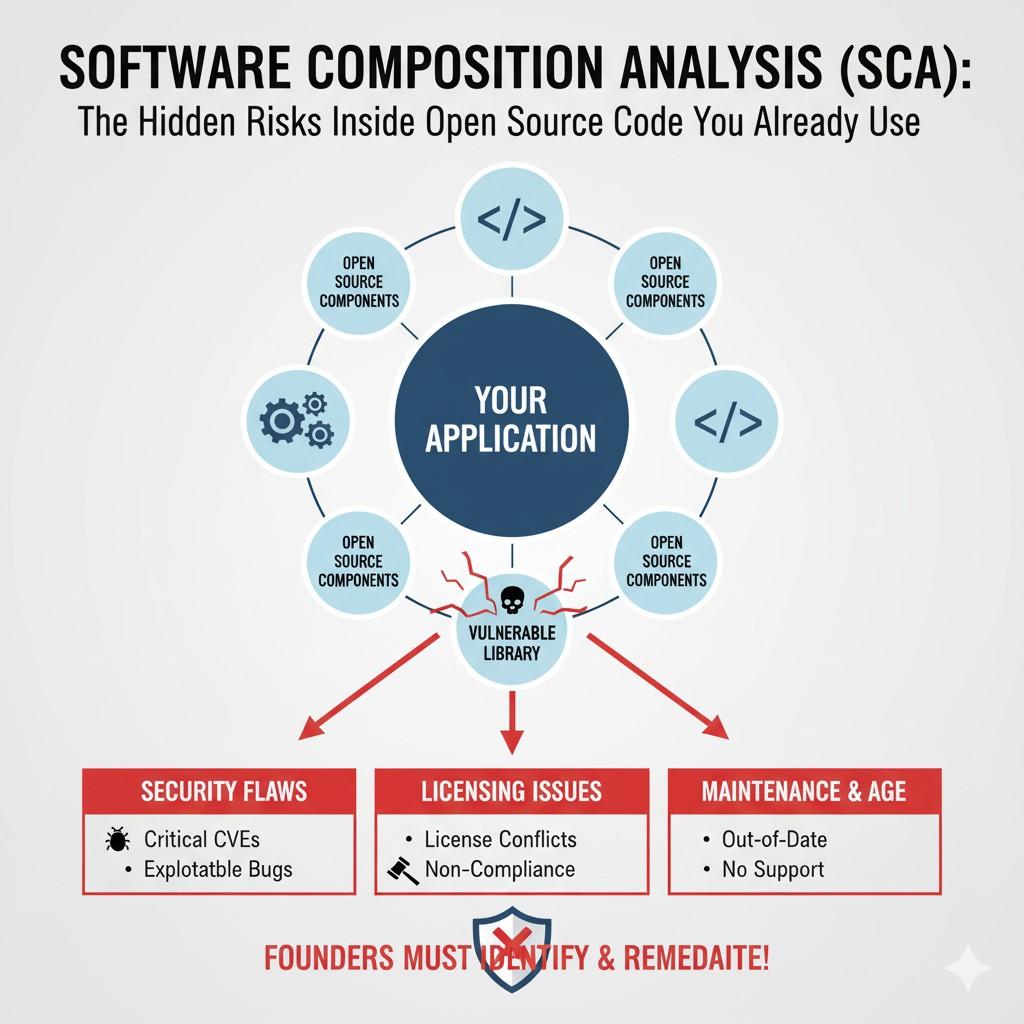
SCA helps you see these licenses clearly. Instead of guessing, you get a full picture of which rules apply to your product right now.
Why License Problems Grow Quietly Over Time
License risk does not show up as a bug. Your app will still run. Your users will still pay. That is why it is easy to ignore.
The problem grows as your codebase grows. One library pulls in another. That one pulls in five more. Suddenly, your product depends on dozens or hundreds of outside pieces. Without SCA, no one knows the full story.
When a lawyer or customer asks for a license review, this hidden web becomes a serious delay. Deals slow down while teams scramble to map things out.
That scramble is expensive and stressful. Early awareness prevents all of that.
Security Issues Are Business Issues, Not Just Tech Issues
Many open source packages are maintained by small teams or even one person. That is not a bad thing, but it does mean issues can go unnoticed.
When a known security problem exists in a package you use, attackers already know about it. They scan for it. If your product depends on that code, you become a target without realizing it.
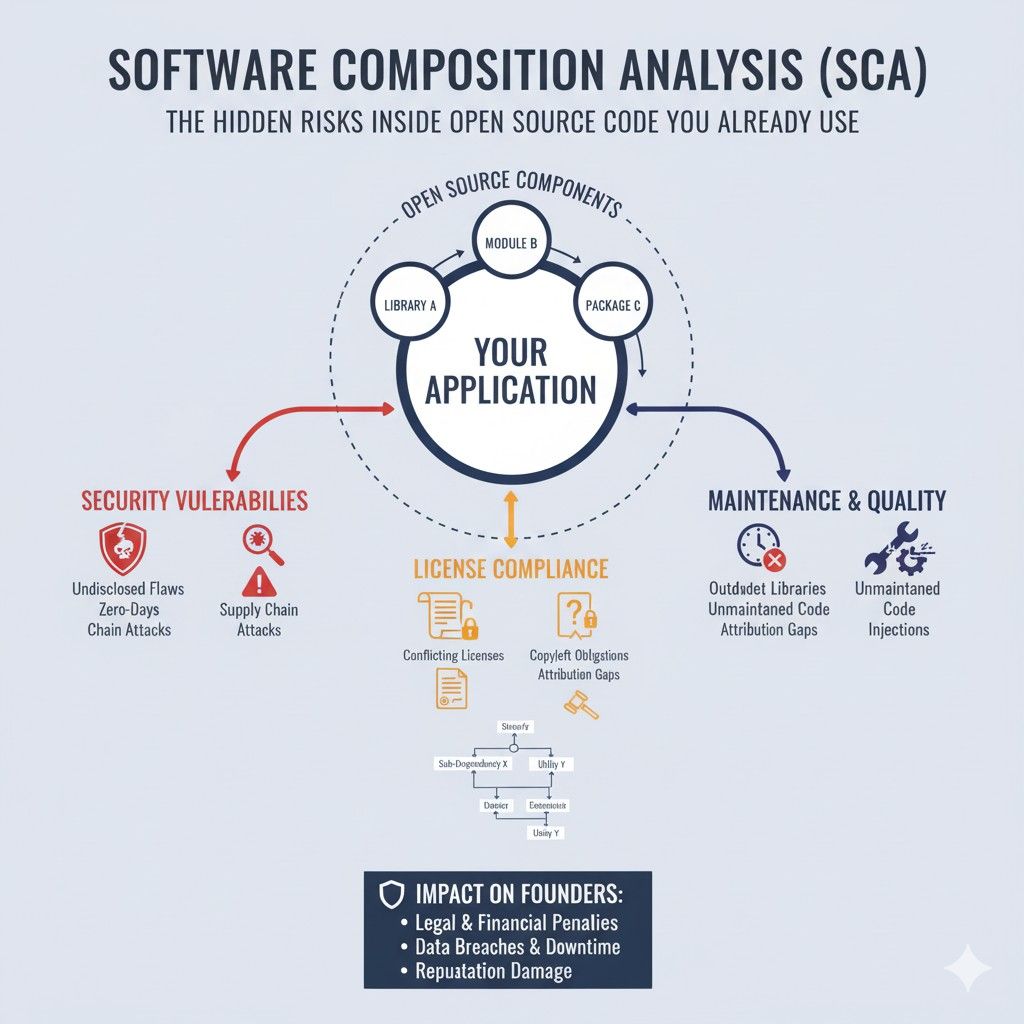
SCA tools flag these problems early. That gives you time to update, replace, or isolate the risky part. From a business view, this protects your brand and your customers. A breach can undo years of trust in days.
Outdated Dependencies Can Lock You In
Another hidden risk is stagnation. Some open source tools stop evolving. They still work, so teams keep them. Over time, they become harder to replace.
When you finally need to upgrade, the cost is high. Large parts of your system may depend on old behavior. This kind of lock-in slows product development and increases technical debt.
SCA shows you which dependencies are aging and which ones are actively supported. Founders can use this insight to guide roadmap decisions instead of reacting under pressure later.
How These Risks Affect Fundraising and Sales
Investors and large customers care about risk. They may not ask detailed technical questions at first, but they will ask them eventually.
During due diligence, unclear software composition raises red flags. It suggests weak internal controls.
It creates doubt about ownership and compliance. Even if nothing is wrong, the lack of clarity itself becomes a problem.
Founders who can clearly explain what is inside their product stand out. It shows maturity. It shows discipline. And it speeds up trust. SCA makes that possible without adding heavy process.
The Real Cost of Fixing Problems Too Late
Fixing composition issues after growth is painful. Teams may need to rewrite key features. Legal reviews can drag on for months. Product plans get paused.
All of this happens at moments when speed matters most. When you are closing a big deal. When you are raising a round. When you are negotiating an exit.
SCA shifts this work to earlier, calmer moments. Fixes become small changes instead of major rewrites. That time shift is one of the biggest advantages for startups.
Using SCA to Set Clear Internal Standards
One powerful use of SCA is setting simple rules for your team. Not complex policies. Just clear guidance.
When engineers know which licenses are safe and which ones need review, decisions become faster. When updates are checked automatically, no one needs to remember extra steps.
Founders should treat SCA as guardrails, not gates. It should help people move faster with confidence, not slow them down with fear.
How This Ties Back to Long-Term IP Strategy
Your software is not just a product. It is an asset. The cleaner its history, the easier it is to protect.
When you later decide to file patents, sell the company, or license your technology, clarity matters. Knowing what is yours and what is shared makes those moves smoother.
At PowerPatent, we see the difference every day between teams who tracked this early and teams who did not.
Clean inputs lead to strong outcomes. You can explore how we help founders turn real software into real protection at https://powerpatent.com/how-it-works.
How SCA Fits Into Building Defensible Software and Strong Patents
Software is not just something you ship. It is something you own. Or at least, it should be. The moment ownership becomes unclear, everything built on top of it becomes weaker.
That includes your product, your business leverage, and your patents.
SCA plays a quiet but critical role here. It helps you prove what you truly created versus what you reused.
That distinction matters more than most founders realize, especially when intellectual property becomes part of the conversation.
Clean Software History Makes Strong IP Possible
Patents are about new ideas. They protect what is original. When your codebase is mixed with unknown or poorly tracked third-party parts, it becomes harder to tell that story.
SCA creates a clean map of your software history. It shows which parts are yours and which parts are shared. This makes it easier to explain your invention clearly and confidently.
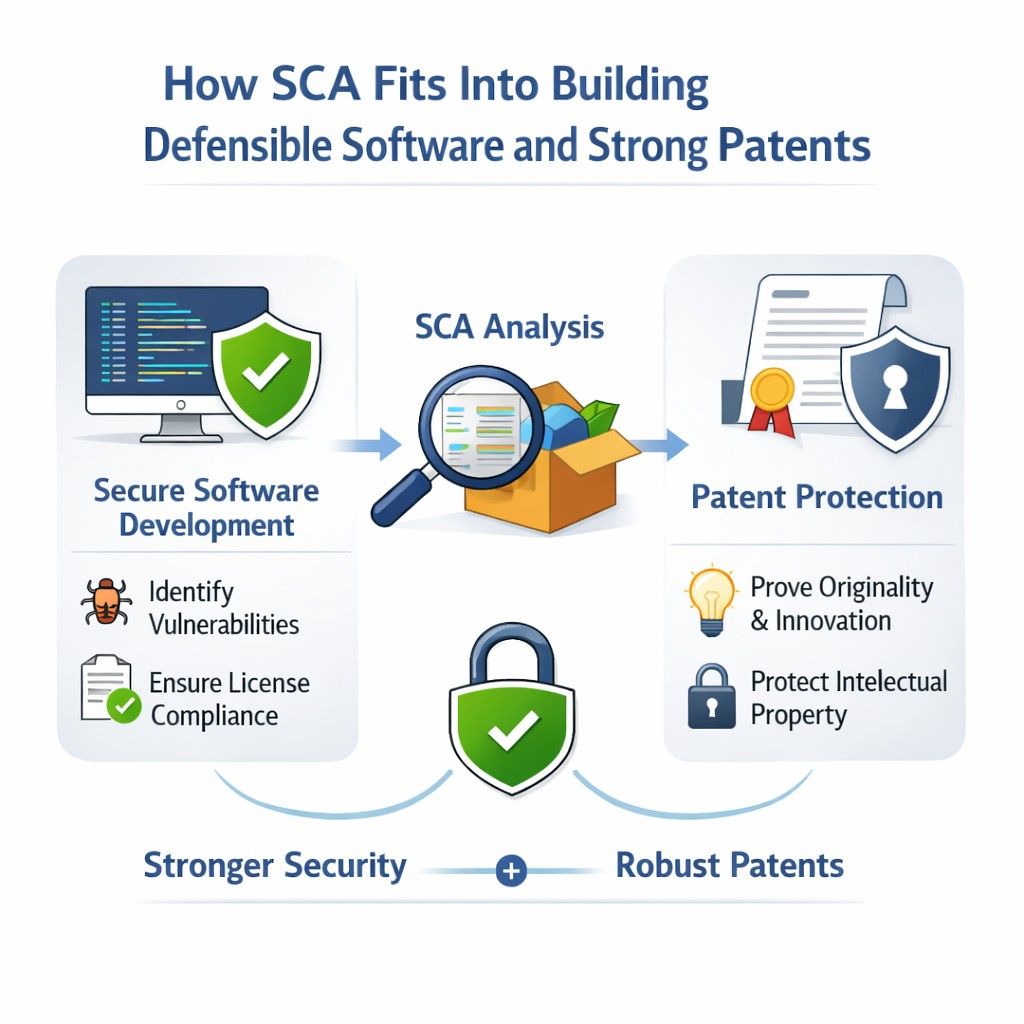
When patent attorneys can focus on the true innovation instead of untangling dependencies, the result is stronger protection and fewer delays. This is one of the biggest hidden advantages of early SCA adoption.
Why Ambiguity Is the Enemy of Software Patents
Ambiguity creates doubt. Doubt weakens patents.
If it is unclear whether a key system behavior comes from your work or from an open source package, it becomes harder to claim it as an invention. Even if your team added real value, messy records can blur the line.
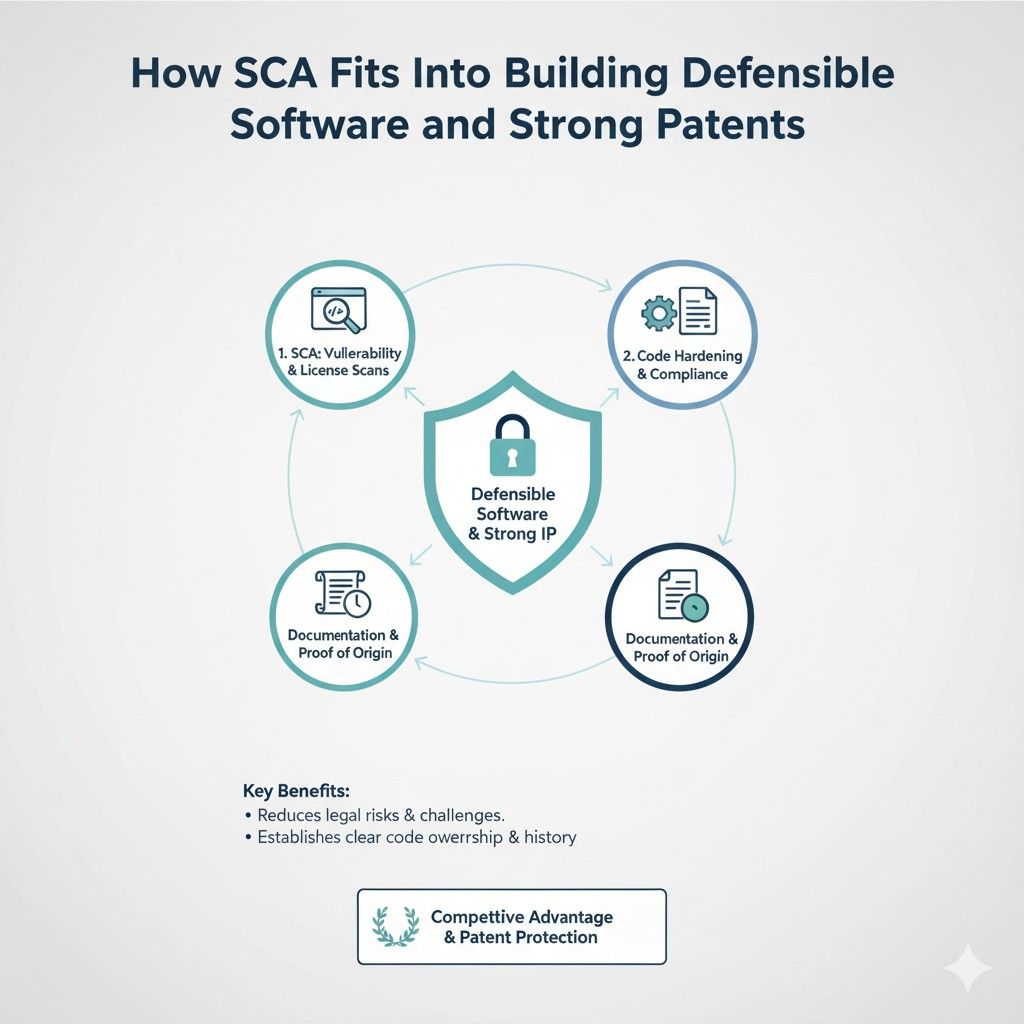
SCA removes that blur. It gives you evidence. It shows what existed before and what you built on top. That clarity strengthens your position long before any application is filed.
SCA Helps You Tell a Better Invention Story
A strong patent starts with a strong story. Not marketing. A technical story that explains the problem, the approach, and the improvement.
When you understand your software composition, you can tell that story with precision. You know which parts are standard and which parts are new. You can explain why your approach is different and why it matters.
This makes patent drafting faster and more focused. It also reduces the risk of overclaiming or underclaiming, both of which weaken outcomes.
Using SCA to Guide What You Should Patent
Not everything in your product needs a patent. SCA helps you decide what is worth protecting.
By separating commodity components from custom logic, you can see where your real value lives. That insight is powerful. It helps founders invest patent effort where it counts instead of wasting time on generic features.
This is especially useful for early teams with limited resources. Focused protection beats broad, unfocused filings every time.
Aligning Engineering Decisions With IP Goals
Most engineering teams do not think about patents during daily work. That is normal. But founders can still align technical decisions with long-term IP goals.
When SCA is part of your workflow, you can see when a feature relies too heavily on outside code. That may be fine. Or it may be a signal to build a core part in-house if it is central to your differentiation.
These decisions are small in the moment but huge over time. SCA gives founders the visibility needed to make them intentionally.
SCA Reduces Risk During Patent Review and Enforcement
Patents do not stop mattering after they are filed. They matter during review, licensing, and enforcement.
If a patent is ever challenged, clarity around what you built versus what was shared can make a difference. SCA records support your claims. They show that your invention was not just a repackaging of existing code.
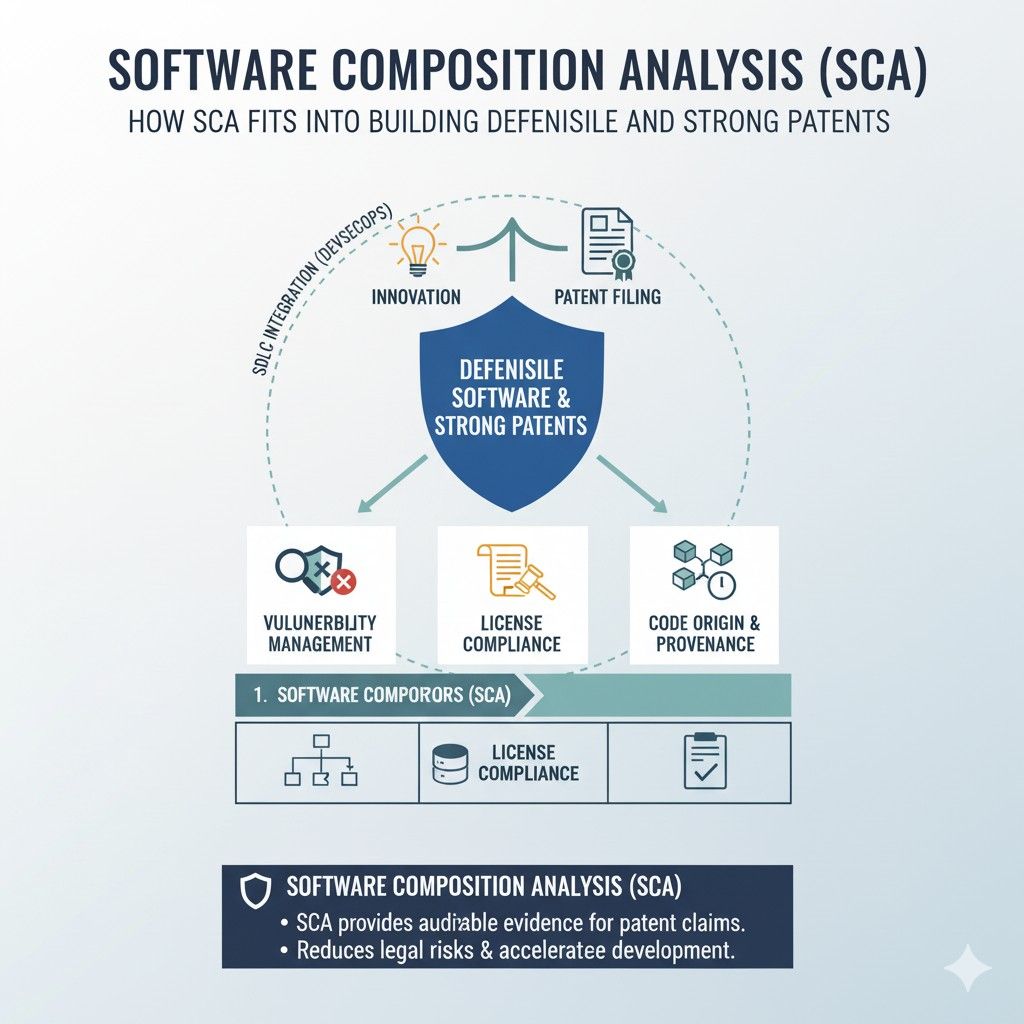
This kind of documentation is rarely created on purpose. SCA creates it as a natural byproduct of good software hygiene.
Turning SCA Data Into a Strategic Asset
SCA data should not live in a forgotten report. It should inform real decisions.
Founders can use it during roadmap planning, architecture reviews, and IP discussions. It becomes a shared source of truth that reduces debate and speeds up alignment.
When paired with a patent platform that understands software deeply, this data becomes even more valuable.
At PowerPatent, we help founders connect real engineering work to real protection, without slowing down. You can see how that process works at https://powerpatent.com/how-it-works.
Building With Confidence Instead of Cleanup
The biggest benefit of SCA in an IP context is confidence. Confidence that what you are building is yours. Confidence that you can protect it. Confidence that growth will not uncover surprises.
Founders who adopt SCA early do not feel this benefit right away. They feel it later, when others are scrambling and they are not.
That calm is not luck. It is the result of clear visibility and intentional choices.
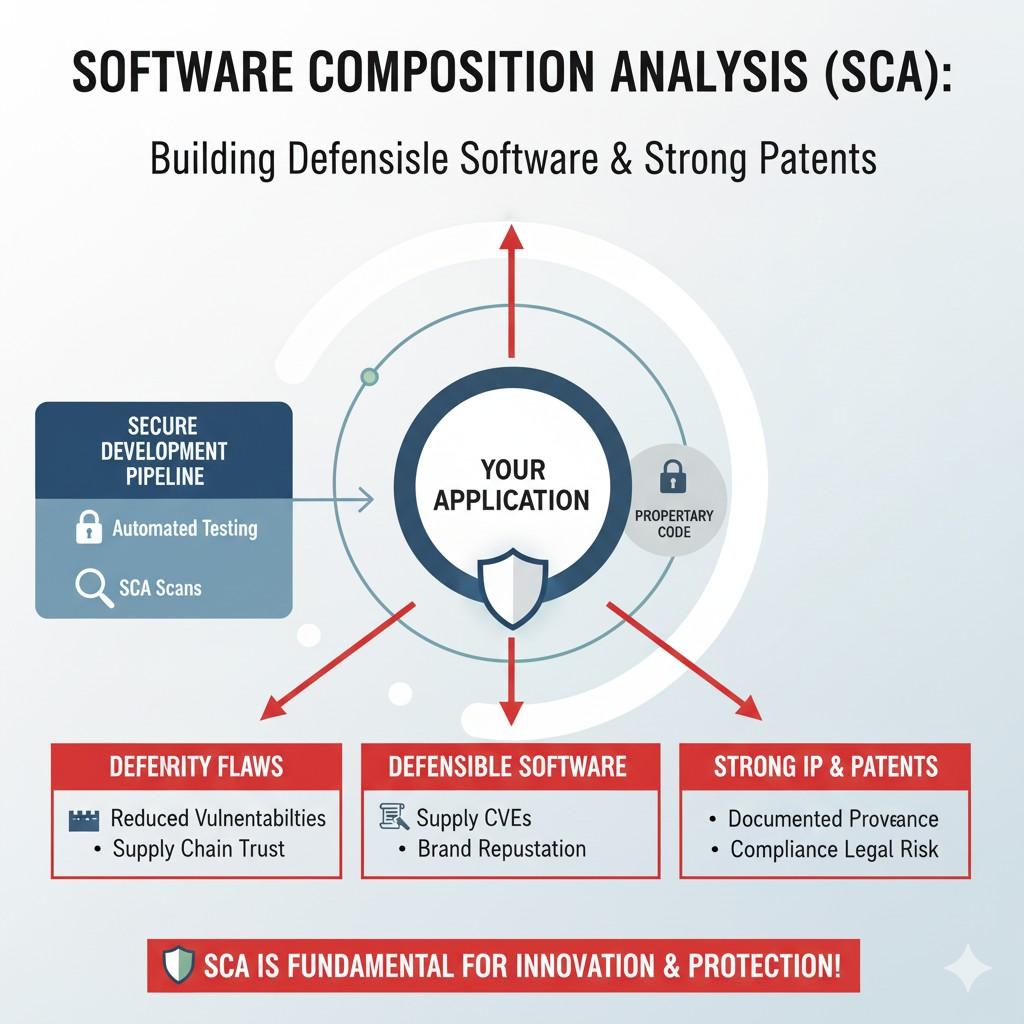
We have now covered what SCA is, the risks it uncovers, and how it supports defensible software and patents.
Wrapping It Up
Software Composition Analysis is not a tool you add when things go wrong. It is a habit you build when things are going right. Founders who understand this early gain an edge that compounds quietly over time.
SCA gives you clarity. It shows you what your software is truly made of. That clarity protects your speed, your deals, and your reputation. It helps you avoid painful cleanups and last-minute surprises. Most importantly, it helps you own what you build.
When software is clean, decisions are easier. Engineering moves faster. Legal conversations shrink. Investors feel safer. Customers trust more. And when the time comes to protect your innovation, the path is clear instead of crowded with questions.
Leave a Reply