
Deals do not fall apart at the pitch. They fall apart in diligence. This is the moment when investors, buyers, or partners stop listening to stories and start looking for proof. They want to see who owns the technology, how it is protected, and whether anything could blow up after the check clears. If your IP is messy, unclear, or half-finished, confidence drops fast. And once confidence drops, terms change or deals die.
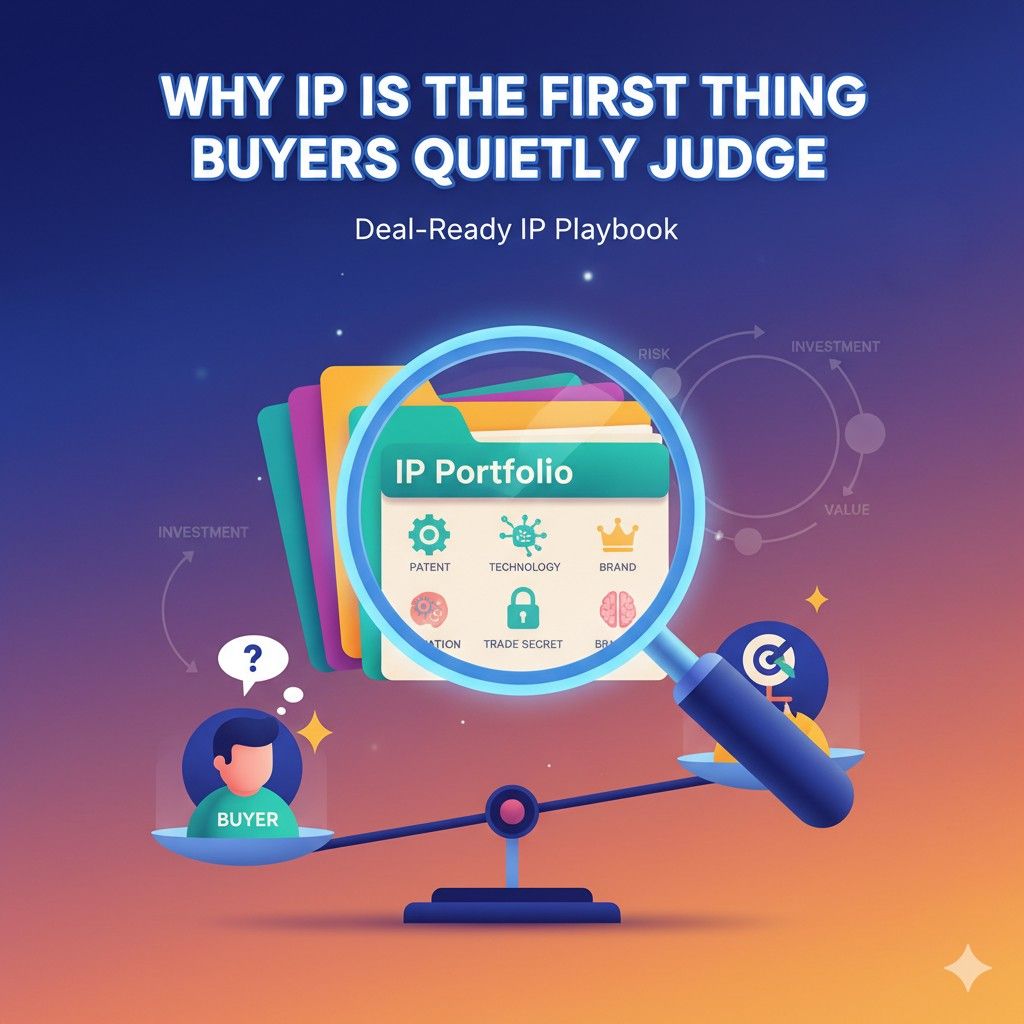
Why IP Is the First Thing Buyers Quietly Judge
Buyers rarely say this out loud, but IP is often the first real signal they trust. Before they care about growth charts or roadmaps, they want to know one simple thing: do you truly own what you are selling, and can anyone else take it away.
This judgment starts early, often before diligence officially begins. It happens in side conversations, internal memos, and quiet red-flag notes that founders never see.
This section breaks down why IP carries so much weight and how smart teams shape that judgment in their favor long before documents are requested.
Buyers Look for Control Before They Look for Value
Control matters more than raw innovation. A buyer can fix pricing, go-to-market, or team gaps after a deal.
They cannot easily fix broken ownership. If they sense that your core tech is not fully under your control, they assume risk that no discount can fully erase.
This is why even early conversations often include soft questions about patents, ownership, and how the product was built. Buyers are not being curious.
They are testing whether control lives with the company or is scattered across contractors, past employers, or unprotected ideas.
A highly practical move here is to audit how your core product came into existence. Trace it from first line of code or first sketch to today.

If there is any point where ownership feels fuzzy, that is exactly where a buyer’s concern will land. Fixing that story now, while you are calm and in control, is far easier than fixing it under deal pressure.
IP Signals How Serious the Company Is
Strong IP does not just protect tech. It signals maturity. Buyers often assume that teams who took time to protect their inventions also run cleaner operations overall. It suggests discipline, foresight, and respect for long-term value.
On the other side, weak or missing IP sends a silent message that corners may have been cut elsewhere too. Even if that is not true, perception shapes outcomes. Diligence teams are trained to follow patterns, not excuses.
One way to shape this signal is to treat IP like a core asset, not a side task. Internal documents should reflect that patents, assignments, and invention records exist and are updated.
When IP looks organized, buyers assume the rest of the business follows the same standard.
Patents Reduce the Fear of Post-Deal Regret
A buyer’s worst nightmare is regret after closing. They imagine competitors copying the product, former team members making claims, or a lawsuit landing months later.
Patents directly calm these fears by creating a clear boundary around what is owned.
Even a small, well-written patent portfolio can change how safe a deal feels. It shows that the company has drawn lines around its invention and made those lines visible to the world.
That visibility alone often reduces perceived risk, even before enforcement is considered.
Actionable advice here is to focus patents on what truly drives value. Buyers care far more about protection around the core system, process, or model than around surface features.
A single strong patent in the right place can do more for a deal than many weak ones scattered around.
Buyers Judge IP Quality, Not Just IP Presence
Having patents is not enough. Buyers quietly assess whether those patents actually matter. They look at claim scope, alignment with the product, and whether the invention feels real or abstract.
This is where many companies get surprised. They filed something, but it does not cover what they now sell. Or it was written too narrowly to block anyone serious.
These gaps are noticed quickly by experienced diligence teams.
The practical move is to regularly compare your live product to your patent claims. Ask whether someone could copy your product while avoiding the patent. If the answer feels uncomfortably close to yes, that is a sign to update or file again.
Modern tools like PowerPatent make this kind of alignment much easier by keeping patents tied closely to real code and systems, not vague descriptions.
Ownership Clarity Beats Clever Structure
Buyers value clarity over complexity. They want clean ownership chains, clear assignments, and no surprises. Complex IP structures, even if legally valid, slow deals and raise questions.
If your IP sits in multiple entities, is partially assigned, or depends on informal agreements, expect extra scrutiny. Every extra explanation creates room for doubt.
A strong step is to simplify wherever possible. Consolidate ownership. Ensure every contributor has signed proper assignment agreements.
Make sure former team members and contractors cannot claim rights. When everything points cleanly to the company, buyers relax.
IP Tells a Story About Defensibility
Buyers are not just buying what you built. They are buying how hard it will be for others to catch up. IP is a key part of that story.
When your patents clearly map to technical barriers, unique methods, or hard-earned insights, buyers see a moat. When IP feels generic or disconnected, they assume competition will be fierce and margins will shrink.
You can actively shape this narrative by framing IP around problems that were hard to solve. Show how the invention came from real technical struggle and why that struggle matters.
Patents that capture this depth are far more persuasive in diligence than surface-level filings.
Early IP Work Saves Time at the Worst Moment
Diligence is not the time to scramble. Buyers notice when teams rush to clean up IP only after a term sheet appears. It suggests reactive behavior and increases the chance that something important was missed.
Companies that prepare early move faster and negotiate from strength. They answer questions quickly, provide clean documents, and avoid delays that give buyers time to second-guess.
A very tactical habit is to keep an internal “deal-ready” folder even when no deal is active.
It should include patent filings, assignment records, and a simple explanation of what is protected and why. Updating this quarterly turns diligence into a formality instead of a fire drill.
Why This Matters More Than Ever Right Now
Markets change, but buyer caution is constant. In tight environments, diligence gets sharper, not looser. IP becomes a deciding factor when valuations are under pressure and buyers want certainty.
Teams that invest in deal-ready IP early often find they gain leverage. Conversations shift from risk mitigation to growth potential. That shift alone can change outcomes dramatically.

PowerPatent exists to help founders reach this point without slowing down.
By turning real technical work into clear, strong IP with attorney oversight and smart software, teams can stay focused on building while quietly strengthening the first thing buyers judge.
If you want to see how that works in practice, you can explore it here: https://powerpatent.com/how-it-works.
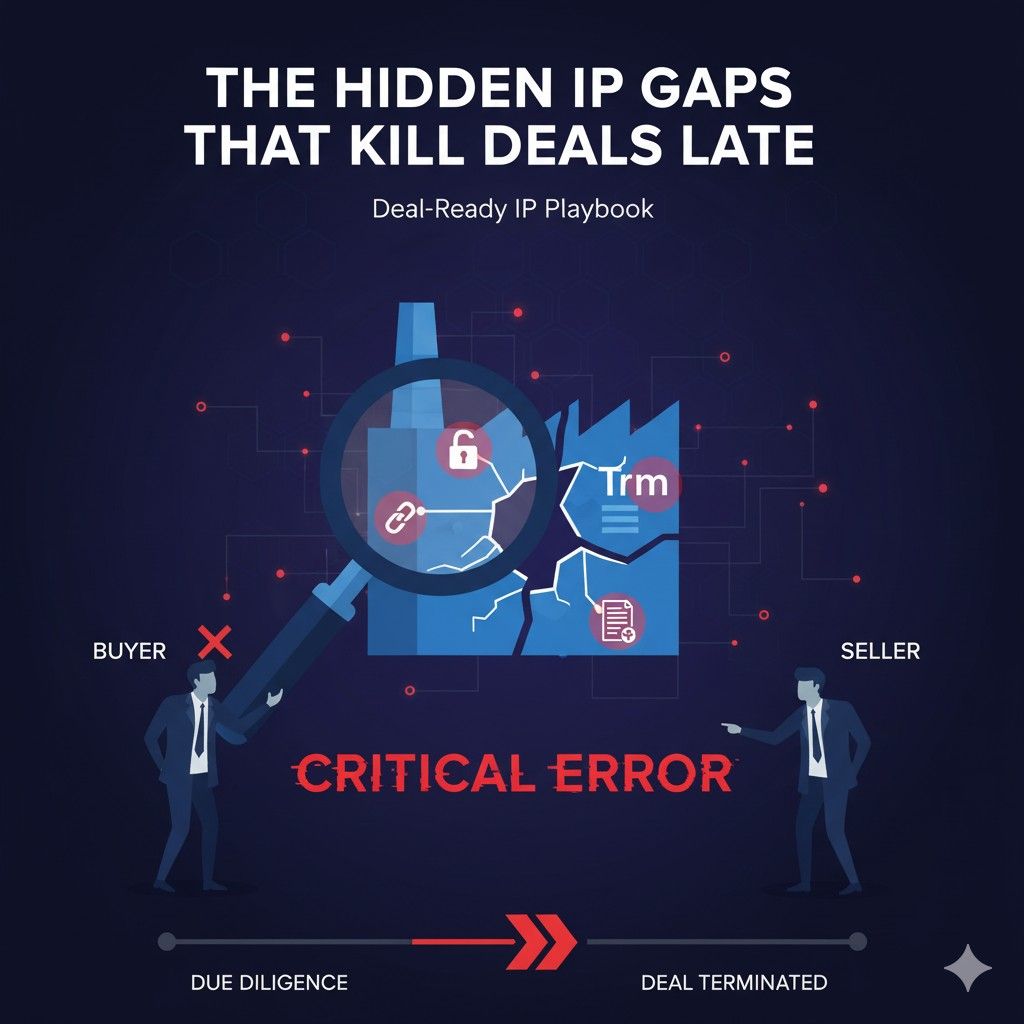
The Hidden IP Gaps That Kill Deals Late
Most deals do not collapse because of obvious problems. They fall apart because of small IP gaps that surface late, when emotions are high and timelines are tight.
These gaps are rarely dramatic on their own. What makes them dangerous is timing. When they appear during diligence, they change leverage, slow momentum, and invite doubt right when certainty matters most.
This section focuses on the quiet IP issues buyers flag behind the scenes and how to close them before they ever come up.
Informal Work That Never Became Company Property
Many startups begin with trust and speed. Friends build together. Early hires jump in fast. Contractors help without much paperwork. This is normal in the early days, but it becomes a serious problem later.
Buyers look closely at whether every person who touched the core product actually transferred their rights to the company. If even one key contributor lacks a clear assignment, the buyer sees risk.
They imagine future claims, disputes, or leverage that could surface after closing.
The most effective fix is not legal gymnastics. It is documentation. Every contributor should have a signed agreement that clearly states the company owns the work.
If something was missed early, it can often be fixed with a simple confirmatory assignment now. Doing this before diligence starts removes a common late-stage blocker.
Contractors Who Quietly Retain Rights
Contractors are one of the most common sources of hidden IP trouble. Many founders assume that paying an invoice means owning the output. In reality, without the right language, contractors often keep ownership by default.
Buyers know this and check for it. They look at who built key systems and whether those people were employees or contractors at the time. If contractors were involved, they want to see clean ownership transfers.
A practical step here is to review all contractor agreements tied to core technology. If the agreement does not clearly assign IP to the company, that is a gap.
Fixing it early is usually simple. Fixing it during diligence can feel urgent and uncomfortable, especially if the contractor is no longer involved.
Open Source Use Without Clear Boundaries
Open source is powerful, but buyers are cautious about it. They want to know what was used, how it was used, and whether it creates obligations that could affect the product or revenue.
The issue is rarely open source itself. The issue is uncertainty. If a company cannot clearly explain its open source use, buyers assume the worst. They imagine forced disclosures, license conflicts, or limits on future growth.
An actionable move is to create a clear internal record of open source components used in the product. This does not need to be complex. It needs to be accurate.

Knowing which licenses apply and confirming they align with your business model removes a major source of late-stage concern.
Patents That Do Not Match the Product Anymore
Technology evolves quickly. Many patents do not. A patent filed two years ago may no longer reflect what the company actually sells today. Buyers notice this gap fast.
When patents feel disconnected from the live product, they lose their power in diligence. Buyers may still value the team and the tech, but the IP stops serving as a risk reducer.
The fix is alignment. Patents should track the real system, not an old version of it.
This often means filing follow-on applications or updating strategy as the product matures. Teams that treat patents as living assets, rather than one-time tasks, avoid this common pitfall.
Missing Proof of Invention Timing
In some deals, timing matters. Buyers want to know when key inventions were created, especially if there are concerns about prior employers, competitors, or overlapping work.
If invention records are thin or unclear, buyers may worry about ownership disputes or challenges. This can trigger deeper diligence or requests for indemnities.
A strong habit is to keep simple invention records that show when ideas were developed and by whom.
These do not need to be formal or complex. They need to exist. Clear timing helps buyers feel confident that the company’s IP stands on solid ground.
Geographic Gaps in Protection
Buyers often think globally, even if the company does not yet operate that way. They assess whether IP protection aligns with future plans. If all protection sits in one country while growth depends on others, they see a gap.
This does not mean every company needs global patents. It means the strategy should make sense. Buyers want to see intention, not neglect.

An actionable approach is to map key markets and consider whether current IP choices support them. Even a plan to file later, if documented and logical, can ease concerns. Silence or confusion cannot.
Overcomplicated Ownership Structures
Complex IP structures are often created for good reasons, such as tax planning or early experimentation. Over time, they can become a diligence headache.
Buyers prefer simplicity. When IP ownership involves multiple entities, licenses, or side agreements, diligence slows. Each layer adds questions and risk.
Where possible, simplifying ownership before a deal saves time and protects leverage. If simplification is not possible, clarity becomes critical. Clear explanations and clean documents reduce friction.
Silence Around Trade Secrets
Not all IP is patented. Buyers know this. What worries them is when companies cannot explain how they protect what is not patented.
Trade secrets require discipline. Buyers want to see that access is limited, information is handled carefully, and employees understand what must stay confidential.
A practical step is to clearly define what the company treats as confidential and how it is protected. This can be as simple as internal policies and access controls. Showing intention and care goes a long way in diligence.
Why These Gaps Surface Late
These issues often stay hidden because day-to-day building does not expose them. Everything works fine until an outside party looks closely with a risk lens.
By the time buyers raise these points, the clock is ticking. Fixes feel rushed. Negotiations get tense. Value leaks out of the deal.
The smartest teams address these gaps before they are asked. They turn unknown risks into known strengths.
PowerPatent helps teams do this by tying IP work directly to real development, keeping ownership clean, and making protection feel manageable instead of heavy.

If you want to see how teams use it to stay deal-ready without slowing down, you can explore it here: https://powerpatent.com/how-it-works.
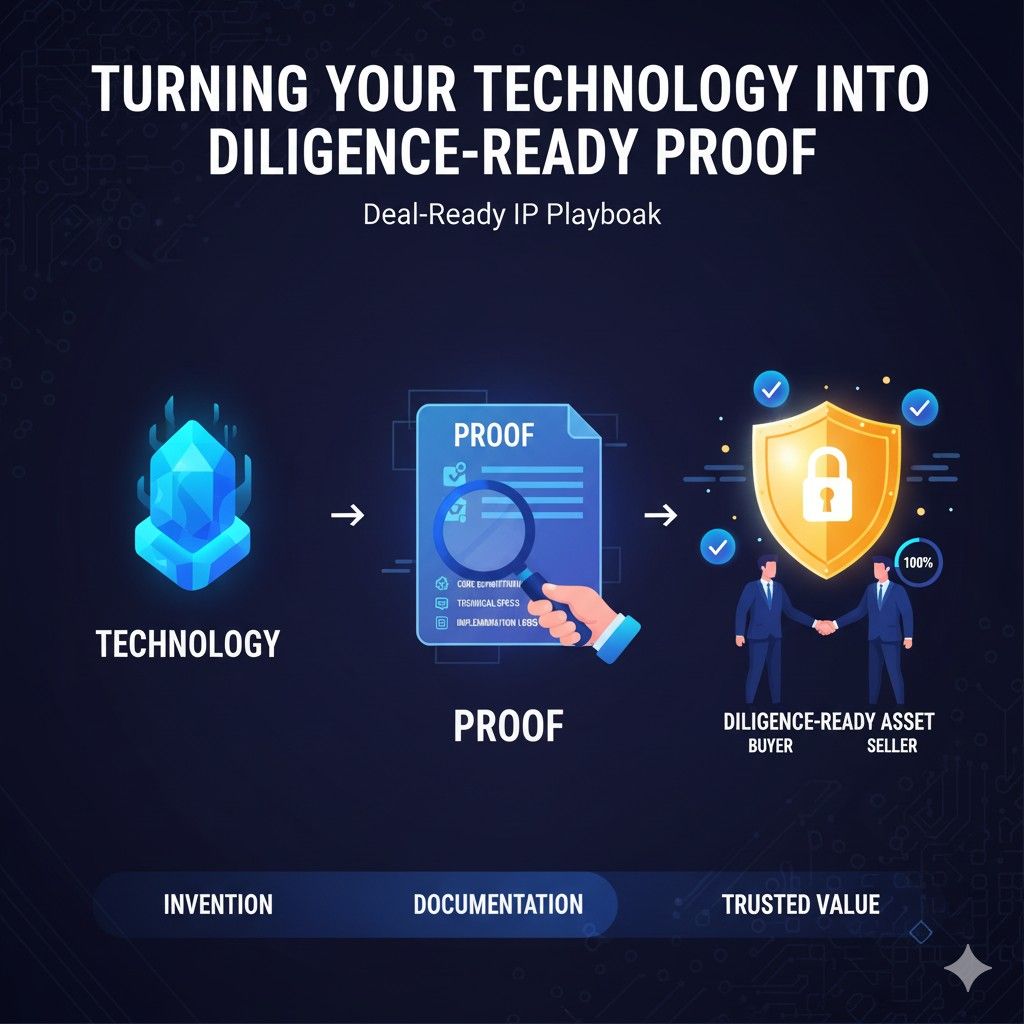
Turning Your Technology Into Diligence-Ready Proof
Buyers do not take your word for it. They look for proof. Not marketing proof. Not vision decks.
Real proof that the technology works, that it is owned by the company, and that it is protected in a way that supports the deal they are about to make.
This is where many strong products fall short. The tech is real, but the proof is scattered.
The story exists in the founders’ heads, not in clean documents. Diligence-ready IP is about turning what you already built into evidence a buyer can trust without friction.
Proof Starts With a Clear Technical Narrative
Before documents, buyers want a story that makes sense. They want to understand what the technology actually is, why it matters, and what makes it hard to copy.
This narrative should not sound like a pitch. It should sound like an engineer explaining a system to another smart engineer. Clear, grounded, and specific.
A strong move is to write a short internal explanation of your core technology in plain language. Explain the problem, the approach, and what makes it different.

This document often becomes the backbone of diligence conversations, patent strategy, and buyer confidence.
Patents as Evidence, Not Decorations
Patents matter most when they read like proof of real work. Buyers can tell when a patent was written by someone who understood the system versus someone who guessed from the outside.
Diligence teams often skim patents looking for signals. Do the claims map to real components? Do the drawings reflect actual architecture? Does the language feel concrete?
The practical takeaway is to treat patent drafting as a technical exercise, not a legal one. The closer the patent mirrors the real product, the more weight it carries.
This is why tools that connect patents directly to code, models, and system design create stronger outcomes than generic filings.
Showing Ownership Without Over-Explaining
When buyers ask about ownership, they do not want a long story. They want confidence. Clean assignments, clear contracts, and simple explanations do more than detailed justifications.
The goal is to make ownership feel boring. When everything is signed, filed, and easy to follow, buyers move on quickly. When things feel complicated, they dig deeper.

A strong practice is to prepare a short ownership summary that shows how IP flows into the company. This is not for marketing. It is for clarity. Having it ready reduces back-and-forth and keeps diligence moving.
Linking IP Directly to Revenue Drivers
Buyers care most about IP that protects how money is made. If patents cover features that do not drive value, they are less persuasive.
Diligence-ready IP clearly connects protection to revenue. It shows how the core invention supports pricing power, market position, or cost advantage.
One actionable step is to map each key patent or trade secret to a business outcome.
This does not need to be shared externally unless asked, but it helps founders speak clearly when questions come up. Confidence comes from knowing exactly why a piece of IP matters.
Making Trade Secrets Visible Without Exposing Them
Trade secrets are invisible by nature, but buyers still want proof they exist and are protected. They are not asking for details. They are asking for assurance.
You can provide this by showing process, not content. Policies, access controls, and internal practices demonstrate seriousness without revealing secrets.
A practical approach is to document how sensitive information is handled inside the company.
Who has access. How it is stored. What happens when someone leaves. These signals often satisfy buyer concerns without risking disclosure.
Speed as a Signal of Readiness
How fast you answer IP questions matters. Slow responses suggest chaos or uncertainty. Fast, clear answers suggest control.
Diligence-ready teams anticipate common questions and prepare responses in advance. This turns diligence from an interrogation into a confirmation exercise.

A simple habit is to run a mock diligence review internally. Ask the hard questions and see how quickly you can answer them with real documents. Any delay points to an area worth fixing before a buyer ever asks.
Using IP to Shape the Deal Conversation
Strong IP does more than pass diligence. It shapes negotiations. When buyers see defensible technology, they worry less about downside and focus more on upside.
This can affect price, structure, and even post-deal roles. Teams with clear, strong IP often retain more influence because buyers see them as long-term value creators, not short-term assets.
The key is to surface IP strength early, but not loudly. Quiet confidence travels far. When buyers discover strong IP on their own during diligence, it reinforces trust more than any claim made upfront.
Preparing Proof Without Slowing the Business
The biggest fear founders have is that IP work will slow everything down. It does not have to. When done right, it runs alongside product development instead of competing with it.
Modern IP processes capture work as it happens. They turn existing code, designs, and systems into protection without heavy interruptions. This keeps teams focused on building while still preparing for future deals.
PowerPatent was designed around this idea. It helps teams turn real technical progress into diligence-ready proof with software speed and real attorney oversight.
If you want to see how that works in practice, you can explore it here: https://powerpatent.com/how-it-works.
Wrapping It Up
The biggest mistake founders make with IP is treating it as a reaction instead of a strategy. They wait for a term sheet, a buyer, or a hard question before they act. By then, time is tight, leverage is fragile, and every gap feels larger than it really is. Deal-ready companies move differently. They assume scrutiny will come and prepare for it quietly. They build proof alongside product. They clean up ownership before anyone asks. They shape their IP so it supports growth, not just compliance.
Leave a Reply