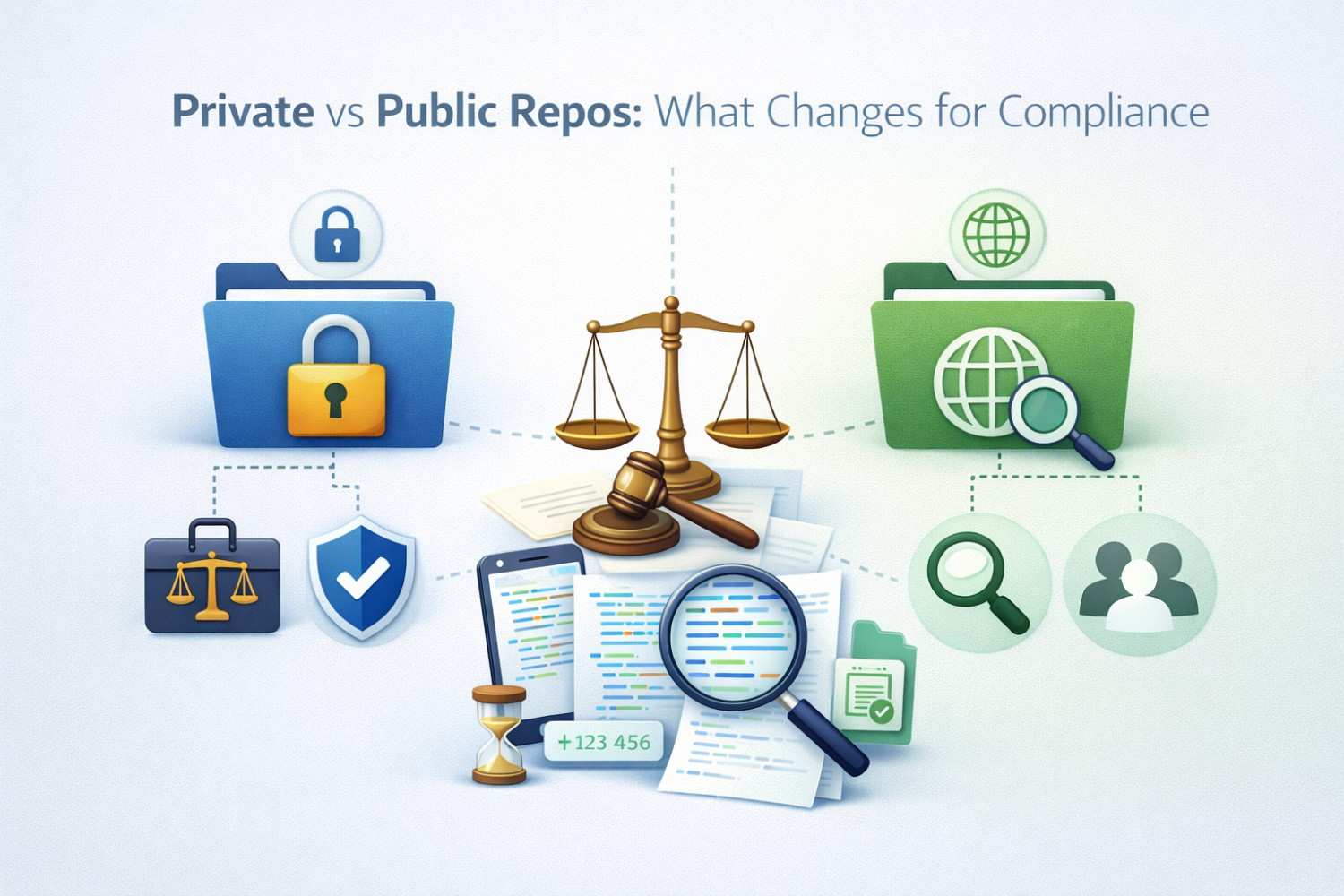
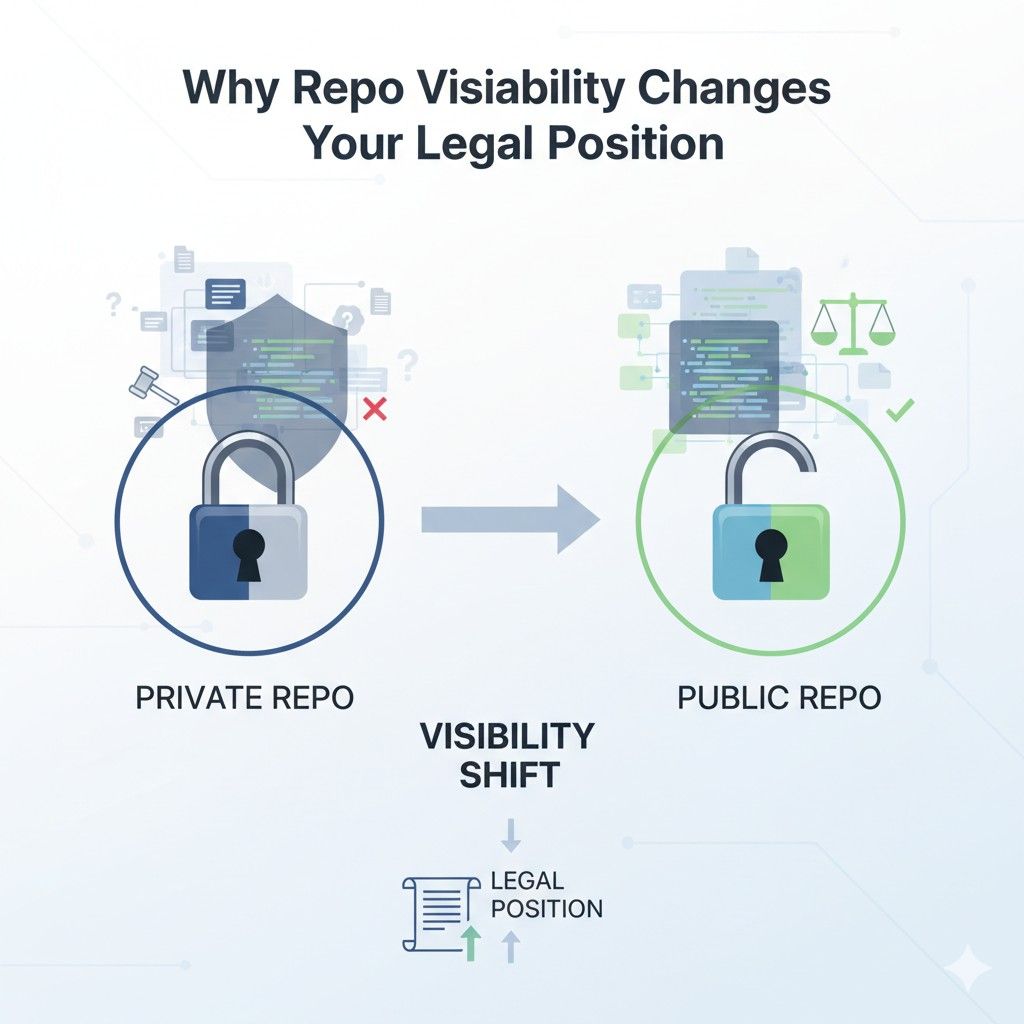
Private and public repos may look the same to an engineer, but they trigger very different compliance realities for a startup. A private repo keeps your work controlled, time-boxed, and flexible, which means you still decide when and how your invention is exposed to the world. A public repo, on the other hand, is a form of disclosure the moment it goes live. From that second on, your code is no longer just internal work, it becomes public evidence of how your system works, when it existed, and what you chose to share.
Why Repo Visibility Changes Your Legal Position
Repo visibility is not a small technical choice. It is a business decision with long-term effects. Many teams treat it as a workflow setting, something decided by an engineer in the first week and never revisited.
In reality, whether your code is private or public changes how the outside world is allowed to see, copy, use, and judge what you are building. Once that line is crossed, you cannot walk it back.
This section breaks down why that matters and how founders can stay in control without slowing down product velocity.
Visibility Turns Code Into Evidence
The moment code is placed in a public repo, it stops being internal work and starts acting like public proof. It shows what you built, how you built it, and when it existed.
That timing matters. If you ever want to claim ownership over an invention, the public record now includes your own repo as a reference point. This can work for you or against you depending on when you protected the idea.
Founders often assume that because they wrote the code, they automatically own the rights forever. That is not how it works. Public code becomes part of the public domain conversation.
Others can point to it. Investors will review it. Competitors can study it. Regulators and acquirers may rely on it as a source of truth. Treating visibility casually is how teams accidentally weaken their own position.
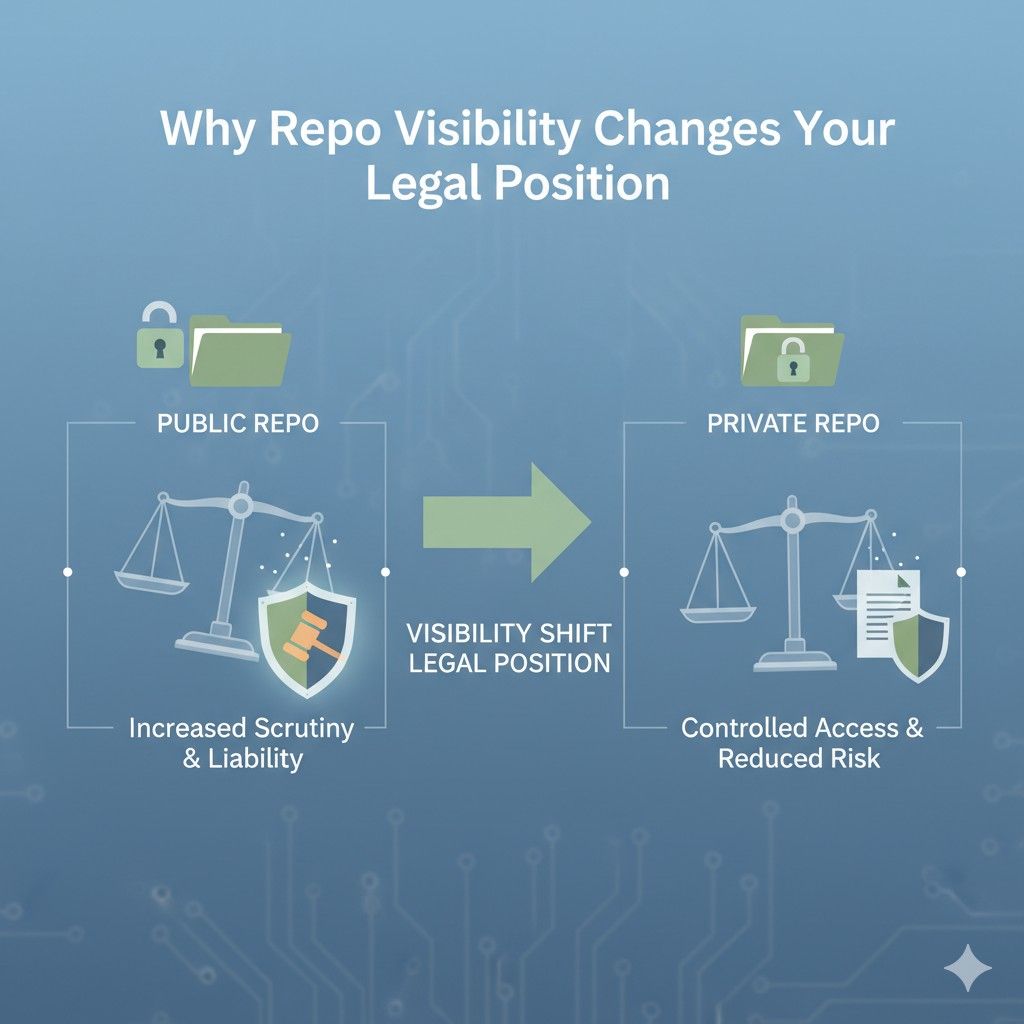
A smart move here is to treat every repo visibility change as a milestone. Before anything goes public, pause and ask whether the core idea is already protected. If not, that is the moment to act.
Platforms like PowerPatent exist to make that step fast and founder-friendly, so protection does not become a blocker to shipping. You can see how that works here: https://powerpatent.com/how-it-works
Public Repos Trigger Disclosure Rules
Disclosure is not just a patent word. It is a compliance concept that shows up in funding, partnerships, and enterprise sales. When your code is public, you have disclosed how certain systems work. That can limit future options.
For example, if you later try to patent a core workflow or model architecture, the timing of that public repo matters. In some countries, public disclosure before filing can remove your ability to get protection at all.
Even where grace periods exist, you are adding pressure and complexity that did not need to be there.
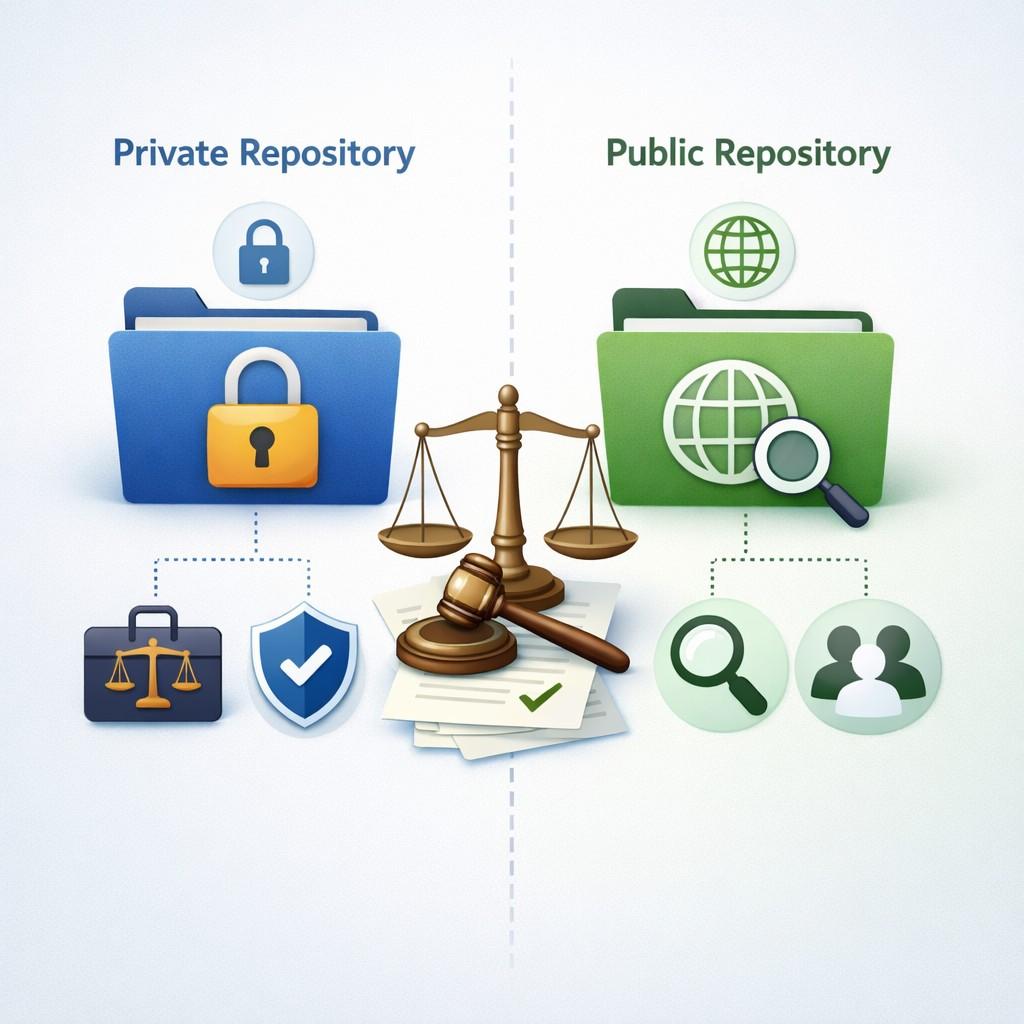
The actionable step is simple but often skipped. Align repo visibility decisions with your protection timeline.
If your team is about to open-source a core component, make sure you have already captured the invention behind it.
This does not mean locking everything down forever. It means filing first, sharing second. That order preserves options instead of closing doors.
Investors Read Repos Differently Than Engineers
Engineers see code quality. Investors see risk.
When a repo is public, investors assume competitors can copy parts of it. They assume your moat must live somewhere else. If you cannot clearly explain where the defensible value is, public code can raise more questions than it answers.
This does not mean public repos are bad. It means they need to be intentional. Many strong companies open-source non-core layers while keeping the heart of the system protected.
The mistake is opening everything by default and hoping it will be fine.
Founders should review their public repos through an investor lens. Ask whether someone unfamiliar with the company could misunderstand what is proprietary and what is not.
If the answer is yes, tighten the story and the structure. Pair public code with clear internal documentation and protected filings so the narrative stays strong.
Compliance Is About Process, Not Just Code
Compliance failures rarely come from bad intent. They come from missing process. Repo visibility decisions often happen without legal or strategic review because they feel small. Over time, those small decisions add up.
A healthy approach is to build a lightweight internal rule. Any change from private to public triggers a short review. Not a long meeting. Not a legal memo. Just a check-in to confirm that nothing critical is being exposed too early.
This is especially important as teams grow. New engineers may default to open-source norms without knowing the company’s protection strategy. Setting expectations early avoids cleanup later.
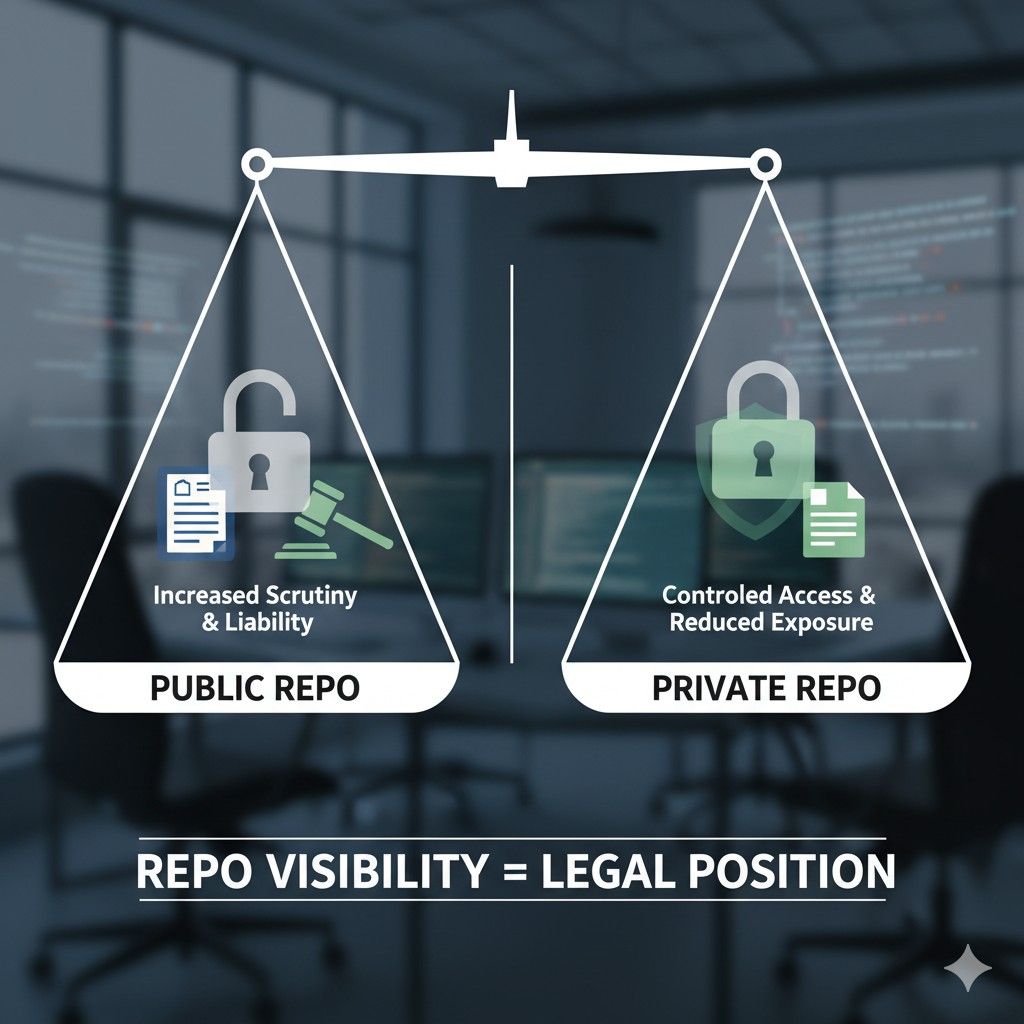
PowerPatent fits naturally into this process. When protection is easy and fast, teams do not feel forced to choose between speed and safety.
They can move quickly and still build a real compliance foundation. You can explore that flow here: https://powerpatent.com/how-it-works
Public Code Shapes Future Enforcement
Enforcement sounds aggressive, but it simply means your ability to say no. If someone copies your system too closely, your past disclosures will be examined. Public repos can be used to argue that certain ideas were already shared freely.
This does not mean you should hide everything. It means you should decide what you are comfortable defending later.
If a feature is central to your business, think carefully before publishing the exact implementation without protection.
A practical habit is to separate concept from execution. Protect the concept first. Then decide how much of the execution you want to share. This keeps you flexible if issues arise down the road.
Timing Is the Hidden Lever
Most repo mistakes are timing mistakes. Founders wait until traction appears before thinking about compliance. By then, the repo history already tells a story that cannot be changed.
The earlier you think about visibility, the easier it is. Early protection gives you freedom later. You can open-source confidently, collaborate publicly, and still know that the core ideas are yours.
If you are already live with public repos, do not panic. Review what is out there. Identify what truly matters. Then protect what you can going forward. Compliance is not about perfection. It is about improving your position over time.
Repo visibility will always be part of modern software culture. The goal is not to avoid it. The goal is to use it on purpose, with clarity and control, so your legal position stays strong as your company grows.
How Public Code Becomes Permanent Disclosure
Public code feels temporary when you are moving fast. You push a commit, fix a bug, and move on. In your head, the code is alive and changing. In the outside world, every public commit is frozen in time.
That difference is where many compliance problems begin. This section explains why public code is treated as permanent disclosure and how founders can work with that reality instead of getting caught by it later.
The Internet Never Forgets Code
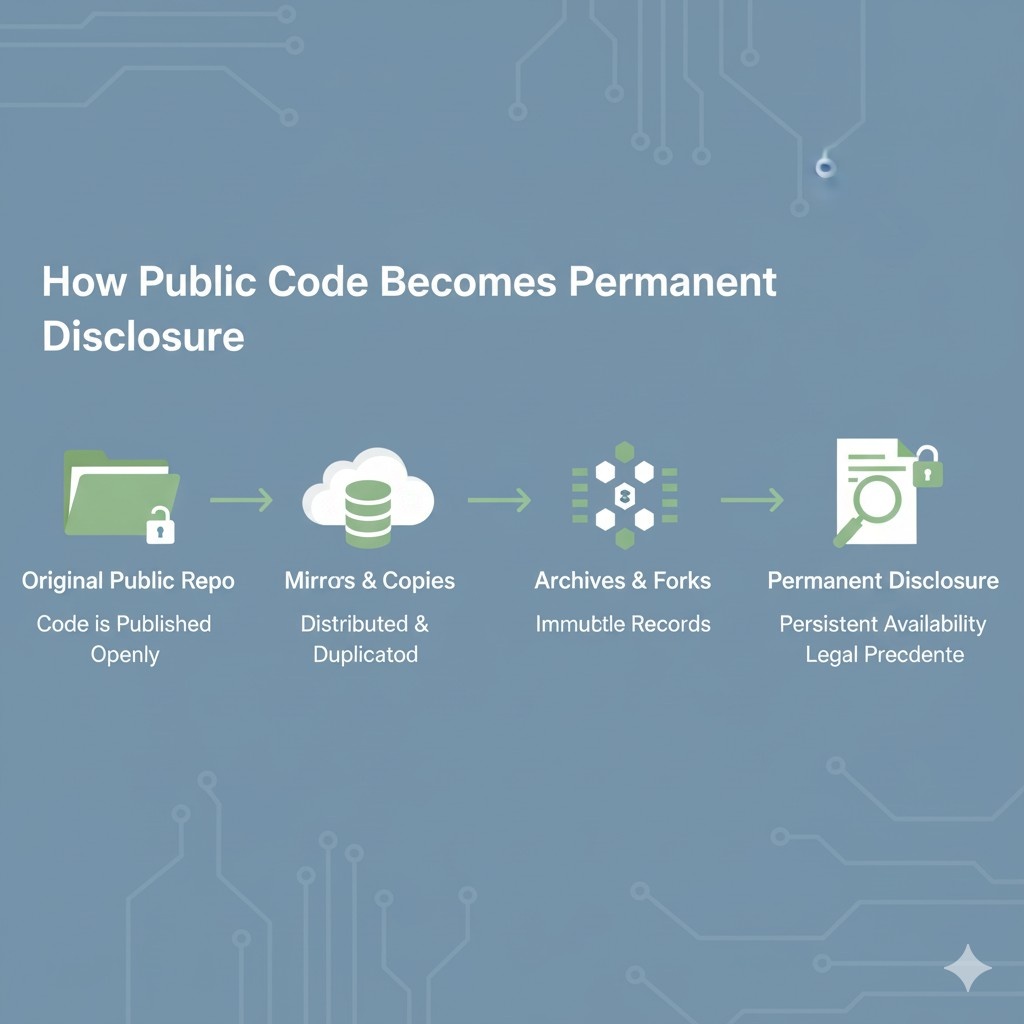
Once code is public, it is copied almost instantly. It is indexed, cached, mirrored, and archived.
Even if you delete the repo later, earlier versions may still exist in forks, backups, or third-party archives. From a compliance point of view, deletion does not undo disclosure.
This matters because disclosure is about access, not intent. It does not matter whether you meant to share something widely. If it was available publicly, it counts.

That single push can define what was known and when it was known.
A smart habit is to assume that anything pushed to a public repo will exist forever. That mindset naturally leads to better decisions.
Before exposing core logic, ask whether you would be comfortable seeing that code referenced years from now during due diligence or a dispute. If the answer is no, pause and protect first.
Public Commits Create a Timeline You Cannot Rewrite
Public repos do more than show code. They show dates. They show authors. They show evolution. This creates a timeline that others can analyze in detail.
In patent and compliance reviews, timing is everything. A public commit can be used to argue that an idea existed before protection was filed or that certain elements were already known.
Even comments and commit messages can be pulled into these discussions.
Founders rarely think about this while coding, but they should. You do not need to hide your work. You need to be aware of how it will be read later by people who are not engineers.
One practical move is to align filing with major technical breakthroughs. When your team solves a hard problem or lands on a novel approach, capture it.
PowerPatent is built for exactly this moment, helping founders turn real code into protection without slowing down the build. You can see how that works here: https://powerpatent.com/how-it-works
Disclosure Is Broader Than You Think
Many founders assume disclosure only applies to full systems. In reality, even partial implementations can count. A clever optimization, a unique data flow, or a custom training setup can all be considered disclosed if shared publicly.
This is where teams get surprised. They open-source a helper library or a demo without realizing it reveals the core idea underneath.
Later, they discover that protection options are narrower because the key concept was already visible.

The way to avoid this is to look at public code from the outside in. Ask what someone smart could infer from it. If the answer is more than you intended, rethink what you are sharing and when.
Open Source Does Not Mean Unprotected
There is a common myth that open-source and protection cannot coexist. That is not true. Many strong companies protect their inventions first and then open-source parts of the implementation later.
The order matters. Filing before sharing keeps your options open. Sharing before filing closes doors you may not even know exist.
This is especially important for startups that want community trust and adoption. You do not have to choose between openness and ownership. You just have to be deliberate about timing.
Public Code Affects Global Rights
Compliance is not local. Public disclosure affects rights differently across countries. Some regions are strict. Once something is public, protection is gone. Others allow limited grace periods.
Most founders do not build for one country. They build for a global market. That means public disclosure decisions should assume the strictest rules, not the most forgiving ones.
The actionable takeaway is simple. If something is worth protecting in one market, it is worth protecting before it goes public anywhere. This avoids painful surprises later when expansion or acquisition is on the table.
Engineers Move Fast, Compliance Moves Once
Engineering culture rewards speed. Compliance rewards precision. Public repos sit at the intersection of both.
If engineers are not given guidance, they will default to what feels normal. That often means public repos, public gists, and open demos. None of this is wrong on its own. It just needs a frame.
Founders should clearly communicate what kinds of work are safe to share and what kinds need review first. This does not require heavy rules. It requires clarity. When teams know the why, they make better calls on their own.
Turning Disclosure Into a Strategic Tool
Public disclosure is not always a threat. Used well, it can support credibility, hiring, and ecosystem growth. The key is choosing what you disclose and when.
When you protect first, disclosure becomes a choice instead of a risk. You can show your work confidently, knowing that the core ideas are already secured.
This is the shift many successful teams make. They stop treating compliance as a brake and start treating it as a foundation. With the right tools, that foundation does not slow you down. It makes everything else safer.
PowerPatent was built to support this exact balance. Fast protection, real attorney oversight, and workflows that fit how engineers actually build.
If you want to see how founders are doing this in practice, you can explore it here: https://powerpatent.com/how-it-works
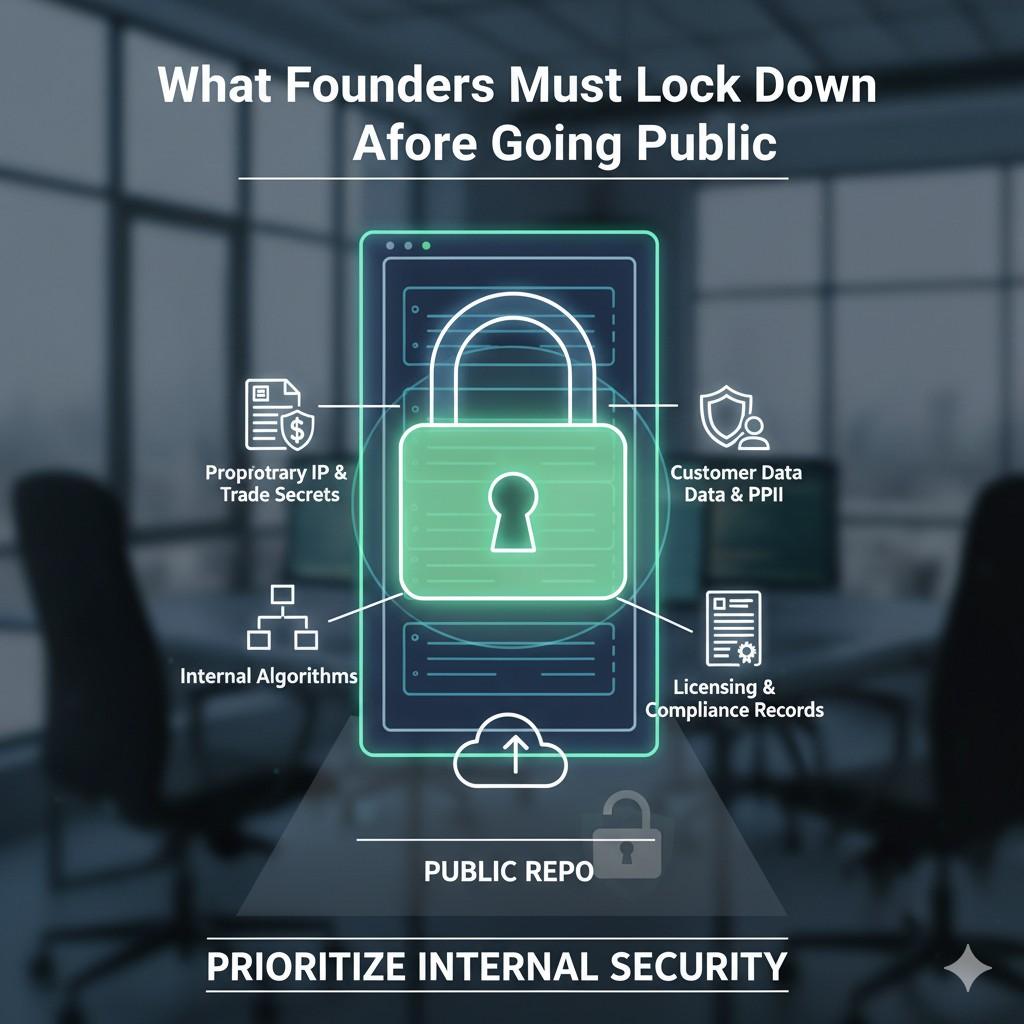
What Founders Must Lock Down Before Going Public
Going public with code is not a single event. It is a sequence of small decisions that add up to a permanent record. Founders who handle this well do not move slower. They move with intent.
This section focuses on what needs to be settled before code becomes public so compliance supports growth instead of creating future friction.
Clarifying What Actually Creates Value
Before anything is shared, founders need a clear internal answer to a simple question. What part of this system truly matters?
Not everything in a repo is strategic. Some code is replaceable. Some ideas are obvious. Others are the result of deep thinking, trial, and error.
Public repos blur these lines if you have not defined them first. When everything is shared, it becomes hard to explain later what was unique and why it deserved protection.
The practical move here is reflection, not paperwork. Founders should step back and describe the invention in plain language.
What problem does it solve in a new way? What makes it better than existing approaches? That clarity guides what should be locked down before sharing.
Capturing Inventions While They Are Fresh
Most inventions do not appear fully formed. They emerge during debugging sessions, late-night refactors, and small breakthroughs that feel routine at the time. Those moments are easy to forget once the feature ships.
Waiting too long to capture them is one of the most common mistakes founders make. By the time traction appears, the code may already be public, and the original insight is harder to isolate.
The fix is simple. When something feels new or clever, write it down. Not in legal terms. In your own words. What changed and why it matters. Tools like
PowerPatent are designed to turn those notes and real code into protection quickly, while the details are still clear. You can see how founders do this without slowing down here: https://powerpatent.com/how-it-works
Aligning Repo Strategy With Business Strategy
Public repos send a signal. They tell the world how open you are, how confident you are, and where you think your advantage lies. If that signal does not match your business strategy, confusion follows.
For example, if your business depends on a unique backend process, but your repo exposes it fully, the message is mixed. Partners and investors may wonder where the defensibility is supposed to come from.
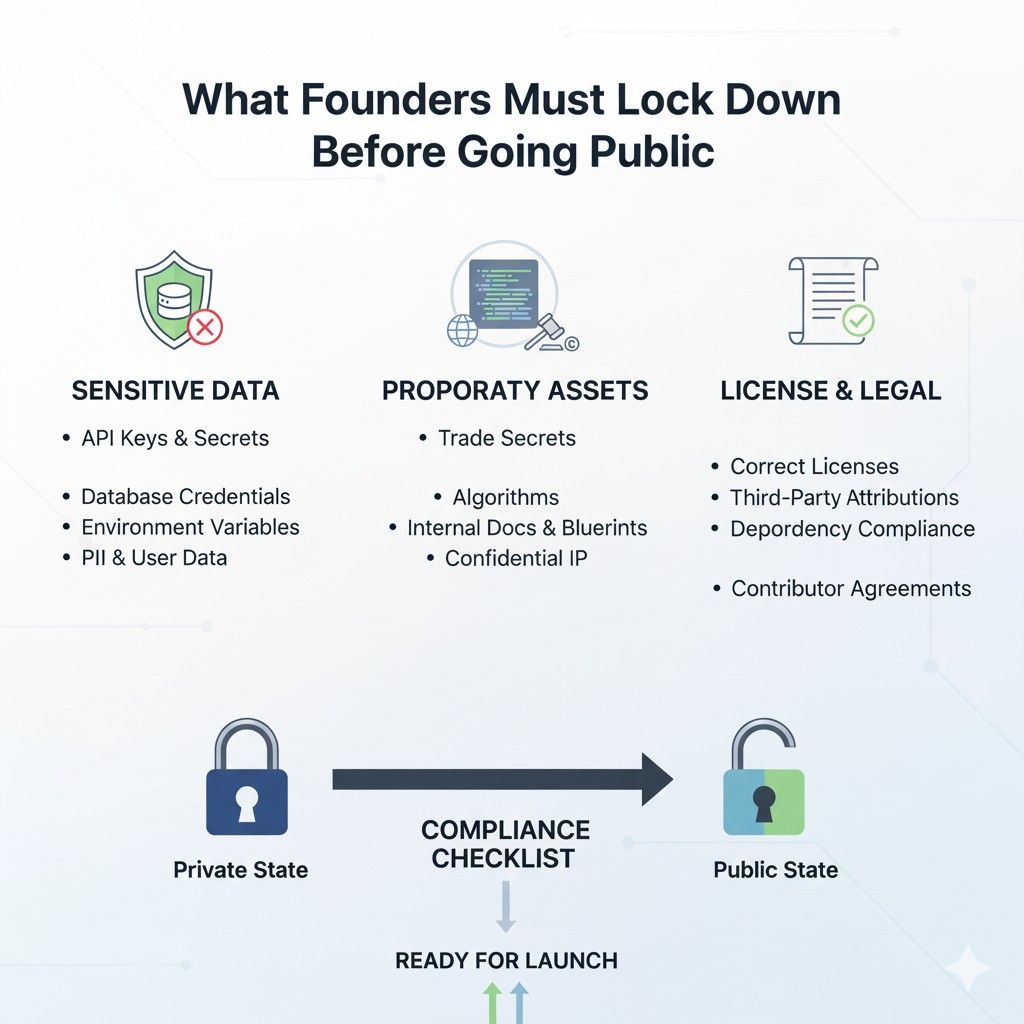
Founders should align repo visibility with business goals. If openness supports growth, great. If protection supports leverage, make sure that is in place first.
The key is that the repo reflects the strategy, not the other way around.
Setting Rules Before Scale Adds Chaos
Early teams move by trust. Everyone knows what is sensitive. As teams grow, that shared understanding fades. New hires bring habits from past jobs. Without guidance, they may share more than intended.
This is why founders should set simple rules early. Not policies that slow people down, but principles that guide decisions.
For example, core system logic stays private until reviewed. Experimental tools can be public. Demos are reviewed before posting.
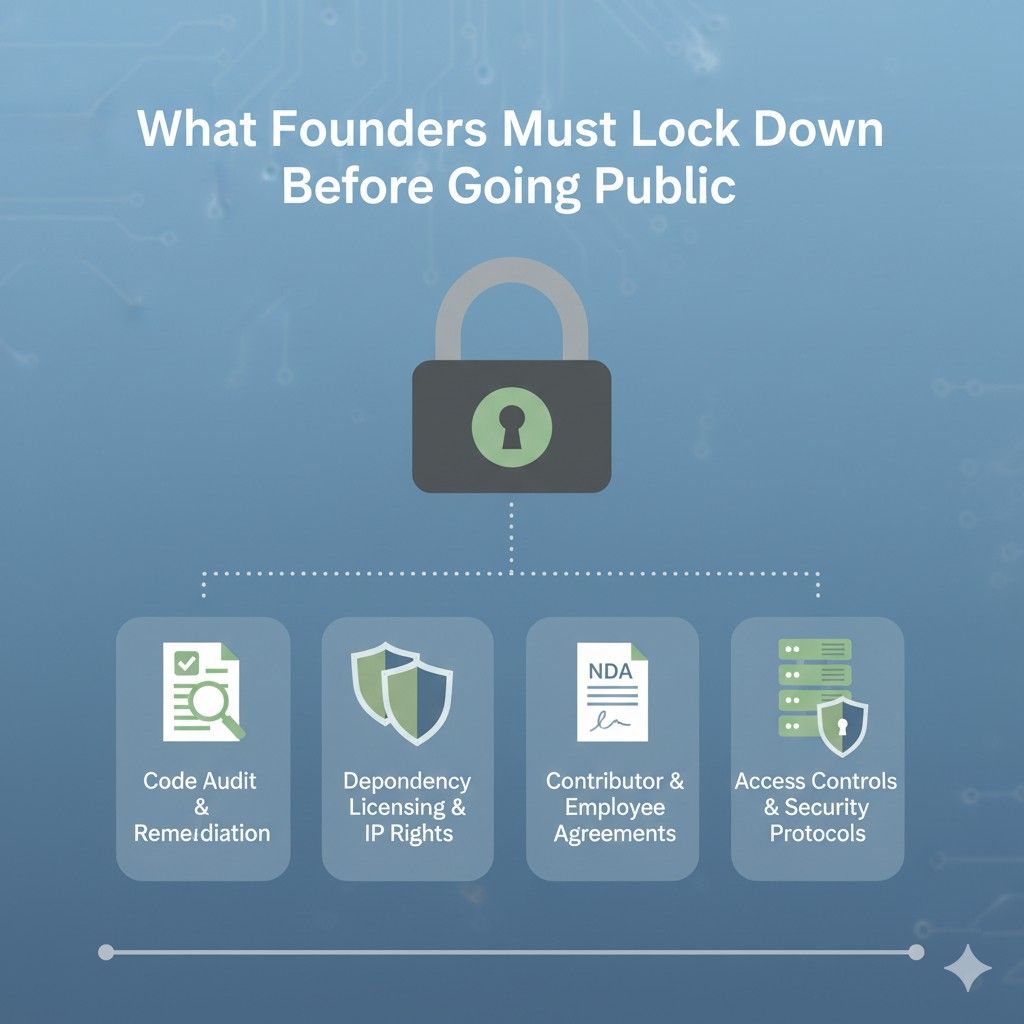
When these norms exist, compliance becomes part of culture instead of an afterthought.
Understanding Licenses Before They Lock You In
Public repos often include licenses added quickly, sometimes automatically. Those licenses have real consequences. Some allow broad reuse. Others require sharing changes. Some can complicate future commercialization.
Many founders discover too late that a license choice made early now limits what they can do. Changing it later is not always possible once others have relied on it.
Before going public, review licenses with intent. Make sure they match how you plan to use the code long term. This is not about avoiding open-source. It is about choosing the right terms from the start.
Protecting First Creates Freedom Later
The common thread in all of this is order. When protection comes first, everything else becomes easier. You can share, collaborate, and open-source with confidence.
Founders who skip this step often feel boxed in later. They either avoid sharing out of fear or realize too late that options are gone.
PowerPatent exists to remove that tradeoff. By making protection fast, clear, and built around real product work, it lets founders move forward without second-guessing every repo decision.
If you want to see how this fits into a modern build process, you can explore it here: https://powerpatent.com/how-it-works
This is how strong companies treat repo visibility. Not as a technical toggle, but as a strategic choice that supports long-term growth.
Wrapping It Up
Repo visibility looks like a small setting, but it shapes how your company is judged, protected, and valued over time. Private repos give you room to think, refine, and secure what matters before the world weighs in. Public repos create a permanent record that can either support your story or quietly weaken it. The difference is not about secrecy. It is about timing, clarity, and intent.
Founders who win long term treat compliance as part of building, not a task for later. They protect first, share second, and stay in control of how their ideas enter the world. This approach does not slow teams down. It removes doubt. It lets engineers ship confidently and lets founders know they are not accidentally giving away the core of what they are building.
Leave a Reply