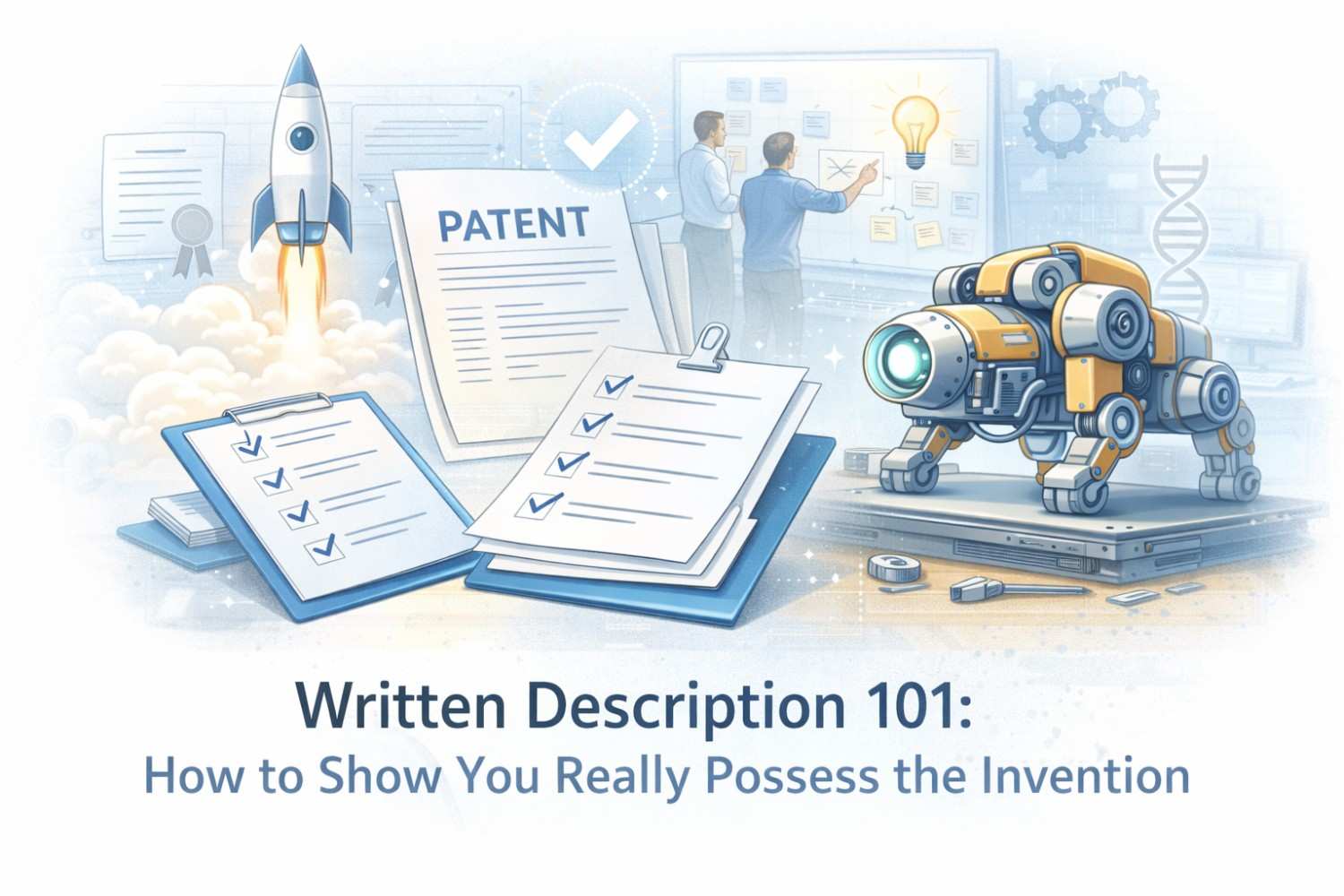
Written description is the part of a patent that proves you truly had the invention when you filed, not just a big idea or a future plan. It shows, in clear and concrete words, what you built, how it works, and why it works that way, so a patent examiner can see that you were in possession of the invention at that exact moment in time. If your patent only talks in high-level goals or vague outcomes, it fails this test, even if your product is real. Strong written description comes from explaining the actual system, logic, structure, or flow you created, using simple language that mirrors how an engineer would explain it to a teammate.
Why Written Description Is the Real Foundation of Any Strong Patent
Written description is not a side rule or a technical detail. It is the base layer that everything else in a patent sits on top of. If this layer is weak, the entire patent becomes fragile, no matter how clever the claims look on paper.
For businesses, this is not just a legal issue. It is a risk issue, a leverage issue, and often a valuation issue.
When investors, buyers, or partners look at your patents, they are not impressed by long documents. They are looking for confidence.
Written description is what creates that confidence because it shows, in plain terms, that your company actually built something real and understood it deeply.
Written Description Is Proof, Not Storytelling
Many founders think the patent text is there to tell a good story about the vision. That instinct hurts more patents than almost anything else.
Written description is not about where you want the product to go. It is about freezing time and proving what existed on that exact filing date.
For a business, this means your patent should read like a snapshot of your system at that moment, not a pitch deck for the future.
Actionable advice here is simple but powerful. When preparing content for a patent, separate future plans from current reality. Only describe what you can explain clearly today.

If you cannot explain how a part works without guessing, it does not belong in the written description yet. This discipline protects you later when claims are challenged.
Examiners Read Written Description Before They Trust Claims
Claims get the attention, but written description earns the trust.
Patent examiners use written description as a filter. Before they even debate novelty or scope, they ask a quiet question: does this document show that the inventor truly possessed this invention?
If the answer feels uncertain, everything else becomes harder.
For businesses, this means that strong written description speeds up prosecution. Examiners are less likely to push back when they can clearly see how your system works.
That translates to fewer office actions, fewer delays, and lower legal spend over time.
A highly practical move is to explain internal logic the same way you would onboard a new engineer. Walk through inputs, processing, and outputs in simple terms.
This clarity signals ownership and reduces friction during examination.
Written Description Anchors Your Claims in Reality
Claims without strong written description are like anchors tied to sand. They may look solid, but they do not hold under pressure.
When claims are later questioned, whether by an examiner or in a dispute, written description becomes the reference point. It answers whether the claim scope is supported by what was actually disclosed.
From a business perspective, this means you should not chase the broadest claim possible if your written description cannot support it. A narrower claim that is fully backed is often more valuable than a broad claim that collapses later.
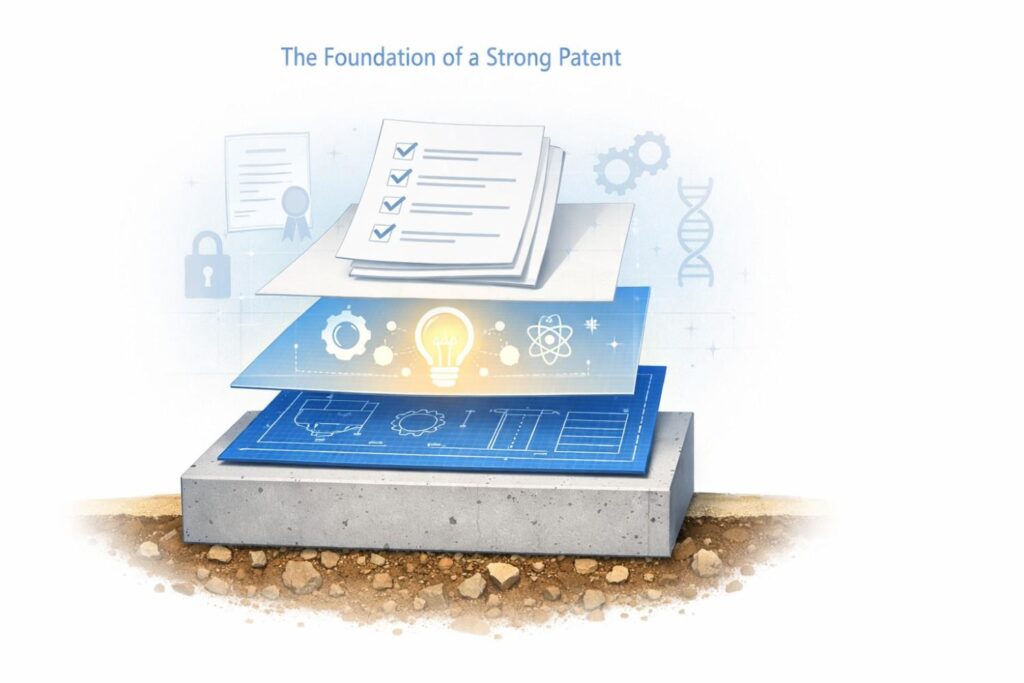
An actionable approach is to review each core claim idea and ask whether the written description explains how to build it without guessing. If the answer is no, expand the description before expanding the claim.
Written Description Protects Against Competitor Attacks
Most patent challenges do not attack novelty first. They attack written description.
Competitors look for gaps, vague language, or leaps in logic. If they can show that your patent claims something you did not clearly possess, the claim can be invalidated.
For businesses operating in fast-moving markets, this risk is real. The stronger your written description, the harder it is for others to argue that you were only speculating.
One practical habit is to describe variations you already understand, not ones you imagine. If you built two versions of a feature, explain both. If you tested different parameters, explain the range you know works.
This shows depth of possession and reduces attack surface.
Written Description Is a Business Asset, Not Legal Overhead
Many teams treat patent writing as a box to check. That mindset misses the real value.
A strong written description becomes internal documentation that lives beyond the patent office. It captures system logic, design decisions, and technical boundaries in a structured way.
For growing companies, this can support onboarding, audits, and even acquisitions. Buyers often review patents to understand how deeply the company understands its own technology.
Actionably, involve technical founders directly in shaping the written description. Do not outsource it blindly. The closer the text is to how the builders think, the stronger and more authentic it becomes.
Written Description Forces Clarity in Your Own Thinking
One hidden benefit of written description is that it exposes gaps in understanding.
When you try to explain your system clearly, weak spots surface. Maybe a component is hand-wavy. Maybe a dependency is unclear. This is not a problem. It is an opportunity.
For businesses, this process can sharpen the product itself. Teams often discover better boundaries, cleaner architectures, or clearer value propositions while drafting.

A useful tactic is to write the description as if someone else will build it from scratch. If that feels uncomfortable, refine the system or the explanation until it does not.
Written Description Sets the Ceiling for Long-Term Value
Your future claim amendments, continuations, and enforcement options all depend on what was originally described.
If something is missing from the written description, you cannot add it later. This makes early decisions critical.
For startups, this does not mean filing massive documents. It means being intentional about capturing the core invention thoroughly the first time.
A smart move is to document your core system at the moment it becomes stable. That moment, not launch or revenue, is often the right time to file.
Platforms like PowerPatent are designed around this idea, helping founders capture real inventions quickly with guidance that keeps written description strong from day one. You can see how that works here: https://powerpatent.com/how-it-works
Written Description Aligns Legal Strength With Business Speed
The biggest myth is that strong written description slows companies down.
In reality, vague description causes more delays later. Clear description early reduces back-and-forth, rewrites, and corrections.
For fast-moving businesses, the goal is not perfection. It is accuracy. Capture what exists clearly, move forward, and build on it.

The most effective teams treat written description as a strategic snapshot, not a final verdict on the product. That mindset keeps patents strong without blocking momentum.
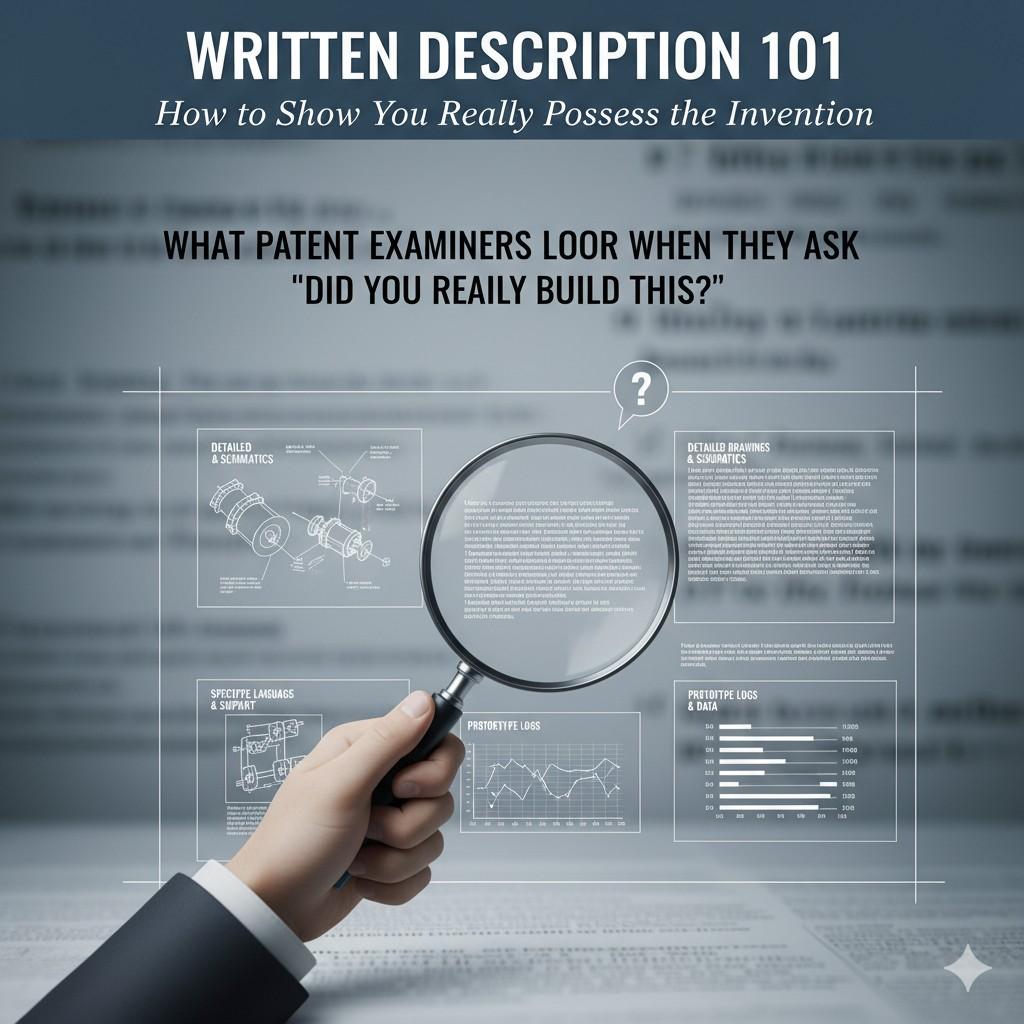
What Patent Examiners Look For When They Ask “Did You Really Build This?”
When a patent examiner reads your application, they are not trying to admire your vision or your ambition.
They are trying to answer a very narrow but powerful question: does this document show that the inventor truly had this invention at the time of filing? Everything else flows from that moment of judgment.
For businesses, understanding how examiners think is one of the fastest ways to write stronger patents without adding length, cost, or delay.
Once you see what they are trained to look for, you can shape your written description to meet that standard naturally.
Examiners Look for Technical Ownership, Not Market Claims
Patent examiners are trained engineers first, not investors or customers.
They do not care if your invention solves a big problem or disrupts an industry. What they care about is whether the document shows technical ownership. Ownership means you understand the moving parts, not just the outcome.
If your description focuses on what the system achieves but not how it achieves it, examiners become skeptical. For businesses, this often happens when founders reuse marketing language inside patent drafts.
A strong approach is to strip out any sentence that sounds like a landing page and replace it with one that sounds like internal engineering notes. This simple shift often makes the difference between trust and rejection.
Examiners Test Whether You Could Teach This to Someone Else
A core mental test examiners use is simple. Could another skilled person build this based on what is written?
They are not asking whether it would be easy. They are asking whether it would be possible without inventing missing pieces.
For businesses, this means written description should function like a teaching tool. It should explain the structure, flow, and logic in a way that removes guesswork.
A practical tactic is to imagine handing the document to a new hire who has never seen the system. If they could sketch the architecture or explain the core logic after reading it, you are likely meeting the examiner’s expectation.
Examiners Look for Consistency Across the Entire Document
One of the fastest ways to lose examiner confidence is inconsistency.
If one part of the description says a component works one way and another part implies something else, it signals weak possession. Even small mismatches raise red flags.
For businesses, this often happens when multiple people contribute pieces without alignment. The result is a document that feels stitched together rather than owned.
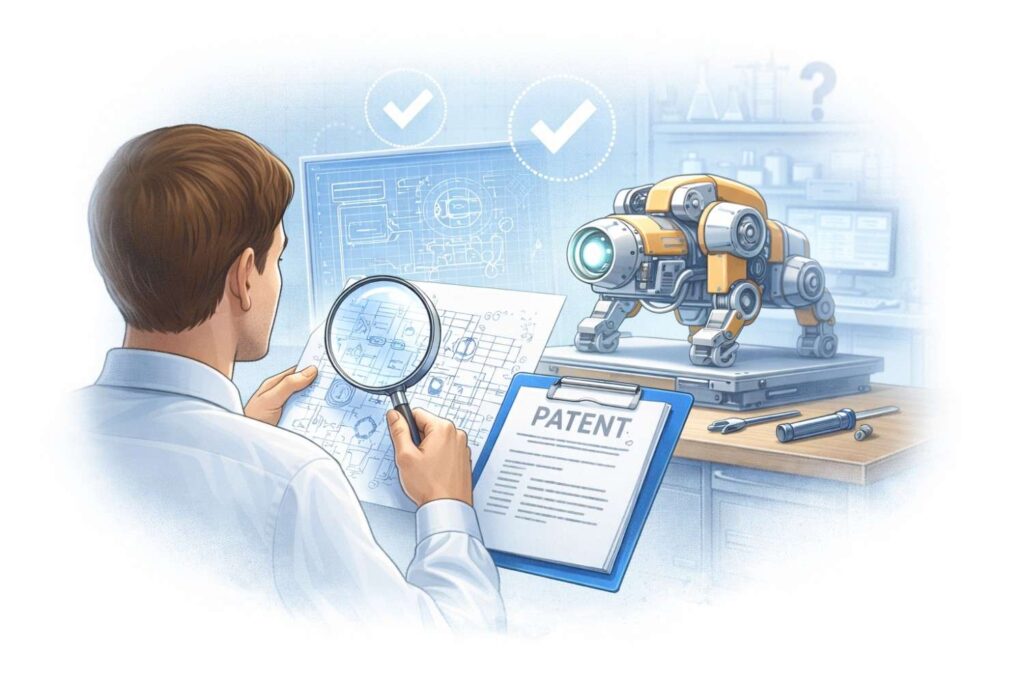
An actionable habit is to reread the entire written description from start to finish as one continuous explanation. Look for terms that change meaning or components that quietly shift roles. Cleaning this up strengthens credibility immediately.
Examiners Pay Attention to How Specific You Are Willing to Be
Vagueness is the enemy of written description.
Examiners notice when inventors avoid specifics because they are afraid of limiting scope. Ironically, this avoidance often weakens the patent instead of strengthening it.
Specifics show confidence. They show that you actually built something and understand it well enough to describe it clearly.
For businesses, the key is to describe specifics while still explaining the underlying pattern.
You can explain a concrete implementation and then explain that variations are possible, as long as those variations are grounded in what you already know works.
Examiners Look for Clear Boundaries Around the Invention
Another quiet test examiners apply is boundary clarity.
They want to see what your invention is and what it is not. If everything feels fuzzy, it becomes hard to believe that you possessed the invention as a defined thing.
For companies, this means describing how your system fits into a larger environment. Explain what happens before your invention takes over and what happens after it produces results.
This context helps examiners see that your invention is not just an abstract idea floating in space, but a concrete solution with defined edges.
Examiners Notice When Language Hides Missing Details
Certain phrases trigger examiner skepticism because they often hide gaps.
When descriptions rely heavily on phrases like “can be configured to” without explaining how, or “may include” without examples, examiners sense uncertainty.
For businesses, this is a warning sign that the document may be leaning on possibility rather than possession.
A better approach is to explain at least one full path in detail. Once one path is clearly described, flexibility becomes believable instead of suspicious.
Examiners Evaluate Whether Variations Feel Earned
Describing variations is important, but examiners judge how those variations are presented.
If a document suddenly claims dozens of variations without explaining how they relate to the core system, it feels speculative. That weakens written description.
For companies, variations should feel earned through explanation. Show how changing one input affects behavior, or how swapping a module changes outcomes.
This approach demonstrates real understanding and makes the scope feel natural rather than inflated.
Examiners Care About Timing More Than You Think
Written description is tied tightly to timing.
Examiners are trained to assess whether the invention existed at the filing date, not whether it could exist later. Language that feels forward-looking can unintentionally undermine possession.
For businesses moving fast, this is critical. Product roadmaps often bleed into patent drafts without anyone noticing.

A simple but powerful action is to review verbs carefully. Describe what the system does, not what it will do. This small shift keeps the document anchored in the present moment.
Examiners Use Written Description to Judge Claim Amendments
As prosecution moves forward, claims often change. When that happens, examiners look back to the written description to see if the new claim language is supported.
If the description is thin, your ability to adjust claims shrinks dramatically.
For businesses, this means written description is what gives you room to maneuver later. It is your safety net when strategies shift or competitors appear.
Capturing the core invention thoroughly at the start gives you options months or years down the line.
Examiners Respond Better to Clear Logic Than Clever Language
Complex language does not impress examiners. Clear logic does.
A simple explanation that walks step by step through a process often carries more weight than dense, abstract language.
For businesses with technical founders, this is good news. The way you already explain systems internally is often better than traditional patent prose.
Platforms like PowerPatent are built around this idea, helping founders translate real systems into clear written description without drowning in legal language.
If you want to see how that process works, you can explore it here: https://powerpatent.com/how-it-works
Examiners Form an Early Impression That Is Hard to Reverse
First impressions matter more than most people realize.
If the written description feels solid and grounded from the start, examiners tend to give the applicant the benefit of the doubt later. If it feels vague early on, skepticism lingers.

For businesses, this means the opening technical explanation is critical. It should quickly establish that the inventor knows exactly what they built.
A strong opening explanation sets the tone for the entire examination.
How to Prove You Possessed the Invention Without Slowing Down Your Startup
Most founders worry that proving possession means weeks of writing, endless reviews, and slowing product momentum.
That fear is understandable, but it is based on a false tradeoff. Proving possession does not require more time. It requires better focus.
When done correctly, written description becomes a byproduct of building, not a separate legal chore.
For businesses that move fast, the goal is to capture reality clearly at the right moment, not to document every possible future.
Possession Is About Depth, Not Volume
Many teams assume that longer patents are stronger patents. In reality, possession is shown through depth of understanding, not word count.
A short explanation that clearly shows how a system works is far more powerful than pages of vague language. Examiners and future reviewers can tell when text exists only to fill space.
For startups, this is good news. You do not need to slow down to write more. You need to write what matters.

A practical approach is to identify the single technical insight that makes your invention work. Then explain that insight fully, using simple language, examples, and logic. Everything else should support that core idea.
Capture the System at the Moment It Becomes Real
There is a specific moment in every product’s life when the invention becomes real. Not when the idea is born. Not when the company launches. But when the system works in a repeatable way.
That moment is the best time to capture written description.
For businesses, waiting too long can be risky. Teams forget early design choices, and documentation becomes fuzzy. Capturing too early can also be risky if the system is still changing daily.
An actionable habit is to watch for stability. When the core logic stops shifting and improvements become incremental, that is your signal to document possession.
Use Real Artifacts as the Backbone of Description
The fastest way to prove possession is to start from real artifacts.
Code snippets, data flows, model structures, hardware layouts, and process diagrams already exist inside your company. Written description should be a translation of these artifacts into clear words, not a reinvention.
For startups, this means patent drafting can happen alongside development. Engineers explain what they built. Writers or tools help convert that explanation into structured description.
This approach minimizes disruption and maximizes accuracy.
Explain Why Each Part Exists, Not Just That It Exists
Many weak descriptions list components without explaining their purpose.
Examiners want to see understanding, not inventory. When you explain why each part exists and what problem it solves within the system, possession becomes obvious.
For businesses, this also clarifies internal thinking. Teams often realize that certain components are more central than they thought.
A simple tactic is to ask one question for every major part: what would break if this was removed? The answer often becomes the explanation you need.
Show Control Over the Edge Cases You Understand
Possession is not about perfection. It is about control.
You do not need to explain every possible edge case. You do need to explain the ones you actually encountered or planned for intentionally.
For startups, this often includes performance limits, failure conditions, or fallback behavior. Describing how the system behaves under stress shows maturity and real-world use.

This kind of detail is hard to fake and easy for examiners to trust.
Avoid Forward-Looking Language That Weakens Possession
One of the biggest slowdowns in patent review comes from language that sounds like a roadmap.
Words that suggest future development create doubt about whether the invention existed at filing.
For fast-moving companies, this happens naturally because teams think in terms of what comes next.
A helpful practice is to describe everything in the present tense. Even if you know the system will improve, focus on what it does now. This keeps possession clear and avoids unnecessary pushback.
Proving Possession Does Not Mean Locking Yourself In
Founders often fear that being specific will trap them.
In reality, specificity done right creates flexibility. When you clearly describe a working example and explain the logic behind it, you earn the right to claim variations later.
For businesses, this means you should not hide details. You should frame them as examples that reveal the underlying pattern.
Explain the rule, not just the instance. This shows ownership without narrowing your future options.
Integrate Written Description Into Normal Workflows
The easiest way to avoid slowdown is to stop treating patents as a separate project.
Written description can be captured through design reviews, architecture discussions, and technical demos. These moments already exist.
For startups, this means recording explanations when decisions are made. Those explanations become the raw material for patents.
Tools that align with this workflow, like PowerPatent, are designed to pull from real technical conversations and turn them into strong filings with attorney oversight, rather than forcing founders into long legal processes.
You can see how that works here: https://powerpatent.com/how-it-works
Focus on What Makes Your System Hard to Copy
Possession is most valuable when it protects what others would struggle to recreate.
For businesses, this often means internal logic, tuning choices, or architectural tradeoffs that are not obvious from the outside.

Written description should shine a light on these choices. Explain why you selected one approach over another. This shows mastery and makes the patent harder to design around.
Use Clear Examples to Replace Abstract Language
Abstract language slows everyone down.
Examples speed understanding and build trust. They show that the inventor has actually thought through real scenarios.
For startups, examples can come from real users, test cases, or internal benchmarks. Even simple walk-throughs of a process add credibility.
These examples do not need to be long. They need to be real.
Possession Is a Snapshot, Not a Final Judgment
Finally, remember that written description captures a moment in time.
It does not judge whether your invention is finished. It proves that it existed.
For businesses, this mindset removes pressure. You are not freezing your product forever. You are documenting a milestone.

Once that milestone is captured correctly, you can keep building at full speed.
Wrapping It Up
Written description is often treated like a legal requirement that must be survived. In reality, it is one of the most practical tools a business has to protect momentum, value, and leverage. When you understand it clearly, it stops being a risk and starts becoming an asset. At its core, written description is simply proof of ownership. It shows that your company did not just imagine something, but actually built it, understood it, and controlled it. That proof matters long before any dispute ever happens. It shapes how examiners treat your application, how investors view your defensibility, and how competitors assess whether they can safely copy you.
Leave a Reply