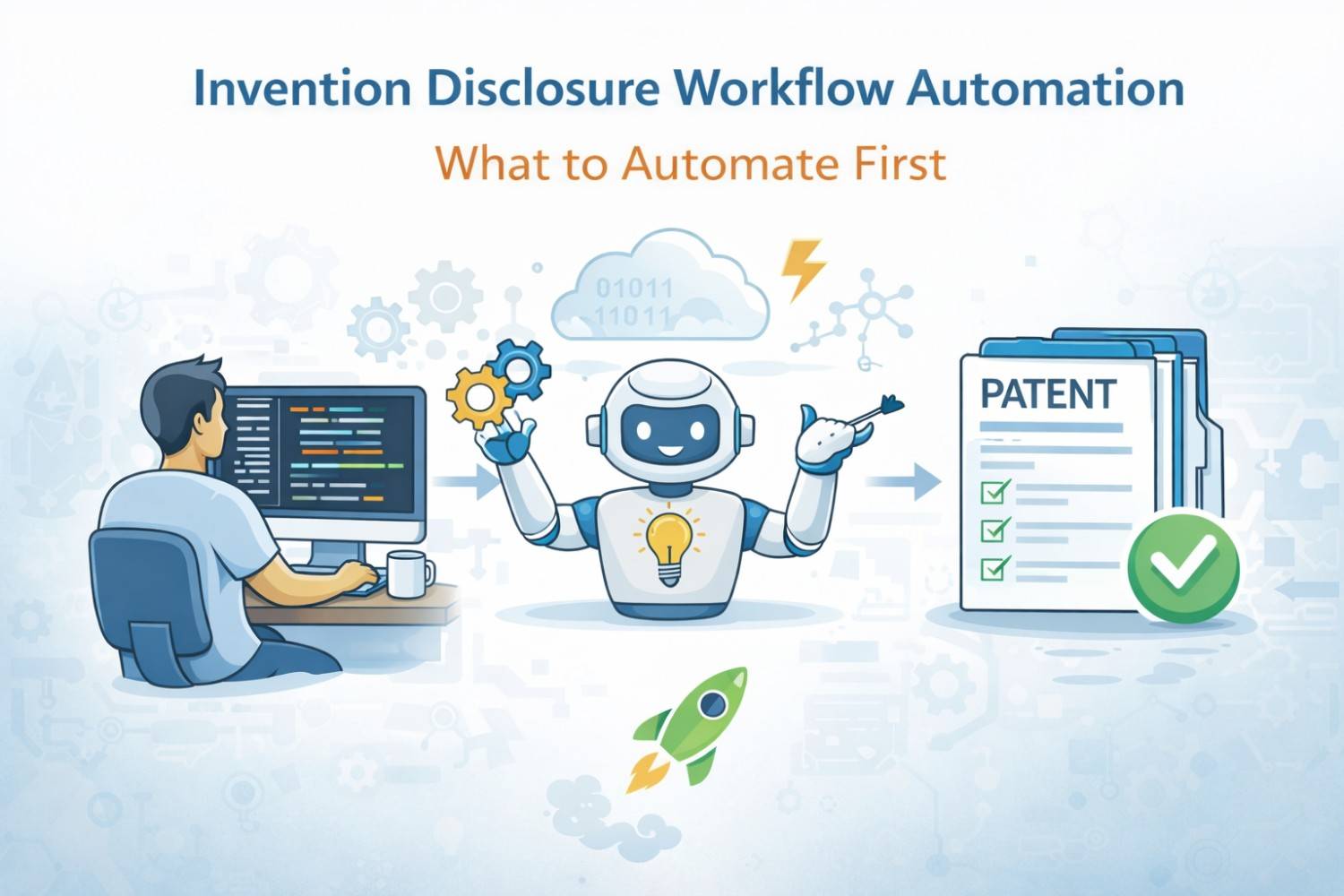
Most invention ideas die in someone’s inbox. An engineer builds something new. A founder ships a feature that took months of late nights. A research lead solves a hard problem. Then someone says, “We should file a patent.” A form gets sent around. People forget to fill it out. Details get lost. Weeks pass. The product moves on. The idea never turns into real protection.
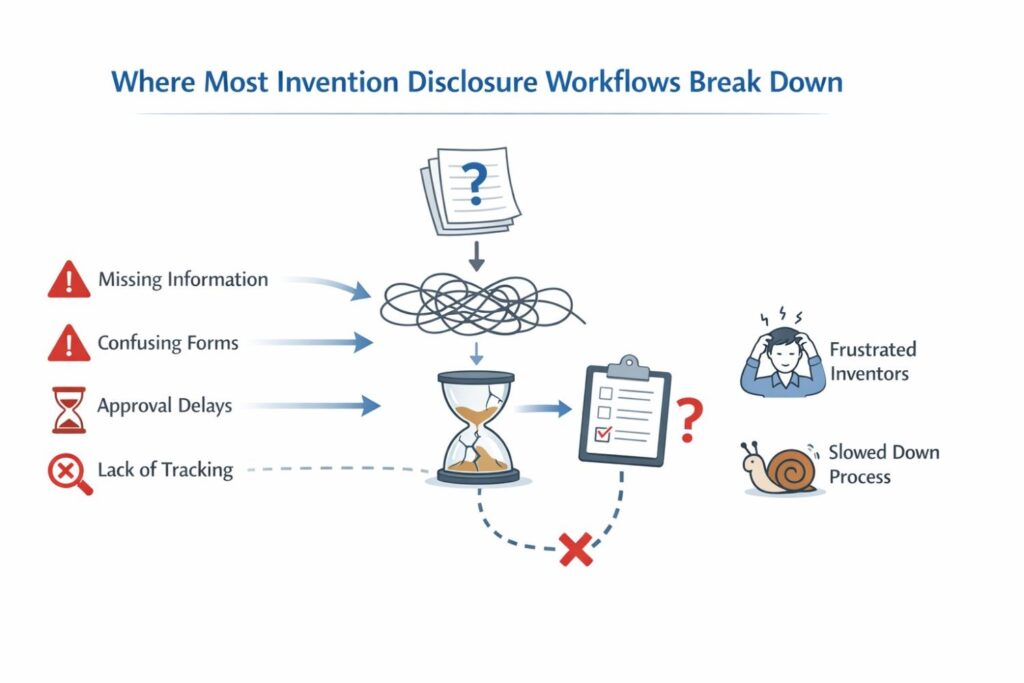
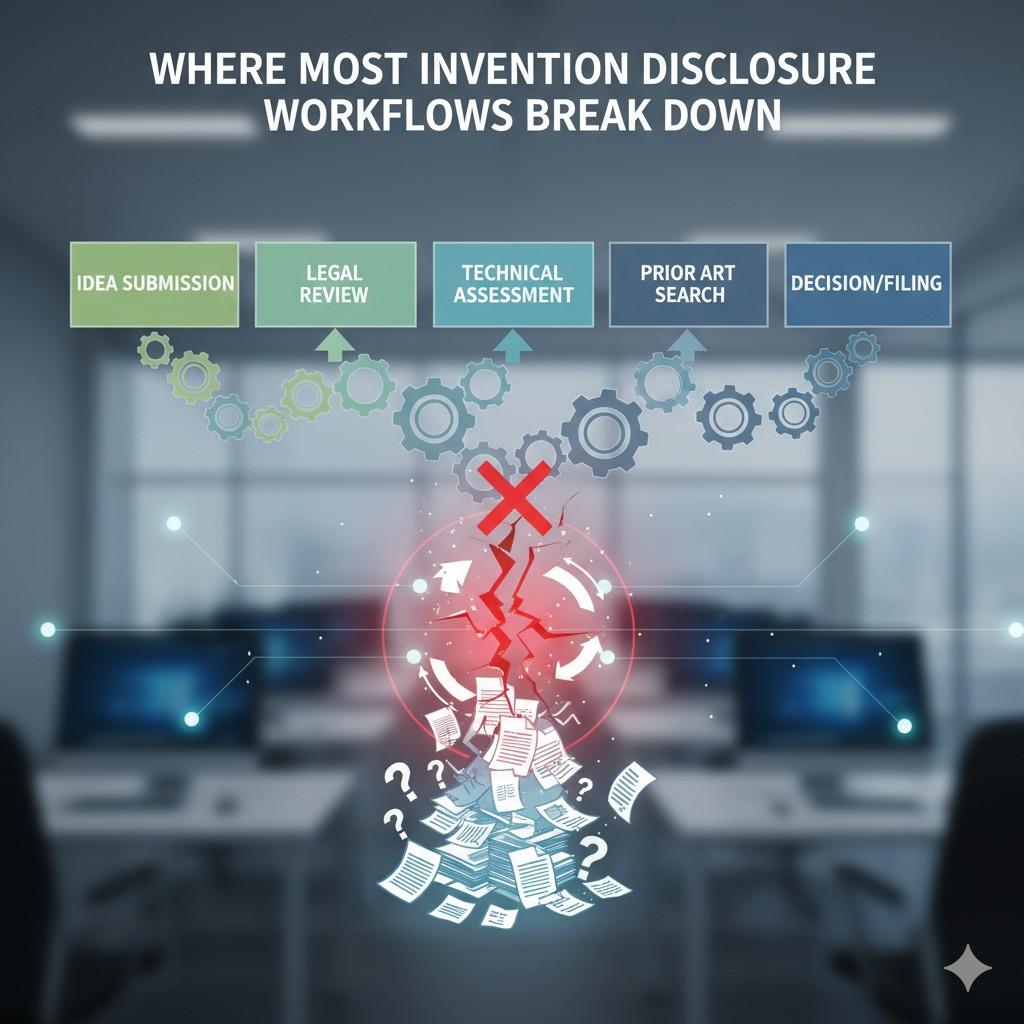
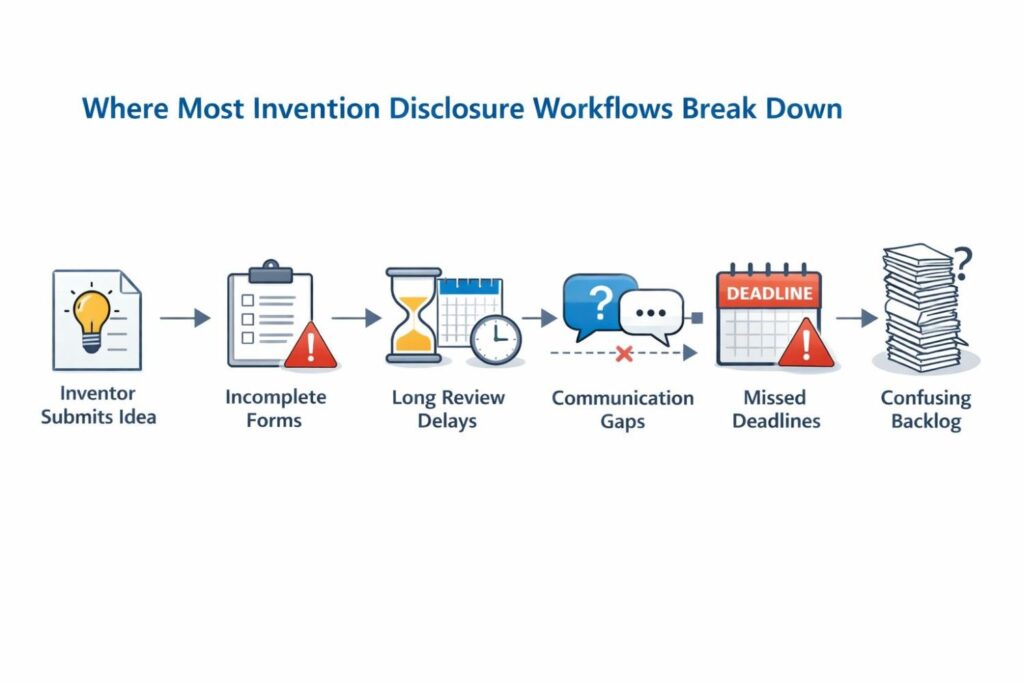
Where Most Invention Disclosure Workflows Break Down
Invention disclosure sounds simple. Someone builds something new. They describe it. The company reviews it. A patent gets filed.
But inside real startups and growing tech companies, it rarely works that cleanly.
The breakdown does not usually happen because people do not care. It happens because the workflow was never designed for speed, clarity, or ownership.
It was copied from an old law firm template or built as a basic internal form that no one truly owns. Over time, small gaps turn into big risks.
If you want to automate the right things first, you have to understand exactly where the system fails.
The Form Is Treated Like a One-Time Event
Most companies treat invention disclosure as a one-time form. Fill it out. Submit. Done.
But invention does not happen in one sitting. It evolves. Features change. Code gets refactored.
Models improve. Hardware revisions stack up. By the time someone fills out the disclosure, the product has already moved three versions ahead.
The first breakdown is this: the disclosure process is disconnected from how engineering actually works.
Instead of being part of the build cycle, it becomes a separate task that feels like paperwork. Engineers push it aside because it does not feel urgent. Founders delay it because shipping comes first.
If you are running a technical team, you need to connect disclosure to moments that already exist. Release cycles. Major feature merges. Architecture changes. New model training milestones. Those are natural checkpoints.
A simple but powerful move is to trigger a short invention capture prompt automatically whenever a major branch is merged or when a release tag is created.
Not a long form. Just a structured prompt asking what changed, what problem was solved, and how it works differently from before.
When disclosure becomes part of shipping, it stops feeling like extra work.
No Clear Ownership
When everyone owns invention disclosure, no one owns it.
In many companies, engineers think legal handles it. Legal thinks engineering will send something over. Founders assume someone else is tracking it. Weeks go by and nothing happens.
The workflow breaks because there is no single owner responsible for moving disclosures from idea to filed application.
Automation cannot fix ownership problems by itself, but it can expose them.
If you are serious about improving this, assign one role internally who is accountable for moving disclosures forward. Not necessarily writing them. Not doing legal review. But making sure nothing gets stuck.
Then automate visibility around that role. Set up automatic notifications when disclosures sit untouched for more than a set number of days. Create dashboards that show how many potential inventions are in review, in draft, or ready for filing.
When ownership is visible, action follows.
Engineers Are Asked the Wrong Questions
Most disclosure forms ask questions that do not match how technical people think.
They ask for “background art” or “advantages over prior systems.” Engineers do not speak that language. They think in terms of system constraints, edge cases, performance tradeoffs, and design decisions.
The mismatch creates shallow answers.
If your team fills out a form that feels like legal homework, they will rush it. The result is weak disclosures that miss key technical depth. That makes drafting harder later. It also increases the risk of filing something too narrow.
A smarter approach is to automate structured technical prompts in plain language.
Instead of asking for “novelty,” ask: What was broken before? What did you change? Why does this approach work better? What happens if someone tries to copy it without understanding your trick?
You can build automated intake systems that guide engineers through these questions in small steps, almost like a short interview.
The system can adapt based on their answers, digging deeper into architecture, data flow, hardware configuration, or model structure.
This type of guided capture produces stronger material without asking engineers to think like patent lawyers.
Disclosures Happen Too Late
Another major breakdown happens when invention capture is reactive.
The company decides to raise money. Investors ask about IP. Suddenly there is a rush to file patents. Teams scramble to remember what they built six months ago.
Memory is unreliable. Important design decisions are forgotten. Key experimental results are buried in old Slack threads or notebooks.
You lose detail. And detail is everything in strong patents.
To prevent this, automation should focus on early detection.
You can set up lightweight monthly invention check-ins triggered automatically. Not to force filings every month. But to ask whether any meaningful technical breakthroughs happened.
This keeps a steady pulse on innovation. It prevents large gaps. It also builds a culture where protecting IP feels normal, not urgent or stressful.
When invention capture becomes routine, quality goes up and panic goes down.
Fragmented Information Across Tools
Modern product teams use dozens of tools. GitHub. Jira. Notion. Slack. Figma. Lab notebooks. Cloud dashboards. Data warehouses.
Your invention story is scattered across all of them.
The workflow breaks when disclosure depends on someone manually pulling details from five different systems.
This is where automation delivers huge leverage.
Instead of relying on memory, you can automatically attach relevant commit history, issue threads, design documents, or experiment logs to a disclosure draft.
This does not mean filing raw data. It means collecting context so nothing important is missed.
Even simple integrations that auto-link recent pull requests or tickets tied to a feature can dramatically improve the quality of disclosures.
The goal is not more paperwork. The goal is richer technical capture with less effort.
Review Bottlenecks Slow Everything Down
After a disclosure is submitted, it often enters a black hole.
Legal review takes weeks. Questions come back slowly. Engineering has already moved on. Context is lost. Clarifications are rushed.
This delay reduces both accuracy and momentum.
A smarter approach is to automate early triage.
You can build rules that flag high-impact inventions based on keywords, product area, revenue tie-in, or strategic roadmap alignment. Those get reviewed first. Lower priority items are scheduled accordingly.
You can also automate structured follow-up questions immediately after submission, while the engineer still remembers the details.
Speed matters. When review happens close to creation, quality improves.
This is one of the core ideas behind modern platforms like PowerPatent.
Instead of long back-and-forth cycles with outdated processes, smart software organizes the invention data early, and real patent attorneys step in with full context.
That combination reduces friction and prevents expensive delays. You can see how that works here: https://powerpatent.com/how-it-works
No Strategic Filter
One of the most expensive mistakes companies make is filing patents randomly.
Without a strategic filter, teams either file too many low-value patents or miss the ones that truly protect core advantages.
Workflow breakdown often happens because disclosure is not tied to business goals.
Automation should not just capture ideas. It should connect them to strategy.
You can require each disclosure to be linked to a product line, revenue driver, or long-term platform bet. You can automatically score submissions based on how central they are to your moat.
This does not replace human judgment. It sharpens it.
When automation highlights which inventions protect your core engine, leadership can make smarter filing decisions.
Founders Lack Real-Time Visibility
Many founders only learn about patent status when something goes wrong.
They do not know how many inventions are pending. They cannot see bottlenecks. They do not know if key innovations are still unprotected.
That lack of visibility creates anxiety.
Automating reporting changes that.
You can build simple dashboards that show disclosure velocity, review timelines, and filing progress. You can track how long it takes from idea capture to attorney draft. You can identify where delays occur.
Visibility creates accountability. It also builds confidence when talking to investors, partners, or acquirers.
When you can clearly show a steady pipeline of protected innovation, your company looks stronger.
Manual Drafting Creates Risk
When disclosure documents are unstructured and inconsistent, drafting becomes slow and expensive. Attorneys spend time chasing missing details. Engineers answer the same questions twice. Small errors slip through.
The workflow breaks because the foundation was weak.
Automation should focus first on structure.
If your invention intake captures system architecture, core algorithms, alternative implementations, edge cases, and practical examples in a consistent format, drafting becomes smoother.
This is exactly why combining AI-driven structuring with real attorney oversight is powerful. The software organizes technical input clearly. Attorneys focus on strengthening claims and strategy, not cleaning up chaos.
If you want to protect your deep tech without slowing down product development, this hybrid model is worth understanding. You can explore it here: https://powerpatent.com/how-it-works
The core lesson is simple.
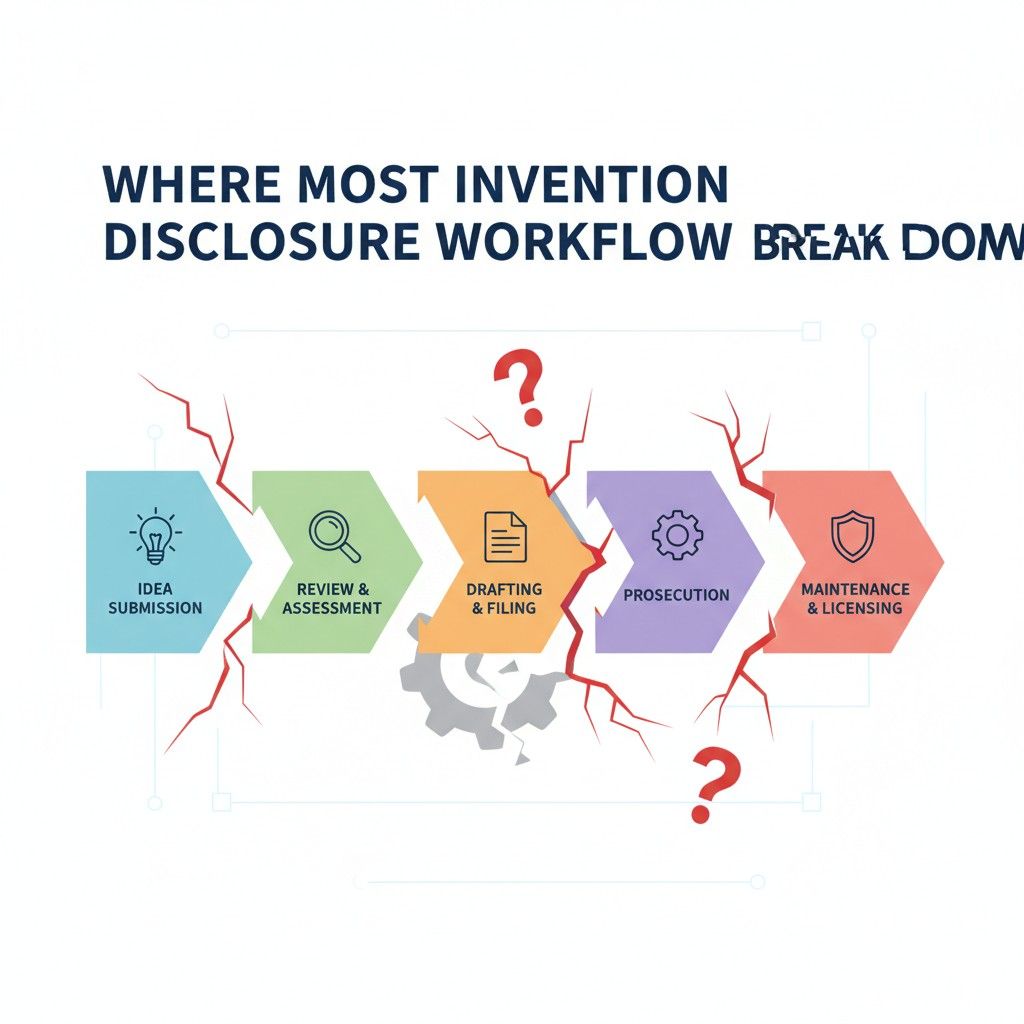
Before you automate everything, fix the points where your current workflow leaks value. Connect disclosure to engineering reality. Assign ownership. Capture context early. Add visibility. Align with strategy.
When you automate those first, the rest becomes much easier.
The First Thing You Should Automate (And Why It Matters More Than You Think)
If you try to automate everything at once, you will create more confusion, not less.
Many companies rush into automation by building dashboards, adding approval layers, or connecting tools. That feels productive. It looks organized. But it often skips the most important step.
The first thing you should automate is the moment an invention is captured.
Not the legal review. Not the filing decision. Not reporting.
The very first capture of the idea.
That moment matters more than anything else because every later step depends on the quality and timing of what gets recorded.
If the initial capture is weak, rushed, or late, everything downstream suffers.
Automate the Trigger, Not Just the Form
Most teams already have a disclosure form somewhere. The real problem is that no one remembers to use it.
So the first automation should not be a better PDF or a longer questionnaire. It should be a trigger.
You want invention capture to happen automatically when certain technical events occur.
When a major feature is merged.
When a new system architecture is deployed.
When a breakthrough experiment hits a key metric.
When a hardware revision solves a long-standing constraint.
Those events already exist inside your workflow. You do not need to invent new behavior. You need to connect invention capture to what your team already does.
Imagine this: an engineer merges a large pull request that introduces a new data processing pipeline. Within minutes, they receive a short, structured prompt asking a few simple questions about what changed and why it matters.
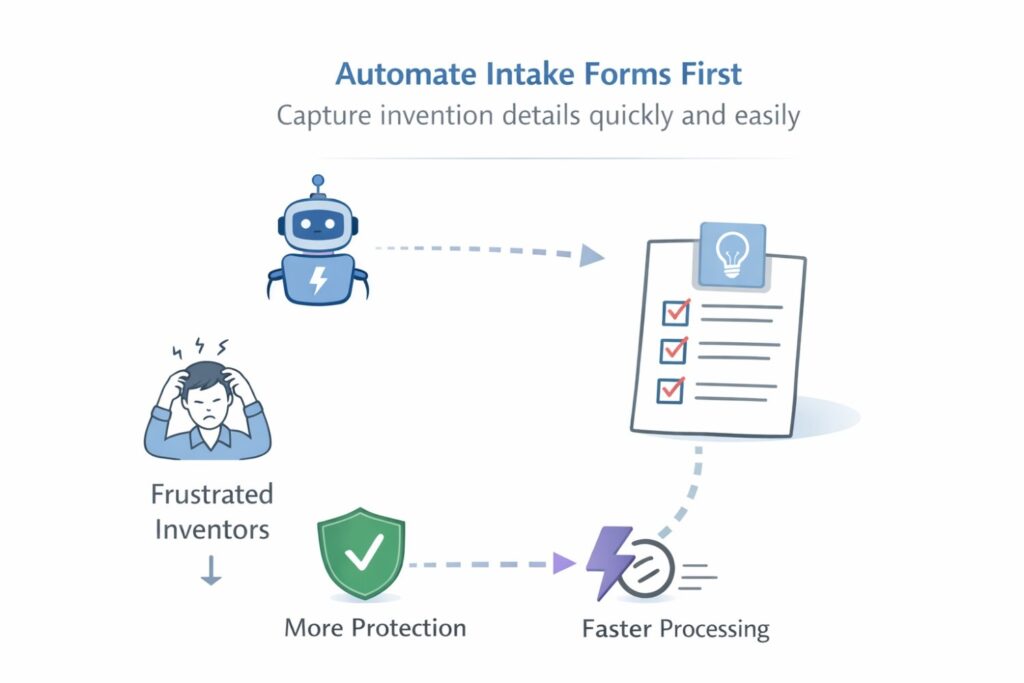
Not a long legal form. Just a focused capture while the context is fresh.
This is powerful because memory fades fast. Details that feel obvious today are forgotten in a few weeks. Automation preserves clarity at the exact moment of creation.
Capture Context While It Is Still Clear
The biggest hidden risk in patent workflows is lost detail.
An engineer solves a hard scaling issue by restructuring a model’s training flow. They know exactly why it works better. They understand the tradeoffs. They remember the failed approaches.
But if disclosure is delayed, those details vanish. What remains is a shallow summary that misses the real technical depth.
Automating early capture protects against this.
You can design a lightweight intake system that collects structured answers about system design, alternatives considered, performance improvements, and practical examples.
The key is timing. It must happen while the engineer still remembers the full story.
This is not about adding extra work. It is about replacing a future headache with a small, smart step today.
When capture happens early, drafting becomes faster. Attorney review becomes sharper. The final patent becomes stronger.
Reduce Friction to Near Zero
If invention capture feels heavy, it will not happen consistently.
So the first automation must focus on removing friction.
That means fewer fields. Clear language. Short prompts. Smart follow-up questions that adapt based on answers.
Instead of asking for ten pages of explanation, guide the engineer step by step. If they mention a new algorithm, the system can ask how it differs from existing approaches.
If they describe a hardware change, the system can ask what constraint it overcomes.
This feels less like paperwork and more like a structured conversation.
When friction drops, participation rises.
This is where smart software makes a real difference. Platforms like PowerPatent use intelligent intake systems to guide founders and engineers through invention capture in plain language.

Then real patent attorneys review and refine the output, ensuring strong protection without forcing technical teams to think like lawyers. You can see how that works here: https://powerpatent.com/how-it-works
Make It Continuous, Not Occasional
One common mistake is treating invention capture as a quarterly event.
That approach guarantees gaps.
Innovation does not happen on a calendar schedule. It happens in sprints, experiments, and rapid iterations.
The first automation should create a continuous capture system. Small prompts triggered by real development milestones. Light monthly check-ins that ask whether any meaningful breakthroughs occurred. Automated reminders if nothing has been submitted in a while.
This keeps your pipeline alive.
Instead of scrambling before a funding round, you build a steady stream of protected innovation.
Investors notice that. Acquirers notice that. Competitors definitely notice that.
Tie Early Capture to Strategic Value
Not every idea needs to become a patent.
But every important technical advantage should at least be evaluated.
When you automate the first capture moment, you create optionality. Leadership can later decide whether to file, delay, or combine disclosures.
Without early capture, you do not even get the choice.
A simple strategic improvement is to include one short question during intake: which product, revenue stream, or future platform does this support?
That small connection forces alignment between engineering and business.
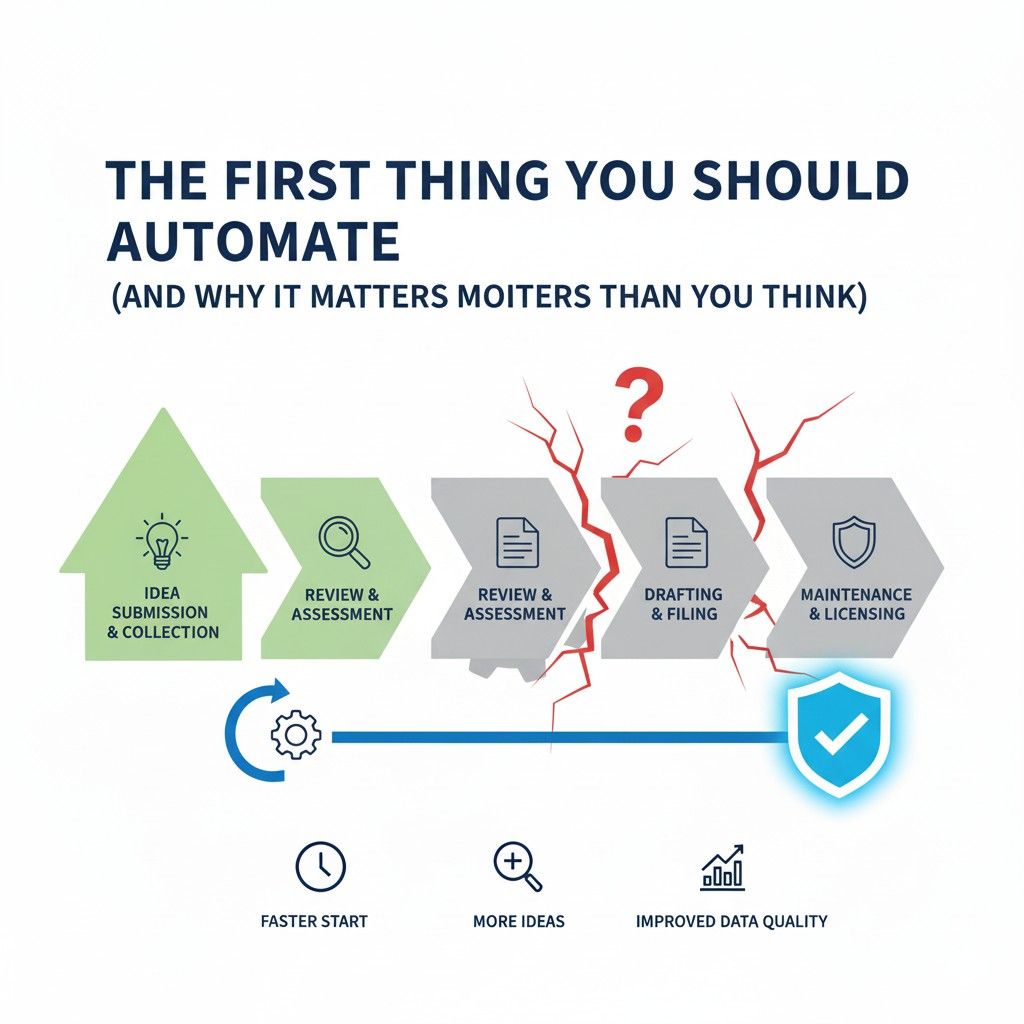
Now your IP pipeline is not random. It reflects your core strategy.
Protect Speed While Building Defense
Founders often worry that focusing on patents will slow down product development.
The opposite is true when you automate correctly.
By embedding invention capture into existing workflows, you remove the need for separate meetings, long email chains, or rushed retroactive drafting.
Your team keeps building. The system quietly captures what matters.
Later, when real attorneys step in, they work from structured, complete material. That reduces revision cycles and prevents costly mistakes.
PowerPatent was built around this exact idea. Smart automation handles early capture and organization. Experienced patent attorneys ensure legal strength and defensibility.
The result is faster filings without sacrificing quality. If you want to understand the model in more detail, you can explore it here: https://powerpatent.com/how-it-works
Why This Step Changes Everything
If you automate review before capture, you polish weak input.
If you automate reporting before capture, you measure incomplete data.
If you automate approvals before capture, you speed up confusion.
But when you automate the first moment of invention capture, everything downstream improves.
Drafting becomes easier. Strategy becomes clearer. Decisions become faster. Protection becomes stronger.
It is the foundation.
Once that is working smoothly, you can automate triage, review workflows, reporting dashboards, and portfolio strategy.
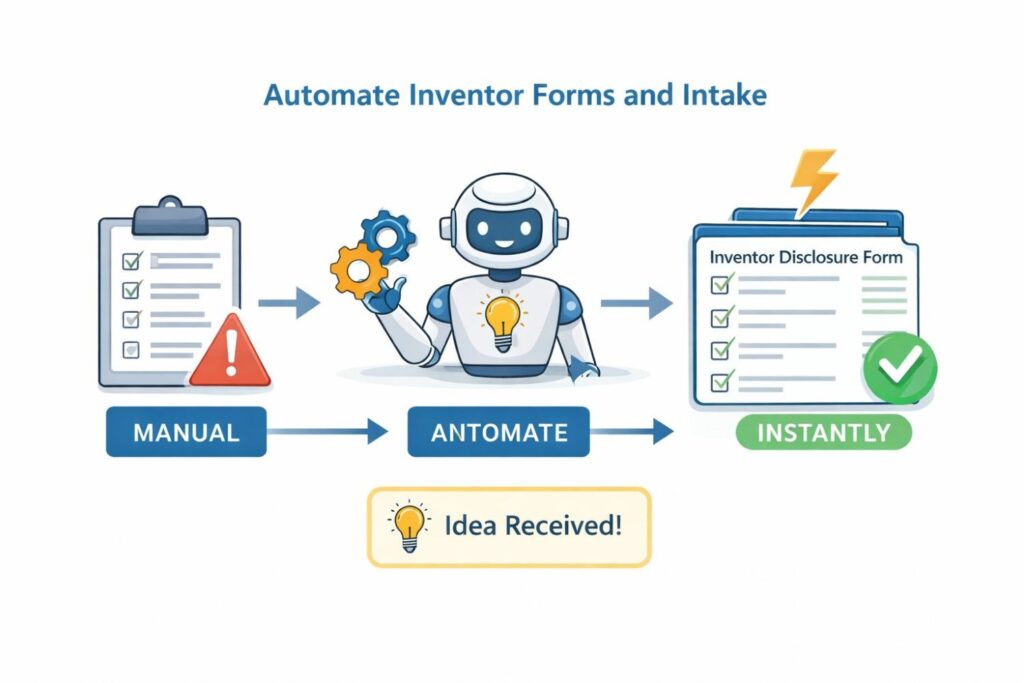
But none of those matter if the core idea was never properly captured.
Turning Engineering Work Into Patent-Ready Assets Without Slowing Down Your Team
Your engineers are not thinking about patents when they are deep in code.
They are thinking about performance, scale, stability, cost, latency, edge cases, model accuracy, hardware limits, user experience. That is where their focus should be.
If your patent process interrupts that flow, it will fail. If it adds heavy meetings, long forms, or vague requests, it will be ignored.
The goal is not to turn engineers into legal writers.
The goal is to turn the work they are already doing into patent-ready assets without slowing them down.
That is a very different mindset.
Start With the Work That Already Exists
Your team is already producing the raw material for strong patents.
Design docs explain system structure.
Pull requests show technical changes.
Architecture diagrams map data flow.
Experiment logs show performance gains.
Internal debates reveal why one approach won over another.
All of this is valuable.
The mistake many companies make is asking engineers to rewrite everything from scratch into a formal disclosure. That duplication feels wasteful because it is.
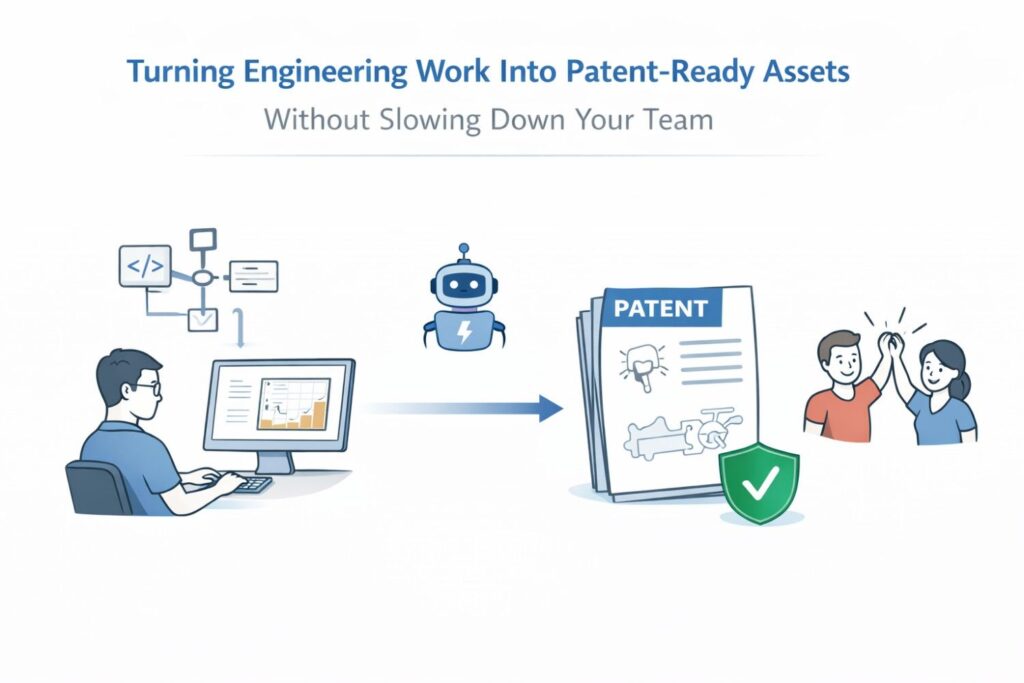
Instead, you should build a system that pulls from existing artifacts.
When an invention capture is triggered, the system should automatically attach related commits, tickets, or design documents. Then it should ask targeted questions that fill in the missing pieces.
For example, if a new distributed processing layer was added, the system can ask what bottleneck it solved and how it differs from standard approaches.
It does not need the engineer to re-explain basic context that already exists in documentation.
This approach respects engineering time.
It also produces richer, more accurate technical records.
Preserve Technical Depth Without Adding Meetings
One hidden problem in many startups is the “patent meeting.”
An attorney joins a call. Engineers try to explain a complex system live. Diagrams are drawn quickly. Details are missed. Follow-up emails pile up.
It feels slow because it is slow.
A better model captures technical depth asynchronously first.
Structured prompts collect architecture details, alternative implementations, edge cases, and real-world examples before any live review.
Engineers can respond when it fits their schedule. They can think clearly. They can include code snippets or diagrams if needed.
Then, when an attorney reviews the material, the conversation becomes sharper and shorter.
Instead of spending time extracting information, the focus shifts to strengthening protection and refining strategy.
This is how you protect innovation without blocking sprint velocity.
Platforms built for modern technical teams, like PowerPatent, are designed around this principle. Smart software organizes engineering input into structured, patent-ready material before attorneys step in.
That dramatically reduces back-and-forth while maintaining high quality. You can see how that works here: https://powerpatent.com/how-it-works
Translate Engineering Thinking Into Protection Strategy
Engineers think in systems. Patents are built around claims.
Those two worlds do not naturally align.
If you leave translation entirely to late-stage legal drafting, you risk missing strategic angles.
The smarter move is to guide engineers to describe their work in a way that supports broad protection from the beginning.
This does not mean teaching them legal language. It means asking better technical questions.
What parts of this system are essential for it to work?
Which components could be swapped out but still achieve the same result?
If a competitor tried to copy this idea in a different way, what would they have to include?
These are engineering questions, not legal ones.
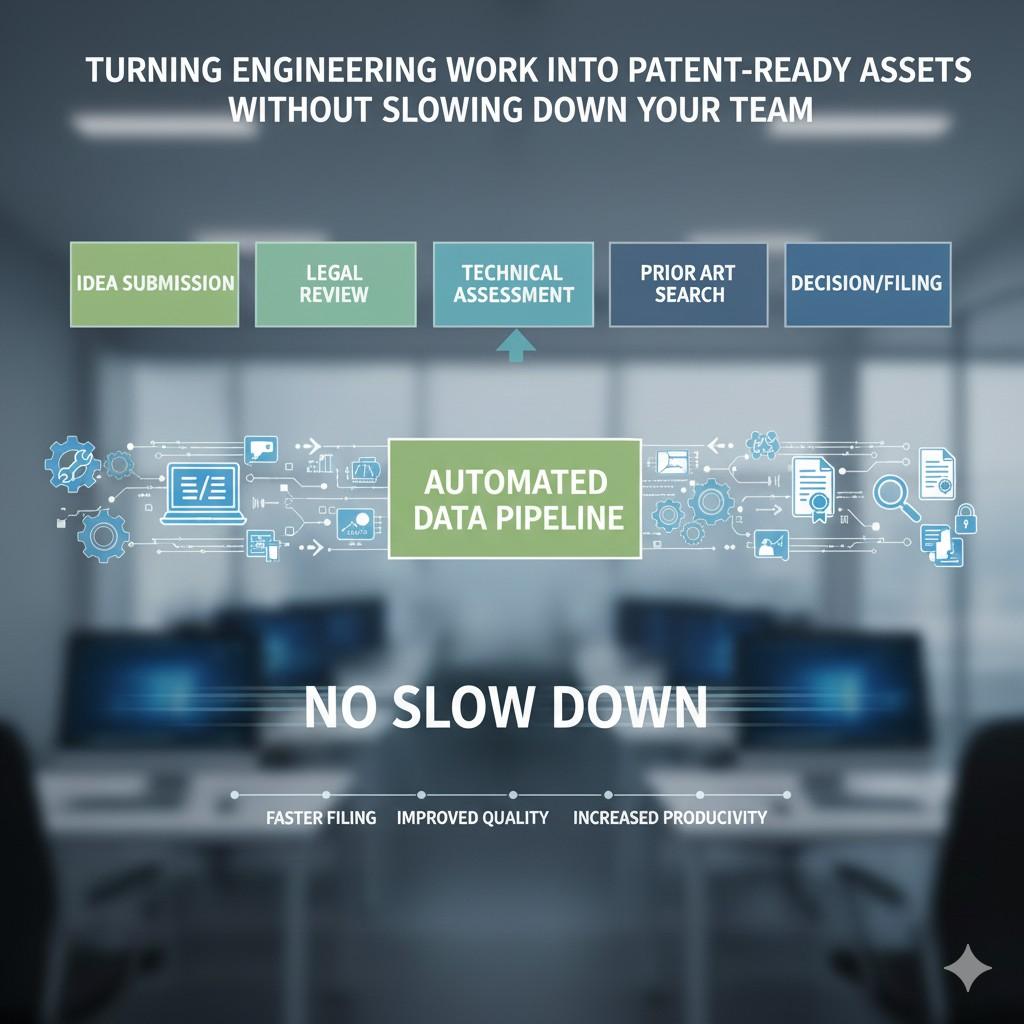
When you automate prompts around these ideas, you gather material that supports stronger and broader patent claims later.
This small shift at the input stage has a massive downstream impact.
Keep Disclosure Lightweight but Layered
One common fear is that adding invention capture will overwhelm engineers.
The answer is not to avoid structure. It is to layer it.
The first layer should be simple. A short description of what was built and why it matters.
If the idea appears strategically important, the system can then unlock deeper follow-up questions. More technical depth. More architectural detail.
This layered approach keeps the average burden low while still allowing high-value inventions to receive full attention.
Automation makes this possible because the system can adapt based on responses.
Without automation, everything becomes either too shallow or too heavy.
Protect Core Architecture, Not Just Features
Startups often file patents around visible features.
But competitors rarely copy features directly. They copy the underlying architecture.
If your disclosure process only captures surface-level changes, you miss the deeper defensive layer.
When turning engineering work into patent-ready assets, focus on capturing core mechanisms.
How does your data pipeline reduce latency in a way others cannot easily replicate?
How does your model training process achieve efficiency at scale?
How does your hardware configuration overcome physical constraints?
These are the building blocks of durable protection.
Automation can help here by flagging foundational changes in system design, not just user-facing features.
When a major architectural file changes or when a system diagram is updated, that should trigger invention evaluation.
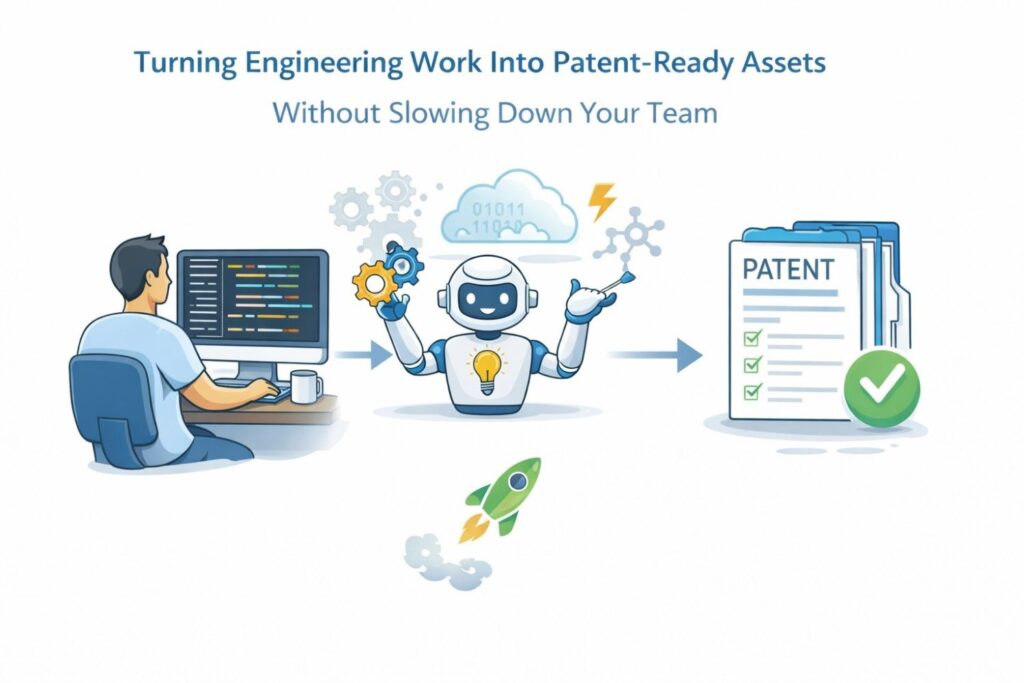
This keeps your patent portfolio aligned with your technical moat.
Shorten the Path From Build to Filing
Speed matters in competitive markets.
If months pass between building something and filing protection, you increase risk. Team members leave. Memory fades. Public disclosures may occur. Competitors catch up.
When your invention workflow is automated properly, the timeline compresses.
Capture happens at build time.
Structured information is organized immediately.
Attorneys review complete material instead of chasing fragments.
Drafting begins sooner.
This reduces cost and strengthens claims because context is still fresh.
It also sends a signal internally that innovation is valued and protected in real time.
PowerPatent was built to shorten this exact path. By combining intelligent intake with real attorney oversight, it allows startups to move from engineering breakthrough to filed patent far faster than traditional models.
If protecting your core technology quickly matters to you, explore how it works here: https://powerpatent.com/how-it-works
Avoid the Innovation Tax
The worst outcome is when engineers feel that inventing creates extra administrative burden.
That mindset kills participation.
The right system does the opposite. It makes protection feel automatic. Almost invisible.
When capture is triggered by existing workflows, when prompts are clear and short, when review is efficient, and when leadership communicates why protection matters, the process feels aligned with building, not separate from it.
Innovation should increase momentum, not reduce it.
When your workflow turns everyday engineering output into structured, defensible intellectual property, you create leverage.
Your team keeps shipping.
Your portfolio keeps growing.
Your company becomes harder to compete against.
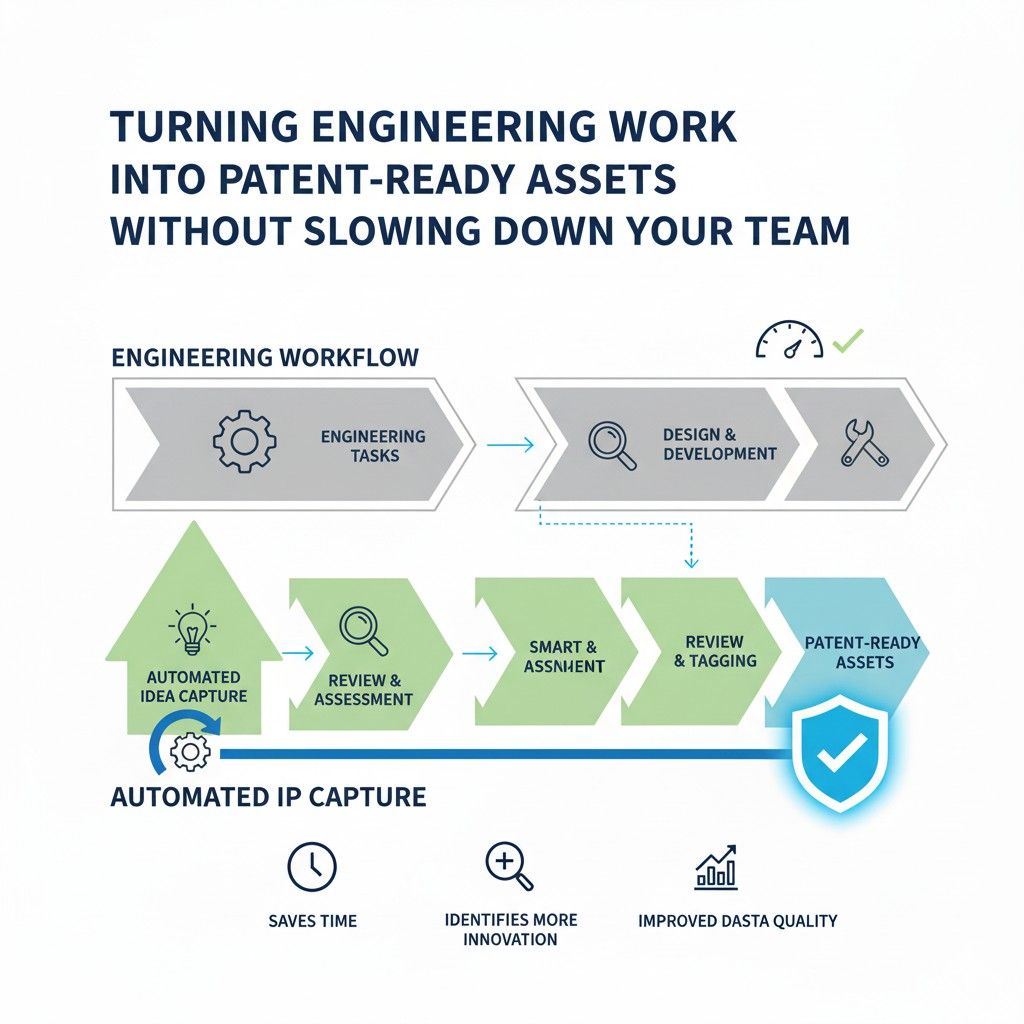
That is how you turn technical work into strategic assets without slowing down your team.
Wrapping It Up
If you remember one thing from this entire article, let it be this. Do not try to automate everything at once. Start with the moment of invention capture. That single step changes the entire game. When capture happens early, while engineers still remember the details, everything improves. Drafting becomes smoother. Strategy becomes clearer. Review cycles shrink. Filing happens faster. And most important, your protection becomes stronger.
Leave a Reply