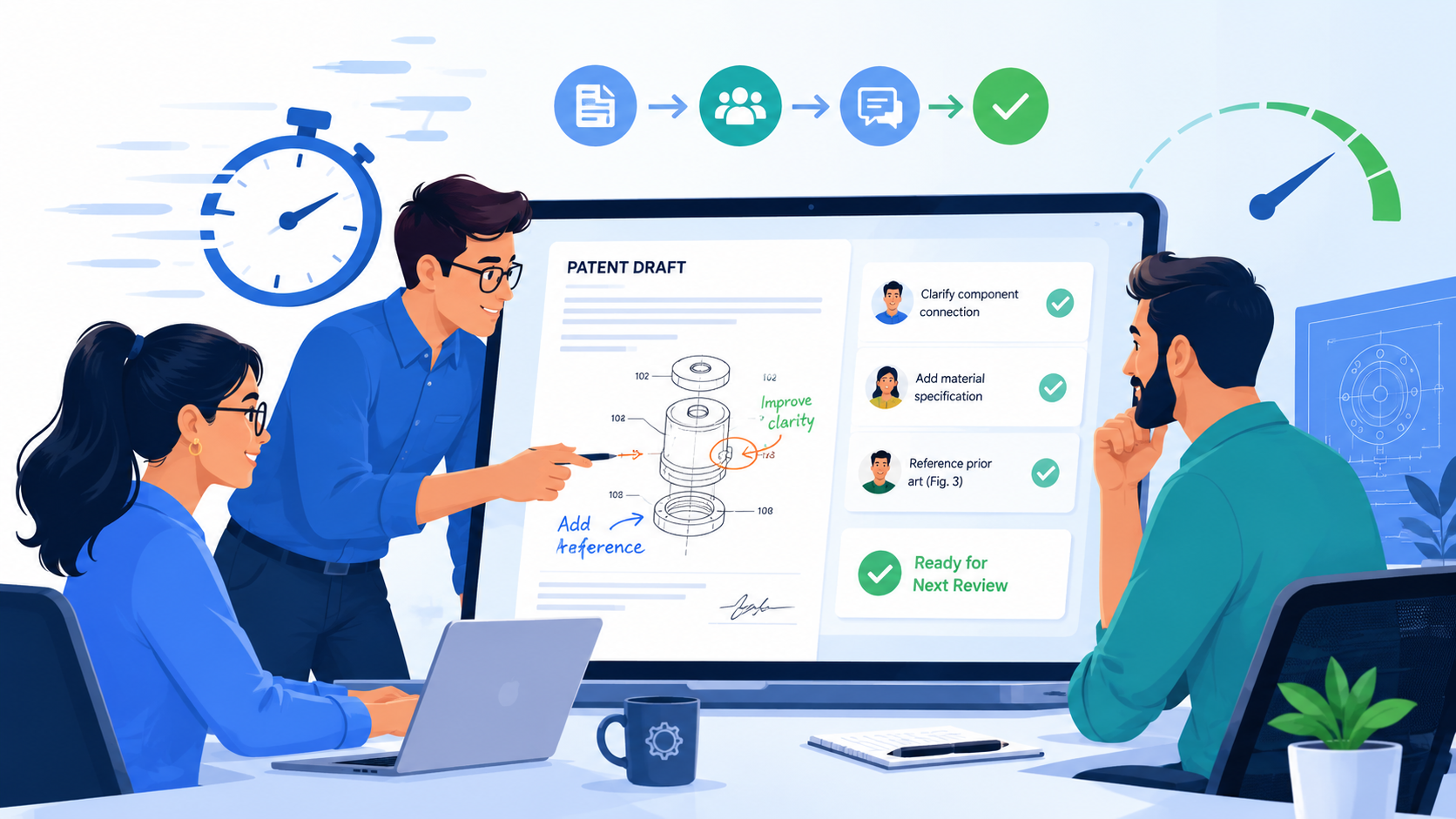
Patent drafts often slow down for one simple reason: the right engineer has not reviewed the right part at the right time. This guide will show you how to turn patent review from a slow legal task into a fast, simple, team-friendly workflow. PowerPatent helps teams do this with smart software and real attorney oversight, so founders can protect inventions without slowing down the build. See how it works here: https://powerpatent.com/how-it-works
Make Patent Review Feel Like Engineering Work, Not Legal Work
The fastest way to speed up patent review is to stop making it feel like a legal task.
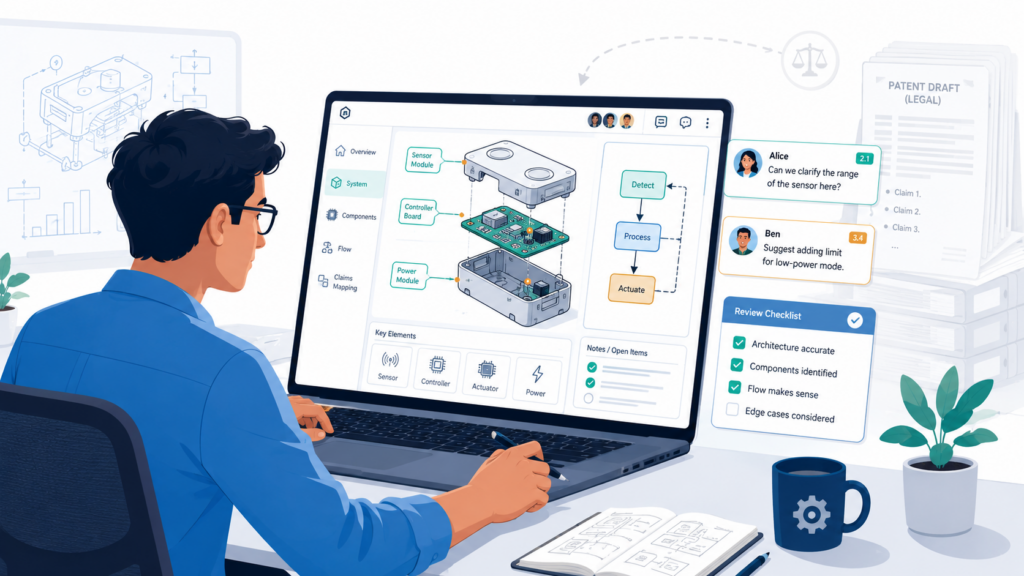
Most engineers do not wake up excited to read a patent draft. That does not mean they are careless. It means the draft does not look like the kind of work they are trained to handle fast.
Engineers are used to clear inputs, clear outputs, tight scope, known owners, and tools that help them see what changed. When a patent draft arrives as a long document with a vague message like “please review,” the task feels wide, slow, and risky.
That is where review breaks down.
A founder or attorney may think the ask is simple. “Just check the draft.” But to an engineer, that can mean many things. Are they checking technical truth? Are they checking claim scope? Are they checking diagrams?
Are they checking whether the examples match the code? Are they supposed to rewrite parts? Are they allowed to say the whole thing is wrong? Are they supposed to understand every legal phrase?
When the task feels unclear, the engineer delays it. Not because they do not want to help, but because unclear work is hard to start.
PowerPatent helps reduce this drag by turning the invention process into a clearer workflow, backed by smart software and real attorney oversight. That means the engineer is not left staring at a legal draft alone.
The system helps capture the invention, organize the key details, and route review in a way that is easier to act on. You can see how that works here: https://powerpatent.com/how-it-works
Translate the Review Into a Technical Check
Engineers move faster when you ask them to review the draft the same way they review a design doc, pull request, model card, API spec, or system note.
That starts with the way you frame the task.
Do not ask, “Can you review this patent draft?” That sounds broad and heavy. Instead, ask something closer to, “Can you check whether the technical flow in sections 2 and 3 matches how the system actually works?”
That is a clear job. It has a target. It has a shape. It does not ask the engineer to become a patent expert.
The more you can turn the review into a technical truth check, the faster the engineer will move. Their job is not to decide whether the draft is legally perfect.
Their job is to make sure the invention is described correctly, the key steps are not missing, and the examples do not create confusion.
That small shift matters.
A patent draft can only protect the real invention if the real invention is explained well. Engineers are the people who know how the thing actually works.
They know what happens in the model, the pipeline, the device, the control loop, the backend service, the data layer, or the user flow. They know which part is new and which part is standard. They know which detail is vital and which detail is just one example.
When they understand that their role is to protect the technical truth, they review faster and with more care.
Make the First Ask Smaller Than You Think It Should Be
A common mistake is sending the whole draft and asking for one full review.
That seems efficient, but it often creates delay. A long draft feels like a large mental load. The engineer opens it, scrolls, sees dense text, and decides to come back later.
Later becomes tomorrow. Tomorrow becomes next week. Then the attorney is waiting, the filing date is slipping, and the founder has to chase everyone.
A better move is to split the first review into a smaller ask.
Ask the engineer to review only the invention summary first. Then ask them to check the core workflow. Then ask them to confirm the examples.
Then ask them to look at the figures or system diagram. This creates motion. Once the engineer starts, the rest becomes easier.
Small asks work because they reduce the cost of starting. Engineers are busy, but they can often find fifteen minutes for a focused check. They may not find two hours for a full draft review.
This does not mean you should create endless tiny steps. That can become annoying. The goal is to break the review into natural parts that match how the engineer thinks about the invention.
Start with the core idea. Then move to the system. Then move to edge cases. Then move to final checks.
PowerPatent is built for this kind of flow. Instead of forcing founders and engineers into a slow back-and-forth process, it helps teams move from invention capture to attorney-backed review with more structure and less wasted time. Learn more here: https://powerpatent.com/how-it-works
Give Engineers a Review Map Before the Draft
Before sending the draft, send the map.
This is one of the simplest ways to speed up review. A review map tells the engineer what matters before they open the document. It lowers stress because they know where to look and what to ignore.
The map does not need to be long. In fact, it should be short enough to read in under two minutes.
It should explain what the invention is, what part needs review, what kind of feedback is useful, and when the feedback is needed. It should also say what the engineer does not need to worry about.
That last part is important.
Engineers often slow down because they think they need to understand every legal word. They do not. They need to check whether the draft captures the real system and the real technical edge.
The attorney can handle patent wording. The engineer should focus on accuracy, missing details, and places where the draft makes the invention sound weaker or narrower than it is.
A review map gives them permission to skip what is not their job. That alone can cut review time in half.
Use Plain Words When You Explain the Stakes
Engineers respond well to clear stakes, not scare tactics.
Do not say, “We need this for legal protection.” That is too vague. Say, “We are filing this before we share the new architecture with customers, so we need to make sure the draft covers the part that makes the system faster.” That is real. It connects the review to the product.
Good stakes are specific. They explain why the review matters now. Maybe the startup is about to pitch investors. Maybe the team is launching a new feature. Maybe the company is publishing a paper.
Maybe a customer demo is coming. Maybe a competitor is moving close. Maybe the invention is part of the company’s core moat.
When engineers see the business reason, they take the review more seriously.
But keep it simple. The message should not sound like a legal warning. It should sound like a founder saying, “This is important because this is the thing we built, and we want to make sure it is protected before the world sees it.”
That kind of message works because it respects the engineer. It does not treat them like a blocker. It treats them like the person who can help protect the company’s best work.
Give Engineers a Clear Review Job Before You Send the Draft
Most patent draft reviews are slow because the request is too open.
When an engineer gets a message that says, “Please review the attached patent draft,” they do not know where to begin. That one sentence creates too many hidden questions.

They wonder if they are supposed to read every word. They wonder if they are supposed to fix wording. They wonder if they are supposed to check legal scope.
They wonder if they should compare the draft against the code, the architecture, the product plan, or all of the above.
That kind of confusion creates delay.
Engineers are trained to solve clear problems. They are fast when the task has a clean goal. They are slower when the job is fuzzy. So the first rule is simple: never send a patent draft without a clear review job attached to it.
The review job should tell them what to check, what to ignore, where to comment, and what kind of answer you need. This turns review from a vague favor into a real task.
Start With the Exact Outcome You Need
Before the engineer opens the draft, they should know what “done” looks like.
That does not mean they need a long set of instructions. It means they need a simple outcome. For example, the goal may be to confirm that the draft describes the system correctly.
Or the goal may be to check whether the workflow in the draft matches the latest version of the product. Or the goal may be to flag any missing technical step that makes the invention work.
Those are different jobs. Each one leads the engineer to read in a different way.
If you ask for everything at once, the review slows down. If you ask for one clear outcome, the engineer can move quickly.
A strong review request may say something like this in plain language: “Please check whether the draft explains how the routing engine picks the best model for each request.
You do not need to review the legal wording. Just flag anything that is technically wrong or missing.”
That kind of message lowers the mental load. It tells the engineer where to look. It also gives them permission not to worry about the rest.
Patent review moves faster when the engineer is not guessing what you want.
Remove the Fear of Getting It Wrong
Engineers often delay patent review because the document feels high-stakes.
They know patents matter. They know a wrong detail could hurt the company. They may also worry that they do not understand the legal side.
So instead of giving quick feedback, they wait until they have enough time to do a “proper” review. That time often never appears.
You can fix this by making the review safer.
Tell the engineer that you are not asking them to make legal calls. Tell them the attorney will handle the patent language. Tell them their job is to make sure the technical story is true, complete, and clear.
This matters because engineers are often more willing to review when they know the limits of their role. They do not want to approve something they do not fully understand.
But they can confidently say, “This part is technically correct,” or “This step is missing,” or “This example is not how the system works anymore.”
That is the feedback you need.
PowerPatent helps teams keep this split clear. The software helps capture the invention and organize the technical details, while real attorneys review the legal side.
That means engineers can focus on what they know best, and founders do not have to manage a messy, slow process by hand. See how it works here: https://powerpatent.com/how-it-works
Assign the Right Engineer to the Right Part
Not every engineer needs to review the whole draft.
In fact, that is often one of the biggest reasons review takes too long. A patent draft may cover a system with many parts. One engineer may know the model training flow.
Another may know the deployment stack. Another may know the user-facing workflow. Another may understand the hardware, sensor, chip, or data pipeline.
If you send the full draft to everyone, each person may assume someone else is handling it. Or they may all read parts they do not know well. That wastes time and creates weak feedback.
A better approach is to assign sections based on ownership.
The person closest to the invention should review the heart of the draft. The person closest to implementation should review the examples.
The person closest to product should check whether the use cases match what the company plans to ship. The founder or technical lead should check whether the draft supports the company’s larger moat.
This does not need to become a complex process. It just needs to be clear.
When each engineer knows the part they own, the review gets faster and better.
Avoid Review by Committee
A patent draft should not become a group editing project.
When too many people review the same sections, comments pile up. Some comments conflict. Some people rewrite sentences that do not need to be changed.
Some people debate style instead of substance. Then the attorney has to sort through noise, and the process slows down.
The best review process has clear owners.
One person should own technical accuracy. One person should own product fit, if needed.
One person should own final internal signoff. For a small startup, that may all be the same person. For a larger team, it may be two or three people. It should almost never be ten.
The goal is not to collect every opinion. The goal is to make sure the draft captures the invention in a strong and correct way.
You want the fewest reviewers needed to get the best feedback.
That sounds simple, but it is powerful. It respects everyone’s time. It keeps the draft moving. It stops the process from turning into a slow internal debate.
Send a Patent Draft That Is Easy to Review
A hard-to-read draft creates a slow review.
This is true even when the invention is great. If the draft looks dense, unclear, or too legal, engineers may put it off. They may want to help, but the document makes the work feel painful.
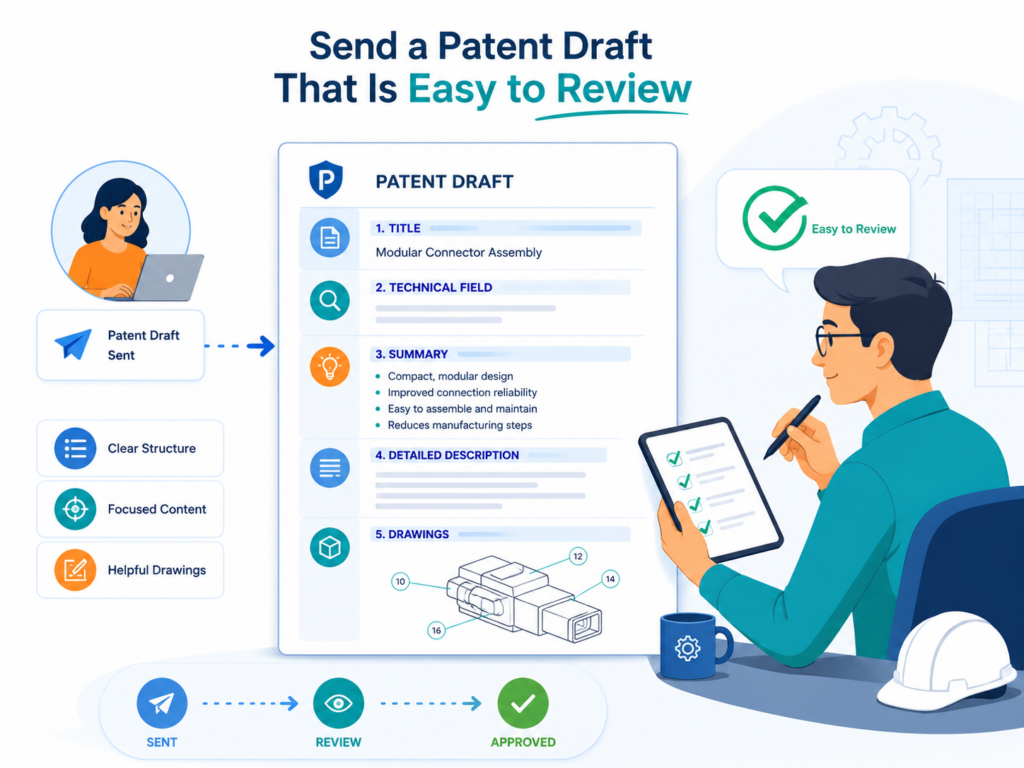
You do not need to make a patent draft casual or sloppy. It still needs to be strong. But you do need to make the review version easy to move through.
The review version should help engineers find the core idea fast. It should show where their feedback matters.
It should make technical details easy to check. It should avoid forcing them to hunt through long text to find the parts they own.
The easier the draft is to review, the faster it comes back.
This is one reason modern patent workflows matter. Old-school patent work often asks technical teams to fit into a legal process that was not built for speed.
PowerPatent helps change that by giving founders a cleaner way to capture inventions, work with attorneys, and keep technical review moving. Learn more here: https://powerpatent.com/how-it-works
Put a Plain-English Summary at the Top
Every review draft should begin with a simple summary.
This summary should explain the invention in normal words. It should say what problem the invention solves, what the system does, and what makes it different.
It should not sound like a patent claim. It should sound like a clear technical note written for a smart teammate.
This summary helps the engineer enter the draft quickly.
Without it, they may start in the middle of dense language and lose the thread. With it, they can understand the target before they review the details. That makes their comments sharper.
The summary should answer a few key questions in paragraph form. What did we build? Why does it matter? What part is new? What part should be protected? What technical details must be right?
When the engineer has those answers up front, the rest of the draft feels less confusing.
Make the Summary Honest, Not Overhyped
A patent summary should not sound like a pitch deck.
Engineers dislike hype when they are being asked to check facts. If the summary says the invention is “revolutionary” or “world-changing,” that does not help them review. It may even make them trust the draft less.
Use plain words instead.
Say the system reduces compute use by routing jobs in a better way. Say the model improves output by using a new feedback signal.
Say the device is easier to calibrate because it uses a new sensing pattern. Say the software catches a failure earlier because it looks at a certain set of signals.
That kind of writing helps engineers see the real invention.
The point is not to make the invention sound bigger than it is. The point is to make the core idea easy to understand. A clear invention is easier to protect than a vague one.
Mark the Sections That Need Review
Do not make engineers guess where to comment.
If a draft has ten sections and only three need technical review, say that clearly. If a figure needs review, mark it.
If an example may be out of date, point to it. If a section was based on an older product design, call that out.
This saves time because engineers can start with the highest-value parts.
It also makes the review feel fair. You are not asking them to spend time on parts that do not need their input. You are asking them to focus where their knowledge matters most.
A review draft can include short notes in the margins. These notes should be direct.
For example, “Please check if this data flow is still correct,” or “Please confirm whether this example also works for the batch version,” or “Please flag any missing step in the model selection process.”
Those notes guide the engineer without getting in the way.
Use Questions Instead of Vague Comments
A vague comment creates vague feedback.
If you write, “Review this section,” the engineer may not know what to look for. If you ask, “Does this section correctly explain how the device handles low-signal cases?” the engineer can answer quickly.
Good questions make review faster because they guide attention.
They also help attorneys get better feedback. Instead of reading broad notes like “needs more detail,” the attorney can see the exact technical issue.
That makes it easier to revise the draft without a long follow-up call.
The best review questions are simple and specific. They focus on truth, missing steps, edge cases, and scope.
They do not ask the engineer to make legal judgments. They ask the engineer to explain what the invention does and where the draft may be off.
This is how you turn review into a clean handoff instead of a long debate.
Fit Patent Review Into the Engineering Calendar
Patent review gets ignored when it competes with sprint work without a place on the calendar.
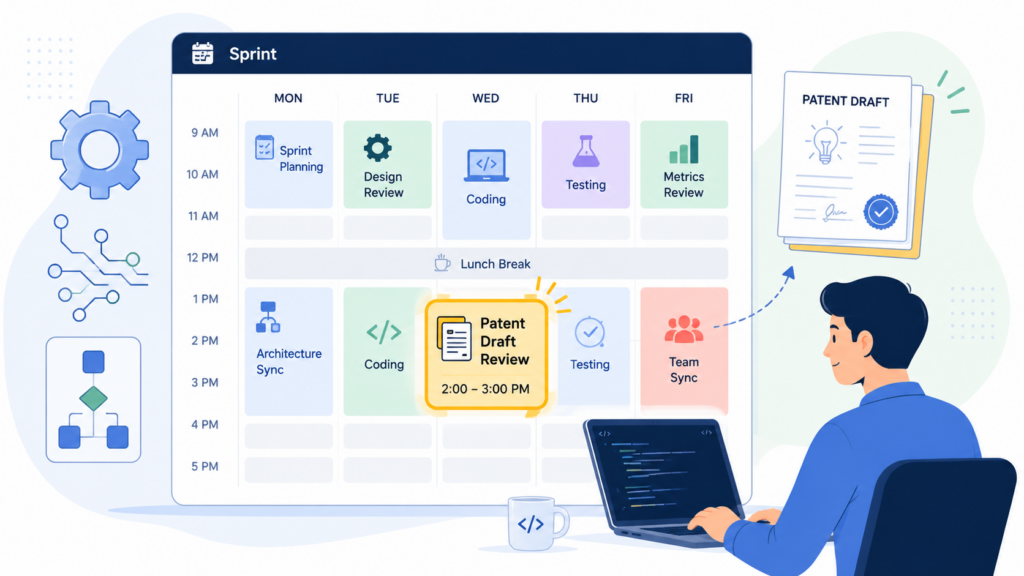
Engineers protect their focus. They have deep work, meetings, releases, customer issues, code reviews, and product deadlines.
If patent review arrives as a side request with no planned time, it will likely lose to urgent work.
That does not mean engineers do not care. It means the process is not built into how they work.
To get faster reviews, treat patent review like real engineering work. Give it a time slot. Add it to the planning flow.
Put it near the moments when invention details are fresh. Do not wait until the draft is cold and the team has moved on to something else.
Speed comes from timing.
A patent draft is easiest to review when the engineer still remembers the design choices, failed paths, tradeoffs, and edge cases. If you wait too long, they have to reload all that context. That makes the review harder and slower.
Tie Review to Product Milestones
The best time to plan patent review is near a real product event.
That may be before a launch, before a customer demo, before a public talk, before a paper, before a model release, before a hardware test, or before a major investor update.
These moments already have energy around them. The team is thinking about what has been built and why it matters.
Patent review fits naturally into that window.
When review is tied to a milestone, it feels less random. The engineer can see why the timing matters.
The founder can say, “We want to file before we show this new workflow in the customer demo,” or “We want the draft checked before the model update goes public.”
That is much stronger than saying, “Legal needs this soon.”
The key is to connect review to the company’s path. Patents are not paperwork for later. They are part of protecting what the company is about to reveal, sell, raise money on, or build around.
That makes the task feel real.
Do Not Wait Until the Draft Is Fully Polished
Many teams wait too long before asking engineers to review.
They think the draft should be nearly perfect before it goes to the technical team. This seems respectful, but it can create more delay.
If the draft is already polished and the engineer finds a major issue, the team has to unwind work that could have been fixed earlier.
A better approach is to do an early technical check before the draft is fully finished.
This does not need to be a full review. It can be a quick pass on the invention summary, main workflow, and key examples. The goal is to catch wrong assumptions before they become baked into the draft.
Then, once the attorney has shaped the draft, the engineer can do a final check.
This two-stage review is faster than one late review because it reduces rework. It also makes the engineer feel like part of the process, not a last-minute approver.
PowerPatent is designed to make this kind of workflow easier. The platform helps collect invention details early and keeps attorney review connected to the technical story, so teams can move with more control and less backtracking. See the process here: https://powerpatent.com/how-it-works
Block Review Time Like a Code Review
Patent review should have a real time block.
If you only send a message and hope the engineer finds time, you are leaving the process to chance.
A better move is to schedule a short review window. This could be thirty minutes for a small draft section or one hour for a more complex invention.
The time block tells the engineer that this work matters.
It also helps them protect focus. Instead of trying to squeeze review between meetings, they can open the draft with a clear mind. This leads to better comments and fewer follow-ups.
The founder or technical lead should make the review window easy to honor. Do not schedule it during a release crunch if you can avoid it.
Do not ask for review at the end of a long day and expect careful feedback. Do not drop a long draft on Friday afternoon and hope for Monday comments.
Patent review is much faster when it is planned like serious work.
Keep the Meeting Optional, But the Deadline Real
Not every review needs a meeting.
In fact, forcing a meeting can slow things down if the engineer can leave clear comments on their own.
But sometimes a short call helps, especially when the invention is complex or the draft has several open questions.
The best approach is to make the meeting optional but keep the deadline firm.
For example, you can say, “Please add comments by Thursday. If anything feels unclear, we can use the review block to walk through it.”
This gives the engineer control. They can review async if the draft is clear. They can ask for a call if they need help.
The deadline still matters.
A soft deadline leads to drift. A real deadline creates movement. But the deadline should be reasonable and tied to a real filing need, not fake urgency. Engineers can tell the difference.
When the date is real, explain why. “We need comments by Thursday so the attorney can revise Friday and we can file before next week’s customer demo.” That is clear, fair, and action-focused.
Make Feedback Easy to Give and Hard to Misread
Patent review slows down when feedback is hard to give.
Engineers may see a problem but not know how to explain it. They may leave a short comment that makes sense to them but not to the attorney.
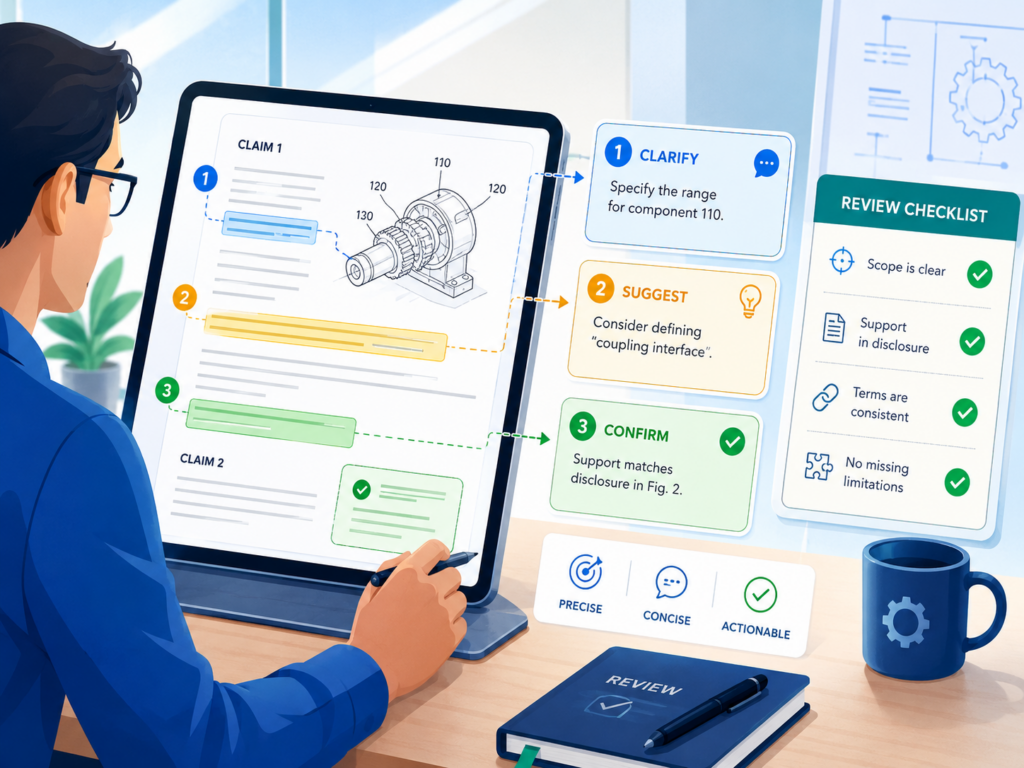
They may rewrite a section when a simple note would have been better. They may raise a deep issue in a chat thread, where it gets lost.
The faster path is to give engineers a simple way to comment.
Feedback should be easy to add, easy to understand, and easy to turn into changes. That means comments should live close to the text.
They should be tied to the exact section. They should explain what is wrong, what is missing, or what should be checked.
The goal is not to create more feedback. The goal is to create useful feedback.
Useful feedback saves time because it reduces follow-up questions.
Teach Engineers What Good Patent Feedback Looks Like
Most engineers have never been taught how to review a patent draft.
They may be excellent at reviewing code, architecture docs, or research notes. But patent review is different. The draft is not just a technical paper.
It needs to describe the invention in a way that can support protection. That means the feedback must focus on the right things.
Engineers should know that helpful comments often fall into a few simple areas.
They can flag a technical error. They can point out a missing step. They can explain a broader version of the idea. They can note that an example is too narrow.
They can mention other ways the same idea could be used. They can identify words that may lock the draft into one version of the product.
This kind of feedback is gold.
For example, an engineer may see that the draft only describes the invention as working with one type of model. But the same method may also work with several model types.
If the draft only names one, the patent may sound narrower than it should. The attorney can fix that, but only if the engineer flags it.
That is why engineer feedback matters so much.
Tell Engineers Not to Rewrite Like Lawyers
Engineers do not need to rewrite the draft in legal style.
In fact, that can make the process slower. If an engineer spends time trying to make the text sound like a patent, they may avoid giving the simple technical note that would help most.
The better instruction is this: leave plain comments.
A comment like “This step also works when the input comes from a sensor stream, not just a stored data file” is more useful than a forced rewrite.
A comment like “We do not always rank models first; sometimes we filter by latency before ranking” is clear and helpful.
A comment like “This example is outdated because the current system uses a different scoring method” gives the attorney exactly what they need.
Plain feedback is faster to write and easier to use.
The attorney can turn that feedback into proper patent language. The engineer should not have to do that work.
This is one of the key benefits of using a platform like PowerPatent. Engineers can give technical input in a way that fits their role, while real attorneys handle the final legal drafting and review.
That helps teams avoid delays without losing quality. You can explore the workflow here: https://powerpatent.com/how-it-works
Keep Feedback in One Place
Scattered feedback kills speed.
One comment is in email. Another is in Slack. Another is in a meeting note. Another is in the document.
Another is said out loud and never written down. By the time the attorney revises the draft, nobody is sure what was decided.
This is how simple reviews become messy.
The fix is to keep feedback in one place. The exact tool matters less than the rule. Comments should be tied to the draft.
Decisions should be recorded. Open questions should be visible. Resolved points should be marked as done.
This gives the team a shared source of truth.
When feedback is centralized, the attorney can revise faster. The founder can see progress. The engineer does not have to answer the same question twice. The team avoids rework.
Separate Comments From Decisions
A comment is not always a decision.
An engineer may write, “This may also apply to real-time input streams.” That is a useful note, but someone still needs to decide whether the draft should include that broader version.
An engineer may write, “This example is old.” That does not automatically mean the example should be deleted. It may need to be updated, reframed, or kept as one possible version.
If comments and decisions get mixed together, review becomes confusing.
A clean process separates them. Engineers provide facts, corrections, and options. The founder and attorney decide how to use them in the draft. This keeps the engineer from feeling like they must own the whole patent strategy.
That makes review faster because people stay in their lanes.
The engineer owns technical truth. The founder owns business importance. The attorney owns legal strength. When those roles are clear, the draft moves.
Engineers Why Their Review Protects the Startup’s Moat
Engineers move faster when they understand why the review matters.
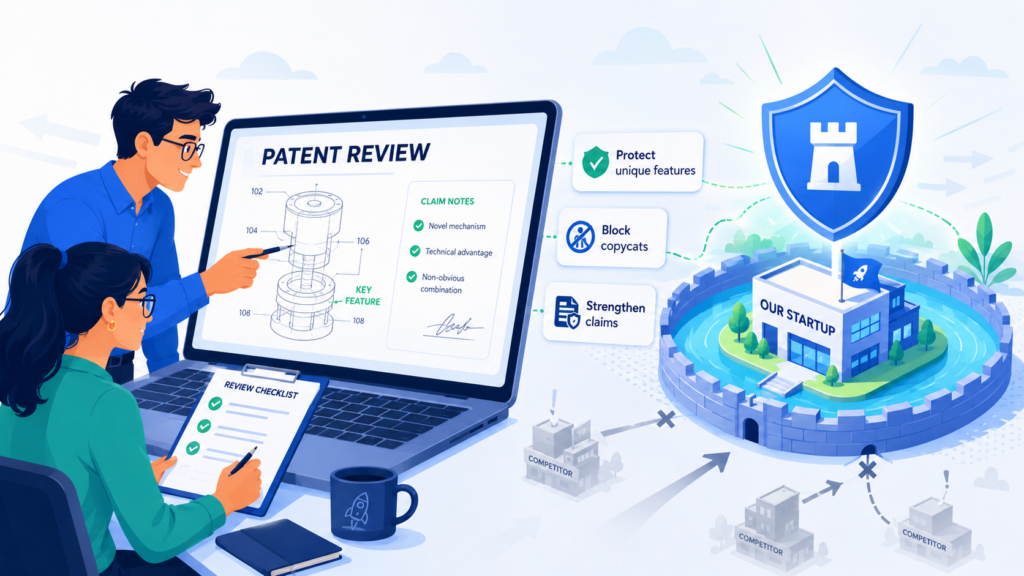
A patent draft can feel distant from the real work of building. It can feel like something outside the product. But that is not true.
A strong patent can help protect the core system, the hard-won design choice, the technical shortcut, the model workflow, the device method, or the infrastructure edge that makes the company valuable.
Engineers need to see that connection.
They do not need a lecture about patent law. They need a clear link between their work and the company’s future. The draft is not just a document. It is a way to protect the thing they built before the market fully sees it.
When review is framed that way, it becomes part of the mission.
That does not mean every invention deserves a patent. It means the ones that matter should be reviewed with care and speed. The team should know which inventions support the company’s edge and why delay creates risk.
Connect the Draft to the Core Product Story
A patent draft should never be reviewed in isolation.
It should be connected to the product story. What is the company building that is hard to copy? What part took real effort to figure out? What part would matter if a competitor tried to follow?
What part helps the startup win customers, reduce cost, improve speed, improve accuracy, or create a better user experience?
When an engineer sees that the draft maps to this story, the review feels more important.
For example, a startup may have built a smarter way to process messy data before it reaches a model.
That may not sound flashy, but it could be the reason the product works better than others. If the patent draft misses that detail, the company may fail to protect the part that truly matters.
Engineers are often the only people who can catch that.
They know the difference between the visible feature and the hidden engine. They know which part was easy and which part took months of trial and error. They know what a competitor would need to copy to get the same result.
That knowledge is strategic.
Make the Review About the Invention, Not the Paperwork
The fastest way to lose an engineer’s attention is to make review sound like paperwork.
The better frame is invention protection.
Say, “We need your help making sure the draft protects the model routing idea we spent two months building.”
Say, “We want to make sure this covers the calibration method before we show the device to partners.” Say, “This draft is meant to protect the way our system handles low-quality inputs, so your review is important.”
That kind of message is direct and real.
It makes the engineer feel the weight of their work without turning the task into a legal chore. It also reminds them that the patent is not separate from the product. It is tied to the same hard thinking that made the product possible.
PowerPatent helps founders make this connection earlier. It helps teams turn technical work into patent-ready invention records, with attorney support built in.
That gives startups a faster path from “we built something important” to “we are protecting it.” See how PowerPatent works here: https://powerpatent.com/how-it-works
Use Founder Context to Raise Priority
Sometimes engineers delay review because they do not know how high the priority really is.
Founders can fix this with a short note that explains why the patent matters to the business. This should not be dramatic. It should be specific.
For example, the founder might say the invention is part of the company’s investor story. Or it supports the next product launch.
Or it protects a workflow that competitors are starting to explore. Or it covers a method that customers care about but cannot easily see from the outside.
That context helps engineers understand the stakes.
Engineers are used to tradeoffs. They make them every day. If they know why the review matters, they can weigh it against other work. If they do not know, it becomes just another task in a crowded queue.
The founder does not need to oversell it. Clear context is enough.
Thank Engineers for Strategic Input, Not Just Speed
People repeat behavior that is seen and valued.
If an engineer gives strong patent feedback, do not only thank them for turning it around quickly. Thank them for protecting the company’s technical edge. Thank them for catching a key detail. Thank them for making the draft stronger.
This matters because it teaches the team what good review looks like.
It also builds a culture where patents are not seen as outside work. They become part of building a serious company. Engineers begin to understand that their design choices can become assets.
Founders begin to capture inventions earlier. Attorneys get better input. The whole process gets faster over time.
Speed is not only about deadlines. It is about culture.
When engineers see patent review as part of protecting the company’s best ideas, they stop treating it as a random legal task. They treat it as important technical work.
Build a Repeatable Review System So Every Draft Moves Faster
The first patent draft review is often slow because the team is still learning how to work together. The second should be faster.
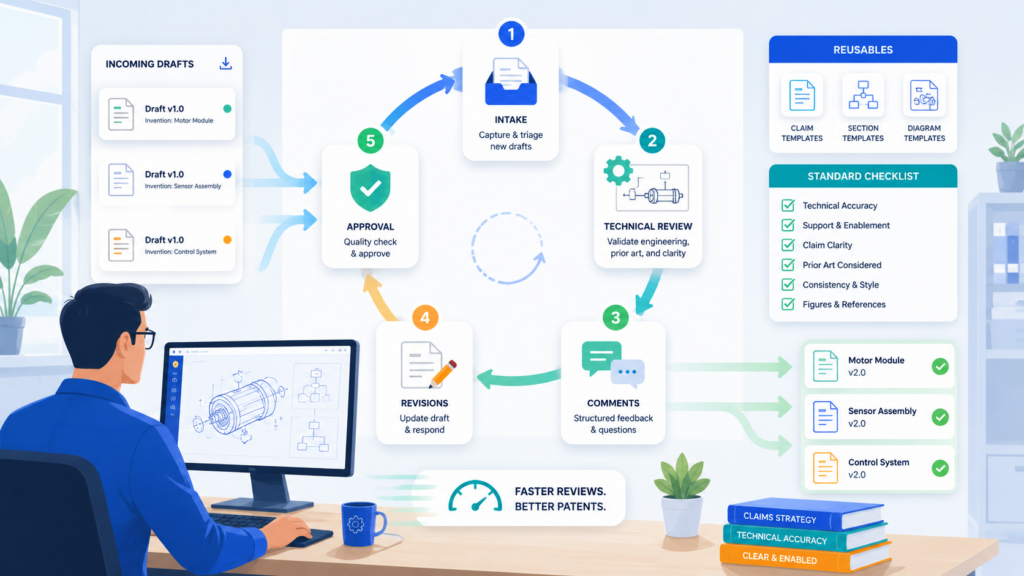
The third should be faster than that. If every draft feels like a brand-new process, the problem is not the engineers. The problem is the system.
A strong patent review process should feel familiar. Engineers should know what kind of message they will get, where the draft will live, how much time review should take, what comments are useful, who makes final calls, and what happens after they respond.
When the pattern is clear, the team wastes less energy figuring out the process and spends more time improving the draft.
This matters a lot for startups because invention does not happen once. It happens again and again.
Every time the team solves a hard problem, improves a model, creates a better workflow, reduces cost, changes a device, or builds a new technical path, there may be something worth capturing.
If the company has no repeatable way to review drafts, patents will always feel slow.
A repeatable system turns patent review into normal company work. It does not need to be heavy. It does not need to involve many meetings.
It just needs to be clear enough that busy engineers can step in, review the right parts, and move on without friction.
PowerPatent is built for this kind of modern workflow. It helps founders and technical teams capture inventions, move faster, and stay connected with real attorney oversight.
That means your team can protect important ideas without building a messy process from scratch. See how it works here: https://powerpatent.com/how-it-works
Create One Standard Review Flow for Every Patent Draft
The fastest teams do not reinvent the review process each time.
They use one standard flow. The invention is captured. The draft is prepared. The technical owner gets a focused review request.
Comments are added in one place. The attorney updates the draft. The founder or technical lead gives final approval. Then the filing moves forward.
This simple flow works because everyone understands it.
The details can change based on the invention, but the shape should stay the same.
Engineers should not wonder whether this review will happen by email, chat, meeting, shared doc, or random comments across three places. They should know the path before the draft arrives.
When the flow is stable, review speed improves because the team builds muscle memory. Engineers know what kind of feedback matters.
Attorneys know where to look. Founders know how to track progress. No one has to ask, “What are we doing here?” every time.
A standard flow also helps new team members. When a new engineer joins, they can quickly learn how patent review works inside the company.
That is far better than having patent knowledge trapped in the founder’s head or scattered across old message threads.
Keep the Flow Light Enough That People Actually Use It
A review system fails when it becomes too heavy.
If the process has too many forms, meetings, approvals, or handoffs, engineers will avoid it. They will see patent review as a time sink.
The goal is not to create a perfect process. The goal is to create one that is easy enough to follow even during a busy product cycle.
A good review flow should feel lighter than a product planning process. It should not need a long kickoff meeting.
It should not require every engineer to weigh in. It should not ask people to fill out long forms after they already gave feedback.
The system should do only what is needed to move the draft forward.
That means clear ownership, clear comments, clear deadlines, and clear decisions. Anything else should earn its place. If a step does not reduce confusion, improve quality, or speed up filing, remove it.
This is where many startups go wrong. They either have no process at all, or they create one that feels too formal.
The best system is in the middle. It is simple enough for a startup, but structured enough that important ideas do not fall through the cracks.
Use Templates Without Making the Writing Feel Templated
Templates can speed up review, but only when they support human thinking.
A review request template is useful because it makes sure every engineer gets the same core context.
It can include the invention name, the review goal, the sections to check, the deadline, the type of feedback needed, and the person who will make final decisions. This saves time for the founder and removes guesswork for the engineer.
But the message should still feel personal.
Do not send cold, stiff patent messages that sound like they came from a legal department.
Engineers respond better when the note is direct and tied to the work they know. The template should be a starting point, not a cage.
For example, the message can say, “You know this part best because you built the routing logic.
Please check whether the draft explains the decision flow correctly.” That feels human. It respects the engineer’s role. It also makes the review feel specific, not generic.
Templates should make the process easier without stripping out context.
Save Strong Review Questions for Future Drafts
Every patent review teaches you something.
If an engineer leaves a great comment, save the pattern. If a certain question helps reveal missing detail, use it again.
If a review request gets a fast response, keep the structure. Over time, your team will build a set of review prompts that work well for your technology.
For example, AI teams may often need to ask whether the draft covers training, inference, evaluation, feedback, data cleaning, model selection, and deployment.
Hardware teams may need to ask about components, sensor behavior, calibration, failure modes, power use, and manufacturing options. Software teams may need to ask about architecture, data flow, user actions, system events, and alternative implementations.
The questions should match the kind of work your company does.
This is how review gets sharper over time. You stop asking broad questions and start asking the ones that uncover real invention value. Engineers will also learn what to expect, which helps them answer faster.
A good patent workflow should become smarter each time your team uses it. That is one reason founders choose PowerPatent.
It gives teams a more guided way to move from technical idea to attorney-backed patent work, so the process becomes less painful and more repeatable. Explore it here: https://powerpatent.com/how-it-works
Review the Invention Before the Patent Draft Exists
One of the best ways to get engineers to review patent drafts faster is to review the invention earlier.
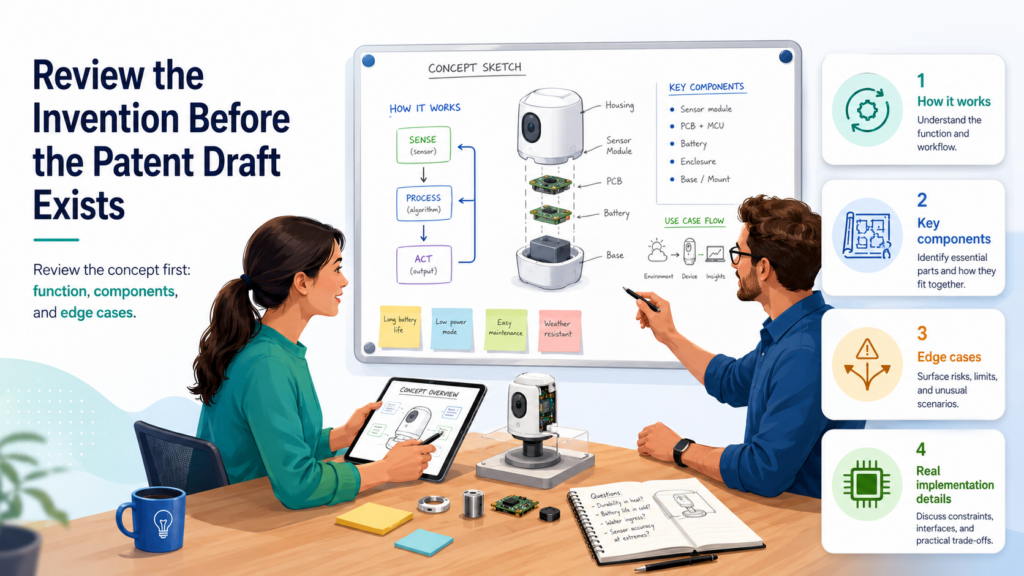
A slow patent review often starts before the draft is even written. The attorney may not have enough technical context. The founder may have explained the invention at a high level, but the real details may live with the engineers.
The draft then comes back missing key points. Engineers see the gaps and have to correct large parts of it. That takes time.
The better path is to capture the invention while it is still fresh.
Before anyone writes a full patent draft, get the engineer to explain the core idea in plain words. What problem did they solve? What was hard about it? What was the old way? What did they change? What options did they consider? What does the system do now? Where else could the same idea apply?
This early step makes the later draft much easier to review because the draft starts from better raw material.
When the invention is captured well, the engineer is not forced to fix a weak draft later. They are only checking that the written version matches what they already explained. That is a much faster task.
Treat Invention Capture Like a Technical Debrief
Engineers are used to explaining technical choices.
They do it in design reviews, incident reviews, architecture talks, sprint planning, code comments, and research discussions. Invention capture should borrow from that habit. It should feel like a short technical debrief, not a legal interview.
The goal is to understand the real work behind the invention.
A strong debrief will pull out the messy parts that often make the patent stronger. What failed before this solution worked? What tradeoff did the team make?
What did the engineer try that seemed obvious but did not work? What small detail made the system perform better? What part would a competitor miss if they only saw the final product?
These answers matter because inventions are often hidden inside the struggle. The final feature may look simple, but the path to it may include hard choices that show why the idea is valuable.
If you wait until draft review to uncover those details, the process slows down. If you capture them before drafting, the patent work moves much faster.
Ask for the Story Behind the Build
Engineers often understate what they invented.
They may say, “We just changed the scoring step,” or “We added a filter,” or “We made the calibration smarter.” To them, it may feel like normal engineering work. But that small change may be the key technical move that gives the product an edge.
That is why the founder or patent team should ask for the story behind the build.
What made the change necessary? What was broken before? Why did the simple fix not work? What did the team learn? What result changed after the new method was added? What would someone need to copy to get the same benefit?
These questions help engineers see their own work more clearly.
They also help the patent draft focus on the real invention, not just the surface feature. A patent that only describes what users see may miss the technical engine underneath. A patent that captures the hidden method can be much stronger.
PowerPatent helps technical teams capture these details in a cleaner way, with smart software and real attorney support working together.
That helps founders avoid weak drafts that need painful review cycles later. See the workflow here: https://powerpatent.com/how-it-works
Capture Alternatives Before They Are Forgotten
A patent draft often gets stronger when it includes more than one way to build the invention.
Engineers are the best source for these alternatives. They know the current version, but they also know other ways the idea could work.
They know what the team tried and rejected. They know what could be built later. They know which parts are fixed and which parts are flexible.
This matters because a draft that only describes the current product may be too narrow.
For example, the system may currently use one kind of model, one data source, one device layout, one scoring method, or one user flow.
But the same invention may work with many models, data sources, layouts, scoring methods, or flows. If those options are not captured, the draft may fail to cover future versions.
Engineers can usually spot this quickly if you ask before drafting.
Once the draft is written in a narrow way, review becomes harder. The engineer has to push back and explain broader options.
The attorney has to revise more heavily. The founder has to think through strategy again. Early capture avoids that.
Ask What Could Change Without Breaking the Idea
This is one of the most useful questions in patent work.
Ask the engineer, “What could change and the invention would still work?” The answer often reveals the true shape of the idea.
Maybe the model could change. Maybe the sensor could change. Maybe the input data could come from a different source. Maybe the ranking step could happen before or after filtering.
Maybe the system could be used in a different market. Maybe the device could be made with another material. Maybe the same logic could run on the edge instead of in the cloud.
These details help the patent draft avoid being trapped inside one product version.
They also make engineer review faster because the draft will already reflect a broader view of the invention. Instead of saying, “This is too narrow,” the engineer can simply confirm that the draft covers the right range.
That is a much cleaner review.
Use Short Review Cycles Instead of One Big Final Review
The slowest patent reviews often happen at the end.
The draft is almost done. The filing deadline is close. The attorney sends the full document. The engineer opens it and finds a major technical issue. Now everyone has to rush.
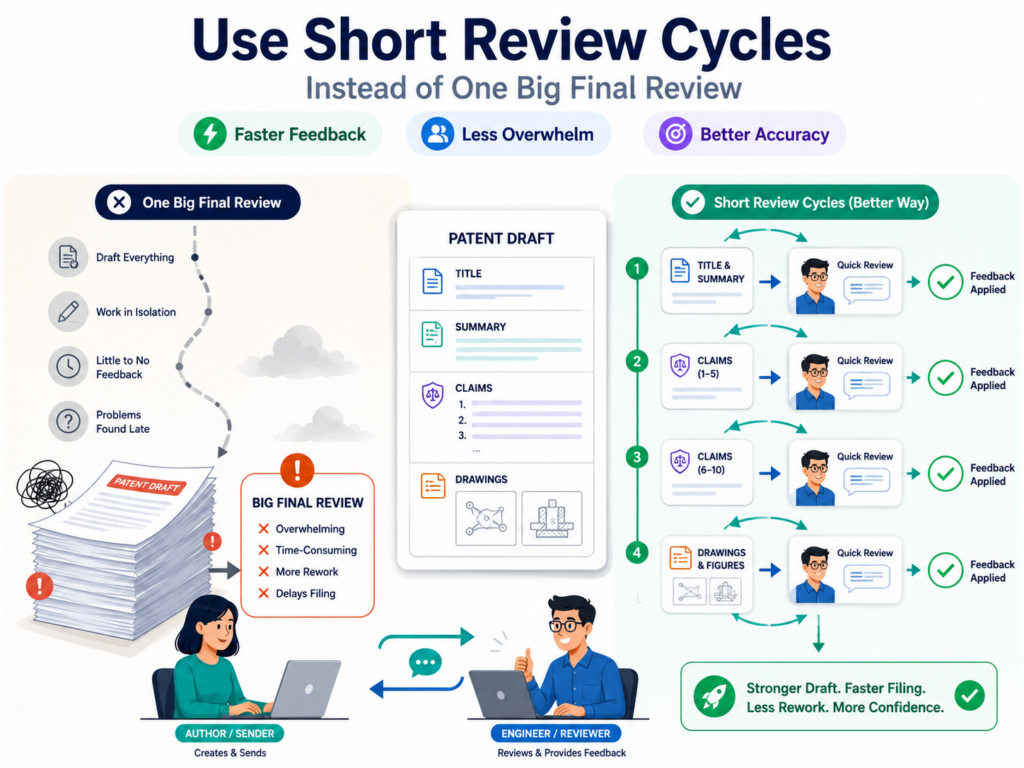
The founder is stressed. The attorney has to revise under pressure. The engineer has to explain details they thought were already clear.
This is avoidable.
A faster process uses short review cycles. Instead of waiting until the end, the team checks the draft in stages.
First, the engineer checks the invention summary. Then they check the system flow. Then they check examples and alternatives. Then they do a final pass.
This may sound like more steps, but it often takes less time overall because each step is smaller and errors are caught earlier.
Small review cycles also match how engineers work. They are used to pull requests, design reviews, test passes, and staged releases.
They know that waiting until the end to check everything creates risk. Patent review should follow the same logic.
Start With the Core Idea Before Reviewing the Full Draft
The first review should focus on the core idea.
Before anyone gets lost in long sections, formal wording, or figure details, the engineer should confirm that the draft is pointed at the right invention.
This is the moment to ask whether the draft captures the real technical move that makes the product better.
If the core idea is wrong, everything else will be slower.
The draft may describe a feature when the invention is really in the backend process. It may describe a user action when the invention is really in the data handling.
It may describe a device layout when the invention is really in the calibration method. It may describe the current build when the true invention is a broader method.
These issues are much easier to fix early.
A short core idea review can happen before the full draft is complete. The engineer does not need to read pages of text. They only need to say whether the invention summary is accurate and complete.
Make the First Review a “Yes, But” Conversation
The first review should not ask for perfect approval.
It should invite correction. A good early prompt might say, “This is our current understanding of the invention. What is right, what is wrong, and what are we missing?”
That tone matters.
If the engineer feels like the draft is already locked, they may hold back or only make small comments.
If they feel invited to correct the direction, they will speak more openly. This helps the team catch big issues before they become expensive.
The phrase “yes, but” is useful because many invention summaries are partly right. The engineer may say, “Yes, that is the general idea, but the key part is not the scoring step.
It is how we create the input features before scoring.” That one correction can change the whole draft for the better.
This kind of early feedback is worth far more than a late grammar edit.
Use the Middle Review to Catch Missing Details
Once the core idea is right, the next review should focus on details.
This is where the engineer checks the technical path. Does the draft explain the steps in the right order? Does it name the right components?
Does it cover the main inputs and outputs? Does it explain what happens in edge cases? Does it include enough examples to show how the invention works?
This middle review is where the draft becomes strong.
It is also where engineers can add the kind of insight that founders and attorneys may not know. They may point out that the system handles failed inputs in a special way.
They may explain that the device runs a calibration step only under certain conditions. They may note that the model is updated using a feedback signal that was not mentioned.
These details can make the patent draft more useful.
A review process that skips this step often ends up with a draft that is correct at a high level but weak in the places that matter.
Keep the Final Review Focused on Changes Only
The final review should not feel like starting over.
By the time the draft is near filing, the engineer should be asked to check changes, not reread everything from scratch. This is only possible if earlier review cycles were done well.
A final review request can say, “Please check the updated sections where your earlier comments were added.
The main changes are in the workflow example and the broader use case language.” That is much faster than saying, “Please review the latest draft.”
This also reduces review fatigue.
Engineers get frustrated when they leave feedback and later have to search the whole document to see whether it was used. Show them exactly what changed. Make the final pass easy.
PowerPatent helps make this process smoother by bringing structure to invention capture, review, and attorney-backed drafting.
For founders who want speed without losing quality, that structure can make a real difference. See how it works here: https://powerpatent.com/how-it-works
Reduce Back-and-Forth With Better First Questions
Every unclear question creates another round of review.
That is why the questions you ask engineers matter so much. If you ask broad questions, you get broad answers. If you ask late questions, you get late changes.
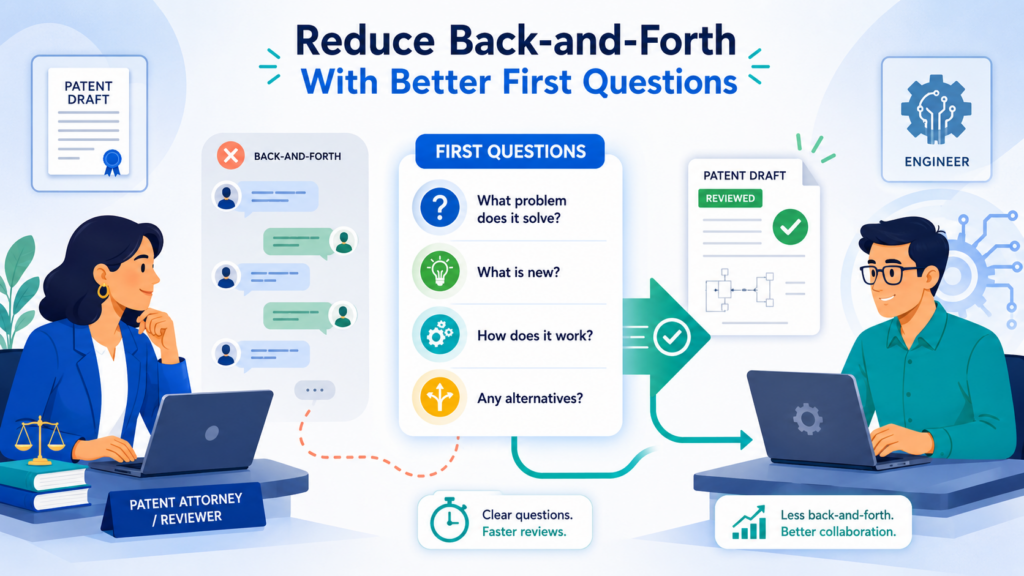
If you ask questions that mix legal, product, and technical issues together, engineers may not know how to respond.
The best patent teams ask better first questions.
Good questions help engineers give useful answers quickly. They also help attorneys draft with fewer gaps. This reduces the number of follow-up calls, comment threads, and rewrites.
A better first question is not complicated. It is focused. It asks about one thing. It uses plain words. It points to the part of the invention that needs truth from the engineer.
The goal is not to make engineers write long essays. The goal is to help them share the details that only they know.
Ask About What Makes the Invention Work
The most important question is simple: what makes this work?
Not what does the product do. Not what does the user see. Not what sounds impressive in a pitch. What makes the invention work?
This question pushes the engineer toward the engine of the idea.
For a software invention, the answer may be a decision rule, data flow, model update, ranking method, timing step, or system architecture.
For a hardware invention, it may be a component layout, signal path, calibration method, material choice, or control process. For a biotech or deep tech invention, it may be a test method, process condition, measurement step, or feedback loop.
Once you know what makes the invention work, the draft becomes easier to shape.
Engineers can review faster because they are not reacting to a vague description. They are checking whether the draft captures the actual mechanism.
Push Past the First Answer
The first answer is often not the best answer.
An engineer may say, “The system picks the best model.” That is useful, but it is not enough. How does it pick the model? What signals does it use? What happens when two models are close?
Does it consider cost, speed, accuracy, user context, safety, or device limits? Is the model picked before the request, during the request, or after some pre-check?
These follow-up questions reveal the invention.
The same is true for devices. An engineer may say, “The sensor is easier to calibrate.” But how? What is measured? What is compared? What changes after calibration? What happens if the signal is noisy? Is the method automatic or user-triggered?
A good review process does not accept surface answers too quickly.
It gently pushes until the real technical move is clear. That makes the draft stronger and saves time later.
Ask What the Draft Gets Too Narrow
A patent draft can be technically correct and still too narrow.
This happens when the draft only describes the current product version. Engineers are often the first to spot it.
They may see that the invention is not limited to one model, one sensor, one device, one database, one cloud setup, one input type, one output format, or one user flow.
But they may not say it unless you ask.
A great review question is, “Where does this draft make the invention sound smaller than it is?” That invites the engineer to think beyond the current build.
This is important because startups change fast. The product you file around today may look different in six months. If the patent draft is too tied to today’s version, it may not support tomorrow’s version as well as it could.
Engineers can help protect against that.
Ask What a Competitor Would Change to Copy the Idea
This question often unlocks strong feedback.
Ask the engineer, “If a competitor wanted the same benefit without copying our exact build, what would they change?” That question helps identify design-around paths.
A competitor may use a different model, a different data source, a different scoring step, a different sensor, a different user flow, or a different deployment setup.
If the same core idea still works, the patent draft may need to describe the invention in a broader way.
This does not mean the draft should claim everything under the sun. It means the team should understand the real range of the invention.
That is where attorney oversight matters. Engineers can explain what variations are technically real. Attorneys can decide how to frame them in the patent draft. Founders can decide which versions matter for the business.
PowerPatent brings these roles together in a cleaner process, so technical insight does not get lost and legal review does not become a bottleneck. Learn more here: https://powerpatent.com/how-it-works
Create a Founder-Led Patent Review Culture
Patent review speed is not just a workflow issue. It is a culture issue.

If patents are treated like random legal paperwork, engineers will treat review like a low-priority task. If patents are treated like part of building the company’s moat, engineers will take review more seriously.
The founder sets that tone.
A founder does not need to talk about patents every week. They do not need to turn the company into a legal machine.
But they do need to make one thing clear: when the team builds something important, the company will protect it with care.
That message matters because engineers often take cues from what founders celebrate. If the founder only praises shipping speed, engineers may see patent review as a delay.
If the founder praises smart protection of core ideas, engineers will see review as part of building wisely.
The goal is not to slow the company down. The goal is to protect what the company is already creating.
Make Patents Part of the Build, Not an Afterthought
A patent process works best when it sits close to product and engineering.
That does not mean every sprint needs patent talk. It means the team should have a habit of noticing when hard technical work may have created something worth protecting.
When a team solves a problem that was not obvious, that is a signal. When a new system improves speed, cost, accuracy, safety, reliability, or user experience in a meaningful way, that is a signal.
When the team builds something competitors would want to copy, that is a signal.
These moments should trigger a simple question: should we capture this?
That one habit changes everything.
Instead of scrambling months later to remember how the invention worked, the team captures the idea while it is still fresh.
Instead of asking engineers to review a cold draft, the draft is based on recent thinking. Instead of treating patents as a cleanup task, the company treats them as part of building a serious moat.
Let Engineers See the Result of Their Review
Engineers are more likely to review future drafts quickly when they see that their past feedback mattered.
After a draft is revised, show them what changed. Keep it brief. Say, “Your note about the fallback path helped us add a stronger example.”
Or say, “Your point about edge deployment helped us broaden the draft beyond the cloud version.” Or say, “Your correction about the scoring order prevented a wrong description from going into the filing.”
This closes the loop.
It also teaches engineers that review is not busywork. Their comments improve the company’s protection. Their knowledge matters.
Over time, this creates faster reviews because engineers trust the process. They know their comments will be used. They know they will not be dragged into endless legal edits. They know the company values their time.
That trust is a speed advantage.
Give Patent Work a Clear Owner Inside the Company
Even with great attorneys, someone inside the company must own the process.
This owner does not need to be a lawyer. In many startups, it is the founder, CTO, head of engineering, chief of staff, or product lead. Their job is to keep the patent process moving.
They know which inventions matter, which engineers should review, what deadlines are real, and how the patent work connects to business goals.
Without an internal owner, reviews drift.
The attorney may send a draft, but no one inside the company drives the feedback. Engineers may assume someone else is handling it.
The founder may not see the delay until the filing date is close. Then the process becomes rushed.
A clear owner prevents this.
They make sure each review has a purpose, a reviewer, a deadline, and a next step. They protect engineers from unclear requests. They help attorneys get the right feedback. They keep the founder informed.
Use PowerPatent to Make the Owner’s Job Easier
The internal owner should not have to manage patent work through scattered docs, random messages, and long email chains.
That is exactly the kind of old process that makes patent review slow. Startups need a cleaner way to move from invention to draft to attorney-backed filing without losing speed.
PowerPatent gives founders and teams a modern path. It combines smart software with real attorney oversight, so the company can capture inventions, organize technical details, and move drafts forward with more confidence.
Engineers can stay focused on technical truth. Founders can stay focused on building the company. Attorneys can focus on making the patent work strong.
That is how review becomes faster without becoming careless.
To see how PowerPatent helps startups protect what they are building, visit https://powerpatent.com/how-it-works
Give Engineers the Context They Need Before They Open the Draft
Engineers review faster when they do not have to rebuild the full story in their heads.
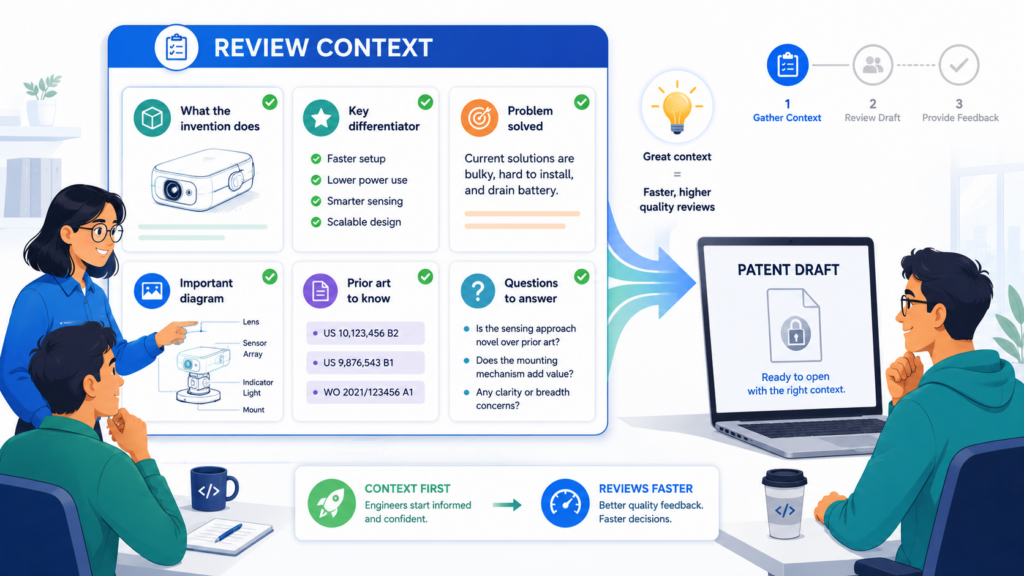
A patent draft often arrives weeks or months after the invention was first built. By then, the team may have moved on. The engineer may be deep in a new sprint. The product may have changed.
The first version of the system may already feel old. So when the draft lands, the engineer has to stop, remember the old design, compare it to the new design, and figure out what the patent is trying to protect.
That is a lot of hidden work.
The faster way is to give the engineer a short context note before they read. This note should explain where the draft came from, what version of the system it covers, what has changed since the invention was first captured, and what decisions are still open. It should help the engineer enter the review with a clear mind.
This does not need to be long. In fact, it should not be long. A few strong paragraphs can save days of delay.
The goal is to remove the blank-page feeling that happens when a busy engineer opens a dense patent draft with no guide.
A good context note says, in plain words, “Here is what this draft is about. Here is why we are filing it now. Here is what we need you to check. Here is what you can ignore. Here is what has changed since we first discussed it.”
That kind of note makes the review feel manageable.
PowerPatent helps teams avoid this kind of confusion by making invention capture and patent review more structured from the start.
Instead of forcing founders to chase details later, it helps organize the invention story early, with real attorney oversight built into the process. You can see how PowerPatent works here: https://powerpatent.com/how-it-works
Bring Back the Original Problem
The best way to help an engineer review faster is to remind them of the problem the team was solving.
This matters because inventions are easier to understand when they are tied to a problem. A draft that starts with system parts, method steps, and examples can feel abstract.
But when the engineer remembers the pain that caused the invention, the draft becomes much easier to check.
The original problem may have been slow model response time. It may have been high compute cost. It may have been noisy sensor data.
It may have been a bad user flow. It may have been poor matching, weak ranking, failed calibration, unsafe output, messy data, or a hard scaling issue.
That problem is the doorway into the invention.
When the engineer remembers the problem, they can quickly see whether the draft explains the right solution.
They can spot if the draft focuses on a side feature instead of the core fix. They can tell if the draft misses the real reason the new method works.
This is why the review note should not only say what the invention is. It should say what pain led to it.
A simple message like, “This draft covers the routing method we built after the old single-model flow created high latency for complex requests,” gives the engineer instant context. Now they know what to look for. They are not reading cold. They are reading with a frame.
Remind Them What Was Hard
Many strong patent details live in the hard parts of the build.
The engineer may remember the final answer, but forget how many paths failed before the team got there. That lost memory matters.
The draft may be technically correct, but it may not show why the invention was smart. It may skip the tradeoffs, the edge cases, or the design choice that made the system work.
A good review process brings those hard parts back into view.
The founder or patent owner can say, “Please check whether the draft captures the hard part of handling low-quality inputs without slowing down the pipeline.”
Or, “Please check whether the draft explains how we avoided recalibrating the device on every use.” Or, “Please check whether the draft covers the way we reduced compute without hurting output quality.”
This kind of prompt helps engineers focus on the value, not just the facts.
It also prevents weak reviews. Without this prompt, an engineer may only fix small errors. With it, they may catch a major missing point.
They may say, “The draft is accurate, but it does not explain the real trick. The key was not just filtering data. It was filtering it at the right time based on signal confidence.”
That kind of comment can make the draft much stronger.
Explain What Version of the Product the Draft Covers
Startups change fast.
That is why patent reviews slow down when no one knows which product version the draft is based on. The draft may describe the old version. The engineer may review against the current version.
The attorney may think both versions matter. The founder may want the draft to cover the future version. Everyone may be right, but the review will still get messy if the version is not clear.
Before review begins, say what the draft is trying to cover.
It may cover the current product. It may cover a prior prototype. It may cover the core idea across both old and new versions.
It may cover a future planned version that has not shipped yet. Each path changes how the engineer should read.
If the draft covers the broader invention, not just the current product, say that clearly. Engineers may otherwise mark useful broader language as wrong because it does not match the current build exactly.
For example, the draft may say the system receives data from one or more sources. The current product may use only one source today. An engineer might comment, “We only use one source.”
But if the broader invention can support many sources, the broader wording may be good. The issue is not accuracy. The issue is context.
Separate Current Reality From Future Coverage
Engineers are trained to care about what is true now.
Patent drafting often also cares about what else the invention can support. This can create tension unless you explain the difference.
A helpful review note can say, “Please flag anything that is not true for the current build, but also mention if it is a real future option.”
That gives the engineer room to be precise without forcing the draft into today’s product only.
This matters because a startup’s patent work should not be trapped inside one release. The company may need room to grow.
A method used in one product today may become useful across many products later. A model workflow used in one market may apply to another. A hardware method used in one device may work in a future device line.
The engineer can help identify that range.
But they need to know that future-ready feedback is welcome. Otherwise, they may only review against what is live right now, which can make the draft too narrow.
PowerPatent helps teams handle these early choices with better structure and attorney guidance, so founders do not have to guess how broad or narrow the draft should be. Learn more here: https://powerpatent.com/how-it-works
Conclusion
Fast patent review does not come from chasing engineers harder. It comes from making the work clear, small, timely, and tied to the product they are already building. When engineers know what to check, where to comment, why it matters, and how their input protects the company’s edge, they move faster and give better feedback.
The best teams treat patents as part of building, not as legal cleanup. PowerPatent helps startups do this with smart software and real attorney oversight, so founders can protect key inventions without slowing the team down. See how it works here: https://powerpatent.com/how-it-works
Leave a Reply