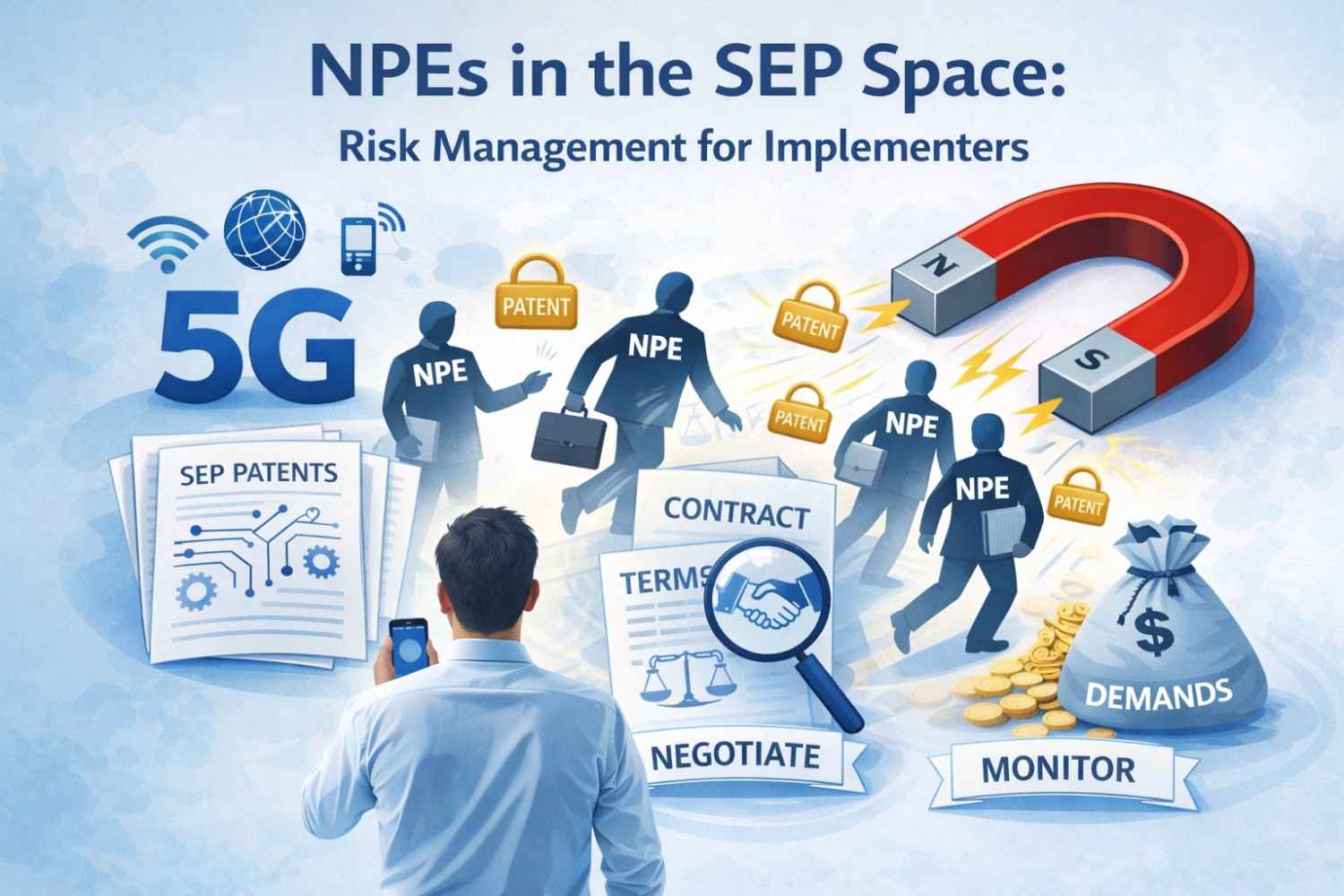
Let’s start with the truth most founders never hear early enough. If your product touches standards like 5G, Wi-Fi, video, or codecs, you are already on someone’s radar. Not because you did something wrong. Not because you copied anyone. Simply because standards attract patents, and patents attract money. This article is about a quiet but very real risk: non-practicing entities, often called NPEs, operating in the standard-essential patent space. These groups do not build products. They do not ship code. They do not care about your roadmap. Their business is owning patents tied to standards and enforcing them against companies that implement those standards.
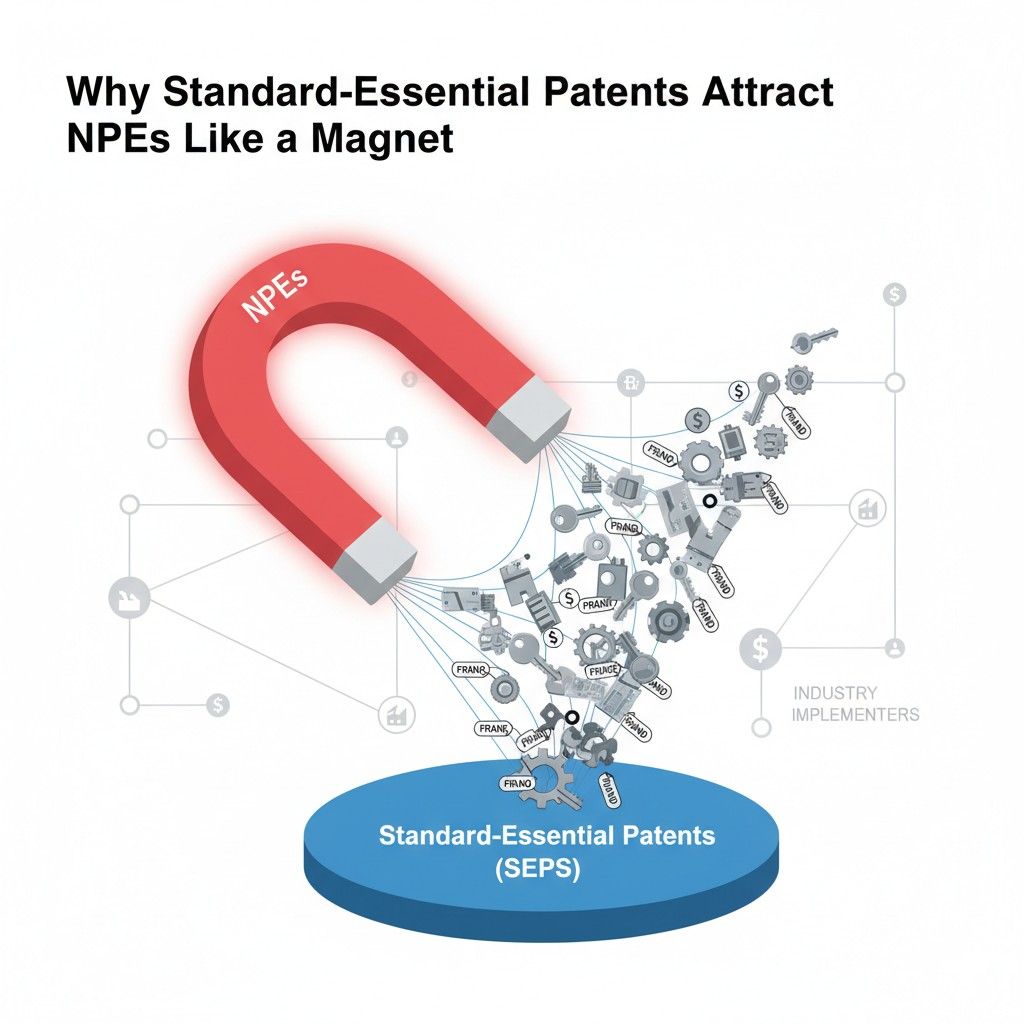
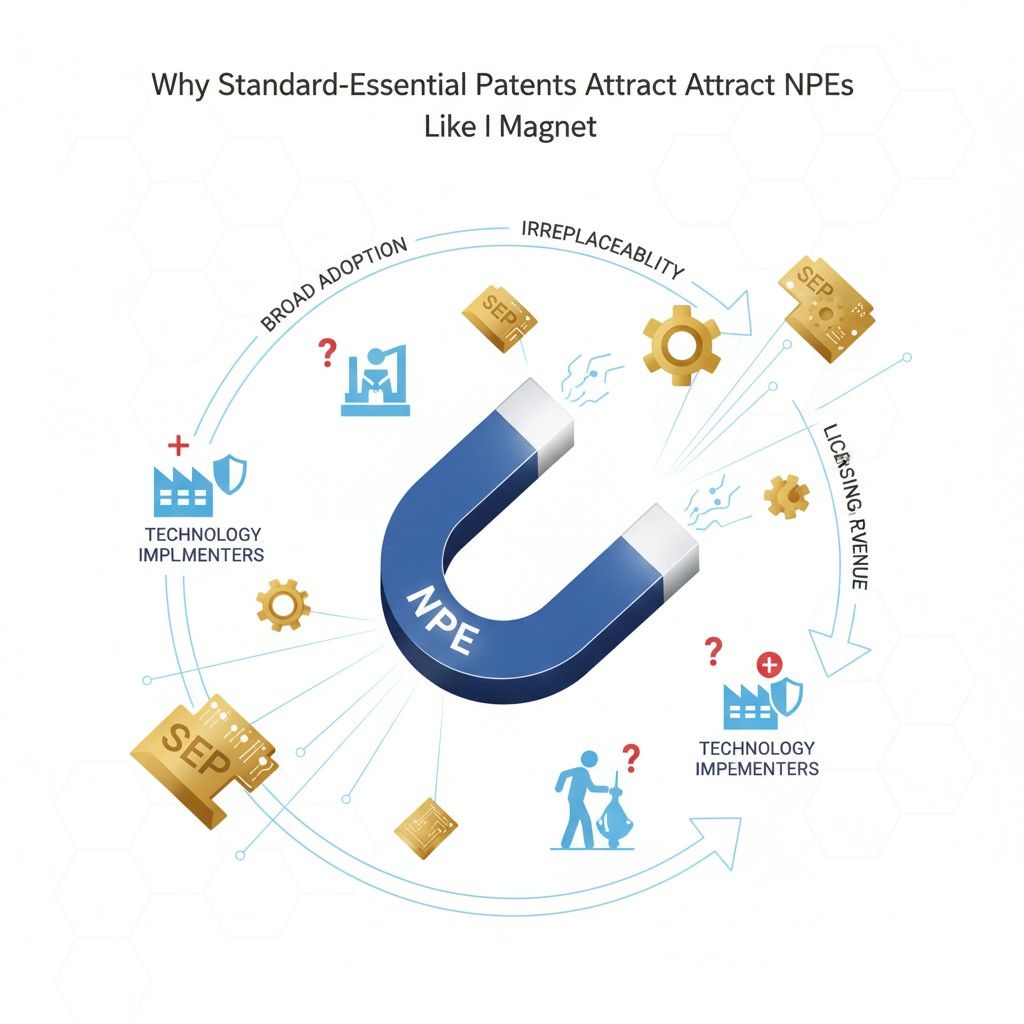
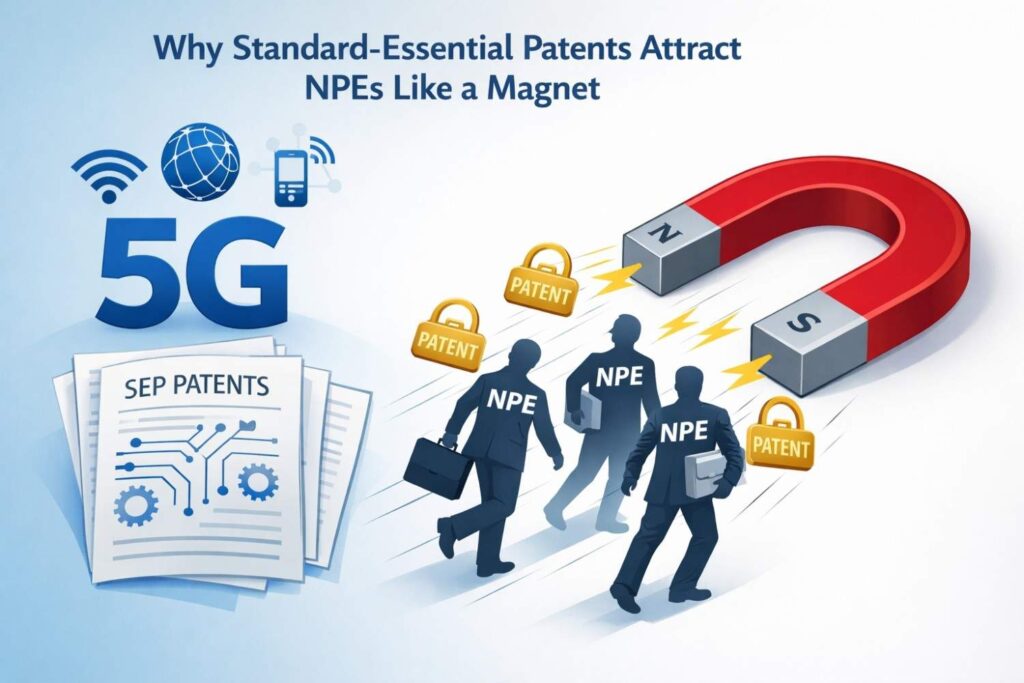
Why Standard-Essential Patents Attract NPEs Like a Magnet
Standard-essential patents sit at a strange crossroads. They are meant to support shared progress, but they also create pressure points that can be exploited.
To understand why NPEs focus so heavily on this space, implementers need to see how standards, patents, and business incentives collide in practice.
This section breaks that down in plain terms, with a focus on what actually matters for companies building real products.
Standards Create Forced Demand
When a standard wins, choice disappears.
This is the first and most important reason NPEs love SEPs. If your product needs to work with Wi-Fi, cellular networks, video formats, or device protocols, you do not get to choose whether to implement the standard.
You must. Customers expect it. Partners require it. Markets punish you if you avoid it.
From an NPE’s point of view, this is perfect. They do not need to prove you copied anything. They do not need to argue about design decisions. All they need to show is that your product follows the standard.
Once that is true, the conversation shifts away from whether infringement happened and toward how much you will pay.
For businesses, the lesson is simple. If a feature is non-optional in the market, assume it is non-optional in patent risk as well. Treat standard compliance as both a technical decision and a legal exposure decision from day one.
SEPs Lower the Proof Burden
Most patent disputes are messy.
They involve debates over claim scope, implementation details, and whether a feature was actually used. SEP disputes skip much of that. The standard document itself often becomes the evidence.
If the standard says a function must work a certain way, and your product follows the standard, the argument is already halfway done.
This is why NPEs prefer SEPs over other patents. Enforcement is cheaper, faster, and more predictable. That predictability attracts capital, repeat filings, and long-term assertion strategies.
Implementers should respond by mapping standards to features early. Do not wait until a demand letter arrives to understand which parts of your product are tied to which standards.
Knowing this internally lets you prepare technical explanations, design alternatives, or licensing positions before pressure hits.
FRAND Sounds Friendly but Still Leaves Gaps
On paper, SEPs are supposed to be licensed on fair terms.
In practice, the meaning of fair is flexible. FRAND commitments do not set prices. They do not prevent lawsuits. They do not stop an NPE from acquiring patents from original holders and enforcing them aggressively.
Many implementers assume FRAND equals safety. That assumption is dangerous.
FRAND is a framework, not a shield. It helps in negotiation and court, but only if you are prepared to use it. If you show up late, unprepared, or without leverage, FRAND does not save you from cost or distraction.
A smart move for businesses is to treat FRAND as a negotiation tool, not a safety net.
Build internal documentation showing your willingness to license, your good-faith behavior, and your understanding of market rates. This record matters later, even if you hope never to use it.
NPEs Exploit Asymmetry in Time and Cost
NPEs do not ship products.
They do not have customers waiting. They do not have engineers blocked by legal reviews. Their timelines are flexible. Yours are not. This imbalance is central to their strategy.
Even weak claims can be profitable if defending them costs more than settling.
SEPs amplify this effect because implementers often cannot pause development or ship non-compliant versions. The business pressure to keep moving creates settlement pressure, regardless of the merits.
The best defense is preparation that lowers reaction cost.
This includes having patent counsel familiar with the standards you use, having internal technical summaries ready, and having a clear decision process for handling demands. Speed reduces leverage. Delay increases it.
Portfolio Aggregation Changes the Game
Many NPEs do not rely on single patents.
They acquire clusters tied to the same standard. One letter can reference dozens of patents, across multiple jurisdictions, creating the feeling of overwhelming risk.
Even if only a few patents are strong, the combined pressure pushes implementers toward broad licenses.
For growing companies, this can feel impossible to fight. The key is not to respond emotionally to volume. Focus on relevance. Many asserted patents may not actually map cleanly to your product or your use of the standard.
Invest time early in understanding which standards matter most to your business and which patent holders are active there. Awareness reduces surprise, and surprise is what NPEs count on.
Standards Freeze Technology in Time
Once a standard is set, it locks in technical choices.
Those choices can remain valuable for decades, even as products change. This long lifespan makes SEPs attractive assets. An NPE can acquire patents years after a standard is adopted and still enforce them against modern products.
Implementers often forget this temporal effect. Just because a standard feels old does not mean the patents around it are inactive. In fact, older standards can be riskier because companies stop monitoring them closely.
A practical step is to review legacy standards in your product, not just the shiny new ones. Ask whether old components still matter commercially and legally. Quiet parts of your stack can create loud problems later.
Licensing Complexity Favors the Aggressive Player
SEP licensing is rarely simple.
Rates vary by region, product type, volume, and time. This complexity benefits parties that do this all day. NPEs specialize in navigating it. Many implementers do not, especially early-stage companies.
Complexity creates confusion, and confusion leads to bad deals. Companies overpay to make problems go away or under-prepare and escalate conflict unnecessarily.
Reducing complexity on your side is critical. Centralize knowledge about your standards, patents, and licensing history. Avoid ad-hoc decisions made under stress. Consistency builds credibility and improves outcomes over time.
Silence Is Often Interpreted as Weakness
NPEs track behavior.
They notice who responds quickly, who ignores letters, and who pushes back with substance. Silence can be read as lack of readiness or internal alignment. That perception influences how aggressively a claim is pursued.
This does not mean you should argue every point immediately. It means you should respond deliberately. A calm, informed reply signals that you take the issue seriously without conceding ground.
Having a response playbook prepared before any issue arises is one of the simplest risk controls available. It turns a surprise into a process.
Building Patents Changes the Power Dynamic
One of the most overlooked truths is that implementers with patents are treated differently.
You do not need a massive portfolio. You need relevant coverage tied to your implementation choices. Patents signal sophistication. They create optional leverage. They change how negotiations feel on both sides.
Even NPEs factor this in. A company that understands patents and has its own filings is less likely to panic, overpay, or make mistakes.
This is where many modern companies gain an edge by filing early, while building, without slowing down.
Tools like PowerPatent exist precisely to make this practical for teams that care about speed and focus. You can explore how that works here: https://powerpatent.com/how-it-works
Seeing the Magnet Clearly Changes How You Move
SEPs attract NPEs because they sit where obligation, clarity, and pressure meet.
Once you see that clearly, the risk becomes manageable. Not small, but manageable.
The goal is not to eliminate exposure. That is unrealistic. The goal is to reduce surprise, shorten response time, and keep control when pressure appears.

Understanding why the magnet exists is the first step. Acting on that understanding is what separates companies that get dragged into costly fights from those that navigate them calmly and move on.
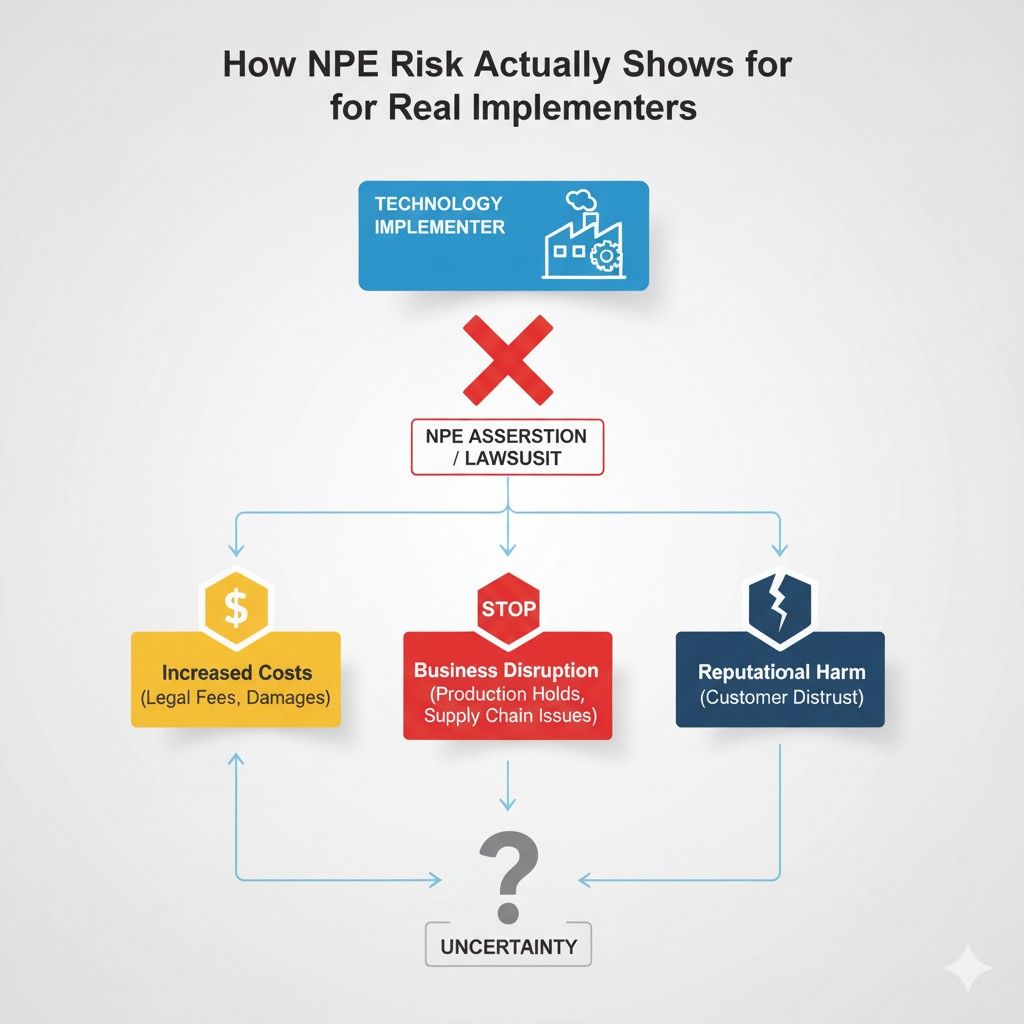
How NPE Risk Actually Shows Up for Real Implementers
Most teams imagine patent risk as a courtroom event. That image is wrong and misleading. For implementers, especially those building products tied to standards, NPE risk usually arrives quietly, long before any lawsuit is filed.
It shows up in emails, board conversations, sales delays, and internal stress. This section walks through how that risk really appears in day-to-day business and what it does to companies that are not ready.
It Often Starts With a Polite Letter
The first signal is rarely aggressive.
It is often a calm, professional message stating that the sender owns patents related to a standard your product uses.
The tone may even sound friendly. There may be talk of licensing discussions and cooperation. This is intentional. The goal is to open a door without triggering immediate defense.
Many teams underestimate this moment. They treat it as low priority because there is no lawsuit attached. That is a mistake. This first contact sets the tone for everything that follows.
How fast you respond, how informed your response is, and who speaks for the company all send signals.
Companies that reply without internal alignment often reveal confusion. Companies that delay too long appear unprepared. Both outcomes increase pressure later.
The Risk Quickly Becomes a Time Problem
Even before money is discussed, time becomes the real cost.
Leadership meetings get pulled into the issue. Engineers are asked questions they were not expecting. Product timelines are reviewed for exposure. Each hour spent reacting is an hour not spent building.
NPEs understand this dynamic very well. They know startups and growth-stage companies run lean. They know distractions are expensive. This is why they often move slowly but persistently, letting the issue linger just enough to drain focus.
The best defense here is speed through preparation. When internal teams already know which standards matter and who owns what decisions, the issue consumes less mental space.
Sales and Partnerships Feel the Impact Early
One of the most damaging effects shows up outside legal channels.
If you are raising money, entering enterprise deals, or forming partnerships, any hint of unresolved IP risk can stall progress. Due diligence questions start appearing. Customers ask for assurances. Investors want clarity.
Even without a lawsuit, the mere existence of an SEP claim can slow growth. Deals take longer. Trust erodes quietly. Momentum suffers.
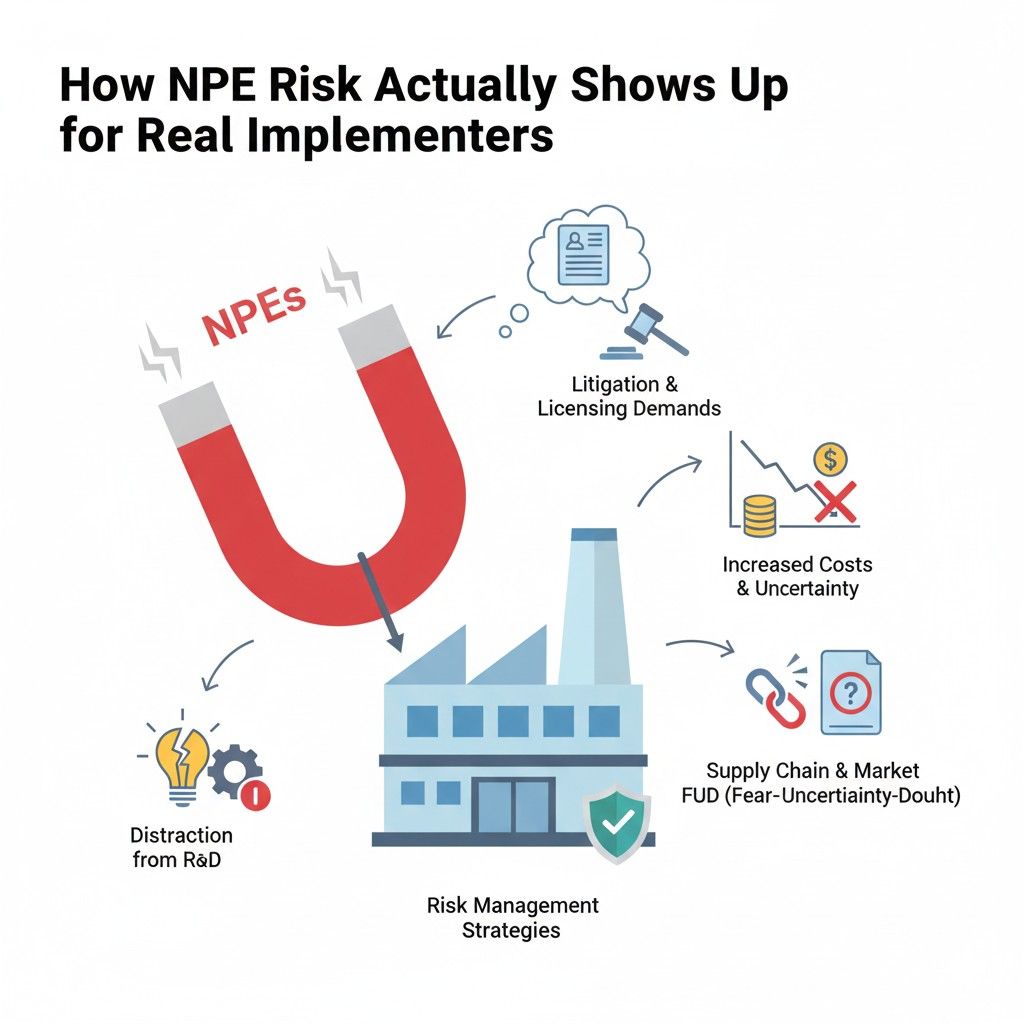
This is why implementers should think of SEP risk as a business issue, not a legal one. The faster you can explain your position clearly and calmly, the less collateral damage occurs.
Escalation Is Often Strategic, Not Reactive
When escalation happens, it is usually planned.
If initial outreach does not lead to quick resolution, NPEs may increase pressure in steps. More patents are mentioned. Additional jurisdictions are referenced. The language becomes firmer. Each step is designed to test resistance.
This escalation is rarely emotional. It is data-driven. NPEs track which companies settle quickly and which push back. Their approach adapts accordingly.
Understanding this helps implementers stay steady. Escalation does not mean you are losing. It often means the other side is probing for leverage.
Internal Confusion Makes Everything Worse
One of the most common failure points is internal misalignment.
Engineering assumes legal will handle it. Legal waits for technical input. Leadership wants a quick answer that does not exist yet. This gap creates delays and mixed messages.
NPEs notice this indirectly through response quality and timing. Inconsistent answers suggest uncertainty. Uncertainty invites pressure.
A simple but powerful move is to define ownership early. Decide who coordinates responses, who provides technical context, and who approves strategy. Clarity inside reduces vulnerability outside.
Cost Appears Before Any Invoice
Even without paying a license, costs add up.
Outside counsel is consulted. Internal resources are diverted. Opportunity cost grows. These expenses rarely show up in a single budget line, but they are real and painful.
This is why prevention matters more than reaction. Reducing the number of surprises reduces these hidden costs. Companies that invest early in understanding their exposure often spend less overall, even if they eventually license.
Litigation Is Rare but Always Possible
Most SEP disputes never reach trial.
They are resolved through licensing or settlement because both sides understand the economics. Still, the possibility of litigation hangs in the background. That threat alone shapes behavior.
For implementers, the key is not to fear litigation but to avoid being unprepared for it.

Courts reward companies that act in good faith, understand the standards they use, and engage constructively. Preparation improves outcomes even when cases never reach court.
The Emotional Toll Is Underrated
Founders and teams feel this deeply.
There is frustration in being targeted for building something useful. There is anxiety about making the wrong call. There is pressure to protect the company without derailing it.
Acknowledging this matters. Stress leads to rushed decisions. Rushed decisions are expensive.
Companies that treat SEP risk as a known, manageable part of scaling tend to stay calmer. Calm teams negotiate better and move faster.
Early IP Strategy Changes the Conversation
One pattern shows up again and again.
Companies that have filed their own patents tied to their implementation choices handle these situations differently. They speak with more confidence. They ask better questions. They are harder to intimidate.
This does not require a massive portfolio. It requires intent. Filing while building, documenting innovation as it happens, and involving experienced patent professionals early all contribute.
Modern tools make this easier than it used to be. Platforms like PowerPatent are designed to fit into fast-moving teams without slowing development, while adding real defensive strength.
You can see how that approach works here: https://powerpatent.com/how-it-works
Seeing Risk Early Keeps It Small
The biggest mistake implementers make is thinking SEP risk appears suddenly.
In reality, it builds slowly. Signals appear long before problems explode. Companies that learn to recognize these signals stay in control. Companies that ignore them react under pressure.
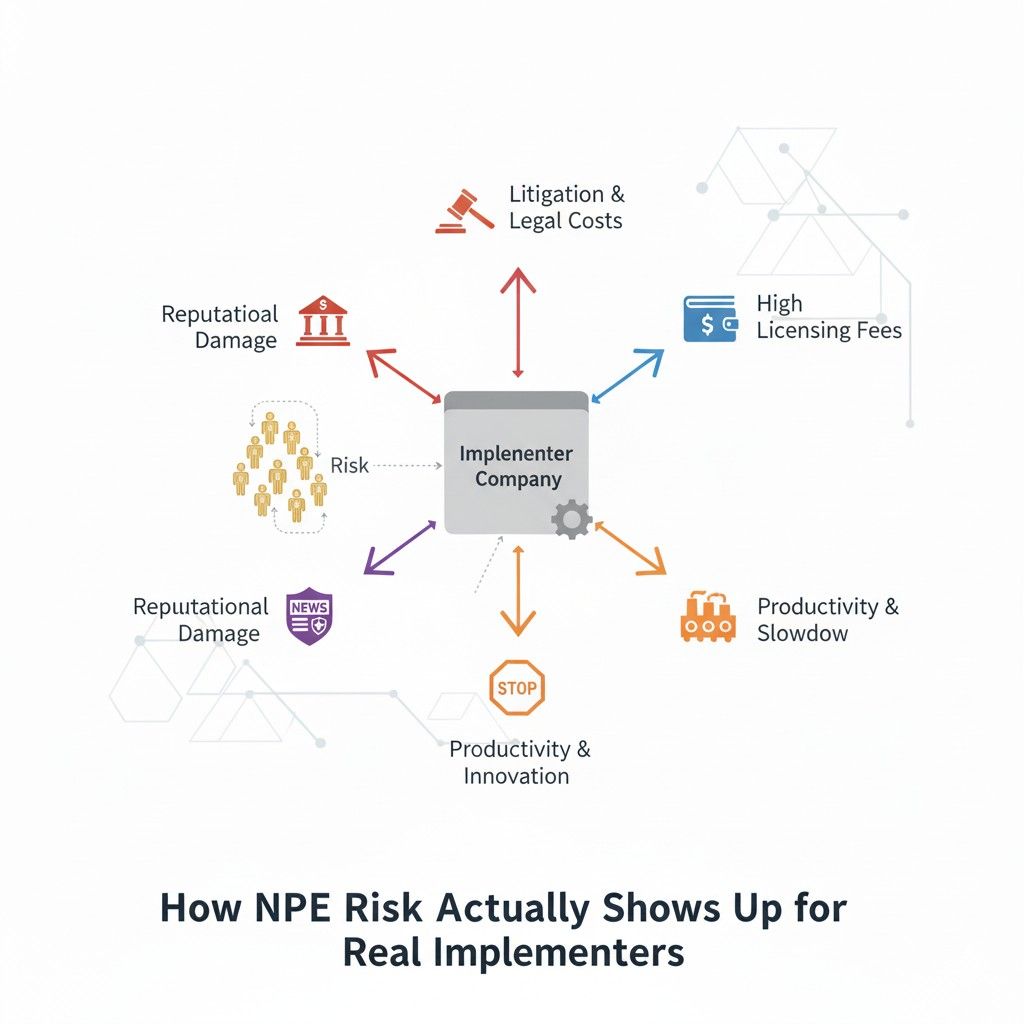
Understanding how NPE risk actually shows up in daily operations turns fear into planning. Planning turns risk into something manageable.
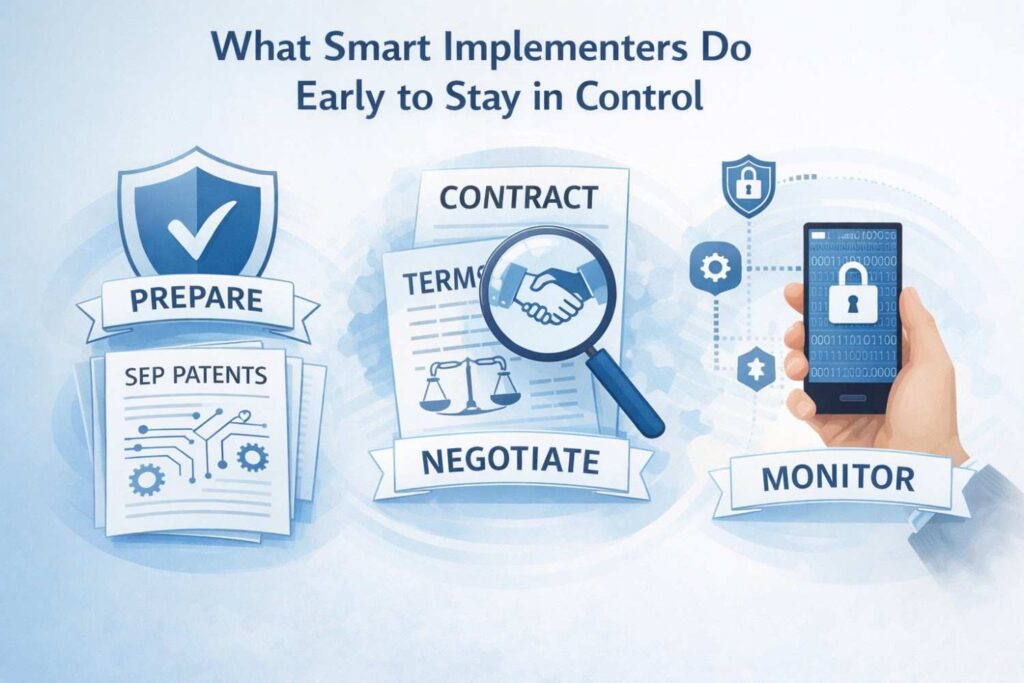
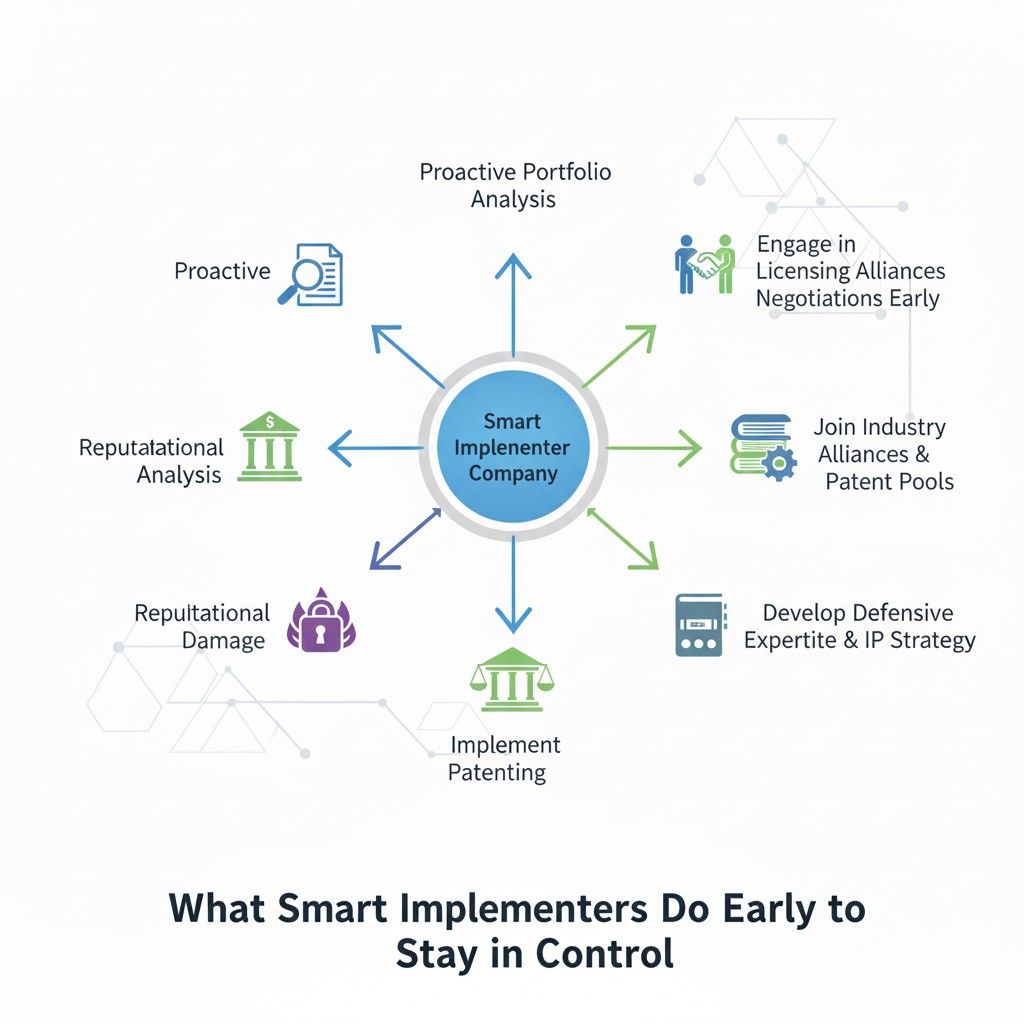
What Smart Implementers Do Early to Stay in Control
The biggest difference between companies that struggle with SEP risk and those that handle it smoothly is not size, funding, or legal budget. It is timing. Smart implementers act before pressure arrives.
They make a few intentional moves early that quietly shift power in their favor. This section explains what that looks like in real life and how teams can do this without slowing down product work.
They Accept That SEP Risk Is Part of the Market
Strong companies do not waste energy denying reality.
If your product depends on standards, SEP exposure is part of the cost of doing business, just like cloud spend or compliance work. Teams that accept this early make better choices.
They do not panic when issues arise because they expected them.
This mindset shift is subtle but powerful. Instead of treating a demand letter as an emergency, it becomes a known scenario with a playbook. Calm replaces chaos.
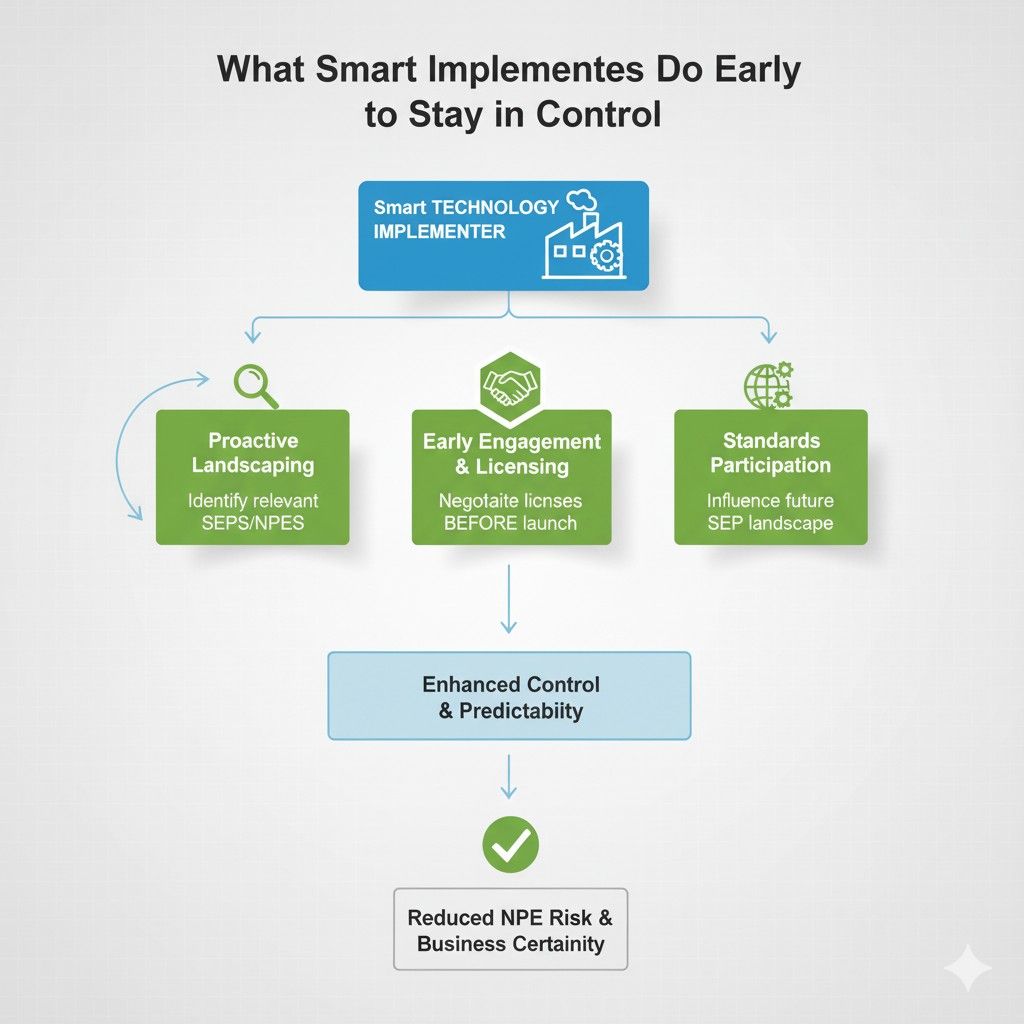
The action here is internal alignment. Leadership should clearly state that SEP risk is understood, expected, and manageable. This clarity trickles down and changes how teams react under pressure.
They Build Internal Awareness Without Creating Fear
Awareness does not mean obsession.
Smart implementers educate a small group inside the company about which standards matter and why. This group usually includes product leadership, one technical lead, and someone responsible for external communication.
They do not broadcast fear across the team. They do not distract engineers with worst-case scenarios. They simply ensure that when questions arise, answers exist.
This controlled awareness prevents last-minute scrambles. It also avoids the mistake of involving too many voices when speed and clarity matter most.
They Document Technical Choices as They Build
One of the most effective risk controls costs almost nothing.
It is simply writing down why certain technical decisions were made. Which parts of the standard were implemented. Which optional features were skipped. Where alternatives were considered.

This documentation becomes gold later. It allows faster analysis when claims appear. It helps outside advisors understand the product quickly. It reduces guesswork and rework.
Teams that document as they go save weeks later. This is not about legal language. Plain notes written by engineers are enough.
They Treat First Contact as a Strategic Moment
The first interaction with an NPE matters more than most realize.
Smart implementers do not ignore it, and they do not overreact. They respond on time, with clarity, and without unnecessary detail. They acknowledge receipt, signal seriousness, and buy time to analyze properly.
This response sets expectations. It shows professionalism without concession. It discourages aggressive escalation driven by perceived weakness.
Preparing a template response in advance is a simple step that pays off. It removes emotion from the moment and keeps control where it belongs.
They Separate Technical Truth From Business Strategy
A common trap is mixing engineering accuracy with negotiation tactics.
Just because something is technically true does not mean it should be shared immediately. Smart implementers understand that information flow matters. They verify facts internally before discussing them externally.
This does not mean hiding or misleading. It means being deliberate. It means answering the right questions at the right time.
Having a single point of coordination for communication helps maintain this balance. It prevents accidental disclosures that complicate negotiations later.
They Invest in Patents That Actually Matter
Smart implementers focus on protecting what they truly do differently within the standard. They do not file randomly. They file with intent, covering implementation details, optimizations, and system-level decisions.
These patents may never be asserted. That is not the point. Their value lies in changing conversations. They signal competence. They provide optional leverage. They reduce the chance of being seen as an easy target.
The key is speed and relevance. Filing early, while details are fresh, produces stronger results than trying to reconstruct innovation years later.
They Avoid Overpaying for Peace Too Early
Settling quickly feels safe, but it can be costly.
Companies that rush to license without understanding scope or relevance often lock themselves into bad terms. These terms can affect future products, regions, or pricing in ways that hurt long-term growth.
Smart implementers take time to assess before agreeing to anything permanent. They understand that patience, when informed, is not weakness. It is strategy.
This does not mean dragging things out unnecessarily. It means making decisions with full context, not fear.
They Choose Tools That Match Startup Reality
Traditional patent processes were not built for fast teams.
Smart implementers use tools and partners that fit how they work. They avoid systems that slow development or bury teams in process. They look for solutions that integrate into their build cycle.
This is where modern platforms make a real difference. PowerPatent, for example, is designed to let teams capture innovation while coding, with real attorney oversight but without heavy overhead.
It turns IP into something active, not a burden. You can explore how that works here: https://powerpatent.com/how-it-works
They Think Long-Term Without Losing Speed
The goal is not to become a patent company.
The goal is to build great products while staying protected. Smart implementers keep moving fast, but they build small guardrails along the way. These guardrails prevent major detours later.
They understand that a little effort early saves a lot of pain later. This perspective keeps them focused and resilient as they scale.
Control Comes From Preparation, Not Power
In the SEP space, control does not come from size or aggression.
It comes from readiness. From knowing your product, your standards, and your options. From acting early and calmly.
Implementers who do this are rarely surprised. They may still face challenges, but they face them on their own terms.
This is what risk management really means in the SEP world. Not avoiding risk, but shaping it.
Wrapping It Up
By now, one thing should be clear. NPEs in the SEP space are not a rare edge case. They are a predictable outcome of how standards, patents, and money intersect. That does not make them good or bad. It makes them something serious companies plan for. The real risk is not that an NPE exists. The real risk is being caught off guard. Implementers who struggle are usually not doing anything reckless. They are building real products, solving real problems, and moving fast. What hurts them is delay.
Leave a Reply