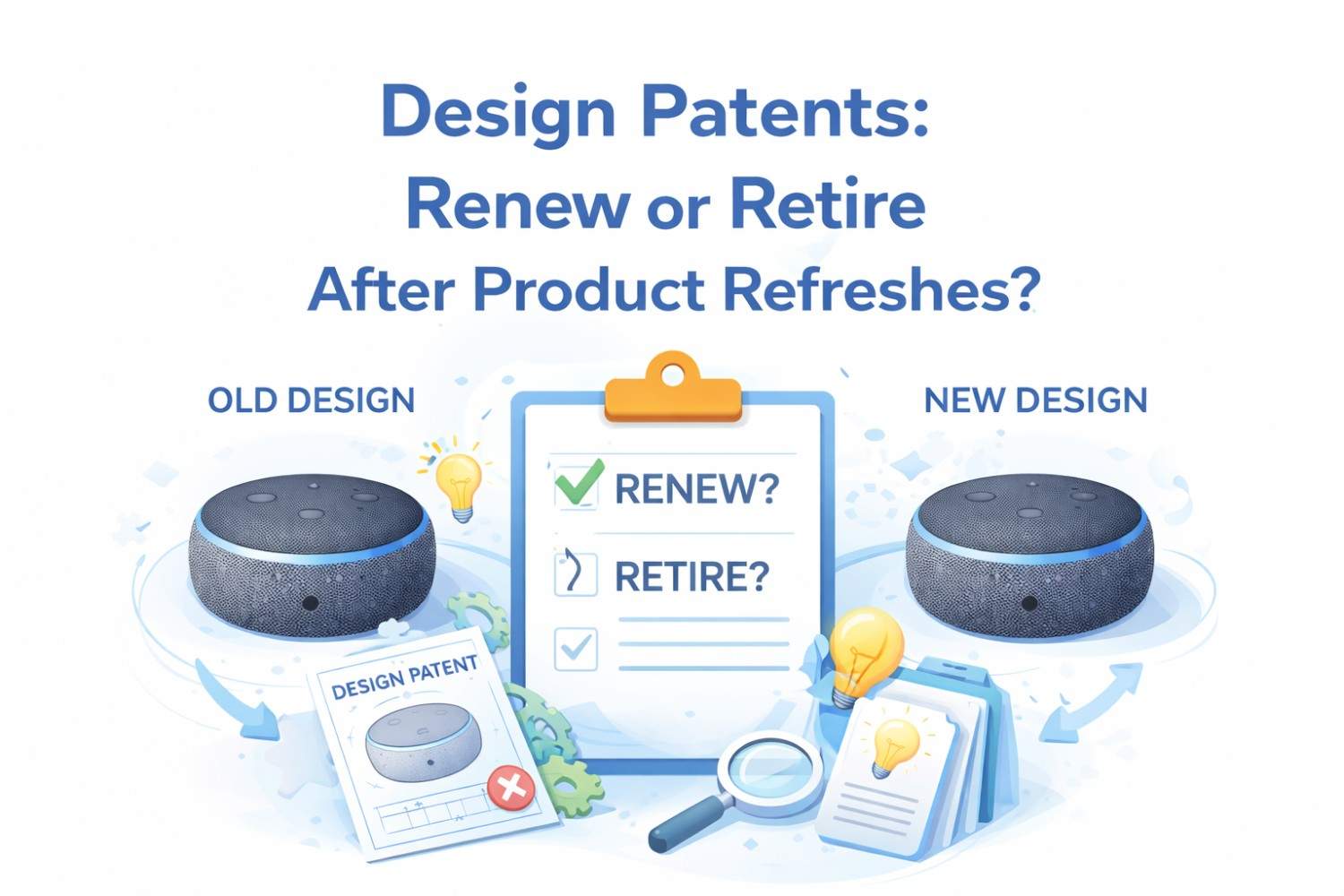
Your product just got a fresh new look. The curves are sharper. The screen is bigger. The case feels better in your hand. Now comes the real question: what happens to your design patent? Do you renew it, update it, or let it go? Most founders do not think about this until it is too late. And by then, the risk is real. In this guide, we will break down exactly how to think about design patents after a product refresh, when to protect the new look, when to retire the old one, and how to make smart moves without slowing down your team. If you are building something people can see and touch, this matters more than you think. And if you want a faster, smarter way to protect your product designs with real attorney support, you can see how PowerPatent works here: https://powerpatent.com/how-it-works
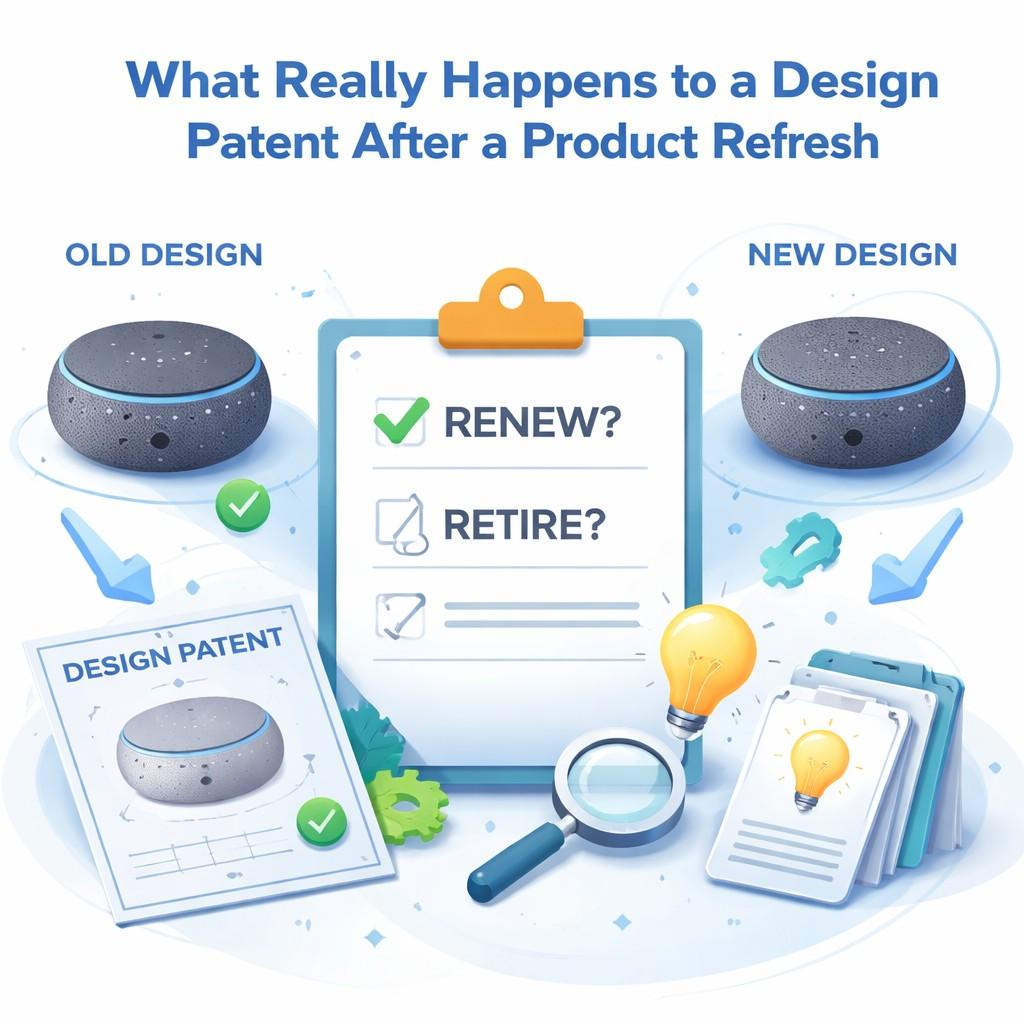
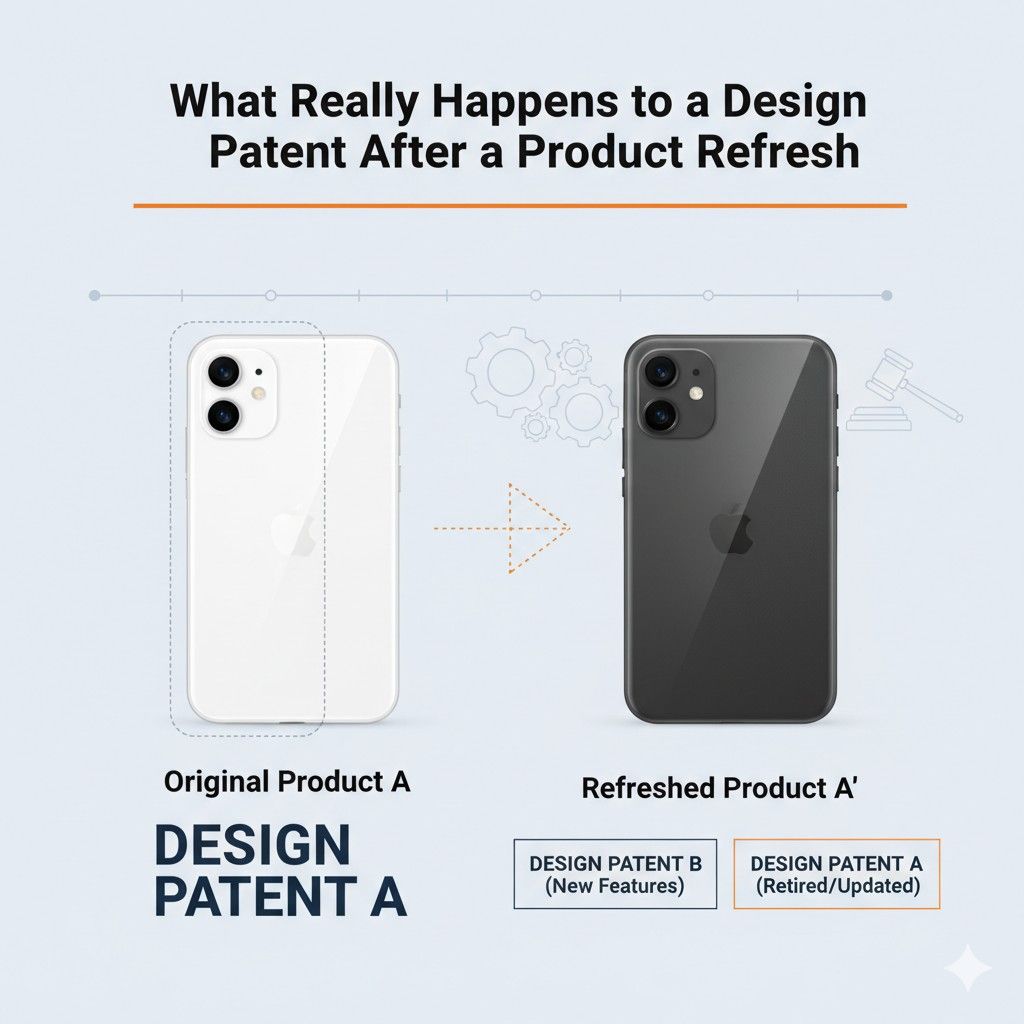
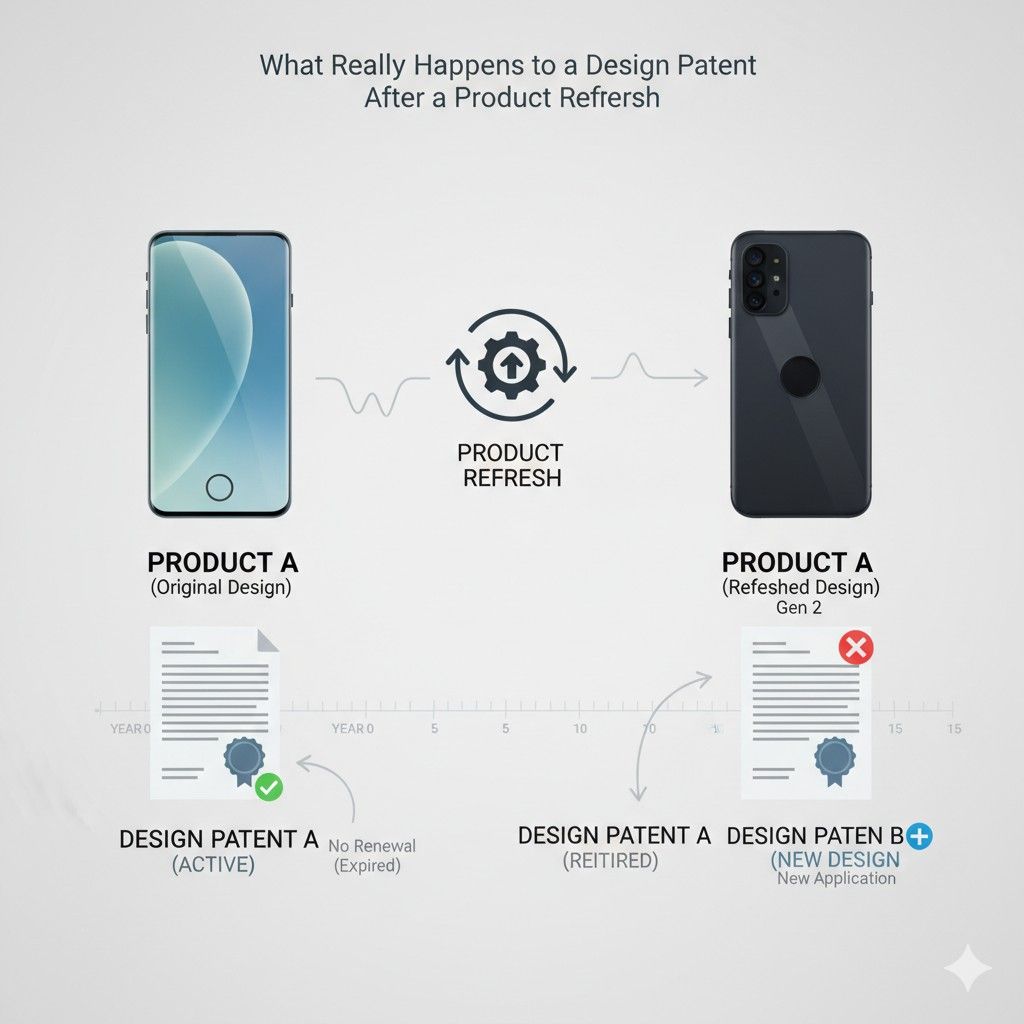
What Really Happens to a Design Patent After a Product Refresh
When you change how your product looks, even in small ways, your design patent does not magically adjust with it. A design patent protects one specific visual appearance.
It is tied to the drawings that were filed. Those drawings are the law. They define exactly what is protected and nothing more. Once your product starts to drift away from those drawings, your protection can drift too.
Many founders assume that if the product is “basically the same,” the patent still covers it. Sometimes that is true. Many times it is not.
The gap between what you filed and what you now sell can quietly grow wider than you think. This section will help you understand what truly happens behind the scenes so you can make strong, smart decisions.
Your Design Patent Is Frozen in Time
A design patent captures a moment. It locks in the exact look shown in the application drawings. It does not evolve with your brand. It does not update when your team improves the product. It is a snapshot.
When you refresh a product, you are creating a new snapshot. Even if the changes feel small, the law compares what is sold today to what was shown in those original drawings.
If the visual impression is different enough, the old patent may not fully protect the new design.
This is where many companies get surprised. They spend months refining a product. They make it sleeker. They adjust the proportions. They simplify edges.
From a design perspective, these changes feel like upgrades. From a legal perspective, they may create a different protected object entirely.
The key strategic move is this: after any visual refresh, pull up your original patent drawings and compare them side by side with the updated product. Do not rely on memory.
Do not rely on marketing images. Look carefully. Ask yourself whether a normal buyer would see them as the same overall look. If the answer is uncertain, that is your signal to review the protection strategy.
If you want to avoid guessing, this is where a structured review with a real patent attorney helps.
PowerPatent makes that process simple and fast so you can evaluate your new design without slowing your roadmap. You can see how it works here: https://powerpatent.com/how-it-works
Small Changes Can Have Big Legal Effects
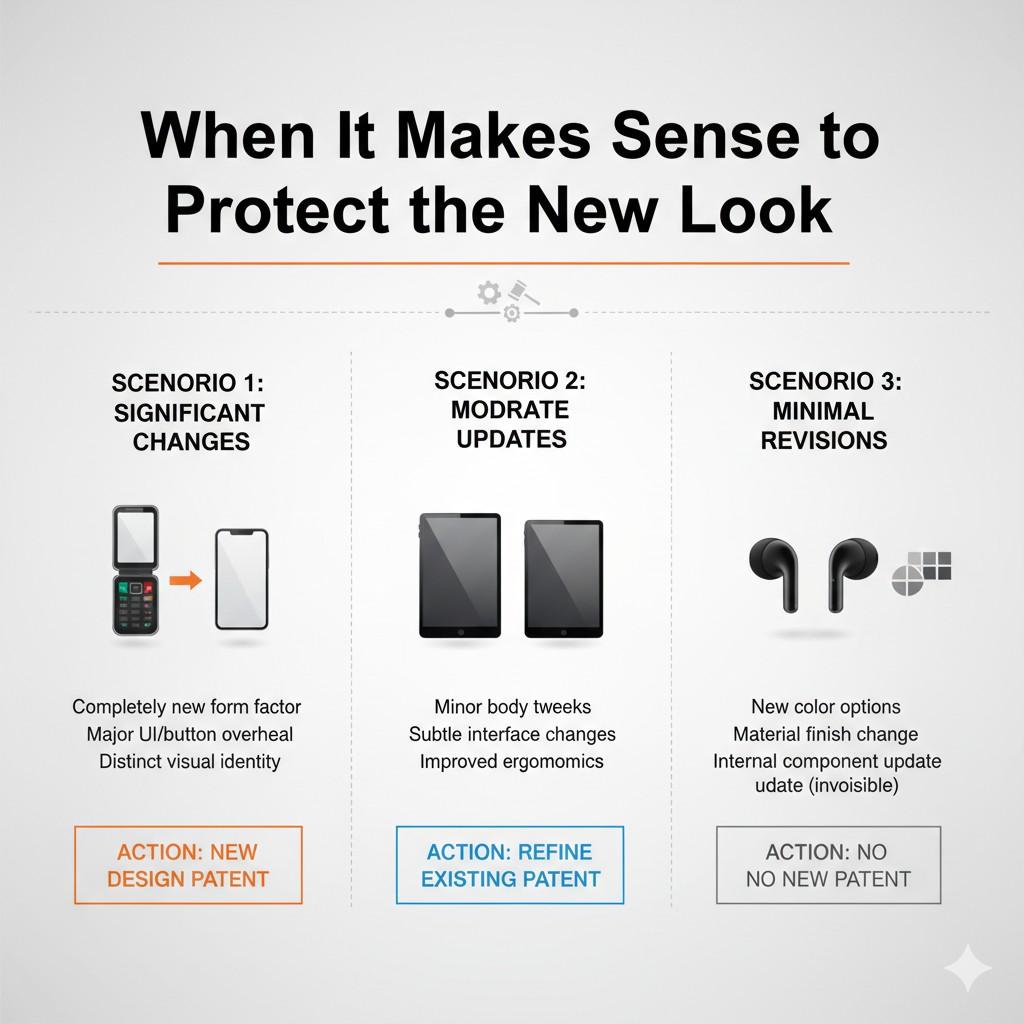
Not all changes are equal. Some tweaks are cosmetic and minor. Others change the entire visual identity of the product.
A slightly different texture might not move the needle much.
But changing the shape of a housing, moving the placement of a camera module, altering the curvature of a device, or shifting the screen ratio can change the overall impression. And in design patent law, the overall impression is what matters most.
The danger is not only losing protection. The danger is thinking you are protected when you are not.
If a competitor copies your refreshed product and your patent drawings show a noticeably different look, enforcement becomes harder.
You may find yourself arguing over subtle differences instead of clearly stopping the copy.
A smart approach is to treat every visual change as a business decision with legal impact.
Before launch, build a short internal checkpoint. When the design team signs off on a refresh, add one more step: a patent review. It does not have to take weeks. It just needs to happen before you go to market.
That small habit can prevent years of regret.
Your Old Patent Does Not Expand to Cover the New Look
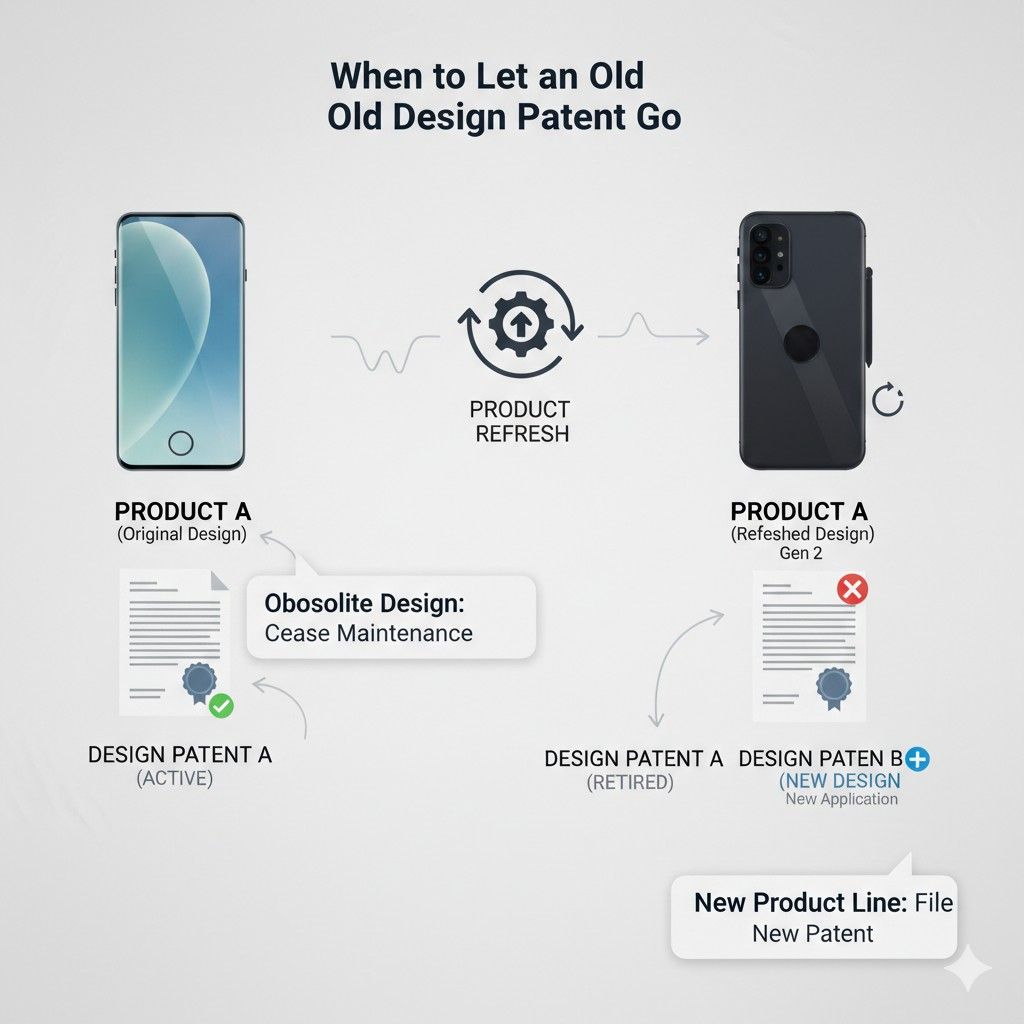
There is no such thing as updating a granted design patent. Once it is issued, it stands as it is. You cannot amend it to match the new version of your product.
This is where many founders misunderstand the system. They think they can “renew” or “edit” the patent to reflect the new version.
That is not how design protection works. If your refreshed product has a new look that you want to protect, you generally need to file a new design patent application.
That does not mean the old patent is useless. It may still protect earlier versions. It may still block competitors from copying that specific look. But it will not stretch to cover the new design unless the two are very close in appearance.
Strategically, this creates a choice. Do you stack protection over time by filing new design patents for each meaningful refresh? Or do you let older ones stand alone and accept that newer versions may not be covered?
The best companies think in terms of a portfolio, not a single filing. Each major visual generation can have its own layer of protection. Over time, this creates a fence around your brand’s visual evolution.
If you are moving fast and iterating often, you need a system that keeps up. That is exactly what PowerPatent is built for.
It helps startups turn product updates into defensible patents quickly, with real attorney oversight and smart software to reduce friction. Learn more here: https://powerpatent.com/how-it-works
The Risk of a Protection Gap
One of the most serious risks after a product refresh is a protection gap. This happens when your old patent no longer clearly covers the new design, and you have not filed a new one.
In that gap, competitors are free to study your updated product. If they move quickly and create something very close to your refreshed design before you file, you could lose valuable rights.
Timing matters more than most founders realize. In many places, once your new design is publicly disclosed, the clock starts ticking. Waiting too long can reduce your options or eliminate them altogether.
The actionable step here is simple but powerful. Treat the first public reveal of your refreshed product as a patent deadline.
Whether it is a launch event, a website update, or a trade show demo, plan your design patent strategy before that moment.
Build a habit where the patent conversation happens during the design freeze stage, not after launch. This small shift can protect millions in brand value later.
Your Competitors Are Watching Your Refreshes
When you refresh your product, you are not the only one paying attention. Competitors study design shifts closely. They look for signals. They look for trends.
They look for opportunities to move closer to your look without crossing clear legal lines.
If your original patent protected a bold, distinct shape, and your refresh moves toward a more minimal style, competitors may feel more confident testing the boundaries.
If they see that your new look is not clearly covered by a patent, they may copy faster than you expect.
This is why strategic founders think beyond protection. They think about signaling.
Filing a new design patent around a refresh sends a message. It tells the market that your new look is not free to take. Even before the patent is granted, the filing itself can create a deterrent effect.
The goal is not just to win lawsuits. The goal is to prevent them.
Design Patents as Part of Brand Strategy
A product refresh is rarely just about looks. It is often about brand positioning. You may be moving upmarket. You may be simplifying to signal maturity. You may be adding visual cues that make your device instantly recognizable.
Design patents protect those cues.
When your visual language evolves, your protection strategy should evolve with it. Instead of thinking about patents as a one-time task, think about them as part of your brand roadmap.
If your roadmap shows a major redesign every two years, your patent plan should mirror that cycle. Budget for it. Plan for it. Make it predictable.
This removes stress from the decision. It becomes a routine part of growth rather than a last-minute scramble.
The Financial Side Most Founders Ignore
Letting a design patent sit unused while your product moves on can waste money. At the same time, over-filing on minor tweaks can drain resources.
The smart move is not to protect everything. It is to protect what drives buying decisions.
Ask yourself what makes customers recognize your product from across the room. What makes it feel unique? What visual elements are core to your identity?
Protect those.
If a refresh only changes internal components or performance features, a design patent may not be necessary. But if it changes the shape, silhouette, or face of the product, that is usually where the real value lies.
A focused strategy keeps your portfolio strong without overcomplicating it.
Why Waiting Feels Safe but Is Often Risky
It is easy to say, “Let’s see how this version performs before filing anything.” That feels practical. But in design protection, waiting can quietly close doors.
Once the refreshed product is out in the world, the design is public. In many regions, that limits your ability to file later. The longer you wait, the more exposed you become.
The disciplined approach is to decide early whether the new look is part of your long-term vision. If it is, protect it while you still can.
Fast-moving startups need fast protection. PowerPatent was built to remove the usual friction so you can move quickly without cutting corners.
You stay in control, real attorneys review the work, and you avoid costly missteps. Explore the process here: https://powerpatent.com/how-it-works
Turning Product Refreshes Into Strategic Assets
A product refresh is not just a design update. It is a strategic moment. It is a chance to strengthen your moat.
Instead of asking, “Do we need to renew this patent?” ask, “Does this new look represent a new asset?” If the answer is yes, treat it like one.
That means reviewing the old design patent, evaluating how much the look has changed, deciding whether the new version deserves its own filing, and making that move before launch.
When you approach refreshes this way, design patents stop being paperwork. They become tools. They become part of how you build lasting value.
And when you have the right system in place, protecting each new generation of your product becomes simple, fast, and aligned with your growth.
When It Makes Sense to Protect the New Look
Every product refresh creates a fork in the road. One path says, “This is close enough to what we had before.” The other path says, “This is a new chapter.” The hard part is knowing which one you are on.
Protecting every small visual tweak is not smart. Ignoring a major shift is even worse. The goal is to protect what truly matters to your business. That means looking at your refreshed product through a strategic lens, not just a design lens.
In this section, we will walk through how to decide when a new design patent is the right move and how to think about that decision like a founder, not just a product builder.
When the Overall Look Feels Different
The first question is simple but powerful. Does the new version feel different at a glance?
Design patents focus on overall visual impression.
If a customer sees the refreshed product next to the old one and instantly notices a new vibe, a new personality, or a new shape language, that is a strong sign you may need new protection.
This is not about millimeter changes. It is about the story your product tells visually. If the story changed, your protection likely needs to change too.
A practical step you can take is to place high-quality images of the old and new versions side by side. Look at them without overthinking. If they look like two generations rather than minor edits, treat the refresh as a new asset.
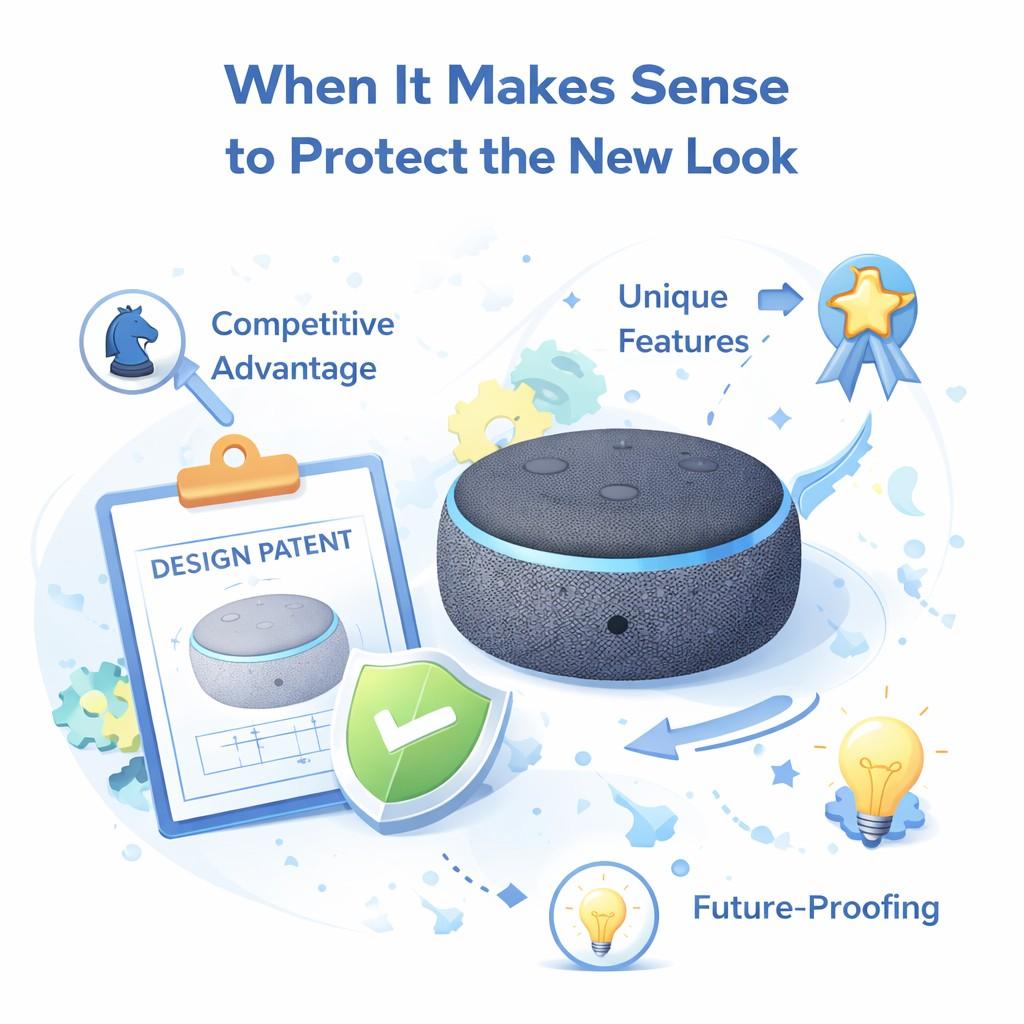
This is especially true if your new look is part of a broader brand shift. Maybe you are moving from playful to premium. Maybe you are moving from bulky to slim. These changes carry business weight. That weight deserves protection.
If you are unsure, this is where a fast review with a real attorney can save you from guesswork.
PowerPatent makes that review simple so you can get clarity without slowing down your release cycle. You can see how here: https://powerpatent.com/how-it-works
When Competitors Are Getting Closer
Sometimes the trigger is not internal. It is external.
If competitors have started to adopt design elements that feel close to yours, a refresh can be your chance to pull ahead visually. But that only works if you protect the new direction.
When your market becomes crowded, visual space becomes tight.
Companies start to circle around similar shapes, layouts, and finishes. If your refresh creates a cleaner, more distinct look, filing a new design patent can lock in that edge.
A smart tactic is to monitor competitor launches during your own redesign process. If you see others drifting toward your visual lane, that is not a reason to delay filing. It is a reason to act quickly.
The earlier you file, the stronger your position. Waiting until competitors are already selling similar-looking products makes enforcement harder and more expensive.
When the Design Drives Buying Decisions
Not every product sells because of how it looks. But many do.
If customers choose your product because it feels sleek, modern, bold, or unique, then the visual design is not decoration. It is a core business driver.
When a refresh improves that visual appeal, you are not just updating aesthetics. You are strengthening one of your key selling points.
In that case, protecting the new look is not optional. It is part of protecting revenue.
A helpful exercise is to look at your marketing materials. Are you highlighting the new shape? Are you showcasing the updated exterior in ads? Are reviewers talking about the new design as a major improvement?
If the answer is yes, that is a strong signal that the design has commercial value. And commercial value is exactly what design patents are meant to guard.
When the Old Patent No Longer Matches Reality
There are times when the old design patent simply does not reflect what you are selling anymore.
Maybe you removed a signature feature. Maybe you changed the front face layout. Maybe you altered the proportions in a way that shifts the entire silhouette.
If the product in the market looks meaningfully different from the drawings in your granted patent, relying on that old filing becomes risky.
In this situation, protecting the new look is about aligning your legal coverage with your actual business. Your patents should reflect what customers can buy today, not what you sold three years ago.
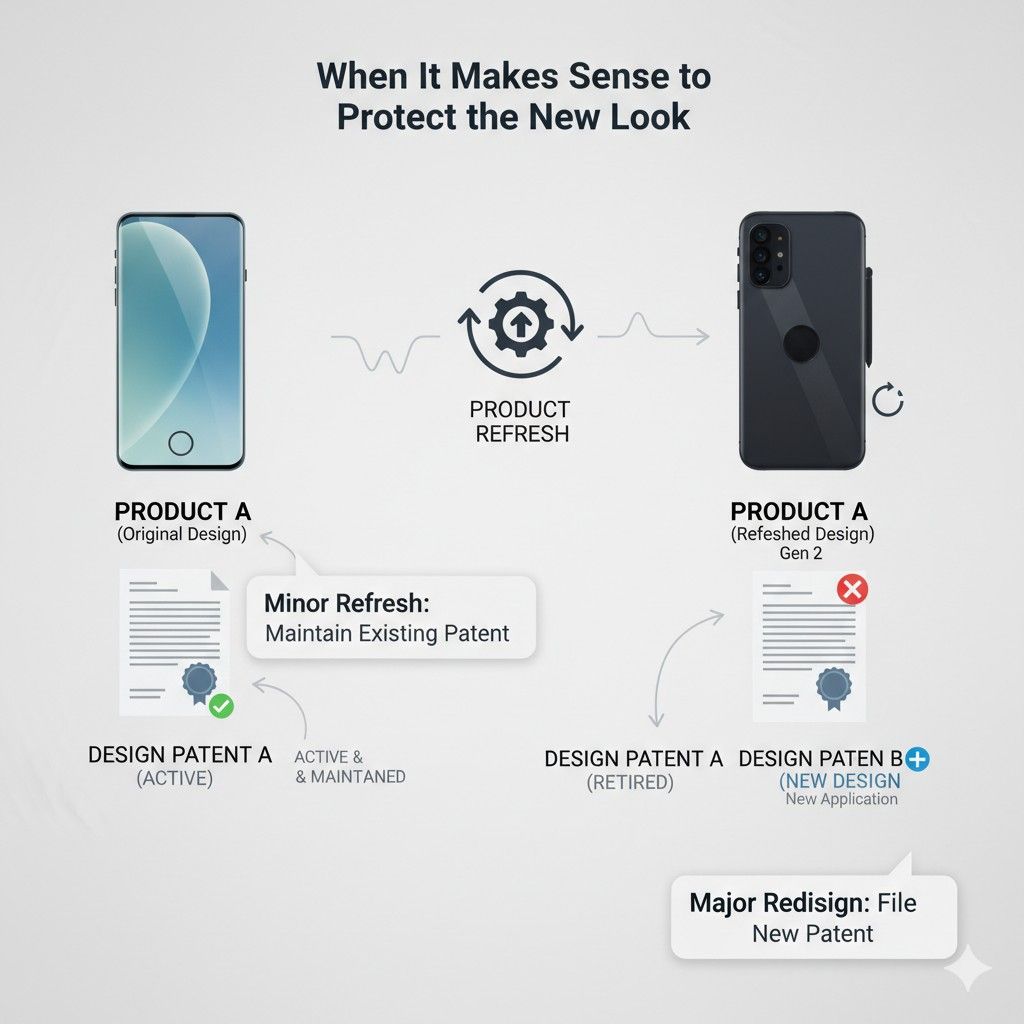
A strong strategy is to treat your patent portfolio as a living record of your product evolution. Each major visual generation should have its own clear layer of protection.
This layered approach can create a stronger defensive wall over time. It also gives you more flexibility if you ever need to enforce your rights.
When You Plan to Scale or Raise Capital
Investors care about defensibility. They want to know that what you are building cannot be easily copied.
If you are planning to raise a round, enter a new market, or partner with a large company, a refreshed product without updated protection can raise questions.
Imagine pitching your newest version as your flagship product while your only design patent covers an older look. That gap can weaken your story.
On the other hand, being able to say that each major generation of your product is protected sends a powerful message. It shows that you think long term. It shows that you build with strategy, not just speed.
Before major business milestones, review your design protection. If the new look is central to your future growth, filing a new design patent can strengthen your position in negotiations.
When You Want to Send a Clear Market Signal
Sometimes the value of a design patent is not just in court. It is in signaling.
Filing on a refreshed design tells the market that you are serious about your visual identity. It tells competitors that copying the new look is not safe.
Even before a patent is granted, the fact that you have filed can act as a quiet warning.
For startups in fast-moving industries, this signaling effect can be powerful. It can reduce the number of close copies before they even happen.
The key is speed. If you refresh your product and wait months to think about protection, the signal becomes weak. Acting early makes it strong.
PowerPatent is built for this moment. Instead of dragging the process out for months, you can move quickly, with real attorney oversight and smart software guiding the details.
That means your protection keeps pace with your product team. Learn more here: https://powerpatent.com/how-it-works
When the Refresh Is Part of a Long-Term Platform
Some refreshes are small steps in a larger journey. You may be building a product platform that will evolve over many years.
If the new design sets the visual direction for future versions, protecting it becomes even more important. It may influence multiple models, accessories, or related products.
In this case, filing a new design patent is not just about this year’s release. It is about setting the foundation for future generations.
Think ahead. If this refreshed look is likely to stick around and define your brand for years, protect it while it is fresh and clearly yours.
When the Cost of Not Protecting Is Higher Than the Filing
Every protection decision comes down to cost versus risk.
The cost of filing a new design patent is usually small compared to the cost of losing exclusivity over a successful product line.
If your refreshed design becomes popular and competitors copy it freely because you did not file, the missed opportunity can be far greater than the filing expense.
A disciplined founder asks a simple question: if this design becomes a hit, will I regret not protecting it?
If the honest answer is yes, that is your sign.
By building a repeatable process for evaluating each refresh, you remove emotion from the decision. You replace it with strategy.
And when you have a platform that makes filing clear, fast, and backed by real attorneys, protecting strong designs becomes far less painful than many founders expect.
When to Let an Old Design Patent Go
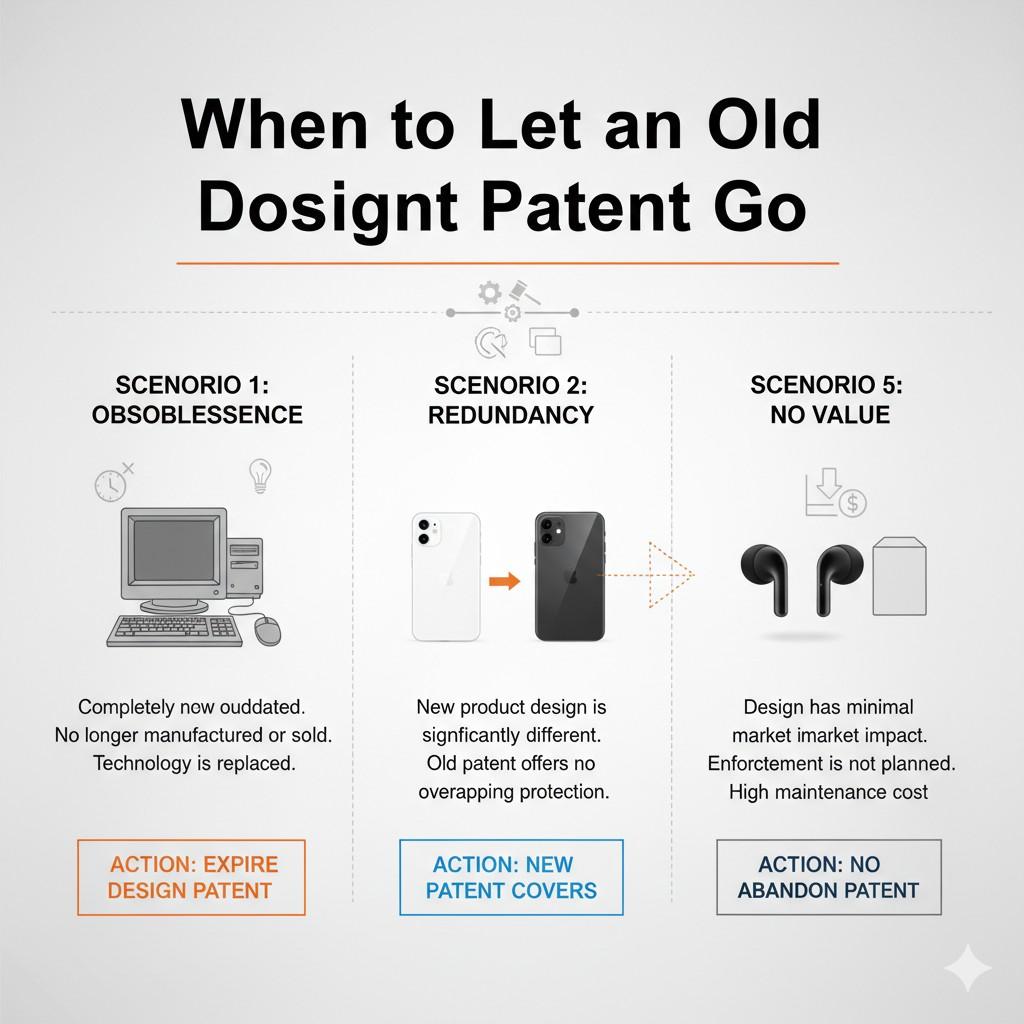
Not every design patent needs to live forever. Sometimes the smartest move is to let one fade out. That may sound strange, especially if you worked hard to secure it.
But strong strategy is not about holding on to everything. It is about focusing on what still serves your business today.
A design patent is a tool. If the tool no longer protects something meaningful, it may be time to retire it. The key is making that decision on purpose, not by accident.
In this section, we will look at how to think clearly about letting an old design patent go and how to do it in a way that protects your long-term position.
When the Product Is No Longer in the Market
If you no longer sell the version covered by the old design patent, the value of that protection may shrink over time.
Design patents protect how something looks. If that exact look is no longer available for customers to buy, enforcement becomes less practical.
Competitors are less likely to copy an outdated design when the market has already moved on.
Before you decide to maintain or renew any related rights, ask a direct question. Is this specific look still tied to active revenue? If not, what real business purpose does the patent serve today?
There are cases where older designs still matter. For example, if you continue to sell refurbished units or lower-cost legacy models, the patent may still create value.
But if the design is truly retired from your lineup, keeping protection may offer limited upside.
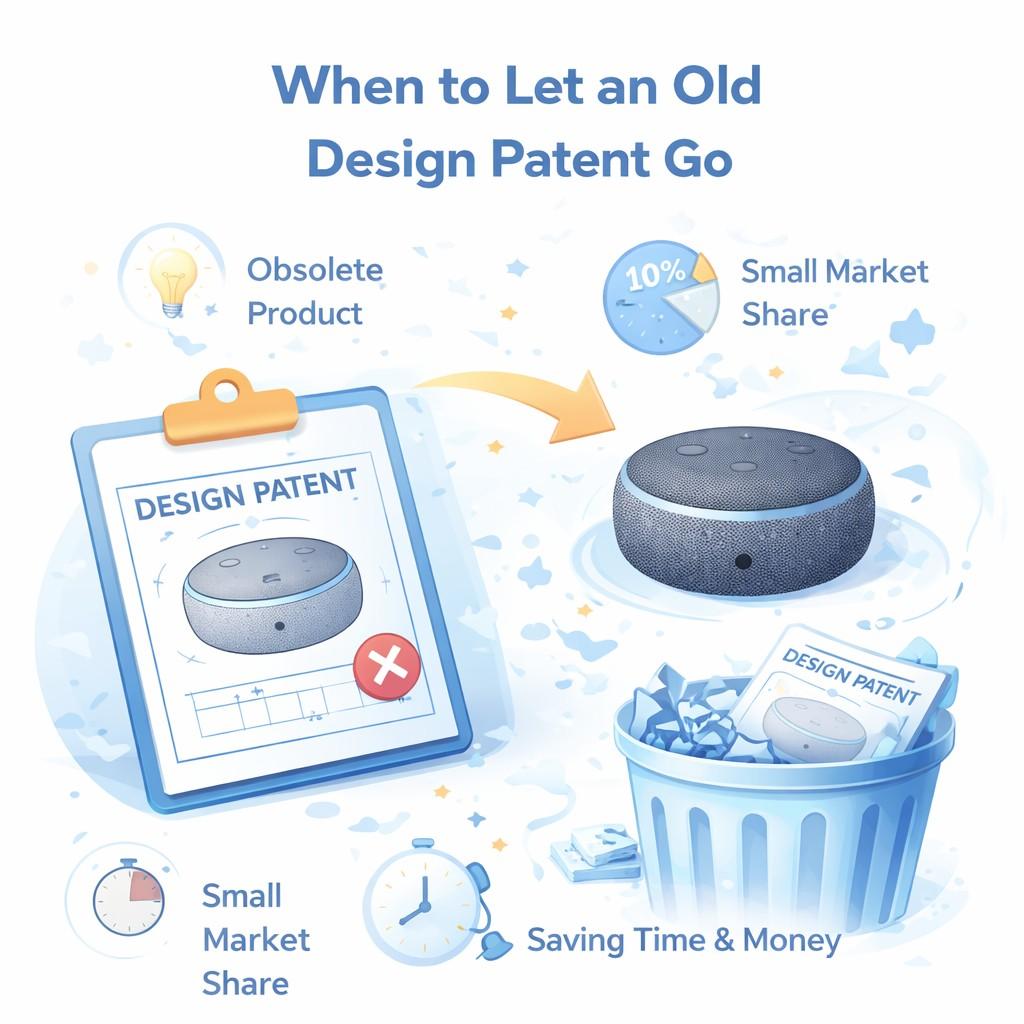
A strategic review once a year can help you see this clearly. Pull up your full portfolio and map each design patent to a current product. If there is no clear connection, that is a signal worth examining.
When the Brand Direction Has Shifted
Brands evolve. What felt bold and fresh three years ago may feel dated now. If your visual identity has moved in a new direction, older designs may no longer represent who you are.
Holding on to patents that protect a visual style you have abandoned can create confusion in your overall strategy. It can also waste attention that should be focused on protecting the designs that define your future.
This is especially true if the older design does not reflect your current quality level or positioning.
If you moved upmarket and your early versions look simple or rough compared to today’s models, protecting that old appearance may not strengthen your brand.
The better move may be to concentrate resources on the designs that support your current story.
This does not mean old patents are useless. They may still have defensive value in certain cases. But if they no longer align with your direction, it may be reasonable to let them sunset naturally rather than investing energy into maintaining them.
When Enforcement No Longer Makes Sense
A design patent has value when you are willing and able to enforce it.
If the design it protects is no longer central to your business, would you realistically spend time and money to stop a copy? If the honest answer is no, the patent may have lost its practical power.
Enforcement is not just about lawsuits. It is also about sending warning letters or taking action on online marketplaces. If you would not take those steps for that specific look, the strategic value drops.
This is not about being aggressive. It is about being realistic.
Strong companies align their protection efforts with their real priorities. They do not hold patents just to say they have them. They hold patents that back up products and designs that matter today.
When Resources Are Better Used Elsewhere
Every business has limits. Time, money, and attention are finite.
If you are choosing between protecting a new flagship design and maintaining focus on an outdated one, the smarter move is usually clear. Invest where the growth is.
For startups especially, focus is everything. A clean, intentional portfolio often beats a large but unfocused one.
This is where having visibility into your protection strategy becomes powerful. When you see your design patents as part of a bigger plan, you can make sharper decisions about where to double down and where to step back.
PowerPatent helps founders see the full picture. Instead of treating each filing as a one-off event, you can build a thoughtful system that grows with your company.
Real attorneys review the work, and smart software keeps everything organized. That clarity makes it easier to know when to protect and when to let go. Learn more here: https://powerpatent.com/how-it-works
When the Design Was a Short-Term Experiment
Not every refresh is a long-term commitment. Sometimes you test a limited edition. Sometimes you experiment with a seasonal look. Sometimes you try a bold concept that does not stick.
If the design was always meant to be temporary, protecting it for the long run may not make sense.
In these cases, ask yourself whether the design created lasting brand value or if it was simply a short-term play. If it did not shape your identity or revenue in a meaningful way, letting the patent expire may be the cleanest option.
The key is to make that decision intentionally. Do not let a patent drift into expiration because you forgot about it. Review it. Decide. Then move forward with confidence.
When the Competitive Landscape Has Changed
Markets shift. Competitors enter and exit. What once felt like a crowded design space may now be less intense.
If the risk of copying around a specific old design has dropped significantly, the need for protection may also decrease.
On the other hand, if that old design still blocks competitors from entering a certain visual lane, keeping it active could still serve a purpose.
The important part is context. A patent does not exist in a vacuum. Its value depends on the market around it.
At least once a year, review your competitors’ products next to your older designs. If no one is moving near that visual territory anymore, you may decide the protection is less critical.
Letting Go Without Losing Strength
Retiring a design patent does not mean weakening your company. In many cases, it means sharpening your focus.
A strong portfolio is not about quantity. It is about alignment. It reflects where your company is going, not just where it has been.
When you free up attention from outdated designs, you can channel it into protecting the products that define your next chapter.
The smartest founders treat their intellectual property like any other asset. They review it, question it, and adjust it as the business evolves.
And when you have a system that makes those reviews simple and fast, you stay in control instead of reacting late.
How to Make the Smart Call Without Slowing Down Your Startup
Speed matters. Your product team is shipping. Your engineers are building. Your designers are refining. The last thing you want is a long legal process that blocks momentum.
But here is the truth. Ignoring design protection decisions does not make them go away. It only pushes them into the future, where they become harder and more expensive to fix.
The real goal is not choosing between speed and protection. The goal is building a system where both can exist at the same time.
This section will show you how to make clear decisions about renewing, retiring, or filing new design patents without slowing down your startup.
Build Design Review Into Your Product Cycle
Most startups have clear stages for product development. There is concept. There is prototype. There is design freeze. There is launch.
Design patent strategy should live inside that flow, not outside it.
The mistake many teams make is treating patents as a separate, heavy process that begins after launch. By then, you are reacting instead of planning.
A better move is simple. At the design freeze stage, add one focused question. Has the overall visual appearance changed enough to consider new protection?
That is it. One question at one key moment.
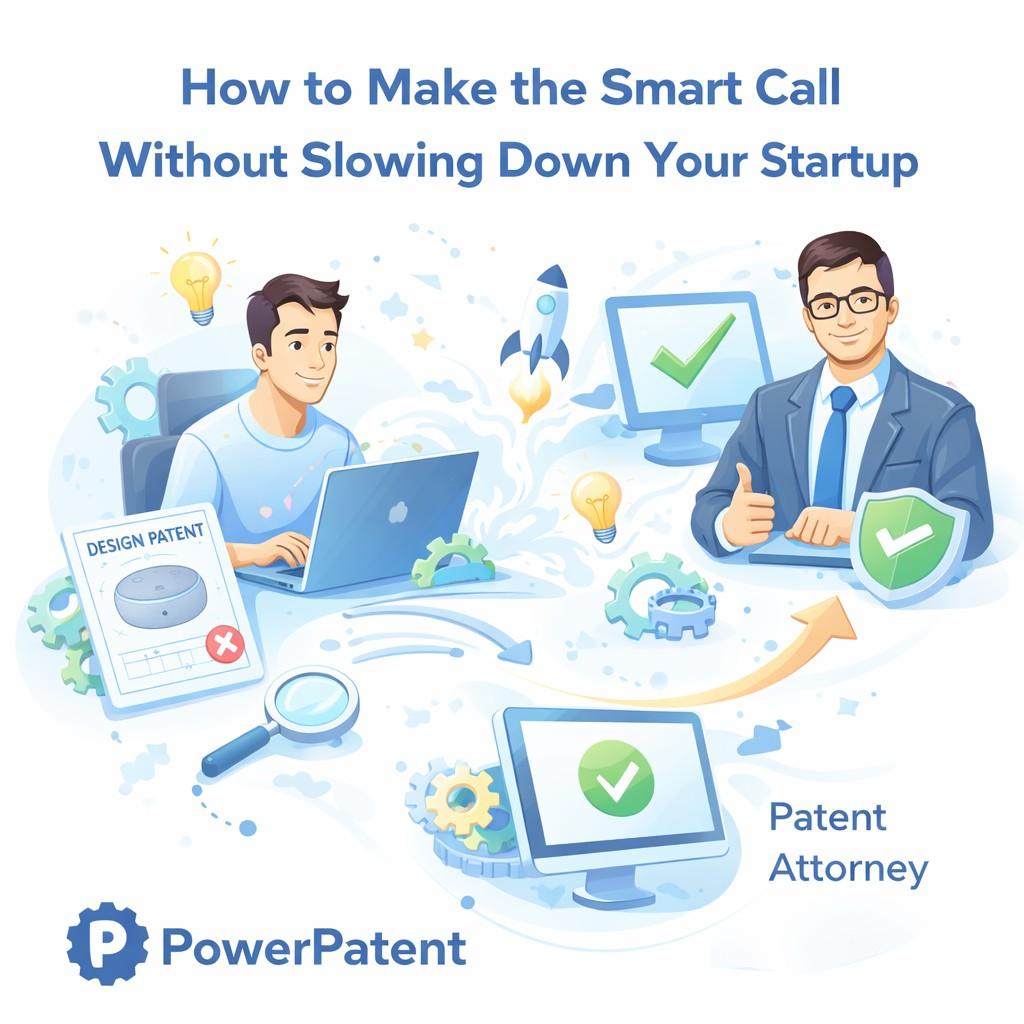
This does not require hours of meetings. It requires awareness. When the team knows that design changes trigger a quick protection review, decisions become part of the rhythm of building.
The result is fewer surprises and stronger coverage.
Create a Clear Internal Owner
Confusion slows companies down. If no one owns the design patent decision, it will fall through the cracks.
You do not need a large legal department. You need one responsible person. It could be a founder. It could be a product lead. It could be an operations manager. The key is clarity.
That person’s role is not to become a patent expert. Their role is to notice when visual changes are meaningful and trigger the review process.
When ownership is clear, the process becomes predictable. Predictable processes move faster than chaotic ones.
This is where modern tools matter. With PowerPatent, the responsible person can quickly upload visuals, describe the refresh, and get real attorney feedback without endless back-and-forth.
The platform is built for startup speed, not slow firm timelines. You can see how it works here: https://powerpatent.com/how-it-works
Decide Based on Business Impact, Not Emotion
Founders often feel attached to their products. That attachment is powerful. But protection decisions should be grounded in business reality.
When reviewing a refreshed design, ask practical questions. Will this look likely stay in the market for years? Is it tied to a major revenue line?
Does it represent a shift in brand identity? Would copying this design hurt us in a real way?
If the answer to these questions is yes, filing a new design patent often makes sense.
If the refresh is minor, short-term, or unlikely to define your brand, protecting it may not be necessary.
This approach keeps your portfolio focused and strong. It also prevents overthinking. You are not chasing protection for every small detail. You are protecting real value.
Move Early, Not Perfectly
Perfection slows teams down. Waiting until every detail feels final can create delays that hurt your protection options.
In design patents, timing is critical. Filing before public release often gives you stronger rights and fewer headaches.
This means you do not need to wait until mass production. If the design is stable and you know it is heading to market, that is often the right moment to act.
The key shift is mental. Stop thinking of design patents as the last step. Think of them as part of the product release plan.
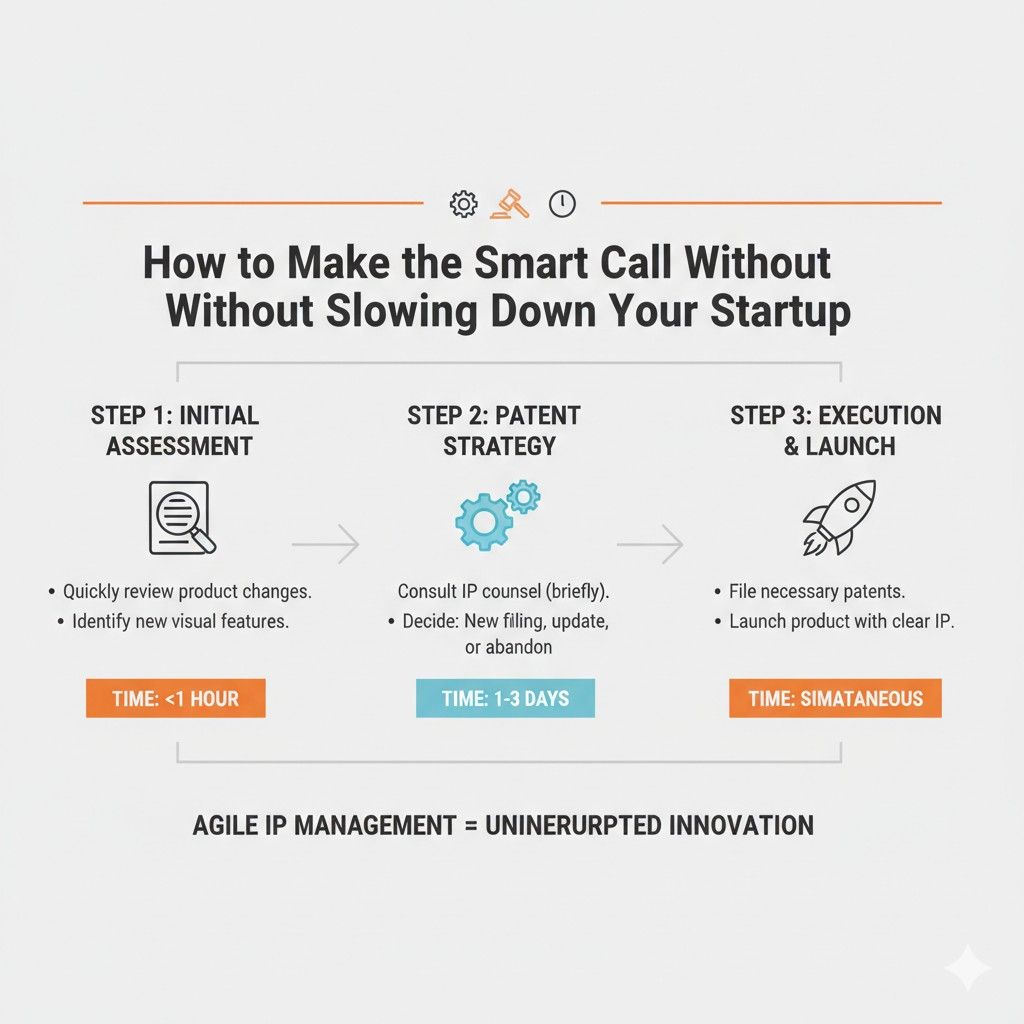
When protection becomes routine, it no longer feels heavy.
Use Each Refresh as a Strategic Checkpoint
A product refresh is more than a visual update. It is a chance to review your entire design portfolio.
Instead of looking at one patent in isolation, zoom out. Which designs are active? Which ones reflect current products? Which ones are outdated?
This broader view helps you see patterns. You may notice that your early patents protect shapes you no longer use. You may see that your newest flagship has no protection yet.
With this clarity, decisions become easier. You are not reacting emotionally to a single refresh. You are shaping a long-term protection map.
This is exactly the kind of structured thinking that separates reactive startups from strategic ones.
Keep the Process Lightweight but Real
Traditional patent processes often feel heavy because they are built for a different era. Long emails. Slow revisions. Complex forms.
Startups do not move that way.
The smarter path is combining software speed with real attorney oversight. That way, you get guidance without friction. You get quality without delay.
PowerPatent was built for this exact balance. Founders can move quickly, stay in control, and still have experienced attorneys reviewing the work. That reduces the risk of mistakes while preserving momentum. Explore the approach here: https://powerpatent.com/how-it-works
When the process is smooth, making the decision to file, renew, or retire becomes far less stressful.
Align Protection With Your Growth Plan
Your design patent strategy should mirror your growth strategy.
If you plan to expand into new markets, strong protection becomes more important. If you are entering partnerships or licensing deals, clear ownership of your designs adds leverage.
On the other hand, if you are pivoting away from a product line, protecting that old design may not serve your future.
The smartest founders review design protection during major business planning sessions. When setting annual goals or product roadmaps, include a short discussion about design assets.
This keeps intellectual property aligned with real growth.
Confidence Is the Real Outcome
At the end of the day, this is not just about paperwork. It is about confidence.
When you know your refreshed product is protected, you market it boldly. You invest in it fully. You scale without hesitation.
When you are unsure whether your old patent covers the new look, doubt creeps in. That doubt can slow decisions more than any filing process ever would.
Clear strategy removes that doubt.
Design patents are not meant to trap you in complexity. They are meant to give you control over the visual identity you worked hard to build.
When you treat each product refresh as a strategic moment, you turn potential risk into long-term strength.
And when you have the right system supporting you, those decisions become fast, focused, and aligned with your startup’s pace.
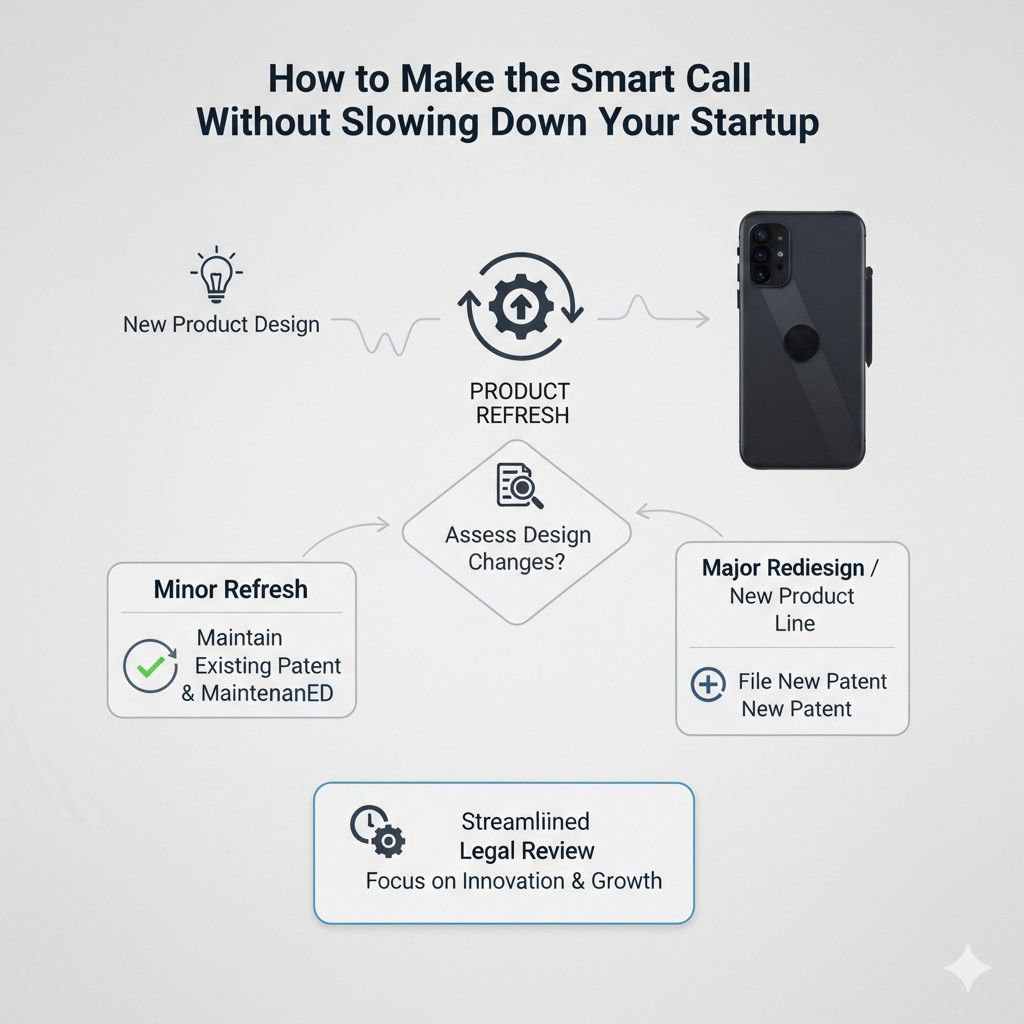
If you are building products where design matters, do not leave this to chance. See how PowerPatent helps founders protect what they are creating without slowing down innovation: https://powerpatent.com/how-it-works
Wrapping It Up
A product refresh is never just about looks. It is about direction. It signals where your company is going. It shows customers how you are evolving. And whether you realize it or not, it also forces a decision about your design protection. Your old design patent does not stretch to cover new shapes. It does not update when your team refines edges or changes proportions. It stays fixed in time. That means every meaningful refresh creates a moment of choice.
Leave a Reply