
You work too hard to pay twice for the same thing. Yet many founders do exactly that with their patents. They build something new, file one patent, then build the next version and file again—without checking what they already own. The result? Overlap. Duplicate filings. Extra legal bills. And weaker protection than they think. Let’s fix that. Before we go deeper, if you’re building real tech and want clear, fast patent protection without waste, take a minute to see how PowerPatent works → https://powerpatent.com/how-it-works
Why Founders Accidentally Pay Twice for the Same Patent Protection
Most founders do not mean to waste money. In fact, they are trying to do the right thing. They are moving fast. They are building new features. They are shipping updates.
They are talking to investors. And somewhere in that speed, they assume that filing another patent must be safer than missing something. So they file again. And again.
The problem is not effort. The problem is visibility. When you do not clearly see what your first patent already covers, it becomes easy to pay twice for the same protection without even knowing it.
This section will break down exactly how that happens and how to stop it.
Speed Feels Safe, But It Can Hide Overlap
Startups move fast. That is the whole point. You build version one. Then version two. Then a new use case. Then a new feature. Each step feels like a new invention.
After this heading, it is important to understand one key truth. Many product changes feel bigger than they are from a patent view. The outside may look new. The inside logic may be the same.
Founders often think, “We changed the interface,” or “We added AI,” or “We switched the data flow.” So they assume they need a fresh filing. What they do not always check is whether the core idea was already protected in the first patent.
This is where overlap starts. The second filing may describe the same engine with different words. The third filing may cover the same method but with one extra step.
You end up paying full price for what is mostly the same protection.
A better move is to pause before filing again. Ask one simple question. What exact new technical change exists that was not already described before? Not marketing changes. Not product packaging. Real technical differences.
If you cannot clearly explain that difference in plain language, you might be filing twice for the same idea.
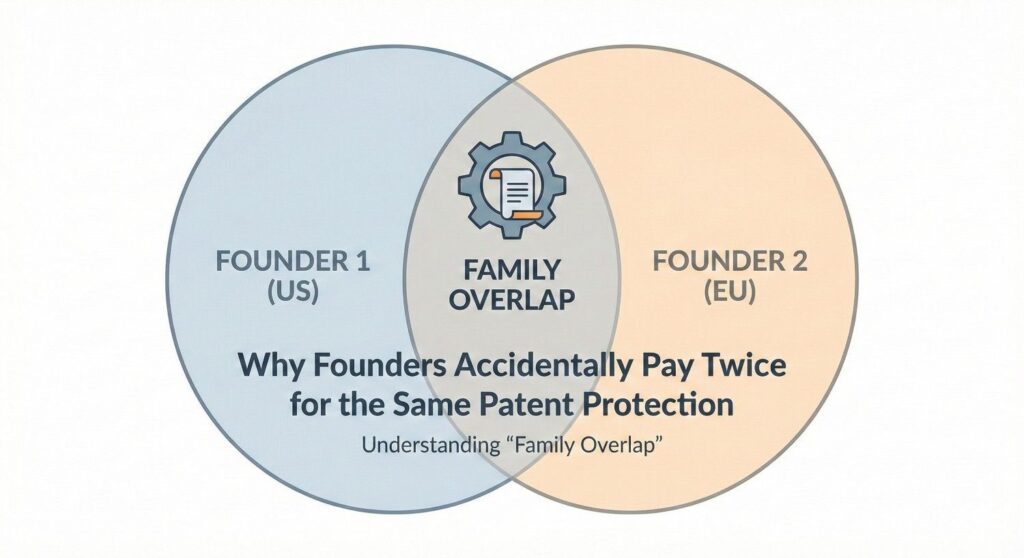
Before you rush to the next filing, it helps to see how modern patent strategy works in a product cycle.
PowerPatent was built for this exact issue. You can see how it maps your inventions over time here → https://powerpatent.com/how-it-works
Product Updates Are Not Always New Inventions
Every startup evolves. That is normal. But not every update deserves its own full patent filing.
After this heading, let’s slow down and think about how patents actually work. A patent protects how something works at a deep level. It is not about surface changes. It is about structure and process.
If your original patent described a system that collects data, processes it with a model, and outputs a result, then adding a dashboard does not always create a new invention.
Changing colors does not. Even switching from one model type to another may not, if the core process stays the same.
Founders often mistake feature growth for technical novelty. They feel progress and assume legal work must follow.
The actionable move here is to build a habit of documenting your real technical jumps.
When your engineering team solves a new technical problem in a new way, write it down clearly. What was the limitation before? What changed? What is now possible that was not possible before?
If you cannot define a clear technical breakthrough, it may fit inside your existing patent family instead of needing a full new one.
A smart strategy is to grow patents like you grow code. Version them. Expand them. Add depth where needed. Do not start from zero every time.
This is where founders save real money. They stop reacting and start planning.
Different Attorneys, Different Files, No Central View
Many startups do not realize how much overlap happens simply because no one has a full picture.
After this heading, consider a common story. A founder files an early patent with one firm.
Months later, they hire a new attorney for a new feature. That attorney reviews only the new materials. They draft a fresh application. No one fully maps it against the original filing.
Now you have two separate documents that partly describe the same system.
This is not bad intent. It is just poor coordination.
When patents are treated as isolated tasks instead of one connected strategy, overlap becomes almost guaranteed.
A better approach is to maintain a living map of your patent family. Each filing should connect clearly to the previous one. You should know which claims expand coverage and which ones repeat it.
If your current process does not give you that visibility, you are operating blind.
This is exactly why founders choose platforms that combine smart software with real attorney oversight.
You need both. You need tools that track your invention history, and you need experienced lawyers who review it carefully before filing.

PowerPatent was designed around this idea. It gives founders a clear view of their entire patent family so nothing overlaps by accident → https://powerpatent.com/how-it-works
Fear of Missing Out Drives Extra Filings
Fear is expensive.
After this heading, let’s talk about something most founders will not admit. Many duplicate filings happen because of fear.
Fear that a competitor will file first. Fear that investors will ask, “Do you have patents on that?” Fear that something might slip through the cracks.
So the founder files again just to feel safe.
But filing more does not always mean stronger protection. In some cases, it creates messy claim sets that are harder to enforce. It can also lead to internal confusion about what is actually protected.
Instead of filing from fear, file from clarity.
When you build something new, do a structured review. Ask your patent team to compare the new feature against your current claims. Identify what is already covered. Identify the gap, if any.
If there is a gap, expand strategically. If not, save your budget for the next real breakthrough.
Smart founders treat patents like capital allocation. Every filing should have a reason tied to business goals.
If you are raising funding, ask yourself which core pieces truly increase valuation. If you are blocking competitors, focus on choke points in your technology. Do not scatter filings everywhere just to feel busy.
Clarity reduces fear. Structure reduces waste.
Misunderstanding What “Coverage” Really Means
Many founders assume that if they describe something slightly differently, it counts as new coverage.
After this heading, it helps to reset expectations. Patent coverage is not about wording alone. It is about the scope of what the claims protect.
Two filings can use different language and still cover the same technical ground. This is where startups unknowingly pay twice.
A strategic move is to request claim comparison before filing anything new. Lay the current claims side by side with the proposed ones. Highlight the true differences.

If the differences are small or cosmetic, you likely do not need a new full filing. You may need a continuation or refinement instead.
This small step alone can prevent thousands of dollars in unnecessary fees.
Founders who win long term are not the ones who file the most. They are the ones who file with precision.
Growth Without Strategy Creates Patent Sprawl
As companies grow, so does complexity.
After this heading, imagine your startup two years from now. More engineers. More features. More experiments. Without a clear patent roadmap, you will end up with scattered filings that overlap in random ways.
This creates what many call patent sprawl. It looks impressive on paper. But when you dig deeper, much of the coverage repeats itself.
This hurts in due diligence. Investors may ask how each patent strengthens your moat. If you cannot explain the role of each one clearly, that is a warning sign.
A smarter path is to align patent filings with product roadmap milestones. Tie each filing to a core technical shift. Make sure each new application expands your protection outward, not sideways into the same space.
This requires discipline. But it also creates a cleaner, stronger portfolio that is easier to defend and easier to explain.
If you want to see how modern founders build structured patent families without overlap, explore how PowerPatent guides that process step by step → https://powerpatent.com/how-it-works
The Hidden Cost of Duplicate Coverage
Paying twice is not only about filing fees.
After this heading, consider the long-term cost. Each extra patent must be maintained. Each one requires responses to office actions. Each one may face challenges later.
Duplicate coverage increases maintenance fees, attorney time, and management overhead.
And here is something many do not realize. Overlapping patents can weaken negotiation leverage. If a competitor challenges one patent and shows it overlaps with another, it can create confusion about scope and validity.
Clean, well-structured coverage is stronger than a stack of partially overlapping filings.
The actionable takeaway is simple but powerful. Before every new filing, conduct a structured overlap review. Treat it as mandatory. Document the result. Only move forward if the new filing clearly expands protection in a meaningful way.
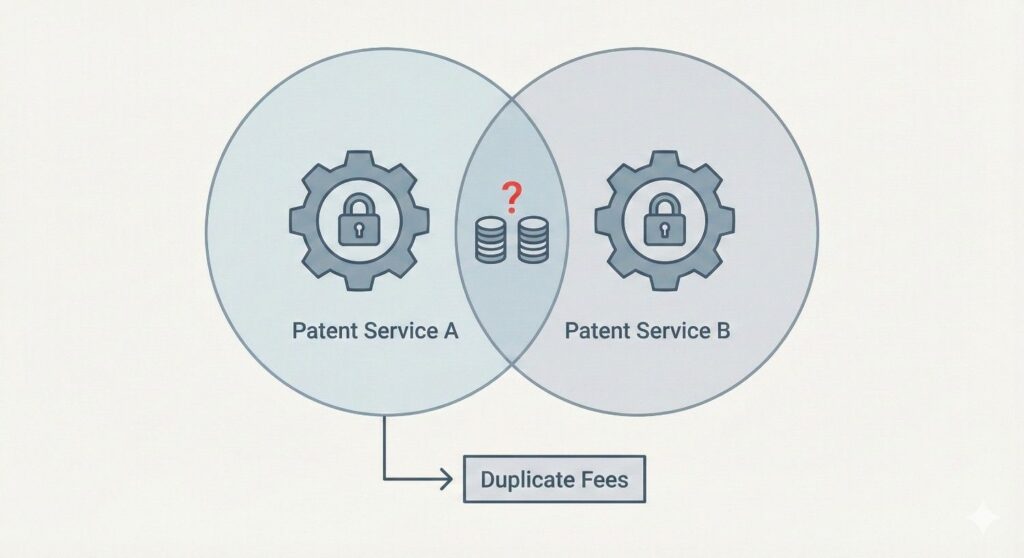
This single habit can save your startup tens of thousands over time.
And more important, it builds a patent portfolio that actually supports your growth instead of draining it.
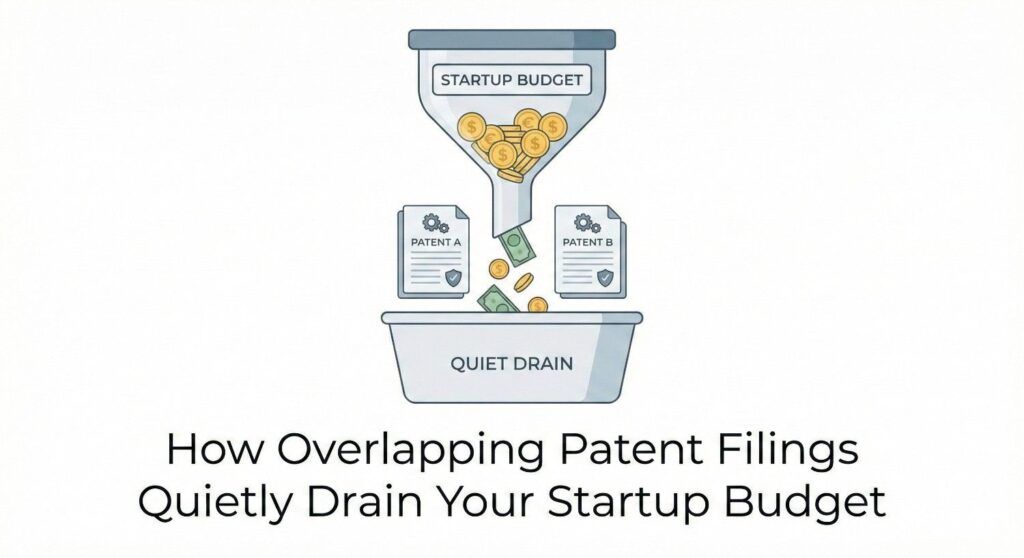
How Overlapping Patent Filings Quietly Drain Your Startup Budget
Most founders track burn rate. They track payroll. They track cloud spend. But very few track patent overlap.
The money leaves slowly. A filing fee here. An attorney invoice there. A response to an office action months later. It does not feel dramatic. Yet over time, it adds up to a serious number.
And the worst part is this: much of that money does not increase your protection at all.
When patent filings overlap, you are not just spending more. You are spending without gaining ground. That is a silent leak in your company.
The Illusion of “More Patents Means More Protection”
It is easy to assume that five patents are better than three. On a pitch deck, that sounds strong. Investors see a bigger number and think you are serious about IP.
After this heading, let’s slow that idea down. Five patents that protect the same core method in slightly different language do not create five layers of safety. They often create one real layer and four expensive echoes.
The danger is psychological. Each time you file, you feel progress. You feel protected. But if the new filing does not expand into new technical territory, it is not increasing your moat.
Instead of asking, “How many patents do we have?” ask, “What new technical ground does this patent claim that we did not already cover?”
That shift in thinking alone can change how you allocate budget.
A smart founder treats patents like land. You do not want to buy the same plot twice. You want to expand into new territory that blocks competitors from entering your space.
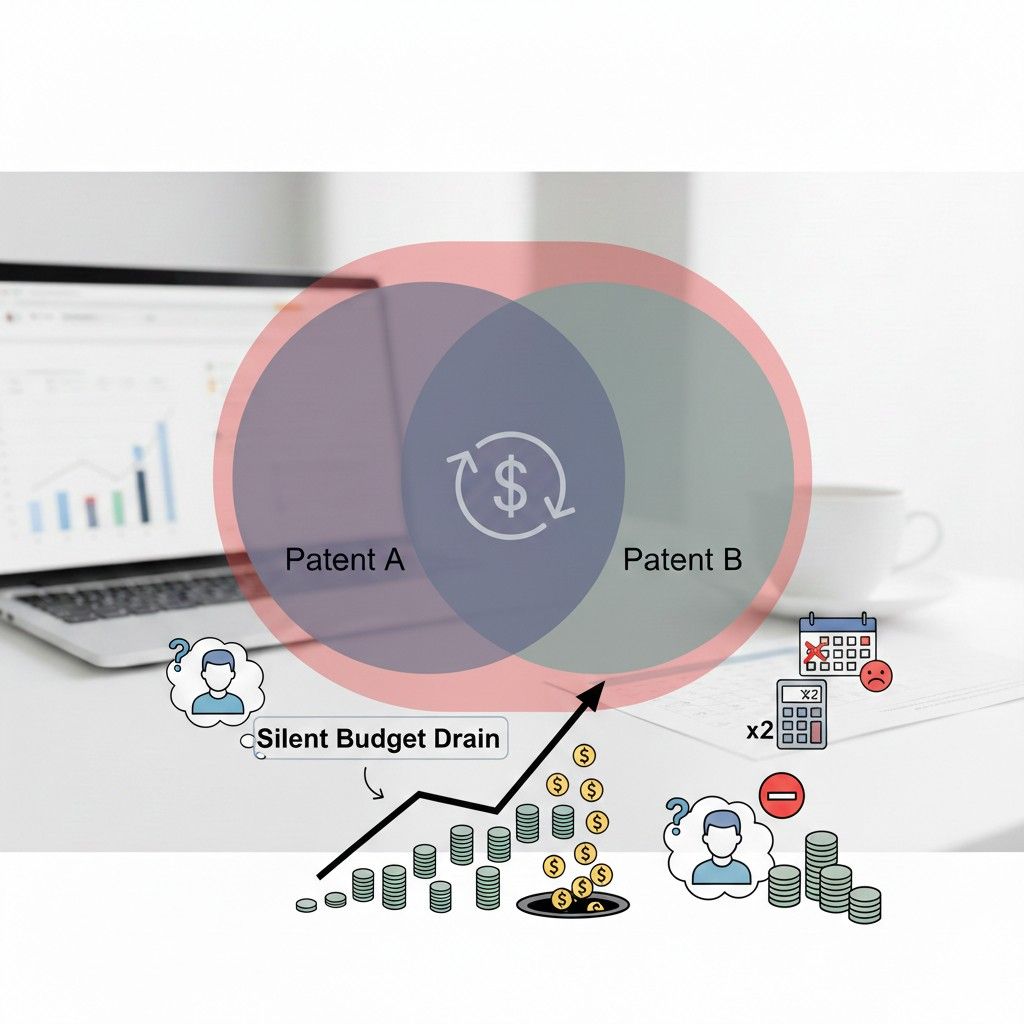
If you are unsure whether your filings are expanding or repeating, that is a sign you need better visibility into your patent family. This is exactly where structured tools and real attorney guidance matter → https://powerpatent.com/how-it-works
Attorney Time Compounds the Cost
Patent filings are not one-time events. They create a long chain of work.
After this heading, consider what happens after you file. The patent office responds. Your attorney reviews the response. You revise claims. You argue. You amend. This cycle can repeat several times.
Now imagine you have two filings that overlap heavily. Both will likely receive similar objections. Both will require similar responses. You are now paying twice for the same back-and-forth.
This is not just about filing fees. It is about ongoing legal effort.
Each hour your attorney spends responding to overlapping issues is an hour not spent strengthening new areas of your portfolio.
Over time, this compounds. It stretches your legal budget thinner. It slows your ability to file truly new innovations.
A strategic move here is to review pending applications before filing new ones. Look at what claims are already under review. Ask whether your new idea could be integrated into an existing case through a continuation instead of starting from scratch.
That single decision can cut future office action costs dramatically.
Maintenance Fees Multiply Quietly
Most founders focus on the cost to file. Few think about the cost to keep a patent alive.
After this heading, here is what happens. Once a patent is granted, you must pay maintenance fees over its life. If you have multiple patents that overlap, you are paying to maintain duplicate protection year after year.
This becomes a long-term financial drag.
Imagine holding three patents that all protect nearly the same method. Over a decade, you may pay maintenance fees on all three, even though one well-structured patent could have done the job.

That is money that could have gone into hiring engineers, running experiments, or expanding your product.
A disciplined review every year can prevent this. Look at your portfolio and ask, “If we were starting today, would we file this again?” If the answer is no, it may be time to rethink how you structure future filings.
Clean structure today prevents regret later.
Overlap Weakens Strategic Focus
There is another cost that is harder to see. Overlapping patents can blur your strategy.
After this heading, think about your company story. What is the core technical advantage that makes you different? Your patent portfolio should reflect that story clearly.
When filings overlap randomly, it becomes harder to explain your moat. Your patents look scattered. The technical focus looks fuzzy.
During due diligence, investors may ask you to explain how each patent supports your competitive position. If you cannot clearly map each one to a distinct advantage, it raises questions.
Overlap creates noise. Noise weakens confidence.
A strong portfolio feels intentional. Each patent builds on the last. Each one expands coverage into a new layer of your system.
To achieve that, you need to align patent planning with product planning. When your roadmap includes a major architectural shift, that may justify a new filing. When you are simply improving performance inside an already claimed method, it may not.
That level of discipline protects both your wallet and your credibility.
Engineering Teams Rarely See the Full Cost
Engineers focus on solving problems. That is their job. When they build something new, they often assume it deserves its own patent.
After this heading, here is where budgets can drift. If every technical improvement leads to a new filing without strategic review, your patent spend will rise quickly.
This is not the engineer’s fault. They are doing what they are trained to do: innovate.
The responsibility sits at the leadership level. Someone must connect invention decisions to portfolio strategy.
One powerful habit is to create a quarterly invention review. Instead of filing immediately after each breakthrough, collect recent innovations and review them together. Decide which ones expand your moat and which ones strengthen existing claims.
This batch approach reduces emotional decisions and encourages strategic thinking.
When you step back and look at the full picture, you often discover that several “new” ideas are part of the same core system and can be protected together.
That saves money and builds stronger, broader claims.
Litigation and Enforcement Become Messier
Most founders do not think about enforcement early on. But it matters.
After this heading, imagine you need to enforce your patent against a competitor. If you have overlapping patents with similar scope, it can complicate the process.
Opposing counsel may argue that your patents are redundant. They may challenge inconsistencies between them. They may use overlapping language to create doubt.
A clean, well-organized patent family is easier to defend. Each patent has a clear purpose. Each one covers a distinct layer.
That clarity strengthens your position in negotiations.
The goal is not volume. The goal is leverage.
Leverage comes from thoughtful structure, not repetition.
Budget Predictability Matters for Growth
Startups thrive on predictability. You plan runway. You forecast revenue. You allocate resources carefully.
After this heading, consider how overlapping filings disrupt that predictability. Surprise legal bills. Unexpected office actions on multiple similar cases. Maintenance fees stacking up.
When patent strategy is reactive, budgets become unstable.
A proactive plan creates smoother spending. You know when major filings are coming. You know how they connect to product milestones. You reduce unnecessary duplication.
This makes it easier to communicate with investors. It shows maturity. It shows control.
Founders who treat patents as part of financial planning, not just legal paperwork, make better long-term decisions.
If you want a system that brings structure, visibility, and real attorney oversight into your patent process, explore how PowerPatent helps founders avoid these exact budget traps → https://powerpatent.com/how-it-works
The Real Drain Is Opportunity Cost
There is one more layer to this problem.
After this heading, think about what your extra patent dollars could have done elsewhere. More marketing experiments. Faster hiring. More compute for model training.
Every dollar spent on overlapping coverage is a dollar not invested in growth.
The goal of patents is to protect your upside. But if the way you file them slows your growth, you are working against yourself.
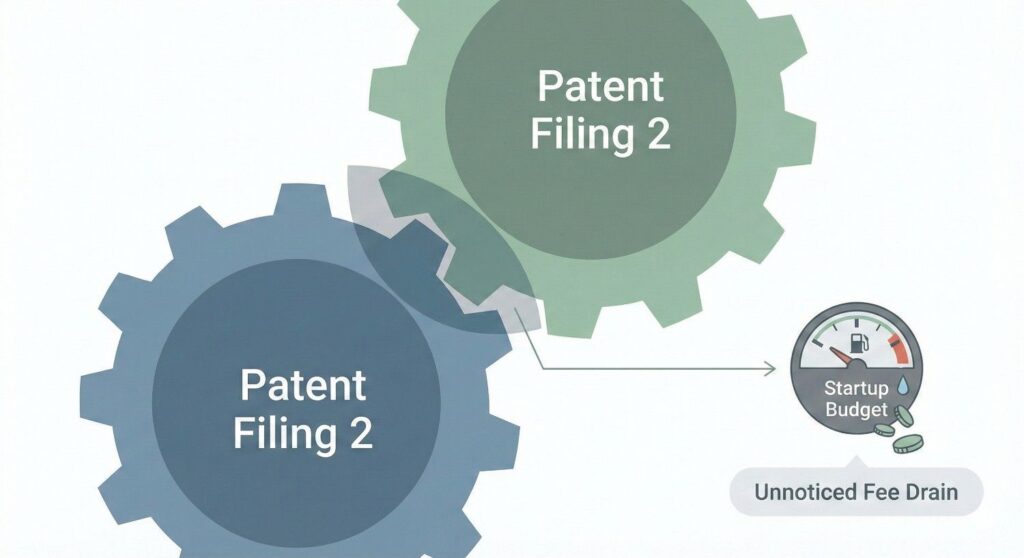
The smartest founders understand balance. Protect what matters deeply. Do not overspend protecting what you already covered.
That balance requires visibility, discipline, and the right support.
How to Build a Smart Patent Strategy That Grows With Your Product — Not Against It
If your patent strategy feels separate from your product roadmap, you are already at risk of overlap.
The strongest startups do not treat patents as legal paperwork that happens after something is built. They treat patents as part of product design. Protection grows in layers as the product grows in depth. It is planned. It is intentional. It is connected.
This is how you stop paying twice. You stop reacting and start designing your patent family the same way you design your system architecture.
Start With the Core Engine, Not the Surface
Every strong product has a core engine. It may be a model pipeline, a data structure, a control system, or a new way of processing signals. That core engine is where real protection begins.
After this heading, the key idea is simple. Protect the deep logic first. Not the interface. Not the branding. Not the outer shell.
When your first filing captures the fundamental method clearly and broadly, you create a foundation. That foundation reduces the need to file again for small changes later.
Many founders rush into patents too narrowly. They describe the exact version they built that week. Months later, when the product evolves, they feel exposed. So they file again.
A smarter move is to step back during the first filing. Ask, what is the underlying mechanism that will still exist two years from now? Capture that.
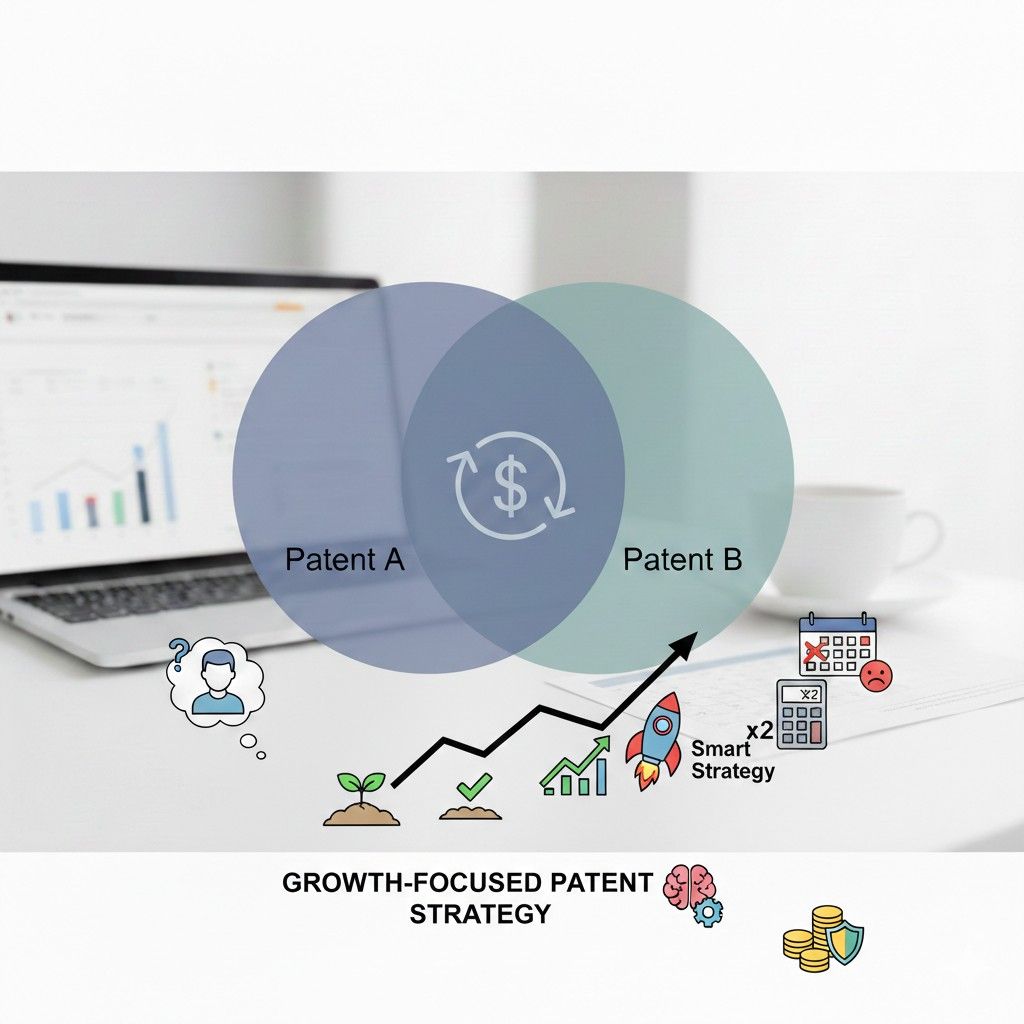
When you anchor your patent family at the engine level, you reduce overlap later because future improvements can build outward instead of sideways.
This is where experienced attorney guidance matters. Software alone cannot see the strategic angles. But software plus real oversight can help you define that strong base layer correctly → https://powerpatent.com/how-it-works
Map Patents to Product Milestones
Patents should follow real technical shifts, not feature releases.
After this heading, picture your product roadmap. There are small updates, and there are major architectural changes. Only some of those shifts justify new filings.
When you tie patent decisions to true structural upgrades, you create natural separation between filings. Each patent covers a distinct generation of your technology.
For example, if you move from a rules-based system to a self-learning system, that may justify a new layer of protection. If you simply improve speed or refine user flow, that may fit inside existing claims.
This alignment creates clarity. Your engineering team knows when to flag a potential invention. Your leadership team knows when to allocate budget.
It also makes due diligence smoother. When investors ask how your IP evolved, you can walk them through clear stages. Each stage corresponds to a product milestone.
That level of organization signals maturity.
Use Continuations the Right Way
Many founders hear the word continuation but do not fully understand its strategic power.
After this heading, here is the simple idea. A continuation allows you to expand or adjust claims based on the same core disclosure. It builds inside your existing patent family instead of starting over.
When used properly, continuations prevent duplicate coverage. They allow you to refine scope as your product evolves without paying for an entirely new foundation each time.
Instead of drafting a fresh application that repeats large parts of your original description, you extend the reach of what you already filed.
This keeps your patent tree connected. It avoids scattered filings that partially overlap without clear structure.
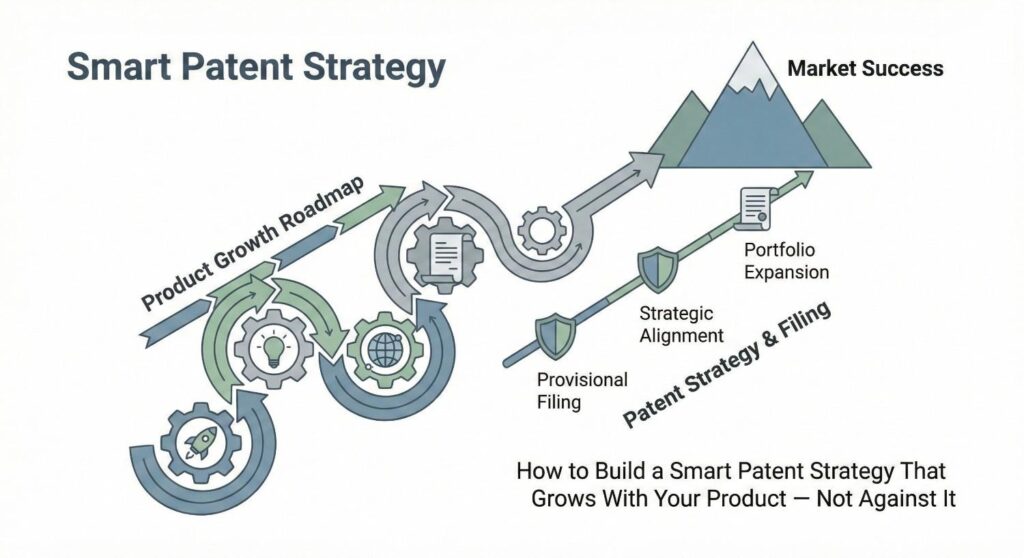
The key is timing and planning. You must think ahead during the original filing. Write it with enough depth so future claim expansions are possible.
That requires coordination between founders and attorneys early, not after the fact.
Create a Single Source of Truth for Your Patent Family
Confusion creates overlap. Visibility prevents it.
After this heading, consider how many documents, emails, and drafts surround your patent filings. If your team cannot quickly see what is already claimed and what is pending, mistakes happen.
A single, organized view of your patent family changes everything. You should be able to answer these questions instantly. What is protected? What is under review? What gaps remain?
Without this clarity, each new invention discussion starts from memory instead of data.
Modern founders expect dashboards for metrics, roadmaps, and code repositories. Your IP should not live in scattered PDFs.
When you centralize your patent information, you reduce the risk of repeating yourself. You make smarter expansion decisions.
This is exactly why platforms built for startups focus on visibility and structured tracking rather than isolated filings → https://powerpatent.com/how-it-works
Align Patent Budget With Business Goals
Patent strategy should serve growth, not distract from it.
After this heading, ask yourself a direct question. Why are we filing this patent? Is it to block a known competitor? Is it to strengthen valuation before fundraising? Is it to protect a future licensing opportunity?
If you cannot tie a filing to a business goal, it may not be worth the cost.
When budgets are tight, clarity matters even more. A focused portfolio that covers high-value areas is stronger than a wide but shallow one.
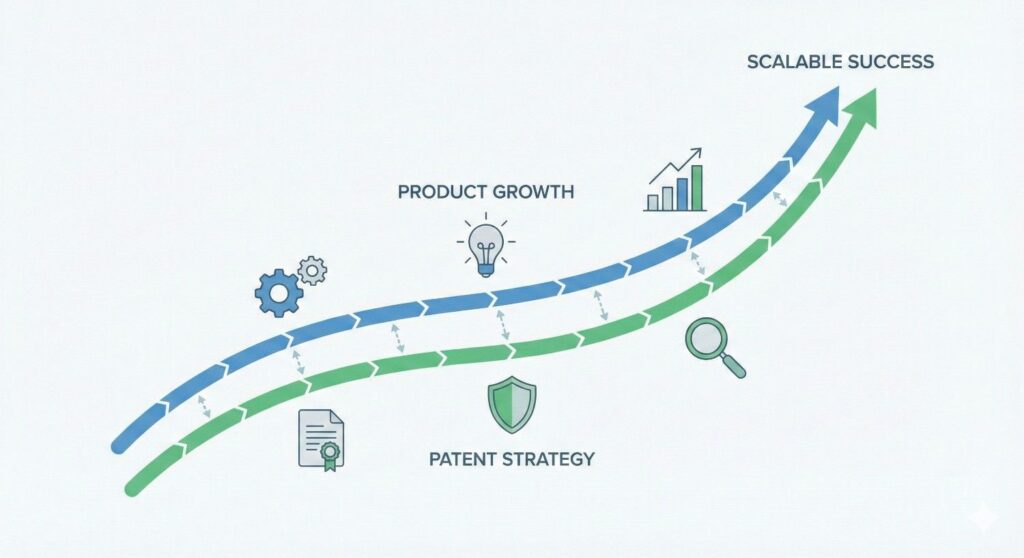
Overlap often happens when filings are approved emotionally instead of strategically. Someone is excited about a new feature. A competitor launches something similar. Panic sets in. A filing is rushed.
Instead, pause. Revisit your business objectives. Decide whether expanding coverage truly advances them.
This discipline keeps your patent spend proportional to your stage.
Involve Engineering Early, But Filter Strategically
Your engineers are closest to the technology. They see breakthroughs first.
After this heading, the goal is not to reduce filings by ignoring innovation. It is to channel innovation into structured protection.
Create a simple internal process. When engineers believe they have a new invention, they document the technical shift clearly. Leadership then evaluates whether that shift expands the protective boundary or strengthens an existing layer.
This two-step filter avoids reactive filings while still capturing real breakthroughs.
It also builds a culture where patents are understood as strategic assets, not just legal trophies.
Engineers begin to think in terms of moat expansion. Leadership thinks in terms of long-term positioning.
That alignment reduces waste and increases impact.
Design for the Long Game
The most common mistake founders make is thinking only about the next six months.
After this heading, zoom out. Your patent portfolio may last twenty years. Decisions you make today shape costs and leverage for decades.
If you stack overlapping patents now, you commit to maintaining and managing them long term. If you build a clean, layered structure, you create flexibility.
A thoughtful patent family grows like a tree. Strong roots. Clear branches. No tangled mess at the base.
This structure makes enforcement easier. It makes licensing clearer. It makes acquisition smoother.
And most importantly, it keeps you from paying twice for the same ground.

When you combine structured software with real attorney oversight, you get the discipline and clarity needed to design that long-term structure from day one. That is the difference between reactive filing and strategic protection → https://powerpatent.com/how-it-works
The founders who win are not the ones who file the most patents. They are the ones who build the right ones, at the right time, in the right way.
Wrapping It Up
You are not building patents. You are building a company. Patents are tools. They should support your growth, not quietly drain your budget. When you file twice for the same coverage, you lose money, time, and clarity. You also lose focus. And focus is everything in a startup. Family overlap does not happen because founders are careless. It happens because they are moving fast. They are shipping. Hiring. Raising. Solving real problems. Patent structure often becomes an afterthought. But here is the shift that changes everything.
Leave a Reply