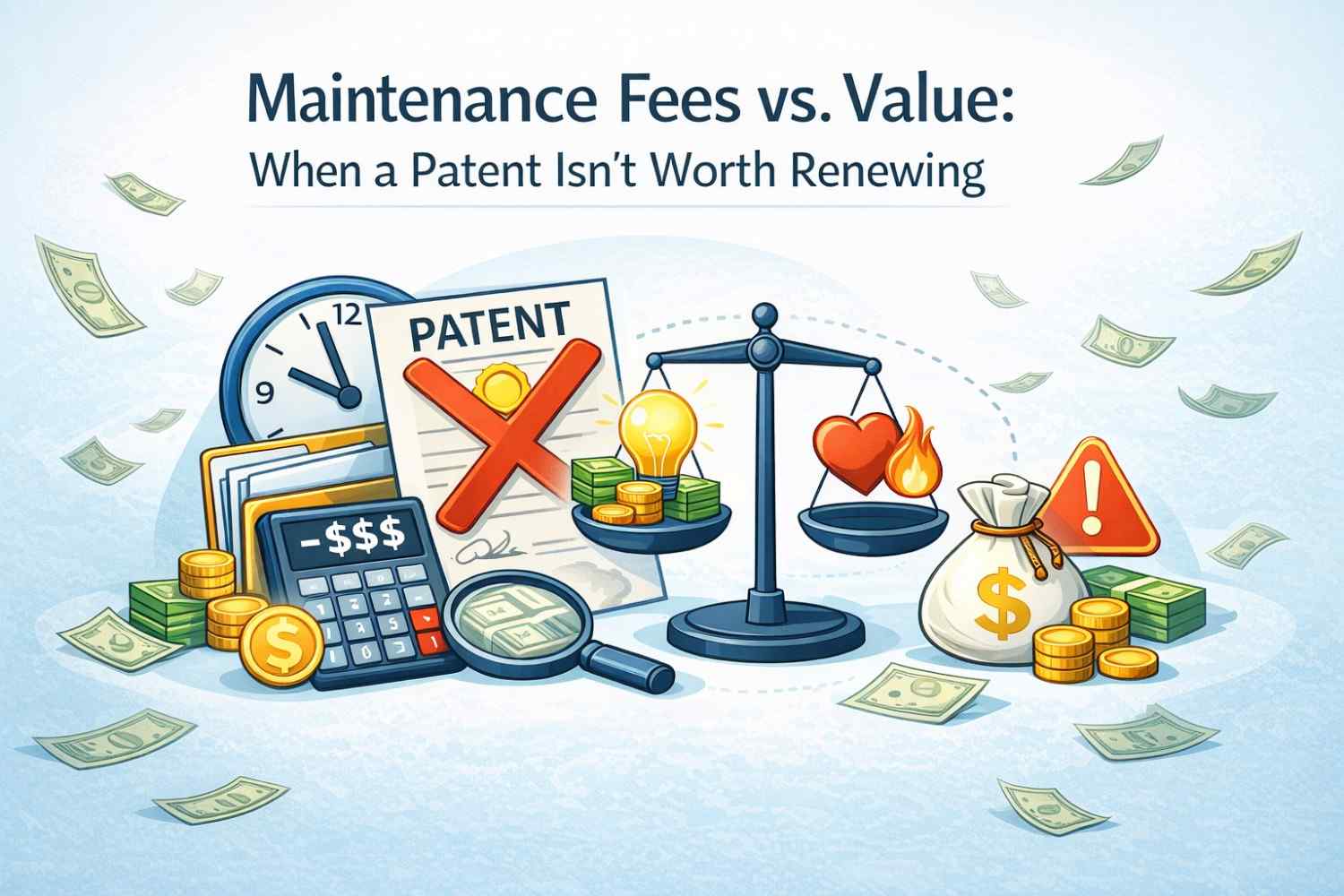
A patent is not a trophy. It is a tool. And like any tool, it only makes sense to keep it if it still does the job. Many founders believe once a patent is granted, the hard part is over. But that is not true. The real question comes later. Should you keep paying to maintain it? Or is it time to let it go? This is where smart founders separate emotion from strategy. In this guide, we will walk through how to decide if a patent is still worth the money, how to measure its real value, and how to avoid wasting thousands on something that no longer serves your startup. If you want to protect what matters without burning cash, explore how PowerPatent helps you stay in control here: https://powerpatent.com/how-it-works.
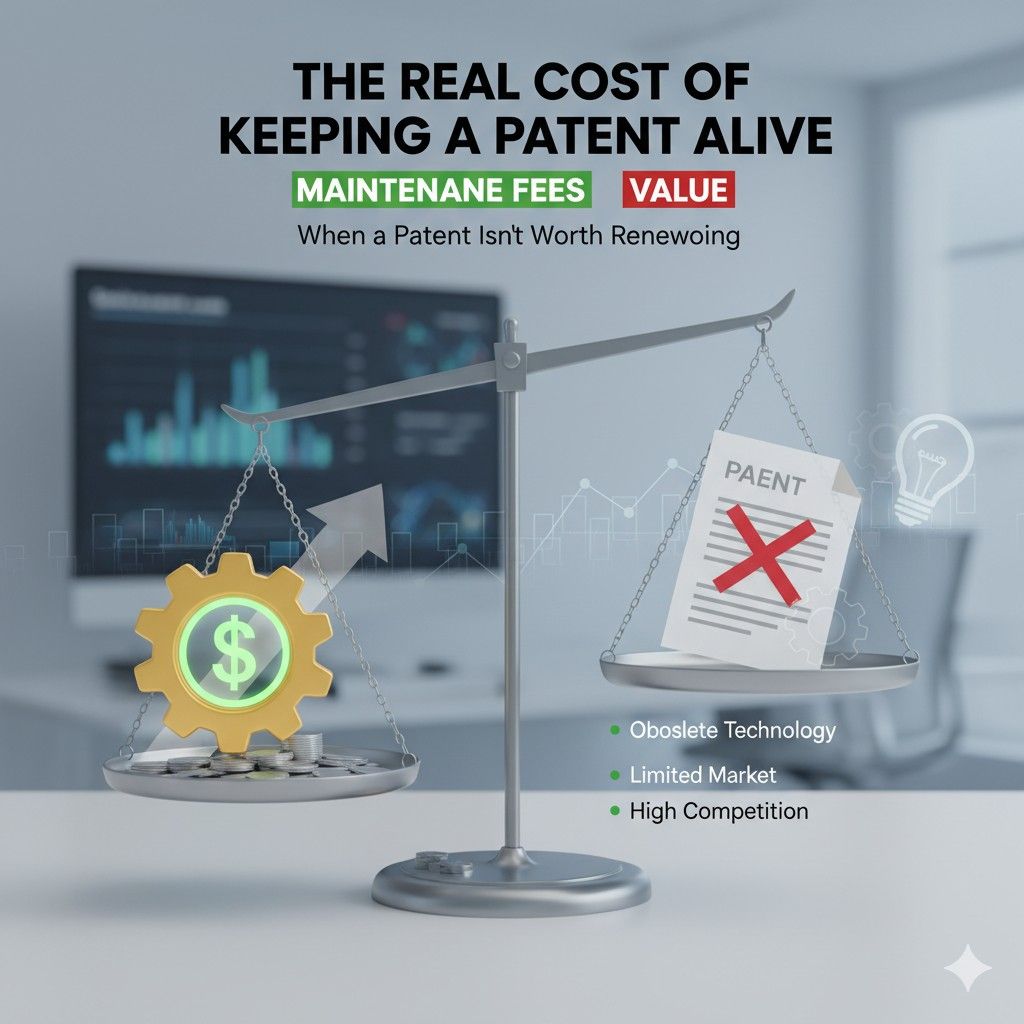
The Real Cost of Keeping a Patent Alive
Owning a patent feels powerful. It feels like control. It feels like protection. But behind that feeling is a stream of ongoing costs that do not stop once the patent is granted.
Many founders only plan for the filing cost. Very few plan for what comes next. If you are running a startup, every dollar must work hard. A patent should not be an emotional asset.
It must be a business asset. To make that decision wisely, you need to see the full picture of what it truly costs to keep a patent alive over time.
Maintenance Fees Are Not Small or Optional
After a patent is granted, the government requires payments at set stages to keep it active. These are called maintenance fees. They increase over time. The longer you keep the patent, the more you pay.
These payments are not flexible. They are not based on how well your company is doing. They are fixed deadlines. Miss them, and your patent expires.
For a startup, this creates pressure. You may be raising funds. You may be still building product-market fit. Yet these payments arrive whether your revenue is stable or not.
Before deciding to renew, look ahead and project the total cost for the remaining life of the patent. Do not just look at the next payment. Look at the next ten years.
Ask yourself whether that total number still makes sense compared to what this patent is bringing into your business.
If you are unsure how these timelines apply to your patent, platforms like https://powerpatent.com/how-it-works help founders track these deadlines clearly so nothing sneaks up on you.
The Hidden Attorney Costs Behind Every Renewal
Many founders assume maintenance fees are the only cost. That is rarely true. In most cases, you will involve an attorney or firm to process payments and manage compliance.
That means extra service charges on top of the official fee.
Over time, those service costs add up. Each payment may look manageable on its own, but when stacked over the life of a patent, they can reach thousands. If you have multiple patents, the number grows quickly.
Before renewing, request a clear breakdown from whoever manages your IP. Ask for the total projected cost through the end of the patent’s life. Not just the government fee.
The full picture. Then compare that number to what you expect this patent to generate in business value.
PowerPatent was built to reduce this type of friction. Founders get smart software and real attorney oversight without the old firm pricing structure. You can see how that works here: https://powerpatent.com/how-it-works.
The Cost of Capital Locked in a Patent
Money used for renewals is money not used elsewhere. That is the real trade-off. Every dollar spent on maintenance is a dollar not spent on hiring, marketing, product, or runway.
Imagine your next renewal costs several thousand dollars. What else could that money do for your startup right now? Could it fund experiments? Could it extend runway by a month? Could it close a key hire?
If your patent directly protects core revenue, that cost may be justified. But if it covers an old version of your product that you no longer sell, then you are locking capital into something that does not move your business forward.
A simple but powerful exercise is this: pretend you never had the patent. If someone offered to sell it to you today for the amount of the upcoming maintenance fee, would you buy it? If the answer is no, that is important data.
The Opportunity Cost of Management Time
There is also a cost that does not show up on invoices. Time. Every patent requires tracking, calendar management, coordination with counsel, and internal review. Even if the tasks seem small, they take mental energy.
For founders, focus is limited. You should be thinking about growth, customers, and strategy. If you are spending time maintaining patents that no longer align with your roadmap, that is silent drag on your company.
Before renewing, review your current product direction. Is the patent still aligned with what you are building today? Or is it tied to a feature you sunset last year? If it no longer reflects your main offering, its strategic weight drops fast.
Using structured systems to track patent alignment can help. With PowerPatent, founders can connect patents directly to product roadmaps so decisions are made based on current strategy, not past effort.
Learn more at https://powerpatent.com/how-it-works.
The Risk of Weak Coverage
Another hidden cost is the risk of keeping a patent that is too narrow or outdated to defend your real product. Technology evolves. Your code changes.
Your models improve. What you ship today may look very different from what you described years ago.
If the patent does not cover your current version, paying maintenance may create a false sense of security. You may believe you are protected when you are not.
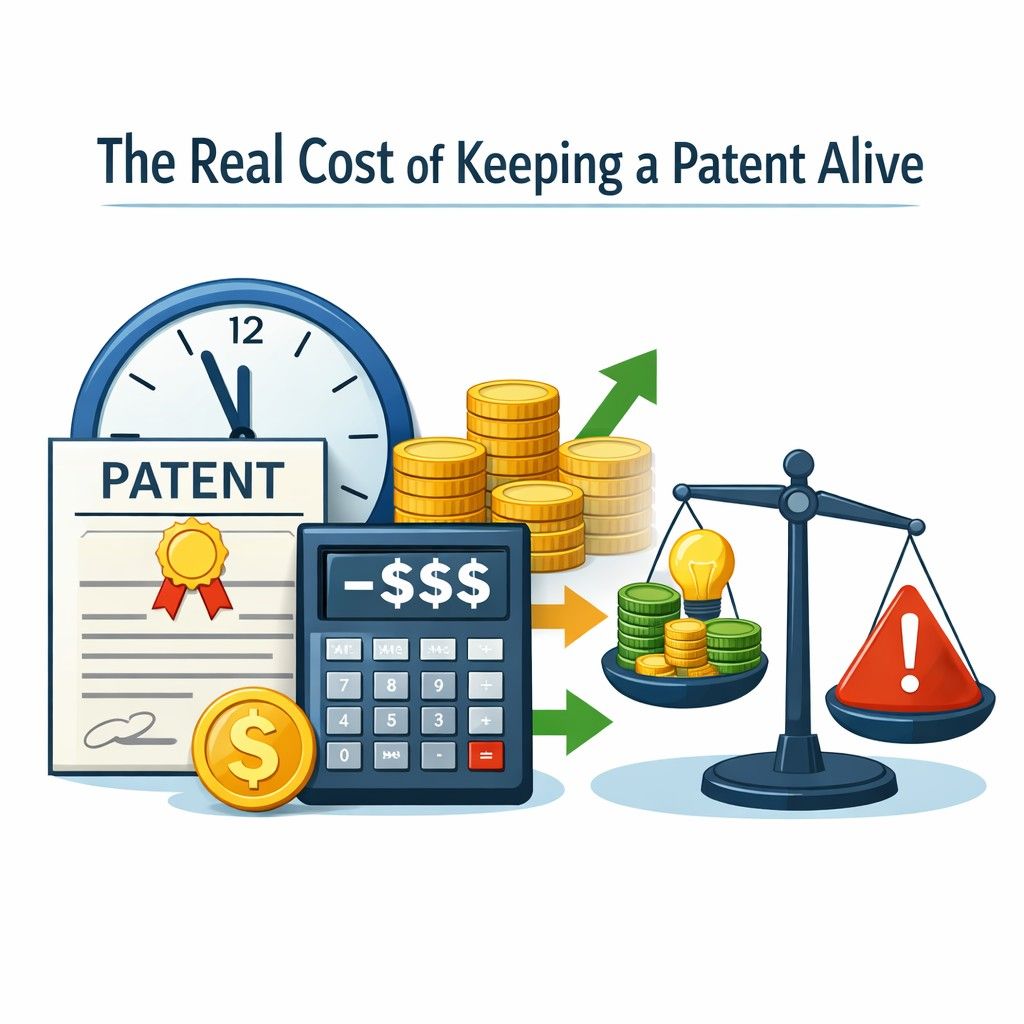
Before renewing, compare the claims of the patent to your live product. Are the key features still covered? If not, the patent may no longer protect what matters most.
In that case, your capital may be better spent filing a new application that reflects your current innovation rather than renewing an old one that misses the mark.
The Investor Perspective
Investors care about patents, but not all patents equally. They look for strong, relevant, defensible protection tied to real revenue or defensible market position.
If you keep renewing patents that do not protect your core business, savvy investors will see through it. They will ask how each patent supports growth. If you cannot answer clearly, it weakens the story.
Before paying a renewal, ask yourself how you would explain this patent in a pitch. Can you clearly say how it blocks competitors? Can you show how it protects a moat? If not, you may be maintaining optics rather than value.
Smart IP strategy impresses investors more than a large but unfocused portfolio. Tools like PowerPatent help founders build intentional protection, not just volume. Explore how here: https://powerpatent.com/how-it-works.
The Compounding Effect of Multiple Patents
One patent may seem affordable. Two may still feel manageable. But when you have five or ten, the renewal wave becomes serious. Deadlines stack up. Fees multiply. The decision to renew one patent cannot be made in isolation.
Zoom out. Look at your full portfolio. Map out every maintenance date over the next five to ten years. Calculate the total projected spend across all patents. This often surprises founders.
When you see the combined number, you can make sharper decisions. Perhaps two patents protect your core engine and are worth every dollar. Perhaps three others relate to early experiments that never scaled.
Being honest about this split can free significant capital.
When Growth Slows but Fees Continue
Early in a startup, optimism is high. You file patents around bold ideas. Years later, reality sets in. Some features win. Others fade. Yet maintenance fees continue as if nothing changed.
If a product line did not grow as expected, revisit the patents tied to it. Does it still make sense to fund protection for something that is no longer a strategic focus?
This is not failure. It is discipline. Letting go of a patent that no longer serves your roadmap can strengthen your company. It allows you to redirect funds toward what is working now.
A Strategic Renewal Framework
Instead of renewing by default, create a simple internal review process. Before each maintenance deadline, review revenue impact, competitive landscape, product alignment, and projected lifetime cost.
Have a clear discussion with leadership. Treat the renewal decision like an investment decision.
If the patent directly supports revenue, blocks a known competitor, or protects a key differentiator, renewal may be obvious. If it does not, challenge it.
This mindset shift turns maintenance from a routine payment into a strategic checkpoint.
Building a Lean, Strong IP Portfolio
The goal is not to have the most patents. The goal is to have the right patents. A lean portfolio that aligns tightly with your core technology is far more powerful than a large collection of outdated filings.
Keeping only what truly protects your edge gives you clarity. It improves your investor story. It frees capital. And it forces you to think intentionally about where your real innovation lies.

PowerPatent was designed for founders who want this level of control. By combining smart software with real attorney guidance, it helps you build and manage patents that match your actual product and growth strategy.
If you want to protect what matters and stop wasting money on what does not, you can see how it works here: https://powerpatent.com/how-it-works.
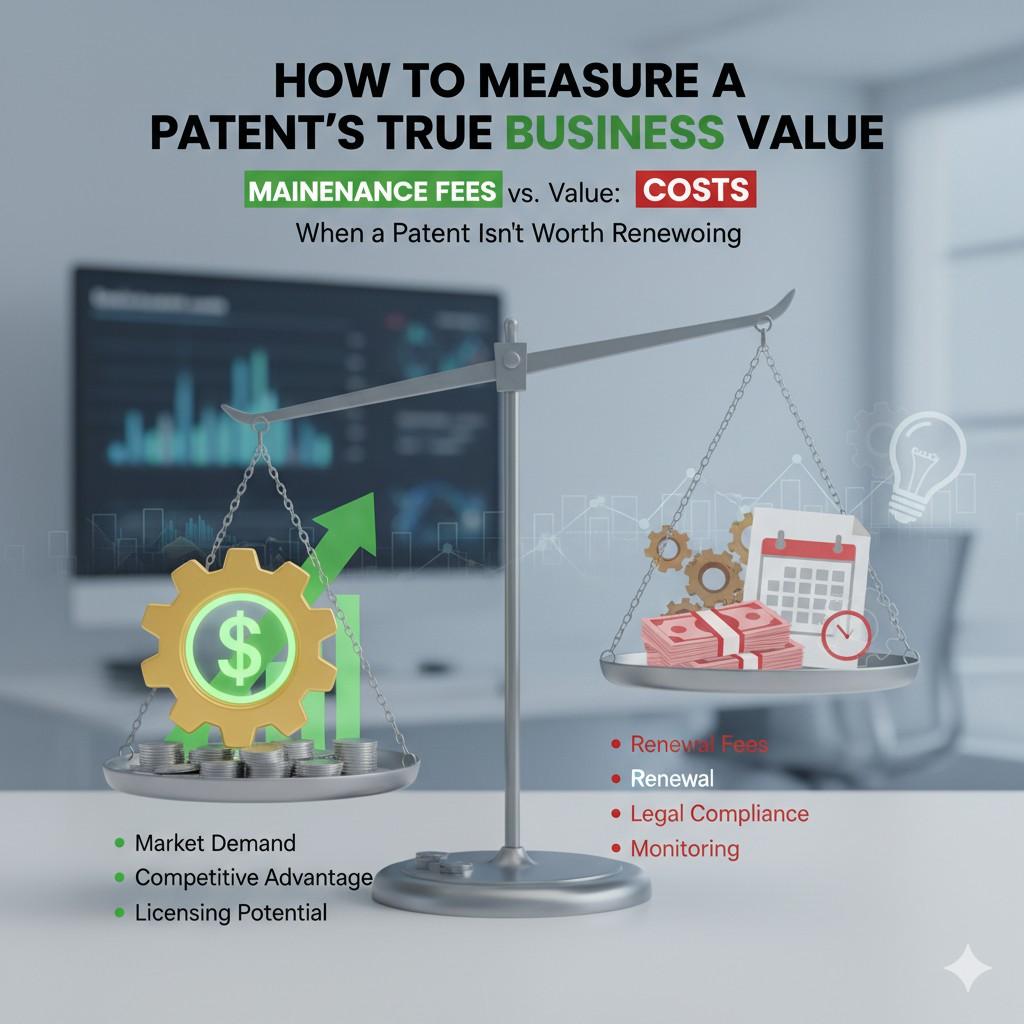
How to Measure a Patent’s True Business Value
A patent only matters if it helps your business win. That is the core truth. It is not about the certificate. It is not about the framed document on the wall. It is about leverage. Real business leverage.
If a patent does not create advantage, reduce risk, increase revenue, or strengthen your position, then it may not deserve more capital.
This section is about clarity. You are going to look at your patent the same way you look at any other asset on your balance sheet. Cold. Strategic. Focused on outcomes.
Revenue Protection Is the First Test
Every patent should answer one simple question. What revenue does this protect?
Start by mapping your current revenue streams. Not the ones you hope to build. The ones you have now or realistically expect soon. Then match the patent to those streams.
Does it directly protect the core engine of your product? Does it cover the feature customers pay for?
If the answer is yes, that patent likely has real value. It helps protect future cash flow. It creates a barrier that competitors must think twice about crossing.
If the answer is unclear, pause. If you struggle to explain how the patent connects to revenue, that is a signal. A strong patent has a clear business story.
You should be able to say, “This protects the core algorithm that drives 80% of our value.” If you cannot say that with confidence, you need to look deeper.
This is where many startups drift. They file patents early, then pivot. The patent stays frozen in time. The product evolves. When that gap grows too wide, the patent’s real value shrinks.
PowerPatent helps founders keep their patents aligned with what they are actually building, not what they built two years ago. If you want to see how that works, you can explore it here: https://powerpatent.com/how-it-works.
Competitive Threat Is a Clear Signal
A patent has value when someone else wants what it covers.
Look at your competitors. Are they building something similar? Are they entering your space? Are they raising capital around a model that overlaps with yours?
If your patent covers a method or system that competitors would need to copy in order to compete, that is strong leverage. Even if you never file a lawsuit, the existence of that protection can shape behavior.
It can stop direct cloning. It can improve negotiation power.
But if no one is building near that area anymore, the value changes. A patent around a feature the market has moved past may no longer create pressure. It may simply sit unused.
The smart move is to review your competitive map before each renewal. Not casually. Seriously. Look at product demos. Read press releases. Study feature launches.
Then ask: does this patent still block something meaningful?
If it does, that is strategic value. If it does not, that matters too.
Licensing Potential Is Not Automatic
Some founders believe every patent can be licensed. In reality, only certain patents attract licensing interest.
A patent must cover something widely used, hard to design around, and commercially important. Without those traits, licensing is unlikely.
Before renewing, evaluate whether there is real licensing potential. Has anyone ever inquired? Does the patent sit in a core technical standard or widely adopted workflow? Or is it highly specific to your internal system?
Be honest. Licensing is not a backup plan for weak strategic alignment. It is a separate strategy that requires active effort.
If licensing is part of your plan, build a clear path. Identify potential licensees. Estimate realistic deal sizes. If there is no clear path, do not assume passive value exists.
Investor Leverage Must Be Real, Not Cosmetic
It is true that patents can strengthen fundraising. But experienced investors look deeper than patent count.
They care about defensibility. They want to know whether your protection actually supports your market position.
Before renewing a patent for investor optics, imagine a partner meeting. You are asked how your IP creates a moat.
Can you walk through the technical edge and explain how it blocks others? Can you show how it supports long-term pricing power?
If yes, that patent adds strategic value to your story. If not, it may not change your fundraising outcome.
Strong, focused patents are far more persuasive than a scattered portfolio. This is why disciplined IP strategy matters. PowerPatent was built to help founders create patents that investors understand and respect.
You can learn more here: https://powerpatent.com/how-it-works.
Product Roadmap Alignment Is Critical
Your roadmap is your future. A patent that aligns with where you are going can be worth far more than one tied to where you have been.
Pull up your next two years of planned development. Which patents support that direction? Which ones cover systems you plan to double down on?
If a patent protects a capability you are expanding, that strengthens its value. It may become more important over time.

If it protects something you are phasing out, the value may decline each year.
This exercise forces clarity. It prevents emotional attachment to old work. Your IP portfolio should move with your strategy, not against it.
Market Timing Changes Everything
Sometimes a patent was filed ahead of its time. The market was not ready. Years later, the industry catches up. In those cases, renewing may suddenly make sense.
Other times, the opposite happens. A once hot area cools down. Adoption stalls. Demand fades. In those cases, continuing to fund protection may not be wise.
Review industry trends honestly. Are customers investing more in this space? Are analysts predicting growth? Or is the excitement shifting elsewhere?
Timing affects value. A patent in a growing sector can become more powerful over time. A patent in a shrinking space can quietly lose strategic weight.
Enforcement Realities Matter
A patent’s theoretical strength and its practical enforceability are not the same thing.
Ask yourself whether you would realistically enforce this patent if needed. Do you have the financial resources? Is the target large enough to justify action? Is the infringement easy to detect?
If enforcement would be nearly impossible or economically irrational, then the patent’s real leverage may be limited.
This does not mean every patent must be enforced aggressively. But you should understand its realistic power. Value depends on credible deterrence.
Internal Clarity Test
Here is a simple internal test. Gather your leadership team. Ask each person to explain, in simple terms, why this patent matters today.
If the answers are sharp and consistent, that is strong alignment. If the answers are vague or different, that is a warning sign.
True value is easy to explain. Confusion often means the connection to business impact has weakened.
Turning Insight Into Action
After evaluating revenue, competition, licensing, investor impact, roadmap alignment, timing, and enforcement reality, you will have a clearer picture.
At this point, the decision becomes strategic rather than emotional.
If the patent strengthens your current and future business in clear, measurable ways, renewal may be an easy call.
If it does not, letting it expire may free capital for stronger protection elsewhere.
The goal is not to hold patents forever. The goal is to hold the right patents at the right time.

PowerPatent gives founders the tools and real attorney support to make these decisions with confidence instead of guesswork.
If you want to build an IP strategy that truly matches your business goals, you can explore how it works here: https://powerpatent.com/how-it-works.
The Warning Signs It’s Time to Let a Patent Go
Letting a patent expire can feel uncomfortable. You invested time. You invested money. You may even feel proud of the invention behind it. But business decisions cannot be based on pride.
They must be based on present value and future return.
There are clear signals that a patent no longer earns its place in your budget. The key is to see those signals early and act with discipline. When you remove emotion from the equation, the decision becomes far more rational.
Your Product Has Moved On
Startups evolve fast. The version of your product today may look nothing like what you built when you first filed the patent.
If your engineering team has rewritten core systems, replaced models, or changed architecture, your original patent may no longer reflect your competitive edge. It may describe a structure that you no longer use.
Pull up the patent and compare it directly to your live system. Not loosely. Line by line. Does it still cover the engine that powers your advantage? Or does it protect an earlier version that has been replaced?
If the gap is wide, the patent may now be a historical document rather than a strategic shield.
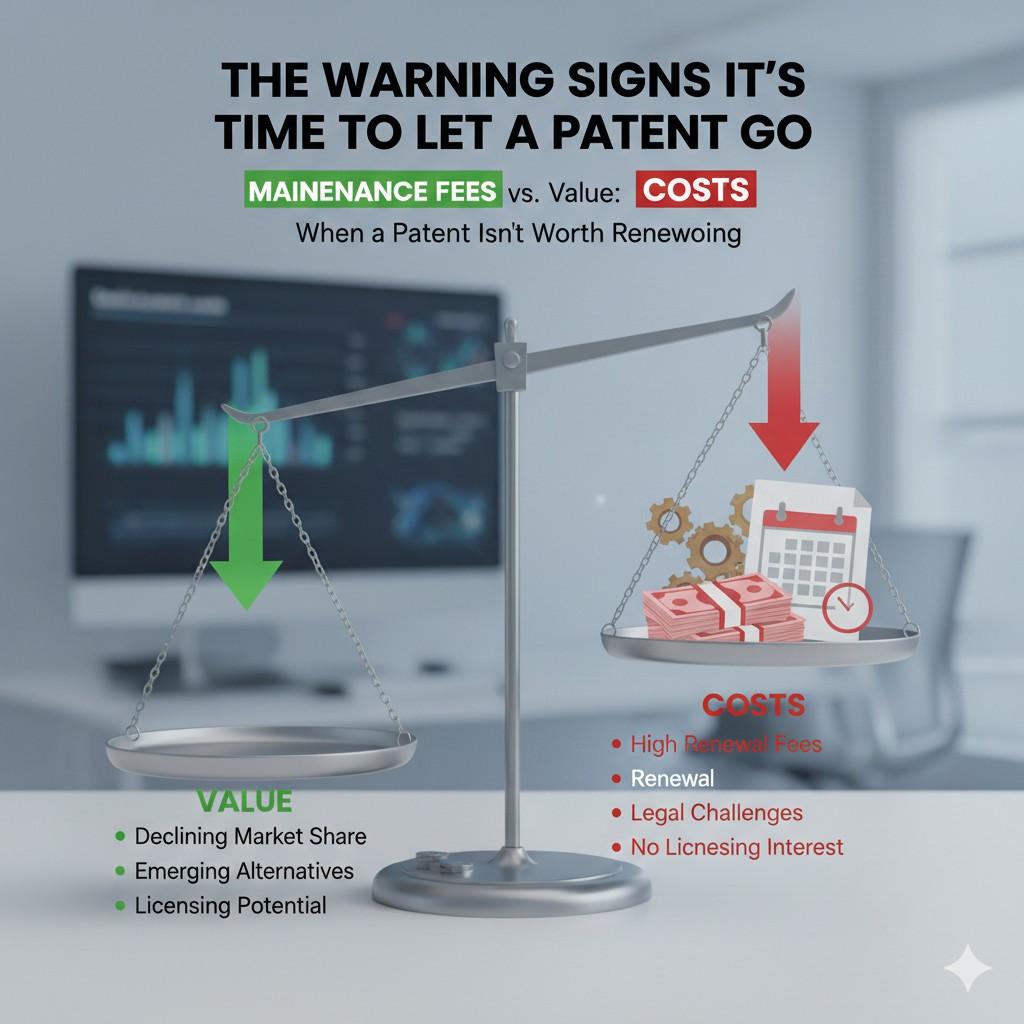
In that case, the smarter move may be to invest in protecting your current innovation instead of funding maintenance on outdated coverage.
PowerPatent helps founders capture new technical advances quickly while ensuring real attorney oversight. You can see how it works here: https://powerpatent.com/how-it-works.
The Market Did Not Develop as Expected
Not every idea becomes a large market. Some features stay niche. Some industries slow down. Some trends disappear entirely.
If your patent covers technology tied to a market that never scaled, its leverage shrinks with that market. A patent has no power in an empty field.
Review industry growth data, customer demand, and adoption patterns. Are companies investing heavily in this area? Are new entrants appearing? Or has attention shifted elsewhere?
If the broader market energy is gone, holding the patent may not change your competitive position. Strategic capital should follow growth, not nostalgia.
No Competitor Cares
A patent becomes valuable when others want what it protects.
If you monitor competitors and none are building near your patented area, that matters. If years pass and no one has attempted to replicate that capability, it may indicate limited commercial interest.
Study competitor product updates. Analyze job postings. Look at technical blogs. If no signal points toward overlap, the deterrent value of the patent may be low.
This does not mean every patent must face active threats. But if there is zero competitive relevance over time, renewal should be questioned seriously.
You Cannot Clearly Explain Its Role
If you struggle to explain why a patent matters, that is a strong warning sign.
Imagine an investor asking, “How does this protect your core business?” If your answer feels vague or overly technical without clear business impact, the strategic link may have weakened.
Strong patents have clear narratives. They tie directly to revenue, cost advantage, or defensibility.
When leadership cannot articulate that link simply, the patent may be surviving on inertia rather than strategy.
This is why ongoing alignment matters. PowerPatent gives founders structured visibility into how each patent connects to their evolving product roadmap, helping prevent this kind of drift. Learn more at https://powerpatent.com/how-it-works.
The Cost Curve No Longer Makes Sense
Maintenance fees increase over time. Early payments may feel manageable. Later ones can become significant.
As those fees grow, the value threshold should rise as well. A patent that barely justified renewal at a lower cost may not justify it at a higher one.
Project the remaining lifetime cost from today forward. Compare that to the realistic upside. Not theoretical upside. Realistic.
If the numbers no longer align, discipline becomes more important than attachment.
Enforcement Would Be Impractical
Even a strong patent has limited value if enforcing it would not be practical.
Litigation is expensive. It requires time, focus, and capital. If your startup is not positioned to defend the patent, its deterrent power may be weaker than you assume.
Ask yourself honestly whether you would take action if a major competitor copied the invention. If the answer is no due to cost or distraction, then the practical leverage of the patent may be lower than expected.
Value depends not only on rights but on realistic ability to act.
The Patent Covers a Narrow Edge Case
Some patents protect very specific technical paths that are easy to design around.
If a competitor could slightly modify their system and avoid infringement, the strategic power decreases. Over time, as technology evolves, design-around options may increase.
Review whether your patent claims cover the broad concept or just a narrow implementation.
If coverage is narrow and alternatives are obvious, the long-term leverage may weaken each year.
Internal Priorities Have Shifted
Sometimes the most important signal is internal.
Your company may have changed focus. You may have pivoted into a new vertical. You may be doubling down on a different product line.
When priorities shift, IP strategy must shift as well. Holding patents tied to old priorities can drain resources from new growth areas.
A disciplined portfolio reflects current strategy, not past plans.
Emotional Attachment Is Driving the Decision
This may be the hardest signal to admit.
Founders often feel personally connected to early inventions. Those patents represent long nights, early breakthroughs, and moments of belief.
But business decisions must separate memory from market value.
Ask yourself whether you are renewing because the patent still drives competitive advantage or because it feels difficult to let go.
Clarity here saves money and strengthens focus.
Reallocating Capital Toward Stronger Protection
Letting a patent expire is not failure. It can be a strategic reallocation.
Capital saved from maintenance can fund new filings that better reflect your current innovation. It can strengthen broader claims around core systems. It can extend runway during critical growth periods.
A lean, focused portfolio often delivers more value than a larger, unfocused one.

PowerPatent was built for founders who want that clarity. With smart software and real attorney guidance, you can evaluate, adjust, and build protection that matches your business today.
If you want to protect what truly matters and avoid wasting capital, explore how it works here: https://powerpatent.com/how-it-works.
Making the Smart Call: Strategy Over Emotion
Renewing a patent should never be automatic. It should never be based on habit. It should never be driven by fear alone. The decision deserves the same level of thinking you apply to hiring, fundraising, or launching a new product.
When you approach renewals with strategy instead of emotion, you protect not just your IP, but your company’s future.
This final step is about building a repeatable way to decide. Not guessing. Not reacting at the last minute. But creating a clear, calm system that turns each renewal into a strategic checkpoint.
Treat Renewal Like an Investment Decision
Every renewal is an investment. You are putting fresh capital into an existing asset. That means you should expect a return.
Before approving payment, ask what return you expect over the remaining life of the patent. Will it protect growing revenue? Will it increase valuation? Will it strengthen your negotiating power with partners or acquirers?
If you would not invest fresh money into this asset today, that insight matters. Too many founders continue paying simply because they paid before. That is not strategy. That is momentum.
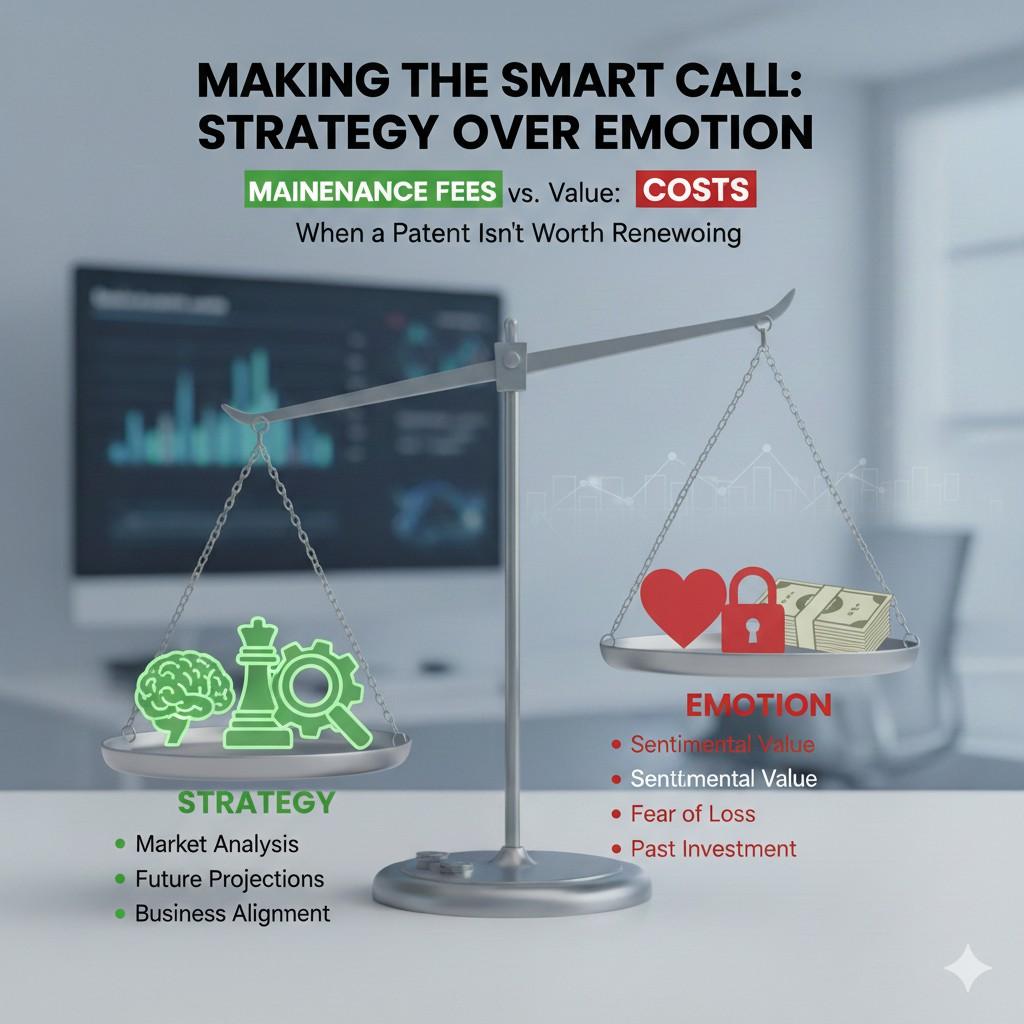
When you frame the decision as a forward-looking investment, clarity improves immediately.
Create a Pre-Renewal Review Window
Smart founders do not wait until the deadline week to think about renewals. They create a review window months in advance.
During that window, leadership reviews product alignment, competitive landscape, revenue impact, and projected remaining costs. The discussion is focused and structured. The patent must justify itself clearly.
This simple discipline prevents rushed decisions. It also prevents emotional reactions. When the conversation happens early, it becomes strategic rather than reactive.
Using tools that centralize patent information and deadlines makes this process far easier. PowerPatent provides visibility into timing and scope while keeping real attorneys involved in oversight.
That combination helps founders avoid surprises and make thoughtful calls. You can explore it here: https://powerpatent.com/how-it-works.
Separate Defensive Value From Ego
There is a difference between protection and pride.
Some patents feel important because they represent technical achievement. That feeling is valid. But achievement alone does not equal ongoing business value.
When reviewing a patent, strip away the story behind it. Focus only on present and future leverage. Would losing this protection materially weaken your company? Would a competitor gain meaningful ground?
If the honest answer is no, then the defensive value may not justify continued funding.
Clear thinking at this stage prevents years of unnecessary expense.
Consider Strategic Exit Scenarios
Think about how the patent plays into potential exit paths.
If your long-term plan includes acquisition, ask how this patent would be viewed in due diligence.
Does it protect a core asset that buyers would care about? Does it strengthen your moat in a way that increases acquisition price?
If yes, renewal may support long-term positioning. If not, its role in exit strategy may be limited.
Sometimes founders overestimate how much weight acquirers place on older, less relevant patents. Buyers care about protection around what drives current revenue and future growth.
Align renewal decisions with realistic exit scenarios, not hypothetical ones.
Reinvest in Stronger Coverage
Letting a weaker patent expire can create space to build stronger ones.
Technology evolves quickly. New improvements, optimizations, and architectures may deserve protection more than early iterations.
Redirecting maintenance capital into fresh filings can create sharper coverage around what truly differentiates your product today.
This approach keeps your portfolio dynamic. It reflects growth instead of freezing your IP strategy in the past.
PowerPatent was built specifically for fast-moving technical founders who need that agility.

It helps you turn real code and real models into defensible patents without the heavy delays of traditional firms, while still backed by real attorney review.
If you want protection that grows with your company, you can learn more here: https://powerpatent.com/how-it-works.
Build a Lean, High-Impact Portfolio
A strong portfolio is not measured by volume. It is measured by impact.
A handful of patents tightly aligned with your core engine can create far more leverage than a large collection tied to experiments that never scaled.
When each patent has a clear role, your IP story becomes sharper. Investors understand it faster. Partners respect it more. Competitors think harder before entering your space.
That clarity only comes from disciplined pruning and intentional renewal decisions.
Accept That Expiration Is Part of Strategy
Not every patent is meant to last its full term. Allowing certain patents to expire can be a sign of maturity, not weakness.
As markets shift and products evolve, your IP strategy must adapt. Expiration becomes a natural part of portfolio management.
What matters is that the patents you keep are powerful, relevant, and aligned with growth.
When you approach renewals with calm analysis instead of automatic continuation, you free your company to allocate capital where it drives the most return.
Confidence Comes From Control
The worst position is uncertainty. Not knowing what your patents truly protect. Not knowing how much future maintenance will cost. Not knowing whether renewal makes sense.
Confidence comes from visibility and structure.
When you can see the full picture, connect patents to real business outcomes, and review them on a disciplined schedule, decisions become straightforward.
That is the difference between reactive IP management and strategic IP leadership.

PowerPatent exists to give founders that control. Smart software keeps everything organized and transparent. Real patent attorneys ensure quality and strength. The result is faster filings, better protection, and clearer renewal decisions.
If you are building serious technology and want your patents to work as hard as you do, take a closer look at how PowerPatent works: https://powerpatent.com/how-it-works.
Wrapping It Up
Patents are powerful. But power without purpose is waste. A renewal decision is not about what you built in the past. It is about what will drive your future. Every maintenance payment is a choice. A choice to keep investing in that specific piece of protection instead of investing somewhere else inside your company. When you look at maintenance fees through that lens, everything becomes clearer.
Leave a Reply