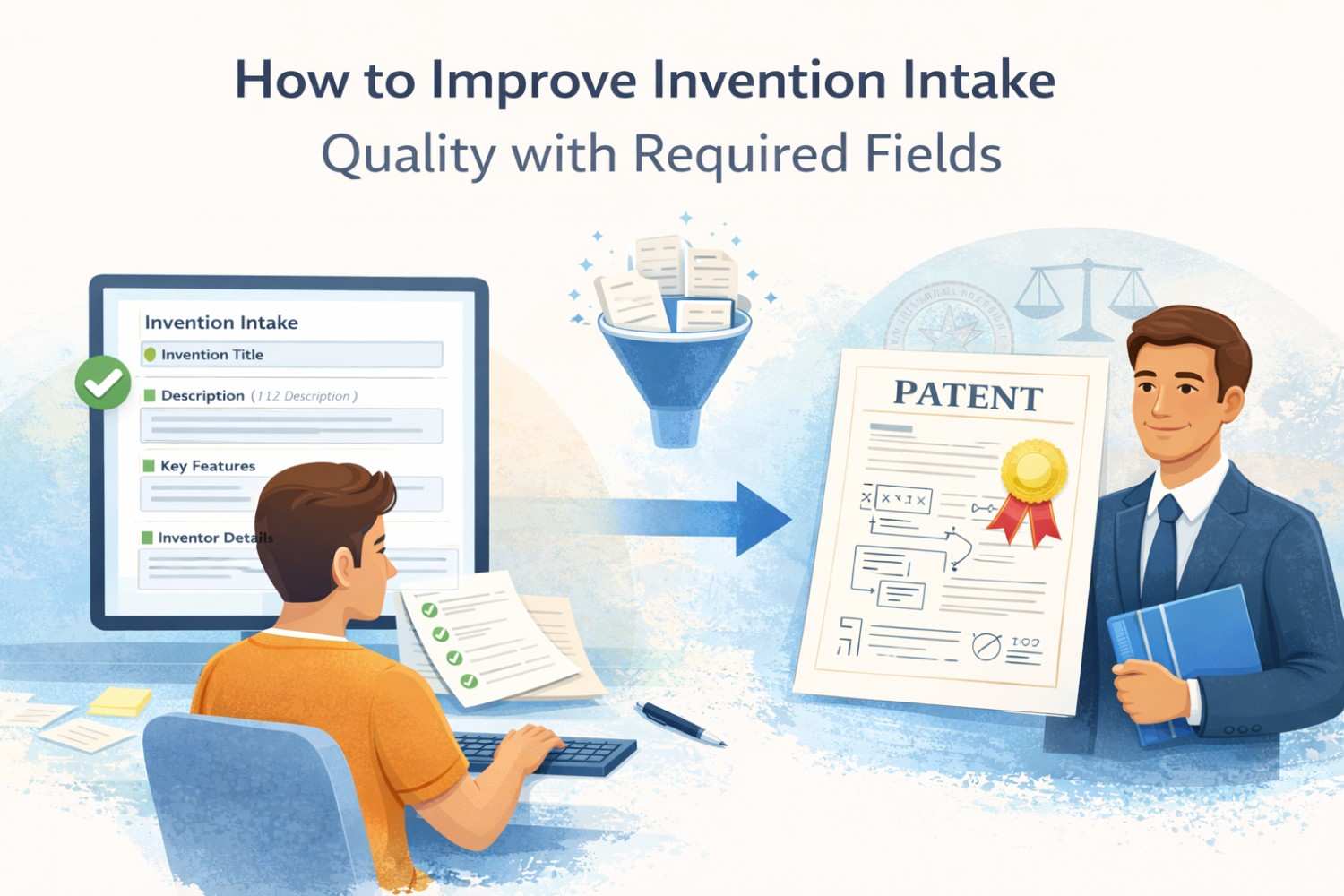
When you build something new with other smart people, things move fast. Ideas overlap. Code blends together. Features grow from group chats and whiteboard sessions. Then one day, you sit down to file a patent—and you realize there are three, four, maybe even six inventors involved in one single disclosure. Now what? If you handle this wrong, you risk fights, delays, or worse—an invalid patent. If you handle it right, you protect everyone and keep your startup moving. Let’s break down exactly how to manage multiple inventors in one disclosure submission the smart way.
Who Really Counts as an Inventor (And Why It Matters More Than You Think)
When more than one person helps build something new, it can feel natural to include everyone on the patent. After all, you are a team. You worked late nights together.
You pushed code, reviewed designs, and solved hard problems side by side. But patents do not work on feelings. They work on contribution to the core idea.
Getting this part right is not optional. It affects ownership, fundraising, equity, and even whether your patent stands up in court. This is where many startups make quiet mistakes that cost them later.
Let’s break this down in a way that protects your company from day one.
The Difference Between Helping and Inventing
Before you submit a disclosure, you need to understand one simple truth. Not everyone who helped build the product is an inventor.
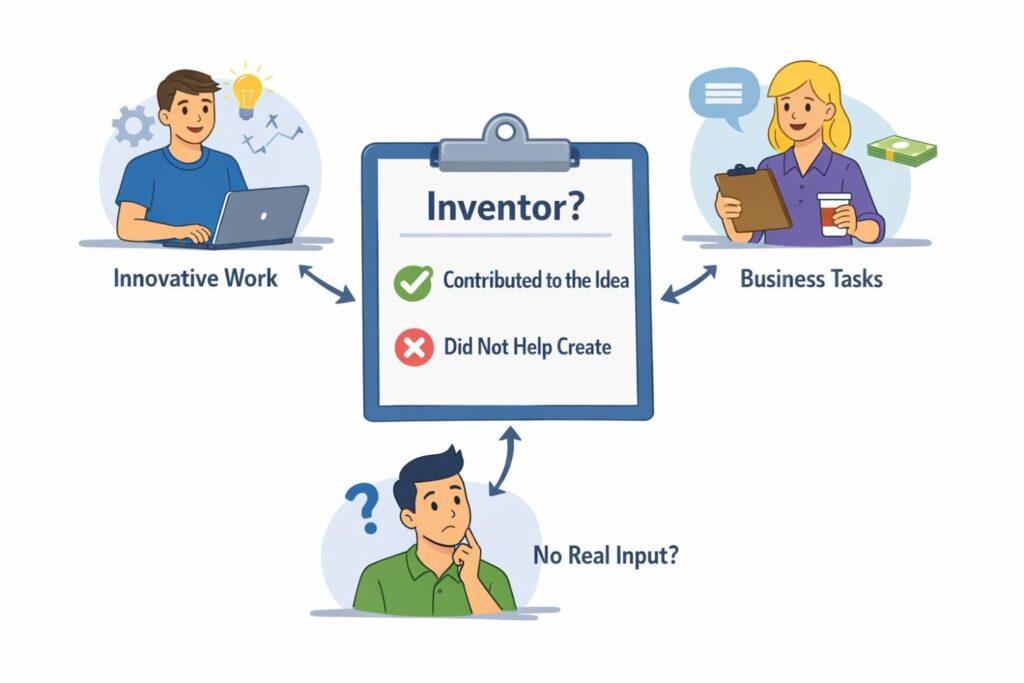
An inventor is someone who contributed to the new idea itself. Not just the work. Not just the execution. The idea.
This is where founders get tripped up. A developer who wrote clean production code is valuable. A product manager who organized sprints is essential.
A designer who shaped the interface made it usable. But unless they helped create the specific new concept you are claiming in the patent, they may not legally count as inventors.
The patent system cares about who shaped the novel parts. The features that make your invention different. The core solution that did not exist before.
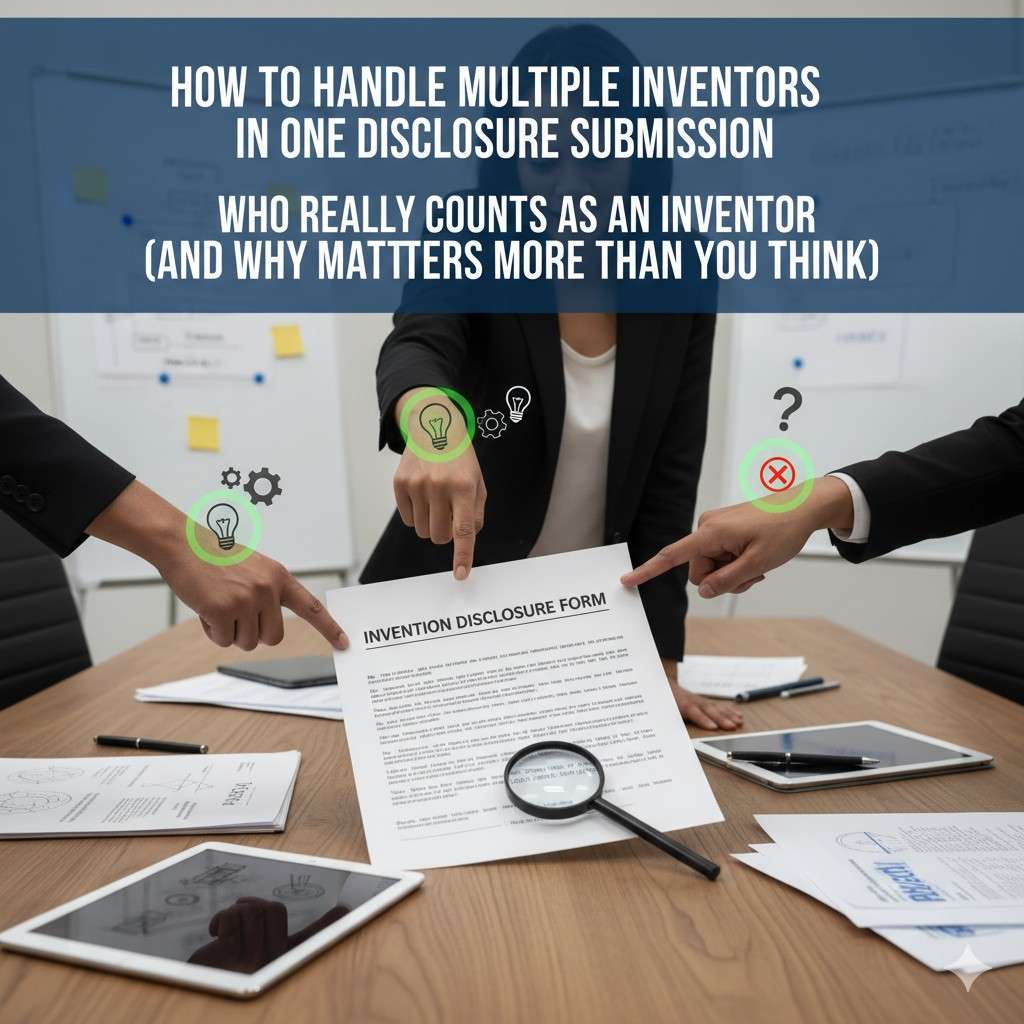
If you include someone who should not be there, you create risk. If you leave someone out who should be included, you create even bigger risk.
Why This Impacts Ownership More Than You Think
Inventorship is not just a title. It often affects ownership rights. In many cases, each inventor has rights to the patent unless those rights are properly assigned to the company.
Now think about this. If someone is wrongly listed and later leaves your startup, they may claim rights you did not expect. Or if someone who should be listed is left out, they can challenge the patent.
That is not a small issue. Investors look closely at intellectual property ownership. If there is confusion around who owns what, it slows deals down. It creates doubt. And doubt kills momentum.
The smart move is to treat inventorship as a business decision that must be precise, not generous.
If you want to see how PowerPatent helps founders lock this down the right way from the start, you can explore how it works here: https://powerpatent.com/how-it-works
Start With the Claims, Not the People
Most teams approach inventorship by asking, “Who worked on this project?” That is the wrong starting point.
Instead, begin with the claims. The claims define what your patent actually protects. They describe the specific features and combinations that make your invention unique.
Once those are clear, then ask a focused question. Who contributed to the ideas inside these claims?
This shift changes everything. It moves the discussion from emotions to facts. It becomes about contribution to defined elements, not about participation in the project.
When you work with experienced patent attorneys and structured software tools, this process becomes much easier. PowerPatent combines both so founders do not have to guess their way through inventorship decisions.
That hybrid approach removes a lot of risk early on.
Capture Contributions While They Are Fresh
One of the biggest mistakes startups make is waiting too long to document who contributed what.
Memories fade. Slack threads get buried. People leave. Details blur.
A smarter approach is to capture contribution data during the building phase. When a breakthrough idea happens in a meeting, document who shaped it. When a new algorithm is proposed, note who designed the structure.
When a system architecture shifts in a novel way, record who drove that change.
You do not need long legal memos. Simple, clear notes work. The key is timing.
If you use a structured disclosure platform that guides inventors through contribution questions, you remove guesswork later.
That is one reason many deep tech teams prefer modern tools over old email chains. Clean records protect your company.
Separate Core Ideas From Supporting Work
In fast moving startups, it is common for many people to touch the same feature. One person sketches the idea. Another refines it. A third improves performance. A fourth makes it scalable.
But inventorship usually ties back to the core concept, not every improvement.
A helpful exercise is to isolate the breakthrough. What is the part that makes this patent worth filing? What makes it new?
Then trace back who contributed to that core structure.
You may find that fewer people qualify than you expected. Or sometimes more.
This exercise forces clarity. And clarity is protection.
Avoid “Courtesy Inventorship”
Many founders feel pressure to include senior team members or co-founders on patents, even if they did not directly contribute to the claimed invention. It feels respectful. It feels political. It may even feel fair in a broad sense.
But courtesy inventorship is dangerous.
If challenged, a patent with incorrect inventors can be weakened or invalidated. That is not a small technical issue. It can destroy the value of your IP at the worst possible time.
The right way to reward leadership or team effort is through equity, bonuses, or recognition. Not by stretching inventorship rules.
Keeping inventorship clean protects everyone.
Have Direct Conversations Early
Many conflicts around inventorship come from silence.
If someone believes they helped invent something but is not listed, resentment builds. That resentment often surfaces later, during funding rounds or exits.
Instead, have open conversations during the disclosure process. Explain how inventorship is determined. Walk through the claims. Show how contributions connect to those claims.
When the process feels transparent, people accept outcomes more easily.
Using a structured disclosure workflow with guided input can help here. When inventors describe their contributions directly inside a platform designed for patent preparation, it becomes easier to map ideas to claims.
That reduces subjective judgment calls.
PowerPatent was built for this exact moment. It helps technical teams explain what they built in simple terms while real patent attorneys review and refine the work.

That blend keeps things accurate without slowing the team down. You can see how the system works here: https://powerpatent.com/how-it-works
Be Careful With Evolving Ideas
Many inventions evolve over time. The version you file may not be the first version that was discussed.
As the concept grows, new people may contribute additional novel elements. That can change inventorship.
This means you cannot treat inventorship as fixed from day one. You must reassess based on the final claimed invention.
If you pivot the architecture, expand the algorithm, or add a new mechanism that becomes part of the claims, you must revisit who qualifies as an inventor.
Smart startups build this review into their filing workflow. Before submission, they pause and confirm inventorship against the final draft.
That simple checkpoint prevents future disputes.
Think Long Term, Not Just Filing Day
When you submit a disclosure with multiple inventors, you are not just filing paperwork. You are shaping the ownership structure of one of your most valuable assets.
Ask yourself a hard question. If this patent becomes the core of your company’s valuation, are you confident the inventor list will hold up under scrutiny?
If the answer is not a strong yes, slow down and review.
The cost of fixing inventorship later is far higher than getting it right upfront.
This is why working with experienced patent attorneys matters. Software alone cannot make legal judgment calls. But attorneys alone can be slow and expensive if the process is messy.
The strongest approach blends both. Smart automation to gather facts. Real attorneys to verify inventorship accuracy.
That is the model PowerPatent uses to help founders file faster while staying protected.
Protect the Company First
At the end of the day, inventorship is about accuracy, not fairness. It is about protecting the company’s rights.
You can still celebrate team effort. You can still reward collaboration. But when it comes to patent disclosures, precision wins.
If you are preparing to submit a disclosure involving multiple inventors, pause and apply this mindset. Start from the claims. Document contributions clearly. Have open conversations. Review before filing.

And if you want a structured, founder-friendly way to handle all of this without drowning in legal jargon, take a look at how PowerPatent guides teams through the entire process here: https://powerpatent.com/how-it-works
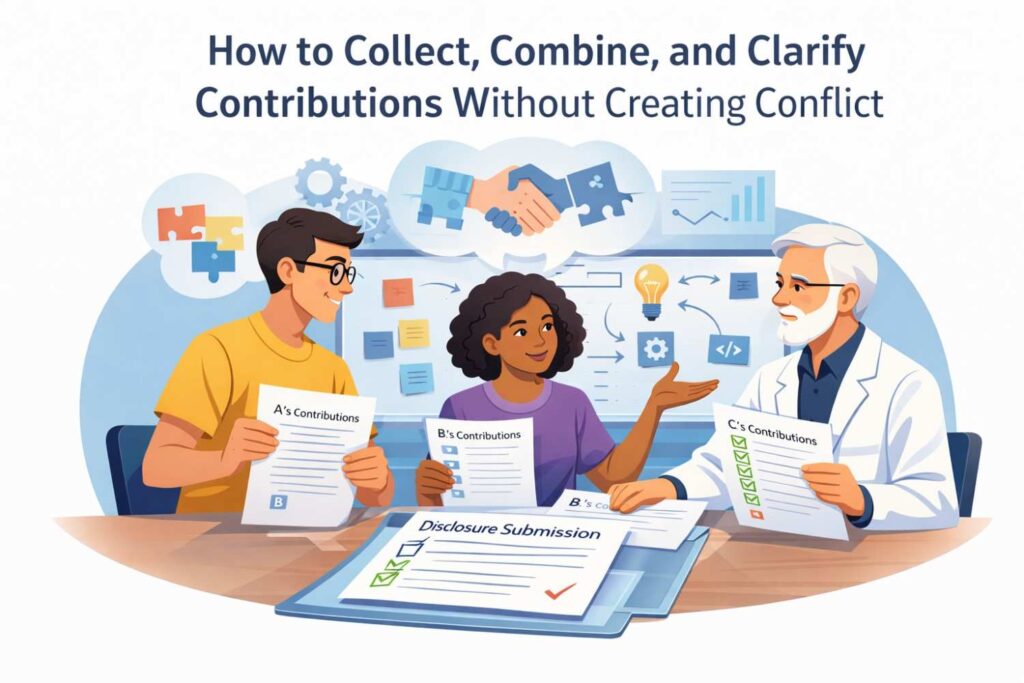
How to Collect, Combine, and Clarify Contributions Without Creating Conflict
When multiple inventors are involved, the hardest part is often not the legal side. It is the human side. Smart people care about their work. They want credit. They want fairness. And they want to feel seen.
If you mishandle this stage, you do not just risk a messy patent filing. You risk team trust.
The goal is simple. Gather clear input from everyone. Shape it into one strong disclosure. Do it in a way that feels fair, calm, and transparent. When you handle this well, you protect your patent and your culture at the same time.
Let’s walk through how to do that without tension.
Start With a Shared Mission
Before you ask anyone to describe their contribution, align the team around one idea. The purpose of this disclosure is to protect the company and the product.
This is not about ego. It is not about status. It is about building an asset that helps the startup win.
When you frame the discussion around protection and growth, the tone shifts. People move from “What do I get?” to “How do we secure this?”
Open the conversation by explaining how patents strengthen fundraising, partnerships, and long-term value. Help the team see that clarity now prevents problems later.

That mindset lowers defensiveness before it even begins.
Collect Input Individually First
Group discussions about contribution can quickly turn messy. Voices overlap. Strong personalities dominate. Quiet contributors stay silent.
A smarter move is to gather written input from each potential inventor separately.
Ask them to describe, in simple words, what problem the invention solves and what specific idea they introduced. Encourage them to explain the moment they believe the breakthrough happened and what part they shaped.
When people write their thoughts first, they feel heard. They also become more precise. Written answers create a clean record. That record becomes the foundation of your disclosure.
Modern patent tools make this process smoother by guiding inventors through structured questions instead of open-ended chaos.
With PowerPatent, for example, inventors are prompted to explain technical details clearly while the system organizes everything for attorney review. That removes a lot of back-and-forth later.
You can see how that works here: https://powerpatent.com/how-it-works
Focus on Facts, Not Feelings
Once you collect input, your job is to look for overlap and connection to the core invention.
This is where leadership matters.
Avoid statements like “You did not do enough.” That language triggers conflict. Instead, anchor every discussion to the invention itself. Refer to the technical concept. Refer to the claim draft. Refer to the defined problem and solution.
When conversations revolve around the invention, not personal value, the tone stays professional.
You are not judging effort. You are mapping contributions to specific inventive concepts.
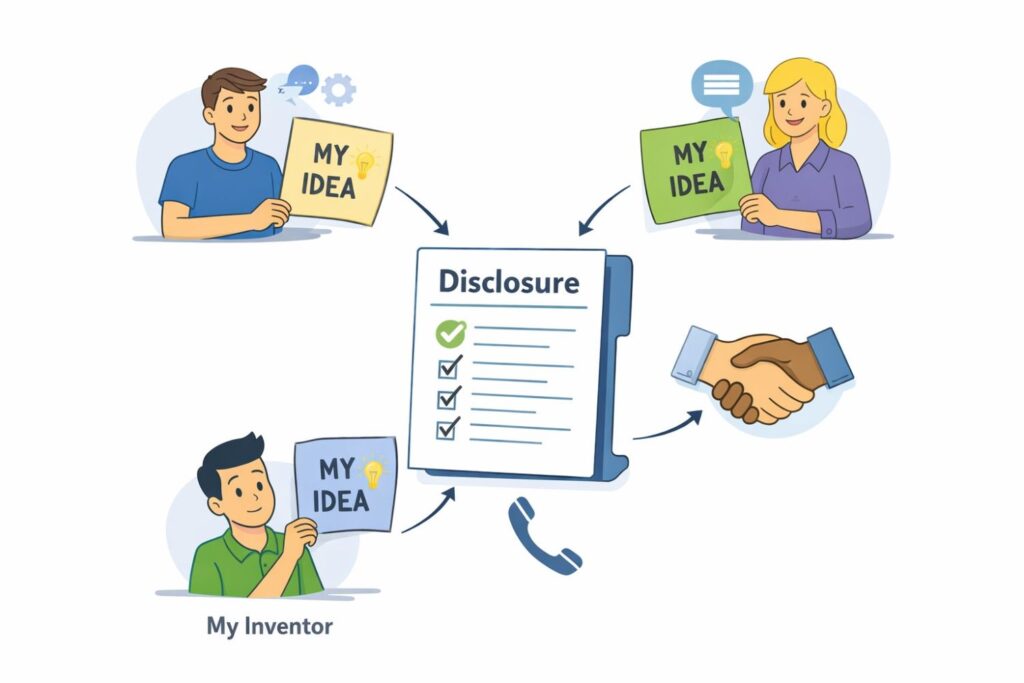
That shift changes everything.
Create a Clear Narrative of the Invention
Many conflicts arise because no one has a clean story of what the invention actually is.
Different team members may see the product from different angles. One sees the algorithm. Another sees the data pipeline. Another sees the user experience layer.
If you do not define the invention clearly, everyone assumes their part is central.
Before finalizing the disclosure, build a single narrative. Describe the invention in one tight explanation. Explain what makes it new. Explain how it works at a high level. Explain what problem it solves in a unique way.
Share that narrative with all contributors.
When people see the defined scope, they better understand how their work connects to it. Some will realize their contribution supports the system but does not shape the core inventive step. That clarity reduces disagreement naturally.
Separate Product Features From Patent Claims
One major source of tension is confusion between product development and patent protection.
Your product may have dozens of features. Only some of them may be part of the invention you are claiming in this specific disclosure.
If someone built a feature that is not central to the claimed invention, they may still feel important to the product. And they are. But that does not automatically make them an inventor for this filing.
Be explicit about this distinction.
Explain that patents protect specific inventive concepts, not every line of code or every design element. Make it clear that other features can be protected in separate filings if needed.

This approach prevents the discussion from becoming a debate about overall contribution to the company.
Use Neutral Review Before Final Decisions
When tensions rise, it helps to have a neutral third party involved.
This is where real patent attorneys play a powerful role. An experienced attorney reviews the technical details and determines inventorship based on legal standards, not internal politics.
At PowerPatent, the process blends software structure with attorney oversight. Founders and engineers input their details. The system organizes it.
Then a real patent attorney reviews and refines inventorship based on the claims. This neutral layer protects the company from bias and emotional decisions.
That combination keeps the process fair without slowing down your build cycle.
If you want to understand how this hybrid model works in practice, you can explore it here: https://powerpatent.com/how-it-works
Address Disagreements Early and Calmly
Even with structure, disagreements may happen. That is normal. What matters is timing and tone.
Do not let confusion sit for months. Address it during the disclosure phase. Bring the discussion back to documented contributions and the defined invention narrative.
Encourage calm discussion backed by written records. Avoid hallway conversations or private side deals. Transparency builds trust.
If needed, document the reasoning behind the final inventorship decision. Keep it professional and factual.
That record may never be needed. But if questions arise later, you have clear documentation showing the process was thoughtful and fair.
Protect Relationships While Protecting the Patent
Your startup’s strength comes from its people. The way you handle inventorship sends a message about leadership.
If you rush the process or dismiss concerns, trust erodes. If you drag it out with endless debate, momentum slows.
The balance is structure with empathy.
Listen carefully. Be clear about standards. Keep discussions anchored to the invention itself. Use written input and attorney guidance to stay objective.
When team members see that the process is consistent and fair, even those who are not listed as inventors will respect the outcome.
Build a Repeatable System
If your startup is innovative, this will not be your last patent disclosure. That means you should not treat this as a one-time event.
Create a repeatable workflow for collecting contributions. Standard questions. Clear documentation. Defined review steps. Attorney verification before filing.
When inventorship evaluation becomes part of your regular build process, it feels less dramatic. It becomes a routine step, not a personal negotiation.
This is exactly why modern startups move away from messy email threads and toward structured patent platforms. A guided system reduces emotion, increases speed, and lowers risk.
PowerPatent was designed for technical teams who want that kind of clarity. It helps you gather input, organize contributions, and finalize disclosures with real attorney oversight, all without the slow pace of traditional firms. You can see how founders use it here: https://powerpatent.com/how-it-works
When you collect, combine, and clarify contributions the right way, you do more than prepare a clean patent filing. You strengthen your culture. You protect ownership. And you set your startup up for confident growth.
Handling multiple inventors does not have to create conflict. With structure, transparency, and the right support, it becomes a smooth part of building something valuable.
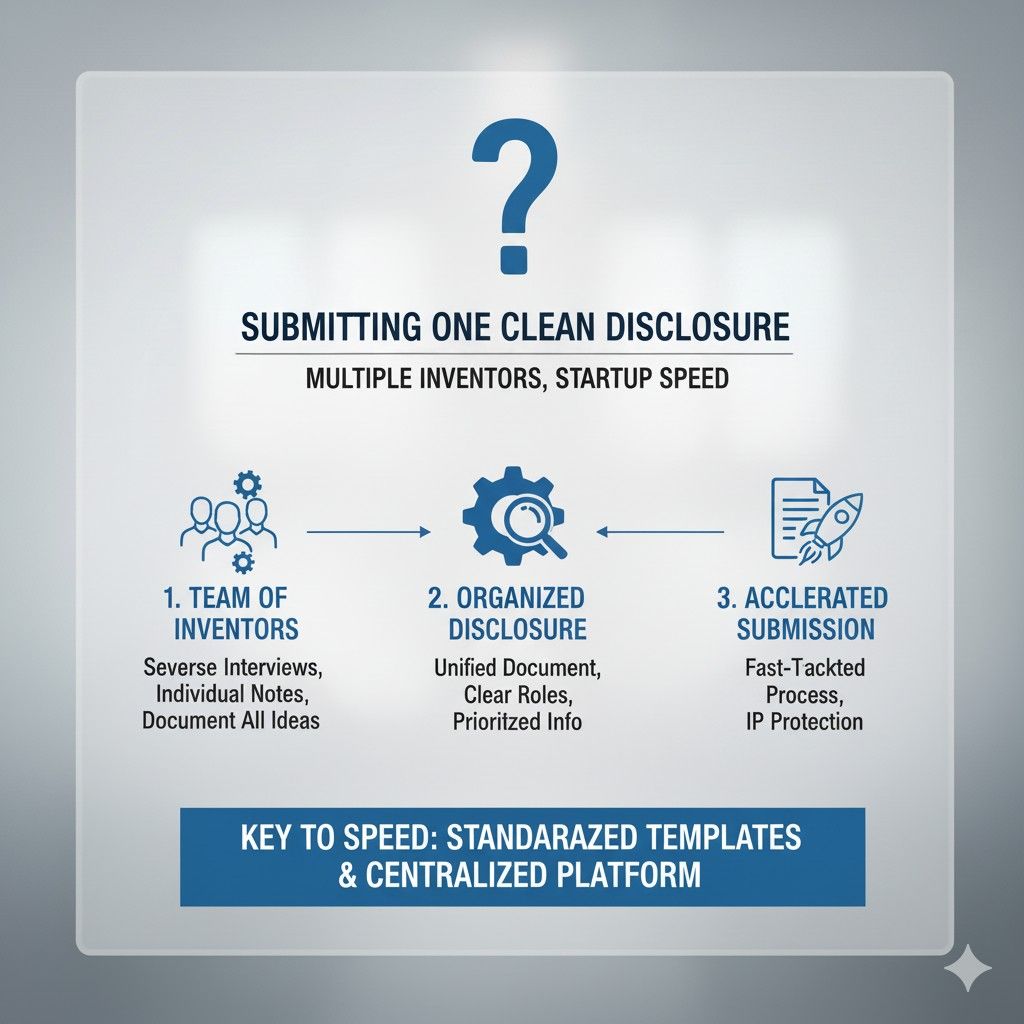
Submitting One Clean Disclosure with Multiple Inventors—Without Slowing Down Your Startup
When it is finally time to submit the disclosure, speed matters. Your team is shipping features. Investors are asking questions. Competitors are moving. The last thing you want is a long legal process that pulls engineers out of build mode.
But here is the truth. Rushing a messy disclosure is worse than taking a little time to do it right.
A clean submission does not slow you down. It protects your momentum. When structured properly, it actually saves time by preventing back-and-forth, rewrites, and corrections later.
The goal is simple. One clear disclosure. Accurate inventors. Strong technical detail. No chaos.
Let’s walk through how to make that happen while your startup keeps moving forward.
Lock the Scope Before You Draft
One of the biggest causes of delay is scope drift.
You start drafting the disclosure, and suddenly new features get added. Someone remembers an edge case. Another engineer suggests expanding the idea. The document grows. Inventorship changes again. Confusion sets in.
To avoid this, lock the scope first.
Define exactly what this disclosure covers. Not the whole product. Not the future roadmap. Just the specific invention you are filing right now.
Write a short internal summary of the invention in plain language. What problem does it solve? What makes it new? What is the core mechanism?
Share that summary with all inventors and confirm alignment before drafting the full submission.

This simple alignment step prevents late-stage expansion that slows everything down.
Assign One Disclosure Lead
Too many voices editing one document creates delay.
When multiple inventors are involved, choose one person to act as the disclosure lead. This person gathers input, organizes content, and communicates with your patent platform or attorney.
This does not mean they own the invention. It means they own the process.
The disclosure lead ensures that technical explanations are consistent. They make sure terminology does not shift from section to section. They check that diagrams match descriptions. They collect final approvals.
Without a single point of coordination, the process drags. With one accountable lead, it moves quickly.
Translate Technical Depth Into Clear Explanation
Engineers often explain inventions in a way that assumes deep context. That works internally. It does not work for a patent filing.
A strong disclosure explains the invention clearly enough that someone outside your company can understand it.
This does not mean simplifying the technology. It means structuring it properly.
Start with the problem. Then explain the current solutions and why they fall short. Then describe your approach step by step. Show how components interact. Explain what makes your method different.
Clarity here reduces revision cycles later.
This is where using a guided system changes everything. Instead of staring at a blank document, inventors answer structured prompts that pull out the right details in the right order.
PowerPatent’s software is built for this exact purpose. It helps founders turn complex systems into clean disclosures while real patent attorneys refine the language behind the scenes.
You can see how that works here: https://powerpatent.com/how-it-works
Consolidate Technical Inputs Before Attorney Review
If each inventor sends separate notes directly to a patent attorney, confusion increases.
Attorneys then spend time reconciling conflicting descriptions. They ask repetitive questions. Weeks pass.
A better approach is internal consolidation first.
The disclosure lead gathers all technical explanations and merges them into one unified draft. Any inconsistencies are resolved internally. Any missing details are filled in.
Only then does the clean draft go for attorney review.
This dramatically shortens review time. It also reduces cost and revision loops.

When software organizes inventor responses into a structured format automatically, consolidation becomes much easier. Instead of chasing documents across email threads, everything lives in one place.
Confirm Inventorship One Final Time
Before submission, pause for a final inventorship check.
Compare the finalized description and draft claims to the documented contributions. Confirm that every listed inventor contributed to at least one claimed concept. Confirm that no contributor to a claimed concept is missing.
This is not a long meeting. It is a focused verification step.
Skipping this step is how errors slip through.
A quick structured confirmation protects the validity of your filing. It also prevents future disputes when the patent becomes valuable.
Keep the Team in Build Mode
One fear founders have is that patent work pulls engineers away from product work.
The key is time boxing.
Set a clear timeline for disclosure preparation. For example, one focused week to gather input, consolidate, review, and finalize. Outside that window, engineers stay focused on product.
When the process is structured and guided, it does not require endless calls or long legal debates.
This is where modern patent platforms shine. Instead of scheduling multiple law firm meetings, inventors log in, answer targeted questions, upload diagrams, and move on.
Real attorneys step in where needed without dragging everyone into long discussions.
That balance keeps your team building while still protecting what they build.
Avoid Perfection Paralysis
Many technical founders delay filing because they want the invention to be fully complete.
They think, “Let’s wait until the system is more polished.”
That delay can be costly.
You can file based on a well-defined version of the invention, even if improvements are coming later. In fact, filing early can protect your position while development continues.
The key is clarity about what version you are claiming.
Do not wait for perfection. Wait for definition.
When you have a clear inventive concept and documented contributions, move forward.
Align Filing Strategy With Business Goals
Submitting a clean disclosure is not just a legal task. It is a strategic move.
Are you preparing for fundraising? Planning enterprise partnerships? Entering a competitive market?
Your patent timeline should support those goals.
If investors are conducting diligence soon, having a filed application strengthens your position. If you are about to launch publicly, filing before launch can protect novelty.
Discuss timing with your patent team in the context of business milestones.
PowerPatent was built for founders who think this way. The platform moves fast enough to match startup speed, while real patent attorneys ensure filings are defensible.
That combination helps you align protection with growth instead of slowing it down. Learn more here: https://powerpatent.com/how-it-works
Create a Repeatable Filing Rhythm
If your company innovates often, treat disclosures as a regular cadence, not a rare event.
For example, review new features quarterly to identify patentable concepts. Capture contributions during sprint cycles. Keep diagrams updated as systems evolve.
When disclosure submission becomes part of your operating rhythm, it feels natural.
There is less stress. Less scramble. Less last-minute coordination across multiple inventors.
A repeatable rhythm protects speed.
Finish Strong and Move Forward
Once the disclosure is finalized and submitted, communicate clearly with the inventor group.
Confirm submission. Outline next steps. Explain expected timelines.
Close the loop.
This builds confidence in the process and prepares the team for future filings.
Submitting one clean disclosure with multiple inventors does not have to slow your startup.
With defined scope, a clear lead, structured input, internal consolidation, final inventorship checks, and smart attorney oversight, the process becomes efficient.

You keep building. You keep shipping. And at the same time, you protect the breakthroughs that make your startup valuable.
Wrapping It Up
Handling multiple inventors in one disclosure submission is not just a paperwork task. It is a leadership test. When you get it wrong, you create confusion, slow down fundraising, and risk weakening one of your most valuable assets. When you get it right, you protect ownership, strengthen trust inside your team, and build real long-term leverage for your company.
Leave a Reply