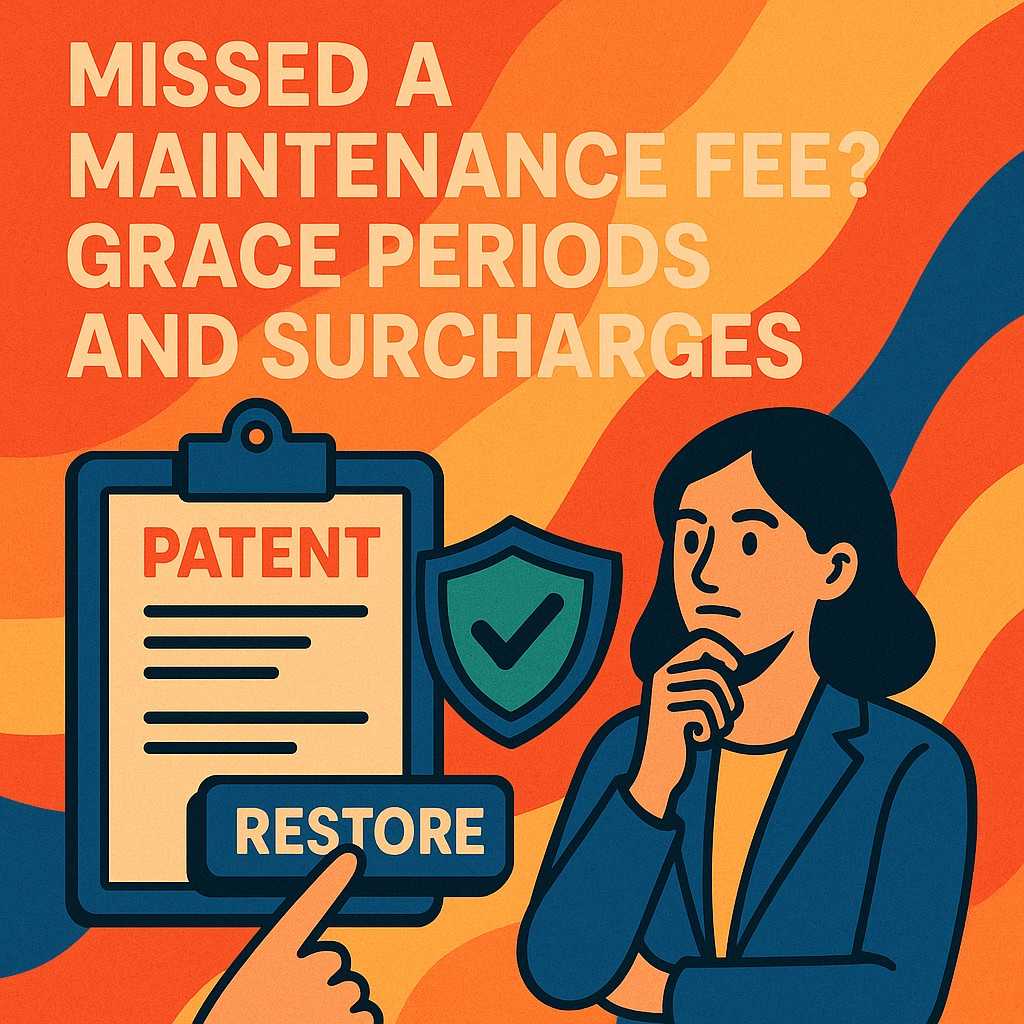
When you miss a patent maintenance fee, it feels like the floor drops out from under you. One moment you’re building your product, closing customers, or writing code. The next moment you’re staring at a notice from the USPTO that makes your stomach twist. The truth is simple: missing a maintenance fee can put your patent at risk. But the bigger truth is even better: you often have a second chance. And you can recover—if you act fast, know your options, and understand what the grace period really means for you.
What Really Happens When You Miss a Maintenance Fee
When a maintenance fee is missed, most founders imagine something dramatic happens right away, as if the patent shuts off instantly.
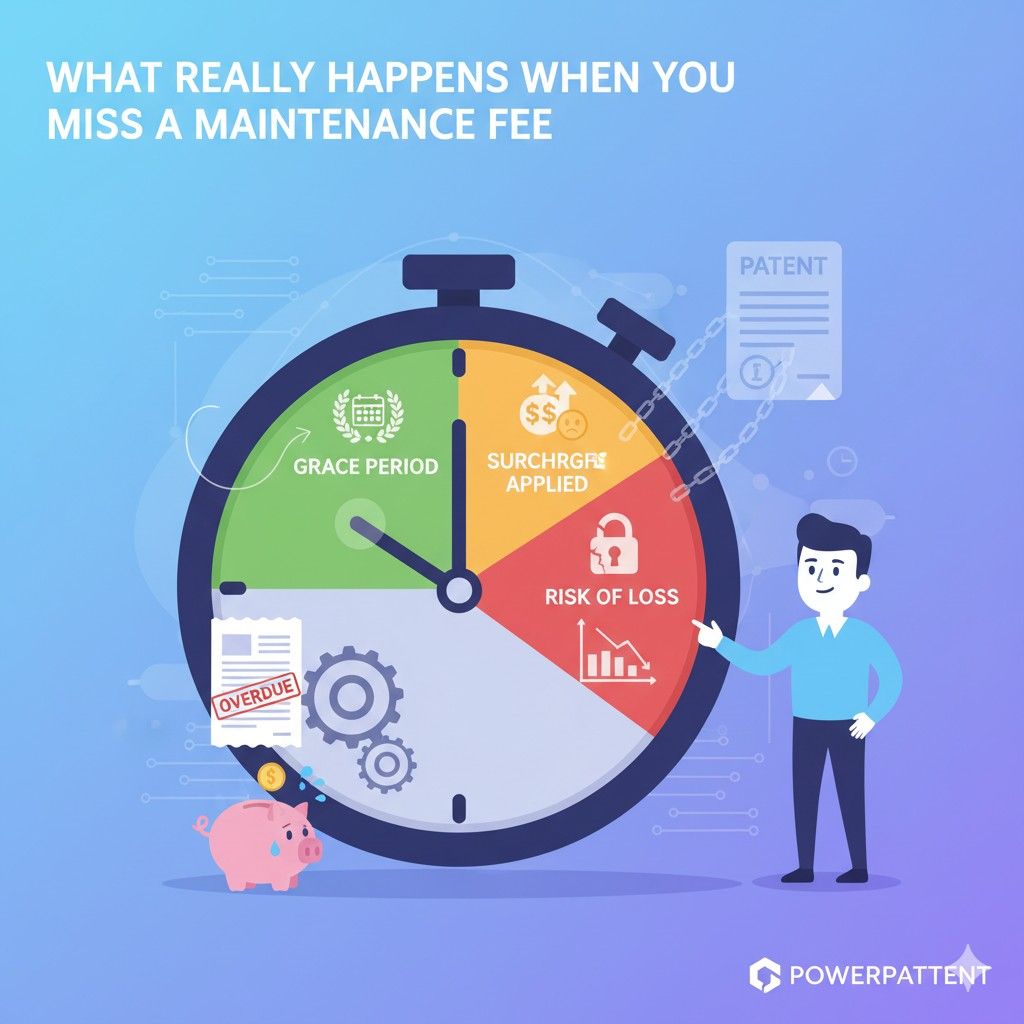
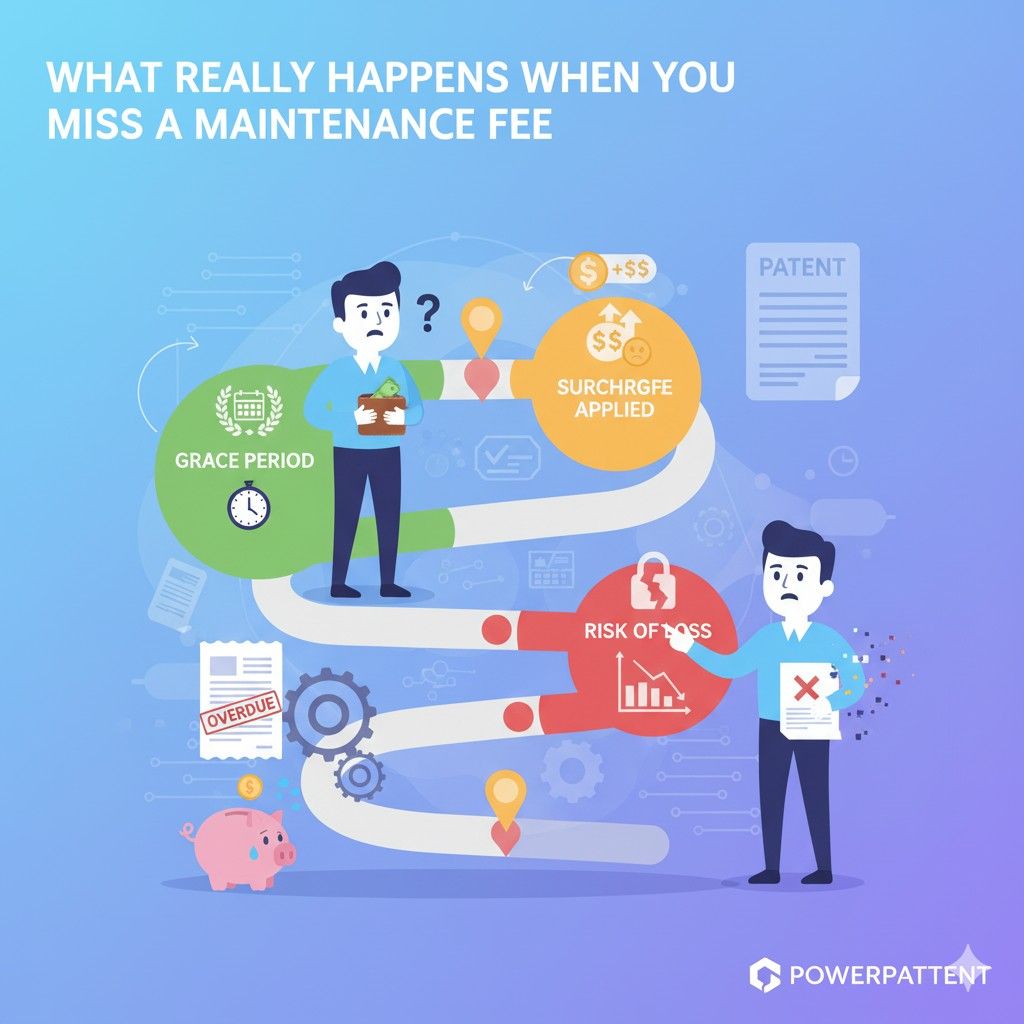
The truth works a little differently, and understanding this rhythm is what helps a business stay safe. When the payment window closes, the patent does not vanish in that same moment. Instead, it enters a quiet but dangerous stage.
This stage is where most companies either save the patent or lose it for good, and the outcome depends on how quickly they act and how clearly they understand the rules.
The first thing that happens is simple: the patent becomes late. It is still in force, but it is now sitting on borrowed time. This is the part most founders never hear about, because the USPTO does not frame it in plain language. But the idea is straightforward.
The office gives you a stretch of extra time, a built-in cushion. During this period, the patent behaves as if it is still alive, even though the fee was missed. That cushion is the grace period.
It is the safety net that stops one missed task from destroying years of work. But it only works if you move during that time.
Understanding the Moment the Fee Is Missed
The moment the deadline passes, the patent shifts into a state that feels harmless on the surface, but it can trigger real business risk. The rights remain in place, but the countdown toward expiration begins.
If too many days pass without action, the patent can be considered expired, and that change can affect everything connected to it, including investor confidence, licensing deals, valuations, and even active negotiations with customers.
Many founders make the same mistake here. They think they can wait until later because the grace period exists. But waiting is what turns a small administrative slip into a major strategic problem.
Each day that goes by creates uncertainty. That uncertainty can weaken your standing in a deal. It can make it hard to enforce your patent if someone copies your idea.
It can even create gaps that competitors quietly use to test the boundaries of your protection.
This is where strategic thinking becomes essential. Treat the grace period the way you treat runway. It buys you time, but it should not change your urgency.
Acting early reduces risk, lowers costs, and prevents you from having to jump through extra steps later.
The Hidden Business Impact Most Companies Don’t Expect
One of the biggest surprises for founders is how a missed maintenance fee affects their business far beyond the patent itself. A patent is not just a legal asset. It is a story.
It tells investors that you build things worth protecting. It tells customers that you own your space. It tells future employees that they are joining a team building real, defensible technology.
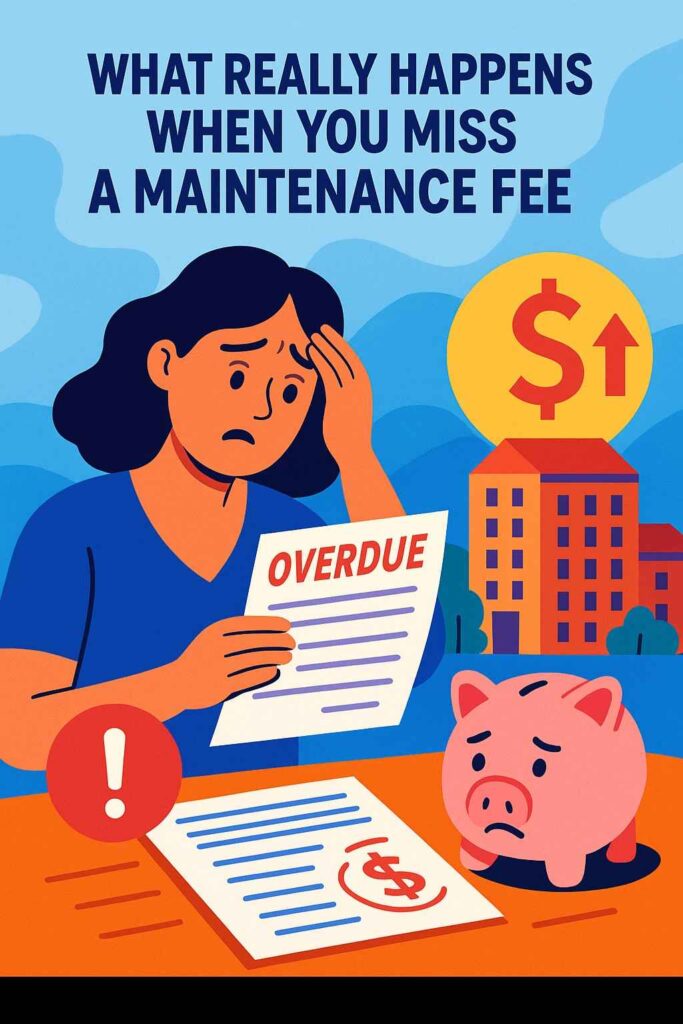
When the patent becomes late, that story becomes unclear. A missed fee looks small on paper, but it signals something inside the company. Investors notice gaps. Partners ask questions.
Competitors watch for openings. Even if the patent is still active during the grace period, the doubt around it creates pressure. And businesses grow stronger when they remove doubt instead of leaving it to drift.
This is why responding fast matters. You are not just saving a legal asset. You are protecting a business signal. You are keeping your foundation steady so that everything built on top of it stays stable.
How to Move When You Realize the Deadline Has Passed
If you discover the missed fee right away, the best thing you can do is take immediate action. Do not hesitate, even if you are unsure how the process works.
Make the payment as soon as possible so you remain within the grace period while the cost is still manageable. If you wait, the USPTO begins adding surcharges, and the longer you delay, the higher those extra costs become.
If you discover the missed fee late, meaning weeks or months after the deadline, you still have options. The grace period is long enough for most companies to rescue the patent if they act with intention.
The key is to avoid the common trap of trying to figure everything out alone. That delay becomes expensive.
When founders try to interpret the USPTO wording themselves, they often misread the window they have left. And by the time they seek help, the patent is much closer to expiration than they realized.
This is one of the reasons many startups rely on PowerPatent. The platform keeps track of deadlines automatically, catches issues early, and helps founders avoid missing fees in the first place.
And if something slips through, the system plus real attorney oversight helps you fix the situation fast without confusion. If you ever want to see how this works behind the scenes, you can explore it here: https://powerpatent.com/how-it-works.
Turning a Missed Fee Into a Moment of Strength
It may sound strange, but a missed maintenance fee can actually strengthen your patent strategy if you use the moment well. It forces you to review your portfolio with fresh eyes.
It helps you understand which patents still match your business goals, which ones deserve priority, and which ones may no longer support your core direction.
Many companies carry old patents that no longer match the product they are building today. A missed fee becomes the wake-up signal that invites you to decide whether the patent still serves you.
For some businesses, renewing the patent through the grace period makes perfect sense. For others, letting a low-value patent expire frees up money and attention that can be used on stronger filings ahead.
This kind of reflection leads to better decisions. Instead of treating maintenance as a chore, treat it as a strategic checkpoint. Align the patent with where your company is heading.
Confirm that it still protects something valuable. Tie the renewal decision to your long-term plan rather than a calendar reminder.
And whenever you’re ready for a smoother, faster, founder-friendly way to avoid missing fees again, you can always take a look at what PowerPatent offers: https://powerpatent.com/how-it-works.
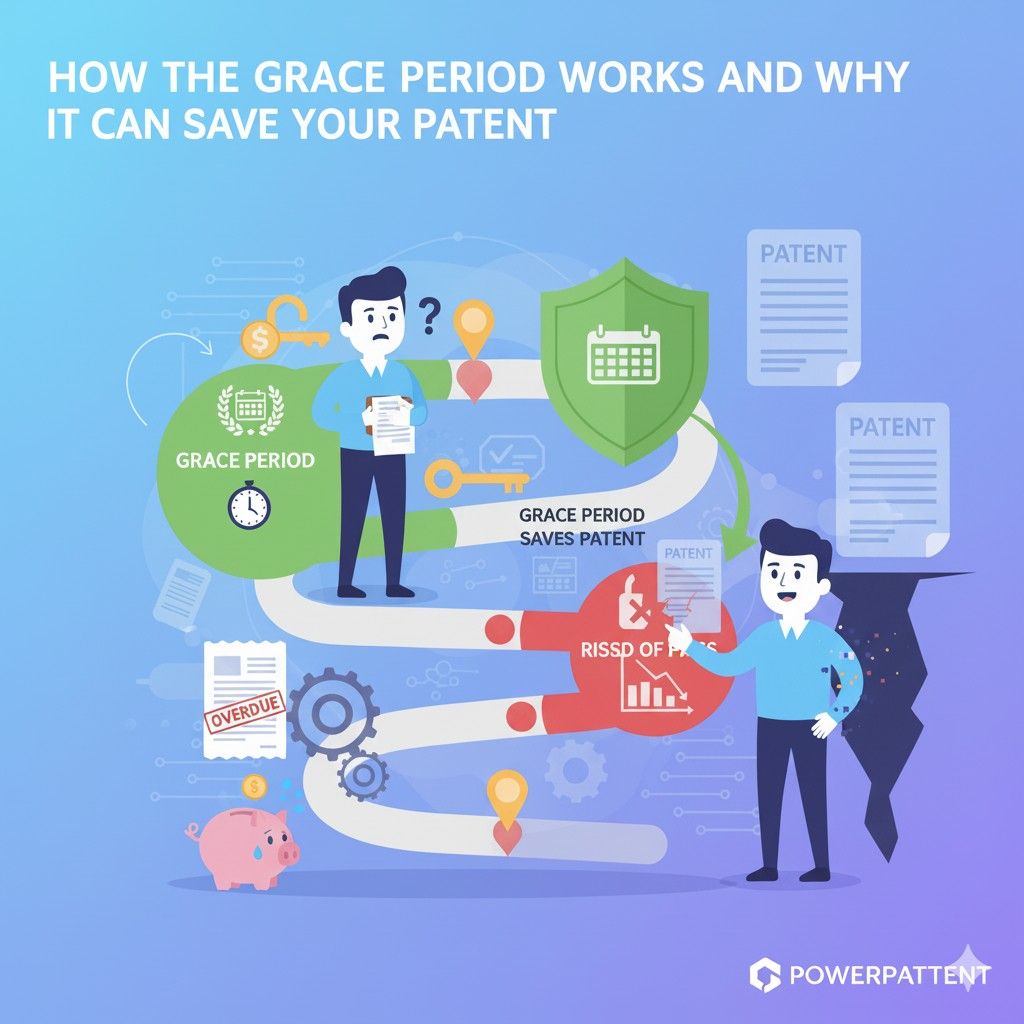
How the Grace Period Works and Why It Can Save Your Patent
The grace period is one of the most misunderstood parts of the entire maintenance-fee process.
Many founders hear the phrase and assume it is a simple extension, almost like an extra deadline added to the original one. But the grace period is more like a safety net than a second deadline.
It exists to protect you from losing everything over a single missed date, but it is not something you want to rely on casually.
When you understand how it works, you can use it to keep your patent rights safe without letting stress or confusion take over the moment you realize a payment slipped through the cracks.
The grace period begins the day after the maintenance fee deadline passes. From that moment on, the USPTO still treats the patent as alive, but only for a limited time.
This is the period where the patent’s status is stable enough for you to fix the problem, yet fragile enough that every day matters.
Even though the patent technically remains enforceable during this window, the uncertainty around it can affect deals, partnerships, and valuations. This is why the grace period should be treated as a shield, not a cushion.
Why the Grace Period Exists in the First Place
It is easy to assume the grace period is just a bureaucratic convenience, but it serves a real business purpose. The USPTO knows that companies move fast. They know people change roles, inboxes get messy, and deadlines get lost inside the noise of building a product.
A patent represents years of effort, creativity, and investment. Expiring it instantly over a single missed date would be unreasonable.
The grace period is the system’s way of giving founders a real chance to fix a small error before it becomes a disaster.
But just because the system offers forgiveness does not mean it encourages delay. The grace period is generous enough to fix the issue, but strict enough to make you treat it seriously.
The longer you wait, the more expensive the repair becomes. The surcharge increases. The administrative process gets heavier. And the risk to your business grows quietly in the background.
What the Grace Period Really Protects
The grace period protects your patent rights, but it also protects your business story. When investors see a lapsed patent that hasn’t been renewed, they immediately wonder why. Was it an oversight?
Was it a cash-flow issue? Was the patent not valuable to the company anymore? These are not questions you want floating around during fundraising or partnership negotiations.
During the grace period, you still have the chance to fix everything without letting the outside world see cracks in your IP foundation.
The moment you make the payment and the USPTO accepts it, the patent stays fully active as if nothing had ever gone wrong. This protects your narrative, your valuation, and your confidence in the protection around your technology.
It is not just about the legal status. It is about the signal. Patents send signals to the market, and the grace period helps you make sure the signal stays strong.
Why Acting Early Inside the Grace Period Makes a Big Difference
Some founders think that as long as they pay before the grace period ends, they are fine. Technically, this is true. But it is not a good strategy for a business that wants to move with clarity and strength. The timing matters.
When you pay early in the grace period, the surcharge is lower. The administrative steps are smoother.
The risk window shrinks. And your team avoids the frantic energy that comes from rushing at the last minute. Waiting until the end compresses every point of failure into a small space.
A credit-card issue, a form mistake, or a single wrong assumption can suddenly lead to an unintended expiration.

The companies that stay safe are the ones that treat the grace period not as extra time but as recovery time. They use it to fix the issue, clean up their internal processes, and make sure it never happens again.
How to Use the Grace Period to Strengthen Your IP Operations
If you are in the grace period right now, the smartest move is immediate action. But once you’ve handled the urgent part, use the moment to strengthen the systems around your patent operations.
The grace period exposes the weak spots you did not know were there. Maybe reminders were only sent to one email. Maybe the responsibility was unclear. Maybe no one was tracking dates at all.
This is where many founders decide they need a more reliable system than manual reminders. And it is one of the reasons PowerPatent exists.
The platform automatically tracks deadlines, sends clear alerts, and gives you a dashboard where everything is visible at a glance.
Paired with real attorney oversight, it closes the gaps that lead to missed payments in the first place. If you want to see how that works, you can explore it here: https://powerpatent.com/how-it-works.
The grace period is not just a rescue option. It is a chance to rethink how your company handles intellectual property. When you build better systems, you build a stronger business.
What Happens If You Ignore the Grace Period
Ignoring the grace period has two consequences. The first is the obvious one: the patent expires officially. Once it enters expiration, the rights fall away. You lose the ability to stop others from using your invention.
Competitors can step in. Partners may hesitate. Your moat disappears.
The second consequence is more subtle but just as damaging. Fixing an expired patent is much harder than fixing one in the grace period. You now need to file a petition to reinstate the patent, and you must convince the USPTO that the delay was unintentional.
This standard is more serious than people realize. It is not enough to say you missed a deadline. You must show that the delay was honest and not strategic.
This process takes more time, costs more money, and introduces uncertainty you do not want around a key business asset.
Founders often assume they can always revive a patent after expiration, but that is not guaranteed. Restoration becomes a question, not a certainty. And no founder wants their company’s protection hanging on a question.
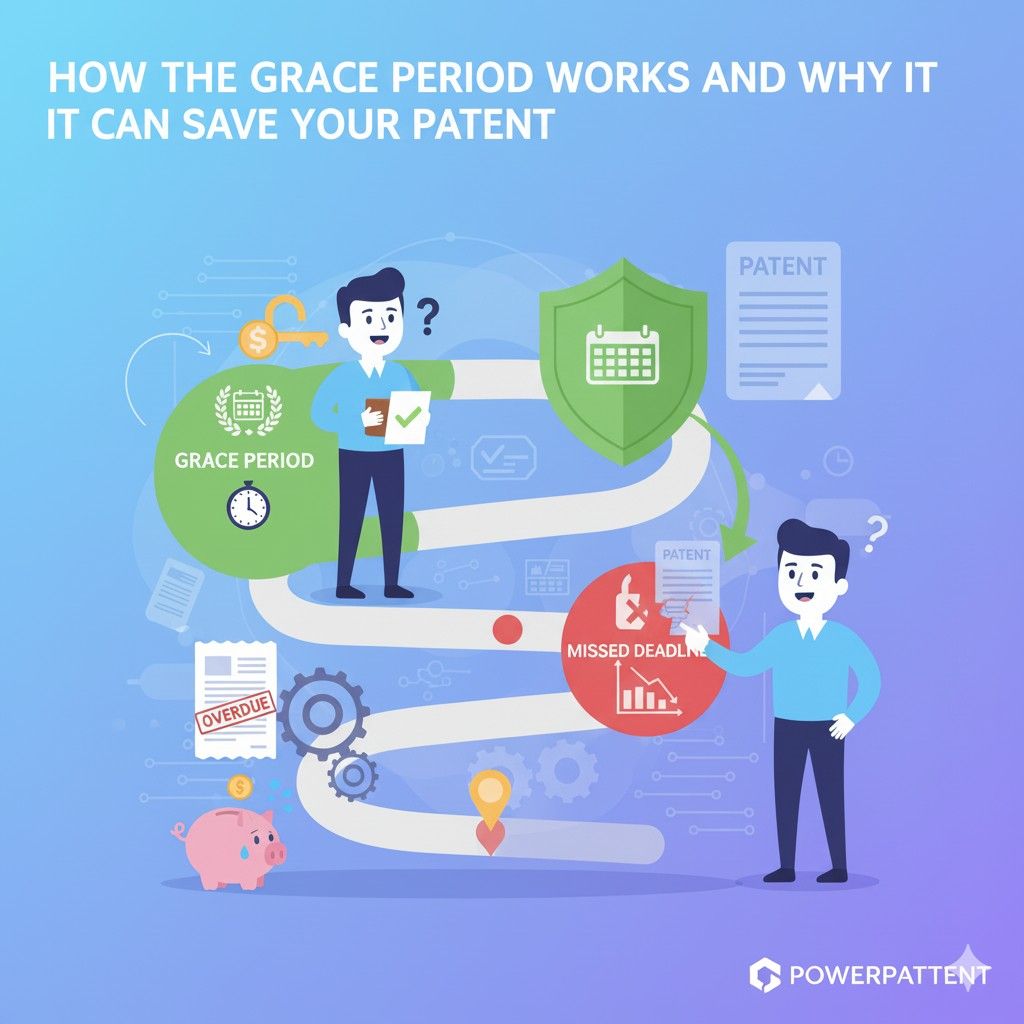
This is why the grace period is so powerful. It gives you a direct and reliable path to keep your rights intact.
The moment you pay inside the grace period, the patent stays fully alive without needing to justify anything to the USPTO. Acting fast keeps everything simple.
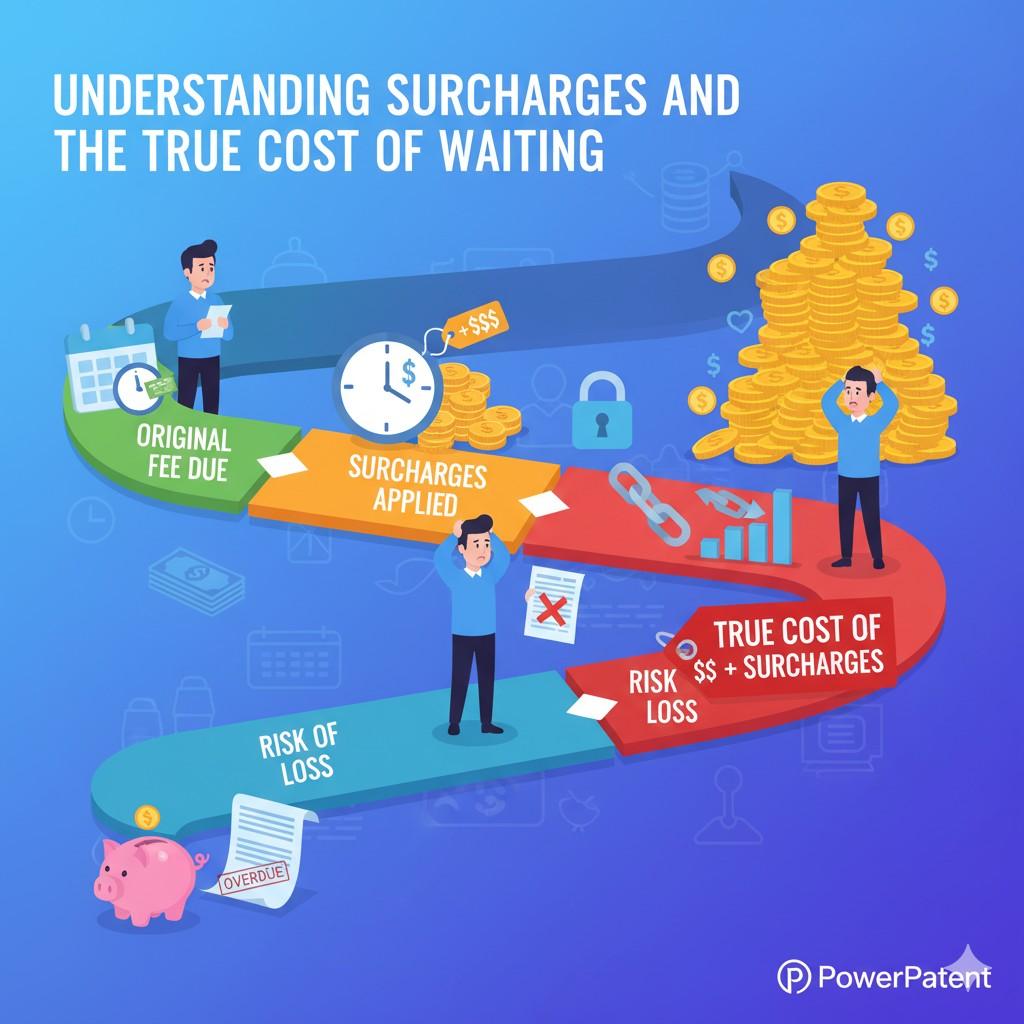
Understanding Surcharges and the True Cost of Waiting
Surcharges are the part of the maintenance-fee process that most founders do not think about until they are forced to face them. They seem small at first, almost like a penalty the system adds just to keep people paying attention.
But when you look deeper, you realize the surcharge is more than a simple late fee. It is the cost of uncertainty. It is the price of delay. And it grows heavier the longer you wait to correct the missed payment.
A surcharge shows up the moment the maintenance fee window closes and you enter the grace period. The USPTO adds it automatically because the patent slipped past its original timeline.
It is a clear signal from the system that action is required soon. But many founders underestimate how fast this extra cost can compound the longer the delay continues.
And they often misunderstand what the surcharge represents in the bigger picture of their IP strategy.
Why Surcharges Exist and What They Signal About Your Patent
A surcharge is not punishment. It is the USPTO’s way of pushing founders to close the gap between a missed fee and a restored patent.
It is meant to keep the system running smoothly and prevent patents from drifting into uncertainty for too long. The surcharge is basically the price you pay to keep the patent in a safe, temporary state after the deadline passes.
But what businesses often overlook is the signal a surcharge sends. It tells you that your patent is now living on borrowed time. It is still alive, but it is not safely maintained.
Anyone doing due diligence can see this if they look closely enough.
You might not feel the effects immediately, but the signal is out there. And signals are powerful in the world of startups.
This is one of the reasons you should never wait until the end of the grace period. The surcharge may be manageable now, but the longer you wait, the more risk you introduce into your company’s story.
And in a world where trust matters, you want your IP to reflect order, not delay.
The Real Cost of Waiting Beyond the Money
The surcharge itself is not the real cost. The dollar amount matters, but it is never the thing that damages a business. The true cost comes from what waiting does to your momentum.
Every day inside the grace period is a day where your patent looks like it is hanging in the air, not fully secured.
This can complicate licensing deals because partners want clarity. It can slow investment conversations because investors want stable rights.
It can introduce doubt inside your own team because people want to know the work they are doing is protected.
When a company waits too long to pay a late maintenance fee, the pressure shifts from a simple financial matter to a strategic weakness. And competitors with sharp instincts understand this.
A patent in the grace period is still enforceable, but if someone wants to test your strength or challenge your confidence, this is the moment they look for.
This is why the surcharge should be treated as a warning, not a bill. It tells you that waiting comes with invisible costs, and the longer you wait, the heavier those costs become.
How Surcharges Build Over Time and Why Timing Matters
As the grace period unfolds, the surcharge sits on top of the normal fee. It does not go away. It does not shrink. It only becomes more painful the closer you get to the end of the period.
And even though the surcharge amount itself does not multiply monthly, the risk around it does.
When founders procrastinate, they tend to push the problem to the back of their minds.
They tell themselves they have time, and technically they do. But the danger of delay comes from the small unexpected things that can trip you up at the last second.
A payment processing issue. A form you thought was complete but was missing one small detail. A change in who holds the responsibility inside your team. A simple misunderstanding of the exact deadline.
When all of this happens near the end of the grace period, there is no buffer left. One small mistake can cause the patent to fall into expiration. Once that happens, you cannot simply pay a fee to fix it.
You must file a petition to revive the patent. You must prove the delay was unintentional. And you must wait for the USPTO to review the petition.
During this waiting period, your patent sits in limbo, and limbo is the worst place for a growing business to be.
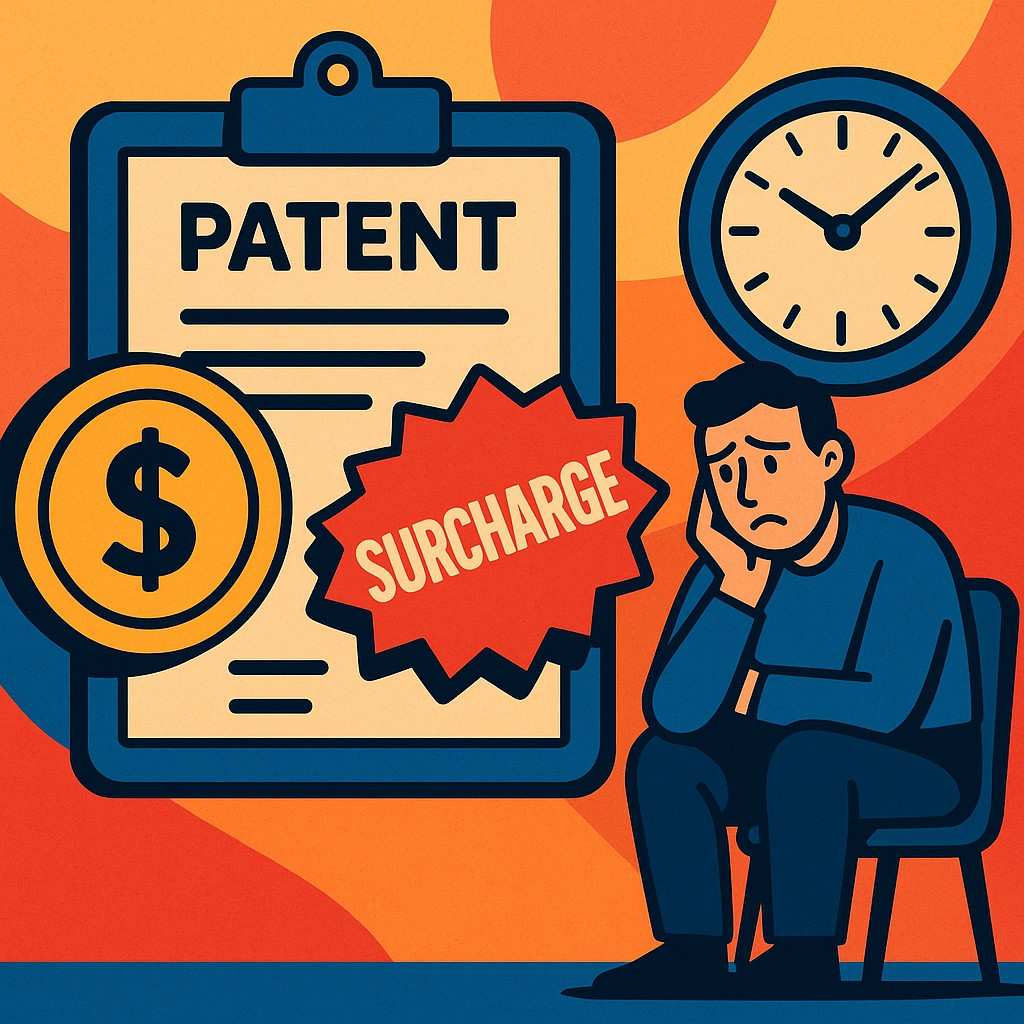
This is why timing is everything. Paying early keeps the surcharge small and the process smooth. Waiting turns a simple late fee into a risk event that affects the entire company.
Why Founders Should Treat Surcharges as a Strategic Trigger
A surcharge is a moment that tells you something about your operations. It tells you that your IP system needs improvement. It tells you that responsibility around patents might be unclear in your team.
It tells you that manual reminders are not enough. And it tells you that your business is moving fast enough that something important slipped through the cracks.
Instead of treating the surcharge as nothing more than an added cost, treat it as a signal to tighten your patent management.
Many founders do not realize how often companies lose patents because no one keeps an eye on deadlines. Teams change. Emails get lost. Roles shift. And patents fade out silently because no one realizes a payment was never made.
This is the exact problem PowerPatent was built to solve. The platform tracks deadlines automatically. It sends reliable reminders. It shows you exactly what is due and when.
And it pairs that automation with real attorneys who check your filings for errors so nothing falls apart at the last minute. If you want to see how that works behind the scenes, you can explore it here: https://powerpatent.com/how-it-works.
A surcharge tells you that your current system is fragile. And fragile systems fail when your company starts to grow. Strengthening it now protects everything you build later.
What Surcharges Mean for Long-Term IP Planning
When you build a patent portfolio, every decision compounds. A missed fee today can affect the strength of a future patent family. A lapse today can weaken a continuation filing tomorrow.
A delay today can limit your ability to negotiate licensing terms later.
Surcharges matter because they show you where your IP maintenance system is stressed. They help you identify where breakdowns are happening before those breakdowns become permanent losses.
When companies treat surcharges with intention, they build stronger IP practices. When they ignore them, they end up dealing with bigger problems months or years later.

A surcharge is not just a number. It is a warning light. And smart companies respond to warning lights before the engine fails.
How to Restore Your Patent Fast—and Keep This From Ever Happening Again
Restoring a patent after missing a maintenance fee is not just about paying what is owed. It is about acting with clarity, speed, and intention so the patent never slips into real danger again.
When founders face this moment, they usually feel a mix of stress and urgency, but once you understand how the restoration process actually works, it becomes far less intimidating.
The goal is simple. Bring the patent back to stable ground and build a system that protects it moving forward.
Restoration inside the grace period is the cleanest path. You pay the maintenance fee along with the surcharge, and once the USPTO accepts the payment, the patent stays active as if nothing had been disrupted. No extra petition.
No long review. No risk of rejection. The mistake disappears in the system as soon as the payment is processed. This is why acting early is so important. It keeps the process simple.
But when a company waits too long and the patent officially expires, the restoration process becomes more serious. You must file a petition explaining that the delay was unintentional.
You must pay the reinstatement fee. You must wait for the USPTO to decide whether your explanation is acceptable.
This waiting period can unsettle investors, partners, and customers. And the USPTO can take months to respond. You do not want to end up here if you can avoid it.
Understanding What Restoration Really Means for Your Patent
When most founders think about restoration, they imagine flipping a switch that turns the patent back on. The reality is more nuanced. If you restore the patent inside the grace period, the rights were never interrupted.
There is no gap in protection. The patent remains enforceable the entire time. No competitor gains legal room to challenge you or use your invention.
If you restore the patent after official expiration, the rights can be revived, but the world does not fully rewind. Some parties may have taken actions during the lapse that complicate enforcement later.
For example, if a competitor began practicing your invention during the expired period, the law gives them certain protections if they started in good faith and relied on the lapse.
These situations can become complex fast, even if you win your petition to revive.
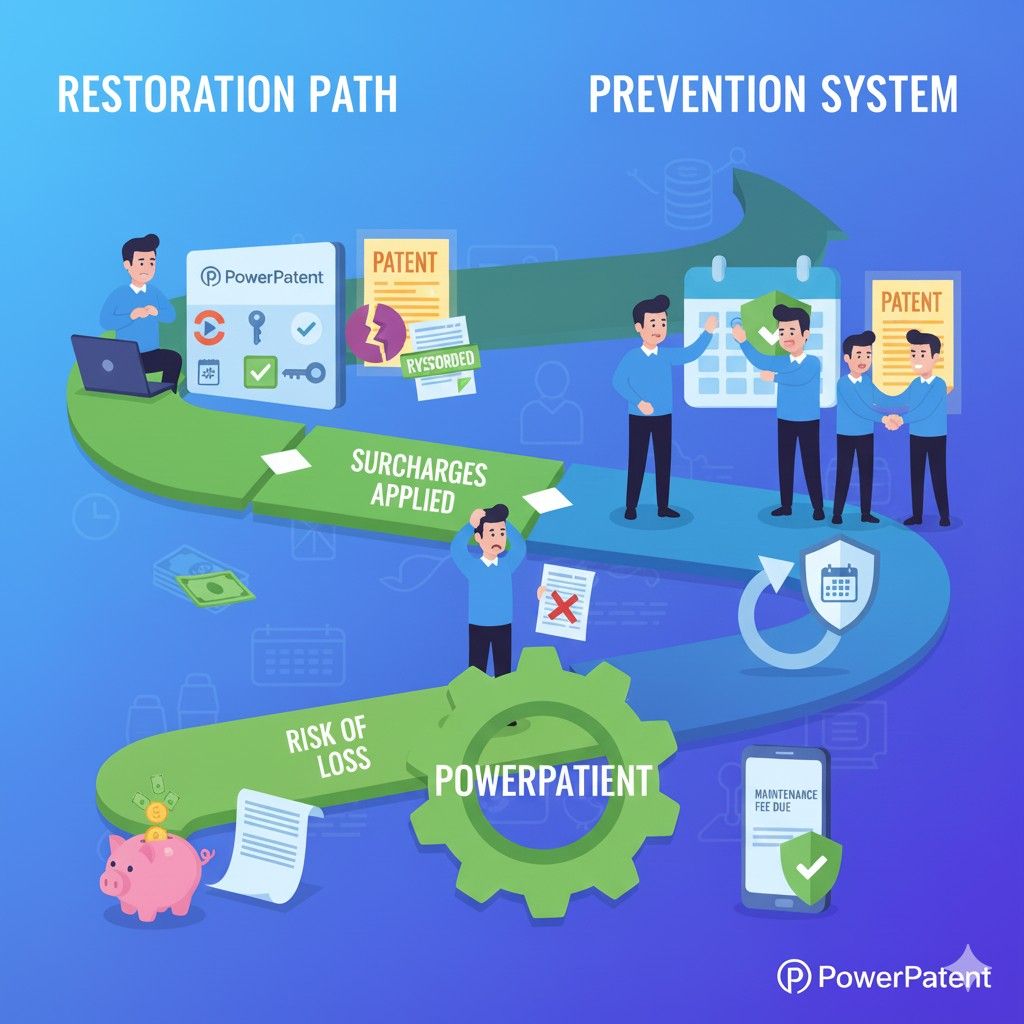
This is why the smoothest path to restoration is always earlier rather than later. Early action keeps everything clean.
Moving Fast When You Realize the Patent Is at Risk
If you discover that a maintenance fee was missed, the smartest move is immediate confirmation. You need to verify whether the payment window truly passed, whether you are still within the grace period, and what the exact fee amount is.
Many founders lose time simply trying to read USPTO language or navigate the payment portal. That delay becomes the real problem.
Speed matters because the restoration process is more predictable the earlier you act. The USPTO does not negotiate. It does not adjust deadlines based on circumstances. It follows a strict system.
When you understand that system, you gain speed and confidence. When you are trying to interpret it on your own, every step takes longer and feels more stressful.
This is the part where many companies turn to PowerPatent, especially when something urgent is happening.
The platform makes deadlines clear, highlights what needs attention, and handles filings under real attorney oversight so mistakes do not create more problems.
If you ever want to see how this helps founders avoid maintenance-fee disasters, you can explore it here: https://powerpatent.com/how-it-works.
The Hidden Risks of Handling Restoration Alone
Restoring a patent is not difficult, but it is easy to make mistakes that cause bigger issues later. One common mistake is paying the fee without checking whether the patent is already considered expired.
Another mistake is assuming you still have time when the grace period is almost over. Some founders misread deadlines.
Some rely on old letters. Some assume that because they paid something, the patent is fully restored. These misunderstandings can create situations where the patent appears active to the company but is not actually active in the USPTO database.
A second major risk is filing the revival petition incorrectly. If the patent is already expired, the USPTO will not accept a simple payment. They require a signed statement explaining that the delay was unintentional.
Many founders write these statements casually, not realizing that the wording matters. If the USPTO believes the delay was intentional or strategic, the petition can be denied. And once denied, restoring the patent becomes far more complicated.
The final risk is waiting while business moves forward. While the patent sits unsettled, your company keeps building. You launch new features, negotiate deals, pitch investors, and take your product to market.
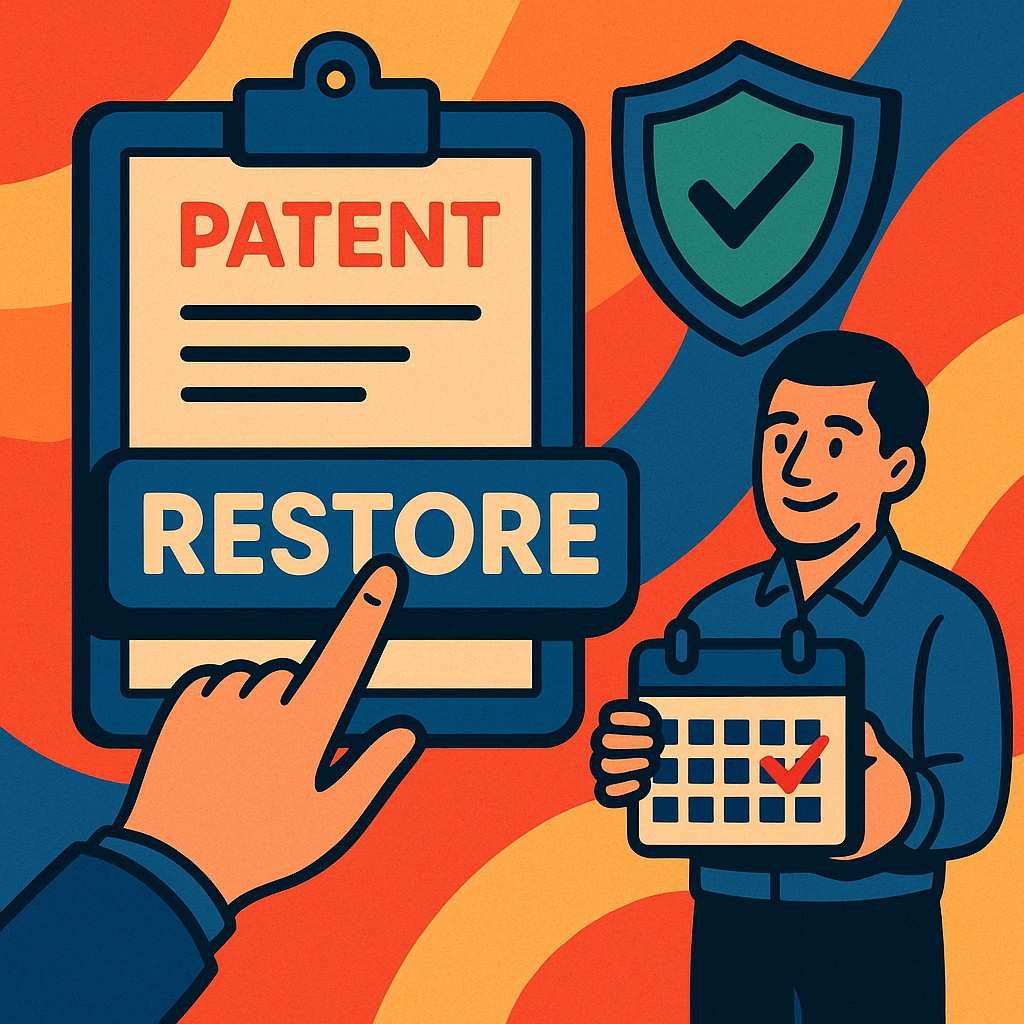
All of this happens on top of a legal foundation that is not secure. This is the type of quiet risk that can cause real problems later, even if the patent is eventually revived.
How to Keep This From Ever Happening Again
The best way to avoid missed maintenance fees is to build a system that does not rely on memory, scattered documents, or a single person’s inbox.
A good IP system works in the background, without stress, without confusion, and without frantic last-minute checks. When you build a calm system, your patent stays safe even when your company is moving at full speed.
The most common cause of missed fees is ownership confusion. Many companies assume someone else is watching the dates. A founder thinks the CTO has it covered.
The CTO thinks operations has it covered. Operations thinks the attorney has it covered. And the attorney assumes the client will ask when the date gets close. This gap in responsibility is what allows maintenance fees to slip unnoticed.
Another cause is poor visibility. If you cannot see your patent deadlines in one place, it is easy for dates to get lost. And the USPTO does not send friendly reminders. Their notices are technical, formal, and easy to miss.
The smartest approach is to use a system that tracks deadlines automatically, provides clear reminders, and gives you a single view of your entire portfolio. When you pair that with attorney oversight, you eliminate the gaps that lead to late fees or sudden surprises.
This is exactly why so many startups use PowerPatent. It gives founders the clarity, structure, and support they need without slowing them down. If you want to see how it works, here is the link again: https://powerpatent.com/how-it-works.
Turning Restoration Into a Powerful Reset Moment
When a patent is restored, the story does not end. This moment becomes a chance to rethink how your company handles IP.
You can use it to clean up old files, clarify roles, update your patent roadmap, and set new rules so nothing gets missed again.
You can treat it as a fresh start, one that strengthens your company’s discipline. Many founders who go through this experience come out more confident. They understand the system better.
They make clearer decisions about which patents matter most. They build stronger habits around tracking deadlines. And they often shift from reactive IP management to proactive strategy.
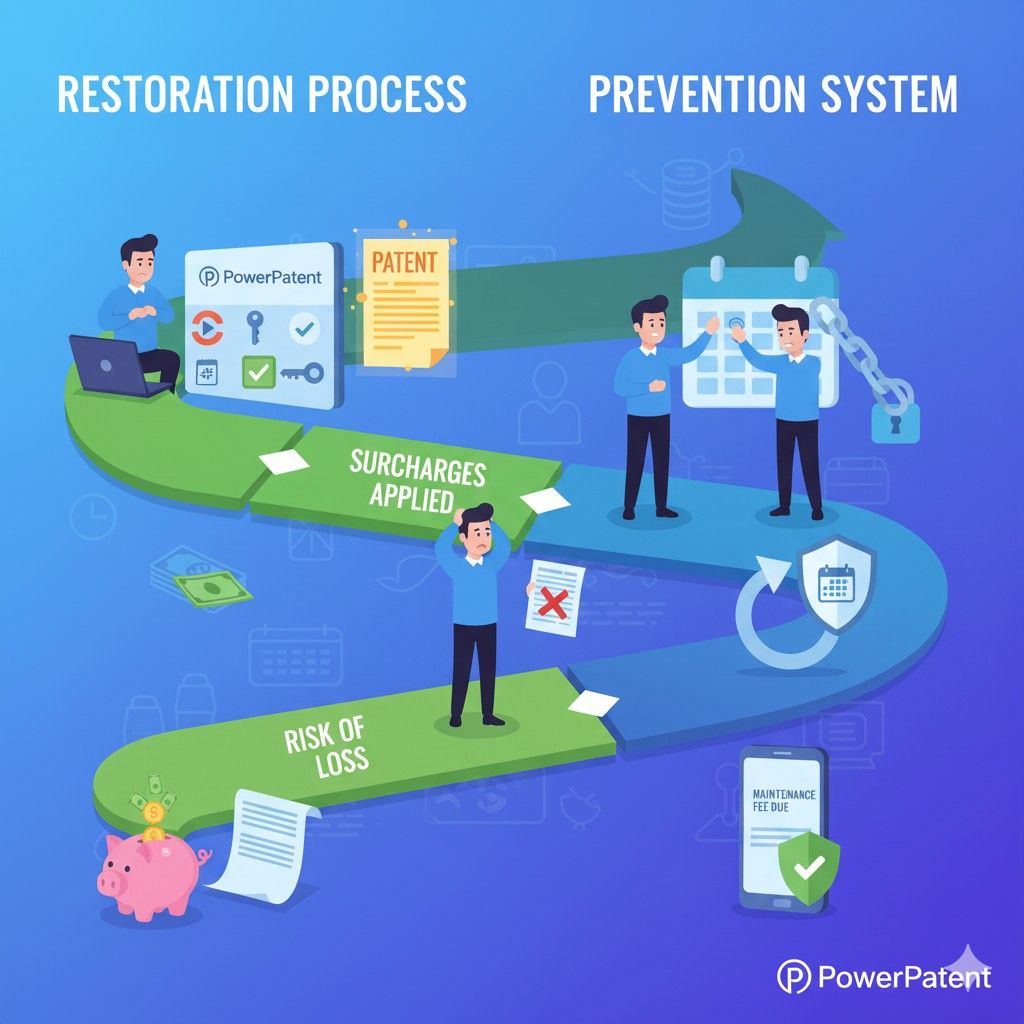
When you handle restoration well and strengthen your systems afterward, the entire company benefits. Investors feel safer. Teams feel supported. Customers feel trust.
Competitors feel pressure. The patent becomes more than a legal asset. It becomes proof that your company protects what it creates.
Wrapping It Up
Missing a maintenance fee feels scary in the moment, but it does not have to turn into a crisis. When you understand how the grace period works, what surcharges really mean, and how restoration actually happens, the whole situation becomes manageable. A missed fee is not the end of your patent and not the end of your protection. What matters most is how quickly and clearly you act the moment you realize something slipped.
Leave a Reply