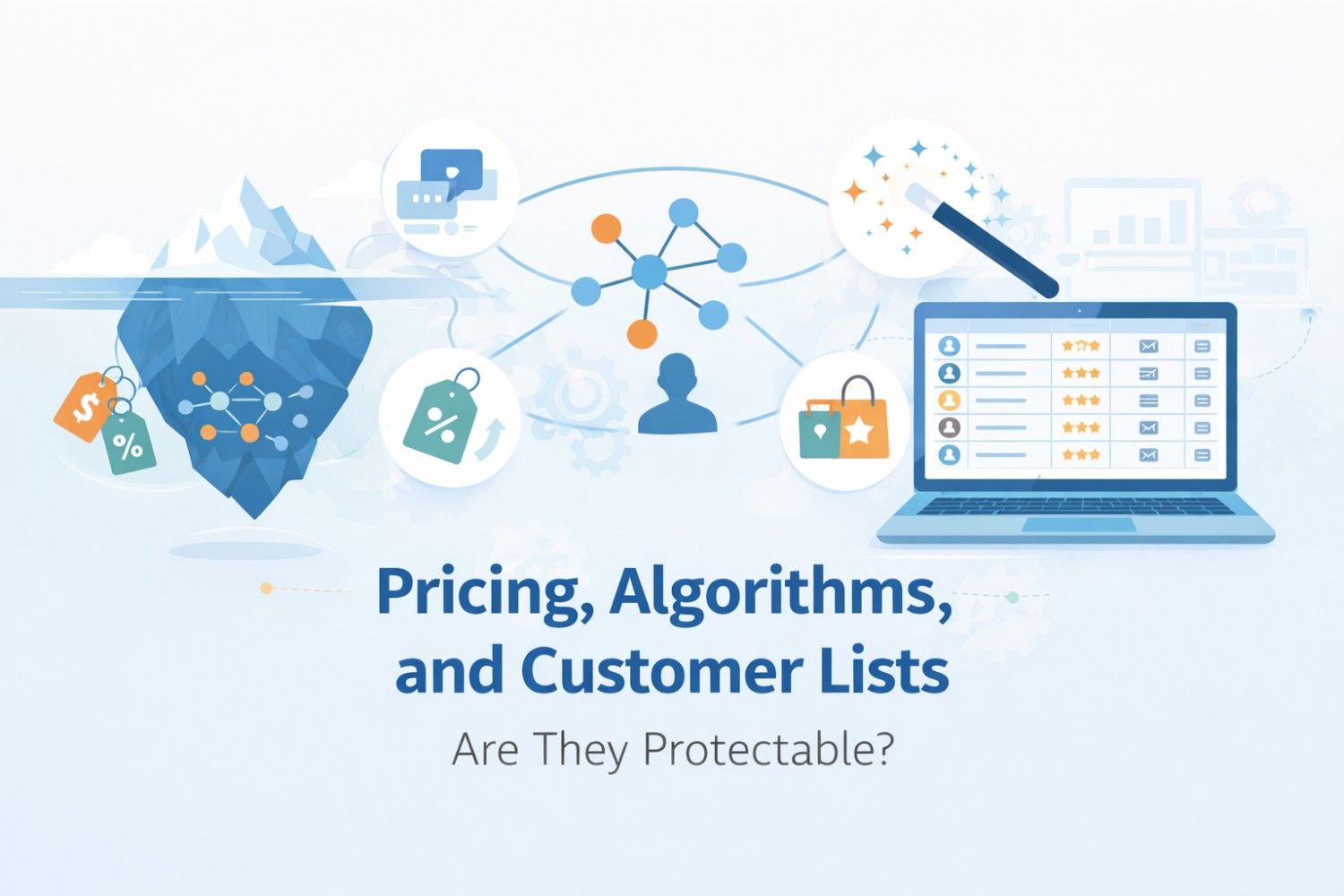
If you are building a real company, you already know this truth: your edge is not your logo or your website. Your edge is how you price, how your product thinks, and who trusts you enough to buy. These are the parts that make or break a startup. They are also the parts founders worry about the most. Can someone copy this? Can I protect it? Am I already too late? This article answers those questions clearly, without legal talk, and without wasting your time. We are going to talk about pricing logic, algorithms, and customer lists in plain words. You will learn what is protectable, what is not, and what smart founders do early so they do not regret it later. Not theory. Not fear. Real steps you can take while you keep building.
Why the Most Valuable Parts of Your Business Are Easy to Miss
Most founders think value looks loud. A flashy feature. A big launch. A clever brand. But real value is often quiet. It lives inside decisions you make every day without writing them down.
That is why it is so easy to miss. You are too close to it. You are inside it. And because it feels normal to you, you assume it is not special.
That assumption is where many companies lose leverage without realizing it.
Builders Are Focused on Shipping, Not Protecting
When you are building, your brain is wired for speed. You care about shipping, fixing bugs, closing users, and staying alive. Protection feels like something you do later, when things calm down.
But later is usually when the value has already leaked out.
What makes this tricky is that nothing feels stolen at first. Someone copies your pricing page. A competitor mirrors how your product makes decisions.
A former contractor reaches out to your customers. Each moment feels small. But together, they slowly erase your edge.

Smart founders do not wait for damage to act. They act when the value is being created, not when it is already exposed.
This is where tools like PowerPatent fit naturally into the building flow instead of interrupting it. You can see how that works here: https://powerpatent.com/how-it-works
Familiarity Makes Value Feel Ordinary
If you built something, it feels obvious to you. You remember the messy early versions. You remember when it barely worked. That history tricks your brain into thinking the final system is simple.
But outsiders do not see the struggle. They only see the result. And often, that result is not obvious at all.
Your pricing logic might look like a few numbers on a screen. But underneath, it may reflect months of learning about customer behavior.
Your algorithm may feel like common sense now, but it is frozen judgment built from real-world feedback. These things are not ordinary. They only feel that way because you lived through them.
One useful exercise is to ask yourself a simple question: if a competitor copied this exactly tomorrow, would it hurt? If the answer is yes, then you are looking at something valuable, whether it feels fancy or not.
Value Often Hides in the “How,” Not the “What”
Many founders focus on what they built. Few focus on how it works under the hood. Protection often lives in the how.
Two companies can offer the same feature, but the way they price it, the way they decide who sees it, and the way they adapt it over time can be very different.
Those differences are not visible on a landing page. They are buried in logic, rules, and flows.
This is why copying the surface rarely leads to the same results. And this is also why founders who document and protect the internal logic gain long-term advantage.
A practical step you can take this week is to write down how key decisions happen inside your product. Not code. Just words. Why does the system choose A over B?

Why does one user pay more than another? That document alone often reveals protectable value founders did not know they had.
Early Revenue Systems Are Often the Crown Jewels
The first systems that generate revenue are usually hacked together fast. Spreadsheets. Manual rules. Simple scripts. Because they look rough, founders assume they are temporary.
But those early systems are often where the deepest learning lives. They reflect real customer behavior before things were polished. They show what actually worked, not what looked good in theory.
Losing control over these systems is painful because they are hard to recreate. Even you would struggle to rebuild them from scratch later.
Founders who take time to lock these systems down early are not being paranoid. They are being practical. They understand that clean code can be rewritten, but hard-earned judgment cannot.
Investors Care More Than You Think
Many founders believe protection only matters at scale. In reality, early protection signals maturity. Investors look for signs that you understand where your value lives and that you have taken steps to defend it.
You do not need a massive portfolio. You need alignment. Your protection should match how you make money. If pricing, algorithms, or customer structure drive growth, then those should be part of your protection story.
This is one reason PowerPatent focuses on working with what you already built instead of forcing you into abstract exercises.
The goal is to reflect your real business, not an imagined one. You can explore that approach here: https://powerpatent.com/how-it-works
The Cost of Missing It Is Usually Invisible at First
The hardest part about missing value is that the cost is delayed. You do not feel it right away. You feel it later, when negotiating a partnership, raising money, or dealing with a copycat.
At that point, the question is no longer “should we protect this?” It becomes “why didn’t we?”

The founders who win long term are not the ones who rush into paperwork. They are the ones who pause just enough to recognize what actually makes them different. Then they move decisively.
Pricing Is Not Just a Number, It Is a System
Most people think pricing is a label you stick on a product. A dollar amount. A plan name. Something you can change later with a few clicks. That thinking is dangerous.
Pricing is not a number. Pricing is a system that shapes how customers behave, how revenue grows, and how competitors react.
Because pricing feels simple on the surface, founders often miss how much value is packed into it. And because they miss that value, they rarely protect it.
Pricing Is Frozen Learning From Real Customers
Every serious pricing model is built on pain. You tried one price and it failed. You tried another and churn dropped. You learned which customers complain and which ones never do. Over time, those lessons turn into rules.
Those rules are not random. They reflect real signals from the market. They are evidence of understanding.
When pricing works, it looks obvious. But that is only because the hard thinking already happened. A competitor looking at your pricing page sees the output, not the process.

What they cannot see is why each tier exists, why limits are set where they are, and why certain users are nudged toward certain plans.
That hidden logic is where protection lives.
Good Pricing Quietly Guides Behavior
The best pricing systems do not just collect money. They guide users toward the right behavior. They reward good usage. They discourage abuse. They push customers to upgrade at the right moment.
If you have ever adjusted pricing to reduce support load, slow down power users, or push larger customers into conversations, then you have built more than pricing. You have built a control system.
Those systems are not generic. They are shaped by your product, your users, and your data. That makes them much harder to recreate than founders realize.
A simple exercise that often reveals hidden value is to ask why each pricing rule exists.
Why is there a limit here? Why does this plan unlock that feature? Why does usage trigger an email or a paywall? If you can explain the why, you are looking at something strategic.
Pricing Changes Are Often the Real Product Changes
Many startups talk about features as the main driver of growth. In reality, pricing changes often have a bigger impact than new code. A small pricing tweak can double revenue, cut churn, or change who your ideal customer is.
That means pricing decisions are product decisions. They shape the company just as much as engineering choices do.
Founders who document pricing logic as carefully as they document code gain clarity. They also gain leverage. That documentation becomes the foundation for protection because it shows intent, structure, and repeatable logic.
This is exactly the kind of real-world input that PowerPatent is designed to capture and turn into defensible assets without slowing teams down. You can see how that works here: https://powerpatent.com/how-it-works
Dynamic Pricing Is Where Value Compounds Fast
Static pricing is easy to copy. Dynamic pricing is not.
If your system changes prices based on usage, time, demand, customer type, or behavior, you are no longer just setting prices. You are running a decision engine.
Even simple rules like discounts triggered by inactivity or automatic upgrades after thresholds add complexity that compounds over time. The longer these systems run, the smarter they get, even if they are not using advanced models.

Founders often underestimate how valuable these systems are because they grow slowly and quietly. But they are often the hardest thing for competitors to replicate, especially without access to your data.
Pricing Ties Directly to Trust
Customers do not just buy products. They buy fairness. If pricing feels random or confusing, trust breaks. If pricing feels aligned with value, trust grows.
When founders experiment and refine pricing, they are really tuning trust. That trust is fragile. Once broken, it is hard to rebuild.
Protecting the systems that preserve that trust is not about being aggressive. It is about being responsible.
It ensures that the relationship you built with customers cannot be easily hijacked by someone copying surface-level details.
Pricing Is Often the First Thing Copied
Competitors rarely copy your code line by line. They copy what they can see. Pricing pages are easy targets.
But copying visible pricing without the underlying logic often leads to failure. That gap is your advantage. The problem is that advantage only matters if you can defend it when it counts.

Founders who treat pricing as an afterthought lose that chance. Founders who recognize pricing as a system early gain options later, whether that is enforcement, negotiation, or acquisition leverage.
Algorithms Are Built Decisions, Not Magic
When founders hear the word algorithm, they often think of something advanced, complex, and out of reach. In reality, most algorithms inside startups are not mysterious at all.
They are structured decisions. They are rules written down so a machine can repeat them at scale.
That is exactly why they matter.
Algorithms are where judgment turns into leverage. They take what a human would decide and make it fast, consistent, and invisible. Because they work quietly in the background, founders often forget how much value they hold.
Most Algorithms Start as Gut Feel
Before there is code, there is instinct. A founder decides which user should see what. Which result should rank higher. Which signal matters more. At first, these decisions happen manually or in the founder’s head.
Over time, those instincts get translated into logic. That logic gets written into code. At that moment, judgment becomes an asset.
What makes this important is that instinct is personal. It is shaped by experience, mistakes, and context. When you encode it, you are not just building software. You are freezing hard-earned understanding into a system.

That system can often be protected, but only if it is treated like the asset it is.
Algorithms Reflect Business Strategy
Every algorithm answers a business question. Who should we trust? Who should we reward? What should we show first? What matters most right now?
These are not technical questions. They are strategic ones.
If your algorithm decides which customers get premium features, you are defining your ideal user. If it decides how content is ranked, you are shaping attention. If it decides pricing tiers or eligibility, you are shaping revenue.
Founders who recognize this stop thinking of algorithms as code and start thinking of them as policy. And policies are valuable.
A helpful step is to write out what your algorithm is trying to optimize for in plain language. Speed. Accuracy. Revenue. Retention. Fairness. Growth. That clarity often reveals where the real value sits.
Small Algorithms Can Be More Valuable Than Big Ones
Not every algorithm is a giant model or complex system. Many of the most valuable ones are simple, quiet, and deeply specific.
A rule that flags risky users. A scoring system that prioritizes leads. A matching logic that pairs supply and demand just well enough to keep both sides happy.

These systems often look boring on paper. But they are tuned over time. Each adjustment reflects feedback from the real world.
Competitors can see the outcome, but they cannot see the tuning process. That tuning is where defensibility lives.
Data Makes Algorithms Harder to Copy
An algorithm without data is just a guess. An algorithm trained or refined with real usage becomes grounded.
Even basic logic becomes powerful when it is shaped by real inputs over time. That is why early data matters so much. It does not just inform decisions. It strengthens the systems that make decisions for you.
Founders who capture how data flows into algorithms gain long-term advantage. It shows how inputs become outputs. It shows structure. It shows repeatability.
This kind of clarity is exactly what makes protection stronger and more realistic, not theoretical.
Algorithms Often Shape User Trust Without Being Seen
Users rarely know why something happened. They only know that it felt right or wrong.
When an algorithm works, users feel understood. When it fails, they feel ignored or mistreated.
That emotional response is not accidental. It is the result of design choices encoded into logic. Those choices shape trust at scale.
Protecting the systems that preserve trust is not about hiding secrets. It is about recognizing responsibility. If your algorithm affects outcomes that matter to users, it is part of your core value.
Founders Often Wait Too Long to Capture Algorithm Logic
Many teams wait until systems are “done” before thinking about protection. But algorithms are never done. They evolve.
Waiting too long creates two problems. First, early versions are forgotten. Second, intent gets lost as systems grow more complex.

Founders who capture algorithm logic early do not freeze innovation. They document direction. That documentation becomes proof of ownership and clarity, even as systems improve.
PowerPatent is built around this idea. It helps founders capture evolving systems without slowing down progress or forcing artificial milestones. You can see how that works here: https://powerpatent.com/how-it-works
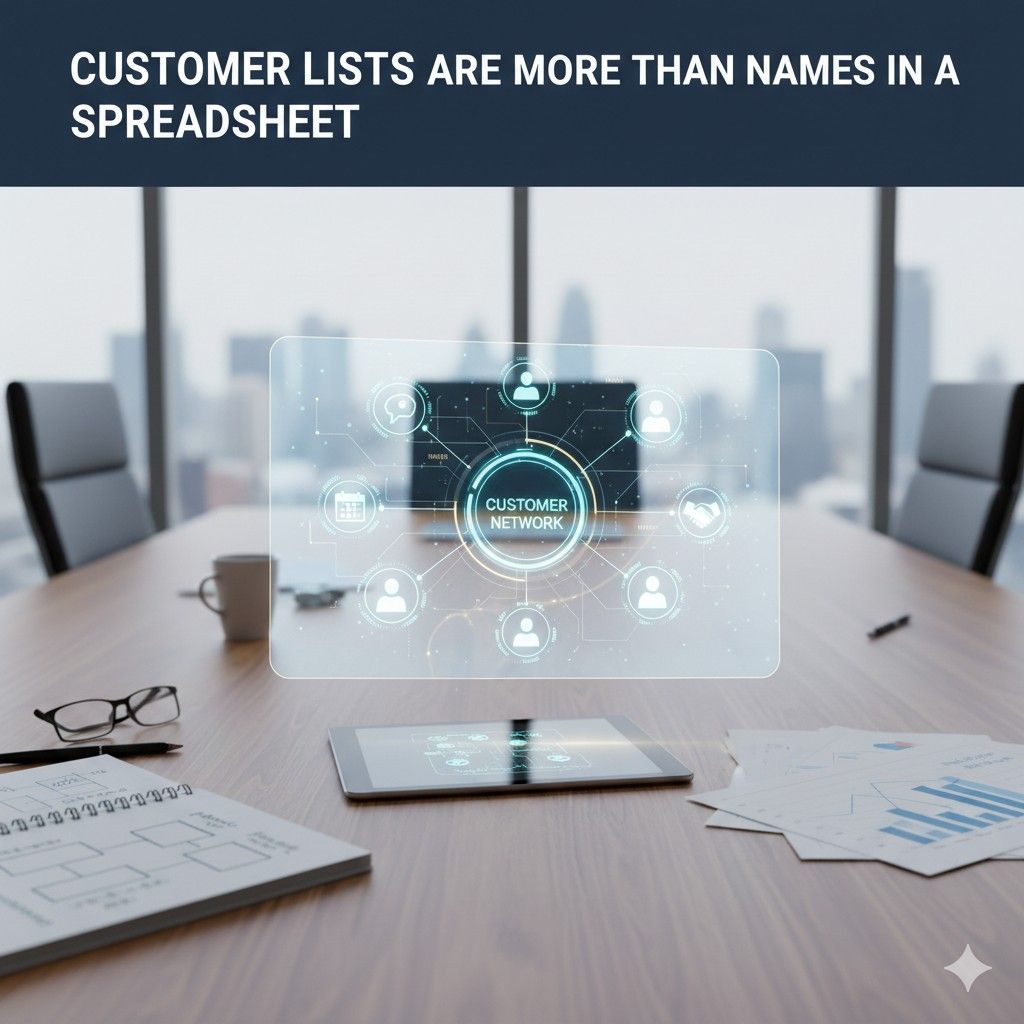
Customer Lists Are More Than Names in a Spreadsheet
Customer lists sound boring. They feel administrative. A file. A CRM export. Something every company has. Because they feel ordinary, founders rarely treat them as strategic assets.
That is a mistake.
A real customer list is not a list. It is a map of trust. It shows who believed in you, when they did, and why. It reflects how you reached them, what they needed, and how they behaved once they arrived.
That context is what makes customer information valuable and, in many cases, protectable.
Access to Customers Is Harder Than Building Features
Features can be rebuilt. Access cannot.
Getting someone to trust you with their money or data takes time. It takes positioning. It takes messaging that resonates. It takes distribution channels that actually work. All of that effort gets compressed into one thing: a customer relationship.
When someone gains access to your customers without earning that trust, they skip the hardest part of the business. That is why customer lists are sensitive, even if they look simple.

Founders should ask themselves a hard question: how long would it take a competitor to build this list from scratch? The longer the answer, the more valuable the asset.
Context Is What Turns Data Into Value
A raw email address has limited worth. Context changes everything.
Knowing when a customer signed up, what they bought, what they ignored, how often they engage, and what made them convert turns a list into a living system. That system can guide sales, marketing, and product decisions.
This is why customer lists tied to behavior are very different from scraped or purchased data. They reflect real interaction, not just contact information.
If your customer data influences how you make decisions, then it is part of your core business logic. And core logic deserves protection.
Relationships Are Often Embedded in Systems
Many founders think relationships live in people. In reality, they often live in systems.
Automated onboarding flows. Retention emails. Account management rules. Usage-based outreach. These systems carry relationships forward even when team members change.
When someone copies these systems or walks away with access to them, they are not just taking data. They are taking the structure that maintains trust at scale.
A practical step founders can take is to trace how a customer moves from first contact to long-term user. Where are decisions made automatically? Where is data used to personalize experience? Those touchpoints often reveal hidden value.
Early Customers Are Often the Most Sensitive
Your earliest customers took a risk. They believed before there was proof. They gave feedback when things were broken.
Those relationships are not just sentimental. They are strategic. Early customers often influence roadmap decisions, pricing changes, and positioning.
Losing control over early customer relationships hurts more than losing later ones because they carry history. That history informs how the company evolved.

Founders who treat early customer data carefully are not being overly cautious. They are protecting the roots of their business.
Customer Structure Can Be Just as Valuable as the List
It is not just who your customers are. It is how they are grouped.
Segmentation rules. Account hierarchies. Usage tiers. Risk categories. These structures reflect how you understand your market.
If your business behaves differently based on customer type, then those rules are part of your secret sauce. They guide decisions automatically and consistently.
Protecting these structures matters because they are often the result of trial and error. A competitor might copy your messaging, but without your segmentation logic, they will struggle to get the same results.
Customer Lists Become Leverage in Big Moments
Customer data matters most when stakes are high. Fundraising. Partnerships. Acquisitions. Legal disputes.
In those moments, clarity around ownership and protection becomes critical. Founders who can show that customer systems are well-defined and controlled appear more mature and less risky.
This is not about being defensive. It is about being prepared.
PowerPatent helps founders capture these systems as they exist, not as abstract ideas. It aligns protection with reality, which is why it fits naturally into growing companies. You can see how that works here: https://powerpatent.com/how-it-works
Wrapping It Up
If there is one idea to take away from this entire discussion, it is this: the most valuable parts of your business are rarely loud. They do not announce themselves. They sit quietly inside decisions, systems, and relationships you rely on every day. Pricing, algorithms, and customer lists are not side details. They are the engines that drive growth, trust, and revenue. They shape how your company behaves when you are not in the room. They reflect learning you cannot easily recreate. And once exposed, they are very hard to pull back.
Leave a Reply