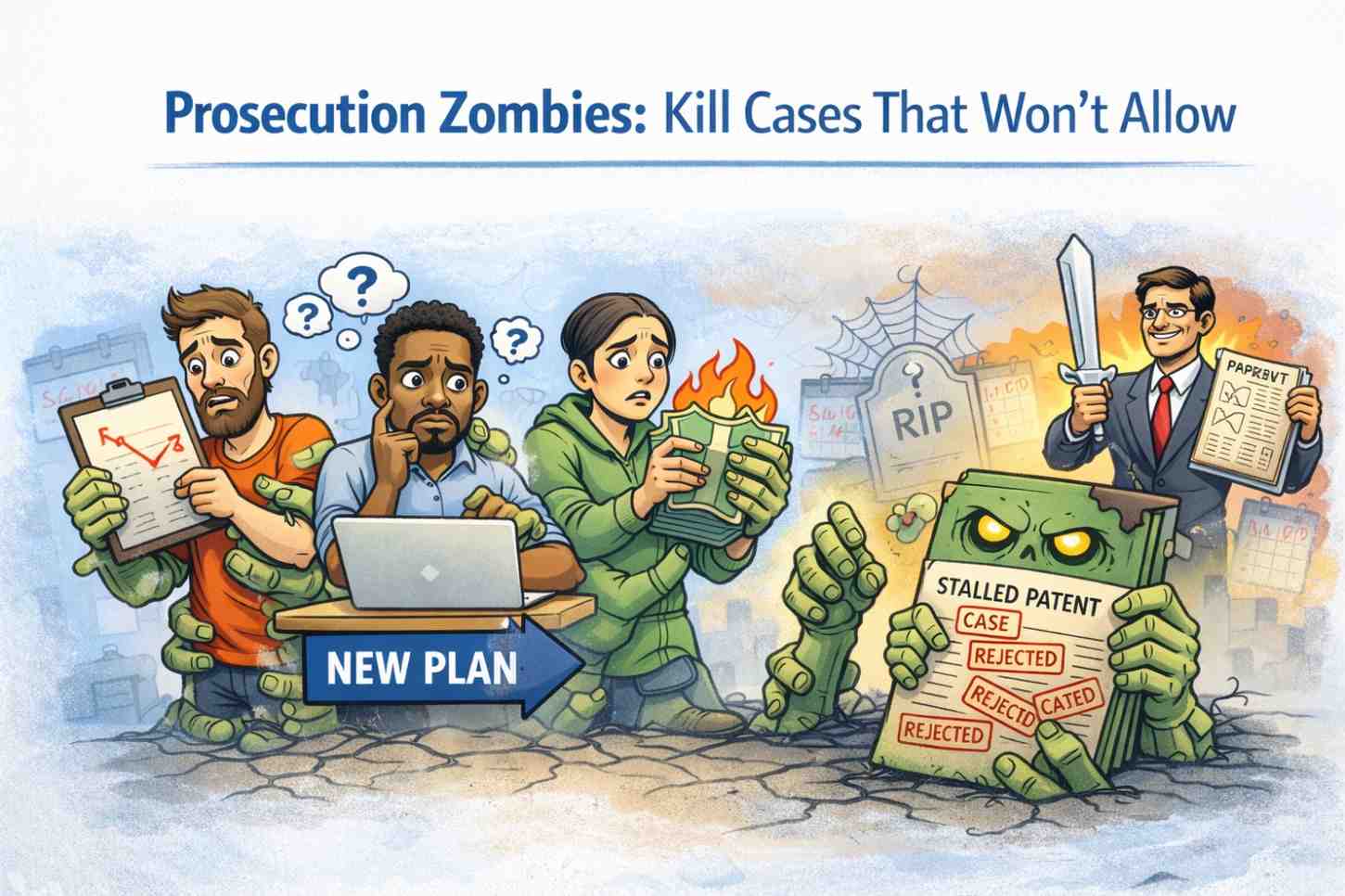
Some patent cases refuse to die. They drag on for years. The examiner keeps saying no. You amend. They reject again. You argue. They reject again. Fees pile up. Time slips away. Your startup moves forward, but your patent stays stuck. That is a prosecution zombie. And if you do not kill it, it will quietly drain your money, focus, and momentum.
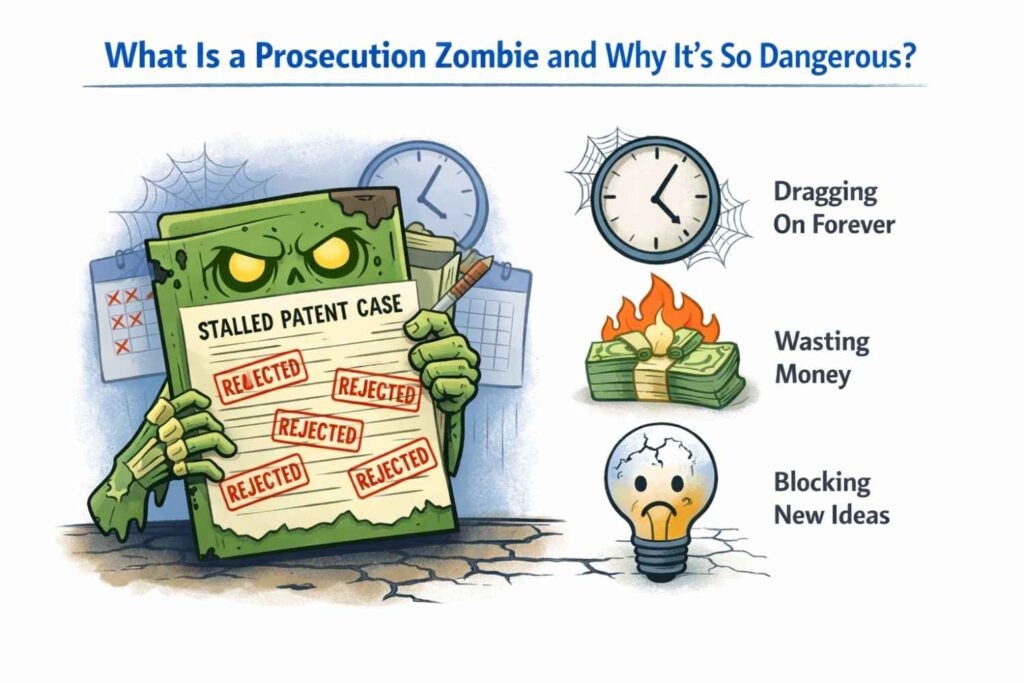
What Is a Prosecution Zombie and Why It’s So Dangerous
A prosecution zombie is not just a patent application that gets rejected. Rejections are normal. Every strong patent goes through pushback. A zombie is different.
It is a case that keeps moving but never makes real progress. It lives on paper. It consumes money. It absorbs time. It gives you hope. But it does not get closer to allowance.
For startups, this is not just a legal issue. It is a business risk. Your patent strategy should support growth, funding, hiring, and product launches.
When a case stalls for years with no clear path forward, it quietly weakens your position. The danger is not loud. It is slow. And that makes it even worse.
The Slow Drain on Capital
Money in a startup is oxygen. Every dollar has a job. A zombie case eats that oxygen without giving you strength in return.
Each office action response costs money. Each extension fee costs money. Each round of arguments costs money. At first, it feels normal. You think, “We are almost there.”
Then two years pass. Then three. You have spent tens of thousands of dollars, and the examiner still refuses the claims.
The real cost is not just what you paid. It is what you did not fund instead. That money could have protected a stronger invention. It could have covered a continuation with better claims.
It could have supported foreign filings in key markets.
A smart move is to track your total spend per application in real time. Do not wait until the end of the year.
After every office action, ask a simple question: If we were starting today, would we file this case again? If the answer is no, you may already be feeding a zombie.
PowerPatent helps founders see this clearly from the start by pairing smart software with real attorney oversight.
You get clean strategy up front, so you do not wander into endless prosecution loops. You can see how that works here: https://powerpatent.com/how-it-works
The Illusion of Progress
A zombie case often looks busy. Responses are filed. Interviews are scheduled. Amendments are made. It feels like movement.
But movement is not the same as progress.
If each amendment narrows the claims so much that they barely cover your product, you are not winning.
If you keep adding technical limits just to get around prior art, you may end up with a patent that competitors can easily design around.
This is where founders need to zoom out. Do not focus only on whether the examiner said yes or no. Focus on what you will actually own if the patent allows.
After each major amendment, map the claim language back to your real product roadmap. Does the claim still cover your current version? Does it cover your next version?
Does it block your top competitor? If the answer keeps shrinking, you are trading strength for survival.
That is a classic zombie pattern. The case lives, but the value dies.
When the Examiner and the Claims Never Align
Sometimes the issue is not money. It is misalignment.
A prosecution zombie often starts with claims that are too broad for the specific art unit. The examiner keeps finding references. You keep adjusting. But the gap between what you want to protect and what the examiner will allow never closes.
At this point, founders often double down. They argue harder. They add more technical detail. They hope one more interview will fix it.
But here is the deeper question: Are you trying to force a square peg into a round hole?
If the core idea keeps being rejected under the same reasoning, it may be a sign that your claim strategy needs a reset, not another patch. This is where a continuation strategy can save you.
Instead of forcing the same structure again, you draft a fresh set of claims from a new angle, while keeping your priority date.
That move can revive a strong idea without dragging the old case forward. The key is to recognize the pattern early.

If three office actions repeat the same rejection logic with only small changes in wording, you are not in a normal back-and-forth. You are in a loop.
Loops create zombies.
The Hidden Risk to Fundraising
Investors care about patents, but not in the way founders often think.
They do not just ask, “Do you have filings?” They ask, “Are they strong? Are they likely to issue? What do they cover?”
If you present a long list of pending cases that have been under rejection for years, that is not strength. It signals uncertainty. Sophisticated investors will look at the prosecution history.
They will see repeated narrowing. They will notice final rejections that never resolved.
A zombie case can create a false sense of security inside the company while creating doubt outside it.
One smart move is to prepare a simple internal status memo for each key application. Write down the real state of the case. What are the main rejection grounds?
What is the path to allowance? What risks remain? If you cannot explain the path in plain words, that is a warning sign.
Strong patent portfolios tell a clean story. Zombie portfolios tell a confusing one.
If you want your IP to help you raise capital instead of complicate the story, it starts with smart strategy at filing. That is exactly why founders choose PowerPatent.
It is built for speed, clarity, and real defensibility. You can learn more here: https://powerpatent.com/how-it-works
The Emotional Trap
There is also a human side to this problem.
Founders fall in love with their first patent application. It represents late nights. It represents breakthrough moments. Killing it feels like admitting defeat.
But patents are tools. They are not trophies. If a tool is broken, you replace it. You do not frame it on the wall and keep paying maintenance fees.
The emotional trap keeps zombie cases alive longer than they should be. You may think, “We have already invested so much.” That is sunk cost thinking. The past money is gone. The only question that matters is what future money will do.
A healthy patent mindset is this: We protect what drives our business forward. We stop what does not.
How Zombies Start in the First Place
Most prosecution zombies are born at filing.
If the original application is rushed, vague, or poorly structured, you create problems that show up years later. Claims may be drafted without a clear understanding of likely prior art.
The specification may not include enough fallback positions. The technical story may not be framed in a way that shows real improvement over existing systems.
When the examiner pushes back, you have little room to adjust. So you keep making small edits instead of making strategic shifts.
This is why front-end quality matters so much. A strong filing gives you options. Weak filings trap you in narrow paths.
Before you even file, pressure-test the invention. Ask: What is the real technical advantage? Where does it beat existing solutions? Can we explain that difference clearly? If you cannot, the examiner will struggle too.
With PowerPatent, founders turn code, models, and product details into structured disclosures guided by real attorneys. That reduces the risk of building a zombie from day one.
You can see how that system works here: https://powerpatent.com/how-it-works
The Compounding Delay Problem
Time in prosecution is not neutral. It compounds risk.
If a case drags on for four or five years, your product may evolve far beyond the original claims. Now you face a gap between what you are selling and what you are trying to protect.
Worse, competitors may enter the market. Without an issued patent, your leverage is weaker. You cannot assert a pending application in the same way you can assert an issued patent.
A zombie case stretches this gap. It keeps you in limbo. You neither secure protection nor fully pivot to a better strategy.
To manage this risk, set internal time limits. For example, decide that if a case does not show a clear path to allowance within a defined window, you reevaluate the entire approach.
That does not mean giving up easily. It means managing your portfolio like a product roadmap, with milestones and decisions.
Patents should move with your company, not lag years behind it.
Why Killing a Case Can Be a Power Move
It may sound strange, but abandoning a case can be a sign of strength.
When you kill a prosecution zombie, you free up budget. You free up attention. You send a message inside the company that IP strategy is intentional, not automatic.
In some situations, abandoning the parent case while filing a sharper continuation can reset the conversation with the examiner. In others, it may make more sense to shift focus to a newer, more commercially important invention.
The key is control. Zombies control you because you keep reacting. When you make a clear decision, you take back control.
Strong startups are decisive. They build. They test. They pivot. Your patent strategy should follow the same logic.
A prosecution zombie is dangerous because it hides inside normal process. It looks like progress while draining value. Once you learn to see it clearly, you can act early and protect what truly matters.
How Smart Founders Spot a Dying Case Before It Eats Their Budget
Most zombie cases do not start as obvious failures. They begin as normal filings with high hopes. The danger grows slowly. That is why the smartest founders build systems to detect trouble early.
They do not wait for year four to realize something is wrong. They watch for signals from the very first rejection.
This section is about pattern recognition. If you can see the warning signs early, you can pivot while the case is still salvageable.
If you ignore them, you end up spending serious capital just to keep something alive that will never truly issue in a meaningful way.
The First Office Action Is a Diagnostic Tool
The first substantive rejection is not just a hurdle. It is a diagnostic report.
When the examiner cites prior art, pay attention to how close it is. If the cited reference feels like a distant cousin to your invention, that is manageable. But if it reads almost exactly like what you built, that is a red flag.
The key question is simple: Is the examiner misunderstanding your invention, or is the invention too close to existing work?
If it is a misunderstanding, you can fix it with clearer claim language and better explanation. If the art is genuinely close, then you must rethink what you are trying to protect.
Smart founders sit down with counsel and ask for a plain-English explanation of the rejection. If you cannot explain the rejection to your technical team in clear words, you are flying blind.
Clarity at this stage prevents years of confusion later.

At PowerPatent, founders get structured breakdowns of office actions so they can make real business decisions, not just legal responses. That level of clarity changes how you respond.
You can see how that process works here: https://powerpatent.com/how-it-works
Repeated Rejections With Slightly Different Wording
One of the clearest zombie signals is repetition.
If the examiner keeps rejecting under the same core reasoning, even after amendments, you may be in a loop. The wording changes. The citation shifts slightly. But the core issue stays the same.
That pattern means the examiner does not see a meaningful technical difference between your claims and the prior art. Minor edits will not solve that.
At this stage, you need to zoom out. Ask whether the claim strategy is fundamentally flawed. Are you trying to protect the wrong layer of the technology?
Are you focusing on features instead of the deeper system architecture? Are you claiming results instead of mechanisms?
A strategic pivot at this point can still save the case. But continuing the same approach with small tweaks is how zombies survive.
Claims That Shrink Until They Lose Commercial Value
Another early sign is aggressive narrowing.
After a few rounds of prosecution, compare the current claims to the original filing. If key features are gone, if entire use cases are removed, or if the claim now covers only a very specific configuration, you must ask a tough question.
If this patent issues in its current form, would it actually stop a competitor?
Many founders are so focused on getting an allowance that they forget the real goal. A patent is not a trophy. It is leverage.
When claims shrink too much, you may technically win the case but lose strategic value. That is a zombie in disguise. It allows, but it does not protect what matters.
A strong internal habit is to run a simple competitor test. Take your top two competitors. Map their product to your amended claims. If they can avoid infringement with minor tweaks, you are drifting into weak territory.
Spotting this early lets you adjust before you narrow beyond repair.
Endless Extensions and Delays
Deadlines tell a story.
If you constantly take extensions of time to respond, it may signal deeper issues. Sometimes extensions are practical. Startups are busy. But repeated delays often mean you are unsure how to respond effectively.
Uncertainty plus delay creates drift. Drift turns into stagnation. Stagnation feeds zombie cases.
Build a rhythm. Treat office actions like product sprints. Review quickly. Decide quickly. Act with intent. If you need more time, use it to rethink the strategy, not just to buy breathing room.
Speed does not mean rushing. It means staying in control of momentum.
This is where modern tooling makes a real difference. When your patent workflow is organized and visible, you reduce confusion and wasted cycles.
PowerPatent was designed to give founders that visibility without slowing down their build cycle. Learn more here: https://powerpatent.com/how-it-works
The Attorney Optimism Trap
Optimism is good in startups. Blind optimism is expensive.
Sometimes founders rely entirely on outside counsel’s reassurance. You hear things like, “We are close,” or “This examiner is tough, but we’ll get there.”
That may be true. But you need more than encouragement. You need data.
Ask for an honest probability estimate. Ask what specific changes would make allowance likely. Ask whether similar cases in the same art unit have issued and under what claim scope.
When answers stay vague, that is a signal.
You are not challenging your attorney. You are managing a business asset. Clear expectations prevent long, costly prosecution cycles based on hope alone.
Misalignment With Product Evolution
Startups evolve fast. Your patent case moves slow.
If your core product has shifted meaningfully since filing, your prosecution strategy must reflect that. A case can become a zombie simply because it no longer matches your business.
Maybe you pivoted from a consumer tool to an enterprise platform. Maybe your AI model architecture changed. Maybe hardware features were dropped.
If the claims still focus on outdated versions, you are defending yesterday’s idea.
A strong portfolio evolves. That might mean filing continuations with updated claim focus. It might mean letting older cases go. What matters is alignment.
Set quarterly IP reviews tied to your product roadmap. Ask whether each pending case still supports your main revenue driver. If not, reconsider the investment.
No Clear Path to Allowance
At some point, you should be able to describe a path forward.
It does not have to be guaranteed. But it should be concrete. For example, “If we amend to include this technical feature, the examiner indicated it may be allowable.”
If instead the strategy sounds like trial and error, that is dangerous.
A zombie case often lacks a defined endpoint. You keep responding, but there is no roadmap. Without a roadmap, costs expand and confidence shrinks.
Push for clarity. If needed, request an examiner interview specifically to test a targeted amendment. Use that conversation to validate direction before investing in another full response.
Intentional prosecution reduces zombie risk.
Budget Without Boundaries
One of the biggest mistakes founders make is not setting a prosecution budget cap.
When you file, you plan for filing costs. But few teams define a maximum spend threshold before reevaluating.
Without boundaries, it is easy to keep approving invoices because each one seems small compared to total company burn.
Decide early what level of investment matches the commercial value of the invention. If you cross that line without meaningful progress, pause.
This is not about being cheap. It is about being strategic.
Strong IP strategy is about allocation. You want your dollars building a moat, not feeding a ghost.
The Founder’s Gut Feeling
There is one more signal that should not be ignored.
Your gut.
If something feels off, if the case feels stuck, if discussions feel circular, do not suppress that instinct. Founders are trained to sense product-market fit. You can sense IP fit too.
When energy shifts from excitement to obligation, that often means the case is no longer serving its original purpose.
Listen to that signal early. Ask harder questions. Reassess the path.
Zombies thrive on inattention. When you shine light on the process, they lose power.
Smart founders do not wait for a formal abandonment to realize a case is dying. They watch patterns. They measure value. They connect IP strategy to business reality.
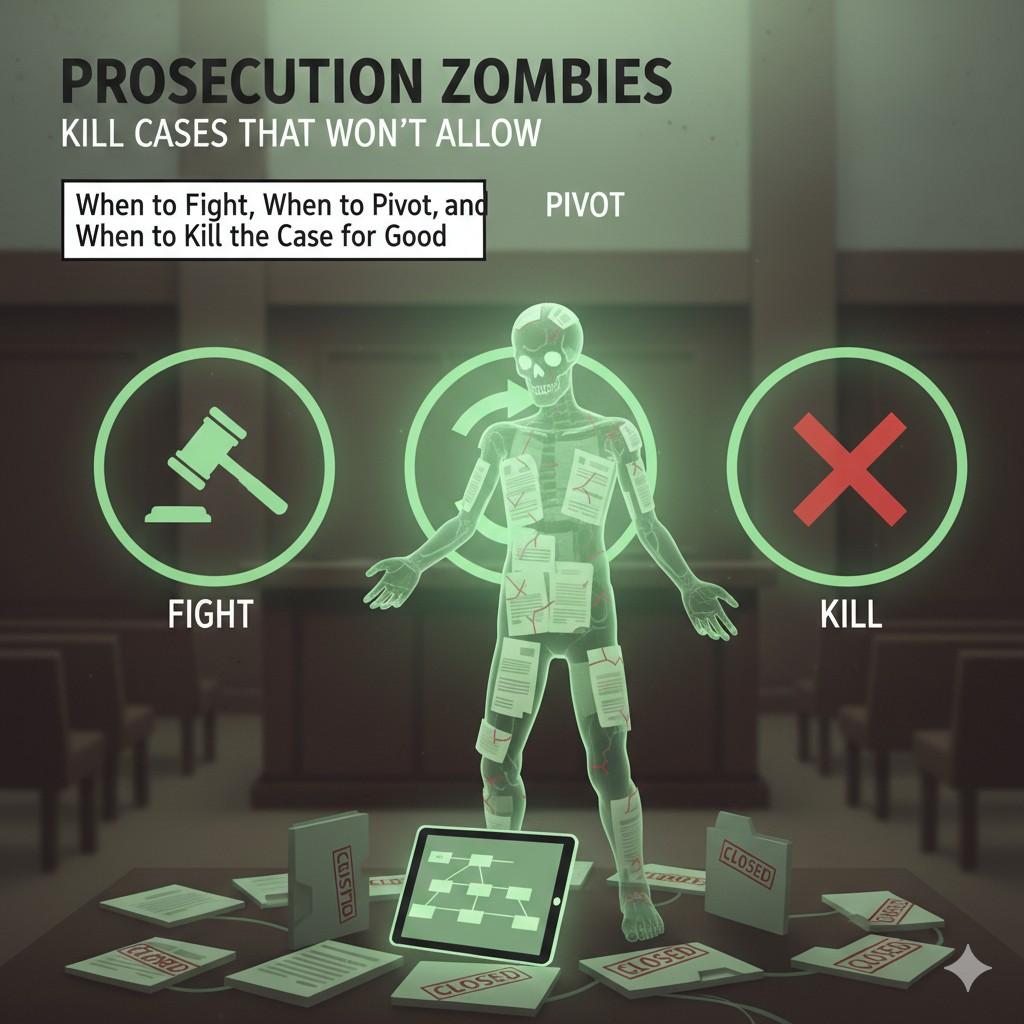
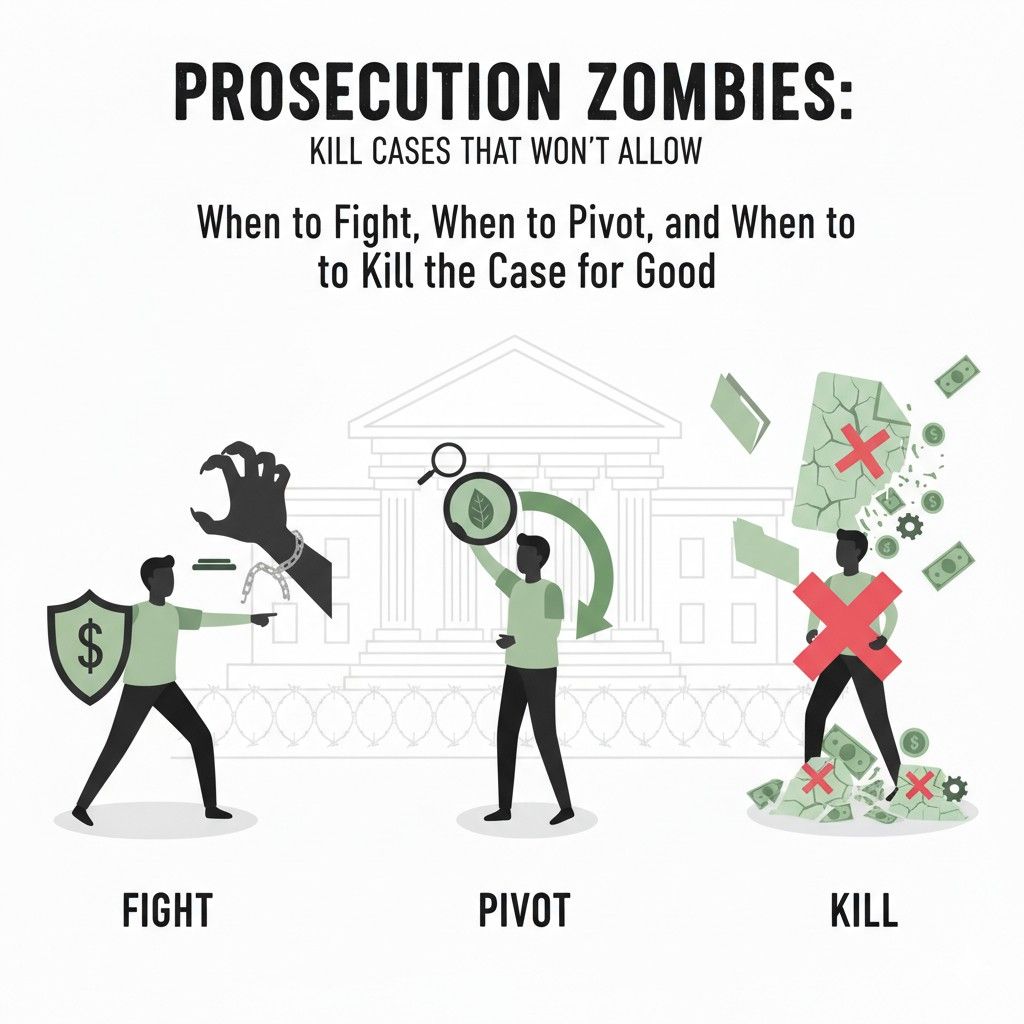
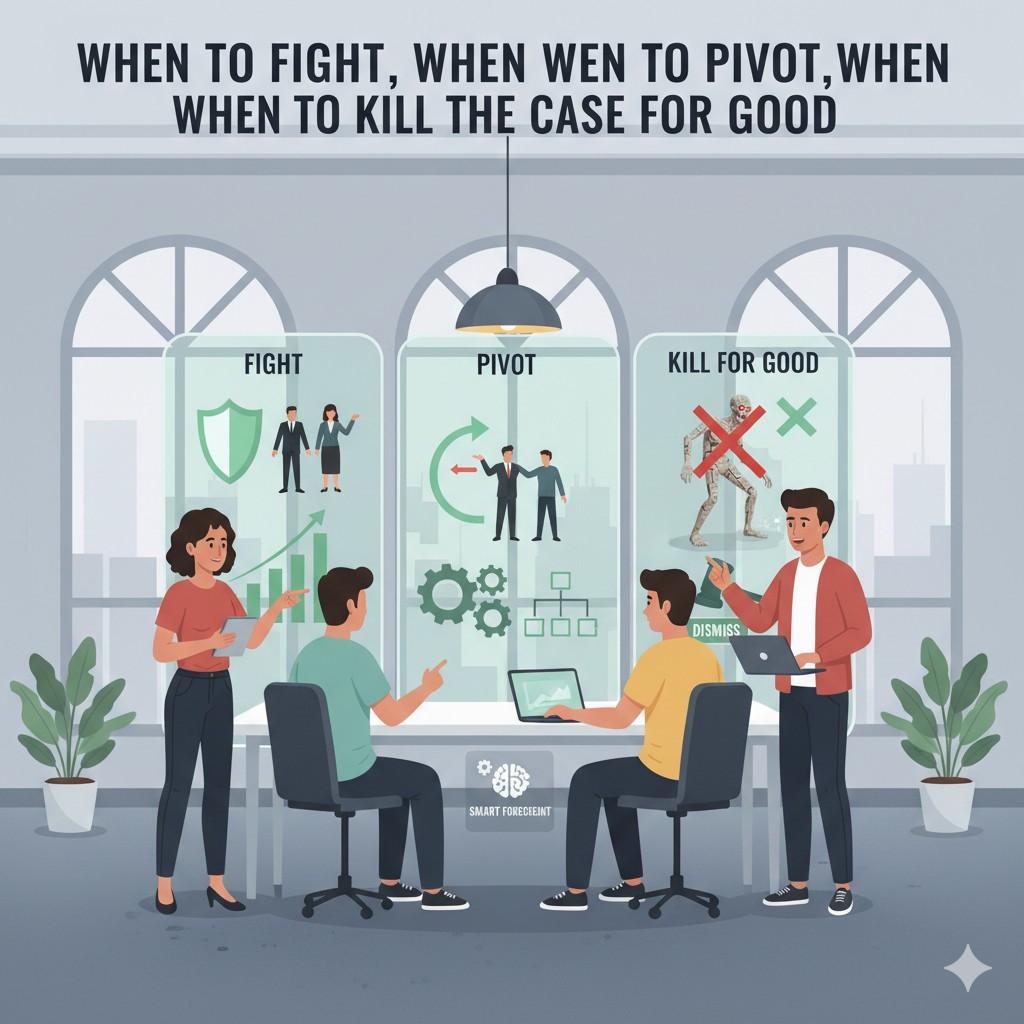
When to Fight, When to Pivot, and When to Kill the Case for Good
Every hard patent case forces a decision. Do you keep pushing? Do you shift strategy? Or do you walk away?
There is no single rule that fits every startup. But there is a clear way to think about it. The right move depends on business value, technical depth, competitive risk, and timing.
When you view prosecution through a business lens instead of a legal one, the answer becomes much clearer.
This section is about control. You are not a passenger in prosecution. You are the CEO of the asset. And that means you choose whether to fight, pivot, or kill.
Fight When the Core Advantage Is Real and Provable
Some cases are worth the battle.
If your invention solves a hard technical problem in a way that is measurably better than existing solutions, that is a strong reason to keep fighting. Especially if that advantage sits at the heart of your product.
The key word here is provable.
Can you show performance gains? Can you show reduced latency, improved accuracy, lower energy use, or better scalability? If your invention creates a clear technical improvement, you have ammunition.
In those situations, examiner interviews can be powerful. Instead of arguing in writing alone, use a live discussion to walk through the technical edge.
Explain how the cited prior art fails to achieve the same result. Be specific. Stay grounded in real engineering.
Fighting makes sense when the invention has depth and commercial impact. It does not make sense when you are defending surface-level features that can easily be replaced.
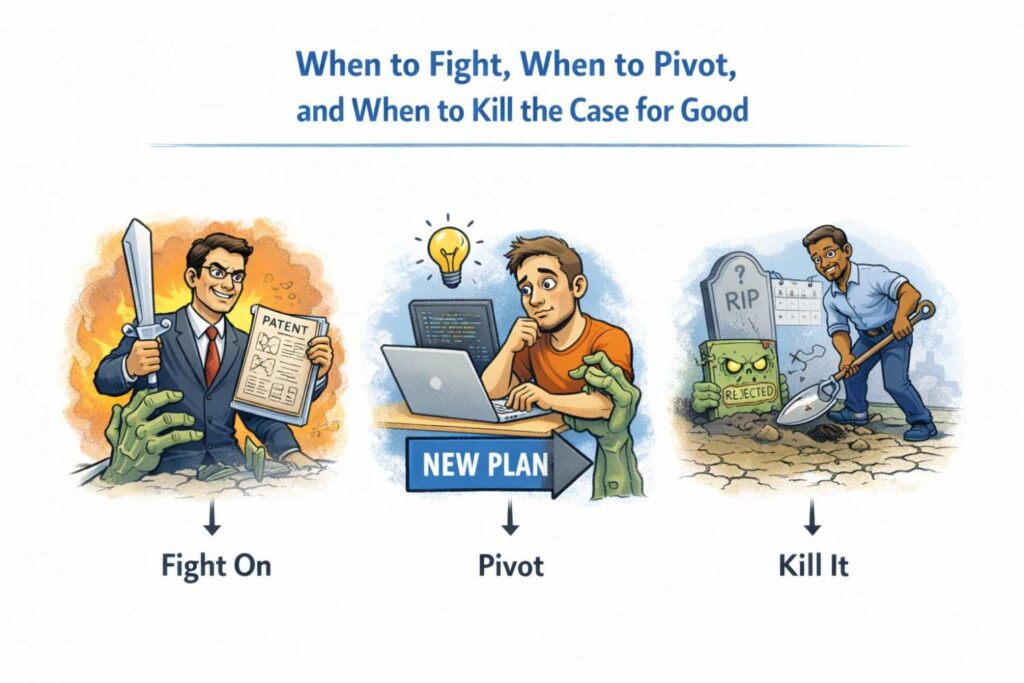
If you are going to invest in a long prosecution cycle, make sure it protects something that truly moves your business forward.
Pivot When the Angle Is Wrong but the Idea Is Strong
Sometimes the invention is solid, but the claims are aimed at the wrong target.
This is where many founders get stuck. They assume the entire case is weak when in reality the framing is weak.
For example, you may have claimed a user-facing feature when the real innovation sits in the backend architecture.
Or you may have focused on method claims when system claims would better capture the structure. Or you claimed a broad result instead of the specific mechanism that creates it.
A pivot means reframing the protection.
This is often done through a continuation. You keep your original priority date but draft a new set of claims that attack the problem from a different angle. You preserve the technical disclosure while adjusting the legal scope.
The smartest founders think of this like refactoring code. The core logic stays. The structure changes.
Pivoting early is powerful. Pivoting after years of narrow amendments is much harder. That is why early pattern detection matters so much.
At PowerPatent, founders work with real attorneys who understand deep tech and can help identify stronger claim angles before a case drifts too far.
That early strategy can prevent years of wasted prosecution. You can see how that works here: https://powerpatent.com/how-it-works
Kill When the Business Case Is Gone
The hardest decision is abandonment. But sometimes it is the smartest move in the room.
If the product tied to the case has been deprecated, if the market has shifted, or if competitors moved in a direction that your claims no longer cover, then continuing prosecution may not make sense.
Ask yourself a direct question. If this patent issued tomorrow exactly as it stands, would it materially strengthen our company?
If the answer is no, then killing the case is not failure. It is discipline.
Startups win by focus. Every dollar and hour should compound advantage. Zombie cases scatter focus. They create the illusion of progress while delivering little real leverage.
Abandoning a case frees capital for new filings that align with your current roadmap. It allows you to protect what actually drives revenue today.
That is not retreat. That is strategic reallocation.
Use Data, Not Ego
Patent prosecution can become personal. Founders feel tied to early inventions. Attorneys feel invested in long-running cases. But business decisions must be grounded in data.
Look at total spend to date. Estimate future costs. Compare that number to projected commercial value. Consider enforcement likelihood. Consider market size.
Remove emotion from the equation.
You would shut down a failing product feature after testing. You would pivot from a weak marketing channel. Patent strategy deserves the same objectivity.
The strongest IP portfolios are not the biggest. They are the most aligned with business reality.
Align Every Decision With Competitive Risk
The real purpose of a patent is leverage over competitors.
So before deciding whether to fight, pivot, or kill, analyze the competitive landscape.
Is a direct competitor building something close to your invention? Are they funded? Are they entering your key market?
If yes, even a hard prosecution fight may be worth it. Because an issued patent could shape market behavior or create licensing leverage.
But if the space is empty or your product has moved elsewhere, the urgency fades.
Patent strategy without competitive awareness is blind.
Tie every prosecution decision to a clear competitive scenario. Imagine the enforcement moment. If you cannot picture it, question the investment.
Time Horizon Matters
Early-stage startups need speed. Later-stage companies can afford longer horizons.
If you are pre-seed or seed, cash preservation is critical. Long, uncertain prosecution battles may not align with your runway.
If you are Series B or later with strong revenue, investing in broader, harder-fought patents may make more sense.
Match your prosecution aggression to your stage.
That is why a one-size-fits-all patent approach fails founders. You need strategy that evolves with your growth.
PowerPatent was built for this reality. It gives startups structured, strategic patent support without the slow, rigid model of traditional firms.
It blends software efficiency with real attorney judgment, so you can move fast without cutting corners. Explore it here: https://powerpatent.com/how-it-works
Make Decisions on Purpose, Not by Default
The worst outcome is not fighting. It is not pivoting. It is not even killing a case.
The worst outcome is drifting.
Drift happens when you approve responses automatically. When you assume the case will resolve eventually. When you never pause to reassess.
Every major prosecution milestone should trigger a decision checkpoint. Not a mechanical response. A decision.
Are we still aligned? Is this still valuable? Is there a clear path forward?
When you operate this way, zombie cases lose power. You either revive them with intent or you shut them down cleanly.
That is how strong portfolios are built.
Prosecution is not just paperwork. It is capital allocation. It is competitive positioning. It is long-term strategy.
Kill what no longer serves you. Strengthen what protects you. Pivot what still holds promise.
That is how you avoid zombies. And that is how you build IP that actually defends your startup.
Wrapping It Up
Prosecution zombies do not show up with warning signs. They look like normal patent cases. They move through the system. They generate paperwork. They create the feeling that something important is happening. But behind the scenes, they quietly drain resources. If you take one idea from this article, let it be this: a patent application is not an achievement by itself. It is an asset only if it strengthens your company.
Leave a Reply