Author: PowerPatent Content Team
-
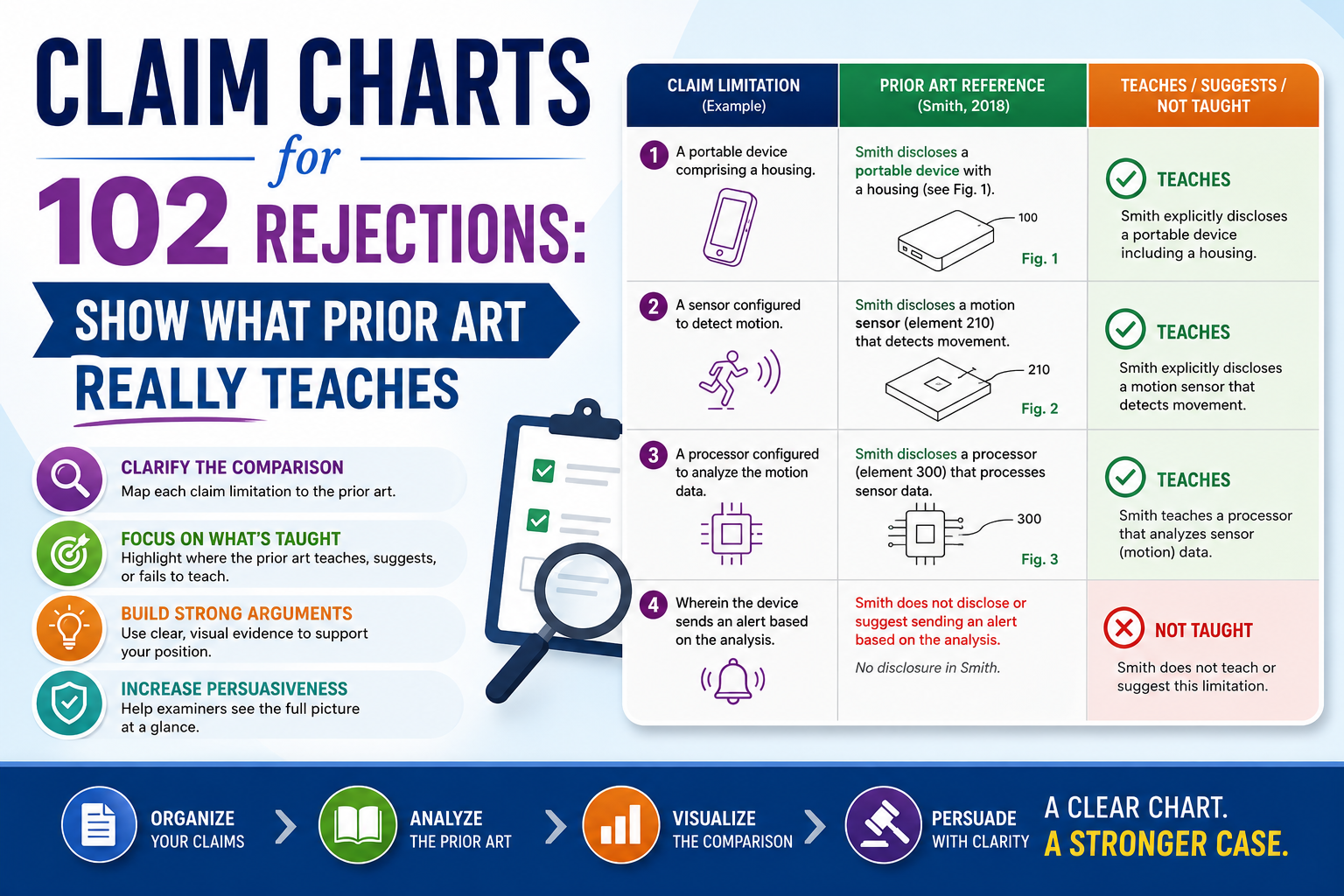
Claim Charts for 102 Rejections: Show What Prior Art Really Teaches
A 102 rejection can feel harsh. The patent examiner is saying, in simple terms, “Someone already showed this before.” For a founder, engineer, or inventor, that can sting. You know your invention is new. You know the real work behind it. But the patent office does not judge what you meant. It looks at what…
-
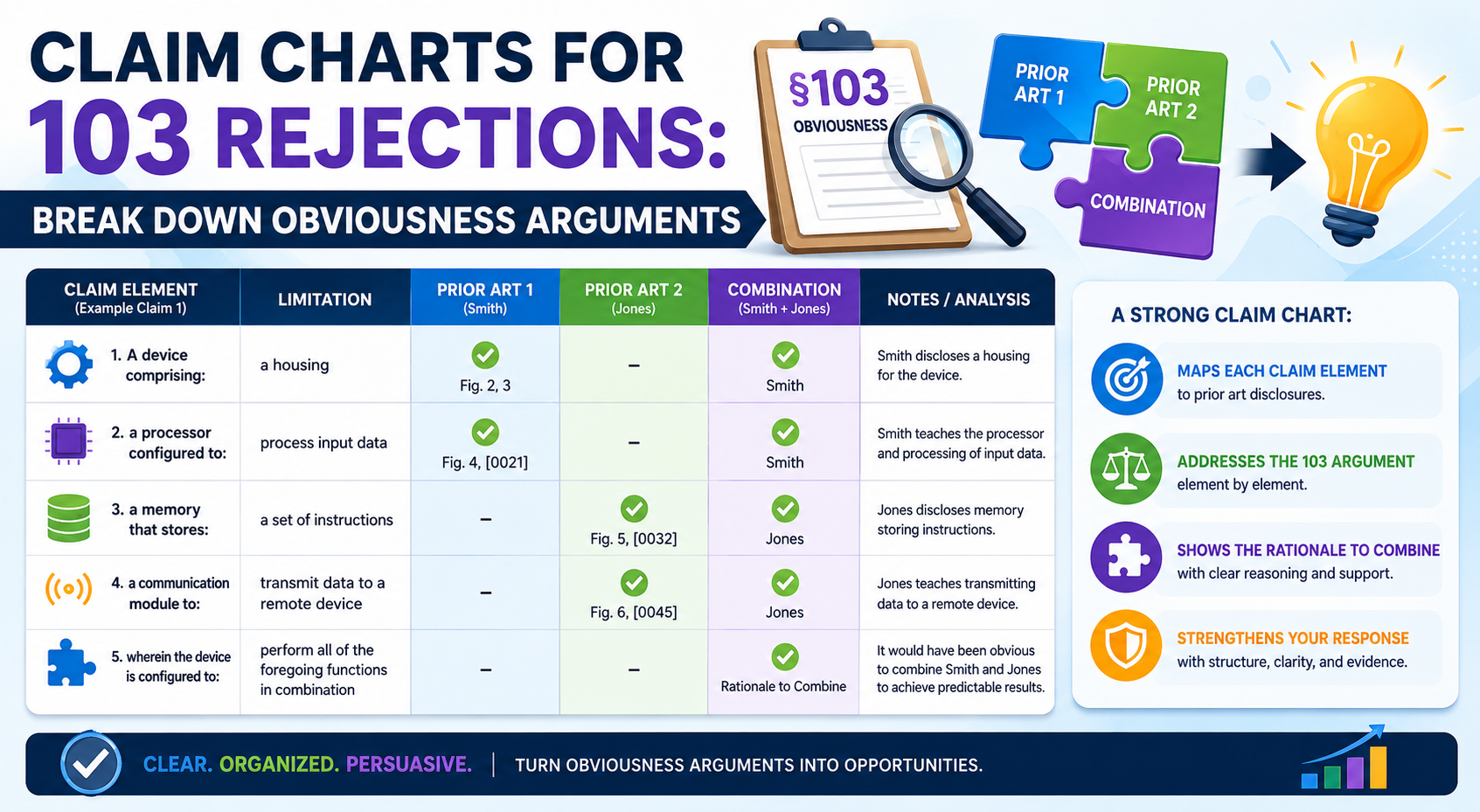
Claim Charts for 103 Rejections: Break Down Obviousness Arguments
A 103 rejection can feel like a hard stop. You built something new. You filed a patent. Then the patent examiner says your idea looks “obvious” when compared to older patents or papers. Why a Claim Chart Makes a 103 Rejection Easier to Fight A 103 rejection can look scary because it often comes with…
-
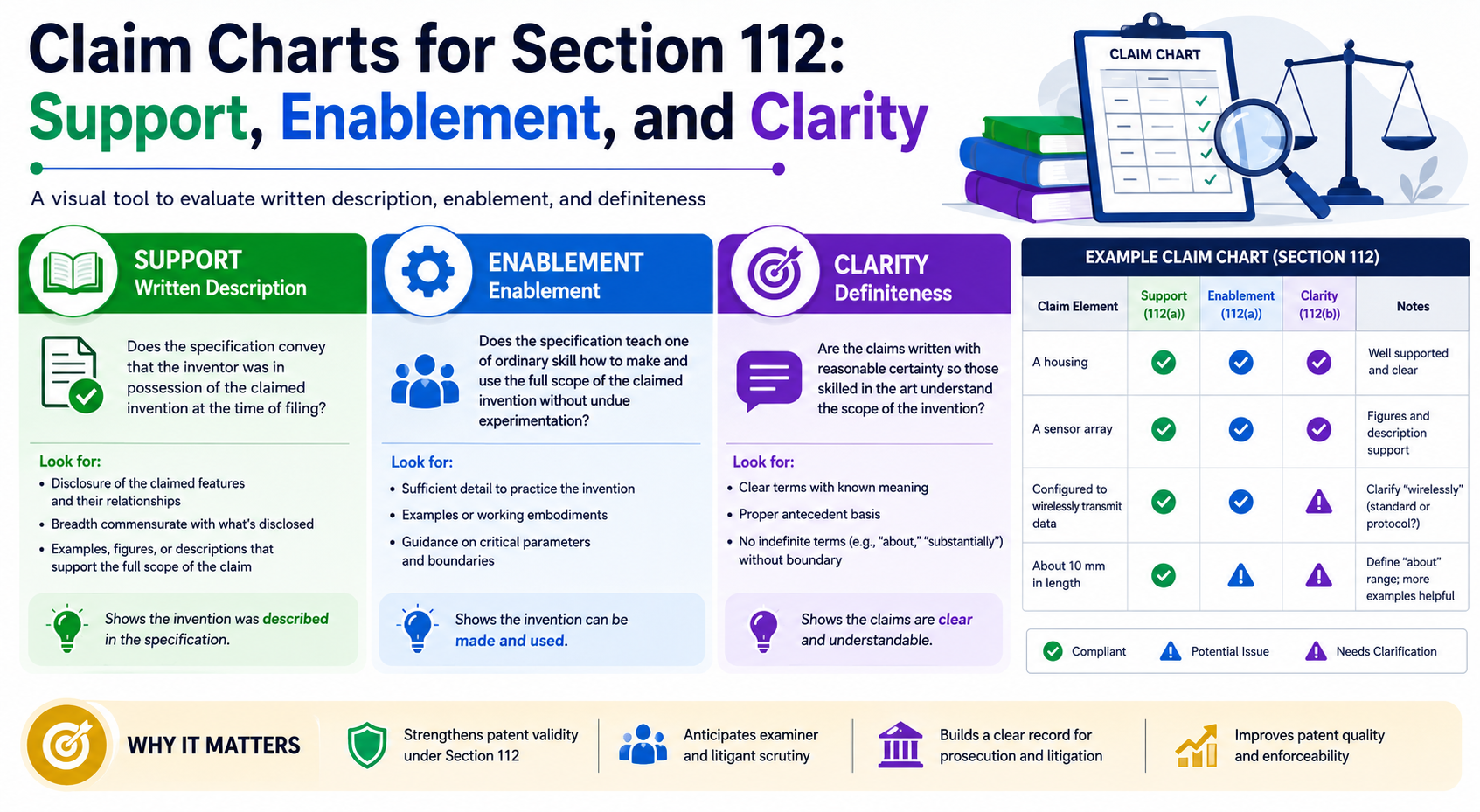
Claim Charts for Section 112: Support, Enablement, and Clarity
A strong patent does not start with clever words. It starts with proof. Section 112 is where that proof gets tested. In plain terms, it asks three hard questions. Did you show that you really had the invention? Did you explain it well enough so another skilled person could make and use it? Did you…
-
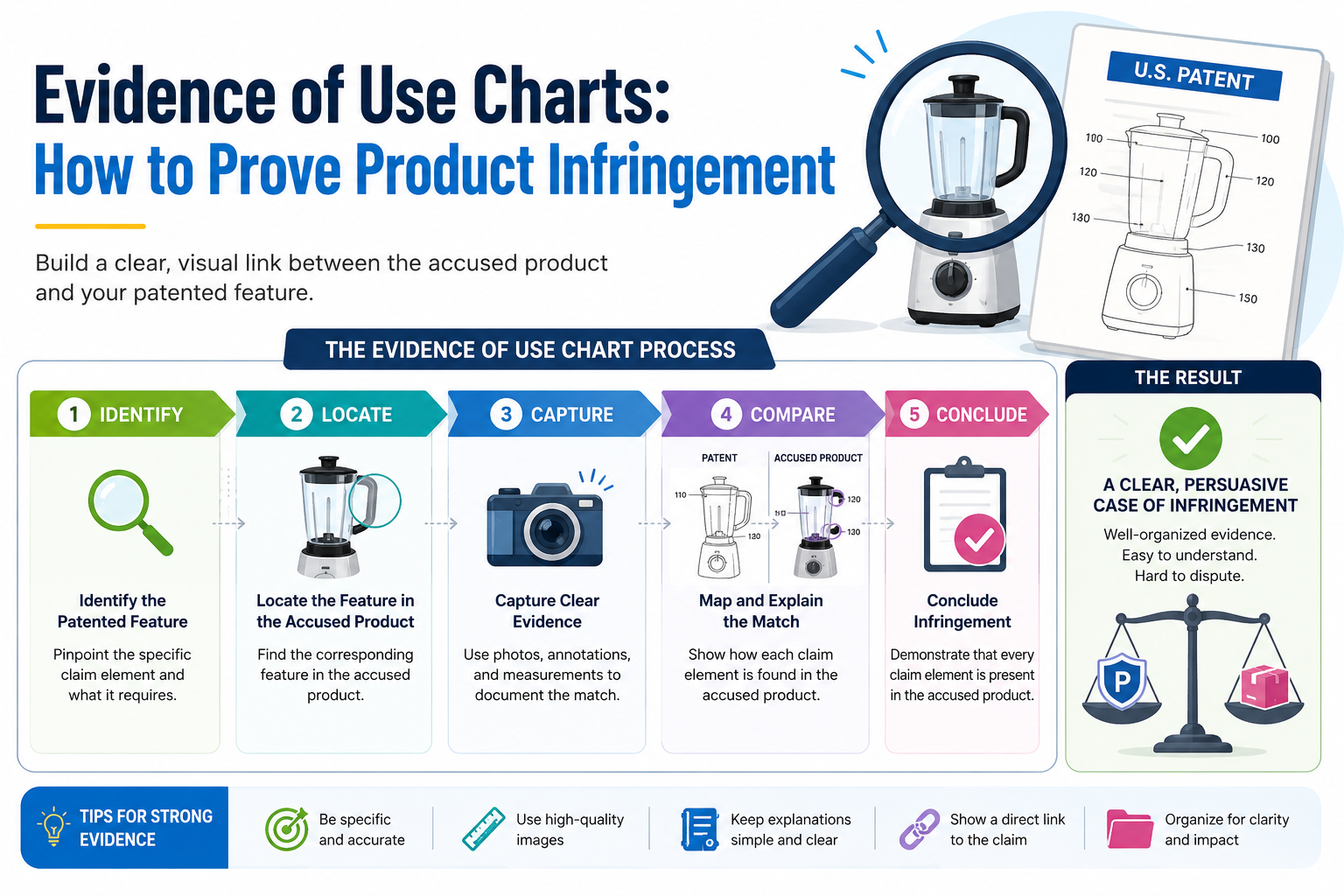
Evidence of Use Charts: How to Prove Product Infringement
When you believe another company is using your patented idea, guessing is not enough. You need proof. Clear proof. Proof that shows how their product matches what your patent protects. At PowerPatent, we help founders turn complex inventions into stronger patent assets with smart software and real attorney oversight. You can see how the process…
-
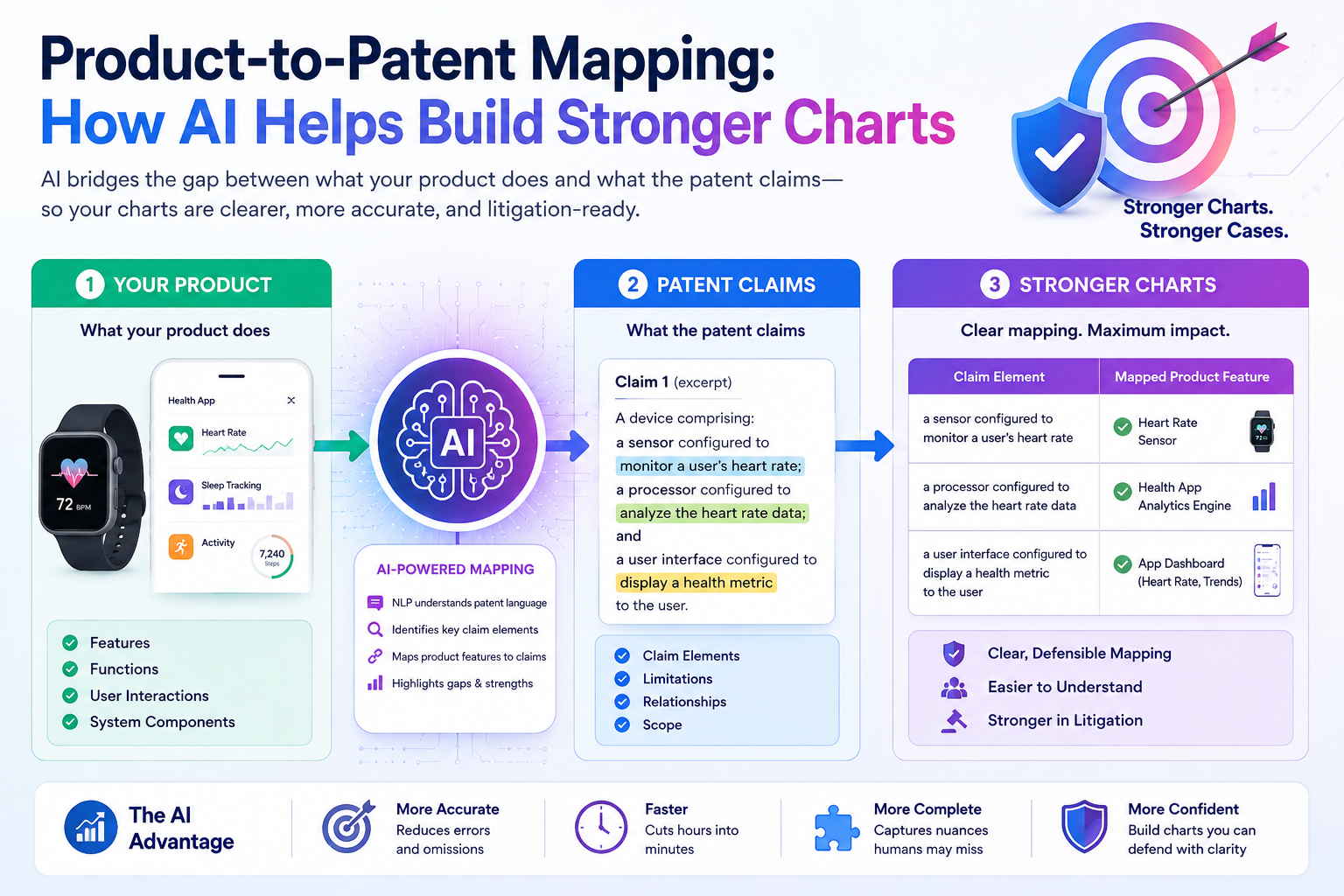
Product-to-Patent Mapping: How AI Helps Build Stronger Charts
Most founders do not lose patent value because their idea is weak. They lose it because the story is not clear. The product does one thing. The patent draft says another. The proof is scattered across code, diagrams, notes, tickets, demos, and slide decks. That gap can make a strong invention look small. Product-to-patent mapping…
-
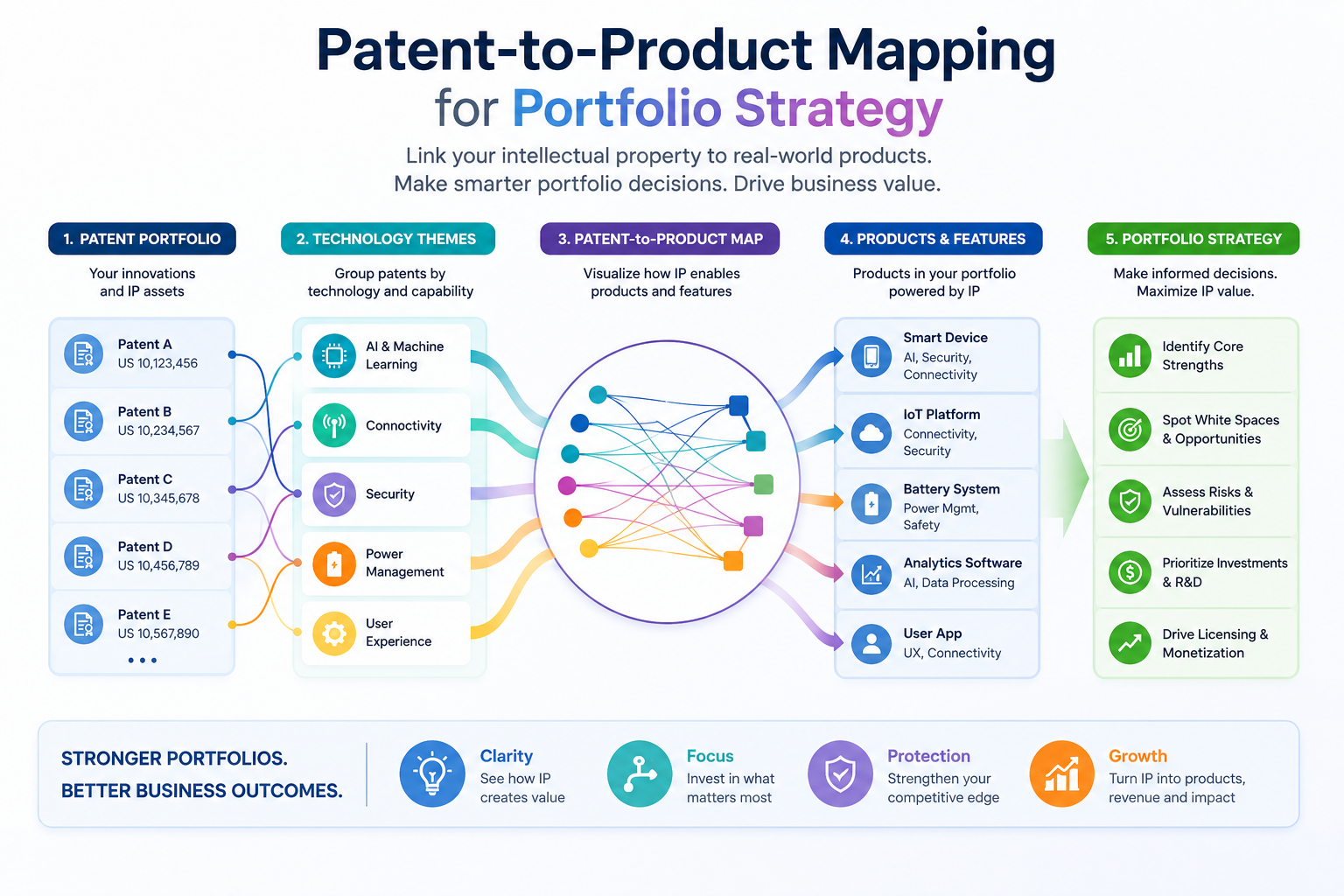
Patent-to-Product Mapping for Portfolio Strategy
A strong patent is not just a legal file. It is a map of what your company is building, what your team knows, and what your competitors should not be able to copy. PowerPatent helps teams do this with smart software and real attorney oversight, so founders can move fast without losing control. You can…
-
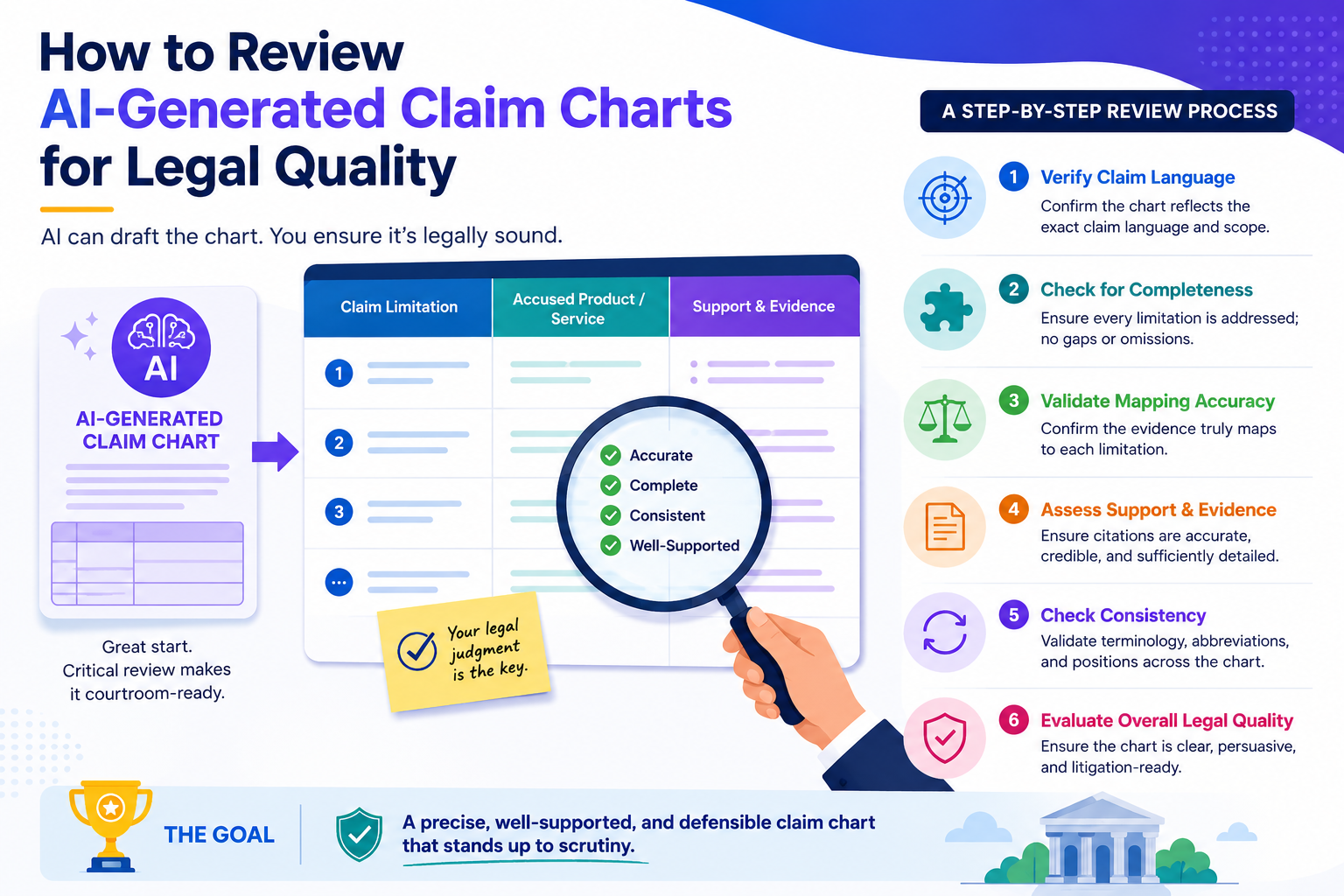
How to Review AI-Generated Claim Charts for Legal Quality
AI can build a claim chart fast. That is useful. But speed alone does not protect your invention. A claim chart can look neat, sound smart, and still miss the point that matters most: does it clearly show how each part of the claim is found in the product, system, paper, code, or standard being…
-
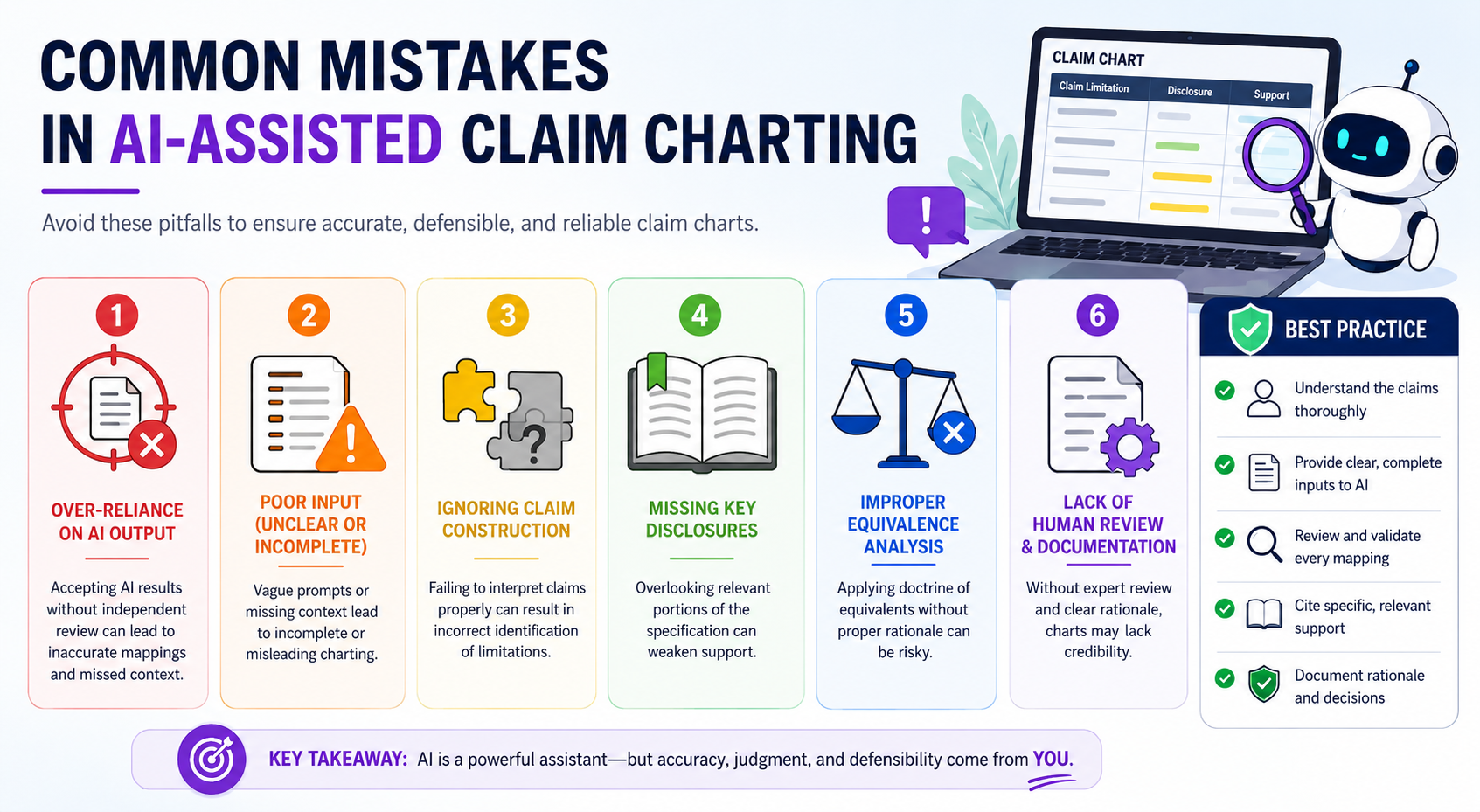
Common Mistakes in AI-Assisted Claim Charting
AI-assisted claim charting can save a huge amount of time. It can help you compare a patent claim to a product, a paper, a system, or a piece of code much faster than doing it by hand. But speed is not the same as strength. Treating AI as the decision maker instead of the helper…
-
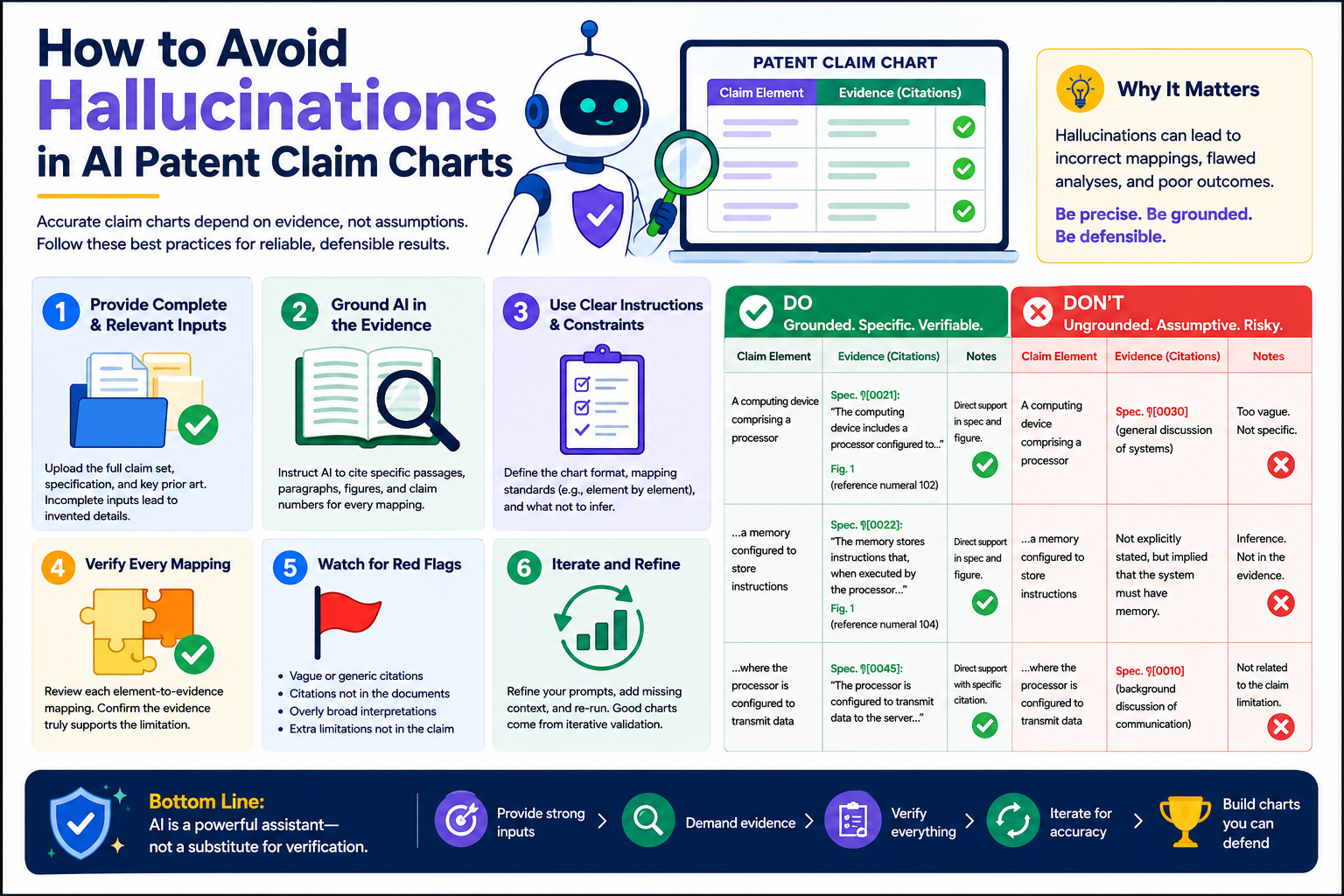
How to Avoid Hallucinations in AI Patent Claim Charts
AI can make patent claim charts faster. It can read claims, scan product pages, compare features, and draft a first pass in minutes. But speed is not the same as truth. A claim chart that looks clean can still be wrong. The AI may guess. It may stretch a product feature to fit a claim.…
-
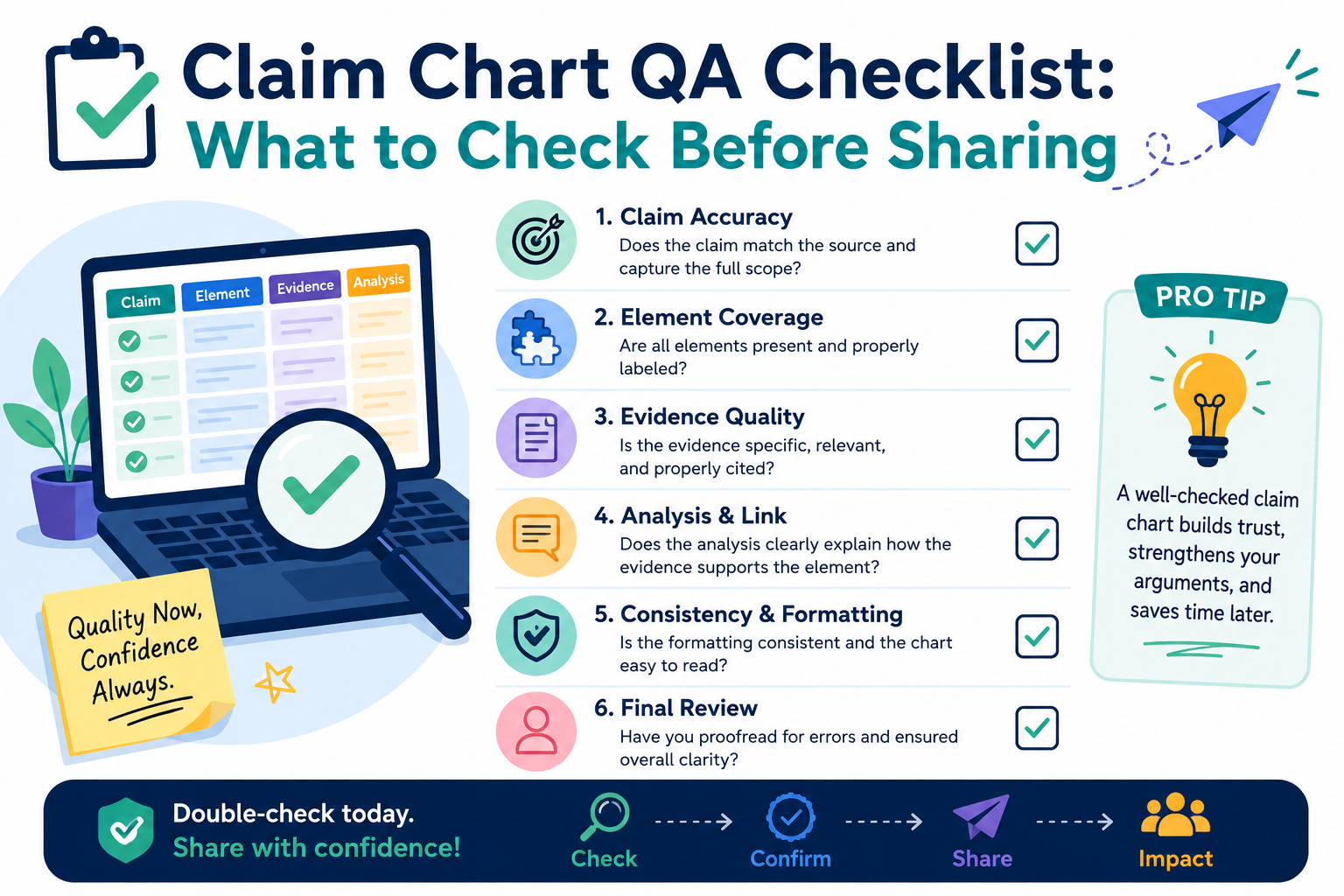
Claim Chart QA Checklist: What to Check Before Sharing
A claim chart can help your team see how an invention matches a product, paper, system, or market need. It can also create risk when it is rushed. One unclear row, one weak source, or one broad statement can confuse the reader and make strong work look shaky. Check whether the claim chart has a…