Tag: AI Patent Tools
-
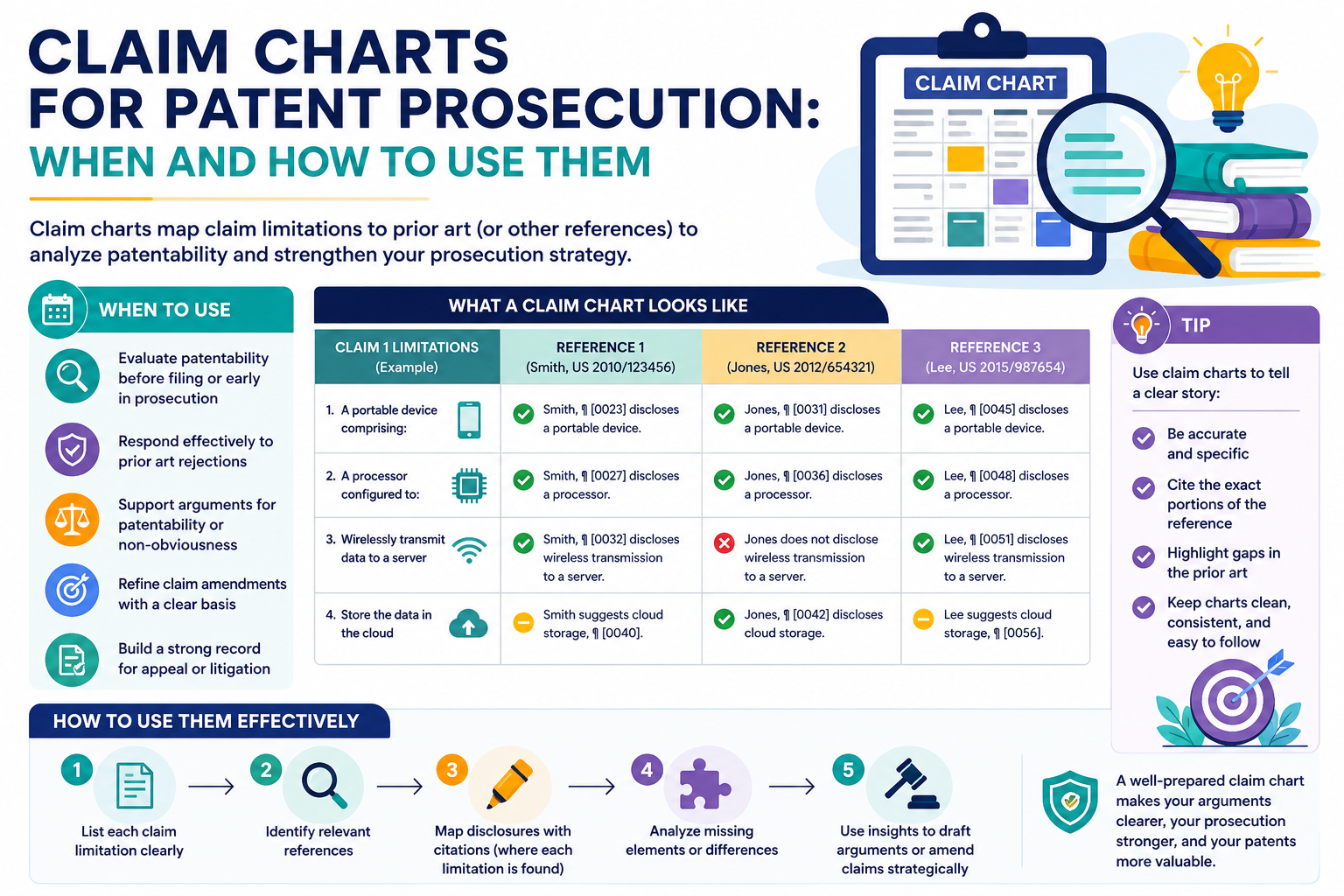
Claim Charts for Patent Prosecution: When and How to Use Them
A patent application can look strong on day one, then get stuck when the patent office pushes back. This is normal. The hard part is not just saying your invention is new. The hard part is showing it in a clear way, piece by piece. Claim charts help you prove the point, not just argue…
-
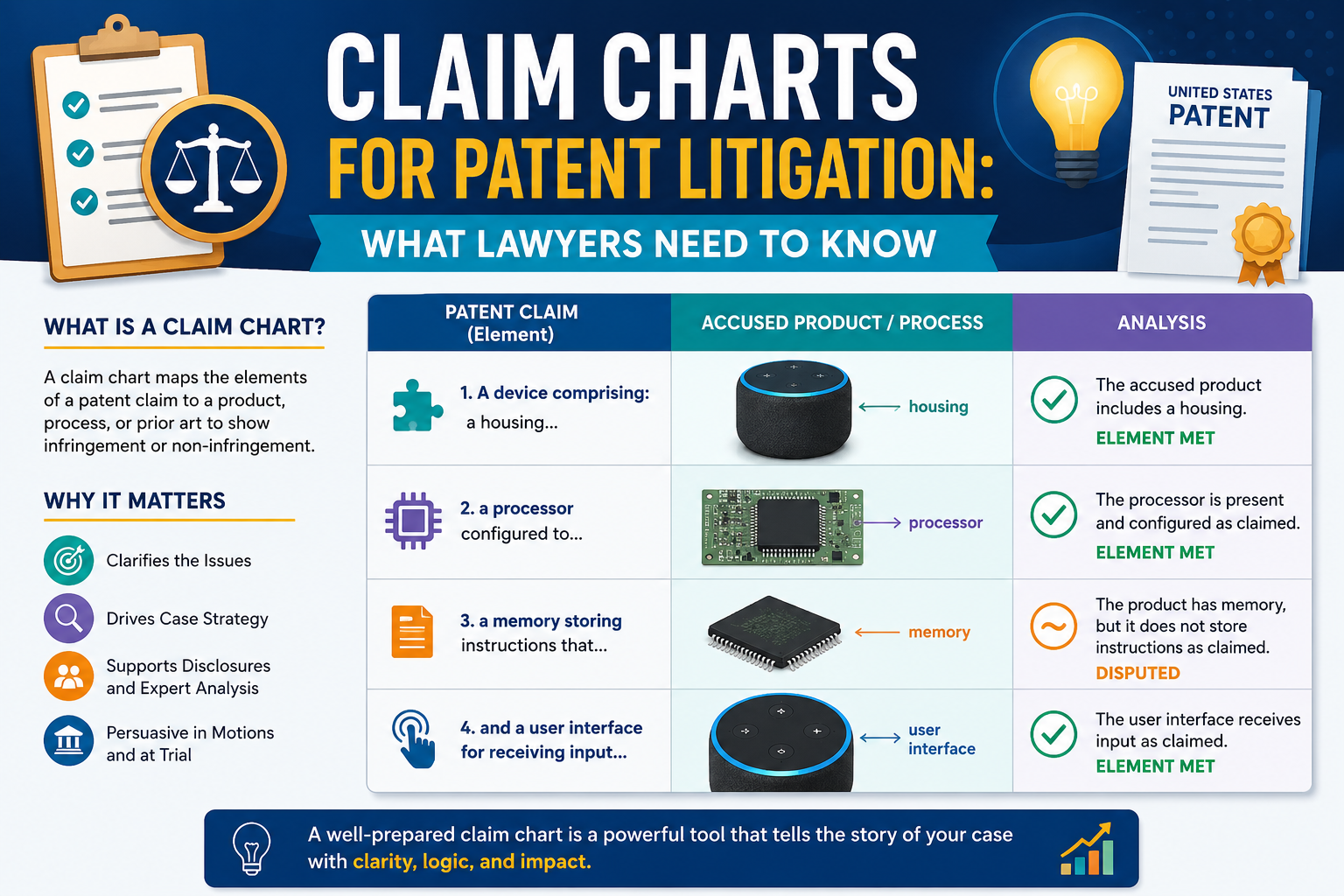
Claim Charts for Patent Litigation: What Lawyers Need to Know
Claim charts can make or break a patent case. They show, in plain terms, how each part of a patent claim maps to a product, system, method, or piece of proof. When done well, they help lawyers tell a clean story. When done poorly, they create gaps, delays, and risk. What claim charts really do…
-
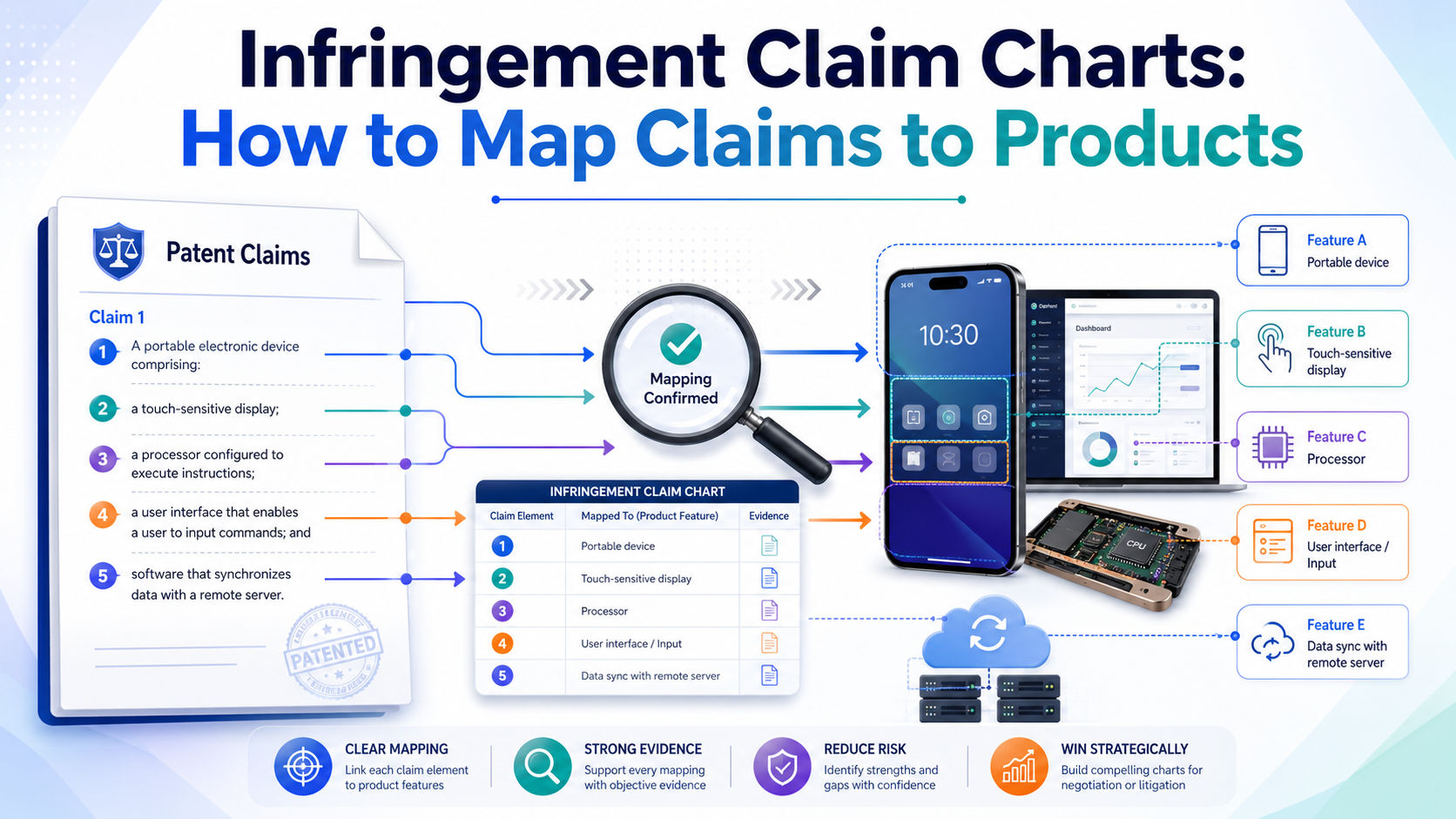
Infringement Claim Charts: How to Map Claims to Products
An infringement claim chart is simple in idea. It takes the words of a patent claim and lines them up against a real product, feature, system, app, chip, model, or process. The goal is to show, step by step, where each part of the claim appears in the product. An infringement claim chart shows whether…
-
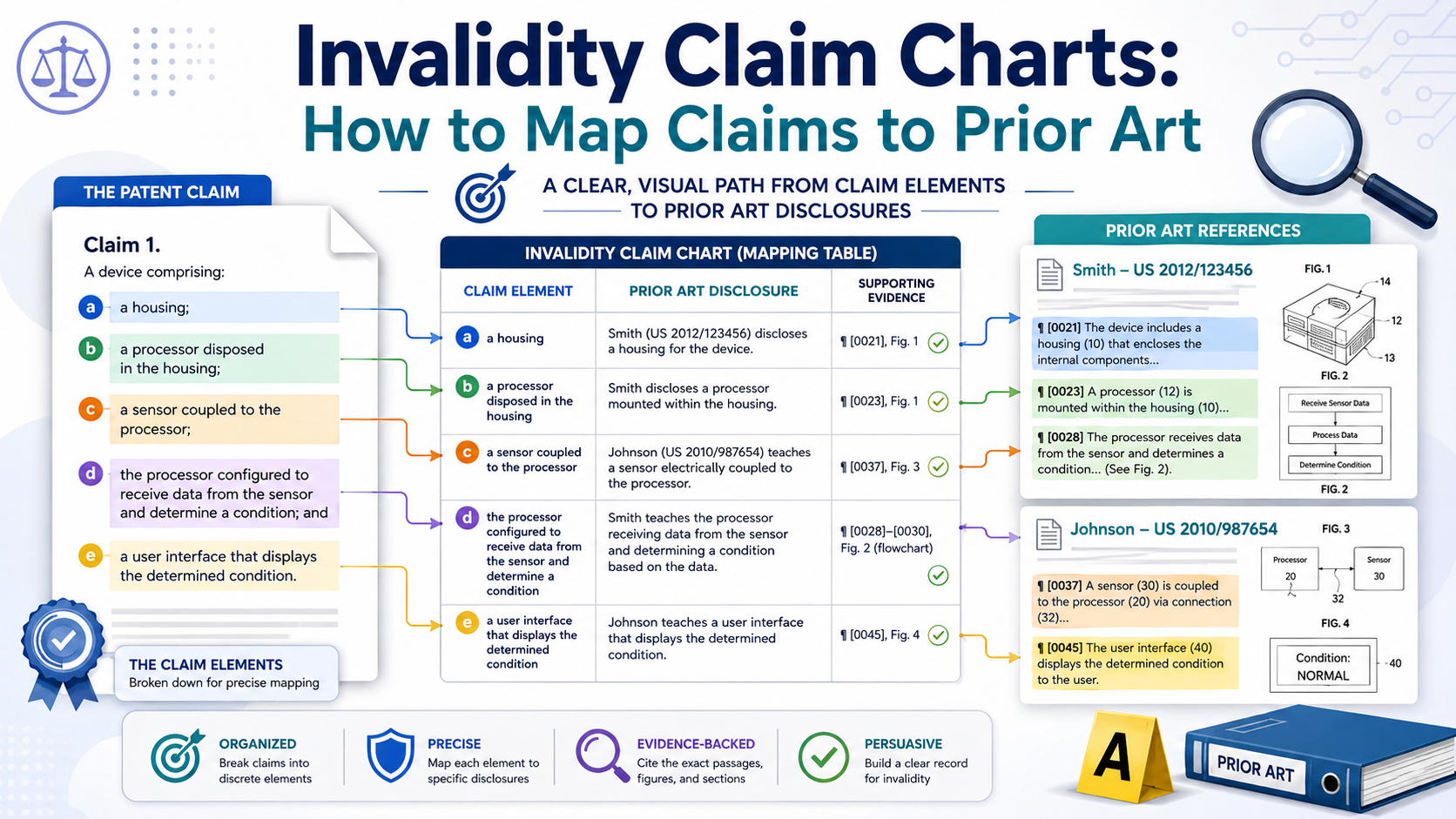
Invalidity Claim Charts: How to Map Claims to Prior Art
An invalidity claim chart is a side-by-side map. On one side, you place the patent claim. On the other side, you place the older proof that may show the idea was already known. That older proof is called prior art. It can be an old patent, paper, product page, manual, video, code base, public demo,…
-

AI vs Manual Claim Charting: Speed, Cost, and Accuracy
Claim charts are where patent work gets real. They show how each part of a patent claim lines up with a product, system, paper, codebase, or accused feature. When they are strong, they can help a founder, investor, buyer, license partner, or legal team see the value of an invention fast. When they are weak,…
-
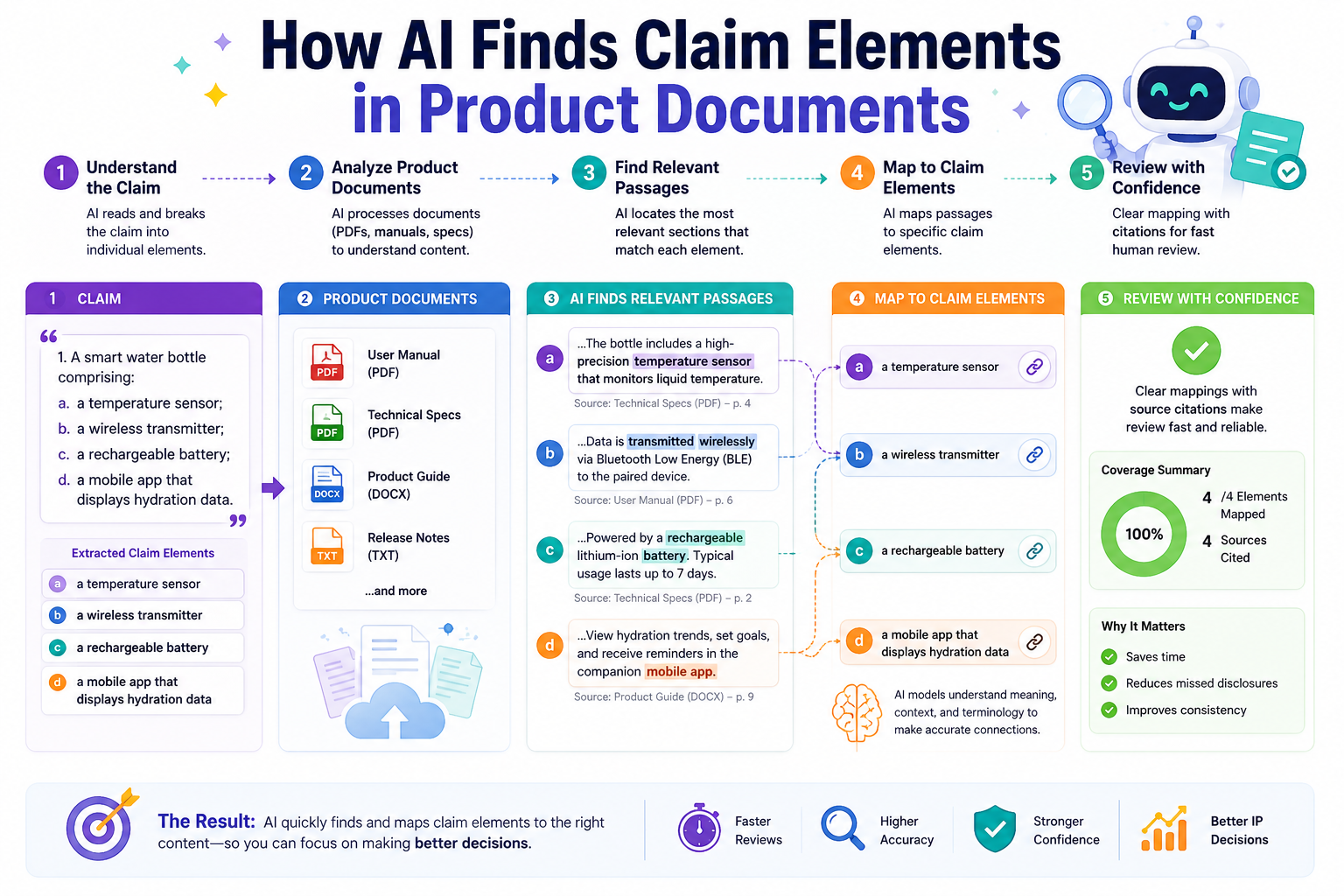
How AI Finds Claim Elements in Product Documents
Most strong patents start in messy places. A product spec. A slide deck. A design doc. A code note. A customer demo. A set of screenshots. A long file that only the engineering team fully understands. AI Starts by Turning Product Documents Into a Clear Invention Map Product documents are rarely neat. One team writes…
-
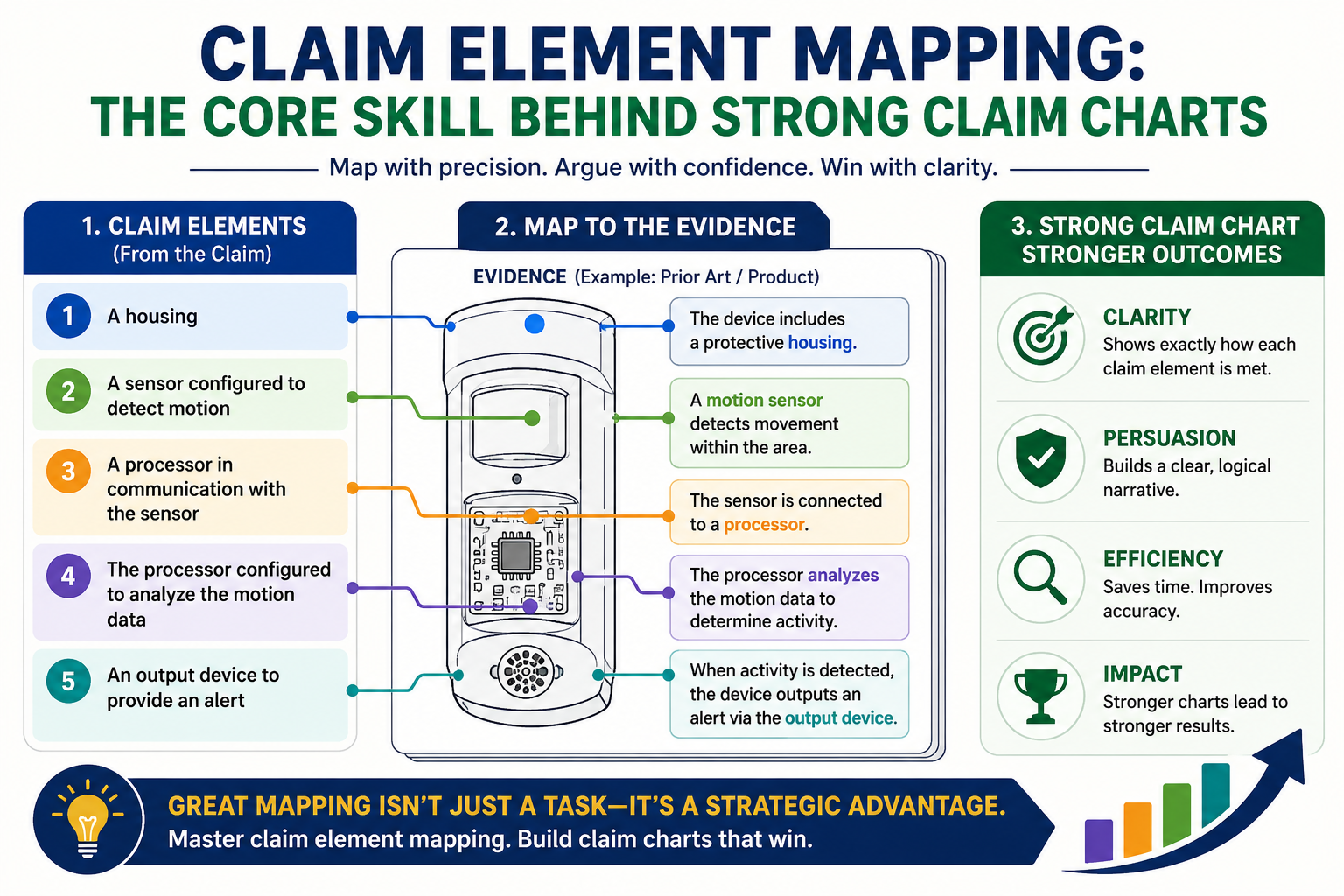
Claim Element Mapping: The Core Skill Behind Strong Claim Charts
A strong claim chart is not built by filling boxes with random proof. It is built by matching each part of a patent claim to clear support in the product, system, code, model, document, or accused tool. To see how PowerPatent helps protect your work faster, visit https://powerpatent.com/how-it-works Claim element mapping is the quiet skill…
-

How to Use Claim Charts in Office Action Responses
An Office Action can feel like a wall. You read the examiner’s points, see the cited patent papers, and wonder how to answer without giving away too much or saying the wrong thing. At PowerPatent, we believe patent work should feel clear, not painful. Smart software and real attorney review can help you map claims,…
-
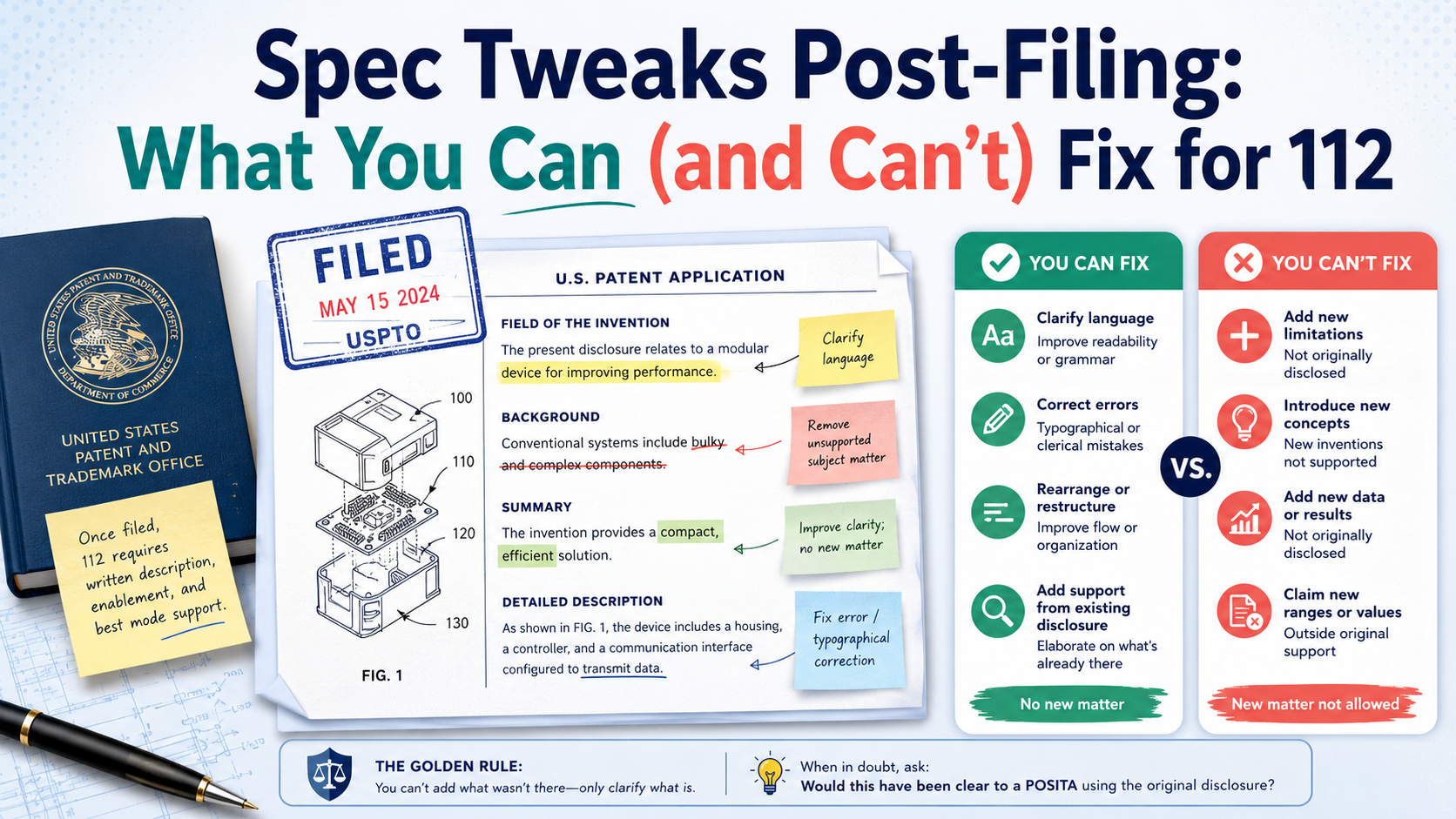
Spec Tweaks Post-Filing: What You Can (and Can’t) Fix for 112
A patent filing date can feel like a finish line. It is not. It is more like wet concrete. You may still smooth the surface, clean up marks, and make the shape clearer. But you cannot pour in new concrete after the fact and pretend it was always there. The first job is to know…
-
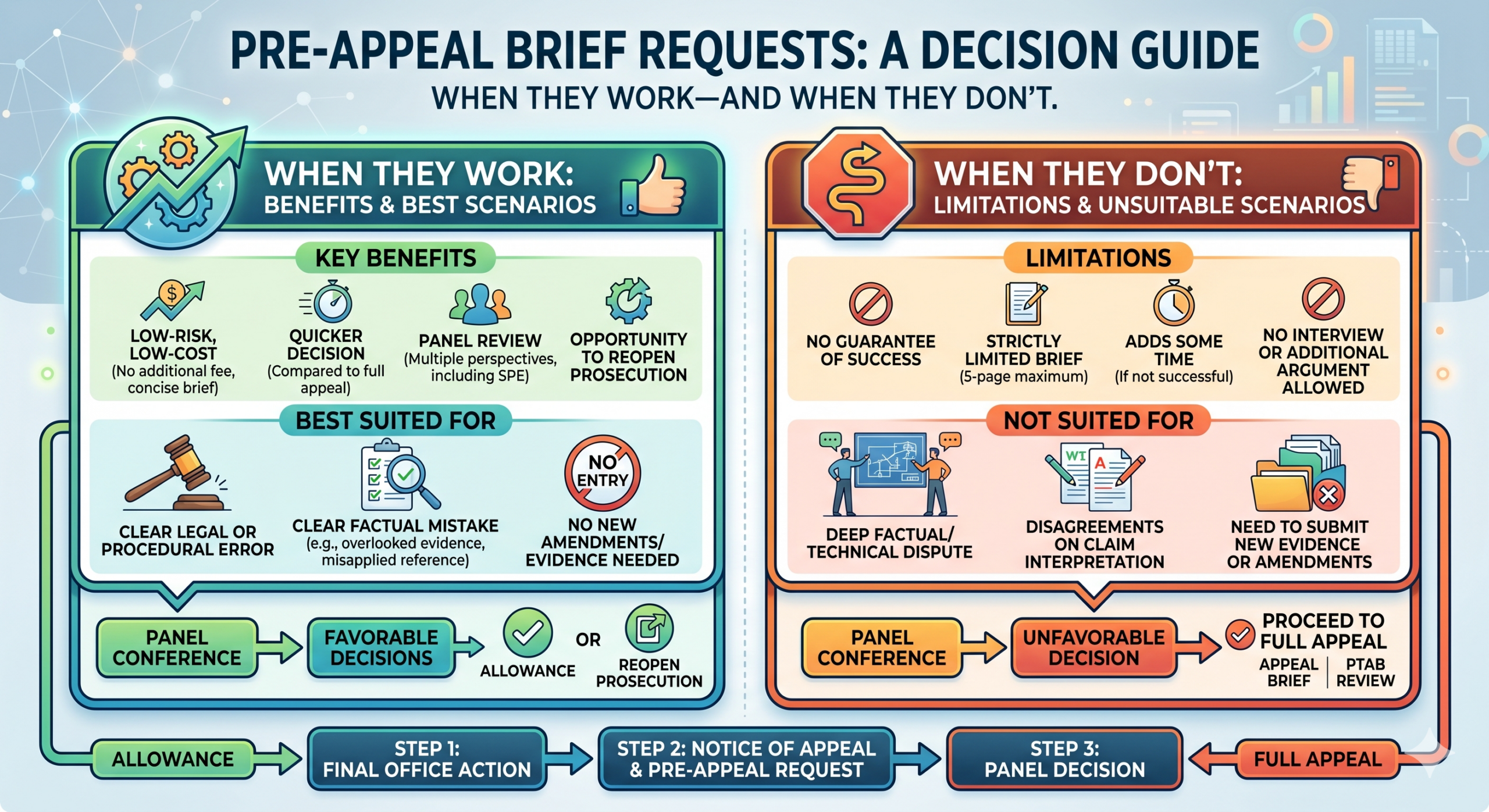
Pre-Appeal Brief Requests: When They Work—and When They Don’t
A pre-appeal brief request sounds like a small step. In the right case, it can be a smart move. It can stop a weak rejection before you spend time and money on a full appeal brief. It can also give your patent application a fresh look before things get more formal. A pre-appeal brief request…